The Innocents-1961

The Innocents-1961

Director Jack Clayton

Starring Deborah Kerr

Top 250 Films #94

Top 40 Horror Films #17

Scott’s Review #639

Reviewed April 29, 2017

Grade: A

The Innocents is a 1961 British psychological horror film that tells a ghost story, based on the novella “The Turn of the Screw” by Henry James.

Although it is a horror film, it contains few traditional elements, such as contrived frights, jumps, and blood. Instead, the film succeeds by using lighting and magnificent cinematography by Freddie Francis.

And, of course, fantastic storytelling and direction from Jack Clayton.

Deborah Kerr gives an excellent turn as a beleaguered governess hired by a wealthy bachelor (Michael Redgrave) to tend to his young niece and nephew, Flora and Miles.

The setting is a lavish yet creepy mansion located outside London. As the Uncle goes away to India on business, Miss Giddens, with no previous experience, is left to tend to Flora and Miles, who both begin acting strangely.

To complicate matters, Miss Giddens sees sinister ghosts lurking around the property. The ghosts are former household servants who have passed away, of whom Miss Giddens has never met.

Miss Giddens is assisted only by the kindly housekeeper, Mrs. Grose, who tells her about the servants’ tragic deaths.

The Innocents, shot in black and white, uses sound to its advantage. This, combined with the interesting camera angles and focus shots—mainly of the ghosts Miss Giddens sees—makes the film unique and scary.

When she hears strange voices, she becomes convinced that Miles and Flora are playing tricks on her, engaging in games with her. The whispers’ sounds are haunting and do wonders for the effects, chilling the viewer as the film progresses.

Is Miss Giddens imagining the voices and visions, or is this an actual reality? Could the children be sinister and playing a vicious prank on her? Could Mrs. Grose be evil?

Nobody else within the household sees or hears anything amiss- or admits to it.

Kerr, a treasured actress, plays the part with emotional facial expressions and genuine fear, so much so that she wins the audience over as we side with and empathize with her character. Still, is she a woman on the verge of a mental breakdown? Does she have past mental problems?

Like her uncle, we know nothing of her past, only that she claims to be the daughter of a minister. How, then, does she have stylish, expensive clothes? Could she only be pretending to be a governess? Has she run away from her past?

The Turn of the Screw is a true ghost story, but The Innocents is a bit different —it relies, successfully, on being more of a character-driven story.

As Miss Giddens becomes convinced that the spirits of the servants have possessed both children, she makes it her mission to rescue them from these spirits. We have an ominous feeling that events will not end well, and they do not.

Several scenes will frighten the viewer, as Miss Giddens sees a haggard ghost (the female servant) quietly standing in the distance near a lake as Flora dances chirpily; the image of the faraway ghost figure is eerie and well-shot.

The film draws comparisons to the classic Hitchcock film Rebecca (1940). Each is set in a large mansion and features complex villains who are portrayed as deceased characters.

Also, the sanity of the main character is in question.

With a compelling story and the nuts and bolts surrounding the tale to add clever effects and a chilling conclusion, the film succeeds as an excellent and intelligent horror film.

With great acting all around, including fantastic performances by child actors, The Innocents (1961) scares the daylights out of any horror fan and uses exterior and interior scenes to make the film an all-around marvel.
Requiem for a Dream-2000

Requiem for a Dream-2000

Director Darren Aronofsky

Starring Ellen Burstyn, Jared Leto

Top 250 Films #95

Top 10 Most Disturbing Films #3    

Scott’s Review #172

60001134

Reviewed September 21, 2014

Grade: A

Requiem for a Dream (2000) is a disturbing film and, at times, tough to watch. Still, it is also a brilliant masterpiece, visually as well as from a storytelling perspective, that I appreciate more and more with each painful (in a good way!) viewing experience.

The film is easily one of the most disturbing films I have ever seen.

The subject matter is drug trafficking/addiction that affects more than one character in the cast- a myriad of different films have tackled this subject- think Traffic, released around the same time as Requiem for a Dream, for a comparison.

At the risk of directly comparing Requiem for a Dream to Traffic, which is unfair, I will say that as gritty as Traffic is, Requiem for a Dream makes it look like a kid’s film.

Director Darren Aronofsky’s direction is superb.

The story revolves around a young man (Harry) from Brooklyn, played by Jared Leto, his girlfriend Marion, played by Jennifer Connelly, Harry’s mother Sara, played by Ellen Burstyn, and Harry’s best friend Tyrone, played by Marlon Wayans.

Each individual falls into a trap of drug addiction in their way, but all are written sympathetically so that the audience cares about them and feels their sorrows intensely.

Harry and Tyrone are involved in drug selling but aspire to be successful and both love their mothers and their significant others- in Harry’s case that is Marion.

Marion (Connelly) falls in over her head and is forced to turn tricks to feed her heroin habit. She is an intelligent young woman from an affluent family, which makes her downward spiral into prostitution all the more shocking.

The standout among the central characters is Sara Goldfarb, who is a lonely widowed woman obsessed with a television game show. She develops delusions of grandeur of becoming a contestant and is tragically determined to lose weight to fit into her favorite red dress.

She becomes dependent on diet pills and begins hallucinating that her refrigerator is attacking her.

Aronofsky perfectly mixes in fantasy sequences showcasing Burstyn’s real attractiveness contrasted with the desperation of Sara. Sara is a sad character and Burstyn is mesmerizing in the role.

How she lost the Oscar to Julia Roberts in 2000 is and always will be one of the biggest Oscar travesties in my opinion.

The special part of this film is the visual and cerebral aspects. The film is dreamlike in its texture and extreme, fast-paced close-ups of the diet pills or heroin being consumed.

The viewer feels the highs and lows that the characters feel and there is immediately a sense that all of the characters are doomed and hopeless.

Besides, this film has one of the most effective and haunting scores I have ever experienced, right up there with John Carpenter’s Halloween.

The slow-motion sequences combined with frenetic images make this quite cerebral to watch. I cannot watch this film very often as it is too disturbing and upsetting, but I sure am glad it was made at all.

Oscar Nominations: Best Actress-Ellen Burstyn

Independent Spirit Award Nominations: 2 wins-Best Feature, Best Director-Darren Aronofsky, Best Female Lead-Ellen Burstyn (won), Best Supporting Female-Jennifer Connelly, Best Cinematography (won)

Rebecca-1940

Rebecca-1940

Director Alfred Hitchcock

Starring Laurence Olivier, Joan Fontaine

Top 250 Films #96

Scott’s Review #345

895272

Reviewed January 9, 2016

Grade: A

The only Alfred Hitchcock film to win the coveted Best Picture Oscar trophy, Rebecca is a very early offering in the famous director’s repertoire.

His heyday being well ahead of this film (the 1950s and 1960s saw his best works), Rebecca is a blueprint of fine things to come and, on its own merits, is a great film.

Shot in black and white, the film is a descent into mystery, intrigue, and madness with a gothic look.

Laurence Olivier stars as wealthy widower Maxim de Winter, whose first wife, the title character Rebecca, died sometime before the story begins. In a clever twist, the character of Rebecca is never seen but takes on a life of her own through the tellings of the rest of the cast.

Joan Fontaine plays a nameless, naïve young woman who meets the sophisticated Maxim and marries him, becoming the new Mrs. de Winter.

This development is met with disdain by the servants who work in the Grand de Winter mansion, Manderley, a character in its own right.

The housekeeper, Mrs. Danvers (Judith Anderson), is cold and distant from Maxim’s new wife. She begins to reveal an obsession with the deceased Rebecca, which creates jealousy and intimidation for Fontaine’s character, to the point where she starts to doubt her sanity and decision-making capabilities.

Thanks to Hitchcock’s direction, Rebecca is a fantastic, old-style film with layers of mystery and wonderment. The mansion, Manderley, is central to the story, as is Mrs. Danvers’s creepy obsession with Rebecca.

She keeps the dead woman’s bedroom neat, a sort of shrine to her memory, so much so that, despite the time the film was made, 1940, a lesbian element is crystal clear to attention-paying audiences.

This aspect may not have been noticed at the time, but it is apparent now.

The film is also a ghost story since the central character, Rebecca, is never seen.

Could she be haunting the mansion? Is she dead, or is this a red herring created to throw the audience off the track? Is the new Mrs. de Winter spiraling out of control? Is she imagining the servant’s menacing actions? Is Maxim in on the tormentor, simply seeking a replacement wife for his steadfast love?

The pertinent questions are asked not only of the character but also of the audience as they watch with bated breath.

The climax and finale of Rebecca (1940) are fantastic.

As the arguably haunted mansion is engulfed in flames and the sinister Mrs. Danvers can be seen lurking near the raging drapes, the truth comes to the surface, leaving a memorable haunting feeling to audiences watching.

Rebecca is a true classic.

Oscar Nominations: 2 wins-Outstanding Production (won), Best Director-Alfred Hitchcock, Best Actor-Laurence Olivier, Best Actress-Joan Fontaine, Best Supporting Actress-Judith Anderson, Best Screenplay, Best Original Score, Best Art Direction, Black and White, Best Cinematography, Black-and-White (won), Best Film Editing, Best Special Effects

Dawn of the Dead-1978

Dawn of the Dead-1978

Director George A. Romero

Starring Ken Foree, Gaylen Ross, David Emge

Top 250 Films #97

Top 40 Horror Films #18

Scott’s Review #289

423744

Reviewed November 26, 2015

Grade: B+

One of the better installments by the famed horror-comedy director George A. Romero, though inferior to my favorite film of his, Night of the Living Dead (1968), Dawn of the Dead (1978) focuses slightly more on the comedy aspect.

For horror fans, there is plenty of gore to satisfy bloodthirsty viewers.

This film is glossier and slicker than its predecessor was.

On a slightly larger budget than Night of the Living Dead, the events take place in suburban Pennsylvania at a local mall.

An unknown phenomenon has made non-buried humans change form into flesh-eating zombies that prey on other human beings.

A group of survivors hunker down in a suburban mall and begin a life of adequacy. They use the mall’s contents until events threaten their existence. They must form a militant operation to survive.

The four survivors are Stephen (David Emge) and Francine (Gaylen Ross), two staff members of a local television station, and Roger (Scott Reiniger) and Peter (Ken Foree), two SWAT team members whom they meet in the ensuing chaos.

The quartet steals a helicopter and travels a short distance to the mall.

Having viewed Dawn of the Dead many times, I am a fan of the film, but not an enormous fan, and it hovers below my Top Twenty-Five Horror Films list (as of this review).

The main flaw is how it delves into the personal lives of Stephen and Francine midstream, a fact I find meaningless, and stalls the plot.

Francine has realized that she is pregnant, and I do not understand the point of slowing down the action for this purpose.

I am a huge fan of character development (even in the horror genre!), but this development does not work.

Still, the lengthy portion of the film of over two hours (highly unusual for horror), enamored me.

The mall scenes are fantastic, and the final-act action is thrilling.

Reminiscent of my youth and hours spent as a child, along with my mother and siblings, being paraded around the local mall, the look of the mall in Dawn of the Dead brings back a flood of memories.

From the fake green plants to the mannequins, the pool of water filled with coins, and the redundant, but lovely Muzak in the background.

Romero, as he did with Night of the Living Dead, provides a social element to the film.

The onset of materialism and consumerism captured the United States in the late 1970s and 1980s, and Romero focuses on it. It’s taken me a couple of viewings to catch onto this point. The zombies stupidly walk around the mall in a numbing fashion, mirroring how many people did during the day.

One character mentions that the zombies are drawn to the mall because it is familiar, much like people who frequented the malls at that time, frivolously spending away their time and money.

Some of the deaths, including that of a main character, are haunting. As the character suddenly “turns”, it is frightening to see them in this new light compared to how they once were.

And, comically, my favorite zombie character is the nurse. Wearing a uniform (white shoes, a classic nurse cap, and a white suit), she is creepy yet mesmerizing in her body language and facial expressions as she lumbers around the mall.

It makes me smile each time I see her.

Dawn of the Dead (1978) is one of the better, more interesting zombie films. I wish the relationship drama, especially in the center, had been toned down, since it slows the pace.

Still, a good, fun, late-night flick.

Kill Bill: Volume 1 and Volume 2-2003/2004

Kill Bill: Volume 1 and Volume 2- 2003/2004

Director Quentin Tarantino

Starring Uma Thurman, David Carradine

Top 250 Films #98

Scott’s Review #322

6003123660032563

Reviewed January 3, 2016

Grade: A

Despite being released as separate films (Fall of 2003 and Spring of 2004), Kill Bill: Volume 1 and Kill Bill: Volume 2 are one grand, sprawling feature.

The films were shot as one, but at a running time of over four hours, it was impossible to release them as one, so director Quentin Tarantino decided to release his masterpiece martial arts film as two sequential films.

I have decided to review them as one since Volume 2 is a clear continuation of Volume 1.

From a story perspective, Kill Bill is a basic revenge thriller. The plot is not complex nor ingenious and is rather ordinary containing B-movie components- think the really bad Kung-Fu films of long ago.

What makes Kill Bill an extraordinary masterpiece, however, is the style that exudes from the film, thanks to the direction and creation of Tarantino.

The film is brimming with good flavor and crackling dialogue of an intelligent sort.

Characters have long conversations with each other-not for redundancy’s sake- in between the endless martial arts and bloody sequences.

We meet our heroine, The Bride (Uma Thurman), in a chapel in El Paso, Texas. About to be married to her groom, the entire wedding party is suddenly assassinated in a bloody fashion by the Deadly Viper Assassination Squad.

Their leader, Bill (David Carradine), shoots The Bride after she reveals to him that she is carrying his baby.

The film flashes forward four years later- The Bride has survived the massacre but has been comatose ever since. When a hospital worker rapes her, she escapes and vows revenge on each one of her attackers- the revenge culminating with Bill.

Her path of destruction leads her to Japan.

Like most of Tarantino’s films, Kill Bill is divided into chapters and often goes back and forth from past to present.

The brilliance of Kill Bill is its pizazz. We know The Bride will get her revenge on the assassins, we just do not know in what way or how bloody the slaughters will be.

The film contains copious amounts of blood and swords and machetes are everywhere to be found.

The slow drawl dialogue as The Bride has conversations with her prey before she kills them, oftentimes ends in a big fight scene. Her first revenge, against Vernita (Vivica A. Fox), is unique in that it takes place in Vernita’s kitchen as her young daughter is happily eating her breakfast cereal.

The entire battle ensues in the kitchen and we are left watching blood and cereal.

It is Tarantino’s unique style of filmmaking and storytelling, adding violence, and long character conversations, that give Kill Bill, and all of his other classic films, his unique brand, and stamp of approval.

I dearly hope he continues to make films that challenge the norm, for years to come.

Thunderball-1965

Thunderball-1965

Director Terence Young

Starring Sean Connery

Top 250 Films #99

Scott’s Review #364

1046268

Reviewed January 9, 2016

Grade: A

By 1965, the James Bond franchise was embarking on its fourth segment, and the budget reflected the success of the preceding films.

Thunderball reaps the benefits of an enormous budget and is. As a result, it is a grand, epic film. Its sheer magnitude makes it one of my favorite Bond films simply because of its look.

The special effects are a marvel.

By this time, Sean Connery had comfortably immersed himself in the role of Bond, utilizing his charm and ability to exude charisma.

In this story, two NATO atomic bombs have been stolen by SPECTRE and held the world to ransom for millions in diamonds. They are threatening to detonate one of the bombs in a major city in either the United States or England. Mr. Bond must race against time to deter this from happening.

For starters, the opening sequence is one of my favorites. Bond attends the funeral of a deceased SPECTRE agent (number 6) at a lavish chateau in France. The agent is disguised as his widow, but Bond is not fooled.

This sets the stage as a dramatic fight scene ensues between the two “men.”

The main villain of Thunderball is Emilio Largo (Adolfo Celi), a handsome, suave SPECTRE agent (number 2). He is rich and sophisticated, a quality that is reflected throughout the film.

His grand estate is set and filmed in the Bahamas, giving most of the film a steamy, posh look, with bluish-green waters and white, crispy sand.

It’s the most gorgeous backdrop.

Largo is a great Bond villain and on par with Bond. He also has charm, good looks, and charisma.

The main Bond girl is Domino, played by Claudine Auger. Largo’s mistress is typically clad in black and/or white, hence her name.

Auger has the perfect balance of beautiful looks, sophistication, and intelligence, and is an ideal match for Bond. The chemistry between Connery and Auger is palpable and a significant factor in the film’s success.

What sets Thunderball apart from some Bond films is the central portion of the film, mainly in the second half, which takes place underwater.

In a clear example of showcasing the modern technology of the time (1965), some complained that these sequences went on too long and did not advance the plot.

These points may have some validity, but oh, are they so visually appealing! The exotic underwater world is majestic.

Thunderball has it all and is one of the most gorgeous Bond films. It is big, bombastic, and filled with bright colors.

It contains all the elements of a great Bond film, so it has held up remarkably well over the years.

Oscar Nominations: 1 win-Best Special Visual Effects (won)

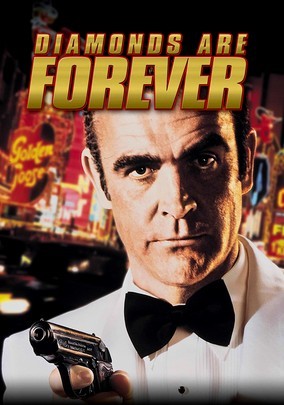
Diamonds Are Forever-1971

Diamonds Are Forever-1971

Director Guy Hamilton

Starring Sean Connery

Top 250 Films #100

Scott’s Review #328

60000705

Reviewed January 6, 2016

Grade: A

Despite Diamonds Are Forever (1971) being one of the lower-rated James Bond films, this is actually one of my favorite films of all time, and many would disagree with me.

Some say Sean Connery phoned this performance in; others say there was little chemistry between him and Jill St. John, and the sets were tense, leading to a sub-par offering. But I think this is a great film.

I love the Las Vegas locale, the bright lights, flashy costumes, and a ritzy underbelly- and the Vegas car chase is incredible.

A bright, shiny Ford Mustang takes center stage throughout the sequence, and if one looks closely, one will realize that nearly all the cars are Ford- fun fact!

The title song by Shirley Bassey is great, sultry and stylish, only enhanced by the glitzy setting. One immediately imagines the film oozing with diamonds as it does.

The villains are fascinating, and Mr. Wint and Mr. Kidd were the first openly gay Bond villains, which, in 1971, was groundbreaking.

Yes, they are evil and slightly silly, but what a risky, surprising, and blatant scene to see the gentlemen holding hands.

St. John is a sophisticated and intelligent Bond girl, and the action in this film is plenty.

Diamonds Are Forever (1971) contains all the elements for an enjoyable Bond experience.

Oscar Nominations: Best Sound

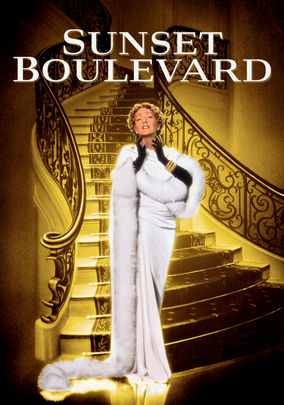
Sunset Boulevard-1950

Sunset Boulevard-1950

Director Billy Wilder

Starring Gloria Swanson, William Holden

Top 250 Films #101

Scott’s Review #330

60010956

Reviewed January 8, 2016

Grade: A

I adore films about Hollywood (good ones), and Sunset Boulevard (1950) is an absolute treasure.

Directed by classic film director Billy Wilder, the film is a film noir about a legendary silent film star, Norma Desmond, who struggles to cope with the advent of sound movies and the instability of her life, plagued by mental illness as her career has long since ended.

Handsome Joe innocently stumbles upon her mansion, forming an eerie relationship that ends in tragedy.

Sunset Boulevard is a famous street in Los Angeles and Beverly Hills, California. It is immediately featured in the film as Joe Gillis, played by William Holden, drives down the street, an unsuccessful screenwriter whose car is about to be repossessed.

Joe narrates the film, and we see a man lying dead in a vast swimming pool. Ironically, this is the film’s ending, and Wilder works backward in an interesting way, so the audience knows tragedy will eventually ensue.

To avoid being chased by men, Joe pulls into a driveway and hides his car in a garage near a vast yet run-down mansion. He is mistaken for a coffin salesman and meets the infamous and creepy Norma and her servant, Max.

The coffin is for Norma’s deceased pet chimpanzee. Intrigued and broke, Joe hatches a plot to rewrite Norma’s terrible screenplay- and make some money from the aging Hollywood star.

Norma needs companionship. The two, along with Max, embark on a complicated relationship marked by jealousy, passion, and rage.

The black-and-white style works exceptionally well in the film, and the lighting creates a sense of intrigue and film noir mystique.

Sunset Boulevard combines noir with a rich character study of Norma, and we feel her pain and isolation as she is cast aside due to the times.

I love how Wilder focuses on the gloomy nature of Norma’s vast mansion—especially when she throws a New Year’s Eve party isolated with just her, Joe, and a hired band—and intersperses it with a lively party in Hollywood filled with young, energetic, up-and-coming talents.

The scenes blend seamlessly and effectively showcase the two different worlds and perspectives.

Sunset Boulevard is a brilliant depiction of old Hollywood at its best (and worst). A study in ambition, struggle, high hopes (Joe), and faded success and dreams shattered in reality, where delusion is the only defense (Norma).

Oscar Nominations: 3 wins-Best Motion Picture, Best Director-Billy Wilder, Best Actor-William Holden, Best Actress-Gloria Swanson, Best Supporting Actor-Erich von Stroheim, Best Supporting Actress-Nancy Olson, Best Story and Screenplay (won), Best Scoring of a Dramatic or Comedy Picture (won), Best Art Direction-Set Decoration, Black-and-White (won), Best Cinematography, Black-and-White, Best Film Editing

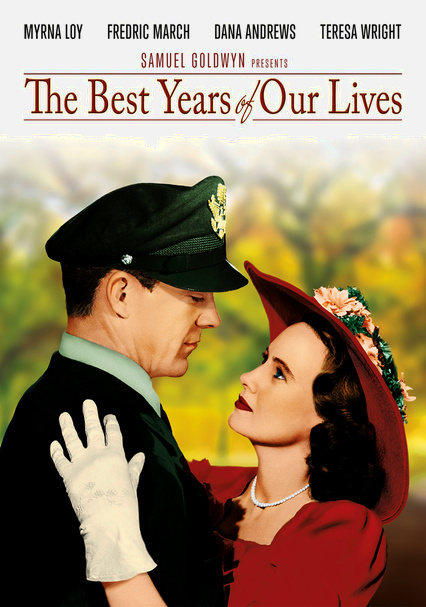
The Best Years of Our Lives-1946

The Best Years of Our Lives-1946

Director William Wyler

Starring Frederic March, Myrna Loy, Dana Andrews

Top 250 Films #102

Scott’s Review #858

Reviewed January 20, 2019

Grade: A

Many films emerged during the 1940s that depicted the horrific events of World War II. The Best Years of Our Lives (1946) is the first film to focus on the aftermath of the war and the lasting psychological effects on soldiers and their loved ones.

The film may teeter on the edge of soap opera territory. Still, it is powerful, dramatic, tender, and heartfelt, allowing its audience to experience the challenges faced by those who serve their country after leaving the military.

Director William Wyler, who also created the similarly themed Mrs. Miniver (1942), again explores the family drama genre. Still, the drama occurs this time in small-town America rather than outside London.

While Mrs. Miniver focuses on the ravages of the current war, he chooses to delve into its after-effects, which offer a broader range of situations and greater complexity. The result is a more substantial and cerebral experience.

The story centers on three U.S. service members as they attempt to readjust to civilian life upon returning home from the battlefields of World War II. Homer (Harold Russell), Al (Frederic March), and Fred (Dana Andrews) all live in the same small town, Boone City, USA.

The men were acquaintances but did not serve together in the war, as each held a different rank and had other duties.

Al has the most going for him with a loving wife, Milly (Myrna Loy), two children, and a stable household. He is promoted to Vice President of a local bank, but despite this achievement, he is a heavy drinker and prone to anger.

He is enraged at the poor treatment of veterans trying to obtain bank loans and at the United States for hindering veterans’ attempts at rebuilding their lives. His adult daughter Peggy (Teresa Wright) is a prominent character as she begins a flirtation with Fred.

Fred is unskilled and must return to his menial job as a drugstore soda jerk, much to his selfish wife, Marie’s (Virginia Mayo), chagrin. Homer lost both hands in the war and wore mechanical prosthetic hands, which made him insecure and troubled.

His days as a respected high school football quarterback have sadly come to an end, though he has unwavering support from his fiancée, Wilma (Cathy O’Donnell).

The trials and tribulations of many characters begin to mount as one character fights another over a dispute about the meaning of the war. Another character plots to ruin a marriage and embarks on a plan to rescue a character from another.

The plots run the risk of being too daytime drama-like, except that the underlying point of the troubled veterans is always at the forefront, and their challenges are to be taken seriously.

A poignant moment is a crucial scene when one character admits that they have “given up the best years of my life,” a frustrated testimonial and proof that war can ravage not only the lives of the veterans but also of their loved ones.

Wyler does not hold back in conveying a clear message through the film. The viewer will undoubtedly ponder the title, “The Best Years of Our Lives,” and realize that it is open to different interpretations and does not have only a positive connotation.

The most powerful aspect of The Best Years of Our Lives is that the actor who played a military veteran, Harold Russell, was a disabled veteran. This realism of a man portraying himself and the terrible effects the war had on him makes his character my favorite and highly empathetic.

His Academy Award wins for Best Supporting Actor are emotional and deserving, as he a won Best Picture and seven other awards.

Featuring a topic that gained prominence after World War II, The Best Years of Our Lives (1946) is a grand Hollywood film that embodies all the hallmarks of a classic drama.

Under the surface, the film is dripping with relevance, social commentary, and the psychological trauma that veterans face upon returning home, and how some are damaged beyond repair. The rich American-style film remains a worthy watch, nearly a century after production wrapped.

Oscar Nominations: 7 wins-Best Motion Picture (won), Best Director-William Wyler (won), Best Actor-Fredric March (won), Best Supporting Actor- Harold Russell (won), Best Screenplay (won), Best Scoring of a Dramatic or Comedy Picture (won), Best Sound Recording, Best Film Editing (won)

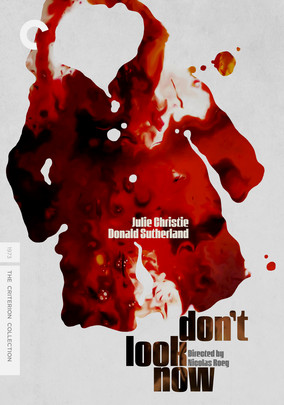
Don’t Look Now-1973

Don’t Look Now-1973

Director Nicolas Roeg

Starring Julie Christie, Donald Sutherland

Top 250 Films #103

Top 40 Horror Films #19

Scott’s Review #693

Reviewed October 22, 2017

Grade: A

Don’t Look Now is an exceptional 1973 supernatural horror film that is as thought-provoking as it is intelligently written and directed.

Combined with riveting acting by famous Hollywood stars of the day, the film is simply an anomaly and must be seen to be appreciated.

It is also the type of film that can be watched again and again for better clarity and exhibits the age-old “it gets better with age” comparison.

The film is rich in story, atmosphere, and cerebral elements, and highly influential on horror films that followed.

An affluent married couple, John and Laura Baxter (Donald Sutherland and Julie Christie), live happily together in their English country home, raising their two children, Johnny and Christine.

After a tragic drowning incident, resulting in the death of Christine, the devastated couple relocates to Venice, after John accepts a position restoring an ancient church.

Soon, Laura meets a pair of elderly sisters, one of whom is blind and claims to be clairvoyant, warning her of imminent danger and that Christine is attempting to contact her from beyond the grave.

Don’t Look Now is hardly your standard horror film, which is the main part of its appeal- psychological in nature, the film holds only one gruesome death, not including the death of Christina, which is a terrible accident, not malicious.

Rather, director Nicolas Roeg quietly builds the suspense to a startling final sequence by using a chilling musical score to elicit a reaction from the audience. We know not what will happen, only that something sinister is bound to.

Due to the successful chemistry between Sutherland and Christie in 1973, both at the top of the film success and marketability charts, the actors deserve much credit for making Don’t Look Now both believable and empathetic.

John and Laura each give their character a likable nature and immeasurable chemistry, which makes the audience care for them.

Despite the film’s supernatural elements, at its core, the story is quite humanistic. John and Laura have tragically lost a child, and we see them deal with the painful grief associated with this loss.

The famous sex scene between the pair is shocking given the time, but also tastefully done, as Roeg uses a fragmented filming style that mixes the nudity with the couple dressing for dinner.

Visually, Don’t Look Now is a pure treat. The viewer is catapulted into the cultural and wonderful world of watery Venice, where scene after scene features gondola rides, exterior shots of the city, and filming locations such as the famous Hotel Gabrielli Sandworth and the San Nicolo dei Mendicoli church, which are wisely chosen, giving the film an effective realism.

The characters of the elderly sisters, Heather and Wendy, are wonderfully cast. Hilary Mason and Clelia Matania are fantastic and believable as the mysterious duo. Seemingly kind and eager to help, I was never really sure of the character’s true motives.

Was Laura paying them for their assistance?

The film never reveals this information, but Heather, in particular, wears a sinister look that shrouds her motivations in uncertainty. Fabulous actress Mason shines in her important role.

As John begins to “see things”, the use of the color red becomes very important. Christine died wearing a red coat, and John sees a child wearing a red coat walking around the city, but cannot make out her face.

When he sees Laura and the sisters at a funeral, we begin to question his sanity. But are the sisters up to something, trying to trick him, or is his mind playing tricks on him?

The terrific conclusion will only lead the viewer to more questions.

Don’t Look Now (1973) is a unique, classic horror film with incredible thematic elements, an eerie psychological story, fine acting, and location sequences that will astound.

Mixing the occult with an unpredictable climax, the film is influenced by Alfred Hitchcock and succeeds in achieving a blood-curdling affair sure to be discussed upon the chilling conclusion.

The film’s non-linear storytelling only makes it more challenging to watch and appreciate.

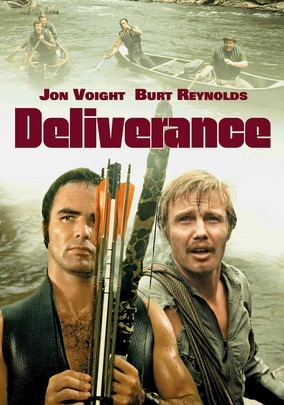
Deliverance-1972

Deliverance-1972

Director John Boorman

Starring Jon Voight, Burt Reynolds, Ned Beatty

Top 250 Films #104   

Scott’s Review #324

433193

Reviewed January 5, 2016

Grade: A

Deliverance is a disturbing, gritty, yet terrific 1972 thriller directed by John Boorman and starring a all-male cast.

The film is an adventure, albeit a dark one, with a subject matter difficult to watch; the film takes dark twists along the way, which is also its beauty. The viewer will get a harsh look at the backwoods of Georgia, not to mention gorgeous outdoor scenery.

A group of middle-aged, metropolitan businessmen, (played by Burt Reynolds, Jon Voight, Ned Beatty, and Ronny Cox), from Atlanta, decide to go rafting for a weekend getaway along a remote river in a desolate area of Georgia.

It is a guy’s weekend.

Lewis and Ed (Reynolds and Voight) are experienced canoeists and therefore the leaders of the group.

The guys are jovial, but soon come upon a strange group of very poor townspeople. The men ask for a ride to the river, and one of the men, Drew (Cox), engages a peculiar young boy in a friendly duel of banjo versus guitar, but the boy then snubs Drew.

Later, events take a dark turn when a hunter-versus-hunted game emerges between the city-dwelling men and the country rednecks.

The film is interesting as it begins as a light-hearted adventure, nearly a buddy movie. The men laugh and joke as they relish the excitement of the weekend ahead.

The film then becomes slightly eerie during the banjo scene. We know that something strange or sinister has occurred, but we cannot put our finger on it.

Does the redneck boy hate the city men, or is he mentally challenged? Why the strange looks of the poor people of the tiny town?

From this point, Deliverance takes a dark turn as a brutal event occurs involving two deaths- one under mysterious circumstances, and a male rape scene that is disturbing in its intensity and humiliation.

The rawness of these aspects of the film is unprecedented, especially when contrasted with the beautiful nature that is also at the forefront.

The acting is spot-on. In my opinion, Jon Voight makes this film and gives a layered, character-driven performance, so much so that the audience becomes invested in his life. Ed is a good guy- arguably the kindest of the bunch- and is forced to become a different person as the film progresses, far from his true self.

He struggles in one scene- one beautifully peaceful scene- to shoot and kill a deer calmly grazing in the woods. He cannot do it. I love this scene as it shows Ed’s true nature. He does not dare tell the other men of his perceived shortcomings.

Ironically, he is then forced to make another painful decision involving human life.

On the surface, it is a straightforward mainstream film, but as the film progresses, it becomes a layered masterpiece—happy, tragic, strange, depressing, peaceful, and brutal—like Deliverance (1972).

The film is a disturbing, memorable gem and needs to be viewed to appreciate the golden age of 1970s cinema.

Oscar Nominations: Best Picture, Best Director-John Boorman, Best Film Editing

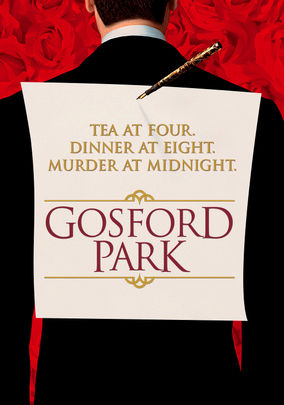
Gosford Park-2001

Gosford Park-2001

Director Robert Altman

Starring Maggie Smith, Helen Mirren, Ryan Phillippe

Top 250 Films #105

Scott’s Review #350

60021796

Reviewed January 9, 2016

Grade: A

Somewhere between the brilliant PBS series of the 1970s and the ultra-modern cool of Downton Abbey (also PBS) lies the masterpiece that is Robert Altman’s 2001 gem, Gosford Park.

Ironic is that the creator, writer, and executive producer of Downtown Abbey, Julian Fellowes, wrote the screenplay of Gosford Park.

No wonder, combined with Altman’s direction, they created genius.

The period is 1932 and the wealthy, along with their servants, flock to the magnificent estate of Gosford Park, a grand English country home. The guests include both Americans and Brits and everyone is gathered for a shooting weekend- foreshadowing if ever there was.

Following a dinner party, a murder occurs and the remainder of the film follows the subsequent police investigation, and the perspectives of the guests and the servants as a whodunit ensues.

Many of the character’s lives unravel as secrets are exposed.

Sir William, the murder victim, is a powerful industrialist. After he announces he will withdraw an investment, the ramifications affect many of the guests so that the set-up is spelled out for the audience.

At the risk of seemingly nothing more than a plot device- it is so much more than that.

During a pheasant shoot, Sir William receives a minor wound thanks to a stray birdshot- is this intentional or merely an accident? When Sir William meets his fate that evening, the potential suspects pile up.

If there are two compelling aspects to a great film, they are a good old-fashioned whodunit and an enormous cast, all potential suspects.

What makes Gosford Park exceptional is that every character is interesting in some way and all are written well.

Secrets abound for miles in this film and are revealed deliciously. Torrid affairs, sexuality secrets, and blackmail abound as revelations make their way to the surface and Altman knows exactly how to cast doubt or suspicion on many of his characters.

The compelling relationship between American film producer Morris Weissman and his valet, Henry Denton (Ryan Phillipe), along with the domineering head housekeeper, Mrs. Wilson (Helen Mirren) are my favorite characters and dynamics.

How clever that Maggie Smith would play similar roles as stuffy aristocrats in both Gosford Park and Downton Abbey.

Rich in texture is the balancing between the haves and the have-nots and how those characters mix (sometimes in secret rendezvous!)

Typical of Altman films, the character dialogue commonly overlaps, and the actors largely improvise the script. In addition to being an actor’s dream, this quality gives a dash of realism to his films and Gosford Park is no exception.

Since there are so many characters and so many plots and sub-plots going on at once, my recommendation is to watch the film at least twice to fully comprehend the layers of the goings-on.

Gosford Park (2001) will become more and more appreciated.

Oscar Nominations: 1 win-Best Picture, Best Director-Robert Altman, Best Supporting Actress-Helen Mirren, Maggie Smith, Best Screenplay Written Directly for the Screen/Original Screenplay (won), Best Art Direction, Best Costume Design

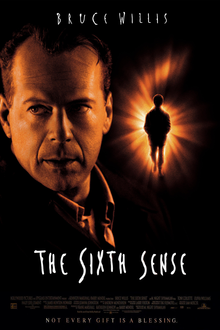
The Sixth Sense-1999

The Sixth Sense-1999

Director M. Night Shyamalan

Starring Bruce Willis, Haley Joel Osment

Top 250 Films #106

Top 40 Horror Films #20

Scott’s Review #182

Reviewed October 8, 2014

Grade: A

The Sixth Sense is a psychological thriller/horror film directed by M. Night Shyamalan, released in 1999, about ghosts, and was an incredible box-office and critical success at the time of its release, making the line “I see dead people” universally imitated.

Bruce Willis stars as Dr. Malcolm Crowe, a successful and admired child psychologist who lives a perfect life with his wife, Anna, in Philadelphia.

Enjoying a romantic night at home, Malcolm and Anna are interrupted by a deranged former patient- played by an unrecognizable Donnie Wahlberg.

Malcolm is shot by the patient, who also shoots himself, and the story picks up a year later as Malcolm takes an interest in Cole, a troubled 9-year-old boy, played by Haley Joel Osment.

Cole is a peculiar boy- an outcast taunted at school, who can see the dead.

He’s worried that his overworked mother, Lynn, is played by Toni Collette.

Meanwhile, Malcolm and Anna appear to be experiencing marital problems and lack meaningful communication with each other.

Anna begins to be pursued by a new beau, much to Malcolm’s chagrin. Malcolm and Cole develop a special bond as Malcolm convinces Cole to speak to and help the ghosts that he sees rather than be terrified of them.

As the plot slowly unfolds, Cole helps a recently deceased girl named Kyra Collins, who is around his age. Kyra gives Cole a videotape that reveals she was murdered and proves who killed her.

The subsequent scene is my favorite- there is a haunting quality to it, and the camera follows the events interestingly, slowly, and sedately.

The setting is a service at Kyra’s house, where family and friends gather to pay respects and support Kyra’s parents. Malcolm and Cole arrive and present Kyra’s father with the plain videotape.

The entire scene is powerful in its simplicity, yet it carries great emotional weight. It is slow, but devastating in its climax and reveals. Small nuances are revealed- why is Kyra’s mother wearing bright red when the other guests are all wearing black? Will Kyra’s younger sister be the next victim?

Superlative filmmaking.

A scene involving Cole’s teacher is riveting: sensing aspects of his teacher’s past, Cole realizes his teacher had a stuttering problem as a child. When his teacher is condescending towards Cole, the young boy explodes with rage and begins a chant of “tuttering Stanley,” which reduces the teacher to childhood traumas.

Yet another powerful scene involves Cole and his mother sitting in a car caught in traffic- Cole admits the truth of his skill of seeing dead people to her and introduces an emotional story to her as proof.

This is a scene where Toni Collette shines brightly.

Well over a decade since The Sixth Sense was released, most people know the twist and the subsequent surprise ending, and it is such a joy to go back, see the manipulations in the story and in individual scenes, add them up, and revel in the clever way Shyamalan puts them together.

The Sixth Sense is not dated and is quite fresh, holding up tremendously well, and I still get chills during the big reveal all these years later.

But beyond this pleasure, the film is beautifully written. Somewhere between horror and psychological thriller, it successfully tells a ghost story with interesting characters and jumps-out-of-your-seat thrills that are not contrived or predictable in the traditional horror-film way.

From an acting perspective, Bruce Willis is amazing and under-appreciated as Malcolm- he is calm, cool, and collected. His performance is quite understated as the inquisitive and pensive psychologist.

More praise should have been reaped for Willis.

Haley Joel Osment gives an astounding performance of a lifetime- he emits an image to the audience of being strange yet sympathetic, and he relays his very frightening fear of the ghosts so well that the pain and conflict he endures are evident on his face.

Toni Collette is effective as the scared, concerned, haggard mother. Collette and Osment were rewarded with Academy Award nominations- sadly, Willis was not.

Shyamalan was subsequently ridiculed for his later films (The Village, 2001, and Unbreakable, 2001) – perhaps the manipulation and trickery from The Sixth Sense angered some people.

The Sixth Sense (1999) is a film that remains with you for days, weeks, even years, and can be revisited and rediscovered for an intelligent, chilling good time.

Oscar Nominations: Best Picture, Best Director-M. Night Shyamalan, Best Supporting Actor-Haley Joel Osment, Best Supporting Actress-Toni Collette, Best Screenplay Written Directly for the Screen, Best Film Editing

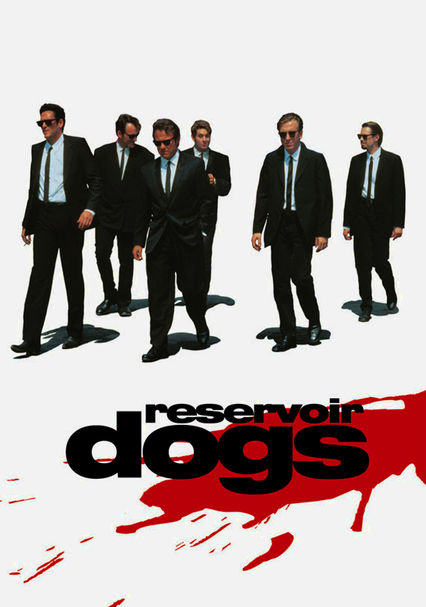
Reservoir Dogs-1992

Reservoir Dogs-1992

Director Quentin Tarantino

Starring Harvey Keitel, Tim Roth, Chris Penn

Top 250 Films #107

Scott’s Review #1,332

Reviewed January 9, 2023

Grade: A

Reservoir Dogs (1992) is the film that began an essential transition in cinema history.

The 1980s saw way too many watered-down or oversaturated films with enough sappy or melodramatic thematics to make a seasoned cinema lover want to gag and run for a good television series.

The 1990s were different.

It’s impossible to think of the decade in film and not speak the name Quentin Tarantino, an iconoclast who took the crime thriller genre and riddled it with violence, dark humor, comic book-style characters, and dozens of other eccentricities and spun the world on its head.

It was needed.

But before anyone assumes Reservoir Dogs is the most fantastic Tarantino film, it’s not. Many list it as his weakest catalog entry.

That’s open to debate, of course, but in my view, the film’s influence accounts for much of my enjoyment of it.

It’s not as developed and stylized as Django Unchained (2012) or as powerfully fucked up or odd as Pulp Fiction (1995). Still, the rawness, the gore, the go-for-broke scenes shot like a play, and the small budget make watching Reservoir Dogs a reminder of the genius that is Tarantino.

Countless scenes mirror sequences to come in his later films, so much so that a game can be played to discover where something from another Tarantino film played out.

The film gave new recognition and merit to the independent film genre, which was huge and opened doors for young filmmakers everywhere who had ideas and just needed to get their films known.

The influence of Reservoir Dogs is immeasurable, and a double feature of Reservoir Dogs and Pulp Fiction is suggested.

Even though the latter was released later, most people saw Pulp Fiction first and then discovered Reservoir Dogs.

A group of unsavory thieves assembles to pull off the perfect diamond heist. It turns into a bloody shit show when one of the men turns out to be a police informer.

But which one is it, and who is responsible for the ambush?

As the group begins to question each other’s guilt, the tensions and suspicions threaten to blow up the situation before the police step in and save the day. But how many will die first?

Tarantino cleverly casts himself in a small role as Mr. Brown and refers to all the men by the same formal title. There are Mr. White (Harvey Keitel), Mr. Orange (Tim Roth), Mr. Blonde (Michael Madsen), Mr. Blue (Edward Bunker), and, finally, Mr. Pink (Steve Buscemi), who is my favorite of all.

In 1992, many scenes were shocking. When sinister Mr. Blonde cuts off the ear of a cop and prepares to set him on fire, the brutality and sadism are hard to watch.

The blood-soaked Mr. Orange lies in a pool of blood throughout nearly the entire film. As his skin turns whiter and whiter and his clothes redder and redder, it’s a masterful example of cinema and creativity.

The few exterior shots are in Los Angeles, which gives the film a low-budget, raw look.  It’s to be celebrated, as the potent sun and the city of angels’ grizzled veneer are on display.

I’m not a fan of the lack of female representation, but it only enhances the characters’ muscles and masculinity. As they sit in a diner mulling over whether tipping is necessary, we could easily be in a men’s locker room, witnessing banter about getting laid, or watching an episode of Seinfeld.

There are no romantic entanglements to mess up the plot, nor is there any need to rescue the girl from criminals. The closest we come is a couple of homoerotic moments of men embracing men amongst bullets and blood.

Reservoir Dogs succeeds as a whodunit, a heist film, and a vile look at the inhumanity of some of the characters.

The influence and relevance of Reservoir Dogs in 2023 are as abundant as they were in 1992. Cinema is like fine wine, and sometimes the more time that passes, the more appreciation a film warrants.

It’s not perfect and is unpolished and sometimes underdeveloped, but it’s been emulated so many times that it’s become a blueprint of the crime thriller.

Independent Spirit Awards: 1 win-Best Supporting Male-Steve Buscemi (won)

The Red Shoes-1948

The Red Shoes-1948

Director Michael Powell, Emeric Pressburger

Starring Moira Shearer, Marius Goring

Top 250 Films #108

Scott’s Review #683

Reviewed September 19, 2017

Grade: A

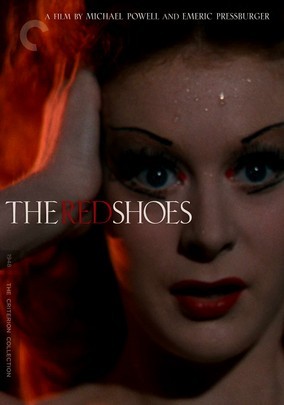
The best in the collection of cinematic ballet films, 1948’s The Red Shoes is a highly artistic and influential film, one that is undoubtedly studied in film schools everywhere.

One cannot view The Red Shoes without amazement, and the realization that this piece must have been dissected by legendary director Darren Aronofsky before he created his creepy 2010 psychological thriller, Black Swan, is evident.

The Red Shoes is a British film that imbues it with a transparent element of grace, class, and sophistication, perfectly encapsulating the themes of love, ambition, and jealousy —the Brits do it right.

Director Michael Powell later crafted the odd and controversial 1960 film Peeping Tom, which was sure to have wholly ruined his career, yet he brought his A-game to this 1948 work.

Decades later, Powell is now considered a genius director.

The film is laden with foreshadowing, at least a handful of times during its running time, as we meet our heroine, Vicky Page (Moira Shearer), a bright-eyed young woman with flowing red locks and aspirations of grandeur as she emerges as a fledgling ballerina in the Covent Garden area of London.

Partially due to her aristocratic upbringing and her assertive, snooty aunt, she lands an audition for the ballet company led by the sophisticated Boris Lermontov (Anton Walbrook).

He is immediately enamored of her, yet gives her the cold shoulder, making her question her talent. The key here is the incorporation of trains in multiple sequences.

As Lermontov and Vicky’s lives begin to intertwine, a young music student named Julian (Marius Goring) is perturbed by the plagiarism of his music by his professor, who had conducted Heart of Fire under the guise of it being his work. When Julian expresses his displeasure to Lermontov, he is hired to perform with the orchestra.

The addition of Julian to the plot kicks off a compelling triangle between the three characters, whose lives overlap in a mixture of young love, passion, and jealous rage.

The action takes off even further as the film moves to the gorgeous setting of Paris and Monte Carlo, a treat for any worldly or aspiring world traveler, as the photography and cinematic angles of the lush locales are breathtaking.

As former prima ballerina Irina Boronskaya decides to leave the company to be married, Lermontov creates a new ballet, The Red Shoes, starring Vicky, with music composed by Julian.

This creates enormous pressure for all involved as the film takes a dark turn.

Dashes of influence surrounding the exquisite performance of the famous Swan Lake dance number heavily influenced the 1950s classic An American in Paris (1951).

The long, colorful, dramatic sequence emits lush, vivacious music and performance. This “time out” from the heavy drama encompassing the rest of the film is beautiful and peaceful, and one of the sheer highlights of The Red Shoes.

The film hinges on the dynamic between the three principal characters, as each actor is spot-on and rich in flair.

Incredibly profound are the performances by Shearer and Walbrook, as each actor brings their respective character to life with the perfect amount of fury, ambition, and tension. Still, Goring as Julian is equally worthy of mention. Kudos.

I adore witnessing Moira Shearer dance; her talent and tenacity are astounding. An internationally renowned British ballet dancer and actress, Vicky’s role is ideally suited to her, as the character must have been close to her heart.

Who can forget the most famous scene, where a determined and crazed Vicky finishes her stage performance, Powell firmly holding the camera on her makeup-stained face, her blue eyes wide and hair wild?

Her look of triumph and insanity, lost in the moment, is a grand and unforgettable image that is often repeated in cinema reference books.

Equal parts dramatic, romantic, eerie, lustful, and wise, The Red Shoes (1948) is a classic film made way ahead of its time. Its startling visuals, treasured art and set designs, powerful acting, and compelling story make it a must-see.

No wonder this film had such a profound influence on other masterpieces to come.

Oscar Nominations: 2 wins-Best Picture, Best Motion Picture Story, Best Scoring of a Dramatic or Comedy Picture (won), Best Art Direction-Set Decoration, Color (won), Best Film Editing

Planet of the Apes-1968

Planet of the Apes-1968

Director Franklin J. Shaffner

Starring Charlton Heston, Roddy McDowall

Top 250 Films #109

Scott’s Review #363

60000539

Reviewed January 9, 2016

Grade: A

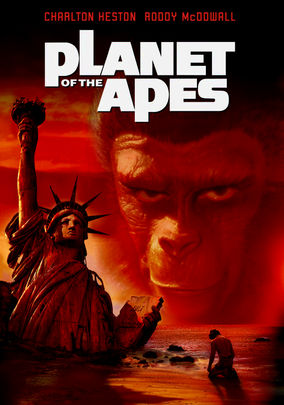
Planet of the Apes is a 1968 science fiction film starring one of the greats, Charlton Heston.

At the time of release, the film was a great film and quite visionary- and the message still holds up well today. Since certainly everyone on the “planet” must know the “surprise” ending, the film speaks volumes about the destruction of the world we know and love.

Intelligently written, Planet of the Apes is memorable and was followed by a bunch of not-so-compelling or strong sequels, remakes, and reboots.

A group of astronauts crash-lands on a strange planet in the distant future. The men have no idea where they are or what period it is.

The planet is inhabited by apes, who are highly intelligent and speak and act just like human beings. They are dominant, and the real humans are largely mute and incapable of doing much- they are kept imprisoned.

George Taylor (played by Heston) is the lead astronaut who, the apes realize, can speak and is assumed to be brilliant. The ape leader wants him killed, but sympathetic scientist and archaeologist apes Cornelius and Zira (played by Roddy McDowell and Kim Hunter) are curious about Taylor and wish to experiment further.

To say nothing of the story, the prosthetic makeup and costumes are dynamic. Human actors play the apes, but they do not look fake or phony.

Furthermore, the sets look genuine and grand and hold up well nearly fifty years later. Nothing about the film appears to be remotely dated or losing its original appeal, as some movies inevitably do.

Planet of the Apes is a political film, and this message also holds up well in the present times.

How human beings have ruined their planet is the main point of the film, but this is wisely not revealed until the very end, with the now-famous scene of an escaped Taylor running along the beach, only to realize, in terror, that the submerged, tattered Statue of Liberty is there.

With horror, he realizes that human beings have destroyed planet Earth, and the astronauts never actually left their planet!

Fun and serious to watch all rolled into one, Planet of the Apes (1968) is a film for the ages, with a distinct message and a story that audiences everywhere can absorb and relate to.

Oscar Nominations: Best Original Score for a Motion Picture (Not a Musical), Best Costume Design

The Omen-1976

The Omen-1976

Director Richard Donner

Starring Gregory Peck, Lee Remick

Top 250 Films #110

Top 40 Horror Films #21

Scott’s Review #331

60002150

Reviewed January 8, 2016

Grade: A

On the heels of similarly themed supernatural horror films, and all three classics, in my view, The Omen (1976) follows suit with a religiously minded, terrifying piece that resembles both The Exorcist (1973) and Rosemary’s Baby (1968).

All three films are cherished gems and among my favorite horror films.

The Omen (the last to be released) is quite possibly the weakest entry, having taken much from the other two films, and at the forefront is a child encompassed by devilish forces.

But to say “weaker” implies it is not good, which is not the case- The Omen is a masterpiece.

Set mostly in London, the film begins in Rome. Gregory Peck plays a powerful diplomat, Robert Thorn. Robert’s wife, Katherine (Lee Remick), has just given birth to a baby, who dies.

Unbeknownst to her, Robert and a priest have taken a newborn whose mother has just died, thereby fooling Katherine into thinking she has delivered a healthy baby boy. They name their child Damien.

Soon, Robert is named U.S. Ambassador to the United Kingdom- an astounding honor. Still, his and Katherine’s lives spin out of control as strange events surrounding Damien begin to occur, and they realize the child is not “right”.

I adore the many aspects of The Omen. The locale of sophisticated and royal London is perfect. The Thorns live in a grand, palatial estate, oozing with potential horror elements.

During a vast party for little Damien’s fifth birthday, the attendees are gathered on the perfectly manicured grounds of the Thorn home. It is a bright and cheery afternoon.

Suddenly, from the top-floor bedroom window, Damien’s fresh-faced nanny publicly hangs herself from the window, proudly shouting, “This is all for you, Damien”!

This scene is one of the most horrific and surprising scenes in the film.

When Damien’s new nanny shows up, she is off-putting and sinister. The inclusion of a pack of black dogs hovering around the estate is fiendish, and an innocent trip to the zoo results in the scared animals fleeing from Damien as if he were the antichrist, which, of course, he is revealed to be.

Fantastic is the religious element of The Omen, a sure measure to frighten and freak out audiences brave enough to watch this film.

Who will not be on edge as a sweet-looking little kid is assumed to be the devil?  Religious elements in horror have been prevalent throughout the ages.

Perhaps it is the Italian and British accents and settings that add layers of fear to the film.

What I love most about the film is its cynicism. The Omen is not a happy film by any means, nor does it result in a happy ending- Satan wins in the end.

Two memorable scenes are the pole through the heart of the priest scene and the gruesome decapitation of a photographer by a sheet of glass. In both scenes, Satan causes the deaths.

The finale of the film is incredibly compelling and downright shocking- the face-off of Robert and Damien in a church, and the prevailing conclusion sets the stage for a sequel, which, of course, there was more than one.

The sinister smile at the end of the film is immeasurably evil.

The Omen (1976) is a film I love to watch and revel in the fright when the chills creep up my back.

What a fantastic film.

Oscar Nominations: 1 win-Best Original Score (won), Best Original Song-“Ave Satani”

Maurice-1987

Maurice-1987

Director James Ivory

Starring James Wilby, Hugh Grant, Rupert Graves

Top 250 Films #111

Scott’s Review #14

Reviewed June 17, 2014

Grade: A

A brilliant film adaptation of E.M. Forster’s novel, set at Cambridge University at the turn of the twentieth century, it tells the story of oppression and the social norms of the time.

It is a gorgeously shot film, with beautiful landscapes, photography, and costumes.

Reminiscent of the British films “A Room with a View” and “Howard’s End”, it is a male love story set in a time when such sexuality was forbidden, and lives were ruined because of it.

The film’s characters make choices: some repress, others celebrate, with differing results. In the middle of it all is a beautiful love story.

Maurice (1987) is a timeless, brave treasure.

Oscar Nominations: Best Costume Design

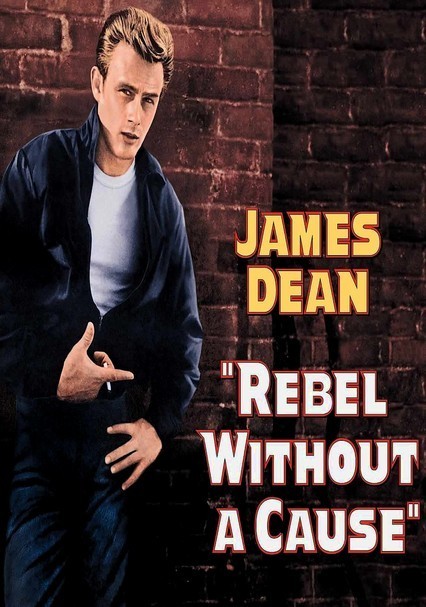
Rebel Without a Cause-1955

Rebel Without a Cause-1955

Director Nicholas Ray

Starring James Dean, Natalie Wood

Top 250 Films #112

Scott’s Review #885

Reviewed April 14, 2019

Grade: A

Rebel Without a Cause (1955) is usually most associated with being the best-remembered film of star James Dean’s short-lived career. East of Eden (1955) and Giant (1956) are his other notable films in a much too brief time.

With Rebel Without a Cause, Dean and underappreciated director Nicholas Ray crafted a story about teenage angst and rebellion that has brilliant authenticity and was the first of its kind to influence countless other films.

In Los Angeles, three teenagers meet and commiserate at the juvenile section of the police station, revealing their respective crimes. Jim Stark (Dean) has been brought in for drunkenness and meets John “Plato” Crawford (Sal Mineo), who was brought in for killing a litter of puppies, and Judy (Natalie Wood), who was brought in for curfew violation.

All three suffer from problems at home and confide in one another. Their most profound revelations connect them and bond them for life.

To complicate matters, Jim is a new student and must endure challenges associated with this, in addition to his troubled home life. His main rival is Buzz Gunderson (Corey Allen), who challenges Jim to a knife fight and, finally, a deadly “Chickie Run” game.

This leads to Buzz’s death, which infuriates his gang, who mistakenly assume that Jim ratted them off to the cops. This puts a target on Jim’s back as he slowly falls in love with Judy and develops a deep friendship with Sal, who idolizes him.

One key to the success of Rebel Without a Cause is in the casting. Dean, rebellious in real life and the roles he portrayed, chews up each scene he appears in.

The famous scene in which Jim quarrels with his father (Jim Backus) results in a bombastic emotional unraveling and an exclamation of “You’re tearing me apart!” as his blind-sided parents bicker with one another over how best to handle the situation.

Dean is a pivotal reason for the film’s success and landmark status.

Wood infuses her character, Judy, with poignancy and a calm demeanor. Judy is a good kid who behaves wildly out of frustration over her inability to communicate with her deliberately distant father (William Hopper).

Finally, Plato (Mineo), who is so sensitive that he threatens to break apart at the seams, has taken to killing puppies as a desperate cry for attention from his wealthy, always absent parents.

Wood and Mineo support the film in brilliant form.

Jim and Judy are likable as a pair from opposite sides of the tracks, another influential aspect of the film that became commonplace in oodles of entertainment genres over the years.

Good Girl meets Bad Boy is dangerous, tender, and filled with story possibilities.

It is implied that Plato is in love with Jim, but in 1955, films were meticulous about pushing the envelope much further than an implication when it came to homosexuality. Rumors ran rampant that Dean and director Ray had a torrid love affair off-screen.

Another positive is that the film is told within twenty-four hours, providing excellent pacing and an action-packed emotional punch. The best scenes occur at night, especially the deadly car race, and the fantastic conclusion takes place in the old deserted mansion that the trio of friends claim as their sanctuary.

The tragic final ending is sure to result in the shedding of a tear or two by anyone who watches and is entranced by the decisive finality of the event.

Watching the film in the present day, one must appreciate the enormous influence that Rebel Without a Cause has achieved.

Some classics that succeeded Rebel and stand out on their own include American Graffiti (1973), The Breakfast Club (1985), and even West Side Story (1961), which also starred Natalie Wood. Each is riddled with teenage angst, hormones, and elevated emotions, and all contain a seriousness and a depth all their own.

Rebel Without a Cause (1955) is a film that should be viewed and viewed again for more than the prominent and impressive story it tells.

The film is directed well and speaks to a generation of unruly and angry teenagers, giving them a much-needed voice. It is fraught with emotion and balance for current and future generations of teenagers to learn from.

Oscar Nominations: Best Motion Picture Story, Best Supporting Actor-Sal Mineo, Best Supporting Actress-Natalie Wood

An American in Paris-1951

An American in Paris-1951

Director Vincente Minnelli

Starring Gene Kelly, Leslie Caron

Top 250 Films #113

Scott’s Review #120

251454

Reviewed July 19, 2014

Grade: B+

A classic film directed by Vincente Minnelli, An American in Paris is a musical from 1951 set in marvelous Paris- though, to be fair, the entire movie, save for the opening scenes of Paris, is shot exclusively on a sound stage.

Gene Kelly stars as Jerry Mulligan, a struggling American artist who lives in a quiet neighborhood with his best friend, Adam Cook.

Jerry optimistically sings and tap dances his way through life, befriending neighbors and school kids and spending time in the local cafe until he is finally noticed by wealthy art buyer Milo, played by Nina Foch.

This sets off a quadrangle when Jerry falls for youthful Lise (Leslie Caron), already dating a suave French singer, Georges Guetary.

An American in Paris is a cheerful fantasy film. It is bright and colorful and filled with musical numbers and dancing.

Highlights in this department are “‘S Wonderful” and “I Got Rhythm”.

The brilliance is the incredible eighteen-minute epic finale, which involves Gene Kelly’s ballet on Parisian sets of various artists. It is as innovative as anything in film history.

The film’s drawback is the lack of chemistry between Kelly and Caron, which I notice more with each passing viewing.

There is more chemistry between Kelly and Foch, who is meant to be the odd woman out, and I still find myself rooting for the two of them instead of the intended couple.

I love that none of the four characters in the story are villains, which adds to the film’s merry feel.

The predictable ending is fantastic and romantic.

An American in Paris won the 1951 Best Picture Oscar, upsetting the heavily favored A Streetcar Named Desire.

Oscar Nominations: 6 wins-Best Motion Picture (won), Best Director-Vincente Minnelli, Best Story and Screenplay (won), Best Scoring of a Musical Picture (won), Best Art Direction, Color (won), Best Cinematography, Color (won), Best Costume Design, Color (won), Best Film Editing

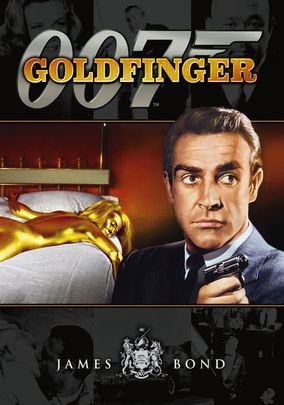
Goldfinger-1964

Goldfinger-1964

Director Guy Hamilton

Starring Sean Connery

Top 250 Films #114

Scott’s Review #337

22041809

Reviewed January 9, 2016

Grade: A

By the time Goldfinger (1964) was released, the third in the James Bond franchise, the films were huge successes, and the budget was not to be spared a dime.

The lavish sets prove this, and Goldfinger is one of the best Bond films. It contains all the necessary elements for success: interesting villains, Bond girls, gadgets, and locales.

By 1964’s Goldfinger, Ian Fleming’s franchise had hit its stride and was achieving runaway success.

The intriguing premise immediately sets the tone- 007 is assigned to investigate a massive gold smuggling scheme. The conspirator is Auric Goldfinger (Gert Frobe), who hatches a plot to contaminate Fort Knox’s United States Bullion Depository.

His goal, naturally, is to control the world.!

The adventure takes Bond from the United Kingdom to Switzerland and finally to the United States in  Kentucky and Florida.

The main Bond girl, a villain, is uniquely named Pussy Galore. The film implies that the character is bisexual and she is tough. James Bond becomes intrigued by and smitten with her.

Goldfinger has the honor of containing one of the greatest Bond villains of all time- the title character of Goldfinger. Big and burly, he is menacing-looking, and actor Frobe is perfectly cast.

We first meet the man cheating at gin rummy poolside at a lavish Miami Beach hotel, while Bond looks on from dozens of floors up, with the assistance of Goldfinger’s moll, Jill Masterson.

In one of the greatest scenes in Bond history, a knocked-out Bond awakens to find Jill dead—and completely covered in gold paint! This scene, which occurs early on, sets up the Bond/Goldfinger rivalry outstandingly.

Goldfinger’s henchman, Oddjob, is also a grand Bond villain. He is Asian, menacing, and wears a trademark steel-rimmed hat, which he uses to kill his victims. Jill’s sister, Tilly, seeks revenge on Goldfinger but finds herself a victim of Oddjob’s infamous bowler hat as she flees for her life.

Following 1962’s From Russia With Love, an exceptional Bond film with nary a flaw, Goldfinger excels slightly because it has all the right ingredients and is firing on all cylinders.

Everything flows with precision.

Unforgettable is the climax of Goldfinger at the legendary Fort Knox itself. Goldfinger’s private army, an atomic device, a countdown to destruction, and Oddjob all make for a satisfying and riveting conclusion to one exceptional Bond entry.

Oscar Nominations: 1 win-Best Sound Effects (won)

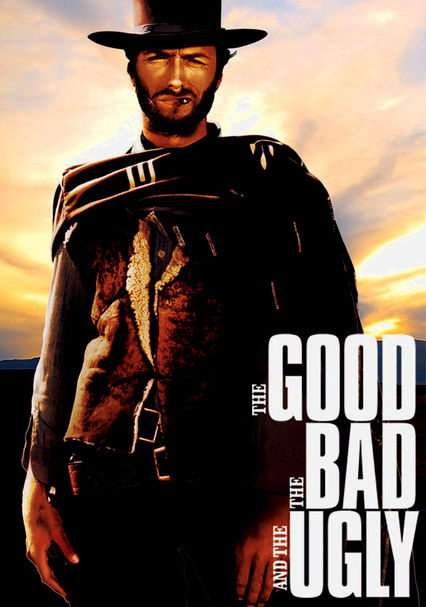
The Good, the Bad, and the Ugly-1966

The Good, the Bad, and the Ugly-1966

Director Sergio Leone

Starring Clint Eastwood, Eli Wallach, Lee Van Cleef

Top 250 Films #115

Scott’s Review #1,320

Reviewed December 9, 2022

Grade: A

Film lovers cannot view The Good, the Bad, and the Ugly (1966) without realizing its enormous influence on Quentin Tarantino, one of the greatest filmmakers of modern times.

Obsessed with the ‘spaghetti western’ a derogatory categorization for cheaply made Italian western films with lousy lip-syncing and an over-the-top stylization, he made them ‘cool’ and interspersed moments and film scores from some of these films.

Director Sergio Leone also created brilliant films like Once Upon a Time in the West (1968) and Once Upon a Time in America (1984) and was famous for his sprawling epics at great length.

The Good, the Bad, and the Ugly is top-notch in nearly every way. The instantly recognizable, hauntingly operatic score is to be revered. It brings dubious and edgy energy that defines the entire film and represents the title characters.

Unfortunately, the film received mixed reviews at best upon initial release but is now considered a masterpiece.

The sprawling landscape represents the American Western territory with lush mountains and desert dryness. The film was shot mainly in Spain, but you’d never know it. It’s a pleasing feeling to possess this knowledge since it makes for more fun and comparisons to the fake world of the frontier.

The creative, sweeping widescreen cinematography is also a significant win. Combined with violent, stylized gunfights, close-ups, and long shots, the film is unique.

Story-wise, during the bloody Civil War, a mysterious stranger, Blondie ‘the Good’ (Clint Eastwood), and a Mexican outlaw, Tuco ‘the Ugly’ (Eli Wallach), form an uneasy partnership. Blondie turns in the bandit for some reward money, then rescues him just as he is being hanged. When Blondie’s shot at the noose goes awry during one escapade, a furious Tuco tries to have him murdered.

The men re-team abruptly, however, to beat out a sadistic criminal named ‘Angel Eyes’ (Lee Van Cleef) or ‘the Ugly’ and the Union army and find $20,000 that a soldier has buried in the desert.

The hook is that each of the three principal characters is looking for loot, specifically a buried cache of Confederate gold. This plot enhances the duels and peril along the way, which is undoubtedly a selling point for the viewer.

The finale and paired ‘noose sequence’ is the highlight.

The Good, the Bad, and the Ugly is purely a ‘guy’s film,’ though this is not to say females who appreciate influential cinema will not get something from it. Even if the plot is a one-trick pony, the other aspects of the film’s quality are worthy of admiration.

In 1966, Clint Eastwood was not the big Hollywood star he would soon become and certainly hadn’t tried his hand in the director’s chair.

The Good, the Bad, and the Ugly is a very early Eastwood film that propelled him into a rebellious action hero he cemented with Dirty Harry (1971).

Studying the characters may be a superfluous approach for a film like this, but Blondie’s nickname, ‘the Good,’ is laughable. He’s a pure antihero who joins forces with ‘the Ugly, ‘ a known criminal. Sure, he spares lives, but he’s not precisely a goody two shoes. That makes the character more appealing in my book.

Spaghetti westerns were derided and scoffed at when they were initially released. Nobody could have predicted that a film like The Good, the Bad, and the Ugly (1966) would be revered and influential.

The great filmmakers who appreciated this film mirrored their own after it.

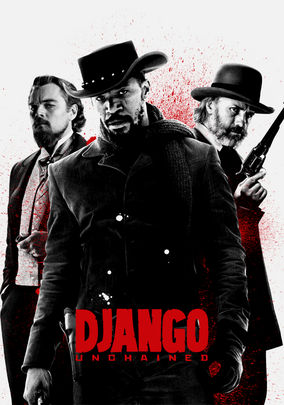
Django Unchained-2012

Django Unchained-2012

Director Quentin Tarantino

Starring Jamie Foxx, Christoph Waltz

Top 250 Films #116

Scott’s Review #699

Reviewed November 26, 2017

Grade: A

Quentin Tarantino, the brilliant filmmaker, can do very little wrong in my opinion, and he releases yet another masterpiece with 2012’s Django Unchained, a western story centering around the delicate subject matter of slavery.

As with several other talented director’s stories, the main focal point here is a revenge-driven tale with plenty of bloody scenes and stylistic ferociousness, making Django Unchained yet another masterpiece in the Tarantino collection.

Certainly not for the faint of heart, the film will please fans of film creativity and artistic achievement.

As with many Tarantino films a stellar cast is used and each actor cast to perfection- it seems almost every actor in Hollywood is dying to appear in the director’s films- this time Jamie Foxx, Christoph Waltz, Kerry Washington, Leonardo DiCaprio, and Samuel L. Jackson are the lucky ones, all featured in prominent roles- not surprisingly the acting is top-notch.

An interesting fact to note is that whoever appears in a Tarantino film seems to be having the time of their lives- what creative freedom and interesting material to experience.

A comparable director to Tarantino- as far as recruiting fine actors- is Robert Altman- also tremendously popular with talent.

The saga begins with clear Western flair as Django Freeman (Foxx) is led through the scorching heat of Texas with a group of other black slaves, presumably, to be sold by their abusive white captors- the time is 1858, and the abolition of slavery has not yet occurred the Civil War is still two years away.

Doctor King Schultz (Waltz), a former dentist and current bounty hunter, is on a mission to find and kill the Brittle brothers and realizes that Django can help him find the men.

To complicate matters, Django has been separated from his wife Broomhilda (Washington) and vows to find her and avenge her abductors.

As circumstances lead Schultz and Django to a vast Tennessee estate, the duo becomes business partners and friends. The race to rescue Broomhilda takes the pair to sunny (and equally hot) Mississippi- the home of vicious Calvin Candie (DiCaprio) and his dreaded “Candyland”.

The crackling heat and the atmospheric nature of Django Unchained combined with the revenge theme make the film an immeasurable success.

An ode to spaghetti westerns of yesteryear, the film incorporates similar music and grit so that the result is a modernized version of those films, with lots more blood and violence.

Slavery is a tough subject matter to tackle, especially when members of the Ku Klux Klan are featured, but Tarantino does so effortlessly, and as Django gains revenge on his tormentors, there is major audience satisfaction to be enjoyed.

The indignities and downright abuse that several black characters suffer can be quite tough to sit through.

The climactic dinner scene in Mississippi is splendid and the best sequence of the film. Schultz and Django dine with Calvin at his spectacular mansion. Calvin’s sinister and loyal house slave (Jackson) suspects a devious plan is about to be hatched and a vicious shoot-out erupts between the parties involved.

The ingenious and long sequence is a cat-and-mouse affair with all of the characters carefully tiptoeing around the others in fear of being revealed or discovered as fakes.

The scene is exceptional in its craft as we watch the characters dine on delectable food and drink, all the while motivations bubble under the surface.

Django Unchained is not for film-goers seeking either a linear story or a mainstream piece of blockbuster movie-making-Tarantino is not a typical Hollywood guy.

The film is exceptionally carved and constructed in a way that challenges the viewer to endure what some of the characters (specifically Django and Broomhilda) are made to go through. This discomfort and horror make the inevitable revenge all the more sweet and satisfying.

Quentin Tarantino has created masterpiece after masterpiece throughout his filmography of work.

Proudly, I can herald 2012’s  Django Unchained as one of the unique director’s very finest and will be sure to be remembered decades and decades in the future as being able to challenge, provoke thought, and satisfy legions of his fans.

Oscar Nominations: 2 wins-Best Picture, Best Supporting Actor-Christoph Waltz (won), Best Original Screenplay (won), Best Sound Editing, Best Cinematography

Carol-2015

Carol-2015

Director Todd Haynes

Starring Cate Blanchett, Rooney Mara

Top 250 Films #117

Scott’s Review #308

80058700

Reviewed December 27, 2015

Grade: A

My comparison would be that this film is the female version of Brokeback Mountain (2005).

Carol is a story of hidden romance and secret lives in the early 1950s when it was difficult to lead an alternative lifestyle openly (or even in hiding!).

The film is a marvel in its honest storytelling, exquisite class, and gracefulness with excellent cinematography and a nice, heartwarming tale.

Carol is directed by Todd Haynes, a director known for films about doomed romances faced with societal challenges. Carol is a wonderful piece of work.

The film contains two equal female lead roles- Carol Aird (Cate Blanchett) is a gorgeous, sophisticated socialite.  She exudes confidence and style in everything that she does.

Always perfectly dressed, well made up, manicured fingernails, her mannerisms relay confidence, and control. She is married to a wealthy businessman, Harge (Kyle Chandler), who is madly in love with her, yet they are divorcing because of her “problem”.

The fact that Carol is a lesbian is known to Harge and they share somewhat of an understanding, and a five-year-old daughter. The divorce they are going through is difficult.

Therese Belevit (Rooney Mara), is the polar opposite of Carol.  Young, and naïve, she is a part-time shopgirl, fascinated by photography. She dates men and goes to parties, living out a typical young girl’s life.

When Carol and Therese meet at the store where Therese works, they are immediately enamored with one another and a friendship develops. Both seem caught off guard and the chemistry between the two actresses sizzles.

The focus is the budding romance between Carol and Therese, and the societal differences that they face, not to mention the age difference between the two women. I found the chemistry quite evident thanks to Blanchett and Mara.

Worlds apart, the two women somehow find their way to each other and form a bond. Their relationship is tender, gentle, and carefully laid out for the audience. They are neither animalistic nor barbaric in a sexual way, but rather sweet.

When Therese takes a spontaneous car trip from New York to Chicago, leaving her boyfriend, Richard, conflict develops. He wants them to run off to Paris but Therese wants to be with Carol. He breaks up with Therese and accuses her of having a crush on Carol.

Therese and Carol’s romance is finally consummated in a mid-western hotel. It is New Year’s Eve and Todd Haynes chooses to shoot this scene in a romantic, spontaneous way. They are celebrating the holiday, but both are blue and vulnerable. It makes perfect sense that they would turn to one another.

The film delves into many different emotions that Carol and Therese face- love, glee, anger, rage, confusion, rejection, and loneliness. These adjectives and the tone of the film are why it succeeds.

From an acting perspective, both Blanchett and Mara are great, but I am more partial to Blanchett’s performance. She embodies this character. From when she orders a martini dry with one olive, to how she brazenly approaches Therese, she is a woman in control. But faced with family issues she becomes vulnerable and we see her as human.

Besides the interesting story of a love faced with many challenges, the look of the film is grand. The sets, hairstyles, clothes, and makeup are graceful and rich. To summarize- everyone looks great and it portrays a perfect picture of the 1950s.

A progressive Hollywood tale, Carol showcases glamour, and great acting, and sends a powerful message of acceptance and struggle during a difficult time to be “different”, to fulfill one’s life.

Oscar Nominations: Best Actress-Cate Blanchett, Best Supporting Actress-Rooney Mara, Best Adapted Screenplay, Best Original Score, Best Cinematography, Best Costume Design

Independent Spirit Award Nominations: 1 win-Best Feature, Best Director-Todd Haynes, Best Female Lead-Cate Blanchett, Rooney Mara, Best Screenplay, Best Cinematography (won)

Call Me By Your Name-2017

Call Me By Your Name-2017

Director Luca Guadagnino

Starring Timothée Chalamet, Armie Hammer

Top 250 Films #118

Scott’s Review #708

Reviewed December 27, 2017

Grade: A

Call Me by Your Name (2017) is a gorgeous film. It is simply beautiful in storytelling, cinematography, and acting.

A humanistic film that crafts a lovely tale of young love, friendship, and emotions, which is breathtaking to experience.

In fact, in the LGBT category, I would venture to proclaim that this film is groundbreaking. It leaves behind any tried-and-true homophobic elements and instead tells a good story that is fresh, sincere, and simply flawless.

The period is the summer of 1983, and the landscape is the beautiful Italian Riviera.

Seventeen-year-old Italian-American Elio (Timothée Chalamet) dreams of spending the summer away, living with his affluent parents in a small village. His world is rich with culture and learning—his father (Michael Stuhlbarg) is a professor, and his mother is a translator.

A brilliant student, Elio wiles away the days reading, playing music, and flirting with his girlfriend, Marzia.

When a handsome twenty-four-year-old American student, Oliver (Armie Hammer), arrives for a six-week stay to assist Elio’s father on a project, desire and first love blossom between the young men as they struggle with their burgeoning relationship.

Directed by Luca Guadagnino, who has also directed the lovely 2009 film, I Am Love, is a man known for stories of desire in small Italian villages.

Call Me By Your Name is the third in a trilogy, I Am Love and 2015’s A Bigger Splash being the others.

The setting is crucial to the story, as both the summer heat and the world of the intellectual scholars are nestled into a grand shell of culture. The philosophical nature of the story is palpable—the film exudes intelligence and sophistication.

By 2017, the LGBT genre had become populated with films in the romantic, drama, and comedy sub-genres, but many use the standard homophobic slant to elicit drama and conflict.

Not to diminish the importance of homophobic discussions to teach viewers, Call Me By Your Name stands alone in that homophobia is not an issue in this story.

Given the time of 1983, this may be surprising—at the very cusp of the AIDS epidemic, this topic is also not discussed; rather, the subject matter is simply a love story between two males and the coming-of-age story that their love expresses.

The film is quite moving; Elio and Oliver are characters filled with texture and raw emotion. Oliver is confident, charismatic, and a great catch for any lucky young lady in the village.

Hammer fills the role with poise and humanity.

Chalamet, a beautiful young man, gives the complex role his all, as so much can be conveyed not by dialogue, but by expressions on the actor’s face.

As Oliver slow dances with a local girl, the wounded look that Chalamet reveals, his eyes welling up with tears, is heartbreaking. Seventeen is a tough age for most young men, but when coming to terms with one’s sexuality, it can be excruciating.

The final scene is poignant, as it features a five-minute-long sequence of gazing into Chalamet’s eyes, during which many emotions are expressed.

Enough credit cannot be given to Stuhlbarg as Elio’s father, as he gave one of the best speeches ever performed in film history. The actor gives a subtle and poignant performance as the sympathetic and knowing father.

His speech, marked by understanding and warmth, is riveting and inspirational—to be cherished. Mr. Perlman is a role model to fathers everywhere and the ideal parent for any gay son.

One scene that could stir controversy is the sure-to-be-controversial “peach scene”. Involving an innocent peach used during a sex act, the scene is erotic and borders on “icky”, but is also vital to foster the connection between Oliver and Elio.

Another potential risk to the film is that Oliver is twenty-four, while Elio is seventeen, making Elio underage. However, the film never portrays Oliver as more of an aggressor, and the relationship remains tender and consensual.

Call Me By Your Name (2017) is not just a great LGBT film but a film for the ages.  Beautifully crafted with gorgeous landscapes and nuanced, powerful acting, the sequences are subtle and carefully paced.

The film is simply a treasure.

Oscar Nominations: 1 win-Best Picture, Best Actor-Timothée Chalamet, Best Adapted Screenplay (won), Best Original Song-“Mystery of Love”

Independent Spirit Award Nominations: 2 wins-Best Feature, Best Director-Luca Guadagnino, Best Male Lead-Timothée Chalamet (won), Best Supporting Male-Armie Hammer, Best Cinematography (won), Best Editing