Tag Archives: Richard Jordan

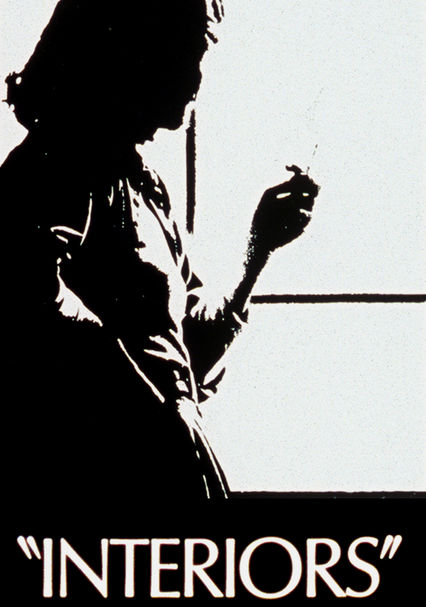
Interiors-1978

Interiors-1978

Director Woody Allen

Starring Diane Keaton, Geraldine Page, Mary Beth Hurt

Scott’s Review #1,392
Reviewed August 24, 2023

Grade: A

Woody Allen films are not everyone’s cup of tea.

Typically, offbeat or even downright wacky comedies with quick-witted dialogue and irritating characters are not everyone’s preferred taste in film.

I’ve always adored the director’s works.

Allen hits a home run with Interiors (1978), his first dramatic film and my favorite. It even rivals classics like Annie Hall (1977) and Manhattan (1979) which most people frequently consider his best.

The famous director turns down the volume and slows the pace with a dark story about mental illness and the ravaging effect it has on a family, the struggling individual, and the other extended members.

Missing from this Woody Allen film are the prevalent one-liners and gimmicks mostly associated with his comedies. The only standard is the inclusion of frequent collaborator Diane Keaton who plays a successful poet, Renata.

The story centers on a middle-aged and upper-class couple’s disintegrating marriage. It forces their three grown daughters (Keaton, Mary Beth Hurt, and Kristin Griffith) to reveal their feelings about themselves and each other. They also have their share of difficulties.

Renata is successful but her husband is a struggling writer with marginal talent. He lusts after Renata’s sister, Flyn (Kristin Griffith), an actress only known for her good looks. Joey (Hurt) is a restless soul unable to decide on a career and jealous of Renata.

Mental illness is only one of their trials and tribulations.

The family resides in Manhattan, Connecticut, and Long Island, most likely the Hamptons so they are wealthy and assumed to be happy, healthy, and thriving.

They are anything but.

None of the daughters are successful at providing ample support to their devastated mother (played by Geraldine Page) who suffers from mental illness and is extremely fragile.

The cast is tiny, with only eight principals, each with a perspective. There are no villains. Only complicated characters with rich texture and substance.

I love the brilliant characterization and development and the many layers most of the characters possess. Each character, especially the father, mother, two of the daughters, and the new wife, Pearl, exceptionally played by Maureen Stapleton, can be heartily examined.

One might assume that the father Arthur played stoically by E.G. Marshall might be unlikable. After all, he requests a ‘separation’ from Eve which the audience knows is a soft-touch way of ultimately asking for a divorce. He then meets a new woman, a different type from his wife, and plans to marry her!

This does not go over well for anyone.

But Arthur is sympathetic and so is Pearl (the new wife). I rooted for the pair even though I felt bad for Eve.

The film culminates in a stunning sequence at the family’s Hampton residence amid Arthur and Pearl’s wedding. The family begrudgingly attends the simple dinner party-style wedding and pretends to be happy.

From a visual perspective, the art direction is flawless. Muted color tones of grey and brown perfectly complement the drab and depressing subject matter.

People have compared Interiors to an Ingmar Bergman film and I completely understand that. The film is dark, cold, and bleak but contains a sophistication and thought provocation mirroring Bergman films like Wild Strawberries (1957) and others.

Woody Allen crafts an astonishingly good screenplay with confidence and precision that only he can do. Interiors (1978) could have easily turned into a soap opera melodrama but remains enthralling and devastating throughout.

Oscar Nominations: Best Director-Woody Allen, Best Actress-Geraldine Page, Best Supporting Actress-Maureen Stapleton, Best Screenplay-Written Directly for the Screen, Best Art Direction
The Friends of Eddie Coyle-1973

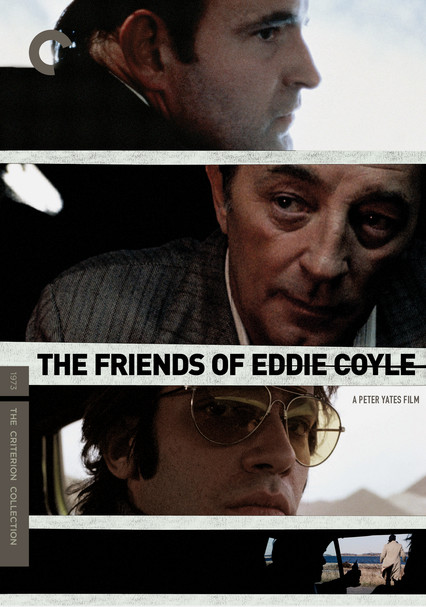
The Friends of Eddie Coyle-1973

Director Peter Yates

Starring Robert Mitchum, Peter Boyle

Scott’s Review #1,151

Reviewed June 11, 2021

Grade: B+

Borrowing heavily from the standard cop thriller films that emerged during the early 1970s but containing a unique cynicism and a point of view all its own, The Friends of Eddie Coyle (1973) is a taut and engaging crime thriller that will please fans of the genre but never bailing on those cinema fans seeking a more intellectual experience.

The Boston landscape is plentiful and a treat for fans of locale shoots and 1970s qualities.

A superior film, despite the many similar films created during the decade, there is a moroseness that encompasses the experience. I felt sorry for the main character, and The Friends of Eddie Coyle lacks a clear good-guy-versus-bad-guy standard. This helps the film.

What I’m trying to say is that those crime-thriller fans who desire a clear hero or standard characterization might be unsatisfied or miss the point, though the bank-robbery scenes alone are worth the price of a ticket.

Some say Robert Mitchum, cast in the title role, gives his finest film performance, but I wasn’t entirely blown away.  The film is an ensemble, and at times, Eddie Coyle feels like a supporting character.

Think Ma Rainey in Ma Rainey’s Black Bottom (2020).

Instead, I ruminated over his brilliant performances in my two favorite films of his, The Night of the Hunter (1955) and Ryan’s Daughter (1970).

His performance is fine, but all the actors bring their A-game.

Aging low-level Boston gunrunner Eddie Coyle (Mitchum) is fearful of the possibility of several years of jail time for participating in a truck hijacking in neighboring New Hampshire. Having a wife and kids dependent on him, and feeling old and desperate, he volunteers to funnel information to Dave Foley (Richard Jordan), an ATF agent.

Eddie buys some guns from another gunrunner, Jackie Brown (Steven Keats), then gives him up to Foley, but the agent isn’t satisfied. Panicked, Eddie decides to give up the gang of bank robbers he’s been supplying, only to find that Foley already knows about them and that the mob believes Eddie snitched.

These events do not bode well for poor Eddie, who now has a mark on his back.

The Friends of Eddie Coyle has a handful of plots happening simultaneously. There is Eddie’s predicament, the saga of the bank robbers and the bank owners they put in peril, and a bartender played by Peter Boyle (of television Everybody Loves Raymond fame), who is also an informant.

The stories intertwine, but sometimes not quite enough, and a conclusion over how the players relate is sometimes unclear.

From the get-go, I was reminded of Dirty Harry (1971), which arguably propelled the cop/crime thriller/crime drama to mainstream audiences.

Dave Grusin receives credit for the music composition and creates a score similar to Dirty Harry, with a funky tempo and time-relevant arrangements. They work and fit the times perfectly.

Unlike Dirty Harry, which is a superb film in many ways, the messaging differs. Whereas Dirty Harry professes a good-versus-bad approach and a conservative pro-gun stance, The Friends of Eddie Coyle doesn’t take the time to school the audience on most cops’ viewpoints.

The bad guys are complex, nuanced characters with worries and fears to wrestle with.

The location sequences are plentiful and lend the film authenticity and a sense of Boston appreciation. The classic Boston Garden is featured as two characters attend a Boston Bruins hockey game. The Charles River, downtown, and surrounding areas, such as Quincy, are featured.

Director Peter Yates certainly creates a blue-collar, Irish-represented community.

Lovers of classic 1970s American automobiles will be in heaven. I spotted a Ford Galaxy, a Chevy Impala, and similar full-sized cars. One character drives a green muscle car.

I mean, there are tons and tons of car sequences in this film.

With the seedy Boston underworld, a terrific performance by Robert Mitchum, and enough guns, car chases, and bank robberies to satisfy the action audience, The Friends of Eddie Coyle (1973) is a win.

The film didn’t stick with me as much as I would have liked, but it’s a striking entry in the crime thriller genre.