Tag Archives: Peter Yates

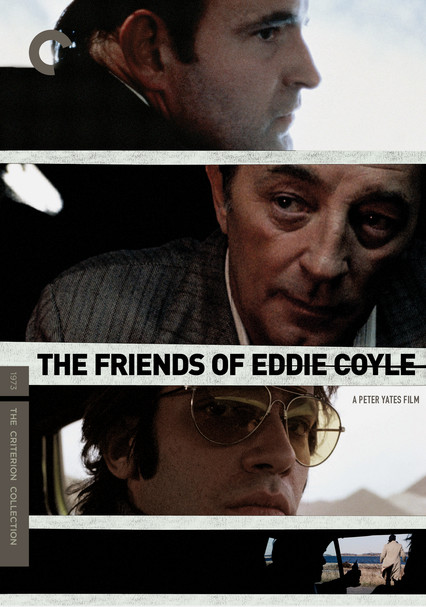
The Friends of Eddie Coyle-1973

The Friends of Eddie Coyle-1973

Director Peter Yates

Starring Robert Mitchum, Peter Boyle

Scott’s Review #1,151
Reviewed June 11, 2021

Grade: B+

Borrowing heavily from the standard cop thriller films that emerged during the early 1970s but containing a unique cynicism and a point of view all its own, The Friends of Eddie Coyle (1973) is a taut and engaging crime thriller that will please fans of the genre but never bailing on those cinema fans seeking a more intellectual experience.

The Boston landscape is plentiful and a treat for fans of locale shoots and 1970s qualities.

A superior film based against the many similar films to be created during the decade, there is a moroseness that encompasses the experience. I felt sorry for the main character and The Friends of Eddie Coyle lacks a clear good guy versus bad guy standard. This helps the film.

What I’m trying to say is that those crime thriller fans desiring a clear hero or standard characterization might be unsatisfied or miss the point, though the bank robbery scenes alone are worth the price of a ticket.

Some say Robert Mitchum, cast in the title role gives his finest film performance but I wasn’t entirely blown away.  The film is an ensemble and at times Eddie Coyle feels like a supporting character.

Think Ma Rainey in Ma Rainey’s Black Bottom (2020).

Instead, I ruminated over his brilliant performances in my two favorite films of his, The Night of the Hunter (1955) and Ryan’s Daughter (1970).

His performance is fine but all the actors bring their A-game.

Aging low-level Boston gunrunner Eddie Coyle (Mitchum) is fearful of the possibility of several years of jail time for participating in a truck hijacking in neighboring New Hampshire. Having a wife and kids dependent on him, and feeling old and desperate, he volunteers to funnel information to Dave Foley (Richard Jordan), an ATF agent.

Eddie buys some guns from another gunrunner, Jackie Brown (Steven Keats), then gives him up to Foley, but the agent isn’t satisfied. Panicked, Eddie decides to also give up the gang of bank robbers he’s been supplying, only to find that Foley already knows about them, and the mob believes Eddie snitched.

These events do not bode well for poor Eddie who now has a mark on his back.

The Friends of Eddie Coyle has a handful of plots happening simultaneously. There is Eddie’s predicament, the saga of the bank robbers and the bank owners they put in peril, and a bartender played by Peter Boyle (of television Everybody Loves Raymond fame), who is also an informant.

The stories intertwine but sometimes not quite enough and a conclusion over how the players relate is sometimes unclear.

From the get-go, I was reminded of Dirty Harry (1971) which arguably propelled the cop/crime thriller/crime drama to mainstream audiences.

Dave Grusin gets credit for the music composition and creates a similar score to Dirt Harry with funky tempo, and time-relevant arrangements. They work and fit the times perfectly.

Differing from Dirty Harry, which is a superb film in many ways, is the messaging. Whereas, Dirty Harry professes a good vs. bad approach and a conservative pro-gun stance, The Friends of Eddie Coyle doesn’t partake in schooling the audience on the viewpoints of most cops.

The bad guys are complex and nuanced characters with worries and fears to wrestle with themselves.

The location sequences are plentiful and give the film authenticity and Boston appreciation. The classic Boston Garden is featured as two characters attend a Boston Bruins hockey game. The Charles River, downtown, and surrounding areas like Quincy are featured. Director, Peter Yates certainly creates a blue-collar, Irish-represented community.

Lovers of classic 1970s American automobiles will be in heaven. I spotted a Ford Galaxy, a Chevy Impala, and similar full-sized cars. One character drives a green muscle car. I mean, there are tons and tons of car sequences in this film.

With the seedy Boston underworld, a terrific performance by Robert Mitchum, and enough guns, car chases, and bank robberies to satisfy the action audience, The Friends of Eddie Coyle (1973) is a win.

The film didn’t stick with me as much as I would have liked but it’s a striking entry in the crime thriller genre.
Bullitt-1968

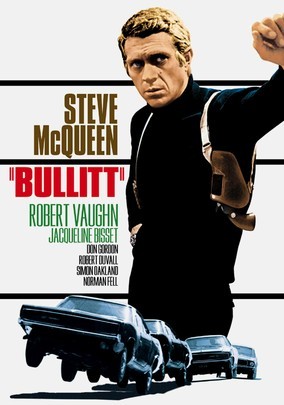
Bullitt-1968

Director Peter Yates

Starring Steve McQueen, Robert Vaughn, Jacqueline Bisset

Scott’s Review #660

Reviewed July 7, 2017

Grade: B+

Bullitt (1968) is one of the ultimate “guy movies”, hardly a stretch considering it stars the “regular guy” hero of the time, Steve McQueen.

With his macho, tough-guy persona and his cool, confident swagger, he was a marquee hero during the late 1960s and into the 1970s.

While the film is rife with machismo stereotypes and is not precisely a women ‘s-lib film, it is also a good old-fashioned action thriller with plenty of chase and fight scenes to make most guys (and some girls) happy.

The story is not particularly thought-provoking, but the film works as escapist fare and is an example of good late-1960s cinema.

Set in San Francisco, Lieutenant Frank Bullitt (Steve McQueen) is assigned to watch a Chicago gangster, Johnny Ross, over a long weekend, before the criminal is set to testify against his brother on Monday morning.

Robert Vaughn plays ambitious politician, Walter Chalmers, who is determined to see the case go off without a hitch and see convictions in the organized crime syndicate.

Predictably, the weekend does not go as planned, and hitmen attack Ross. This, in turn,  sets off a cat-and-mouse game of deception and intrigue. As expected, the action is virtually non-stop with many action sequences lighting up the screen.

The plot of Bullitt does not matter, and one does not need to completely understand what is going on to enjoy the film for what it is. The intent of a movie like Bullitt is not good storytelling, but rather good action.

This is not meant as a put-down, but rather good, honest critiquing. One can sit back, relax, and enjoy the testosterone-laden affair.

Bullitt contains some riveting scenes that raise it above an average, middling action flick. The muscle car chase involving a then-state-of-the-art, flashy Ford Mustang and a Dodge Charger is fantastic and one of the film’s high points.

The quick, edgy camera angles as the cars zip down the windy, narrow San Francisco roads build compelling tension.

Will one of the cars careen off the side of the road or blow up? Since one of the cars holds Frank Bullitt and the other car is the bad guy, it is not tough to guess how the sequence will end.

But it’s good fun all the same, and well filmed.

The other spectacular sequence is the finale: as Frank and company overtake a busy San Francisco airport in pursuit of a baddie about to board a transcontinental flight, the chase leads them throughout the airport, onto a taxiing plane, and finally onto the runway as a plane is about to take off.

It is action at its finest and a treat for the viewer, bringing us back to airport days, pre-9/11, when airports were just different—the luxurious flight crew, the innocence, and the glamour- all a distant memory.

The scene is such that it shows all of the airport elements- the people, the employees, the airport, and the planes, giving it a slice-of-life feel, circa late 1960s airport days.

Appealing is the period in which the film is made. 1968 was an excellent year for cinema; Bullitt capitalized on the newly liberal use of blood in films, making it an influential action film.

Dozens of imitators (some admittedly with superior writing) followed, including classics Dirty Harry and The French Connection (both 1971). These contain the exact basic blueprint that Bullitt has.

A negative of Bullitt is the trite way women are portrayed. Female characters are written as dutiful nurses, gasping in fear and helplessly running away when an assailant runs rampant in the hospital, praying for a man to save the day.

Or, they are written, in the case of Bullitt’s girlfriend, as a gorgeous yet insignificant character, given a laughable scene in which she questions whether or not she knows Frank after witnessing the violence in his job- hello?

He is in the San Francisco Police Department after all.

Bullitt is a meat-and-potatoes kind of filmmaking. An early entry into what would become the raw 1970s and the slick formulaic 1980s action genre, the film deserves credit for being at the front of the pack in style and influence.

The story and character development are secondary to other aspects of the film, and Bullitt (1968) is just OK as escapism fare.

Oscar Nominations: 1 win-Best Sound, Best Film Editing (won)