Tag Archives: DeVeren Bookwalter

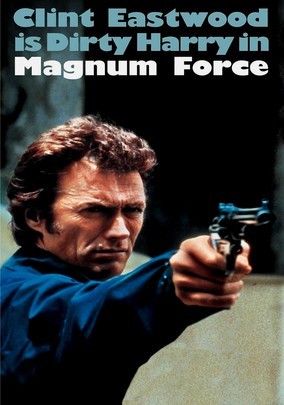
Magnum Force-1973

Magnum Force-1973

Director Ted Post

Starring Clint Eastwood, Hal Holbrook

Top 250 Films #148

Scott’s Review #336
60021588

Reviewed January 9, 2016

Grade: A

The follow-up to the original action thriller to end all action thrillers, Dirty Harry, 1973’s Magnum Force, is as good as the original in my opinion, but flies under the radar compared to the acclaimed Harry.

Both films are similar in style and grit, but Magnum Force holds sentimental memories for me, as I remember watching the film countless times on rainy Saturday afternoons as a kid.

The similarities abound between the two films, as the screenwriter and the score are by the same writer and composer, respectively.

Admittedly, Magnum Force is more conventional and less dirty than its predecessor.

Playing not just the same role of Harry Callahan, the grizzled, hard-nosed Inspector from Dirty Harry, but also Clint Eastwood plays him in quite the same manner.

Not one to blow anyone away with his dazzling acting talent, Eastwood is smart to keep to the status quo. The character is tough and no-nonsense, but has a take-prisoner vulnerability we love and admire.

In this chapter, a syndicate of vigilante cops is taking matters into their own hands by assassinating known criminals who have been let off the hook either by connections or some other form of loophole.

The pattern is for uniformed patrol officers to pull over a criminal for a mundane reason, only to shoot and kill them on the side of the road at point-blank range. They deserve it, but are the cops justified in their actions?

The appeal and mystery of the film is that the police officers wear dark helmets that hide their identities from the audience, adding a level of intrigue.

The film offers up a moral question: do the criminals get what they deserve, and do the police officers have the right to justify their actions?

Especially relevant is the final thirty minutes of the film, as Harry and the central “villain”, Lieutenant Briggs (Holbrook), have a standoff and discuss the topic.

Magnum Force is a shoot-’em-up action flick, so this debate is skirted over largely in favor of car chases and fight scenes. But the point can be thought about.

The best sequence of the film is the finale, as Callahan is lured to an abandoned garage and chased by three remaining cops. The big reveal is that Briggs is running the show, and as he drives around in his early 1970’s Ford LTD, soon to become battered and weathered, it is a great scene, especially for those who enjoy car chases.

Magnum Force (1973) is a no-frills “guy” film, but one done very well and with an interesting, semi-controversial premise.

The film is the 1970s action genre at its very best.

Surprisingly, and to the film’s credit, one can discuss the film after watching it instead of it being a generic, forgettable flick.

The Enforcer-1976

The Enforcer-1976

Director James Fargo

Starring Clint Eastwood, Tyne Daly, John Mitchum

Scott’s Review #1,330

Reviewed January 2, 2023

Grade: B+

The Dirty Harry film series is pure, gooey 1970s machismo entertainment.

Featuring a vigilante-type police detective who rids the world of the bad guys is pleasure personified, if not all that realistic. In these films, there is only good versus evil, and social issues, if explored, are not the most relevant part of the film, but rather provide more context for why the events occur.

Nonetheless, the films are top-notch in action, with quality gunfights and violence, creating a powerful crime thriller franchise that still holds up well.

They are much better than the similar yet uninspired and poorly acted Death Wish films featuring Charles Bronson.

The Enforcer (1976) is a third of five films from 1971 until 1988, following the 1971 masterpiece Dirty Harry and the nearly as good Magnum Force in 1973.

This one offers a slightly progressive, feminist approach that continues into 1983’s Sudden Impact and adds much-needed humor, creating a lighter touch.

Feminism is the inclusion of a female cop due to a new affirmative action initiative, who goes toe to toe with the masculinity and conservatism of our main character.

Officer “Dirty Harry” Callahan (Clint Eastwood) is reassigned from homicide to personnel after his latest use of excessive force exhausts his outranking superiors. Demoralized, he angrily assumes his duties while a new case disrupts the San Francisco Bay Area.

A new terrorist group, calling itself the People’s Revolutionary Strike Force, organizes a series of crimes in San Francisco, hoping to enrich themselves. Led by Bobby Maxwell (DeVeren Bookwalter), they wreak havoc and create fear.

When they kidnap the mayor (John Crawford) and steal rockets and rifles for their next attack, Harry and his new female partner, Inspector Kate Moore (Tyne Daly), must stop the terrorists.

To measure up to 1971’s Dirty Harry is a nearly impossible feat, but The Enforcer continues the rhythm with largely the same basic script. A main part of the fun is watching the grizzled Callahan feud with his superiors and being reduced to working with a female cop.

Naturally, he and Moore eventually become buddies, and I like the lack of sexual chemistry between them. She’s not interested in his affection, and neither is he, so their relationship is focused on serving and protecting the public.

Daly is terrific as Moore, which led to her career-defining role in the television series Cagney and Lacey. Rather than playing her as a bitch she is warm and determined to immerse herself in a man’s world.

She’s a great character, but unfortunately, she is not explored as much as she could have been.

The filmmakers also keep San Francisco’s setting intact, which is a wise move and a treat for moviegoers who love a good exterior sequence or two.

A fabulous final sequence finds the film’s events heading to a Giants game at the historic Candlestick Park, and finally a showdown at Alcatraz Island. These trimmings are essential for fans anticipating the juicy, pulsating locales of the populous city.

No, Eastwood is not the greatest actor in the film, but he is the best at playing Callahan. He carries the film seamlessly and will make conservatives smirk as he endures the irritations of liberal-minded decision-makers.

A weak explanation of the real motives of the terrorist group is unimportant. It’s the violence, the thrills, the chases, and Eastwood and Daly that make this movie pure fun.

The Enforcer (1976) doesn’t challenge or add to the creativity of cinema but offers a shoot-em-up experience with a confident, charismatic protagonist.

Forever immersed in the good tidings of 1970s cinema is enough to continue the successful string of Dirty Harry films.

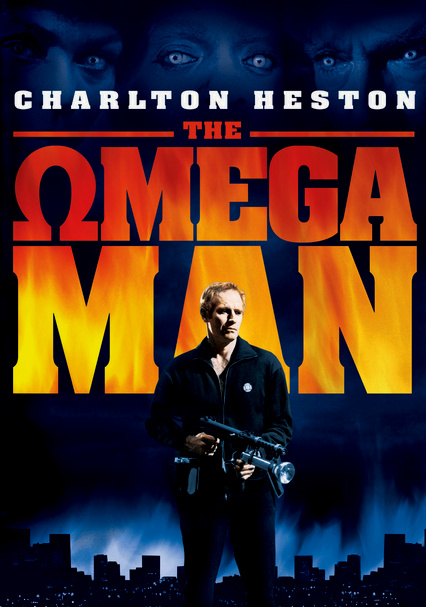
The Omega Man-1971

The Omega Man-1971

Director Boris Sagal

Starring Charlton Heston, Rosalind Cash

Scott’s Review #1,168

Reviewed August 2, 2021

Grade: B

Watching in 2021, a film about a global pandemic, made in 1971, conjures many interesting nuances and comparisons, and brings fresh relevance to the story.

Throw in the vaccinated versus non-vaccinated debate, and the similarities are downright eerie.

Given its relevance, I wish I had found The Omega Man (1971) more engaging. It’s not a bad watch; it delivers a very progressive interracial romance and incredible exterior scenes of downtown Los Angeles, but the story doesn’t live up to the potential the premise suggests.

I kept thinking of Charlton Heston, who stars in two of his other science fiction roles- Planet of the Apes (1968) and Soylent Green (1973).

Planet is, of course, a classic.

In the first scene, Robert Neville (Heston) wanders the streets of Los Angeles. We quickly surmise that he is the last man left on earth. Armed with an experimental vaccine for the disease that’s turned everyone into light-averse zombies, he fights a biological war, roaming the empty streets by day and fighting off the mutated creatures at night.

The premise immediately reminded me of a famous Twilight Zone episode.

On paper, the storyline sounds fascinating, with many possible directions and nuances to explore. Sadly, the direction Sagal chooses feels lackluster and dull.

Neville hunts and kills as many members of “the Family”, a cult of plague victims who were turned into nocturnal albino mutants, as he can. The Family, in turn, seeks to destroy all technology and kill Neville, who has become a symbol of the science they blame for humanity’s downfall.

They try to kill each other, but “the Family’s” motivations and reasoning make little sense. If they destroy technology, what will they do? And why not just get the vaccination? These bits may have been explained, but I didn’t take notice.

The parallels between the film and the Covid-19 pandemic of 2020-2021 and perhaps onward are uncanny. Maybe the unvaccinated of today will turn into creepy-looking creatures with pale, glowing eyes? One can only hope.

There is also a hokey idea that Neville believes he can extend his immunity to others by creating a serum from his blood.

I didn’t feel very engaged by the story, but I was very interested in the romance between Neville and Lisa, played by Rosalind Cash. Lisa is a black woman who arrives on the scene with her infected and dying brother.

In 1971, a mainstream interracial romance was a huge win for diversity and inclusion, though the film stops short of showing the pair consummating their relationship. This is quite conspicuous. There is also not a whole lot of chemistry between Heston and Cash, but I was rooting for them anyway.

It is considered one of the first interracial kisses in cinematic history.

Suffice it to say the conclusion isn’t very satisfying, but I’ll leave it right there to avoid spoilers.

The science fiction genre is a tough one to tackle.

The bar is set pretty high with 2001: A Space Odyssey (1968), the greatest science fiction film ever made. Too many times, the story is hokey or not imaginative enough, and that’s what makes The Omega Man lose some points.

Parts are inspiring, and parts are goofy, but the progressive slant makes The Omega Man (1971) an above-par cinema experience. The unexpected parallels to a global situation some fifty years later are remarkable in themselves.