Category Archives: Lee Marvin

Gorky Park-1983

Gorky Park-1983

Director Michael Apted

Starring William Hurt, Lee Marvin, Joanna Pacula

Scott’s Review #1,522

Reviewed March 8, 2026

Grade: B+

Gorky Park (1983) is an aptly named thriller set in Moscow, Russia, involving a mysterious triple murder of three young adults while ice skating at the titled central park. In addition to being murdered, their faces have been skinned and their fingerprints removed.

Russian detective Arkady Renko (William Hurt) uncovers a network of deceit and intrigue when he investigates the murders.

As he tries to make progress on the case, it becomes apparent that the KGB doesn’t want the homicide to be solved, and Renko needs to know why. He eventually meets an American businessman, Jack Osborne (Lee Marvin), who offers some clues, but Renko soon realizes that Osborne may be involved in the plot.

He also meets and falls in love with a mysterious young woman, Irina Asanova (Joanna Pacula), who owned the ice skates found on one of the victims.

The film succeeds in outlining a compelling story that doesn’t lag and in providing a cold, wintry atmosphere, just what one would expect from the drab Russian environment. The audience knows deadly shananigans have occurred, and the film is fun to watch as it tries to connect the dots.

Even though the action is palpable, the ensuing mystery can feel overly complicated at times and hard to follow, leading to an overwhelming feeling.

Accepting Hurt, an American actor, as a Russian police investigator takes some time. For the first thirty minutes, I thought he was an American character.  He sometimes shows hints of an English accent and no Russian at all.

Once I accepted this, Hurt does a very good job at leading the film, which is a tough ask given the complexities of the story. He is handsome and a good guy wanting to do the right thing, so he’s easy to root for.

The film is adapted from the 1981 novel written by Martin Cruz Smith.

While most of the film is set in Moscow, the action later shifts to Stockholm, Sweden, a city I adore. Due to the Cold War conflicts between the Soviet Union and the United States, the film was obviously not shot in Moscow.

Finland and Sweden were the chosen filming locations.

As hard as I tried to follow the main plot, my mind occasionally wandered because there are KGB elements, Jack Osborne, Irina, and an American detective, William Kurwill, in the mix, as well as various colleagues and connections to Renko.

Any or all of these characters or organizations could be involved in the murders, and minor red herrings like the creepy Professor who recreates the victim’s heads and Irina, who comes off as a cold and unfeeling, emerge as the story goes along.

Despite the story’s complexities, Gorky Park is filmed very well and rises above the ranks of mediocrity it could have fallen into, since countless other political and crime thrillers have used the tired Russia/United States rivalry.

The elements are the best part because numerous snowy and bleak sequences enhance the overall story and atmosphere. A scene in woodsy Sweden is wonderfully cold and white, with the woods and a shack coming into play.

The romantic storyline between Renko and Irina is more plot-driven than anything fresh. It’s predictable from the moment the characters meet as they delve into a strong dislike that becomes a love formula.

While there are some cliches to endure, like menacing ‘type’ characters and the overuse of the word ‘comrade’, the film surprisingly feels crisp, and the big reveal and the hows and whys of a sable fur smuggling organization, though years later, feel dated, are interesting.

I’m not sure I need to see Gorky Park (1983) again, but considering it’s a political/crime thriller amid hundreds of similar films, it stands a bit above the rest.
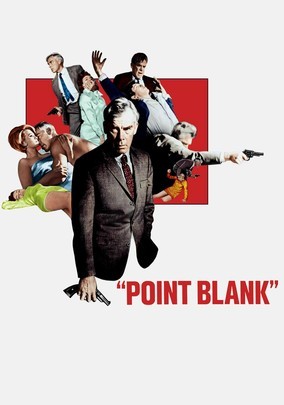
Point Blank-1967

Point Blank-1967

Director John Boorman

Starring Lee Marvin, Angie Dickinson

Scott’s Review #263

70033963

Reviewed August 8, 2015

Grade: B+

Directed by John Boorman, (later made famous for the masterpiece Deliverance in 1972), and based on the novel The Hunter, by Donald E. Westlake, Point Blank (1967) is a tense crime drama starring Lee Marvin as a man seeking revenge on those who have wronged him.

A criminal himself and involved in the mob world of deals and drugs, he is double-crossed by his partner, who takes off with his wife.

A relatively obscure film, Point Blank features obvious influences from the classics it preceded (The Getaway, 1972; Chinatown, 1974; The French Connection, 1971; and Dirty Harry, 1971) and contains some dynamic camera work and art direction.

In its day, it must have been quite a groundbreaking film.

The film begins muddled a confusing, catching the viewer off guard. We know nothing about any of the characters, who are suddenly introduced via flashbacks, interlaced with present and future scenes, so that chaos and tension fill the story immediately.

We know that someone has stabbed someone in the back, but we do not understand why or who the players are.

The film is set partly on deserted Alcatraz Island (the meeting point for a money drop, which we later learn), then moves to Los Angeles. Early on, we realize that Marvin’s character (Walker) has been tricked, shot, and left for dead by his partner Mal (John Vernon), who takes off with Walker’s share of cash…and his troubled wife Lynne.

Hell-bent on seeking revenge (and his money) on Mal and his wife (Lynne), he attempts to track the duo down using any means necessary, leading to the introduction of pivotal and mysterious characters such as Lynne’s sister Chris (played by Angie Dickinson), and Crime Organization leaders Carter and Brewster (played by Lloyd Bochner and Carroll O’Connor, respectively).

With little blood or overt violence, the film instead uses tense action scenes and a great style, and is told in a non-linear way.

One favorite scene involves Walker taking a new car for a test drive and interrogating the salesman for information. As he terrorizes the salesman, he repeatedly slams the vehicle into a pole using the car’s reverse and drive gears, increasing in intensity with each attempt by the salesman to avoid answering Walker’s questions.

Two other scenes that stand out and deserve mention are as follows: when a naked villain is nonchalantly tossed from a penthouse apartment to his death on the street, and subsequently becomes wedged under a passing car, the scene is as startling as it is well shot, especially considering the year was 1967.

In another scene, Lynne is at the beauty salon having her makeup and hair done by a stylist. Her face is captured in the mirror, and the camera shows a dozen or so images of the mirror layered on top of one another.

This looks great, inventive, and is a good example of some superlative camera shots that occur throughout the film.

A few interesting tidbits that I pondered following the film. Was the elevator scene containing Angie Dickinson (almost meaningless to Point Blank) the inspiration for the famous elevator scene from the 1980s Dressed to Kill?

Only Dressed to Kill’s director, Brian De Palma, would know the answer to that question.

How interesting to see Carroll O’Connor (later universally famous for portraying TV’s “Archie Bunker”) as a crime lord. Even though Point Blank was made before All in the Family premiered, it was tough to find him believable in this role.

Finally, I loved the scenes set high atop Los Angeles, in a gorgeous high-rise apartment- the sophisticated living room furniture arrangement and colors are great visual treats.

Taut, intense, and engaging, though admittedly a plot not always made crystal clear nor easy to follow, the film came along at a time when edgier, more experimental films were beginning to be released, which makes Point Blank (1967) a groundbreaking and influential film that undoubtedly helped bring about other crime dramas to follow.