Category Archives: Mitchell Ryan

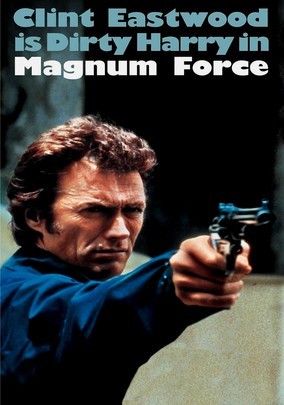
Magnum Force-1973

Magnum Force-1973

Director Ted Post

Starring Clint Eastwood, Hal Holbrook

Top 250 Films #148

Scott’s Review #336
60021588

Reviewed January 9, 2016

Grade: A

The follow-up to the original action thriller to end all action thrillers, Dirty Harry, 1973’s Magnum Force, is as good as the original in my opinion, but flies under the radar compared to the acclaimed Harry.

Both films are similar in style and grit, but Magnum Force holds sentimental memories for me, as I remember watching the film countless times on rainy Saturday afternoons as a kid.

The similarities abound between the two films, as the screenwriter and the score are by the same writer and composer, respectively.

Admittedly, Magnum Force is more conventional and less dirty than its predecessor.

Playing not just the same role of Harry Callahan, the grizzled, hard-nosed Inspector from Dirty Harry, but also Clint Eastwood plays him in quite the same manner.

Not one to blow anyone away with his dazzling acting talent, Eastwood is smart to keep to the status quo. The character is tough and no-nonsense, but has a take-prisoner vulnerability we love and admire.

In this chapter, a syndicate of vigilante cops is taking matters into their own hands by assassinating known criminals who have been let off the hook either by connections or some other form of loophole.

The pattern is for uniformed patrol officers to pull over a criminal for a mundane reason, only to shoot and kill them on the side of the road at point-blank range. They deserve it, but are the cops justified in their actions?

The appeal and mystery of the film is that the police officers wear dark helmets that hide their identities from the audience, adding a level of intrigue.

The film offers up a moral question: do the criminals get what they deserve, and do the police officers have the right to justify their actions?

Especially relevant is the final thirty minutes of the film, as Harry and the central “villain”, Lieutenant Briggs (Holbrook), have a standoff and discuss the topic.

Magnum Force is a shoot-’em-up action flick, so this debate is skirted over largely in favor of car chases and fight scenes. But the point can be thought about.

The best sequence of the film is the finale, as Callahan is lured to an abandoned garage and chased by three remaining cops. The big reveal is that Briggs is running the show, and as he drives around in his early 1970’s Ford LTD, soon to become battered and weathered, it is a great scene, especially for those who enjoy car chases.

Magnum Force (1973) is a no-frills “guy” film, but one done very well and with an interesting, semi-controversial premise.

The film is the 1970s action genre at its very best.

Surprisingly, and to the film’s credit, one can discuss the film after watching it instead of it being a generic, forgettable flick.
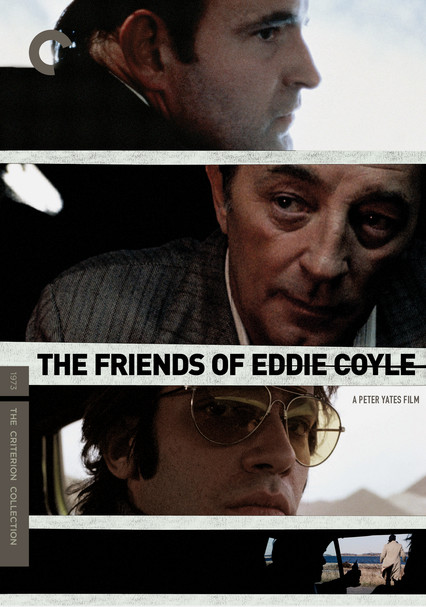
The Friends of Eddie Coyle-1973

The Friends of Eddie Coyle-1973

Director Peter Yates

Starring Robert Mitchum, Peter Boyle

Scott’s Review #1,151

Reviewed June 11, 2021

Grade: B+

Borrowing heavily from the standard cop thriller films that emerged during the early 1970s but containing a unique cynicism and a point of view all its own, The Friends of Eddie Coyle (1973) is a taut and engaging crime thriller that will please fans of the genre but never bailing on those cinema fans seeking a more intellectual experience.

The Boston landscape is plentiful and a treat for fans of locale shoots and 1970s qualities.

A superior film, despite the many similar films created during the decade, there is a moroseness that encompasses the experience. I felt sorry for the main character, and The Friends of Eddie Coyle lacks a clear good-guy-versus-bad-guy standard. This helps the film.

What I’m trying to say is that those crime-thriller fans who desire a clear hero or standard characterization might be unsatisfied or miss the point, though the bank-robbery scenes alone are worth the price of a ticket.

Some say Robert Mitchum, cast in the title role, gives his finest film performance, but I wasn’t entirely blown away.  The film is an ensemble, and at times, Eddie Coyle feels like a supporting character.

Think Ma Rainey in Ma Rainey’s Black Bottom (2020).

Instead, I ruminated over his brilliant performances in my two favorite films of his, The Night of the Hunter (1955) and Ryan’s Daughter (1970).

His performance is fine, but all the actors bring their A-game.

Aging low-level Boston gunrunner Eddie Coyle (Mitchum) is fearful of the possibility of several years of jail time for participating in a truck hijacking in neighboring New Hampshire. Having a wife and kids dependent on him, and feeling old and desperate, he volunteers to funnel information to Dave Foley (Richard Jordan), an ATF agent.

Eddie buys some guns from another gunrunner, Jackie Brown (Steven Keats), then gives him up to Foley, but the agent isn’t satisfied. Panicked, Eddie decides to give up the gang of bank robbers he’s been supplying, only to find that Foley already knows about them and that the mob believes Eddie snitched.

These events do not bode well for poor Eddie, who now has a mark on his back.

The Friends of Eddie Coyle has a handful of plots happening simultaneously. There is Eddie’s predicament, the saga of the bank robbers and the bank owners they put in peril, and a bartender played by Peter Boyle (of television Everybody Loves Raymond fame), who is also an informant.

The stories intertwine, but sometimes not quite enough, and a conclusion over how the players relate is sometimes unclear.

From the get-go, I was reminded of Dirty Harry (1971), which arguably propelled the cop/crime thriller/crime drama to mainstream audiences.

Dave Grusin receives credit for the music composition and creates a score similar to Dirty Harry, with a funky tempo and time-relevant arrangements. They work and fit the times perfectly.

Unlike Dirty Harry, which is a superb film in many ways, the messaging differs. Whereas Dirty Harry professes a good-versus-bad approach and a conservative pro-gun stance, The Friends of Eddie Coyle doesn’t take the time to school the audience on most cops’ viewpoints.

The bad guys are complex, nuanced characters with worries and fears to wrestle with.

The location sequences are plentiful and lend the film authenticity and a sense of Boston appreciation. The classic Boston Garden is featured as two characters attend a Boston Bruins hockey game. The Charles River, downtown, and surrounding areas, such as Quincy, are featured.

Director Peter Yates certainly creates a blue-collar, Irish-represented community.

Lovers of classic 1970s American automobiles will be in heaven. I spotted a Ford Galaxy, a Chevy Impala, and similar full-sized cars. One character drives a green muscle car.

I mean, there are tons and tons of car sequences in this film.

With the seedy Boston underworld, a terrific performance by Robert Mitchum, and enough guns, car chases, and bank robberies to satisfy the action audience, The Friends of Eddie Coyle (1973) is a win.

The film didn’t stick with me as much as I would have liked, but it’s a striking entry in the crime thriller genre.