Category Archives: Chris Bauer

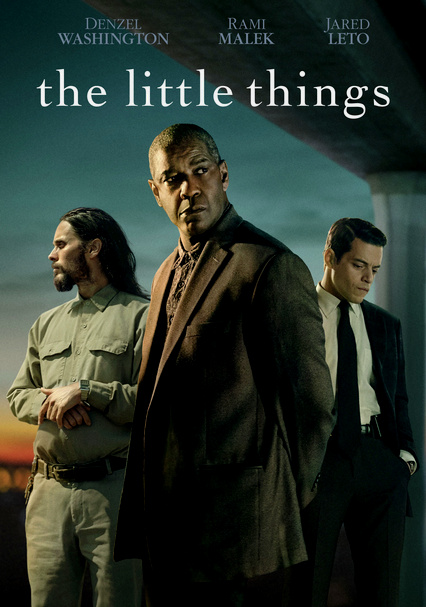
The Little Things-2021

The Little Things-2021

Director John Lee Hancock

Starring Denzel Washington, Rami Malek, Jared Leto

Scott’s Review #1,191
Reviewed November 5, 2021

Grade: B

The serial killer genre in film always fascinates me. Gems like Dirty Harry (1971), The Silence of the Lambs (1991), Seven (1995), and Zodiac (2007) immediately spring to mind as top-of-the-heap works.

John Lee Hancock, who directs The Little Things (2021), thinks so too, as he borrows from those pictures throughout his film.

The film features superior acting and a fantastic mood, complemented by practical musical score elements and absorbing cinematography of Los Angeles and its surrounding areas.

The script must have been compelling enough to attract heavyweights like Washington, Malek, and Jeto to join on board.

Despite these wins, The Little Things is lackluster and ultimately disappoints. I was ready to award it a solid B+ if not for the confusing and unsatisfying conclusion, which reminds me of a weak copy of those mentioned above, Seven.

Deputy Sheriff Joe “Deke” Deacon (Washington) joins forces with Sgt. Jim Baxter (Malek) to search for a serial killer who’s terrorizing Los Angeles. The blueprint is similar to a case that Deacon worked on and ended with a deadly mistake and his resulting heart attack.

As the pair track the suspected culprit, a loner named Albert Sparma (Leto), Baxter becomes aware of Deke’s inner demons and risks going down the same emotionally wrecked path.

A cat-and-mouse game ensues with Sparma continually toying with both Deke and Baxter.

The story is familiar territory and sets the stage for the rest of the film. How many times in film have we seen a detective tortured over a case? Despite Sparma being the only real suspect and presumed serial killer, we never do learn whether or not he did the deeds.

One girl who escaped the killers’ clutches may recognize Sparmas’ boots, but is dismissed after concluding that, since he is in police custody, he must be the killer.

The opening sequence is excellent despite using a direct rip-off of the scene in The Silence of the Lambs where the girl is cruising down an empty desert road at high speed, singing a rock song without a care in the world.

Thankfully, they had her crooning a different song, but the scene mirrors the other. She is pursued by a killer in another car. The scene is a terrific way to start.

The ensemble does good work with the characters they play. Leto gets the showiest role while Washington plays yet another police detective, a role he now can probably play in his sleep, but always does well.

Malek was cast based on the success of his Oscar-winning portrayal of Freddie Mercury in Bohemian Rhapsody (2018).

Leto received enough acclaim to earn a Screen Actors Guild Award nomination and a Golden Globe nomination. This prompted me, and undoubtedly others, to see The Little Things, which suffered at the box office due to the COVID-19 pandemic.

I didn’t buy the period of 1990-1991 for a second, regardless of how many shiny Chevy Impalas were used in the production. None of the characters looked like the time that it was supposed to be, though I admired the now old-fashioned diners and storefronts they used.

I don’t know much about Hancock, who both directs and writes The Little Things, but looking at his filmography, he has produced such works as The Blind Side (2009) and Saving Mr. Banks (2013).

Since both of these films are safer works, it’s unsurprising that much of the film resembles watching an episode of CSI.

Hancock could do with a dose of rawness over sleekness in his next film.

The Little Things (2021) pales in comparison to other, better-known genre films and will not be remembered well, despite making a valiant effort to play with the big boys.

Unfortunately, it’s a minor league experience that borrows too heavily from other films and therefore lacks a distinct identity.

I shudder to think of the result if not for the big stars who appear.
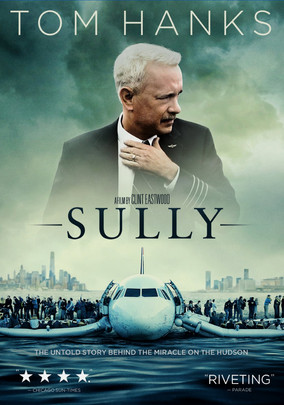
Sully-2016

Sully-2016

Director Clint Eastwood

Starring Tom Hanks, Aaron Eckhart

Scott’s Review #623

Reviewed March 10, 2017

Grade: B

I think most film critics would agree that each modern film directed by Clint Eastwood would accurately be described as a compelling film yet safe film, and the 2016 Eastwood offering, Sully, fits into both of these categories snugly- just as Sully feels like a snug film.

Everything seems to fit into a nice package when the credits roll.

While the film is sympathetic and has leanings of a character study, it is also shrouded in a wholesomeness that is incredibly safe and “Hollywood.”

This is not a knock or a detriment to the film, as it is very good, well-made, and has a high budget. However, edginess is not its forte, and it might have been better off with a bit more grit.

The actual film recounts the lively, perilous recent United Airways flight 1549, on which the now-famous Captain Sully successfully landed in New York’s frigid Hudson River one January morning.

Tom Hanks is the subdued and unassuming hero to perfection as his calm demeanor and grounded persona make him a likable chap, to say nothing of saving 155 lives aboard the would-be doomed flight that day.

Instead of going in a purely linear direction, building up the events (gravitating passengers, takeoff) in sequential order until the inevitable crash, Eastwood wisely decides to begin directly after the crash.

Captain Sully, clearly jarred by the events, is startled awake by nightmares. He dreams of crashing into midtown Manhattan instead of safely landing the jet.

The hero is beginning to suffer from symptoms of PTSD.

He is kept in New York City for days on both a press tour, interview after interview, as well as being questioned by The National Transportation Safety Board, who wonder why Captain Sully did not return to a nearby airport for an emergency landing as simulated computer recreations show that he could have.

This leads to both Sully and First Officer Jeff Skiles (Aaron Eckhart) being put under a microscope and questioned.

I was a bit caught off guard and got slightly bored, as the film takes about thirty minutes to focus on the actual crash or show an airplane scene rather than building up the events by concentrating on Sully and Skiles’s mental health. However, in retrospect, Eastwood made a wise decision.

The entire film is barely over ninety minutes total, so the action comes fast and furious mid-stream.

Still, the film is not quite all that it could have been. Despite the potentially horrific consequences faced by an airplane blowing both engines due to the flocks of birds, I never got many extremely perilous moments during the film.

While technically well done, the danger scenes as Sully navigates the plane into the river lack much in the way of the punch.

Sure, there are a few quick shots of passengers praying or appearing frightened, but we never get to know any of the passengers very well.

A “don’t blink or you might miss it” scene of an elderly mother and her daughter shopping for a snow globe at the airport or three men rushing to catch the plane to catch a golf game in Charlotte is not enough for the audience to become too enveloped in their characters.

They almost seem thrown at the last minute as a way of personalizing the passengers.

As I mentioned above, the film’s point surrounds Sully (and arguably it should; there is nothing wrong with that) and, to a lesser degree, Skiles. The supporting characters contain no character development, and even Skiles’s personal life is not explored well.

Scully’s wife is only seen through phone conversations (played by Laura Linney), and he is happily married with two daughters. There is a brief talk about money trouble, but the wife is underdeveloped.

Additionally, the NTSB agents are portrayed as quite antagonistic towards Sully and Skiles (rumors abound that this was embellished for movie making), which makes sense.

I enjoyed the ending of the film- in tandem with the credits rolling- of seeing not only the real-life Sully but his wife and the passengers and crew of the actual United Airlines Flight 1549 through interviews and photographs.

This offering in true-life biography films is now a standard feature to look forward to as it brings a humanistic conclusion to the story just watched.

The film’s focus centers on Captain Sully, which is fine by me- the man is a hero- but as a film, and more than a biography, it might have added depth to have richer supporting characters and a more substantial background of the man that is Sully.

A few rushed childhood aviator and battle plane scenes seemed somewhat out of place.

Still, the film is pleasant and immensely watchable. It will not set the world on fire or be remembered as much more than a decent film based on a true story.

Oscar Nominations: Best Sound Editing