Category Archives: Bud Cort

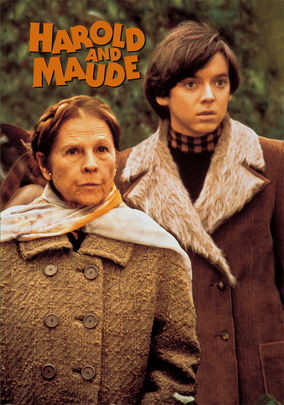
Harold and Maude-1971

Harold and Maude-1971

Director Hal Ashby

Starring Bud Cort, Ruth Gordon

Top 250 Films #70

Scott’s Review #208
60000591

Reviewed December 30, 2014

Grade: A

Harold and Maude (1971) is the bravest and most left-of-center film that I have ever had the pleasure of viewing. A subject matter so taboo that it had never before been explored in cinema and, to my knowledge, has not since.

The film challenges so many mainstream views of aging, sex, and relationships.

Ruth Gordon and Bud Cort give performances of a lifetime.

The film tells the story of an unhappy, wealthy teenager named Harold (Cort) whose mother- hilariously played by Vivian Pickles- is a cold socialite attempting to reform Harold from his rebellious adolescent behavior.

Harold frequently plays suicide pranks on her and the numerous females she tries to set him up with, reducing them to tearful exits from the family mansion in frightened hysterics.

Obsessed with attending funerals for fun, one day, Harold meets Maude (Gordon), an older woman, at a funeral, and it turns out that both share the same fascination, but for vastly different reasons, as the story shows.

They embark on a tender romance despite their age difference of over sixty years.

In many ways, Maude is the real adolescent of the film, which I love. It is a role reversal of sorts. On the cusp of age eighty, she has a pure zest for life, living each minute as if it were her last, unconcerned with the consequences of her actions- she is a true free spirit.

She gleefully steals cars parked on the street, and her erratic driving is comically brilliant.

Harold becomes the more responsible one despite being the tender age of only nineteen. He cares for Maude, and her shocking revelation towards the end of the film floors Harold.

It will also shock the audience.

Harold and Maude deal with death, but the film is not a downer. It is hilarious at times, brilliantly written, and Maude, a Nazi prison camp survivor, does not fear death- she has seen her share of it and almost embraces it.

Harold is just beginning his life, and the contrast of the characters and their growing bond is what works best in this film.

The aforementioned Vivian Pickles knocks it out of the park with her portrayal of Harold’s mother- her comic wit and timing are excellent- she callously hosts a dinner party. She boasts to the guests about her travels to France while Harold sits ignored, bored, and depressed, staring at his mother in disbelief.

He wants nothing to do with her or her trivial lifestyle. She makes an unimportant phone call while Harold dangles from the ceiling in a faux suicide attempt- clearly a cry for attention from his mother.

This is a total black comedy.

The implied intimacy between Harold and Maude was too much for many viewers in 1971. I find it sweet and quite tastefully done. They fall in love, and it feels wonderful for both of them.

I would be remiss not to mention the fantastic, lively soundtrack by Cat Stevens.

Edgy, laugh-out-loud, unusual, and witty are words to describe Harold and Maude (1971)- one of the most intelligent comedies in film history.
Heat-1995

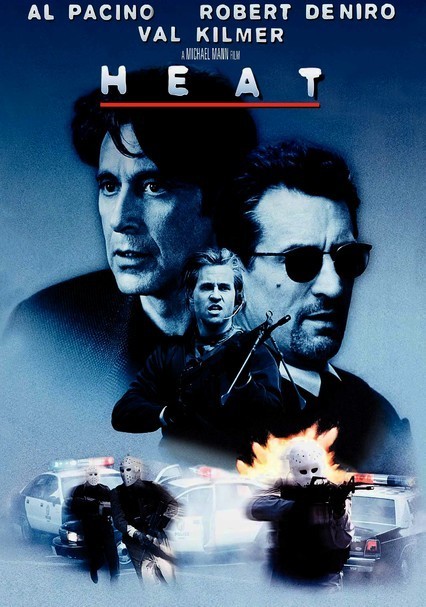
Heat-1995

Director Michael Mann

Starring Al Pacino, Robert De Niro, Val Kilmer

Scott’s Review #1,228

Reviewed February 12, 2022

Grade: A-

Fans of the popular 1980s NBC television series, Miami Vice will recall that Michael Mann was the Executive Producer of the show during its run.  He has a distinctive crime thriller style that goes perfectly well with Heat, a sizzling 1995 offering starring two film greats-Al Pacino and Rober De Niro.

The fact that the pair do not appear too often on screen together can be forgiven because when they are the stars align and the power of quiet scenes cannot be outdone. I savored over the moment when they first appeared together. Quality over quantity.

De Niro plays Neil McCauley, a lifelong criminal who is trying to handle damage control caused by one of his men, while also planning one last big heist before retiring to parts unknown. He meets a lovely young Los Angeles-based artist played by Amy Brenneman in a diner and the two plan to relocate abroad.

Meanwhile, Lieutenant Hanna (Al Pacino) is a seasoned officer attempting to track down McCauley and his cohort while dealing with the chaos in his own life, including the infidelity of his wife (Diane Venora) and the unhinged mental health of his stepdaughter (Natalie Portman).

McCauley and Hanna discover mutual respect, even as they try to thwart each other’s plans. The two characters become doppelgangers of one another. The situation comes to a cat-and-mouse-based conclusion on the tarmac of LAX airport.

To say that Heat is a by-the-numbers 1990s thriller is a fair assessment although it’s way better than that classification and it’s of that genre.

For starters, the acting is superior, and obviously, De Niro and Pacino bring a level of professionalism to the film in the lead roles. My favorite scene is not the one you’d most expect me to say but rather a quiet and powerful chit-chat in a small coffee shop. They are rivals, having lived opposite lives, and yet have troubled lives that mirror each other.

Without a doubt, Hanna wants to bring McCauley to justice, and yet he admires him and sees parts of himself in the man. The feeling is mutual and the two actors relay this revelation without actually speaking the words. Viewers immerse themselves into the characters pivoting from this powerful scene.

There are a ton of characters in Heat but each one feels like he or she has much to offer. Juicy storylines are introduced but never forgotten even if not part of the main canvas. Hanna’s wife and stepdaughter play a central part in the final act even though they mainly appear during the first chapter.

In supporting roles, Val Kilmer and Ashley Judd share beautiful chemistry and a melancholy storyline as a damaged couple trying to survive surrounded by a life of crime.

At two hours and fifty-two minutes, there is plenty of time for each character to make their mark.

I love the rich character development that Heat offers but sometimes it’s admittedly tough to keep track of the motivations of the characters and how they tie into the main action.

Mann’s style is all over the place and even the musical score brought me back to the episodic song intervals that Miami Vice created. The moody and dark atmosphere of dingy and crime-infested Los Angeles is perfectly placed against glossy and glamorous high-rise and sprawling estate scenes. The bright and luminous city skyline is a feast for the eyes.

The cop/criminal dynamic is the main draw as Heat flexes its masculine muscles scene after scene. A bloody bank heist gone wrong at the beginning of the film cements what Mann is trying to create here. A guy’s film with enough juice to hook the introspective film viewer too.

Not remembered as well as it probably should be, Heat holds up surprisingly well when put up against similar but hokey 1990s action films like Lethal Weapon and the Die Hard films.

Though there’s not a whole lot that is new in Heat (1995), rich writing and powerful acting win out every time, and of course, Pacino and De Niro are worth the price of admission.

Bernice Bobs Her Hair-1976

Bernice Bobs Her Hair-1976

Director Joan Micklin Silver

Starring Shelley Duvall, Veronica Cartwright 

Scott’s Review #1,141

Reviewed May 12, 2021

Grade: B+

Much transpires within Bernice Bobs Her Hair (1976), a short film based on a short story by famed author F. Scott Fitzgerald.

For the non-literary crowd, Fitzgerald penned the worldly The Great Gatsby, a treasured story set in the 1920s on Long Island, New York.

The story was adapted into a television production in 1976 for PBS’s The American Short Story.

Bernice Bobs Her Hair is a quieter story than Gatsby, and more peculiar, resulting in a fabulous tale of revenge set a 1920, the cusp of the American Jazz Age.

The setting is presumed to be Long Island or Westchester County, New York, though that’s never confirmed.

Regardless, our main character, Bernice (Shelley Duvall), hails from Wisconsin and visits her family.

The visit isn’t exactly peaches and cream, as you can imagine.

The bitchy and sophisticated Marjorie (Veronica Cartwright), Bernice’s cousin, pities her for being awkward and unlikable, and for being far inferior to the elitist company she keeps. She rolls up her sleeves and becomes determined to shape Bernice into a sophisticated vixen, molding her into a girl who gets what she wants.

The idea ends up biting her in the ass.

Bernice, mocked for being quiet and dull, blossoms into a brave young woman, titillated by the attention of the society boys. She delights in having her pick of the litter and daringly proclaims to have her hair bobbed in a few days, to the shock and chagrin of the rich group of friends.

Would a young woman ever dare to do something so drastic for attention? Hell, she’ll have to go to a barber and be sheared!

Marjorie’s jealousy intensifies as Bernice’s confidence soars, culminating in a dramatic and satisfying conclusion.

Duvall is delightful in the role. The actress, very unconventional looking, appears the prettiest I’ve ever seen her, even when she plays dowdy. Telling so much with her wide-eyed and expression-filled eyes, she seduced me into her world of mystique and wonderment. Duvall has a charisma all her own and fascinates in any film she appears in.

Not to be overlooked, Veronica Cartwright brings Marjorie to life with fury and pizazz, also doing so much with her trademark blue eyes. The actresses work so well together as they eventually play a seductive game of will and wit.

For the boys, there are a few love interests to note. I loved seeing Bud Cort, struggling for work after his groundbreaking role in 1971’s Harold & Maude, appear in the short film. Insecure, he is nonetheless smitten with Bernice, just as Draycott Deyo (Patrick Reynolds) is.

Other handsome suitors like Mark LaMura, of daytime television fame, appear.

The costumes and sets are lavish and fitting to the 1920s, which enhanced my enjoyment. The hot summer setting also infuses the film with smoldering and rigid tension, enhancing the experience. There is nothing like escaping into the past in style and enchantment.

The final revenge is extremely fulfilling as the classes clash. The socially awkward Bernice conquers the WASP-y Marjorie like a plain Jane would a beautiful evil princess. It’s quite satisfying.

The entire experience of Bernice Bobs Her Hair (1976) is pleasing and compelling. The kicker is that when Bernice does indeed ‘bob her hair’, she looks amazing and trendy for the decade to follow. She gets her just desserts in more ways than one, and the audience cheers her to victory!