Grease-1978

Grease-1978

Director Randal Kleiser

Starring John Travolta, Olivia Newton-John

Top 250 Films #69

Scott’s Review #354
60000577

Reviewed January 9, 2016

Grade: A

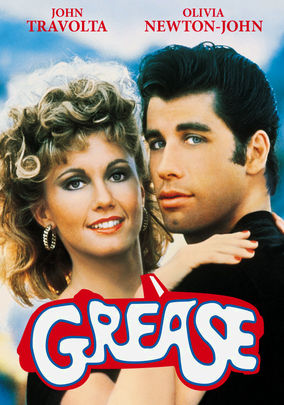
Grease (1978) is the ultimate musical fantasy that comes to life and can be appreciated by anyone looking to re-live their high school days through song, or merely escape life’s stresses with a fun, bright musical that is very well made.

Is it realistic? Not, but sometimes escapism is just what the doctor ordered, and Grease is one of my favorite films that meets that criteria.

It is light-hearted and sweet, and above all, it contains wonderful legendary musical numbers.

The time is the 1950s, and we meet Danny and Sandy on a windswept beach with cascading waves and bright sunshine. It is summer break for the two high school students, who meet in California, she vacationing from Australia, and he is a local boy.

They say their goodbyes and return to normal lives, but cannot forget about each other.

Suddenly, Sandy arrives at Rydell High in Los Angeles, coincidentally, where Danny goes to school. Her parents (whom we never see) decided to stay in California.

Danny is a “tough guy” in high school, much different from who he was on the beach with Sandy. He is the leader of the infamous T-birds, a group of boys who love their black leather jackets and cars.

Torn, he maintains his tough image, and he and Sandy find their way back to each other through classmates, songs, and dancing, intermingling with fun supporting characters who encourage them to find true love.

Travolta and Newton-John have magical chemistry, which allows this film to work.

Grease has appeared on stage numerous times, but these actors are fine together. I bought them as teenagers in love, although both were well beyond their teen years.

The supporting cast is excellent- specifically Stockard Channing as the lead Pink Lady, Rizzo, and Sandy’s kind-hearted friend, Frenchy.

Interestingly, no parents ever appear in the film, as it is not about the adults.

However, Rydell’s female principal, Mrs. McGee (played by Eve Arden), and her dotty Vice Principal, Blanche (Dody Goodman), are marvelous as comic relief.

Rizzo is an interesting character and can be argued to be the only one who threatens to steal the thunder from Danny and Sandy. Containing a tough exterior, she is also vulnerable as she fears she has become pregnant mid-way through the film.

Being unmarried and pregnant in the 1950s was quite the scandal, and Channing conveys layers of emotion during her solo number, “There Are Worse Things I Could Do”.

The wonderful high school dance scene is choreographed amazingly well. The excitement of the student body at being filmed for a special television show is apparent as dance numbers and dance contests, some raunchy, follow.

The musical numbers “Grease”, “Greased Lightning”, “Hopelessly Devoted To You”, and “Beauty School Dropout” are intrinsically memorable, all of which are personal favorites of mine.

Grease is a film meant not to be analyzed but rather enjoyed for its fantastic chemistry and energy.

Sometimes, in a film, all the elements come together perfectly, and Grease (1978) is an excellent example.

Oscar Nominations: Best Song-“Hopelessly Devoted to You”
Harold and Maude-1971

Harold and Maude-1971

Director Hal Ashby

Starring Bud Cort, Ruth Gordon

Top 250 Films #70

Scott’s Review #208

60000591

Reviewed December 30, 2014

Grade: A

Harold and Maude (1971) is the bravest and most left-of-center film that I have ever had the pleasure of viewing. A subject matter so taboo that it had never before been explored in cinema and, to my knowledge, has not since.

The film challenges so many mainstream views of aging, sex, and relationships.

Ruth Gordon and Bud Cort give performances of a lifetime.

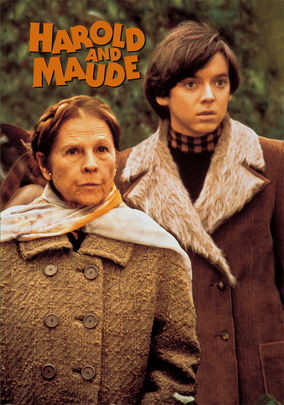
The film tells the story of an unhappy, wealthy teenager named Harold (Cort) whose mother- hilariously played by Vivian Pickles- is a cold socialite attempting to reform Harold from his rebellious adolescent behavior.

Harold frequently plays suicide pranks on her and the numerous females she tries to set him up with, reducing them to tearful exits from the family mansion in frightened hysterics.

Obsessed with attending funerals for fun, one day, Harold meets Maude (Gordon), an older woman, at a funeral, and it turns out that both share the same fascination, but for vastly different reasons, as the story shows.

They embark on a tender romance despite their age difference of over sixty years.

In many ways, Maude is the real adolescent of the film, which I love. It is a role reversal of sorts. On the cusp of age eighty, she has a pure zest for life, living each minute as if it were her last, unconcerned with the consequences of her actions- she is a true free spirit.

She gleefully steals cars parked on the street, and her erratic driving is comically brilliant.

Harold becomes the more responsible one despite being the tender age of only nineteen. He cares for Maude, and her shocking revelation towards the end of the film floors Harold.

It will also shock the audience.

Harold and Maude deal with death, but the film is not a downer. It is hilarious at times, brilliantly written, and Maude, a Nazi prison camp survivor, does not fear death- she has seen her share of it and almost embraces it.

Harold is just beginning his life, and the contrast of the characters and their growing bond is what works best in this film.

The aforementioned Vivian Pickles knocks it out of the park with her portrayal of Harold’s mother- her comic wit and timing are excellent- she callously hosts a dinner party. She boasts to the guests about her travels to France while Harold sits ignored, bored, and depressed, staring at his mother in disbelief.

He wants nothing to do with her or her trivial lifestyle. She makes an unimportant phone call while Harold dangles from the ceiling in a faux suicide attempt- clearly a cry for attention from his mother.

This is a total black comedy.

The implied intimacy between Harold and Maude was too much for many viewers in 1971. I find it sweet and quite tastefully done. They fall in love, and it feels wonderful for both of them.

I would be remiss not to mention the fantastic, lively soundtrack by Cat Stevens.

Edgy, laugh-out-loud, unusual, and witty are words to describe Harold and Maude (1971)- one of the most intelligent comedies in film history.

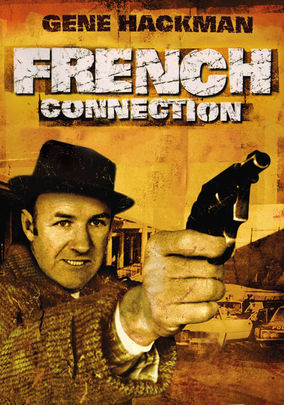
The French Connection-1971

The French Connection-1971

Director William Friedkin

Starring Gene Hackman, Fernando Rey, Roy Scheider

Top 250 Films #71

Scott’s Review #342

60011660

Reviewed January 9, 2016

Grade: A

The French Connection was the first R-rated film to win the Academy Award for Best Picture in 1971.

This praise, similar to The Silence of the Lambs being the first horror film to win Best Picture in 1991, is well worth noting and quite honorary.

The film succeeds, both for other critics and me, due to its unique camerawork style, shot in a documentary manner, and the use of quick edits.

It is much more intricate in every way than the traditional crime thriller.

Gene Hackman stars as the feisty detective, Jimmy “Popeye” Doyle, who, along with his partner, Buddy “Cloudy” Russo (Scheider), is determined to crack the case of a massive heroin smuggling syndicate from France.

The narcotics are flowing into New York City, and the duo is determined to get to the bottom of the drug ring, figuring out who the mastermind is and defeating their foe.

The primary culprit is a suave French drug lord named Alain Charnier, brilliantly played by Fernando Rey.

Throughout the film, the action is nonstop, traversing Manhattan and Brooklyn by subway and car as Popeye becomes increasingly obsessed with the case.

Director William Friedkin, who also directed the legendary 1973 film, The Exorcist, deserves a heap of praise for creating a movie of this caliber. All can enjoy the French Connection, and it is well beyond the limitations of a “guy film”- it is much more than that.

The editing and frenetic pacing work wonders for the film, all the while not ruining the experience or overshadowing the good plot. Quite simply, the film is a chase across New York City.

Friedkin distinguishes the boroughs by making Manhattan seem sophisticated and stylish, while Brooklyn comes across as dirty, grizzled, and drug-laden.

The settings are perfect.

The best scene in the film is the well-known car chase throughout New York City. Popeye is determined not to lose his man, the man riding in a subway on an elevated platform. Popeye steals a car and proceeds to chase the subway, narrowly missing pedestrians, including a woman with a baby carriage, as he recklessly weaves in and out of traffic at a high speed to keep pace with the train.

This is a phenomenal scene as the excitement and tension continue to build.

The film’s conclusion and final scene are cynical and leave the audience perplexed and unsure of what has transpired.

The French Connection is open to reasonable discussion and even interpretation, a novel aspect of the action film.

Providing a tremendous glimpse into 1970s Manhattan and Brooklyn, The French Connection is an exciting film that oozes with thrills, car chases, and a good story.

The film is unique in style and still holds up incredibly well- one of my favorites in the action genre.

Oscar Nominations: 5 wins-Best Picture (won), Best Director-Richard Friedkin (won), Best Actor-Gene Hackman (won), Best Supporting Actor-Roy Scheider, Best Screenplay Based on Material from Another Medium (won), Best Sound, Best Cinematography, Best Film Editing (won)

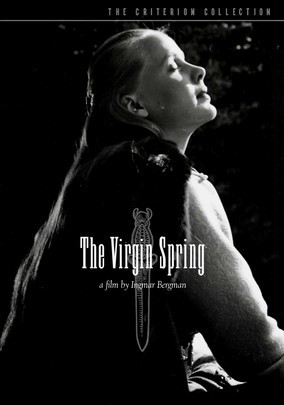
The Virgin Spring-1960

The Virgin Spring-1960

Director Ingmar Bergman

Starring Max von Sydow, Birgitta Valberg

Top 250 Films #72

Scott’s Review #243

60011418

Reviewed May 15, 2015

Grade: A

The Virgin Spring is a quiet masterpiece by director Ingmar Bergman.

A Swedish film, it won the Best Foreign Language Oscar in 1960, which is surprising for such a dark film.

I have heard about this film for years, but it has eluded me until now. I am finally glad I viewed it. It is breathtaking and mesmerizing.

A unique film for many reasons, it inspired “revenge” films to follow, specifically The Last House on the Left and I Spit on Your Grave, which is a horror film, while The Virgin Spring is an interestingly artful film.

The film also explores morals, the main character’s religious beliefs, and the theme of guilt.

The film is shot in black and white, and the first thing that struck me about it was its gorgeous cinematography and lighting. The brilliant, deep contrast of black and white, with the illumination of a character’s face against a deathly black background, is bold and reminiscent of Citizen Kane (1941).

It gives the film warmth and glow that contrasts perfectly with the bleak subject matter.

The story of The Virgin Spring is a tragedy, yet the filming is so magnificent that it was not until the film concluded and I pondered the actual story that I realized just how horrific it truly is. And that is what Bergman was going for-provoking a thought.

This is not a film to watch while munching on a tub of popcorn. It is a film designed to prompt thought.

An affluent Swedish couple owns a farm and lives a peaceful, quiet existence. They are stellar members of their community and church. Although they are humble, they can afford to have servants.

They have a beautiful and pampered young daughter named Karin, who is sent to deliver candles to their church one sunny day. Karin is a trusting, virginal, and proper girl. She meets a trio of males- two adults and a young boy.

At first, gleefully sharing food with them and enjoying her newfound friends, they soon turn on her, and she is viciously raped, robbed, beaten, and murdered.

The look of surprise, pain, and horror on Karin’s face is monumental. As this occurs, a pregnant and spiteful servant, Ingeri, watches in horror from a hiding place. A rival of Karin’s, Ingeri, wanted misfortune to be thrust upon Karin, but as she sees in horror, her expressions portray regret.

As the family hopes and prays that they can find the missing Karin, the men and boy show up at the farmhouse in need of food and shelter.

Unbeknownst to the family, they are Karin’s rapists and killers, and once the truth is known, the once-sweet parents are out for brutal revenge. The young boy of the trio is guilt-ridden and physically sick from the circumstances.

Is the family’s revenge justified, or should they (as good Christians) forgive? This is the moral point of the story.

The conclusion is powerful as the father begs God for forgiveness. He questions his actions. But is he a changed man?

Bergman uniquely and intelligently shoots these scenes with only the father’s back in view as he throws his hands to leave. In these moments, we, the viewers, become one with the father, which makes for powerful storytelling.

Influential to many subsequent films, The Virgin Spring (1960) is a powerful tale reminiscent of a fairy tale that prompts viewers to reflect on its ending.

Subdued yet horrifying, it is meant to be viewed and analyzed.

Oscar Nominations: 1 win-Best Foreign Language Film (won), Best Costume Design, Black-and-White

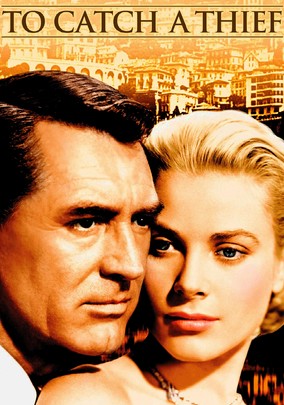
To Catch A Thief-1955

To Catch A Thief-1955

Director Alfred Hitchcock

Starring Cary Grant, Grace Kelly

Top 250 Films #73

Scott’s Review #455

60000732

Reviewed July 24, 2016

Grade: A-

Cary Grant starred in five Alfred Hitchcock films in his day, and 1955’s To Catch A Thief is right smack in the middle of Hitchcock’s prime period of masterful pictures.

Grace Kelly (her third and final Hitchcock film) co-stars, making this film a marquee treat as both actors were top-notch in their heyday and had much chemistry in this film.

While not my all-time favorite of Hitchcock films, To Catch a Thief has mystery, a whodunit, and some of the most gorgeous cinematography of the French Riviera. The breathtaking surroundings are my favorite part of this film.

Grant plays John Robie, aka. “The Cat,” an infamous jewel thief who has now gone clean. He spends his days quietly atop the French Riviera growing grapes and flowers and keeping out of trouble.

When a new jewel thief begins to strike wealthy tourists, Robie is immediately under suspicion by the police. He is forced to prove his innocence by catching the real thief in the act, as the thief uses the same style of stealing as Robie once did.

Amid this drama, Robie meets the beautiful heiress Frances (Kelly) and her interfering mother, Jessie Stevens (Jessie Royce Landis), which leads to romance.

Although Grant could be old enough to be Kelly’s father, we immediately accept Robie and Frances as the perfect couple- she is sophisticated, stylish, and rich, and he equally has a bad-boy edge.

To Catch A Thief has a strong romantic element and a glamorous and wealthy tone. After all, the subject matter at hand- jewels- equates to lavish set decorations, women dripping in expensive jewelry, and a posh resort among the gorgeous French waters.

The supporting characters are interesting, too. A triangle emerges as Frances plays catty with a young girl, Danielle, eager for Robie’s affection. Danielle, much plainer looking than Frances, though no shrinking violet, holds her own in a match of wits with Frances as they bathe in the water one afternoon.

Frances’s mother, Jessie, provides tremendous comic relief as she attempts to bring Robie and Frances together. She is always searching for a handsome suitor for her daughter.

Finally, insurance man H.H. Hughson also contributes to the comic relief by begrudgingly providing Robie with a list of wealthy visitors with jewels.

In their playfully awkward lunch- delicious quiche is the meal of the day- at Robie’s place, Robie proves how Hughson himself is a thief of sorts to accomplish what he needs to get from Hughson.

Despite all of the positive notes, something about To Catch A Thief prevents it from being among my all-time favorite Hitchcock films. Perhaps it is because I never doubted Robie’s innocence, and if dissected, the caper is a bit silly.

I get the sense that the audience is supposed to question whether Robie is truly reformed or playing a game and is back to his dirty deeds, but I wasn’t fooled.

This is a minor gripe, but To Catch A Thief is a fantastic film.

The way the film is shot is almost like being on the French Riviera. Countless coastal shots of the skyline will amaze the viewer with breathtaking awe of how gorgeous the French country is and how romantic and wonderful it is.

This is my favorite part of To Catch A Thief.

The visuals of the film rival the story as the costumes created by costume designer and Hitchcock mainstay, Edith Head, are simply lovely. And who can forget the costume ball near the conclusion?

Though the story might be the weakest and lightest element of the story,  who cares? The visuals more than make up for any of that, as To Catch A Thief (1955) will please loyal fans of Hitchcock’s vast catalog.

Oscar Nominations: 1 win-Best Art Direction, Color, Best Cinematography, Color (won), Best Costume Design, Color

(Le Boucher) The Butcher-1970

(Le Boucher) The Butcher-1970

Director Claude Chabrol

Starring Stephane Audran, Jean Yanne

Top 250 Films #74

Scott’s Review #273

Reviewed September 14, 2015

Grade: A-

(Le Boucher) The Butcher is a French thriller released in 1970 that is slow-moving at first but builds to a dramatic crescendo as the film progresses, transforming from plodding to a cerebral mind-blower.

Mirroring and inspired by director Alfred Hitchcock, The Butcher is surprisingly not quite horror (based on the title, one might assume it is), but rather an intelligent, dreamy thriller.

Gorgeous schoolteacher Helene Daville is competent, confident, and filled with a zest for life. She tutors children who need extra help, laughs with them, and even lets one sip champagne at a wedding to try it. She enjoys living and occasionally embarking on adventures.

One day, at a wedding, she meets the local butcher, Paul Thomas, and they immediately hit it off as they tenderly walk home together. Cordial and kind, they develop a friendship and laugh together.

As time goes on, a series of killings begins to occur in the town.

Helene begins to suspect Paul of the murders and wrestles with her conflict between her budding love for him and her revulsion at the thought of being in love with a vicious murderer. Her conflict is the film’s point.

The relationship between Helene and Paul is an interesting dynamic and, I now realize, the reason for the picture’s slow pace. Helene and Paul enjoy a nurturing, caring courtship, and the film successfully achieves the intended slow build.

The murder mystery is secondary and serves to support the main plot. We know little- almost nothing- about the female victims. They are strangers to the audience, and the reason for their deaths is unknown.

The killer simply kills- no motivation is revealed. This is what makes the film so cerebral and mysterious.

The Butcher is a love story intertwined with a thriller. It is not a mainstream thriller in the conventional sense, and the final twenty or thirty minutes reeled me in completely and gave me great admiration for the film, which I had been hedging about throughout.

The meat of the film might have started an additional 30 minutes earlier, in my opinion, but then again, the slow build may have been intended to make the result more powerful.

The moral conflict, love versus hate, tenderness, affection, caring, devastation, and betrayal are all explored during this relatively brief finale.

Besides, the blurry camera shots and angles from the vantage point of an automobile driver traveling down a dark, tree-lined street are highly creative and unique.

The comparisons to Hitchcock are evident.

Helene is similar to Tippi Hedren’s character, “Melanie Daniels,” in The Birds. She is glamorous, alluring, blonde, tall, well-dressed, and the heroine of the film. Attractive and blonde are traits featured in many Hitchcock films.

Paul, on the other hand, reminds me of Rod Taylor’s Mitch, also from The Birds, though not as handsome or charismatic. Still, their relationship reminds me of the two of them as the chemistry oozes from the screen and a romance and thriller are combined.

The audience perceives Helene as a wholesome, wonderful person, but is she truly?

In the end, we are left questioning her true feelings and are left with a distaste in our mouths. Her choices confuse us, or is she simply a complex human being like each of us is?

The interesting aspect of The Butcher (1970) is that it leaves one questioning how we would handle Helene’s dilemma, and more importantly, how we would channel our feelings if faced with a similar predicament.

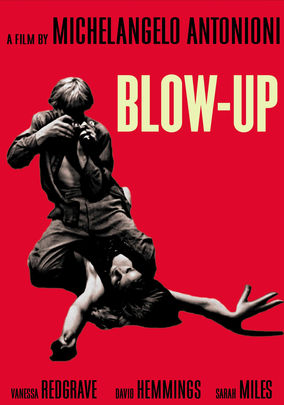
Blow-Up-1966

Blow-Up-1966

Director Michelangelo Antonioni

Starring David Hemmings, Vanessa Redgrave

Top 250 Films #75

Scott’s Review #305

60033579

Reviewed December 21, 2015

Grade: A

Blow-up is a mysterious and compelling 1966 (the spawn of more edgy films) thriller that undoubtedly influenced the yet-to-come 1974 masterpiece The Conversation, directed by Francis Ford Coppola, as both films are tense tales of intrigue focusing on technology as a tool to witness a murder.

This film is legendary director Michelangelo Antonioni’s first English-speaking film, and what a film it is.

Set in hip London in the 1960s, it is undoubtedly a fascinating portrayal of the fashion world. The story is about a fashion photographer named Thomas, who is in high demand. He revels in bedding women so they may have their photos taken by this rock star photographer and is chased around London by gorgeous women.

One day, he aborts a photo shoot because he is bored. He is not the nicest guy in the world, but an unlikable character.

But perhaps that is secondary or even intentional. One day, while walking in Maryon Park, he encounters a couple in the distance. They appear to be having a secret rendezvous and nervously kissing, so he begins photographing the woman, Jane (played by a very young Vanessa Redgrave). Jane realizes they have been snapped and is furious, demanding the film.

This sets off the mystery and the meat of the film.

The film is a tremendous achievement in cinematic intrigue. It is pretty psychological and open to much interpretation, which is its genius. The main questions are: “What exactly transpired in the park, and who is responsible?”

We feel little sympathy for Thomas, which perhaps is intentional. And what about Jane?

Talk about a mystery!

We know little about her beyond the fact that she has secrets, but is she responsible for the crime? Throughout the film, Thomas and Jane engage in a cat-and-mouse game, seemingly trying to outwit and outmaneuver each other.

The unique aspect of the film is that the viewer will often ask questions: “Was there even a crime committed?” “Are the events all in Thomas’s imagination, or has he misinterpreted the series”? One will revel in the magnificence of these questions.

I immediately recognized similarities to The Conversation (1974). Both feature one of the senses as a means of solving or realizing the crime committed—in The Conversation, it is hearing; in Blow-Up, it is sight.

In both, the main character uses these senses for a living, and both are arguably not the most likable characters. Both films feature mimes.  Both films are pretty cerebral, and both are cinema gems for the “thinking man.”

Blow-Up has weird, little intricate moments- a very tall female Russian model experiences an odd photoshoot with Thomas. Later,  a giggling pair of young girls end up in a grappling match with Thomas after asking him to take their photos.  A topless (from behind) Jane prancing around Thomas’s apartment is an unusual scene.

As a first-time viewer, I adored this film. It is a good example of a movie that requires multiple viewings to appreciate fully, and I look forward to doing just that.

A fantastic, creative achievement, Blow-Up (1966) is a masterpiece that can be dissected with each subsequent viewing.

Oscar Nominations: Best Director, Michelangelo Antonioni, Best Story, and Screenplay Written Directly for the Screen

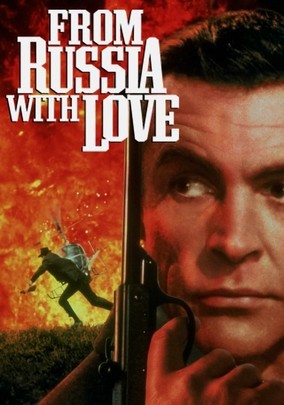
From Russia with Love-1963

From Russia with Love-1963

Director Terence Young

Starring Sean Connery

Top 250 Films #76

Scott’s Review #615

Reviewed February 5, 2017

Grade: A

From Russia with Love (1963) is only the second film in the storied James Bond franchise. It is a sequel to the debut installment, Dr. No, and received twice the budget.

This is evident in the film’s exquisite cinematography and look, with chase and battle scenes galore.

The film is lavish and grand, and what a Bond film ought to be, featuring adventures across countries, gorgeous location sequences, and a lovely romance between Bond (Sean Connery) and Bond girl Tatiana (Daniela Bianchi).

Still, she is not in my top Bond girls of all time.

Terence Young returned to direct the film with successful results.

Vowing revenge on James Bond for killing villainous Dr. No, SPECTRE’s Number 1 (seen only speaking and holding a cat) recruits evil Number 3, Rosa Klebb, a Russian director and defector, and Kronsteen, SPECTRE’s expert planner, to devise a plot to steal a Lektor cryptographic device from the Soviets and kill Bond in the process.

Klebb recruits expert killer Donald “Red” Grant and manipulates Tatiana into assisting. The story takes Bond mainly through Istanbul, Turkey, into a gypsy camp and via the Orient Express through Yugoslavia to the ultimate climax.

The villains in From Russia with Love are outstanding and a major draw to the film.

Klebb (Lotte Lenya) and Grant (Robert Shaw) are perfectly cast. Klebb, militant and severe with her short-cropped red hair, has a penchant for deadly footwear (she has a spike that shoots out from her boot containing venom that kills in seconds) and casually flaunts her lesbianism in front of Tatiana.

I admire this level of diversity in early Bond films—it was 1963, which was extremely rare.

Grant, on the other hand, is handsome and charismatic, with a chest of steel. With his good looks and bleached blonde hair, he is a perfect opponent for Bond, as the final battle between him and Bond aboard the Orient Express is a spectacular fight scene and a satisfactory conclusion to the film.

The action sequences are aplenty and compelling, especially the Orient Express train sequence finale, which is grand. As Bond and Tatiana, along with their ally Ali Kerim Bey, a British Intelligence chief from Istanbul, embark on a journey, they are stalked by Grant, who waits for an opportunity to pounce on his foes.

This sequence is the best part of the film for me- Grant, posing as a sophisticated British agent, has a cat-and-mouse conversation with Bond and Tatiana over a delicious dinner of Sole.

Grant drugs Tatiana by placing capsules in her white wine- the fact that he orders Chianti with Sole, a culinary faux pas, gives him away.

Other notable aspects of From Russia with Love are the soon-to-be familiar cohorts of Bond, who will be featured in Bond films for years to come: M, Q, and Miss Moneypenny become treasured supporting characters that audiences know and love.

Mere novices in this film, it is fun to see their scenes- especially lovelorn Moneypenny.

An odd scene of sparring female gypsies is both erotic and comical as the two women wrestle and fight over a gypsy chief, only to forget their rivalry and both bed Bond, falling madly in love with him as the two women suddenly become the best of friends.

The chemistry between Connery and Bianchi is good but nothing spectacular, and it is not the real highlight of this Bond entry. Don’t get me wrong—they make a gorgeous couple—his dark looks and her statuesque blonde figure look great, but I found the pairing just decent rather than spectacular.

The action sequences, especially the Orient Express scenes, are a spectacle, and the many location shots in and around Istanbul are ravishing.

From Russia with Love (1963) is a top entry in the Bond series and a film that got the ball rolling with fantastic Bond features- it is an expensively produced film, and this shows.

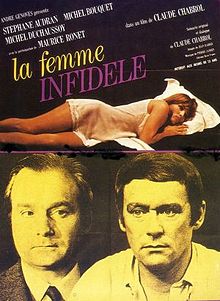
La Femme Infidele-1969

La Femme Infidele-1969

Director Claude Chabrol

Starring Stephane Audran, Michel Bouquet

Top 250 Films #77

Scott’s Review #397

220px-UnfaithfulWifePoster

Reviewed April 23, 2016

Grade: A-

Another gem by French director Claude Chabrol, La Femme Infidel (The Unfaithful Wife) is a 1969 film later remade in the United States in 2002, directed by Adrian Lynde.

Having seen the remake a few times before watching the original, I cannot help but compare the two films, which is fun for me since they are vastly different, especially as I ponder each further.

One is more conventional- the other more psychological.

Successful insurance executive Charles Desvallees lives in the suburbs of Paris with his beautiful wife Helene and their young son.

Life is seemingly idyllic: they enjoy every luxury imaginable, a beautiful house, a stunning landscape, and a dutiful maid.

Charles has a sexy secretary, smokes, drinks, and enjoys life at work, and Helene frequently goes to Paris for shopping sprees, beauty treatments, and to attend the cinema.

What could be missing from their lives?  Helene, a bored housewife, has embarked on an affair with Victor Pegalla, a writer living in Paris.

When Charles grows suspicious of Helene, he hires a private investigator to track her activities and uncover the truth about how she spends her time.

Admittedly, I was highly influenced by Unfaithful, the 2002 remake starring Diane Lane and Richard Gere, when I viewed La Femme Infidel.

The remake is set in New York instead of Paris and is more polished and less psychological- a Fatal Attraction-type slick thriller, if you will.

The “other man” is much sexier and more passionate, and the connection is more primal than in the original. This changes the tone of the film from a sexual and lustful one to a more complex and psychological dynamic- La Femme Infidel is a more thinking man’s film.

Victor is handsome and well-groomed, but he is somewhat similar to Helene’s husband, so we wonder what the main appeal is- if she is seeking adventure.

Lane’s 2002 character’s choice is easy- her affair is based on the physical attractiveness of the man. 1969’s Helene is not having her affair for that reason-the reasons, besides boredom, are unclear, making the film more complex.

When the main action (death) occurs at the midpoint, the film takes a different direction and becomes complicated. No longer is the main plot of Helene’s adultery, but rather what Charles has done and the repercussions bound to follow.

Do we see Charles as the villain and Helene as the victim? Who do we feel sorry for? Do we root for anyone? Indeed, the character of Victor is not explored in much depth. What are his motivations? Is he in love with Helene?

Helene is an interesting character. Is she meant to be sympathetic or hated? Or just complex?  One can interpret her in different ways- the woman has it all: beauty, a faithful husband, and a wonderful home life- why does she risk sacrificing it all for a fling?

Does she dare to want more out of her life and have some adulterous fun? It does not seem that Helene is in love with Victor or has any desire to run away with him or leave her husband.

Charles is also a character worth analyzing closely.

Throughout the film’s first portion, he is seen as a victim- his gorgeous wife has mysterious contempt for him and plays him for a fool. She spends his money and cheats on him, while he adores her and resists his young, flirtatious secretary, who has a thing for Charles and wears short skirts seemingly for his benefit.

She is much younger than Helene. Later, his character’s actions and motivations shift from victim to arguably brutish and primal. A momentary outburst changes his motivations, and the texture becomes calculating.

In the end, Charles and Helene come together and resume normalcy in their lives, but will things ever be the same? Will the trust ever reappear in their lives? Is Helene now afraid of or intimidated by her husband, or rather, does she now have a newfound desire for her alpha, take-charge husband?

The 1969 version of La Femme Infidel is layered, complex, and engaging, and left me thinking about the film, which is a perfect sign.

The remake, while very good, is more of a blockbuster-style film, while the original goes more for thought.

The lack of sex appeal in Victor is a negative of the film, as are his motivations, but the character-driven nuances of the other characters make this a thought-provoking watch.

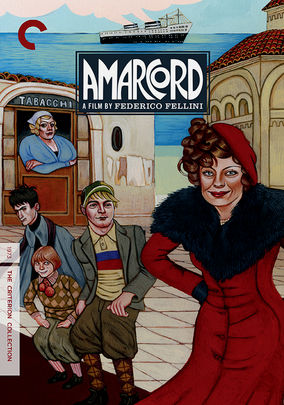
Amarcord-1974

Amarcord-1974

Director Federico Fellini

Starring Bruno Zanin

Top 250 Films #78

Scott’s Review #357

247784

Reviewed January 9, 2016

Grade: A

Federico Fellini’s Amarcord, winner of the Best Foreign Language Oscar and Golden Globe in 1974, is a semi-autobiographical film based on the director’s own childhood.

Set in the small Italian village of Borgo San Giuliano, the film features a diverse array of quirky, eccentric characters.

The plot centers around young Titta (Bruno Zanin), and his coming-of-age development as he blossoms into a young man- his sexual desires and fantasies are heavily explored in this zany film.

Since the time is the 1930s and Fascism, led by the tyrannical Mussolini, was rearing its ugly head, Amarcord is not all light-hearted fun and games, despite how it appears on the surface- there is a serious undertone to the entire film.

Still, the film lacks any story that can be dissected very well, which both pleases and frustrates- the film is simply to be “experienced”. It can leave you spinning, scratching your head, or disliking the film.

That is not to say that I take issue with or take offense at Amarcord. I adore the film, but it is not an easy watch. Scenes meander about in a dream-like fashion as we follow Titta through his sexual blossoming.

In one memorable scene, Titta has a titillating experience with a buxom older female who lives in the village. Some of the other characters we meet are giddy with peculiarities: a blind accordion player and a female nymphomaniac, to name but a couple.

Titta and his family are featured prominently as they eat, fight, and live together. One day, when the family treks to visit their Uncle Teo, who is confined to an insane asylum, they take him out for a day in the country, where he climbs a tree and refuses to come down.

A dwarf nun and two orderlies finally arrive and coax him down- he obediently returns to the asylum. It is a bizarre sequence, but one that sums up Amarcord perfectly.

Amarcord contains one wacky scene after another, but many of them are not just there to showcase outlandish behavior, nor are they fluff.

Fellini has a distinct message in the film, and several scenes mock Christianity or Mussolini’s crazy political ideas.

The film is larger than life but also encrusted with the fear of 1930’s Fascism and the fear that the Italians felt during this time.

The film is also sweet, and Fellini successfully adds a nostalgic feel to it- everyone feels cozy in a large sprawling town with unique characters, shenanigans, and a celebratory theme, but seriousness lurks beneath.

Amarcord (1974) is a zest for life throughout a tumultuous time, and Fellini successfully creates a hybrid of the two, resulting in one fantastic film.

Oscar Nominations: 1 win-Best Foreign Language Film (won), Best Director-Federico Fellini

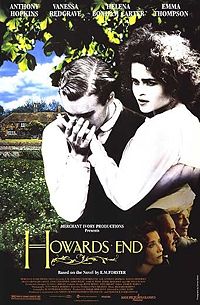
Howards End-1992

Howards End-1992

Director James Ivory

Starring Emma Thompson, Helena Bonham Carter, Anthony Hopkins

Top 250 Films #79

Scott’s Review #702

Reviewed December 1, 2017

Grade: A-

Howards End is my favorite film adaptation of E.M. Forster’s novel, which was also adapted into a film during the 1980s (1985’s A Room with a View and 1987’s Maurice are the other two notable works).

The novels were written during the early 1900s and set during the same period, focusing on class relations in 20th-century England.

The film is lovely and picturesque, telling an interesting story about romance and drama between the haves and have-nots during this period.

The film was a success and received heaps of Academy Award nominations in 1993.

Margaret Schlegel (Emma Thompson), an upper-middle-class intellectual and member of London’s bourgeoisie, befriends wealthy and sophisticated yet shockingly conservative Ruth Wilcox (Vanessa Redgrave).

The two women strike up a powerful friendship, which results in Margaret being left her beloved country home when Mrs. Wilcox, ailing, dies.

To complicate matters, Margaret falls in love with a businessman (and husband of Ruth), Henry (Anthony Hopkins). At the same time, Margaret’s sister Helen briefly becomes engaged to Paul Wilcox (Joseph A. Bennett), Henry’s son.

The two families’ lives further intersect when they become neighbors in London, and the true owner of the beloved “Howards End” is called into question.

Added to the mix are several other characters of various social backgrounds, having connections to the families.

The writing in Howard’s End is rich and emotional, with each character perfectly fleshed out, including both supporting and lead characters.

Thompson and Hopkins, both sensational actors, have tremendous chemistry, and, unsurprisingly, Thompson won Best Actress in this competitive year.

Thompson carries the film seamlessly with her upper-middle-class ideals- not conservatively rich, but far from working-class- she epitomizes poise, grace, and empathy for those less fortunate than she.

Hopkins, on the other hand, is calculating and confident, yet charismatic and sexy as an old-school, controlling businessman.

Somehow, these two characters complement each other exceptionally well despite their varied background.s

The role of Helen may very well be Helena Bonham Carter’s finest. Not being an enormous fan of the actress, who is overrated and too brooding in my opinion, I enjoy portraying an interesting character in Helen.

Lovelorn and earnest, yet somewhat oblivious, she develops a delicious romance with the young clerk, Leonard Bast, my favorite character in the film.

Living with Jacky, a woman of dubious origins, he is the ultimate nice guy and sadly winds up down on his luck after heeding terrible business advice.

Bast, thanks in large part to actor Samuel West, who imbues his character with an innocent, good-guy quality, deserves major props.

The cinematography featured in Howards End is beautiful, with extravagant outdoor scenes- the lavish gardens of Howards End- just ravishing and wonderful.

Kudos, too, to the art direction, set design, and costume departments for making the film look so enchanting.

There is something so appealing about the look of this film, and director James Ivory undoubtedly deserves praise for pulling it all together into a suave picture. Whether the scene calls for sun or rain, tranquil or bustling, every scene looks great.

If I were to knock any points off this fine film, it would be for its two hours and twenty-two minutes. Howards End drags ever so slightly, and many scenes involve the characters merely chatting, with little action.

But this criticism is small potatoes when compared to the exceptional writing and well-nuanced character development displayed throughout the piece.

Admittedly, and perhaps shamefully, I have not read any of Forster’s novels. Still, Howard’s End appears to be the film that is most successfully adapted, gleaming with textured finesse, grace, and style.

With the film’s finest actors along for the experience and intricate, fine storytelling, Howards End (1992) is a film well worth watching.

Oscar Nominations: 3 wins-Best Picture, Best Director-James Ivory, Best Actress-Emma Thompson (won), Best Supporting Actress-Vanessa Redgrave, Best Screenplay Based on Material Previously Produced or Published (won), Best Original Score, Best Art Direction (won), Best Cinematography, Best Costume Design

Independent Spirit Award Nominations: Best International Film

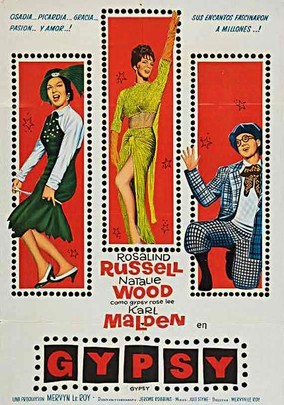
Gypsy-1962

Gypsy-1962

Director Mervyn LeRoy

Starring Rosalind Russell, Natalie Wood

Top 250 Films #80

Scott’s Review #37

567360

Reviewed June 18, 2014

Grade: A

The film version of the iconic Broadway production is a huge success, mainly due to Rosalind Russell’s superb performance as Mama Rose, a muscular and driven stage mother in the Depression-era world of show business.

She is mesmerizing in the role and reminiscent of Joan Crawford and Bette Davis, who would have been wonderful in it.

Russell carries the film with her bombastic, loud, and determined performance- her children will become stars, and Rose will get the stardom and spoils she so richly deserves.

She uses every nook and cranny to her advantage —borrowing money from her father, scraping leftover Chinese food scraps, and stealing silverware.

Rose’s daughters, Baby June and Louise (Natalie Wood), are in tow to help her achieve her goals —June, the talented one, and Louise, along for the ride.

When circumstances develop, Louise blossoms and becomes the famous Gypsy Rose Lee.

From masterpieces “Everything’s Coming up Roses” and “Some People” to her heartbreak at being a driven stage mom, Russell’s performance makes the film.

Her best scene comes at the climax. Rose finally admits that she has spent her life needing to be noticed, hits an empty stage alone in a theater, and has an emotional breakdown.

Natalie Wood and Karl Malden certainly add depth to their characters, especially Wood, who transforms from a mousy wallflower to the seductive stripper Gypsy Rose Lee.

From a casting perspective, I am not sure Wood was quite right for the role- the second time in two years this would occur (her casting in West Side Story being the other misstep), but she was an enormous star at the time and was awarded juicy roles.

Gypsy (1962) is one of the great Hollywood musicals from the 1950s/1960s heyday.

Witty and clever dialogue help this film stand out at the top of the list of similar movies.

Bravura!

Oscar Nominations: Best Scoring of Music-Adaptation or Treatment, Best Cinematography, Color, Best Costume Design, Color

Picnic-1955

Picnic-1955

Director Joshua Logan

Starring William Holden, Kim Novak

Top 250 Films #81

Scott’s Review #550

Reviewed December 19, 2016

Grade: A-

Picnic is a classic 1955 film that is wonderful to watch over Labor Day weekend or anytime during the humid summer season.

The film perfectly depicts summertime in a tiny town in Kansas. It is a slice-of-life story about life in middle America during the 1950s, despite its trials and tribulations.

William Holden stars as a “wrong side of the tracks” type of guy who arrives in a quiet Kansas town on Labor Day weekend, disrupting the town’s events and causing scandals for the townspeople.

He is a hunky former college football player and exudes sexuality.

He then falls in love with his best friend’s girlfriend, Madge Owens, played by Kim Novak. The chemistry between the two stars is the film’s main appeal.

The supporting cast makes this film unique (Arthur O’Connell and Rosalind Russell star as townspeople who are in a relationship of their own).

Picnic also contains a gorgeous and lovely musical score, precisely “Theme from Picnic” and “Moonglow”.

It is shot on location in Kansas, mostly in and around Hutchinson, and is considered classic summer enjoyment.

Based on the Pulitzer-award-winning play.

Oscar Nominations: 2 wins-Best Motion Picture, Best Director-Joshua Logan, Best Supporting Actor-Arthur O’Connell, Best Scoring of a Dramatic or Comedy Picture, Best Art Direction, Color (won), Best Film Editing (won)

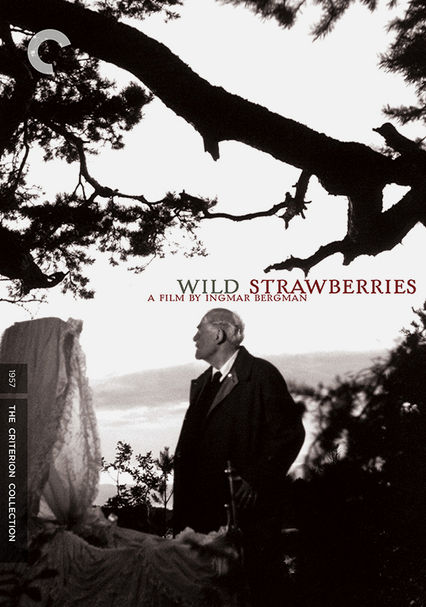
Wild Strawberries-1957

Wild Strawberries-1957

Director Ingmar Bergman

Starring Victor Sjostrom, Bibi Andersson

Top 250 Films #82

Scott’s Review #1,111

Reviewed February 10, 2021

Grade: A

A seventy-eight-year-old man (Victor Sjostrom) reflects on life, loss, and a million other emotions as he ponders his inevitable death in the Ingmar Bergman masterpiece Wild Strawberries (1957).

The film’s melancholy tone forces viewers to imagine themselves in the older man’s shoes and wonder how senior citizens view death. One significant point is that it represents the geriatric demographic, which has traditionally been lacking in cinema.

It’s cerebral and reminds me of A Christmas Carol since an older man struggles over his forgotten and sometimes misbegotten youth.

Bergman creates genius on par with his most famous work, The Seventh Seal, also released in 1957. I’d list these two films as his very best and most inspiring.

Do older people fear death?  Do they whimsically revisit their youth from time to time, or do they live with regret and unfulfilled desires?

My hunch is that it’s probably a bit of all.

Wild Strawberries made me think like the older man and the effect was powerful. They made me worry about my death and relive my glory days.

Isak Borg (Sjostrom) begins to reflect on his life after he takes a road trip from his home in Stockholm to the distant town of Lund to receive a special award. Along the way, a string of encounters causes him to experience hallucinations that expose his insecurities and fears.

He realizes that his choices have rendered his life meaningless, or so he perceives it.

He is accompanied by his daughter-in-law Marianne (Ingrid Thulin), who doesn’t like Isak too much, is pregnant, and plans to leave her husband. They meet a trio of friendly hitchhikers led by Sara (Bibi Andersson), who reminds Isak of the love of his youth.

A bickering couple reminds him of his unhappy marriage, while his elderly mother reminds him of himself.

The best part is when the group stops at Isak’s childhood seaside home and imagines his sweetheart, Sara, with whom he remembered gathering strawberries but who instead married his brother.

Anyone who has returned to their childhood home or neighborhood can easily relate to the powerful memories. I pretended I was in Isak’s character, and several emotions occurred.

Sjostrom infuses a natural range of emotions. At first, crotchety and distant, I admired his sentimentality as he fondly recalls innocently picking strawberries on a summer day. How glorious and innocent it is to reminisce in a mundane yet monumental act.

Although he was an older man, he was once young. How quickly the years pass. I took this as a lesson to appreciate each day and experience. Sjostrom had me mesmerized.

Some find Izak unsympathetic. I found him incredibly likable.

Relationships are a strong element of Wild Strawberries. Izak muses over past loves, his mother, daughter-in-law, housekeeper, and hitchhikers. Peculiar is his relationship with his housekeeper, Agda, who is played stunningly well by Julian Kindahl.

Are they secret lovers or platonic friends? They seem like husband and wife.

While the story is astounding, the visual qualities of Wild Strawberries are exceptional.

The video content is crisp and clear, with very bright black-and-white photography. Each shot is mesmerizing and reminiscent of paintings.

There is so much going on in Wild Strawberries. The closest adjectives to describe the experience are hallucinogenic and mesmerizing.

The people gathered over a meal were young, fresh, and carefree. They all have lives ahead of them, and almost every viewer can recount a time when they felt that way.

It’s both nostalgic and sad to realize it doesn’t last, as Bergman makes so painfully evident.

The scene where Isak witnesses a hearse approaching is terrifying. When he realizes it is himself lying in the casket, it gives one a chill. The scene is creepy and powerful in tone and effect.

Wild Strawberries (1957) explores many facets of the human experience, including sorrow, joy, depression, acceptance, frustration, and fulfillment.

This is a work of genius and is highly recommended to anyone who appreciates excellent experiences in cinema.

Oscar Nominations: Best Original Screenplay

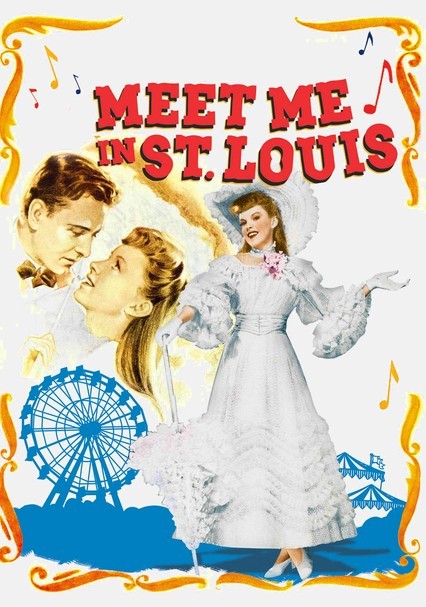
Meet Me in St. Louis-1944

Meet Me in St. Louis-1944

Director Vincente Minnelli 

Starring Judy Garland, Margaret O’Brien

Top 250 Films #83

Scott’s Review #845

Reviewed December 19, 2018

Grade: A

With talents such as Vincente Minnelli and Judy Garland involved in a project, it is tough for the results not to be resounding, and this is the case with Meet Me in St. Louis (1944), a treasured musical with enough songs and melodrama to last a lifetime.

The film is a lively and earnest achievement from both stars when each was at their prime. It is rich in flavor and contains a myriad of good touches.

Meet Me in St. Louis is an ensemble piece featuring many actors, but the film belongs to Garland for the musical numbers alone. The film is groundbreaking and sets the tone for the slew of MGM musicals to follow during the 1950s and 1960s.

The film is considered one of the greatest and most memorable musicals of all time, and I share this sentiment.

The story revolves around the upper-middle-class Smith family, set in 1903, St. Louis. In its lovely form, the film has been composed of seasonal vignettes for over a year.

Trials and tribulations erupt, especially involving the romantic entanglements of eldest sisters Rose (Lucille Bremer) and Esther (Garland), as well as the possibility of the family relocating to New York City.

Rose and Esther are two of the siblings, along with the Smith parents, Grandpa, and Katie, the maid.

The household is filled with glee, music, and heartbreak.

The film’s setup is a considerable success, eliciting a warm sensation. As the title card reads, “Summer 1903,” we are welcomed into a sunny and picturesque street, set against the backdrop of St. Louis, which is perfectly midwestern.

The Smith home is showcased, and the viewer is welcomed into the idyllic world of a bonded family.

Meet Me in St. Louis feels homespun and like a good best friend. It can be watched and re-watched often, regardless of the season, as it features a summer fair, a spooky Halloween sequence, and a dazzling Christmastime segment.

Other than Esther, the most memorable and fascinating character is Tootie (Margaret O’Brien). O’Brien gives a startlingly good performance and packs an emotional wallop, enriching a character arguably interpreted as obsessed with death with some needed humor.

She buries her dolls on a dare and throws flour in a man’s face on Halloween, thereby “killing” him.

Her most significant scene, though, occurs during a meltdown when Tootie destroys her beloved snowmen on the family lawn. The actress portrays such rage and despair during this scene that it is easy to forget, at the time, how young she was.

She was honored with an honorary Oscar for her efforts.

The musical numbers by Garland are absolute treasures. Highlights include “The Trolley Song,” performed as Esther rides the afternoon trolley across town, hoping that the boy next door with whom she is madly in love, John (Tom Drake), will be on the same trolley.

The gorgeously performed number “Have Yourself A Merry Little Christmas” is my favorite. Following a lavish Christmas Eve ball, Esther sings the song to Tootie, and nestled within its lyrics are emotions such as hope and sadness.

Meet Me in St. Louis (1944) is a film that has it all and can be enjoyed by audiences of all ages. With memorable musical numbers, romance, drama, and a wholesome, timeless sensibility, it is a favorite that deserves to be revisited.

Like the finest wines, this film improves with age.

Oscar Nominations: Best Screenplay, Best Scoring of a Musical Picture, Best Song-“The Trolley Song”, Best Cinematography, Color

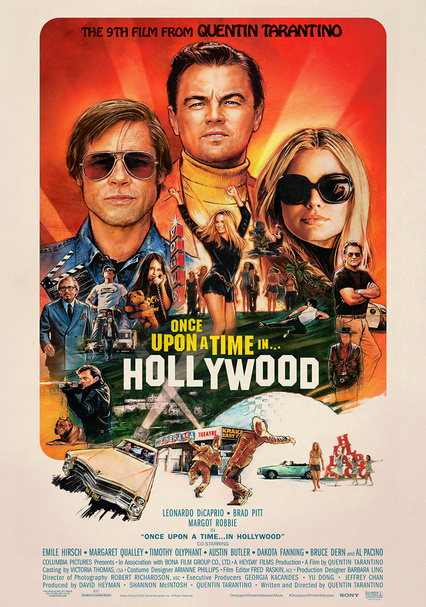
Once Upon a Time in Hollywood-2019

Once Upon a Time in Hollywood-2019

Director Quentin Tarantino

Starring Leonardo DiCaprio, Brad Pitt, Margot Robbie

Top 250 Films #84

Scott’s Review #926

Reviewed August 1, 2019

Grade: A

Once Upon a Time in Hollywood (2019) is another brilliant offering by one of the most (deservedly) respected directors of the modern film era.

This film may be his most personal, as it includes many cinematic references and immerses itself in Hollywood life. Toned down considerably from the violence standard in his other films, the first half lays the groundwork for a startlingly good second half, with every detail of utmost importance.

A bevy of riches awaits any viewer enthusiastically feasting their eyes on this film.

The time is 1969, as actor Rick Dalton (Leonardo DiCaprio) struggles to reinvent himself and revitalize his career in Hollywood amid a changing cinematic landscape.

Famous for a popular western television series from the 1950s, Bounty Law, a pursued film career has not taken off, and he is reduced to guest appearances as the villain, then considered throwaway roles, in other episodic series.

His stunt double and best friend, Cliff Booth (Brad Pitt), accompanies him almost everywhere, serving as both sidekick and errand boy.

Meanwhile, famous director Roman Polanski and his wife, actress Sharon Tate (played by Argot Robbie), have moved into the house next door, which Dalton hopes will help him revitalize his career aspirations.

As Tate goes about her daily life of running errands and watching her movies in the theater, she is visited by Charles Manson one day, looking for the former resident of her house.

Historical viewers are familiar with the subsequent events that unfolded in real life, while Tarantino presents a fictional, tantalizing version of them.

The film’s length is two hours and thirty-nine minutes, quite robust but typical for a Tarantino production. Some may complain about the bloated running time, but the film never drags; instead, the director lays out all the pieces carefully like a fine chess game.

By the mid-point, all hell breaks loose with one of the most suspenseful and edge-of-your-seat scenes in film history. When Cliff drives a flirtatious young hippy hitchhiker, Pussycat (Margaret Qualley), to a range populated by Manson followers, he is in for the adventure of his life…..if he survives.

Once Upon a Time in Hollywood is an orgy of cinematic tidbits, featuring a myriad of clips from forgotten films of the late 1960s and popular songs from that era.

This is just the tip of the iceberg in greatness as Tarantino perfectly immerses the viewer into the time with fury and zest. Every set piece, costume, hairstyle, or car is flawlessly placed. Kraft macaroni and cheese, Velveeta cheese, and popular dog food from the period are featured.

Tarantino is a fan of cinema and makes cinema lovers fall in love with cinema all over again.

The cast is humongous, but each character is necessary and perfectly represented in both large and small roles.

The haunting troupe of Manson followers, specifically Tex Watson (Austin Butler), Squeaky Fromme (Dakota Fanning), and Susan Atkins (Mikey Madison), are all real-life figures. They are foreboding, dangerous, and crucial to the story.

Al Pacino shines in the small but pivotal role of Schwarz (not Schwartz), Dalton’s agent, while Steve McQueen’s look-alike, Damian Lewis, is memorable on-screen for merely seconds.

The list of cameo performances goes on and on and on, and the fun is wondering who may appear next.

Despite the incorporation of big-name stars in important minor roles, the best performances belong to DiCaprio and Pitt. DiCaprio’s best scene takes place alone in his trailer as the washed-up star botches his lines thanks to a hangover, causing a delay in filming.

He abuses himself into nailing the scene, receiving kudos all around, while becoming teary-eyed after a compliment from a young actress.

Pitt has never given a better performance than he does as Cliff, sharing his best scenes with his adorable dog Brandi and with DiCaprio.

Who can ever forget his chest-baring rooftop scene?

Quentin Tarantino scores again with a bombastic and flawless picture, his ninth release. Rumored to retire after his tenth film, one can hardly fathom the reality of that statement. Hismovis can be watched and watched again, continuously absorbing new and noteworthy details of rich texture.

Once Upon a Time in Hollywood (2019) easily joins the ranks of great works, not just of the director’s catalog, but of all time.

Oscar Nominations: 2 wins-Best Picture, Best Director-Quentin Tarantino, Best Actor-Leonardo DiCaprio, Best Supporting Actor-Brad Pitt (won), Best Original Screenplay, Best Sound Editing, Best Sound Mixing, Best Production Design (won), Best Cinematography, Best Costume Design

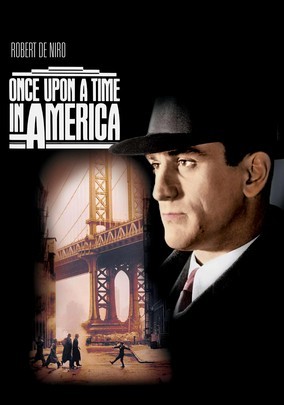
Once Upon a Time in America-1984

Once Upon a Time in America-1984

Director Sergio Leone

Starring Robert De Niro

Top 250 Films #85

Scott’s Review #218

60028306

Reviewed January 19, 2015

Grade: A

An epic film, the extended director’s cut of 1984’s Once Upon a Time in America is more than four hours in length and a directed by Sergio Leone, who also directed the 1968 masterpiece Once Upon a Time in the West and numerous other westerns starring Clint Eastwood.

This particular film is in a different vein and not to be confused as any sequel or related to the aforementioned film- this time Leone explores the crime drama genre rather than the western, and does so in remarkable fashion.

The film tells the story of a group of Jewish friends who became involved in organized crime in New York City during the 1920s.

The main story is told via flashbacks as the central character, Noodles, played by Robert De Niro, returns to Brooklyn thirty years later to reunite with his former mobster friends.

In this way, the film is sectioned- the group of youngsters and kids, and the same characters as adults.

Once Upon a Time in America has been met with considerable controversy since its release. At the time of its release, the film was butchered, with over an hour of footage cut by the studio heads, leaving it largely uneven.

Fortunately, the restored version, over three hours long, is available for viewing. Furthermorethe director’s cut clocks in at well over four hours and is the best version to watch. Due to so many cuts, other versions appear shoddy and out of order, making the viewing experience difficult.

Once Upon a Time in America is largely underappreciated, except among die-hard cinema lovers, most of whom are patient with the film, and it deserves mention as an excellent crime epic drama.

The film shares many similarities with The Godfather and The Godfather Part II, and the role De Niro plays is not too different from that of Vito Corleone in Part II.

However, the greatest contrast is that Once Upon a Time in America is more visually artistic than The Godfather films.

The film centers on Noodle’s perspective as he enjoys his youth in the Lower East Side of Manhattan, where he meets his lifelong friends.

The focal point is his friendship with Max, the adult character played by James Woods, and his undying love for Deborah, played by Elizabeth McGovern as an adult.

As kids, they are worry-free but gradually fall in with a group of older mobsters, first doing their dirty work, then venturing out on their own.

The film’s themes are loyalty, childhood friendship, betrayal, and greed, as all the characters change (or die) over the course of the film.

When a mysterious letter forces Noodles to resurface in Brooklyn, we begin to understand the backstory and the history between the friends as layers are slowly peeled back.

The film drags slightly in the middle section, but the first and last parts are very well made and absorbing.

Leone has a way of pacing the film that works- it is methodical and nuanced, with wonderful set pieces and each period explored- 1920s, 1930s, and 1960s seem equally as authentic as the next one does.

I especially enjoyed the 1920s art direction- it revealed such a state of genuineness and felt like truly being there in that period.

The relationship between Noodles and Deborah is an interesting one worth mentioning. Falling in love as youngsters (when a very young Jennifer Connelly played Deborah), they had an innocent puppy-love relationship.

As adults, they are ruined by a violent, disgraceful act, and one might argue that one of the characters becomes quite unsympathetic.

Once Upon a Time in America (1984) is a sprawling epic film sure to be enjoyed by intelligent fans of the crime epic drama genre and specifically Sergio Leone fans- an underappreciated gem.

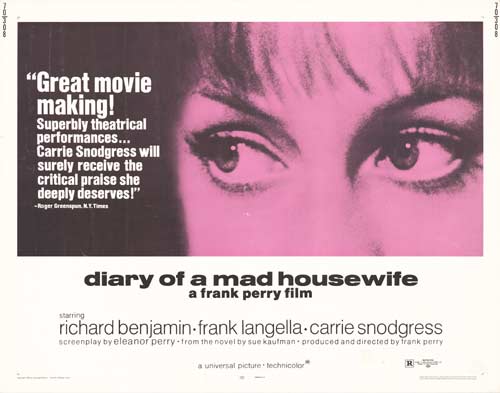
Diary of a Mad Housewife-1970

Diary of a Mad Housewife-1970

Director Frank Perry

Starring Carrie Snodgress, Frank Langella

Top 250 Films #86

Scott’s Review #189

MPW-36461

Reviewed November 5, 2014

Grade: A

The film version of Diary of a Mad Housewife (1970), based on the best-selling novel by Sue Kaufman, is a tremendous, unique story of one woman’s frustration with her irritating life.

A superb Carrie Snodgrass stars as a haggard, insecure, yet affluent housewife named Tina Balser, living in New York City with an unpleasant family.

The family is led by Tina’s verbally abusive and neurotic husband, Jonathan- a successful attorney, played flawlessly and instead comedically by Richard Benjamin, and her two brattish daughters, Sylvie and Liz.

Bored, Tina decides to embark on an affair with crude artist George Prager, wonderfully played by Frank Langella. She teeters on the edge of an emotional breakdown throughout the film and trudges through life depressed and disappointed with all aspects of her life except for her affair with George.

George, however, is a womanizer and openly has other conquests besides Tina.

The film’s brilliant idea is to tell the story strictly from Tina’s point of view. All of the action centers on her character, which makes the film so enjoyable.

On the surface, one might argue she has everything- she is intelligent, well-educated, and affluent. A stay-at-home mother, she is treated like a servant by her husband, Jonathan, as he constantly berates her appearance and criticizes her activities- she is always doing something incorrectly.

The film, though, is not a downer. It is a dry, satirical comedy that reminds me very much of a Woody Allen film. Tina is depressed, yes, but she goes through life with a realistic, almost chin-up, outlook. Her marriage to Jonathan is loveless, yet why doesn’t she leave him?

Her affair with George is sexually satisfying, but she has no intention of pursuing anything further with him, nor does he want to. Tina dotes on her husband- planning dinner parties, sending Christmas cards, and various other wife duties.

I’m not sure that the film’s true intent is to show Tina as either a strictly sympathetic character or as completely downtrodden- the film is not a moral tale nor is it a schmaltzy, woman victimized and will rise against the world’s generic drama- it is witty and filled with black humor.

Despite her unkind husband, I found myself, in a way, envying Tina’s life, and I think the film expects that of the viewer. I never got the impression that Tina was suicidal in any way.

It’s not that type of film.

Instead, she has wealth, and she goes to fancy restaurants, but she also has a very needy husband- he does not abuse her in a physical sense, nor is she reduced to tears by his outbursts.

She gets annoyed, merely accepts that this is the way life is, and gets by with an occasional swig of alcohol while doing dishes or preparing dinner, or when the dog has “an accident” on the living room rug and Tina’s kids cannot wait to tattle on her.

She is a sophisticated woman, trapped in an unhappy yet financially secure relationship.

Diary of a Mad Housewife is an interesting character study for all women to view and perhaps even slyly wink at.  Many women would champion Tina. She is a likable, sarcastic, fabulous chick. Audiences will find themselves drawn to her and even falling in love with her before long- I know I did.

Without the talents of Carrie Snodgrass, who completely carries this film, it would not be the wonder that it is. An excellent satire, the film is not as wry or satirical as the novel, but how many films are?

The novel delves deeper into the role of the Balsers’ maid, who is barely mentioned in the film, yet she plays a larger role in the Kaufman novel.

I loved the portrayal of Jonathan by Richard Benjamin, who must receive some honor for the most annoying character ever in the film when he repeatedly screams for his wife by bellowing “teeeenaaaaa!”, or initiating sex by asking “Would you like a little roll in dee hay?”, one wants to choke him.

The way Tina’s daughters whine “mudder” instead of “mother” is comically brilliant. And her simmering hatred of all of them is dark hysteria.

Diary of a Mad Housewife is a genius and should not be forgotten.

Oscar Nominations: Best Actress-Carrie Snodgress

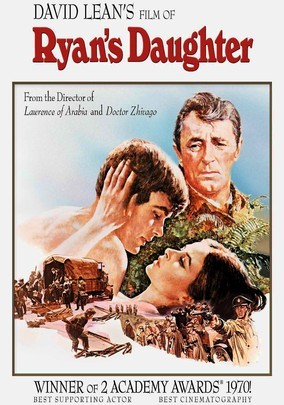
Ryan’s Daughter-1970

Ryan’s Daughter-1970

Director David Lean

Starring Sarah Miles, Robert Mitchum, Christopher Jones

Top 250 Films #87

Scott’s Review #10

60010843

Reviewed June 17, 2014

Grade: A

Ryan’s Daughter (1970) is a sweeping epic by the masterful director, David Lean (Lawrence of Arabia, A Passage to India, Doctor Zhivago).

The film is sprawling and filled with fabulous locales of oceanic Ireland. Much of the action takes place using exterior scenes, and this is arguably as prominent and important to the film as the story is.

Set in WWI-era Ireland, one will immediately notice the gorgeous Irish landscapes and the brilliant photography involved. This gives the film a timeless look, and one can escape into the scenery itself, forgetting the story, and dream away through the roaring waves.

The intense “storm scene” is second to none as Lean had to wait over a year to film this pivotal scene- and Mother Nature had to cooperate.

The story is twofold: a love story involving a woman torn between her schoolteacher husband and a strapping, yet English (at this time, there was no love lost between the Irish and English), officer. Rosy (Sarah Miles) is headstrong yet kindhearted, the daughter of a local, prominent man.

Her husband, Charles (Robert Mitchum), is dutiful and loyal to a fault. After Rosy’s affair with the British officer, she is deemed a tyrant by the townspeople, while her husband stands by her side.

The second story is political. A strong sense of nationalism runs through the townspeople toward the British. Both stories blend nicely as small-town gossip, and a subsequent witch hunt comes into play.

The village idiot is played brilliantly by John Mills, who won an Academy Award for his efforts.

The story’s main appeal is character-driven, and the audience will surely feel perplexed about whom to root for or empathize with. I know I did. In fact, at different times, one’s loyalties can fluctuate or be challenged.

The film is reminiscent of Doctor Zhivago (1965) to me, as romance and politics intertwine, and a dilemma involving the central female characters is similar. At over three hours, the film does not drag and remains interesting throughout, as the conflict and drama reach a crescendo in the final act.

At no time is there any filler or unnecessary scenes, which, in itself, is a positive.

Sadly, Ryan’s Daughter is not considered as worthy as other aforementioned David Lean efforts, but I disagree with this- the film ages exceptionally well, like a fine wine.

This film also focuses mainly on a female character and, therefore, is female-driven, a remarkable aspect of the film, circa 1970.

Oscar Nominations: 2 wins-Best Actress-Sarah Miles, Best Supporting Actor-John Mills (won), Best Sound, Best Cinematography (won)

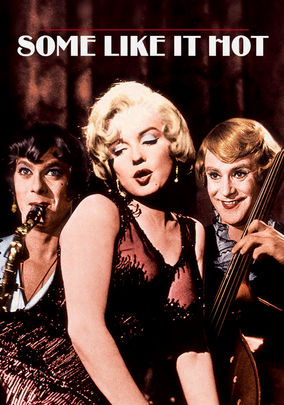
Some Like It Hot-1959

Some Like It Hot-1959

Director Billy Wilder

Starring Marilyn Monroe, Jack Lemmon, Tony Curtis

Top 250 Films #88

Scott’s Review #388

60010910

Reviewed March 26, 2016

Grade: A

Considered one of the best comedies ever made, Some Like It Hot (1959) is a funny, outlandish, yet controlled film that never goes too over the top or dives into outrageous camp. Instead, it is well-written, well-acted, and contains excellent chemistry between the stars.

In summary, it is a film in which all the elements come together just right. In film comedy, this is an infrequent occurrence. Instead, we are typically treated to formulas or retreads of past successes.

Some Like It Hot feels refreshing and brilliant.

The film was also monumental in paving the way to the eventual elimination of the hated Hays Code, which imposed many restrictions on American cinema from 1930 to 1968.

Some Like It Hot pushed the envelope in essential ways, leading to a spike in creativity and art within the film industry that lasted mainly throughout the 1960s and 1970s.

For that, it is a masterpiece.

Down on their luck, broke, and needing work, Jerry and Joe (Jack Lemmon and Tony Curtis) are struggling jazz musicians seeking a meager existence in snowy Chicago. Having witnessed the St. Valentine’s Day massacre, they go on the run from the assailants, who have seen them, and pose as Josephine and Daphne, dressed in drag.

This leads to one humorous situation after another as they take the bus from Chicago to Miami with an all-girl musical band, a sort of slumber party led by boozy starlet Sugar Kane (played by Marilyn Monroe), who serves as the band’s vocalist and ukulele player.

Once arriving in sunny Miami, “the girls” find themselves entangled in romantic relationships with Sugar and the wealthy millionaire Osgood Fielding III, which leads to some blatant comic antics. Josephine poses as a male Shell Oil Junior, attempting to woo Sugar with his assumed riches in the oil business.

What makes Some Like It Hot work so well is that it does not go too far over the edge to seem campy, nor does it play it too straight. This perfect balance makes the film rich with natural, fresh comedy.

Director Billy Wilder chose to film in black and white, avoiding Lemmon and Curtis looking ridiculous with colorful, bright makeup. This was toned down and muted to allow for greater believability.

Additionally, the film’s subtle edginess impresses me with each passing watch. Some Like It Hot got away with a lot in 1959, considering the restrictions, and that knowledge gives it a groundbreaking quality.

There is an air of homosexuality throughout, and the final line is my favorite, allowing for a thought-provoking interpretation.

When Daphne reaches her breaking point with Osgood’s romance and yanks off his wig, she professes exasperation, “I am a man!! ” Only to hear Osgood’s startling reply, ‘Well, nobody’s perfect,’ is clever dialogue.

Did Osgood know all along that Daphne was male? Will he marry ‘her’ anyway?

Who wouldn’t have blushed gazing at Monroe’s skin-colored and quite revealing outfit? It gave the impression that she was nude and showed how funny Lemmon and Curtis’s physical comic timing together is.

Bumbling around in stockings, heels, and dresses, attempting to be feminine but never quite succeeding, makes all the other characters think they are women, which is excellent.

Curtis was reportedly quite uncomfortable in drag, which shows on camera, but this works out well, giving Josephine a natural awkwardness.

Lemmon went all out in his costumes, and his energy came across.

In my opinion, although not looking her best, slightly plump and tired, Marilyn Monroe still gives the film added life and charm, and who is not mesmerized by her on stage singing “You Wanna love me”?

To think that Monroe died only three short years later is sad, and it highlights the appreciation for her career in its final stages.

A risqué, laugh-out-loud, funny treat, Some Like It Hot resonates with me and did so with audiences upon release in 1959.

Comical, thoughtful, and highly influential, the film is a must-see for fans of honest and cliché-free film comedy.

It is a blueprint for all witty comedies to follow.

Oscar Nominations: 1 win-Best Director-Billy Wilder, Best Actor-Jack Lemmon, Best Screenplay Based on Material from Another Medium, Best Art Direction, Black-and-White, Best Cinematography, Black-and-White, Best Costume Design, Black-and-White (won)

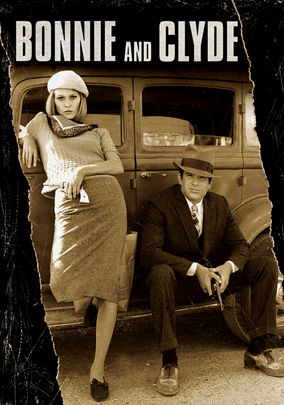
Bonnie and Clyde-1967

Bonnie and Clyde-1967

Director Arthur Penn

Starring Warren Beatty, Faye Dunaway

Top 250 Films #89

Scott’s Review #628

Reviewed March 25, 2017

Grade: A

Bonnie and Clyde is an excellent 1967 crime drama that is not only a great film but also successfully and surprisingly influenced an entire generation, becoming something of a rallying cry for the youth of the time.

Released in a tumultuous period in history (the Vietnam War, the Sexual Revolution, and Civil Rights), the film fits the times and was groundbreaking in its use of violence, blood, and sex.

The film holds up tremendously well to this day and is beloved by intelligent film lovers everywhere.

The film begins with snapshots of the honest Bonnie and Clyde- a duo of bank robbers who rampaged the southwest during the Great Depression.

Set in steamy Texas, circa the 1930s, the film tells its story.

Clyde Barrow (Warren Beatty) meets Bonnie Parker (Faye Dunaway) when he tries to steal her mother’s car one hot day. Instantly infatuated with each other, the steamy duo team up and become partners in crime.

Over time, they enlist others and become more successful bank robbers, with the stakes rising with each heist.

Rounding out the crew of criminals are gas-station attendant, C.W. Moss, and Clyde’s older brother Buck, played by Gene Hackman, along with his wife, Blanche (Estelle Parsons), an innocent-minded and sometimes hysterical preacher’s wife.

Bonnie and Clyde is a unique film in many different ways- the quick-cut editing style influenced Sam Peckinpah in his movies to come, and the film uses a fast-paced rat-a-tat-tat style that symbolizes the gunfire, a significant element of the film.

Blood spurts from victims’ bodies in a style never before seen on the big screen, which led to many filmmakers’ comfort with using increased violence.

You could say that Bonnie and Clyde took away the innocence of Hollywood films and shook all of the traditional elements inside out.

The film’s conclusion is one of the greatest in cinematic history.

Far from an idyllic, happy ending, the traditional one in those days, the law finally catches up with Bonnie and Clyde, with grim results for the pair, and their demise is gruesome but true to form.

We have fallen in love with the characters, so their hasty exit from this world is tough to stomach, and as they writhe and twitch with each gunshot wound, the bullets pummeling the bodies, the scene is a difficult one to watch.

The love story between Bonnie and Clyde is intense yet sweet, and the casting of Beatty and Dunaway is spot-on. Smoldering with sexuality- as Bonnie fondles Clyde’s gun, who does not see this as a phallic symbol- their relationship is fraught with stamina and emotional energy.

The two actors feed off of each other and fill the scenes with gusto. Their chemistry is part of what makes the film so great.

One of the best scenes is the shoot-’em-up showdown at a ranch where the robbers are hiding out. The scene is laden with intensity and violence.

As Buck is mortally wounded, Blanche is blinded and captured, soon to make a grave mistake in revealing one of the others ‘ identities.

Bonnie, Clyde, and C.W. barely escape with their lives, and their antics from this point become bloodier and bloodier. The cat-and-mouse play during this scene makes it the most suspenseful of them all.

Amid all the violence, a fantastic scene unfolds when Bonnie and Clyde meet at a secret location with Bonnie’s mother. A local townswoman, not an actress, was cast in the pivotal role of Bonnie’s mother, and the scene is emotionally charged.

The woman’s kindness and sensibility, and the sheer “regular person” she embodies, humanize Bonnie and Clyde, and ominously, their downfall is imminent.

A highly influential film, Bonnie and Clyde is a film that is still quite relevant, especially for those who appreciate good movies and rich, intelligently written characters who are flawed yet humanistic, layered with complexity.

This is what director Penn carves out, and the film is an all-time Hollywood classic.

Oscar Nominations: 2 wins-Best Picture, Best Director-Arthur Penn, Best Actor-Warren Beatty, Best Actress-Faye Dunaway, Best Supporting Actor-Gene Hackman, Michael J. Pollard, Best Supporting Actress-Estelle Parsons (won), Best Story and Screenplay Written Directly for the Screen, Best Costume Design, Best Cinematography (won)

Reflections in a Golden Eye-1967

Reflections in a Golden Eye-1967

Director John Huston

Starring Marlon Brando, Elizabeth Taylor

Top 250 Films #90

Scott’s Review #678

Reviewed September 3, 2017

Grade: A

Reflections in a Golden Eye is a film made during the beginning of a rich and creative time in cinema history (the latter part of the 1960s and the beginning part of the 1970s), where films were “created” rather than produced.

Less studio influence meant more creative control for the director- in this case, John Huston, who cast the immeasurable talents of Elizabeth Taylor and Marlon Brando in the key roles.

Worth mentioning is that Montgomery Clift was the intended star, but died before the shooting began. Richard Burton had turned down the role.

The film is an edgy and taboo story of lust, jealousy, and sexual repression set amid a southern military base. In the novel 1967, repressed homosexuality is explored in full detail, as well as heterosexual repression and voyeurism.

Initially a box-office flop, the film has since become an admired and cherished part of film history.

Reflections in a Golden Eye is based on the 1941 Carson McCullers novel.

Major Weldon Penderton (Brando) resides with his spoiled wife, Leonora (Taylor), at a US Army post somewhere in the South during the 1940s and 1950s.

A neighboring couple, Lieutenant Colonel Morris Langdon (Brian Keith) and his depressed wife, Alison (Julie Harris) are also featured and the trials and tribulations of Army life are exposed. Playing key roles are Langdon’s effeminate houseboy, Anacleto, and a mysterious Private Williams, played by a young and dashing Robert Forster.

Weldon is a repressed homosexual, rigid, and very unhappy with himself and his life, despite being successful professionally. To make matters worse, he is repeatedly needled and tormented by Leonora, who is having an affair with Morris.

Leonora adores her prized horse, Firebird, who becomes a significant part of the story. When Weldon and Leonora spy Private Williams completely naked in the woods riding bareback, Weldon feigns disgust, but his secret desires for the young man are revealed.

The two men then begin a secret cat-and-mouse game of spying and following each other around until a tragedy occurs.

Reflections in a Golden Eye is not a happy film; rather, it is a depressing piece about troubled lives and emotions. Passions are unfulfilled and repeatedly repressed as each character can be dissected in a complex fashion.

I am most intrigued by the character of Private Williams. A bit of an oddity, he mainly watches the action from afar, learning Weldon and Leonora’s secrets- they keep separate bedrooms and repeatedly squabble.

We wonder- is Williams obsessed with Weldon or Leonora? Or both? He sneaks into her room and rummages through her lingerie and perfume drawers. Would he, in a different time, consider himself to be transgender? Or merely intrigued by cross-dressing?

Weldon can also be carefully examined- he has fits of rage and violence that frequently erupt. Poor Firebird suffers a violent beating at his hands, to say nothing of the main character’s fate at the end of the film.

Having a macho and masculine exterior, his job is that of a leader, but the perception of a homosexual male during that time, if it was thought of at all, was more like the femininity portrayed by the Filipino male, Anacleto.

Huston wisely casts both male roles well in this department, as the men, along with Williams, could not be more different or nuanced.

A wise and telling aspect of the film is how it was initially shot with a muted yet distinguishable golden haze- appropriate to the film’s title- and much of the action seems to be viewed from the viewpoint of the horses.

The color theme was reportedly changed because it confused audiences, but my copy has the intended golden haze, and I find this tremendous. It works brilliantly in capturing Huston’s original intentions.

The film is reminiscent of Who’s Afraid of Virginia Woolf or Cat on a Hot Tin Roof, the latter made only the year before. Arguably, Taylor’s character in that film is very similar to Leonora’s.

In ways, Reflections of a Golden Eye (1967) could have been a stage production. One thing is clear: the film explores the human psyche deeply. I look forward to repeated viewings and further digging into the feelings and motivations of every principal character in a groundbreaking film by Huston.

3 Women-1977

3 Women-1977

Director Robert Altman

Starring Shelley Duvall, Sissy Spacek

Top 250 Films #91

Scott’s Review #578

Reviewed January 1, 2017

Grade: A

Robert Altman is one of my all-time favorite directors, and what a pleasure it is to uncover additional gems that he has directed over the years.

I have seen 3 Women (1977) before, but some films (the true greats) are like fine wines, getting better and better over time and more appreciated with each passing viewing.

3 Women is a prime example of this. The psychological depth and the characters’ evolving personalities make it a unique and brilliant experience.

3 Women is a psychological feast and the study of three complex characters, hence the title.

How fantastic, how Altman claimed to have dreamed the entire film, complete with Duvall and Spacek in the roles, and then attempted to recreate the dream on film- he has done a masterful job.

The film is dream-like with an interpretive element that will leave the viewer pondering not only the relationships between the three women but who exactly each woman is- consciously and subconsciously.

Lots of questions will abound as the film concludes.

The main relationship is between the characters portrayed by Duvall and Spacek.

Duvall plays Millie Lamoreaux, a chatty and confident woman who works at a California health spa for elderly clientele. She is statuesque and gorgeous, but surprisingly not well-liked by her colleagues, two of whom are mysterious identical twins.

New employee Pinky Rose is a shy, vulnerable, mousy type who takes an immediate liking to Millie, becoming somewhat obsessed with her. The pair eventually moves in together and begins a mysterious, sometimes volatile friendship, dripping with jealousy and lust.

Eventually, they switch personalities, only adding to the film’s mystique. They reside in the Purple Sage Apartments, run by Edgar and Willie Hart.

Willie is the third woman referenced in the title and a pregnant painter, creating unsettling murals that amaze Pinky.

It has been argued that 3 Women influenced the David Lynch masterpiece, Mulholland Drive (1992), and the more I ponder this, the more I agree.

The dream-like, surrealistic qualities are prevalent in both films.

Peculiar, strong-willed women are the central characters in both films, and psychology and amnesia are the main themes. The Southern California setting is identical, as are the interpretive elements, and the fantastically odd characters- both lead and supporting.

When Pinky’s elderly parents are introduced, it feels uncanny, like a pair of grandparents featured in Mulholland Drive. Both are superior films, so the comparisons are a joy to think about and ponder the complexities.

Ingmar Bergman’s 1966 psychological film Persona is most certainly a large influence on 3 Women. That film dared to explore merging personalities among women.

The final scene of 3 Women is intense and thought-provoking. The women’s lives carry on after a tragic event, but each assumes a distinct persona and role within the family unit they have forged.

Among other qualities, I view 3 Women as a feminist film, despite being directed by a male. Altman was famous for giving his actors free rein in dialogue and development, and this was most certainly the case with 3 Women.

One of Altman’s masterpieces.

Altman is a genius in nearly every film he creates, but 3 Women is probably his most cerebral and the one that can be talked about and analyzed more than the others.

What a pure treat for a complex film lover to explore. 3 Women (1977) is not for mainstream audiences, nor is it meant to be.

Inglourious Basterds-2009

Inglourious Basterds-2009

Director Quentin Tarantino

Starring Brad Pitt, Christoph Waltz

Top 250 Films #92

Scott’s Review #589

Reviewed January 7, 2017

Grade: A

Inglorious Basterds (2009) is simply a great movie. Blending many film genres, it is hard to categorize, but that is because it is a Quentin Tarantino film, and that says it all.

The film as a whole contains excellent acting, is wonderfully shot, and is extremely detail-oriented, plus it has the familiar “Tarantino” style of music and sound, the chapter breakdown, and the heavy violence.

Set mainly in German-occupied France during the early 1940s, during World War II, the action centers around two stories- Shosanna (Melanie Laurent), a teenage girl whose entire family is killed after being discovered hidden by a dairy farmer.

He is a Jewish sympathizer, and Shosanna barely escapes with her life when an SS Colonel, brilliantly played by Christoph Waltz, interrogates the man.

Three years later, now living in Paris and owning a cinema, she plots her revenge. The other story is also of a revenge plot by a group of Jewish-American soldiers to kill as many Nazis as possible.

Both stories eventually intersect with a grand finale inside a cinema.

The story itself is richly nuanced and unlike many generic films of today. The fantastic set design and the perfection of every last set-piece are amazing. Long scenes play out slowly but bristle with authenticity and good dialogue.

Take the first scene for example- as the SS Colonel, aptly nicknamed the “Jew Hunter” plays cat and mouse with the dairy farmer, politely asking for two glasses of milk, the audience knows the payoff will be huge, but the conversation crackles with good dialogue.

What strikes me most about the film is the intelligent writing. The many scenes of conversations between characters- a chat over strudel and cream, a trivia game at a bar, and the aforementioned scene at the farmhouse, bristle with unique, clever written dialogue so that the scenes are far from mere filler.

Of course, this is also a characteristic of Tarantino.

At over two and a half hours Inglourious Basterds (2009) is long but satisfying.

My only criticism is of Brad Pitt. I didn’t buy him as a Tarantino guy and found his character the only weak point of the film. His southern drawl just did not draw me in like I thought it might.

He was touted as the main character (perhaps because he was the biggest star), but he plays a supporting role.

Oscar Nominations: 1 win-Best Picture, Best Director-Quentin Tarantino, Best Supporting Actor-Christoph Waltz (won), Best Original Screenplay, Best Sound Editing, Best Sound Mixing, Best Cinematography, Best Film Editing

Faster, Pussycat! Kill! Kill!-1965

Faster, Pussycat! Kill! Kill!- 1965

Director Russ Meyer

Starring Tura Satana, Haji

Top 250 Films #93

Scott’s Review #406

220px-Faster_pussycat_kill_kill_poster_(1)

Reviewed May 28, 2016

Grade: A

Faster, Pussycat! Kill! Kill! is a 1965 masterpiece that has eluded me for many years, primarily because it is not available on Netflix.

Finally, I decided to buy the newly released Blu-Ray edition and immediately became a massive fan of this Russ Meyer work of art.

Influential and intriguing, it is no surprise that it is a camp classic.

Several famous directors, like Quentin Tarantino, have paid homage to this film in their later works, notably Death Proof (2007). Fast cars, sexy women, and murder are the hallmarks of this unique film.

Compared to other famous Meyer works, specifically the gregarious yet brilliant Supervixens (1975), Faster, Pussycat! Kill! Kill! is almost understated and quiet.

He also directed the well-known Beyond the Valley of the Dolls from 1970.

Shot in black and white, several notable comparisons to Supervixens are: a hot California desert, large-breasted women, and gas stations are prevalent throughout.

Unlike Supervixens, though, there is little or no nudity.

Three go-go dancers race through the desert in their sports cars. They have murder and kidnapping on their minds. The ring leader, Varla (Tura Satana), is a vicious, sexy, Asian woman. Her two sidekicks are Billie (Lori Williams) and Rosie (Haji). While Billie and Rosie fight in a juvenile fashion, Varla is the serious one.

The trio enjoys racing their cars and engaging in the game “chicken.” When they meet the all-American couple, Tommy and Linda, out for a romantic drive, they have a dispute and end up killing Tommy, drugging and kidnapping Linda.

After stopping for gas, Varla hatches a plot to steal money from a crazy older man, his muscular yet dimwitted son (known as the Vegetable), and the older man’s seemingly normal son, Kirk.

Faster, Pussycat! Kill! Kill! is a groundbreaking film because it subverts traditional gender roles. The women are hardly written as sex objects, as most films of that day were far from that. They are ferocious, specifically Varla, and they do typically masculine things. They race cars, fight, and kill, yet they do not sacrifice any of their femininity.

All three women are attractive and busty, and they wear stylish makeup. They are not trying to be like men but tough girls, and these aspects make the film so wonderful to watch.

In Hollywood, these female characters are often portrayed as molls to even rougher men or as supporting characters who aid the men in some way. These female characters are the film.

My favorite character is Varla. Sexy, fierce, and a minority, how often is a female villain this charismatic?  Perhaps she would be a conquest for Bond in the Bond films, not her person.

Varla makes up her own rules. The fact that she is Asian is superb and breaks many barriers to how Asians are portrayed in the film. Varla is more devious than the other characters and is willing to kill anyone who stands in her way, even her friends.

She is a character skillfully written by Russ Meyer and is a quintessential femme fatale.

The male supporting characters are interesting. The older man, actor Stuart Lancaster, would later appear in Supervixens. He is a cripple, wacky, and as diabolical as the women. He has designs on innocent Linda and makes no bones about it. The Vegetable is hunky and fresh-faced- an innocent victim of his father’s evil ways, so he is a character we root for. I enjoyed the brief romance between him and Billie.

Lastly, Kirk is the “normal” son, also a victim of his father. When he and Linda run across the desert while Varla chases them, we root for them to survive.

The black-and-white style, chosen to save money, enhances the unique cinematography with sharp edits, giving the film a mystique.

The 1960s jazzy score also adds to the film. In color, I wonder if the film would have had a more cartoonish quality. The black and white moves Faster, Pussycat! Kill! Kill! Into art film territory.

The debate over the film is, “Is the film exploiting women or empowering them?” The film answers whether women can be challenging, sexy, and complicated with a resounding yes.

All three principal characters are layered, each developing feelings for other characters. At one point, Billie questions Rosie’s sexuality. Still, the female characters are neither monsters nor caricatures. They are complex with real emotions.

Faster, Pussycat! Kill! Kill! (1965) is an influential art film/exploitation film that empowers female characters, questions gender categorizations, and takes hold of the viewer, never letting go.

The film is a brilliant representation of the changing times in cinema during the 1960s.