Tag Archives: Pupella Maggio

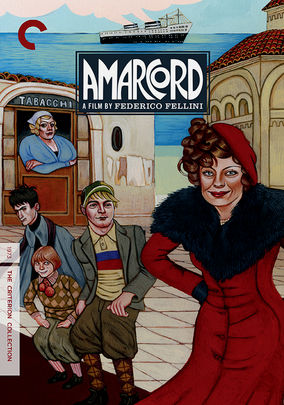
Amarcord-1974

Amarcord-1974

Director Federico Fellini

Starring Bruno Zanin, Magali Noel, Armando Brancia

Top 250 Films #78

Scott’s Review #357

247784

Reviewed January 9, 2016

Grade: A

Federico Fellini’s Amarcord, winner of the Best Foreign Language Oscar and Golden Globe in 1974, is a semi-autobiographical film based on the director’s own childhood.

Set in the small Italian village of Borgo San Giuliano, the film features a diverse array of quirky, eccentric characters.

The plot centers around young Titta, and his coming-of-age development as he blossoms into a young man- his sexual desires and fantasies are heavily explored in this zany film.

Since the time is the 1930s and Fascism, led by the tyrannical Mussolini, was rearing its ugly head, Amarcord is not all light-hearted fun and games, despite how it appears on the surface- there is a serious undertone to the entire film.

Still, the film lacks any sort of story that can be dissected very well, which both pleases and frustrates- the film is simply to be “experienced”. It can leave you spinning, scratching your head, or disliking the film.

That is not to say that I take issue with or take offense at Amarcord. I adore the film, but it is not an easy watch. Scenes meander about in a dream-like fashion as we follow Titta through his sexual blossoming.

In one memorable scene, Titta has a titillating experience with a buxom older female who lives in the village. Some of the other characters we meet are giddy with peculiarities: a blind accordion player and a female nymphomaniac, to name but a couple.

Titta and his family are featured prominently as they eat, fight, and live together. One day, when the family treks to visit their Uncle Teo, who is confined to an insane asylum, they take him out for a day in the country, where he climbs a tree and refuses to come down.

A dwarf nun and two orderlies finally arrive and coax him down- he obediently returns to the asylum. It is a bizarre sequence, but one that sums up Amarcord perfectly.

Amarcord contains one wacky scene after another, but many of the scenes are not just to showcase outlandish behavior, nor are they created as fluff.

Fellini has a distinct message in the film, and several scenes mock Christianity or Mussolini’s crazy political ideas.

The film is larger than life but also encrusted with the fear of 1930’s Fascism and the fear that the Italians felt during this time.

The film is also sweet, and Fellini successfully adds a nostalgic feel to it- everyone feels cozy in a large sprawling town with unique characters, shenanigans, and a celebratory theme, but seriousness lurks beneath.

Amarcord (1974) is a zest for life throughout a tumultuous time, and Fellini successfully creates a hybrid of the two, creating one fantastic film in the process.

Oscar Nominations: 1 win-Best Foreign Language Film (won), Best Director-Federico Fellini

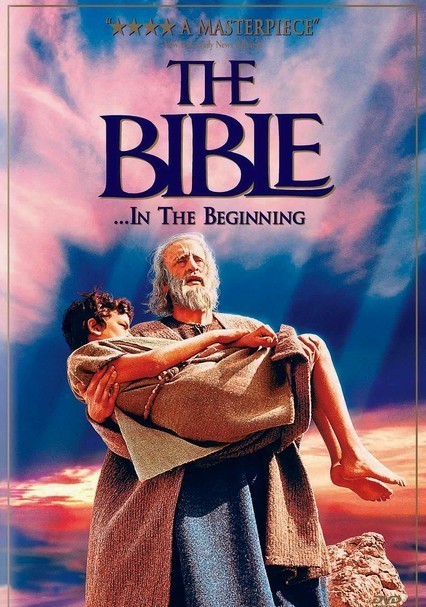
The Bible: In the Beginning-1966

The Bible: In the Beginning-1966

Director John Huston

Starring George C. Scott, Ava Gardner, Richard Harris

Scott’s Review #1,139

Reviewed May 5, 2021

Grade: A-

An epic of grand proportions that nearly rivals the magic cinematography of Lawrence of Arabia (1963), The Bible: In The Beginning (1966) embraces its definition of majestic, magnificent, and sweeping.

The story follows the chronological telling of The Bible book, beginning with Adam & Eve.

It is important to remember that one need not be Catholic, Christian, or of any religious persuasion to enjoy the film’s rapturous beauty.

The pious and non-believers alike can enjoy the experience. There is a hint of the unbelievable and suspension of disbelief in some of the stories gracing director John Huston’s “Good Book.”

He also narrates some of the stories and appears as Noah.

Nobody is mocked for their beliefs, and the film is a straight-ahead interpretation of the first twenty-two chapters of the Book of Genesis, covering the stories from Creation and Adam and Eve to Isaac’s binding.

Abraham (George C. Scott) and Sarah (Ava Gardner) are heavily featured.

The film focuses on five main sections: Creation, Garden of Eden, Cain and Abel, Noah’s Ark, and Abraham’s story. Some other stories are given less screen time and attention but are featured.

Speaking of Adam and Eve (Michael Parks and Ulla Bergyrd), they kick off the action with the fateful decision to pick and taste the luscious fruits dangling before their eyes as the Serpent fiendishly looks on. God punishes Adam and Eve for their temptations, setting off a common theme throughout the film and, indeed, the excellent book: resisting pleasures of the flesh and being penalized for caving into desires.

Aod is happy when people are unfulfilled and joyless. Sadly, some have taken this too seriously.

We could debate religion until the cows come home, and many have, but I became aware of a hint of ridicule or at least intense questioning on the part of Huston.

He creates scenes that most would deem ridiculous if not written in the words of the Bible. Again, Huston is careful not to mock anyone, shrouding any antics in good, stylized 1960s film, but a woman being turned into a pillar of salt for looking at the sky could be found amusing.

Admittedly, some chapters are better than others.

The trials and tribulations of Abraham and Sarah get off to a slow start when Abraham and company traverse miles and miles of the lonely desert so much that I was left wondering if they were on the road to nowhere.

Finally, the action takes off as Sarah realizes she is barren, which makes her maid conceive a child with Abraham. I never knew this saga had so much in common with the Hulu hit The Handmaid’s Tale, but the similarities are eerie and uncanny.

Noah and his Ark is also an excellent sequence and brings more humor than necessary, but I guess this is to counterbalance more severe stories. Noah adores animals, especially cats and lions, and treats them beautifully, choosing to save and live harmoniously with the creatures. They love him. The flooding scenes related to this chapter are exquisite and adventurous.

The film depicts God as a bit of a son of a bitch as he calls Abraham to lead his only son to a high mountain and sacrifice him. This tests Abraham’s will and is thoughtful.

If many of the actors look Italian, it’s because they do. Pupella Maggio, famous for her role in Fellini’s Amarcord (1973), plays Noah’s wife.

Much of the film was shot in and around the Italian city of Rome.

Huston not only narrates some of the sections but appears as Noah himself!

The Bible: In the Beginning (1966) is exquisite and pleasing cinematically. Many fans of religious cinema will prefer the more conventional The Ten Commandments (1956) to this one. While slow at times, by the conclusion, the film has aged like a fine wine and had me enthralled and appreciative of its achievements.

Oscar Nominations: Best Original Music Score