Barry Lyndon-1975

Barry Lyndon-1975

Director Stanley Kubrick

Starring Ryan O’Neal, Marisa Berenson

Top 250 Films #44

Scott’s Review #211
284790

Reviewed January 4, 2015

Grade: A

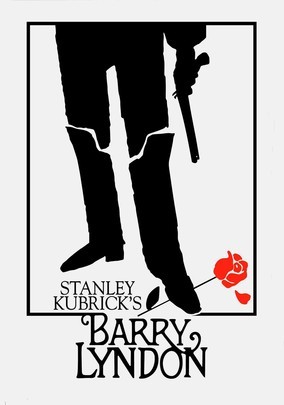
Barry Lyndon (1975) is a sprawling, beautiful film by famed director Stanley Kubrick. The film is set in the 18th century.

Extremely slow-paced yet mesmerizing, every shot looks like a portrait, and the inventive use of real candlelight in certain scenes makes this film a spectacle in its subdued beauty, to say nothing of the gorgeous sets and costumes.

The film is nothing short of a marvel to view.

The story centers around Ryan O’Neal, who plays an Irishman named Redmond Barry.

Redmond is a poor Irishman, but he is an opportunist. The film follows his life as he travels throughout Ireland, England, and Germany, becoming involved in duels, being robbed, impersonating an officer, being reduced to a servant, gambling, marrying a rich widow, and feuding with his stepson.

When he woos and marries the wealthy Countess of Lyndon, he settles in England to enjoy a life of wealth and sophistication. He changes his name to Barry Lyndon.

His ten-year-old stepson, Lord Bullingdon, becomes a lifelong enemy as their hatred escalates, and he is the focal point of Act II of the film.

The supporting cast is filled with unique characters, and in particular, the three sinister characters (Lord Bullingdon, Mother Barry, and Reverend Runt) are delicious to watch, especially when they square off against one another, as with Runt and Mother Barry.

Barry’s two love interests (Lady Lyndon and a German war widow) are entertaining to watch, and Lady Lyndon’s costumes are exquisite. Furthermore, Chevalier de Balibar, a wealthy gambler who takes Barry under his wing, is a delight.

As with many masterpieces, the film would not be as wonderful without the great casting.

My three favorite scenes include the vicious confrontation between Mother Barry and Reverend Runt- an initially polite conversation between two selfish characters gradually spins into viciousness, the duel between Barry Lyndon and Lord Bullingdon- bitter rivals square off in an awkward yet dramatic duel, and when Barry passionately kisses his dying friend- an unexpected homoerotic scene.

Barry Lyndon delves into the issue of class and class distinctions, clearly defining the haves and the have-nots, and the struggles of the poor to obtain wealth by any means and of the wealthy to retain their good fortunes.

With a running time of over three hours, it may initially turn viewers off, but over time, the film will grip them and not let go.

Having now seen Barry Lyndon (1975) four times, I enjoy the film more each time as I become more absorbed in and immersed in the masterpiece.

It’s like a fine wine- it gets better with each taste.

Oscar Nominations: 4 wins-Best Picture, Best Director-Stanley Kubrick, Best Screenplay Adapted from Other Material, Best Scoring: Original Song Score and Adaptation or Scoring: Adaptation (won), Best Costume Design (won), Best Art Direction (won), Best Cinematography (won)
Marnie-1964

Marnie-1964

Director Alfred Hitchcock

Starring Sean Connery, Tippi Hedren

Top 250 Films #45

Scott’s Review #180

60000769

Reviewed October 4, 2014

Grade: A

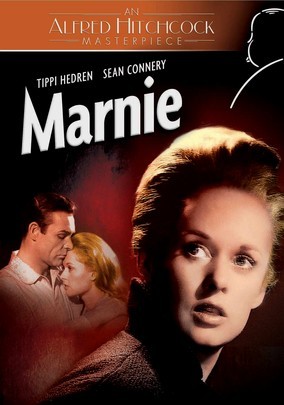
When evaluating Alfred Hitchcock’s many films, Marnie (1964) is one of the more complicated. In recent years, it has earned higher praise than it did at its release, similar to Vertigo (1958).

It features one of Hitchcock’s most complex psychological characters and is as much a character study as a psychological thriller.

Tippi Hedren stars as Marnie Edgar, a troubled young woman who travels from one financial company to another, using a false identity and her good looks to insinuate herself into a clerical job without references. Over time, she steals thousands from the companies by gaining their trust.

Eventually, she is caught by Mark Rutland, a handsome, wealthy widower and client of one of the firms, played by Sean Connery. Infatuated with Marnie, he strikes a deal with her: She will marry him, but he will not turn her over to the police.

Marnie gives most of her stolen money to her disabled mother, Bernice, in Baltimore, played by Louise Latham.

Why Bernice is crippled, avoids affection with Marnie, and why Marnie despises most men and is terrified of the color red make up the film’s mysterious nature. Diane Baker is compelling as Lil, the sister-in-law to Mark and somewhat nemesis of Marnie.

The film features three scenes I am enamored with each time I watch it. In one scene, Marnie hides and waits in the bathroom until all the employees have gone home for the night. She carefully steals money from her employer’s safe and prepares to make her escape. Suddenly, she notices an unaware cleaning woman with her back to Marnie, yet blocking the exit.

How will Marnie escape unnoticed? The surprise in this scene is excellent. Hitchcock plays the scene without music, which adds to the tension—brilliant.

In an emotional scene later in the film, Marnie’s horse, Forio, is injured, and a sobbing Marnie must choose between killing her beloved friend or letting him suffer until a veterinarian can be summoned.

It is a heart-wrenching scene.

The third scene takes place at a racetrack as Marnie and Mark are enjoying one of their first dates together. However, the date is ruined when a former employer of Marnie’s, who has been victimized, recognizes her and makes accusations.

Marnie turns from a sweet girl to an ice queen seamlessly.

A huge controversial aspect of the film is that, while not shown, it is heavily implied that Mark rapes Marnie on their honeymoon. The following day, Marnie attempts suicide but is rescued by Mark.

This scene was filmed carefully so viewers didn’t hate Mark. Perhaps saving Marnie the next morning lessens what he did the night before in the eyes of the audience? This is open to debate.

Hedren excels at portraying the complexities of Marnie’s character throughout the entire film and does an excellent job in a demanding role.

As excellent as Hedren is (and she is fantastic), I have difficulty accepting her as a poor, icy criminal, and this issue arises each time I watch the film.

Could this be a result of having identified Hedren as the sophisticated, glamorous socialite in The Birds made a year earlier so many times? This is quite possibly so.

The set of Marnie was reportedly fraught with tension during filming. This tension was mainly between Hedren and Hitchcock, who refused to speak with each other throughout the filming. This may have added to the tension, and Hedren appears anxious.

Could this be art imitating life? As the ending nears, Marnie and Mark align and form a team as they try to avoid the police altogether; Mark, more or less, becomes an accomplice.

The final reveal seems rushed. It takes place mostly in flashbacks and wraps up quickly. Marnie has blocked much of her childhood from her memory, which seems far-fetched.

Still, Marnie (1964) is a complex, psychological classic from Hitchcock’s heyday.

Goodfellas-1990

Goodfellas-1990

Director Martin Scorsese

Starring Ray Liotta, Robert De Niro, Joe Pesci

Top 250 Films #46

Scott’s Review #349

70002022

Reviewed January 9, 2016

Grade: A

Director Martin Scorsese adapts Goodfellas, a crime-mob film, from Nicholas Pileggi’s 1986 nonfiction book. Pileggi helped Scorsese write the screenplay.

The film is more matter-of-fact in its telling than the purely dramatic The Godfather, with added wit and humor, and excellent editing.

Featuring powerful acting by Ray Liotta, Robert De Niro, and Joe Pesci, it is a memorable classic mob film that can be enjoyed via repeated viewings.

Largely ad-libbed, the film is rich in good dialogue and contains one of the highest totals of curse words in film history.

The film is told from the first-person narrative of the lead character, Henry Hill.

Henry, now in the Witness Protection Program, recounts his years affiliated with the mob from 1955 to 1980.

We meet Henry as a youngster in Brooklyn, New York. He is half-Italian, half-Sicilian. He idolizes the “wise guys” on the streets and intends to join their ranks one day.

From there, the film describes the trials and tribulations of Henry’s group of miscreants. Henry meets and falls in love with Karen (Lorraine Bracco), and their tumultuous love story is explored through tender moments and affairs.

What I love most about Goodfellas is the characters’ love and the sense that you are part of the action.

The film is a highly stylized family drama- gritty nonetheless, but the viewer feels like they are part of things and a family member- milestones are celebrated, and meals are shared.

We see Henry grow from a gullible teenage boy who idolizes the neighborhood men to a member of the group.

The other characters, such as the vicious and volatile Tommy DeVito (Pesci) and Jimmy “The Gent” Conway (De Niro), are older and more mature.

Bracco’s character is interesting. Unlike most of the female characters in The Godfather films, she is not content to merely sit on the sidelines and look past her husband’s shenanigans and torrid affairs with floozies.

She is a more modern, determined woman, and Bracco plays her with intelligence and a calm demeanor. She wants to be Henry’s equal, not just some trophy wife.

Pesci deservedly won the Best Supporting Actor Oscar for his role; he is brutal and filthy, but a mesmerizing character.

During a memorable scene, his character, Tommy, jokingly teases Henry, but when Henry responds in a way that displeases him, the scene grows tense, and Tommy becomes increasingly disturbing.

His famous line “What am I, a clown- do I amuse you?” is both clever and haunting in its repercussions.

I adore the soundtrack Scorsese chose for the film—spanning decades, he selects songs true to their times, such as “Layla” (1970) and “Remember (Walking in the Sand)” (1964), which are just perfect.

Worth noting is that when a scene plays, the song is sometimes mixed into the narrative to enhance the scene altogether—becoming a part of it rather than simply background music.

If one is looking for the perfect mob film, one that contains music, wit, charm, and fantastic writing, Goodfellas is among the best.

I prefer The Godfather and The Godfather II, but while Goodfellas has similarities to these films, it is also completely different and stands on its own merits.

Oscar Nominations: 1 win-Best Picture, Best Director-Martin Scorsese, Best Supporting Actor-Joe Pesci (won), Best Supporting Actress-Lorraine Bracco, Best Screenplay Based on Material from Another Medium, Best Film Editing

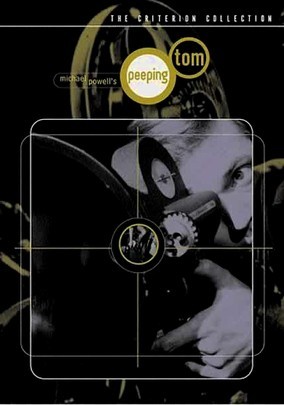
Peeping Tom-1960

Peeping Tom-1960

Director Michael Powell

Starring Nigel Davenport

Top 250 Films #47

Top 40 Horror Films #10

Scott’s Review #127

848669

Reviewed July 22, 2014

Grade: A

Peeping Tom is a brilliant 1960 horror film directed by Michael Powell.

It is a British film released the same year as Psycho. The two films share similarities in that they both feature more character-driven villains than many other contemporary horror films.

Both feature male killers with a sympathetic (to them) female.

Set in London, it tells the story of an assistant cameraman who kills his victims by using a camera with a spike on the end of it as he is videotaping the fear in their eyes, which he later plays back for his own psychological needs.

The killer has emotionally damaged himself, and the film explores this aspect in depth; his father tormented him as a child with weird, traumatic experiments used on the boy for research.

I love this aspect of the film compared with other films of the genre, where the killer typically has no sympathetic aspects and whose motivations are usually explored minimally.

The audience has sympathy for this killer, which, strangely, is absurd and shocking.

Ahead of its time, viewers were initially turned off by the film upon its release. Director Michael Powell’s (ironically playing the terrible father in videotape scenes) career was ruined.

Anna Massey (later to appear in the Hitchcock masterpiece Frenzy, 1972) plays the sweet-natured girl next door who develops a crush on the killer. Her blind and boozy mother is a fascinating character as she suspects and strangely bonds with the killer.

The film has an erotic and voyeuristic quality that has been unmatched in horror.

Peeping Tom (1960) is now widely regarded as a masterpiece, and I concur with that assessment. It is one of the most interesting and unique horror films ever made.

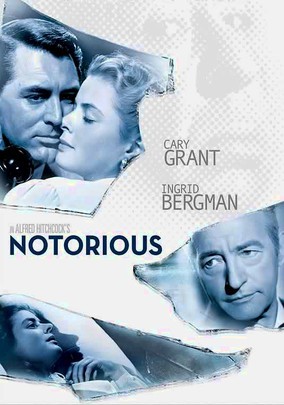
Notorious-1946

Notorious-1946

Director Alfred Hitchcock

Starring Cary Grant, Ingrid Bergman

Top 250 Films #48

Scott’s Review #265

813874

Reviewed August 11, 2015

Grade: A

Notorious is a classic Alfred Hitchcock film from 1946, a period that preceded his golden age of brilliant works in the 1950s and 1960s, but it is a marvel all the same.

Perhaps not as wonderful as future works, but that is like comparing prime rib to filet mignon. Shot in black and white, the subject matter is familiar to Hitchcock fans- political espionage.

The film contains elements familiar with Hitchcock’s films- romance with suspenseful plot.

Starring two greats of the time (and Hitchcock stalwarts), Carey Grant and Ingrid Bergman, one is immediately enthralled by the chemistry between the characters they play- T.R. Devlin and Alicia Huberman. Devlin, a government agent, recruits Alicia, per his bosses, to spy on a Nazi sympathizer, Alex Sebastian (Claude Raines), who is affiliated with her father.

Her father, having been convicted and sentenced to prison, has committed suicide. Alicia’s allegiance is questioned as she takes drastic measures to prove her loyalty and complete the hated assignment.

The film is set between Miami and the gorgeous Rio De Janeiro, where much of the action is set at Alex’s mansion.

A blueprint for his later works, Hitchcock experiments with creative camera shots and angles- specifically the wide and high shot overlooking an enormous ballroom.

I also love the airplane scene- subtly, Hitchcock treats the audience to background views of Rio from the view of the airplane as Devlin and Alicia converse.

The plane is slowly descending for landing, which allows for a slow, gorgeous glimpse of the countryside and landscape in the background.

Subtleties like these that may go unnoticed make Hitchcock such a brilliant director.

The character of Alicia is worth a study. Well known for his lady issues, did Hitchcock hint at her being an oversexed, boozy, nymphomaniac?

I did not think the character was written sympathetically, though, to be fair, she is headstrong and loyal in the face of adversity.

She parties hard, drives at 65 miles per hour while intoxicated, and falls into bed with more than one man. It is also implied that she has a history of being promiscuous.

Made in 1946, this must have been controversial during that period. The sexual revolution was still decades away.

Notorious also features one of Hitchcock’s most sinister female characters: Madame Sebastian (Leopoldine Konstantin). The woman is evil personified, and her actions are reprehensible. She is arguably the mastermind behind all of the dirty deeds and a fan of slow, painful death by poisoning.

My favorite scene is, without a doubt, the wine cellar scene. To me, it epitomizes good, old-fashioned suspense and edge-of-your-seat entertainment.

A cat-and-mouse game involving a secret rendezvous, a smashed bottle, a key, champagne, and the grand reveal enraptures this scene, which goes on for quite some time and is the climax.

Perhaps Notorious is not quite as great a film as Vertigo (1958), Psycho (1960), or The Birds (1963), but it is a top-notch adventure/thriller that ought to be watched and respected.

Oscar Nominations: Best Supporting Actor- Claude Rains, Best Original Screenplay

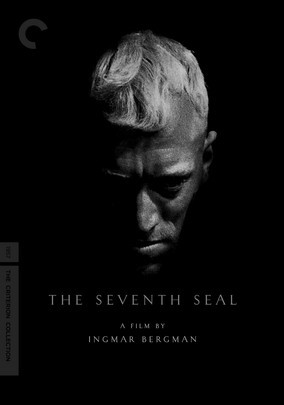
The Seventh Seal-1957

The Seventh Seal-1957

Director Ingmar Bergman

Starring Max von Sydow, Gunnar Bjornstrand

Top 250 Films #49

Scott’s Review #497

70127971

Reviewed October 23, 2016

Grade: A

The Seventh Seal (1957) is an Ingmar Bergman Swedish masterpiece that, after three mere viewings, I am just beginning to appreciate and fall in love with.

It is not that I did not “get” the dark, artsy theme to begin with- I did, but The Seventh Seal is a savory dish meant for repeated offerings, and with each, I have loved it even more.

The subject matter of the plague and the Black Death is heavy.

It is a quiet yet powerful, dark art film about death.

The film is shot in black and white, which does nothing but enhance the cold, stark concepts of the film. The color would have certainly made the film cheery or bright- if that can be said, given the subject matter.

Instead, the filming is cold yet illuminating, and the whites seem very white, while the blacks seem very dark, which symbolizes the film’s concepts.

In the story, a disillusioned medieval knight, Antonius Block (Max von Sydow), returns home from war, disenchanted with life. He fought in the Crusades and returned home to Sweden to find it plagued by the Black Death.

He begins to play a game of chess alone- and is visited by Death- a hideous pale creature shrouded in black. Antonius challenges Death to chess- his fate is left so long as the game continues.

Throughout the film, Antonius is the only character who can see Death- the other characters cannot, making the film open to interpretations.

The other characters in the story are a troupe of actors that Antonius meets along the way to his castle, and a young, fresh-faced girl who has been branded a witch and is fated to be burned at the stake is featured.

Since she is close to death, Antonius takes a particular fascination with her.

Throughout the film, as well as the trials and tribulations of the characters, Death continuously lurks around, watching these characters, which is a fascinating part of the film. They cannot see him, so we can only assume their time in this world is limited.

What makes The Seventh Seal so powerful is its honesty—harsh as it is. The knowledge that death is coming for these people is fascinating. Many characters discuss God in length and pray, as religion is an enormous aspect of the film.

It almost contains a good vs. evil, God vs. devil component, and again, important to stress, highly open to interpretation. Great art films are.

Numerous scenes reverberate and are significant iconic moments in film history decades later. The scene of Antonius and Death playing chess on the beach is chilling and ghost-like. Death- his pale face and a black cloak would frighten anyone. This scene has been referenced numerous times over the years.

My favorite is the inevitable final shot of peasants being led to their fate by Death. They are pulled begrudgingly by a rope reminiscent of the Pied Piper titled “Dance of Death.”

The individuals are dressed in black and are atop a hill surrounded by the sky, making the morbid scene highly effective.

The Last Supper scene is powerful, and the group enjoys the final meal, unsure of what fate has in store for them the next day.

I anticipate more viewings of this brilliant piece of filmmaking.

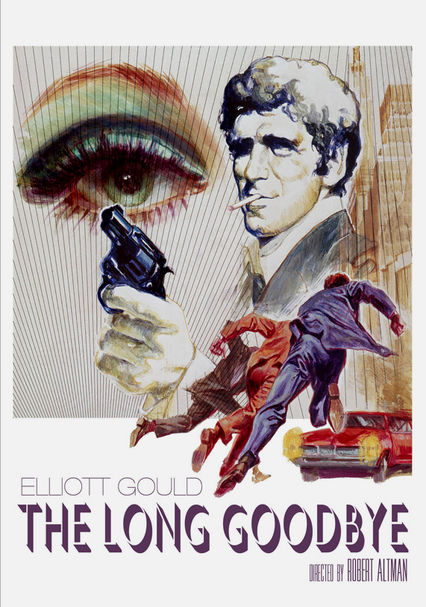
The Long Goodbye-1973

The Long Goodbye-1973

Director Robert Altman

Starring Elliott Gould, Nina van Pallandt

Top 250 Films #50

Scott’s Review #830

Reviewed November 14, 2018

Grade: A

Nearly a full-fledged character study of one man’s moral fiber, The Long Goodbye (1973) is an edgy piece of direction by the famous mastermind Robert Altman.

The setting of Los Angeles’ underbelly is both fabulous and practical, as is the dim lighting and excellent camera work prevalent throughout. The film is not cheery, but rather bleak, which suits me just fine, given the dreary locale.

Perhaps a more obscure Altman offering, but the film sizzles with zest and authenticity.

The film is based on a story written by Raymond Chandler in 1953.

Altman, however, opts to change the setting from 1950 to present times- 1970s Los Angeles and present a film noir experience involving deceit and shenanigans where all is not as it seems.

I think this is a wise move, and I could not help but draw many comparisons (mainly the overall story) to Chinatown (1974), released the year after The Long Goodbye, but a film much better remembered.

Elliott Gould is wonderful as Phillip Marlowe, a struggling private investigator and insomniac. He is asked by a friend, Terry Lennox, for a ride to the Mexico border one night and agrees to do the favor.

This leads to a mystery involving police, gangsters, and Eileen and Roger Wade after Phillip is questioned regarding his connection to Terry, who is accused of murdering his wife, Sylvia.

The seedy side and complexities of several characters are revealed as the story unfolds and the plot gradually thickens.

My favorite aspects of The Long Goodbye are not necessarily the primary storytelling, though the writing is filled with tension.

As the film opens, an extended sequence featuring a “conversation” between Phillip and his cat is both odd and humorous. The finicky feline refuses to eat anything other than one brand of cat food.

As Phillip tries to reason with the cat by talking and meowing, he is forced to venture out in the middle of the night to an all-night grocery store.

Altman, known for allowing his actors free rein with improvised dialogue, appears to let Gould experiment during this scene.

Phillip’s neighbors, a bunch of gorgeous twenty-something females, seem to do nothing except exercise on their balcony, get high, and ask him to buy them brownie mix for a “special occasion”.

As they stretch topless, usually in the background and almost out of camera range, they are a prime example of an interesting nuance of the film. The girls are mysterious but have nothing to do with the actual plot, adding even more intrigue to the film.

In one of the most frightening scenes in cinematic history and one that could be straight from The Godfather (1972), crazed gangster, Marty Augustine (Mark Rydell), slices the beautiful face of his girlfriend to prove a point to Marlowe.

In a famous line, he utters, “That’s someone I love. You, I don’t even like.” The violent act is quick, unexpected, and fraught with insanity.

Finally, the film’s conclusion contains a good old-fashioned twist worthy of any good film noir. In the end, the big reveal makes sense and begs to raise the question, “Why did we trust this character?”

In addition to the viewer being satisfied, Marlowe also gets a deserved finale and proves that he cannot be messed with or taken for a fool.

The Long Goodbye is undoubtedly the best film of Gould’s career. With a charismatic, wisecracking persona, the chain-smoking cynic is considered a loser by most.

He is an unhappy man and down on humanity, but still wants to do what is right. He lives a depressed life with few friends and the company of only his cat.

While his neighbors marginally entertain him, he goes about his days only barely getting by emotionally. Gould is brilliant at relaying all these qualities within his performance.

The addition of the title theme song in numerous renditions is a major win for the film, and something that becomes more noticeable with each viewing. The ill-fated gangster’s girlfriend hums along to the song playing on the radio at one point, and a jazz pianist plays a rendition in a smoky bar.

This is an ingenious approach by Altman and gives the film a greater sense of mystery and style.

There is no question among cinema lovers that Robert Altman is one of the best directors of all time.

In his lengthy catalog of rich, experimental films, The Long Goodbye (1973) is neither the best-remembered nor the most recognizable.

I implore film fans, especially fans of plodding mystery and intrigue, to check this great steak dinner of a film out.

Who’s Afraid of Virginia Woolf?-1966

Who’s Afraid of Virginia Woolf? -1966

Director Mike Nichols

Starring Elizabeth Taylor, Richard Burton

Top 250 Films #51

Scott’s Review #200

1120753

Reviewed December 3, 2014

Grade: A

Who’s Afraid of Virginia Woolf? This dark film, directed by Mike Nichols (The Graduate), is based on a play from the early 1960s.

Thankfully, the Production Code had been lifted by 1966, allowing edgier, darker films to be made—think The Wild Bunch or Bonnie and Clyde from the same period.

Who’s Afraid of Virginia Woolf? is dreary, bleak, and with damn good acting by all four principals.

George and Martha (Richard Burton and Elizabeth Taylor) are associate history professors and the college president’s daughter, respectively. They live in a small town in New England.

They have a complex, often bitter love-hate relationship.

One night, they invite young newlyweds Nick (George Segal) and Honey (Sandy Dennis), a new professor and his wife, over for drinks at 2:00 a.m.

From this point, a destructive night of verbal assaults and psychological games ensues with damaging and sad results for all parties involved, as their personal lives are exposed and dissected.

At the forefront are George and Martha, whose relationship is characterized by insults, neediness, secrets, and alcohol. After an evening out, they return home and have a vicious fight.

When their young friends arrive, the tension is thick.

Eventually, the young couple becomes sucked into the older couple’s web of dysfunction, aided by endless drinks throughout the night.

The film is shot in black and white, like a play, which I found highly effective. Most scenes occur in George and Martha’s house.

While all four actors are great (and were all Oscar-nominated), my standouts are Taylor and Dennis.

In my opinion, this role is Taylor’s finest acting performance. She is overweight, bitter, angry, frustrated, drunk, and, at times, vicious to her husband. This performance differs from many of her other film roles and is truly dynamite.

As her anger flares up, the heat and intensity oozing from the screen can be felt. She goes from vulnerable and soft one moment to a grizzled, bitter woman the next.

Conversely, Dennis is pure, innocent, kind, vulnerable, impressionable, and somewhat naive. Having had too much brandy and spent more than one occasion in the bathroom, Dennis successfully plays giddiness and innocence to the hilt.

Both Martha and Honey harbor dark secrets, which eventually are revealed.

The ambiance is just amazing. The black-and-white cinematography gives the film a hot, suffocating feel. It feels like a quiet little college hamlet, and the setting of the eerily quiet wee hours of the morning is conveyed successfully.

Each story, told mainly by George and Martha, is captivating in its viciousness (both usually belittling the other), and the film becomes mesmerizing in its shock value at the insults hurled.

What will they say or do next?

I loved the scene where Honey awkwardly dances at the late-night bar that the four of them go to. Also, the shotgun scene, where George obtains the gun from the garage during one of Martha’s insulting tales, is disturbing – what will he do with the gun?

The stories involving George and Martha’s son are sad and mysterious- the viewer wonders what is happening.

The final reveal still gives me chills.

Who’s Afraid of Virginia Woolf? (1966) is one of the most significant film adaptations of a play I have ever seen.

Oscar Nominations: 5 wins-Best Picture, Best Director-Mike Nichols, Best Actor-Richard Burton, Best Actress-Elizabeth Taylor (won), Best Supporting Actor-George Segal, Best Supporting Actress-Sandy Dennis (won), Best Screenplay Based on Material from Another Medium, Best Original Music Score, Best Sound, Best Art Direction, Black-and-White (won), Best Cinematography, Black-and-White (won), Best Costume Design, Black-and-White (won), Best Film Editing

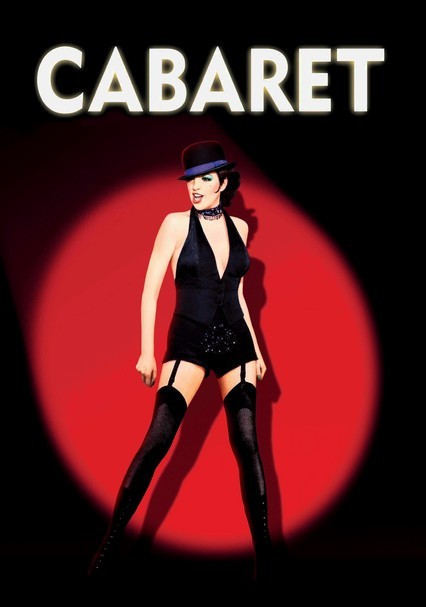
Cabaret-1972

Cabaret-1972

Director Bob Fosse

Starring Liza Minnelli, Michael York

Top 250 Films #52

Scott’s Review #975

Reviewed December 31, 2019

Grade: A

If not for the mighty and powerful The Godfather (1972) blocking its path (but who’s complaining?), Cabaret (1972), with eight Academy Award nominations, surely would have won Best Picture in its year of release.

The film thus has the dubious honor of receiving the most nominations of all time without whisking away the ultimate trophy, but no matter; the Oscars are not everything.

The production, acting, and story are inventive and envelope-pushing, both serious and fun, and proof that 1972 was one of cinema’s greatest years.

The story centers on a circle of friends enjoying the decadence and joviality of the decade, though they face their own struggles. Energetic Kit Kat Klub performer, Sally Bowles (Minnelli) takes a shine to British scribe, Brian (Michael York) when he moves into her boarding house.

Despite having completely different personalities, they become deeply bonded and best friends. Rich playboy baron, Maximilian (Helmut Griem), woos the pair with money and travel and beds each of them separately, eventually dumping them both.

In a supporting yet important subplot, Fritz Wendel (Fritz Wepper) is a German Jew passing himself off as a Protestant. He falls madly in love with Natalia (Marisa Berenson), a gorgeous and authentic German Jewish heiress.

Their love story is comic relief, but it also has a dangerous aspect, given the foreboding political events. The safety of the cabaret serves as a haven while the outlandish Master of Ceremonies (Joel Grey) appears throughout the film performing risque numbers.

Adapted from the popular Broadway stage show, the musical drama is set in 1930s Berlin and begins in 1931. Historians will realize that the decade of the 1930s in Germany was frightening, giving rise to the deadly and hated Nazi Party.

While the film never goes full-fledged dark, there are snippets of beatings and ridicule at the hands of the Nazis, powerful stuff and tough to take, especially given the Jewish religion of some of the principals.

Liza Minnelli has never had a better role than the one she plays as Sally. The character is vivacious, zesty, and emotional, and Minnelli dives in headfirst, winning viewers’ hearts. Beneath her bubbly exterior, Sally is wounded, yearning for love and peace of mind.

She pretends to be close to her wealthy father, but it is far from the truth. The most powerful scene is when a pregnant Sally comes to terms with the heart-wrenching decision to abort the baby.

For both the time-period setting, the 1930s, and the year the film was made, 1972, the sexuality dynamic is powerful and worth a nod. Brian, openly bisexual and at a different time certainly gay, is a great character.

He beds Sally more out of friendship than anything else while delving into admiration (or lusting) for the suave and dashing Maximilian. The fact that his sexuality is embraced and explored is to be celebrated and respected. It’s also a damned interesting part of the film.

Of course, Cabaret being a musical, the performance numbers are superlative. With gorgeous choreography by the director, Bob Fosse (and who would expect anything less from the seasoned artist), the sets and costumes are stylish.

The conclusion, featuring “Cabaret”, is done grandly as Sally performs on stage with precision and bombast. “Willkommen” and “Maybe This Time” are also dynamic favorites.

Cabaret (1972) is a spirited, intelligent experience, never glossing over the historical period, nor assuming viewers are too dumb to have a handle on those events.

The film plays best for smart audiences who appreciate artistic merit and enjoy the robust musical numbers.

Carefully, the film is designednever to shy away from the crucial Nazi power that was creeping up and leading to a generation of despair and repercussions.

Oscar Nominations: 8 wins-Best Picture, Best Director-Bob Fosse (won), Best Actress-Liza Minnelli (won), Best Supporting Actor-Joel Grey (won), Best Screenplay Based on Material from Another Medium, Best Scoring: Adaptation and Original Song Score (won), Best Sound (won), Best Art Direction (won), Best Cinematography (won), Best Film Editing (won)

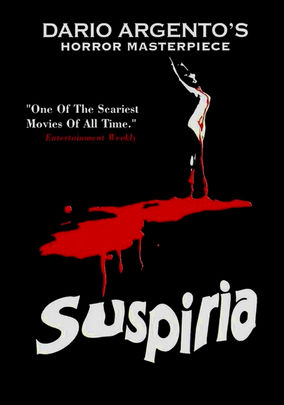
Suspiria-1977

Suspiria-1977

Director Dario Argento

Starring Jessica Harper, Stefania Casini, Joan Bennett

Top 250 Films #53

Top 40 Horror Films #11

Scott’s Review #339

60037424

Reviewed January 9, 2016

Grade: A

Suspiria is a horror masterpiece, made in 1977, by my favorite Italian horror director, Dario Argento.

A combination of complex storytelling, glossy colors, and a unique art direction makes this film a treasure and an influence in “the look” of a film attempting to achieve an interesting art direction choice.

The color red is highly prevalent throughout Suspiria, which is fitting given the film’s subject matter of witchcraft and demons. The musical score is brilliant and chilling.

This film is perfect and one of my favorites.

The film takes place in Germany, and the opening sequence is fantastic. We meet our heroine, Suzy Bannion (Jessica Harper), an American ballet student, as she arrives in blustery Munich to attend a prestigious ballet school.

The shot of the driving wind and rain as she exits the airport is a great example of this film’s ultimate style.

Suzy meets a creepy taxi driver who takes her to the school, where she witnesses a frantic student, Pat Hingle, fleeing. A mysterious voice over the intercom then denies Suzy access to the school.

The film’s focus then briefly shifts to Pat’s perspective as she meets a sinister fate while staying with a friend.

One fantastic aspect of Suspiria is that we know something is wrong at the ballet academy; we do not know what or who is involved. With great creativity, Dario Argento builds a set that is modern and sophisticated yet laced with an undercurrent of menace.

As we meet the supporting characters, Madame Blanc (Joan Bennett) and Miss Tanner (Alida Valli), we know something is not right with them either. Blanc is kindhearted; Tanner is a drill sergeant, but both seem to have something to hide and claim to know nothing of Pat’s terror.

There is also Daniel, the blind piano player, whose seeing-eye dog suddenly turns vicious.

The plot is complex and does not always make perfect sense, but the elements of Suspiria make it a masterpiece.  Pat’s death scene is laced with greatness as she dangles from a high glass ceiling dripping blood. Her hysterical friend is sliced to bits by the falling glass.

This is the best double-death scene in horror film history.

When creepy maggots invade the school, leaving the girls feeling unsafe, the film goes all out. A later scene involving Suzy’s best friend and fellow student, Sarah, attempting to flee the school via the basement, only to struggle in a pit of razor wire, is splendid.

Much of Suspiria is dubbed in English, mainly because the actors speak either German or Italian. Still, Jessica Harper and Joan Bennett have distinctive voices that lend texture and richness to the dialogue.

Suspiria (1977) is a grand horror film, not solely for its mysterious story, but for all the added components that Argento throws into the mix- strange characters, weird sets, and a heavy dose of blood-red- pretty fitting.

Women in Love-1969

Women in Love-1969

UPDATED REVIEW

Director Ken Russell

Starring Glenda Jackson, Oliver Reed, Alan Bates

Top 250 Films #54

Scott’s Review #766

Reviewed June 2, 2018

Grade: A

Women in Love (1969) is a British romantic drama film that stands out as truly one of a kind. The film is quite cerebral and requires a bit of thought, which will undoubtedly lead to good conversation with film connoisseurs everywhere after a viewing.

The four central characters are complex and flawed, and they dramatically intersect in each other’s lives, making the film a “thinking man’s” feast.

The film is adapted from a popular D.H. Lawrence novel of the same name.

In 1920, set in the Midlands section of central England, sisters Ursula (Jennie Linden) and Gudrun (Glenda Jackson) attend the wedding of an acquaintance, Laura Crich. The Crich family is enormously wealthy and owns a large share of the mining town.

During the ceremony, Gudrun and Ursula fantasize about Gerald Crich (Oliver Platt) and Rupert Birkin (Alan Bates), respectively. When the foursome cross paths again at Rupert’s pretentious girlfriend’s party, attraction and conflict arise.

The film is described as “character-driven,” but it does not begin to do it justice. Each of the four principal characters is richly written with intelligence and gusto. All of them are either flawed or insecure in some way, while the fact that Gerald and Rupert share a sexual attraction for each other is another nuance explored throughout the film.

Rupert is confident and outspoken about his bisexuality- extremely rare for a 1969 film. In this way, Women in Love is ahead of its time.

The significant themes in Women in Love are commitment and love, and how each character handles them, sometimes embracing them and sometimes running away from them.

Gudrun and Gerald are in love with each other, as are Rupert and Ursula, but only one couple reaches any bliss. The characters possess a bevy of emotions, making their happiness almost impossible, and they feel doomed to failure from the onset.

This is an example of Larry Kramer’s tremendous writing and of bringing the characters to the big screen in a memorable way.

Jackson’s Gudrun and Bates’s Rupert are my favorite characters because they seem to have a bit more depth and feel like standouts. Gudrun appears to have love-hate feelings toward Gerald and is often downright cruel to him.

As they vacation in the Swiss Alps, Gudrun purposely and inexplicably flirts with a gay artist, leaving Gerald extremely jealous, which results in tragedy.

Counter-balancing Gudrun’s anger, Rupert showers in fun and zest for life, happily bisexual and thinking nothing of it, enjoying his sexually charged affections for both men and women.

The supporting characters, specifically snobbish Hermione and mentally unstable Christianna Crich, are examples of perfect casting. Eleanor Bron plays Hermione as mocking and teetering on the edge of unhinged. As she psychologically bullies poor Ursula, even though it’s clear Rupert prefers the more innocent woman, Hermione becomes frightened.

Actress Catherine Willmer takes Christianna to a new level of creepy. Already appearing psychotic, when her daughter tragically drowns, the woman goes over the edge, unleashing vicious dogs on any visitors to her estate.

Both actresses give unforgettable performances.

Women in Love contains a scene that may very well be the most homo-erotic scene in film history. As Rupert and Gerald decide to partake in a Japanese-style wrestling match one evening, they strip completely naked and grapple in front of a roaring fire.

In this lengthy sequence, both front and rear nudity are provided, leaving nothing to the imagination. When Rupert suggests they swear eternal love for each other, Gerald cannot commit to the emotional union.

One wonders if this outstanding scene influenced 2007’s Eastern Promises.

1969’s Women in Love is a fantastic film with terrific acting all around. Taking romantic drama to an entirely different level and setting a new standard for cinematic complexity, the work of director Ken Russell is peppered with nuance, making it rich with great storytelling and character development.

The fact that one couple ends in bliss and the other in tragedy is sheer excellence.

Oscar Nominations: 1 win-Best Director-Ken Russell, Best Actress-Glenda Jackson (won), Best Screenplay Based on Material from Another Medium, Best Cinematography

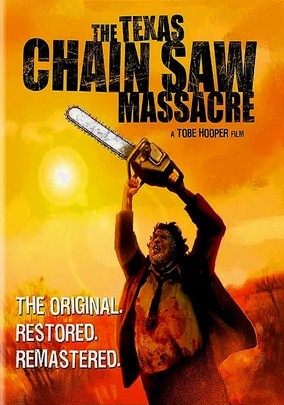
The Texas Chain Saw Massacre-1974

The Texas Chain Saw Massacre-1974

Director Tobe Hooper

Starring Marilyn Burns, Gunnar Hansen

Top 250 Films #55

Top 40 Horror Films #12

Top 10 Most Disturbing Films #5    

Scott’s Review #209                                                      

15815343

Reviewed December 31, 2014

Grade: A

The Texas Chain Saw Massacre (1974) is one of the grittiest, rawest, and most frightening horror films I have ever seen, and it still holds up incredibly well today.

Featuring a documentary-like look, it is horrifying due to its grainy, visual, and realistic feel. It is not psychological horror- it is in-your-face, brutal horror.

The perception of an incredibly hot, sticky, backwoods Texas summer is incredibly well done and only adds to the terror.

A group of five teenagers travels to the vast fields of Texas — aka the middle of nowhere —presumably on a road trip. On their drive, they pick up a strange hitchhiker who ends up stabbing one of the teens and cutting his arm.

Spooked by this odd occurrence, they stop for gas and directions, but veer off course and accidentally wind up at a slaughterhouse owned by cannibals.

The group of teens is led by Sally Hardesty, played by Marilyn Burns.

As the teens are chopped off grotesquely, similar to a slew of similarly fashioned, but less interesting horror films to follow, Sally winds up the lone survivor of the group.

Burns plays the first “final girl”, a title made famous in horror films as the last female remaining alive- it was almost always a female- to take on the maniacal killer.

The Texas Chain Saw Massacre features one of the horror genre’s best villains- Leatherface.

The viewer knows little about him since he does not speak- is he mentally disabled? Is he an intelligent man? He is disguised behind a mask made of strewn-together human skin and wields a scary chainsaw.

We know nothing about him- only that he loves to kill.

The ambiguity is immeasurable.

Besides the way the film is shot, another shocking element is the story’s reality. Could this happen to the viewer? The answer is yes, of course it could. How many times have we been driving and gotten lost in unfamiliar surroundings?

There are no supernatural beings or CGI effects in this film- only a group of youngsters crossing paths with maniacs, and this could happen in real life. This realization adds to the fright.

The famous- or infamous- dinner scene is revolutionary in disgust and distaste. The family attempts to serve Sally as dessert to the elderly patriarch, and as he begins to suck blood from Sally’s finger, it will force the squeamish to turn away.

The Texas Chain Saw Massacre is a short film, running at only 84 minutes, but the breathtaking finale- Sally running through the endless woods followed by Leatherface, seems interminable. Will he catch her? How can she possibly escape?

The Texas Chain Saw Massacre (1974) is dirty, ugly, and intense. It is no-holds-barred brutality. It is one of the best horror films ever made.

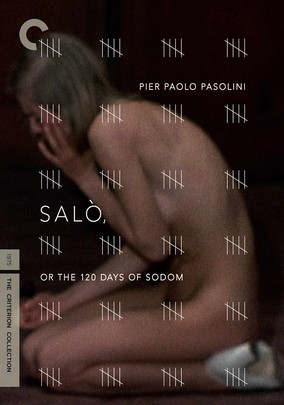
Salo-1975

Salo-1975

Director Pier Paolo Pasolini

Starring Paolo Bonacelli, Giorgio Cataldi, Caterina Boratto

Top 250 Films #56

Top 10 Most Disturbing Films #1    

Scott’s Review #183 

70099045

Reviewed October 9, 2014

Grade: A

 Salo is a disconcerting, highly controversial Italian art film from 1975 that is not for the squeamish nor the prudish.

Many people will revile this film for its distastefulness and despise it entirely — that is, if they even give it a chance, which, unfortunately, many will refuse to do.

But beyond the filth, perversion, and hatefulness that are themes of Salo lies a film that is a work of art and must be experienced by the most open-minded of cinema lovers.

The film is a dreamlike experience that centers on four wealthy Fascist Italian men of great importance and power, circa 1944, who decide to kidnap eighteen teenage boys and girls- the youngsters must be the cream of the crop and flawless in appearance, only the most attractive will do- one girl missing a tooth is immediately cast aside as a reject.

Whether the girl flaunted her marred appearance is open to interpretation.

The youths are then taken to an enormous palace where they are stripped of all clothing and forced to endure four months of torture, sexual perversions, and humiliations at the whim of and for the entertainment of their captors.

Finally, at the end of their terms, most are tortured to death by way of scalping, removal of tongues, or having their sexual organs burned off.

Also living in the palace are four aging prostitutes who enthrall the men, along with the reluctant prisoners, with tales of kinky and perverted sexual encounters from their younger days, mostly involving anal sex.

The film is divided into four sections based on Dante’s Divine Comedy: the Ante Inferno, the Circle of Manias, the Circle of Shit, and the Circle of Blood.

In one sadistically disturbing scene, one of the young girls is forced to eat human excrement by one of her wealthy captors.

In another, during the Circle of Shit, everyone dines on a meal consisting of human excrement, where lewd sex occurs.

One of the female prisoners is tricked into eating food laced with nails- a contest to determine who has the best buttocks results in the winner being brutally murdered.

Everyone in the film is bisexual, and there are repeated scenes of extreme, almost pornographic, violent sex scenes.

On a side note, most of the youngsters (non-actors) reported having a ball while filming Salo and knew not what the film was really about, so the feeling on the set was light-hearted, nothing like the finished product.

While deeply disturbing, Salo is a film that some, or many, will not get or look beyond the obvious for a deeper message. It is a masterpiece in its ugliness, rawness, and political statements, and quite artistic once one gets past the film’s brutality.

Salo contains much political symbolism- the excrement serves as the filth of Nazi Germany and authoritarian figures throughout Europe such as Hitler and Mussolini, the abuse of power that was rampant during the time of the film (World War II era), and the entire film is about the abuse that powerful people (the wealthy fascists equate to powerful Germans) inflicted on the weak (the innocent boys and girls mirror the Jews and the weak).

Is Salo a disturbing, grotesque film? It is. Is it mindless torture for the sake of torture, like movies as extreme as Saw and Hostel? It is not. It is an art film, not a horror film.

Banned in many countries for decades due to the extreme content of rape, murder, and torture of individuals thought to be under the age of eighteen, it remains widely banned to this day in several countries.

Many filmmakers, actors, and historians struggle to preserve the film’s artistic merit.

To fully grasp Salo, one must delve into the filmmakers’ minds and recognize that it is a statement film, filled with symbolism that challenges and questions the politics of its time.

Director Pier Paolo Pasolini was brutally murdered by a male prostitute shortly before the film’s release.

Salo (1975) is one of the most disturbing films I have ever viewed.

The Graduate-1967

The Graduate-1967

Director Mike Nichols

Starring Dustin Hoffman, Anne Bancroft

Top 250 Films #57

Scott’s Review #335

555221

Reviewed January 9, 2016

Grade: A

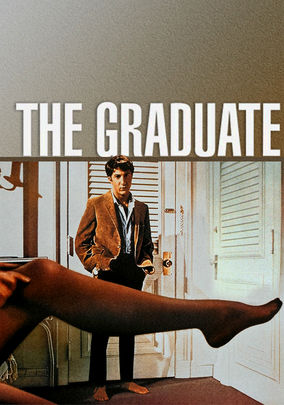
The Graduate is an immeasurable success and highly influential comedy from 1967- a time when films were gaining creative freedoms and pushing the envelope in new, edgy ideas and risqué subject matters.

Almost scandalous at the time of release, the film holds up exceptionally well after all these years and remains fresh and cutting-edge.

It is slick, sophisticated, and quite funny, though peppered with dark humor.

Thanks to Dustin Hoffman and Anne Bancroft, the film succeeds and remains among my all-time favorites.

Hoffman plays Benjamin Braddock, a nervous and insecure recent college graduate who returns home to sunny California, unsure of what his future holds.

His overbearing parents throw a lavish celebration at their home, where Benjamin is flocked by well-wishers, most of whom have a materialistic edge to them. His parents live in a very affluent community where wealth and items are of great importance.

All Benjamin wants to do is be by himself. At the party, Benjamin is pursued by the much older and glamorous Mrs. Robinson (Bancroft), who lives nearby and asks Benjamin for a ride home.

Her attempted seduction of him sets the film’s narrative in motion, as their relationship unfolds, particularly when Mrs. Robinson’s daughter, Elaine (Katharine Ross), enters the picture and captures Benjamin’s heart.

Director Mike Nichols successfully sets the right tone for the film, and we see the style and the sophistication of wealthy California in the 1960s.

Fashion, style, and glamour are prevalent, but they run counter to what Benjamin and Elaine stand for.

The film is also an exploration of generations. Benjamin’s parents and all their friends are into material things like cars, houses, and parties.

The triangle between Benjamin, Mrs. Robinson, and Elaine is the heart of the film. At first, we find ourselves rooting for Benjamin and Mrs. Robinson. There is a sweet nature to their romance. She is the aggressor- mature, in control, and confident, whereas Benjamin is insecure and shy, yet enamored with Mrs. Robinson.

Their awkward exchange in the hotel bar and their liaison in the hotel room are fantastic scenes.

Slowly, once Elaine emerges, Mrs. Robinson becomes more manipulative, taking on a villainous role as the youngsters’ love blossoms, and we begin to root for their happiness.

A fantastic aspect of The Graduate is its musical soundtrack, which was composed entirely by Simon and Garfunkel, a central musical duo of the late 1960s, from the opening chords of ‘The Sound of Silence’, to the appropriate ‘Mrs. Robinson, the music adds much life and energy to the film, and was successful at attracting young viewers at the time.

The featured soundtrack was highly influential to other films released after The Graduate.

Still fresh today, The Graduate (1967) launched the very successful career of Dustin Hoffman and emerged as an inspirational film that, though controversial in its day, seems tame now; however, the writing remains as crisp as ever.

A film to watch over and over again.  

Oscar Nominations: 1 win– Best Picture, Best Director-Mike Nichols (won), Best Actor-Dustin Hoffman, Best Actress-Anne Bancroft, Best Supporting Actress-Katharine Ross, Best Screenplay Based on Material from Another Medium, Best Cinematography

The Getaway-1972

The Getaway-1972

Director Sam Peckinpah

Starring Steve McQueen, Ali MacGraw

Top 250 Films #58

Scott’s Review #439

539604

Reviewed July 3, 2016

Grade: A-

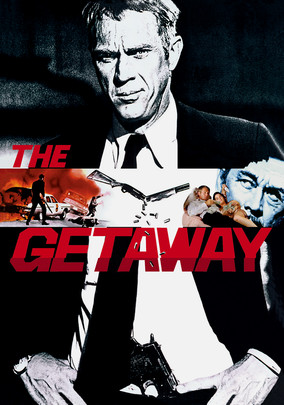
The Getaway (1972) is a classic action film directed by Sam Peckinpah, known for films such as Straw Dogs and The Wild Bunch.

His films are known as “guy films” and are a rather violent experience.  The Getaway is no exception, though it is not immensely brutal either. Still, there is more than one macabre scene and one dastardly villain.

For fans of Peckinpah, The Getaway is a must-see.

The film features Steve McQueen and Ali MacGraw, who are perfectly cast as lovers Doc and Carol McCoy. Inescapable was their chemistry, and art mirrored life: the two were embroiled in a torrid love affair during the shooting, and later they married.

We meet Doc in a Texas prison, where his parole has just been denied. Doc and Carol decide to make a deal with corrupt businessman Jack Benyon to ensure Doc’s release. One stipulation is for Doc to participate in a bank heist with two of Jack’s men (Rudy and Frank).

The heist goes off, but things go awry, and Doc and Carol head for El Paso with a large sum of money, being pursued by Rudy and a double-cross attempt by Jack.

Rudy kidnaps veterinarian Harold and his young wife Fran (Sally Struthers) to aid him with his injuries, taking them along as he pursues Doc and Carol.

Amid the already complicated plot, a con man attempts to steal Doc and Carol’s money.

Doc and Carol are clearly the heroes of the film and are meant to be rooted for, and the characters work very well together. Yes, they are criminals, but they are portrayed as lovely and as not hurting anyone who does not deserve it. Doc does spare Rudy’s life at one point, and I think this only reinforces Doc’s appeal as an antihero.

The love story is also a significant aspect of the filmmaking, making Doc and Carol likable. A few sweet, tender scenes of their romance are mixed in, adding a nice balance to the otherwise testosterone-fueled events.

The Getaway features spectacular editing, particularly at the beginning of the film, where we watch Doc in prison, going through his day-to-day rituals, which are seamlessly interwoven with other stories in the movie.

The musical score matches perfectly with the editing, adding a provocative element of intrigue. These components add the necessary elements to a film like this- edge-of-your-seat!

I love the Texas setting.

Characters are constantly traveling to get somewhere- either by train, by car, or on foot- so we see much of the Texas countryside, almost giving The Getaway a Western flavor.

It is certainly a hot, humid environment, though McQueen always wears a sophisticated suit, and MacGraw looks stylish and put together.

And from a prop perspective, I never tire of seeing those early 1970s sedans driving at high speeds.

Unfortunately, as with most of Peckinpah’s films, women are not portrayed in a positive light, though Carol is one of the strongest of his female characters. Yet, in one tough scene, she is smacked around by Doc after he realizes she slept with Jack to ensure his release from prison.

The most confusing and weak character is Fran. In a strange bit of writing, she inexplicably falls madly in love with her kidnapper, Rudy, even as he abuses and humiliates her, while her husband is around. This is odd and tough to watch, and not the best part of The Getaway.

Her character is not developed well, and it is head-shaking that she feels any passion for Rudy.

The heart of the film belongs to Doc and Carol as they are on the lam for much of the time, and this is a successful part of The Getaway- hence the title. Will they get caught? Will they escape?

The characters remind me of Bonnie and Clyde, so we wonder if Doc and Carol will meet the same fate, but of course, we like them, so we do not want that.

The Getaway is a fast-paced, down-home, red-blooded sort of action film. It is stylized, gritty, and sometimes violent. The chicken wing scene between Rudy, Fran, and Harold starts light and then turns ugly, adding to the film’s unpredictable nature.

A supreme offering by Peckinpah.

The Exorcist-1973

The Exorcist-1973

Director William Friedkin

Starring Ellen Burstyn, Jason Miller, Linda Blair

Top 250 Films #59

Top 40 Horror Films #13

Scott’s Review #326

14546619

Reviewed January 5, 2016

Grade: A

Making a lasting mark on cinematic history and impossible not to be familiar with through some form of pop culture, The Exorcist (1973) is a classic supernatural horror film that transcends the genre to become a Hollywood success story.

Along with Rosemary’s Baby (1968) and The Omen (1976), these three films share similarly haunting “religious” themes and explore dark, sinister topics such as “god versus the devil” and “good versus evil”.

The Exorcist is a masterpiece on every level and is adapted from the 1971 hit novel of the same name.

The story centers on “demonic possession” and was quite simply a shocking subject when The Exorcist was released in 1973, scaring the wits out of those brave enough to see it (especially Christians) everywhere.

Some abhorred the subject matter and refused to have any part of the film; their loss.

Ellen Burstyn stars as Chris MacNeil, a noted actress who relocates to Georgetown to film a movie. In tow is her twelve-year-old daughter, Regan (Linda Blair).

As shooting on the film wraps, Regan begins acting very strangely —making noises, becoming belligerent, and urinating on the floor during a dinner party. Worried, Chris enlists the assistance of priests (Max von Sydow and Jason Miller).

Things progress from bad to worse as Regan spirals out of control, and Chris and the priests determine that an exorcism is the only resolution to the problem.

The Exorcist, mainly director William Friedkin, sets up the film in a clever way by using various technical elements to build the tension.

For starters, the eerie musical score is highly effective at scaring the audience, and it is similar to that of Rosemary’s Baby. The film is also lit very well, so it appears dark with dim lighting- the cinematography and the windy rustling of leaves in the exterior sets are great.

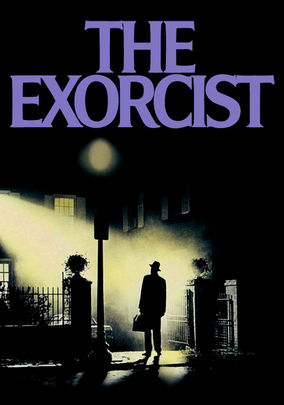
The cover art of the film should indicate the unique style used: black and white. A man with a hat and suitcase peers up at the second floor of a house where a glowing light illuminates. The image is intriguing and haunting.

Enough cannot be said for Linda Blair’s performance as Regan, especially in the final act. During the “pea soup” and “Jesus crucifix” scenes, a different voice was used, but Blair’s facial expressions and emotions are admirable.

As Regan is bedridden, angry, scared, and emotional, there is no limit to Blair’s range. Throughout a large part of the film, she is a sweet, young girl, innocent, so much so that her transformation is both shocking and disturbing to witness.

The final act of the film- the “exorcism” is riveting and a groundbreaking aspect of film history. The terrifying scene, all taking place in one child’s tiny bedroom, elicits fright and is nail-bitingly intense.

The Exorcist (1973) is a highly influential film that has inspired filmmakers for decades and still resonates with audiences today.

Oscar Nominations: 2 wins-Best Picture, Best Director-William Friedkin, Best Actress-Ellen Burstyn, Best Supporting Actor-Jason Miller, Best Supporting Actress-Linda Blair, Best Screenplay Based on Material from Another Medium (won), Best Sound (won), Best Art Direction, Best Cinematography, Best Film Editing

The Ice Storm-1997

The Ice Storm-1997

Director Ang Lee

Starring Kevin Kline, Joan Allen, Sigourney Weaver

Top 250 Films #60

Scott’s Review #850

Reviewed January 1, 2019

Grade: A

The Ice Storm (1997) is a brilliant film directed by Ang Lee of Crouching Tiger, Hidden Dragon (2000) and Brokeback Mountain (2005) fame.

The film is based on a 1994 novel of the same name, written by Rick Moody.

The brilliance lies in the rich way the characters are written, with coldness, repression, and loneliness being central themes.

The film is astonishingly genuine and fresh with an authenticity rarely felt so wholly in adult family dramas.

The period is 1973, and the events take place in New Canaan, Connecticut, a wealthy suburban town.

Two dysfunctional families, the Hoods and the Carvers, co-exist during the Thanksgiving weekend as each deals with repression and escapism amid alcohol and sexual experimentation.

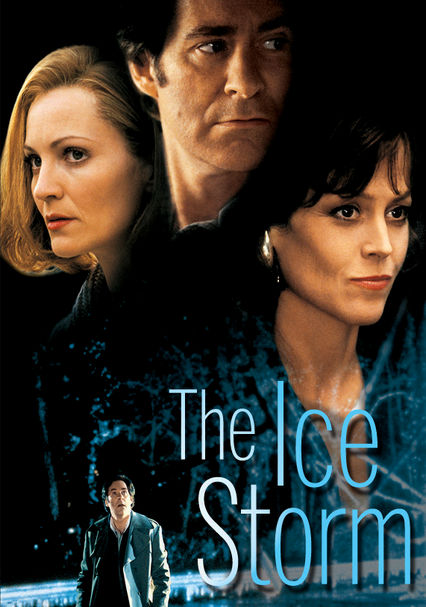
Both the adults’ and the children’s lives are prominently featured in the story. Ben and Elena Hood (Kevin Kline and Joan Allen) and Jim and Janey Carver (Jamey Sheridan and Sigourney Weaver) head the families.

While Ben and Janey carry on a secret affair, Elena lives an unfulfilled existence, craving more from life but not knowing how to get more and reduced to consulting self-help books for support.

Wendy Hood (Christina Ricci) enjoys sexual escapades with multiple boys. At the same time,e Paul Hood (Tobey Maguire), home from boarding school, takes the train into New York City to see a rich classmate, Libbets Casey (Katie Holmes).

The most wonderful aspect of the film is that the story is a slice of life, but with clever nuances. Since the families are rich, why should the viewer feel sympathy for any of the characters, let alone root for them?

Ben and Janey lounge in bed after sex; he is chatty about nonsense, and she is bored and depressed.

During a holiday neighborhood gathering, a kinky “key party” develops, where participants swap spouses for the night, resulting in titillation and excitement.

The bold and controversial writing is exactly why The Ice Storm scores so many points. The characters are cold and frozen, unlikable and selfish, but might that be the point?

All seem unhappy and tired of their dull, small-town existence, craving whatever little excitement they can muster.

Written similarly to American Beauty (1999) the films could be watched in tandem for evenings of Gothic and macabre story-telling.

My favorite character is Elena, as she has the most sensibility. She is lonely and ignored by her husband, dutifully going about her day with little emotion.

She feels temporarily excited when she develops a romantic crush on a neighbor, only to quickly realize the most she can ever hope for with this man is a fling.

Her character is fleshed out as she yearns for more than she has. The other characters are largely selfish and pampered.

The film’s conclusion, however, is monumental as it changes the perceptions of some characters and softens them. A tragic death brings characters together in a powerful way.

Again, the writing in The Ice Storm is the most interesting and compelling appeal.

The acting among the entire cast is professional, heartfelt, and brazen, but the written dialogue and interesting situations make this film rise above others of a similar genre.

Lee’s direction is brilliant, as the blustery winter atmosphere is central to the story in more ways than we might initially think. The frozen power lines and slick, windy country roads evoke a cozy feeling, as if harboring family secrets and scandals.

The bitter yet beautiful ambiance is a soothing and compelling aspect of the film, and Lee portrays it with precision.

As an independent drama, The Ice Storm has a low budget and features big-name stars. The film could easily be performed as a play, but its cinematic elements and fantastic writing make it a memorable, storied piece of filmmaking.

Ang Lee frequently incorporates astounding character development in his works, and The Ice Storm (1997) has all the qualities of a masterpiece.

The Night of the Hunter-1955

The Night of the Hunter-1955

Director Charles Laughton

Starring Robert Mitchum, Shelley Winters

Top 250 Films #61

Scott’s Review #351

804679

Reviewed January 9, 2016

Grade: A

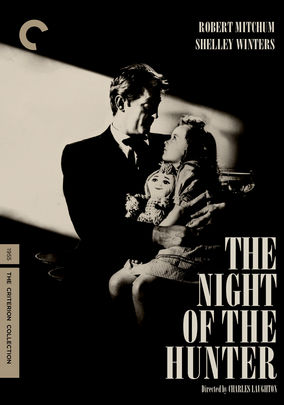
The Night of the Hunter (1955) is a fairy tale for adults. Although it is categorized as a thriller, it certainly teeters on the edge of being a horror film. In addition to being well-written, it also contains breathtaking cinematography.

Made in the mid-1950s, it is shot in black and white and tells the tale of good versus evil in a small town. The film is a masterpiece and one of my all-time favorites.

The film is both creepy and intelligent, and director Charles Laughton is responsible for its considerable success. Although it was not a success upon release, it has only finally received its due admiration as the years pass.

The film is way ahead of its time.

It is based on the 1953 novel by Davis Grubb.

The time is the 1930s, and the setting is rural West Virginia along the Ohio River. Ben Harper, a local family man, robs a bank and hides the stolen money inside his daughter’s doll.

His son and daughter (John and Pearl) are central characters in the story. Caught, Ben is out of the picture, leaving his wife, Wilma (Winters), vulnerable and alone.

A serial killer, Reverend Harry Powell (Mitchum), a misogynist, is on the loose disguised as a preacher. In prison with Ben, he knows the money is hidden and is determined to find out where it is. He has designs on wooing Wilma.

When dire events occur, John and Pearl are left along the river to seek refuge with a kindly older woman, Rachel Cooper (Lillian Gish).

The film is majestic, haunting, and artistic. Each scene seemingly glows as the dark black-and-white colors mix gorgeously with tranquility despite the dark tone of the subject matter.

The Night of the Hunter also has a dream-like visual quality. In one pivotal scene, we see a dead body submerged at the bottom of the river. The scene is horrific, with bulging eyes and bloating beginning to set in, but it is also creatively beautiful.

The flowing hair of the victim and the posture are mesmerizing scenes that stick with you for some time.

Poetic and a sense of good versus evil, this is clearly laid out as Powell has two words imprinted on the knuckles of each hand: “L-O-V-E” and “H-A-T-E.”  These words form the basis of the film, as both can be applied to the characters.

My favorite scene is when John and Pearl travel along the Ohio River, fleeing from their rival. The shapes of the trees mirrored by the flowing river are incredible, and I can watch this scene again.

A thriller, written intelligently well, with creativity for miles, is a recipe for pure delight. Director Laughton directed only this one film, encouraging creative collaboration and participation from his actors, which is evident in the resulting masterpiece.

The Night of the Hunter (1955) has had a profound influence on numerous directors.

Supervixens-1975

Supervixens-1975

Director Russ Meyer

Starring Shari Eubank, Charles Pitts, Charles Napier

Top 250 Films #62

Scott’s Review #361

220px-Supervixensposter

Reviewed January 9, 2016

Grade: A

I first watched Supervixens in 2008, and, if I am being sincere, I did not much care for it, or rather, I was very perplexed by it. I did not know what I had just viewed and was caught off guard and blown away- I have since realized that this is part of my love for the film.

Is it a comedy? Is it too over-the-top and shameless? Is it trying to degrade women? Now, a mere eight years later, it lands firmly ensconced on my Top 100 Films list, and it is similar to a fine wine- it just gets better and better with age.

Never before did I think I would fall in love with a sexploitation film, but I have.

Directed by Russ Meyer, noted for his series of 1970s sexploitation films, Supervixens is set somewhere in the desert of eastern California.

Gas station attendant Clint Ramsey, a handsome young man, is found irresistible to a series of sexy, large-breasted women, all with names beginning with “Super”.

We are introduced to his steady girlfriend, SuperAngel, a bored, horny, feisty woman played by Shari Eubank. Jealous and possessive, she commands Clint to leave his job and come home to her immediately, leading to hilarity as they spar outside, using an ax as they wrestle and fight.

Their nosy neighbor looks on, both tantalized and frightened.

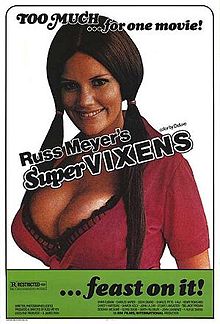
Others who make appearances during Clint’s journeys are SuperLorna, a horny gas station customer (strangely appearing in only one scene, but gracing the film cover packaging), who sets her sights on Clint, much to SuperAngel’s chagrin.

SuperCherry is a buxom girl who picks up Clint hitchhiking; SuperSoul, an Austrian farmer’s wife, seduces Clint at the farm; SuperHaji, a bartender at the local watering hole; and finally, SuperEula, who is black, deaf, and has a white father.

Supervixens, as well as some of Russ Meyer’s films, have influenced countless other famous films, and I continue to note their specific influence on Quentin Tarantino.

With the bloody violence mixed with cartoonish characters, as well as Nazi references (a frequent theme of Tarantino’s) and German marching music, Supervixens has a sly sense of humor- wicked almost, but never apologetic.

Tarantino uses a similarly outrageous style.

Carrie (SuperVixen bloody in the tub), The Shining (Harry breaking down the bathroom door amid a screaming SuperVixen), Friday the 13th- Part 3 (the camera angle at the top of the hayloft panning down on the approaching climber) are just a few film comparisons that I have noticed during repeated viewings.

My love for the film is its outrageousness, and I find it empowering to women, most of all, and not degrading. There is also male nudity and references to the male anatomy numerous times, so it is not a one-sided exploitation film.

Each female is a superhero, of sorts, and despite the sexploitation aspect, the film is quite romantic in spots- the tenderness between Clint and SuperEula is one of my favorites.

I also love the romance between Clint and SuperVixen (a dual role for Eubanks), as she is a reincarnation of SuperAngel. Working side by side at a roadside gas station that she owns, they pump gas and prepare burgers together, while running through the desert in a happy, lovely way.

Of course, their romance is threatened by the sinister Harry, who has returned for revenge.

Hilarious, outrageous, and in-your-face sexual, Supervixens (1975) is a camp classic that is so much more than that. Influential and creative, it must be seen to be believed.

I hope it is never forgotten.

Carrie-1976

Carrie-1976

Director Brian De Palma

Starring Sissy Spacek, Amy Irving, Piper Laurie

Top 250 Films #63

Top 40 Horror Films #14

Scott’s Review #325

352989

Reviewed January 5, 2016

Grade: A

Carrie is a 1976 horror film adapted from Stephen King’s novel of the same name.

Many King adaptations have failed, but Carrie (along with The Shining, 1980) is among the best.

Going beyond the scope of horror and earning more than one major Oscar nomination (largely unheard of in the genre), Carrie influenced films and filmmakers for decades after its release.

This is due mainly to the dream-like and breathtaking direction of mood master Brian De Palma.

By this time (2016), the film and the character of Carrie White were legendary.

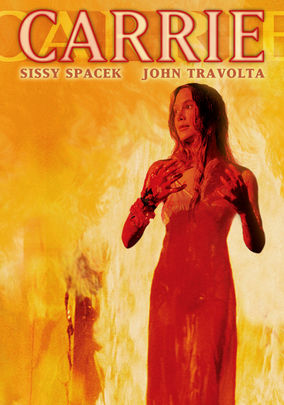
Carrie (Sissy Spacek) is a lonely suburban teenager, ostracized by her classmates for being “weird”. Her mother (Piper Laurie) is a devout Christian who spreads the word of god amongst the neighbors.

Carrie has a special ability to move things, usually during anger- this is called telekinesis.

After a humiliating incident in the girl’s locker room when Carrie begins menstruating, one of the nicer girls in the class, Sue Snell (Amy Irving) feels sorry for Carrie and convinces her boyfriend, Tommy Ross, to take Carrie to the prom.

When others in the class take revenge upon Carrie with a sick joke, things take a horrific turn.

Betty Buckley as the empathetic gym teacher, Miss Collins, and John Travolta and Nancy Allen as the dastardly Billy and Chris also star and are perfectly cast.

The direction in the film is second to none. De Palma adds interesting camera work throughout the film.

During a tender, lovely prom dance between Carrie and Tommy, the camera circles the pair repeatedly, giving a spellbinding, but not dizzying quality.

The use of slow motion in the pivotal “pig blood” scene is immeasurably effective.

The seemingly eternal time it takes for the blood to spill, and the camera (in slow motion) going from Sue to Miss Collins to Chris to the bucket of blood, is fantastic.

The list of inspired and intense scenes goes on and on- from the climactic scene between Carrie and Mrs. White to the “jump out of your seat” final scene.

The acting is also worthy of high praise. Spacek and Laurie deservedly received Oscar nominations for their work. Spacek brings so much rooting value to her role, with a shred of psychosis bubbling just beneath the surface.

Carrie wants to fit in and have a happy life, so the audience is drawn into her corner and celebrates her brief happiness with Tommy at the prom. Spacek is just perfectly cast.

Laurie, on the other hand, exudes crazy in every sense, but we do feel pangs of sympathy for her. We strongly believe she cares for her daughter and wants to protect her from the dangers of the world.

Carrie (1976) is a masterpiece that continues to hold up well and influence generations who can relate to school bullying,  taunting, and the desire to see the nasty popular kids get their just desserts.

More than a great horror film, it is a revered classic with a dreamy, moody vibe.

One of my all-time favorites.

Oscar Nominations: Best Actress-Sissy Spacek, Best Supporting Actress-Piper Laurie

The Silence of the Lambs-1991

The Silence of the Lambs-1991

Director Jonathan Demme

Starring Anthony Hopkins, Jodie Foster

Top 250 Films #64

Top 40 Horror Films #15

Scott’s Review #320

14546747

Reviewed January 3, 2016

Grade: A

The Silence of the Lambs (1991) has the honorary achievement of being one of only three films to win the top five Oscar statuettes, having been awarded Best Picture, Best Director (Jonathan Demme), Best Adapted Screenplay, Best Actor (Anthony Hopkins), and Best Actress (Jodie Foster) at the 1991 Oscar ceremonies.

This is no small feat, especially considering the film was released in March (not an Oscar-happy month) and is a horror film.

These elements speak volumes about the level of mastery in The Silence of the Lambs, and the film holds up incredibly well as the years go by.

The film was a sleeper hit at the time of its release and gradually built momentum throughout the year, becoming a phenomenon and a classic forever.

The film is adapted from the novel of the same name by Thomas Harris and, despite being a horror film, contains little gore.

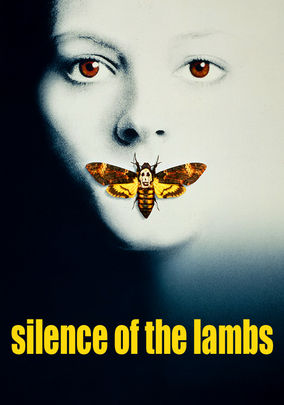
The film stars Foster as Clarice Starling, an FBI trainee, sent by her superiors to interview the infamous Hannibal Lecter.

Hannibal, “The Cannibal”, is a highly intelligent former psychiatrist who has been banished to a maximum security insane asylum after having been found guilty of killing and eating his victims.

The FBI hopes that Hannibal will aid them in a current case involving “Buffalo Bill”, a serial killer who skins his female victims.

Hannibal and Clarice embark on an intense and strange relationship in which he gets under her skin and questions her unhappy childhood in exchange for information about “Buffalo Bill”.

This relationship leaves Clarice vulnerable, though the pair develops a strong connection. As Hannibal makes increasingly demanding demands in exchange for information, he eventually escapes from custody in a chilling, bizarre escape.

The psychological elements and the intense relationship between Hannibal and Clarice are of monumental importance, and Hopkins and Foster share an amazing chemistry.

Hopkins gives a top-notch and downright creepy performance as the cannibalistic killer. His mannerisms are stiff and calculating, his tone of voice monotone, and he embodies his character, making him a legendary and recognizable presence in film history.

Two memorable lines he utters are: “I do wish we could chat longer, but I am having an old friend for dinner,” and “I ate his liver with some fava beans and a nice Chianti.”

The character of “Buffalo Bill” is as terrifying as Hannibal Lecter.

Portrayed by Ted Levine, the character is maniacal, sexually confused, and otherwise downtrodden. A tailor, he aspires to make a full “woman suit” from his victim’s skin. His current hostage, a Senator’s daughter, is kept confined in an old well and terrorized by Bill’s antics.

His famous line, “It puts the lotion on, or it gets the hose again,” still terrifies me.

Highly influential, imitated for years to come, and featuring multiple lines and characters permanently etched into film history, The Silence of the Lambs (1991) is a classic not soon forgotten.

The film was followed by multiple sequels, none of which come close to the power and psychological complexities of the original.

Oscar Nominations: 5 wins-Best Picture (won), Best Director-Jonathan Demme (won), Best Actor-Anthony Hopkins (won), Best Actress-Jodie Foster (won), Best Screenplay Based on Material Previously Produced or Published (won), Best Sound, Best Film Editing

Blue Velvet-1986

Blue Velvet-1986

Director David Lynch

Starring Kyle MacLachlan, Isabella Rossellini

Top 250 Films #65

Scott’s Review #343

319022

Reviewed January 9, 2016

Grade: A

Based on a 1963 Bobby Vinton tune of the same name, Blue Velvet (1986) is an independent noir thriller directed by the master of the weird and the unusual, David Lynch.

It is surreal in look and so mysterious- almost a precursor to Lynch’s fantastic television series, Twin Peaks. I adore the film and discover new facets with each viewing.

Though it’s not an easy or mainstream watch, the payoff can be big, and you know you are watching a deep, layered film.

The story can be tough to understand in full, but it goes something like this: Beneath the guise of a cheerful, suburban surface, evil lurks.

College student, Jeffrey (MacLachlan) discovers a severed human ear lying in an abandoned lot, delivers it to police detective John Williams, and reconnects with the detective’s daughter, Sandy (Dern).

Sandy, being privy to secret information about the case, reveals that a mysterious woman, Dorothy Valens (Isabella Rossellini), resides in an apartment key to the case. Jeffrey and Sandy decide to investigate further, only to get themselves in over their heads as the mystery deepens.

The film’s dreamlike quality is very compelling and intriguing. Layers upon layers come to the forefront as the story unfolds, and very few answers are ever provided- this adds to the mystery and is really the point of the film.

Many aspects are open to interpretation.

The relationship between Jeffrey and the much older Dorothy is fascinating, but what about his chemistry with the innocent Sandy? And who is the Yellowman? When the youngsters see Dorothy perform “Blue Velvet” at her nightclub, it is a great moment in the film.

The character of Frank Booth, played by Dennis Hopper, must be one of the strangest in film history, as the man is maniacal and bizarre beyond measure. With his unusual sexual tastes- he enjoys inhaling gas and sadomasochism- he is a unique character. He is also quite abusive to Dorothy.

The film is a throwback to classic film noir from the 1950s, and a clear femme fatale, Dorothy, is central to the film.

I find the film so compelling since its subject matter is secrets. Many secrets and dark corruption, as well as various forms of left-of-center dealings, reside in this small North Carolina town- it is the audience’s challenge to put all the pieces of this puzzle together.

Oscar Nominations: Best Director-David Lynch

Independent Spirit Award Nominations: 1 win-Best Feature, Best Director-David Lynch, Best Male Lead-Dennis Hopper, Best Female Lead-Isabella Rossellini (won), Laura Dern, Best Screenplay, Best Cinematography

Fargo-1996

Fargo-1996

Director Joel Coen and Ethan Coen

Starring Frances McDormand, William H. Macy

Top 250 Films #66

Scott’s Review #366

493387

Reviewed January 9, 2016

Grade: A

Fargo (1996) is a treasure as far as I’m concerned, and the role that deservedly propelled Frances McDormand to the forefront of the film audience’s minds, not to mention a gold statue for Best Actress.

The film epitomizes dark humor and zany freshness during a time in cinema when originality was emerging, and independent films were gaining popularity.

Fargo led the pack.

The film suffers from derision from locals in and around the upper Midwest U.S.A. for its depiction of accents — perhaps overdone, but hysterical all the same.

Set against snowy, icy locales, the film effectively conveys a harsh, small-town atmosphere.

The introduction of a crime, initially done innocently, escalates out of control.

Fargo is a part caper, part thriller, and part adventure, and is a layered, cool film.

The fact that it’s 1987 is excellent. The cars, the Oldsmobile dealership, all work particularly well.

McDormand plays a local Police Chief, Marge Gunderson, who is very pregnant and stumbles upon the crime, slowly unraveling the mystery.

All the while, the character keeps her cool, cracks jokes, and delivers witty one-liners after another, presenting a slightly dim-witted image but brilliantly deducing aspects of the crime.

William H. Macy, largely unknown in 1996, is perfectly cast as a car salesman, Jerry Lundegaard.

Nervous and shaky, yet with down-home respectability, he hatches a plot to have his wife kidnapped, the ransom to be paid by her wealthy father, enabling Jerry to pay off an enormous embezzling debt, and splitting the money with the kidnappers.

Predictably, things go awry and spiral out of control.

I love how the film crosses genres and is tough to label- is it a crime drama, a thriller, or a comedy? A bit of each, which is the brilliance of it.

Fargo (1996) is an odd little piece of art and is remembered as one of the best films of the 1990s, making Frances McDormand a star.

Oscar Nominations: 2 wins-Best Picture, Best Director- Joel Coen, Best Actress- Frances McDormand (won), Best Supporting Actor- William H. Macy, Best Screenplay Written Directly for the Screen (won), Best Cinematography, Best Film Editing

Independent Spirit Award Nominations: 6 wins-Best Feature (won), Best Director- Joel Coen (won), Best Male Lead- William H. Macy (won), Best Female Lead- Frances McDormand (won), Best Screenplay (won), Best Cinematography (won)
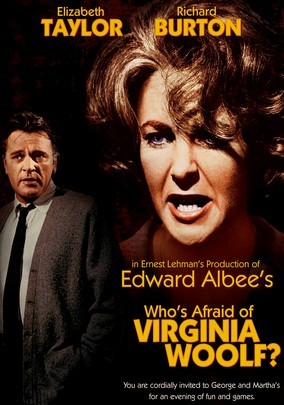
Magnolia-1999

Magnolia-1999

Director Paul Thomas Anderson

Starring Tom Cruise, Julianne Moore, John C. Reilly

Top 250 Films #67

Scott’s Review #777

Reviewed June 21, 2018

Grade: A

Paul Thomas Anderson is one of my favorite modern directors. In my opinion, his best film is Boogie Nights (1997), but he has also created other dark offerings, such as Phantom Thread (2017) and Inherent Vice (2014).

Arguably, his most distinctive effort might be Magnolia (1999), a cerebral film that explores themes of forgiveness and the meaning of life.

An ambitious effort, featuring a stellar ensemble cast, makes the film a fantastic experience.

Set in the San Fernando Valley (a mountainous area of Los Angeles), the film resembles David Lynch’s Mulholland Drive (2001) in its setting and oddness, as well as its unusual dialogue and offbeat characters.

A narrator explains three situations of extreme coincidence and surmises that chance may not be the only responsible party. Anderson then weaves an intricate tale involving numerous characters, intersecting lives, and a riveting climax on a rainy California day (an oddity in itself!).

The plot begins when we meet Jim Kurring (John C. Reilly), a police officer who is called to investigate a disturbance.

After finding a woman’s body in an apartment closet, events turn bizarre as a children’s game show host (Philip Baker Hall), his estranged daughter (Melora Walters), the show’s former producer, Earl (Jason Robards), who is dying from cancer, his drug-addicted wife Linda (Julianne Moore), Earl’s male caretaker (Philip Seymour Hoffman), a former game show champion (William H. Macy), and finally, an intense motivational speaker (Tom Cruise).

Quite a bevy of talented actors!

As the plot progresses mysteriously, the connections among the characters are revealed, and their peculiar motivations begin to take shape.

For example, Linda, who married Earl for his money, seems to have an epiphany and demands her lawyer change Earl’s will. Later, a character may have a connection to Earl and Linda, but is it all as it seems?

In Magnolia, the film is so wonderfully strange that it leaves the audience guessing for most of its running time.

Bizarre scenes are commonplace throughout the film. My favorite one is a marvelously creative scene. Suddenly, frogs begin to fall out of nowhere from the Los Angeles sky, with numerous consequences for the characters.

The incident causes a ripple effect, of sorts, as many of the characters’ fates are determined. Though one may not be able to make heads or tails of this scene or take complete logic from it, it’s enthralling all the same.

Magnolia has an overall quirky tone- sometimes upbeat, sometimes melancholy- that I adore. Films that are tough to figure out and feature an interesting musical score are so rich in flavor.

Aimee Mann is responsible for composing many of the songs on the musical soundtrack, so much so that she received a title credit on the soundtrack itself. Mann infuses her music with moody, diverse richness and ambient essentials.

Many actors make frequent appearances in Paul Thomas Anderson’s films. Magnolia alone seems almost like a Boogie Nights reunion with Moore, Walters, Macy, Baker Hall, and Philip Seymour-Hoffman to name just a handful.

The amazing aspect is that all of the aforementioned actors play vastly different, and arguably even more complex roles than they did in Boogie Nights.

Similar to Quentin Tarantino’s actors appearing in many of his films, this must be a creative treat for them.

There is no doubt that Magnolia (1999) is a complex, dream-like film. Open to interpretation and reflection, I find it a brilliant movie that I would like to revisit and dive into further with each viewing, hopefully for a better understanding and even deeper appreciation.

Oscar Nominations: Best Supporting Actor-Tom Cruise, Best Screenplay Written Directly for the Screen, Best Original Song-“Save Me”

What Ever Happened to Baby Jane?-1962

What Ever Happened to Baby Jane? -1962

Director Robert Aldrich

Starring Bette Davis, Joan Crawford

Top 250 Films #68

Top 40 Horror Films #16

Scott’s Review #193

70048556

Reviewed November 14, 2014

Grade: A

Baby Jane kicked off a trend, prominent throughout the 1960s, of aging Hollywood actresses starring in horror films (interestingly, Bette Davis and Joan Crawford each did two—the others being Dead Ringer and Strait-Jacket), with varying degrees of success.

What Ever Happened to Baby Jane (1962), directed by Robert Aldrich, stars Davis and Crawford as, ironically enough, two aging Hollywood actresses, Jane and Blanche Hudson.

Jane (Davis), a child star in the 1920s nicknamed Baby Jane, with an adorable signature song, “I’ve Written a Letter to Daddy,” has long since faded from the spotlight but continues to dress in her Baby Jane costume, consisting of a little girl dress with hair in curls and ribbons.

Blanche, however, achieved success as an adult in the 1930s until a tragic accident left her wheelchair-bound and subsequently ruined her career. She then became a popular film star, much more popular than Jane.

Blanche and Jane now while away the years in a crumbling mansion in Los Angeles. Blanche is entirely dependent on her unbalanced sister for care. Jane is resentful of Blanche’s success and popularity and plans to relaunch her career in her once-famous alter ego.

The film has macabre comedic elements but never veers too far over the edge into camp or foolishness. It is also a very psychological film, as Jane mentally abuses Blanche and plays mind games with her to gain the upper hand.

Davis had a ball with this role, as her appearance alone is frightful – a grown woman of a certain age in blonde curls, pancake makeup, and a baby doll dress – she looks hideous!

What Ever Happened to Baby Jane reminds me quite a bit of Billy Wilder’s masterpiece Sunset Boulevard in several ways. For example, both feature successful stars of years past with delusions of returning to their former fame, both feature older women who are more than a bit unbalanced, and both films are set in sunny Los Angeles.

Two of the film’s supporting actors are well cast, adding significantly to the film, and deserve recognition. Victor Buono, later made famous for his role of King Tut in the popular late 1960s television series Batman, is highly effective as the opportunist sloth, Edwin Flagg, who aids Jane in her comeback attempt.

Maidie Norman as the Hudson sisters’ black housekeeper, Elvira, loyal to Blanche but never a fan of Jane’s, slowly becomes wise to Jane’s sinister plot and does a fantastic acting job when she stands up to the manipulative sister- for 1962, a black maid verbally assaulting a white woman employer was still somewhat taboo and kudos to the film for bravely going there is a highly effective scene.

The fact that Davis and Crawford famously despised each other in real life gives the audience an edge in scenes where the two women physically and verbally clash.

The film features wonderfully quotable dialogue. “We got rats in the cellar,” Jane utters matter-of-factly as she serves Blanche a cooked rat on a bed of lettuce for lunch one day, and cackles fiendishly when she hears Blanche scream in disgust.

One aspect of the film that has taken me three viewings to become aware of and that I love is the musical score throughout the film- it features multiple and creepy versions of Jane’s signature song, “I’ve Written a Letter to Daddy,” with varying tempos.

This film must use suspension of disbelief. Why does Blanche not pound and scream at her bedroom window to alert the neighbor of trouble instead of casually tossing a note out the window?

Blanche struggles to descend the steps by sliding down them and then cannot slide across the floor to escape the mansion, which is silly. The film is so gripping that I happily overlook these errors and instead enjoy the suspenseful film, which features two actresses, rivals both on and off-screen, that make this film a bit too realistic —a realism that makes for delightful film-watching.

Oscar Nominations: 1 win-Best Actress-Bette Davis, Best Supporting Actor-Victor Buono, Best Sound, Best Cinematography, Black-and-White, Best Costume Design, Black-and-White (won)