Category Archives: Geraldine James

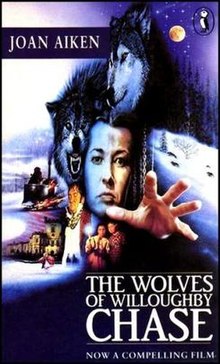
The Wolves of Willoughby Chase-1989

The Wolves of Willoughby Chase-1989

Director Stuart Olme

Starring Stephanie Beacham

Scott’s Review #1,418
Reviewed January 20, 2024

Grade: B+

The Wolves of Willoughby Chase (1989) is a British dark fantasy film directed by Stuart Orme in his theatrical directorial debut. Most notably, as a rock video director, I am unsure if Orme ever directed another film.

The film is based on the 1962 novel of the same name by Joan Aiken, which was popular with children during the 1960s and beyond.

Similar to the book, the film is set in an alternate history version of nineteenth-century England where wolves roam the countryside. The animals prance through the wintry landscapes, causing fear among humans who spot them.

The experience is playful and escapist, with similarities to both Oliver! (1968) and The Witches (1990). Especially regarding the former, some of the action takes place in a bleak workhouse where adults mistreat children.

Predictably and satisfying, the evil adults get their comeuppance while the nice children and warm adults live happily ever after. This is a main part of the fun of watching the perilous situations.

The plot centers around two young girls. Bonnie (Emily Hudson) is the daughter of Lord and Lady Willoughby, who live at the grand yet cozy country estate named Willoughby Chase. Lady Willoughby (Eleanor David) is ill, and the couple plans to recuperate, basking in the warm sun along the Mediterranean.

In urban London, Bonnie’s cousin, Sylvia (Aleks Darowska), is leaving her impoverished Aunt Jane (Lord Willoughby’s cousin) to keep Bonnie company while her parents are away.

While on the train, she meets a mysterious man, Mr. Grimshaw (Mel Smith), whom they decide to bring back to Willoughby Chase after falling unconscious when wolves attack the train.

Meanwhile, Bonnie and Sylvia’s cousin, Letitia (Stephanie Beacham), is their new governess. She is evil and determined to get rid of the children so she can inherit the money and the estate.

Billed as a children’s film, as Oliver! Some of the sequences may be too much for younger kids. The ferocious wolves may be frightening, while a scene in which one of the girls is locked in a chest might cause nightmares.

There is a presumed drowning, and another character catches on fire.

For adults, particularly those who enjoyed the book as youngsters, the dangerous situations are light fare and merely make Bonnie and Sylvia more heroic and justified in escaping the adults’ clutches.

The art direction and set designs are also a big part of the fun. Numerous scenes of winter and snow-covered roads and pathways are what make The Wolves of Willoughby Chase a perfect watch for a frigid January evening.

I’m not sure if the film would feel as atmospheric in July or August.

The estate where much of the action takes place has a warm and cozy feel. It made me want to curl up by a raging fire with a good book.

There’s an undertone of class distinction when the servants are all dismissed to save money, and I questioned why Sylvia and her aunt didn’t simply live on the estate. The poor living amongst the rich is a perfect setup for more meaningful storylines, but the intent is more for The Wolves of Willoughby Chase to be fun.

Beacham is delightful while slightly over-the-top playing a fiendish character. Best known for appearing on television’s ‘Dynasty,’ the actress has also appeared in British horror films.

I assumed she planned to kill the parents and the girls, but what about the aunt?

It doesn’t matter much because her plan is foiled and the girls are reunited with their loved ones.

The Wolves of Willoughby Chase (1989) contains a nice musical score that enhances the adventures. The film is a bit too scary for kids, but perfect for young adults and older adults.
Gandhi-1982

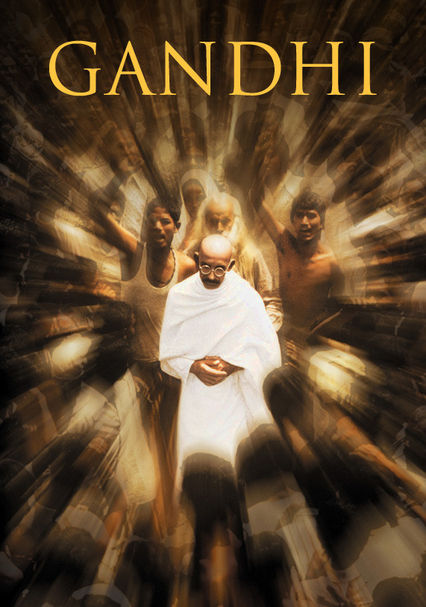
Gandhi-1982

Director Richard Attenborough

Starring Ben Kingsley

Scott’s Review #1,189

Reviewed October 30, 2021

Grade: A

Ben Kingsley delivers an astonishing performance as Mahatma Gandhi,  the steady-handed lawyer who stood up against British rule in India and became an international symbol of nonviolence and peaceful understanding until his tragic assassination in 1948.

Entitled simply Gandhi (1982), the film is directed by Richard Attenborough, who had previously created masculine offerings such as The Great Escape (1963) and The Sand Pebbles (1966).

Calmly, the director creates a grandiose epic, but one that is thought-provoking and introspective in its humility.

I was incredibly affected by this picture.

As beautiful as the cinematography and other trimmings are, the message stands out to me most. One man’s spirit and thirst for fairness and human equality are beyond inspiring decades after the film was made.

Thanks to Kingsley, the biography infuses an infectious sense of what being a human is all about and makes human decency the desired goal.

The film belongs to Kingsley. Despite hosting a cast of literally thousands, he is the only name worth mentioning. He is that superior.

Attenborough, who teams with screenwriter John Briley, presents major events in the life of Mohandas Gandhi (Kingsley).

The film starts suddenly in January 1948, when an elderly Gandhi is on his way to an evening prayer service and is shot point-blank in the chest in front of a large number of dumbfounded greeters and admirers.

His state funeral is shown, the procession attended by millions from all walks of life, with a radio reporter speaking eloquently about Gandhi’s world-changing life and projects.

The film then returns decades earlier, when Gandhi, a young man, has a violent and racist experience. He vows to dedicate himself to nonviolent resistance. Initially dismissed, Gandhi was eventually internationally renowned, and his gatherings of passive protest moved India towards independence.

Gandhi has been criticized for its extraordinary length with a running time of three hours and ten minutes. A suggestion is to watch the film in multiple sittings, though the best recommended approach would be to see it on the big screen.

Unfortunately, I didn’t, but I fantasized about the massive sequences and how gorgeous they would appear at the cinema.

The story, acting, production, and pretty much everything else about Gandhi is a ravishing spectacle.

It’s worth its weight to sit back and watch Kingsley completely immerse himself in the role. The actor deservedly won the Best Actor Academy Award and, despite his oodles of other film roles, is best remembered for this one.

I’m half-surprised that it didn’t typecast him, since he is so identifiable in the role.

I want to mention two aspects that some might notice less than others, but that are simply astounding. The cinematography of India’s deserts, towns, and cities is rich in detail and accuracy. If one cannot go on a trip to India, the next best thing is to watch this film instead. You’ll get a good dose of realism.

South Africa is also featured.

The costumes brilliantly showcase Indian flair and culture, so much so that I felt I had been to an interesting country at the time the film portrayed the events, nestled amid the luxurious colors and good taste.

Post-1982, the epic film genre exists rarely, if ever, anymore.

Long gone are the days of brilliance like Gone With the Wind (1939) or Lawrence of Arabia (1962), which are truly a delight to lay one’s eyes on.

Gandhi deserves to be appreciated as much as those other films, despite being released in a less-than-artistic decade in cinema.

Gandhi (1982) is a wonderfully tragic film that leaves the viewer feeling sad but also inspired to carry the torch that one brave man picked up.

A history lesson is also a lesson in humanity and in the courageous fight one man waged. Military power is not the way to achieve change in the world.

Oscar Nominations: 7 wins-Best Picture (won), Best Director-Richard Attenborough (won), Best Actor-Ben Kingsley (won), Best Screenplay-Written Directly for the Screen (won), Best Art Direction, Best Cinematography (won), Best Costume Design (won), Best Film Editing (won), Best Makeup, Best Original Score, Best Sound

Downton Abbey-2019

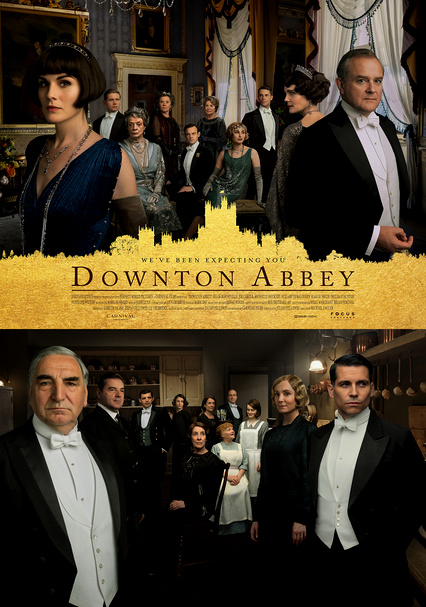
Downton Abbey-2019

Director Michael Engler

Starring Hugh Bonneville, Michelle Dockery, Maggie Smith

Scott’s Review #947

Reviewed October 16, 2019

Grade: B+

Capitalizing on the tremendous success of the television series, which ended in 2015, Downton Abbey (2019) is a British historical period drama film written by Julian Fellowes, creator and writer of the series.

Beloved fans will devour the film, as the familiar formula and characters are brought to the big screen, giving it an even grander feel.

The film plays more like a two-hour episode arc over reinventing the wheel, but the result is a resounding crowd-pleasing affair with drama, scandals, and a good dose of nostalgia.

The Crawleys and their servants reside in the lavish fictional estate of Downton Abbey during the year 1927, a year and a half after the series ended.

Little has changed, and most of the characters are in similar situations, enjoying their daily lives.

Robert (Hugh Bonneville) and Cora Crawley (Elizabeth McGovern), the Earl and Countess of Grantham, are notified that King George V and Queen Mary will visit their home as part of a royal tour throughout the country.

The family and staff are excited yet skittish as they prepare to ensure the lavish event goes off without a hitch.

Situations arise such as the Downton Abbey servants feuding with the Buckingham Palace staff, Violet Crawley’s (Maggie Smith) dismay at Robert’s cousin Maud (Imelda Staunton) being in attendance, and attempted plot to kill the King which is thwarted by Tom (Allen Leach).

A new job offer for Edith’s (Laura Carmichael) husband, Mary’s (Michelle Dockery) frustration with maintaining the vast estate, and potential romances for several characters, including a scandalous same-sex relationship.

A few contemporary issues are created – among them, women’s rights and the plight of gay men. And though welcome, neither changes the overall blueprint of what the series is about, which is just what the series fans ordered.

Smith is the main attraction as she chews up the scenery with her insults, sarcasm, and blunt honesty. But the best scene, coming late in the film, gives Smith a chance to burst with sentimentality and limit the hamminess for at least one treasured scene.

The costumes and art direction are lovely, with luscious gowns, tuxedos, suits, jackets, hats, and shoes found in every scene.

The sprawling grounds of Downton Abbey and the ravishing interiors are front and center.

The film ventures to the neighboring city of York to offer a more progressive and metropolitan vibe, but each scene looks perfect, which is what fans have come to expect.

Not every character is front and center, but with an unwieldy cast of close to thirty principals, some are destined to accept back-burner status.

Surprisingly, yet agreeably, is the toned-down story for “super-couple” Bates (Brendan Coyle) and Anna (Joanne Froggatt), having enjoyed their share of trials and tribulations during the original run.

Wonderful moments feature supporting characters like Carson (Jim Carter), Thomas (Robert James-Collier), and Molesley (Kevin Doyle), who nearly steals the show with his hysterical fascination with royalty.

The balance and pace of the film are nearly perfect, and every character has at least something to do.

This characteristic has always helped huge ensemble casts succeed, and Fellowes wisely balances humor with drama but avoids tragedy or dark situations, hoping for mainstream success with his move to the big screen, opting to play it safe.

The attempt succeeds as the film adopts the “if it ain’t broke, don’t fix it” approach.

Downton Abbey (2019) is a splendid winner, primarily due to its impressive production values and costumes.

For fans of the television series, the film is a must-see and offers no more or no less than expected, providing more than enough to please those who want what the popular stories initially offered.

Despite the drama, the film does not feel “soapy” or contrived, and the tender moments may evoke a need for a hankie.

If the writing can remain fresh, I see no reason for another offering not to be green-lit, primarily due to the significant box-office returns.

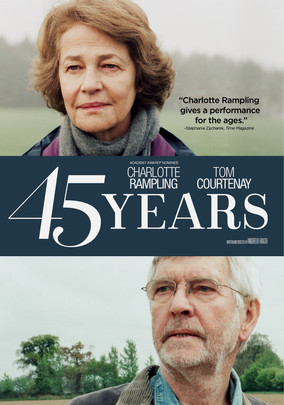
45 Years-2015

45 Years-2015

Director Andre Haigh

Starring Charlotte Rampling, Tom Courtenay

Scott’s Review #488

80040147

Reviewed October 1, 2016

Grade: B+

In the case of 45 Years (2015), acting is the clear highlight of the film and the main reason to view it.

Seasoned veterans take center stage and give tremendous performances and lessons in acting.

Tom Courtenay and Charlotte Rampling carry the film.

The subject of 45 Years is an enduring marriage tested by an outside revelation that escalates in importance into conflict and mixed emotions.

The film moves at a slow pace and can be challenging to the most patient of viewers, but the slow pace is warranted as the longevity of the character’s marriage is the key to the film.

Geoff and Kate Mercer, a happy couple living in rural England, are excitedly planning their 45th wedding anniversary (the 40th was canceled due to Geoff’s heart condition). They are a popular couple within their town, both kind and decent people, and the event will be attended by many.

One day Geoff receives a letter from authorities in Switzerland- a young woman (Katya) he was once involved with, and presumed dead in 1962, has been found. Having fallen into an icy glacier, her body is preserved and looks the same as she did then.

Not knowing the extent of their relationship, Kate is riddled with multiple feelings including jealousy, curiosity, and guilt. Geoff and Kate’s marriage is tested.

45 Years is a mature film involving mature characters. Geoff and Kate are still in love decades into their relationship, but the introduction of Katya becomes an unwelcome conflict.

The film plays out gradually, but realistically, as marriage moves along slowly. Many scenes of Geoff and Kate’s day-to-day activities are shown- they walk their dog together, travel into town to shop, relax, and read the newspaper.

Like real people do.

This is an asset to the film. Real life is sometimes mundane and dull, but these little tasks are pleasurable and soothing.

Geoff and Kate’s marriage contrasts with the relationship Geoff and Katya briefly had all those years ago (excitement, risk, youth) and one can understand Kate’s point of view.

As details reveal themselves, Kate feels inferior. She is not young anymore and thinks of Geoff and Katya and the life they may have had together if the accident had not occurred. Despite being dead, Katya becomes an obstacle in Kate’s mind.

The film wisely does not write Kate as a jealous shrew or one-dimensional. She fights her jealousy every step of the way and tries to be strong and realistic.

Charlotte Rampling gives such a good, subtle, understated performance that it is easy to overlook how good she is. She does not have hysterical moments or a scene where she loses control. Rather, Rampling shows a series of complex emotions with her facial expressions.

Let’s not forget to mention Tom Courtenay. Imagine being in the golden years of your life and a long-lost lover (in spirit anyway) returns to the fold. Geoff cannot help but imagine a life with Katya if she remained alive. Kate asks Geoff if he would have married Katya and he cannot deny that he would have.

Several scenes show the couple engaging in “old people” issues- awkward lovemaking for example, which enhances the differences between when Geoff and Katya were in their prime. Geoff cannot help but be whisked back in time with thoughts and what-ifs.

A standout scene is when Kate and Geoff dance at their anniversary party. Having professed his love during a speech they causally dance. Kate is both touched and pained and as the scene goes along unravels. She explodes internally.

Sometimes perhaps a tad too slowly paced, I get the point of pacing 45 Years this way. After all, nearly 50 years of marriage is a long time and similar days will pass with few important moments. Thanks to great acting, I overlooked this and was astounded at the complexities both Rampling and Courtenay bring to the table.

Oscar Nominations: Best Actress-Charlotte Rampling