Category Archives: Guillermo del Toro

The Witches-2020

The Witches-2020

Director Robert Zemeckis

Starring Anne Hathaway, Octavia Spencer

Scott’s Review #1,314

Reviewed November 16, 2022

Grade: B

A remake of the 1990 film starring Anjelica Huston, The Witches (2020) sometimes delivers the goods and occasionally derails off the tracks into campy, over-the-top, wackadoo.

Mostly, on the part of the star Anne Hathaway, who plays an evil and powerful witch.

But, regardless of what this adult thinks, it will please, surprise, and fascinate youngsters who see it. There’s a comforting and vital message of friendship and family roots ingrained in the story, which is a nice touch.

In 1968, seven-year-old orphan Charlie Hansen (Jahzir Bruno) travels from Chicago to Alabama to live with his grandmother, Agatha (Octavia Spencer), after his parents are killed in a car accident.

After a dastardly witch approaches him in a grocery store, they flee to a seaside resort to avoid the child-hating witches. Agatha has a troubled past with the witches who long ago turned her best friend into a chicken.

When the two arrive at their hotel, they find a coven with villainous plans. They are accompanied by a mouse named Daisy and an English boy named Bruno (Codie-Lei Eastick).

I much prefer the first half of The Witches to the last.

The wonderful and caring relationship between Agatha and Charlie is a beautiful dynamic. When she envelops him with love and southern cooking in her cozy home, understanding the trauma he has endured, it is heartwarming and genuine.

Spencer is terrific in any role she plays, of course, but her calm and stoic demeanor when paired against the witches is lovely. She is prepared for trouble and sneaks to a back room where she keeps crystals and other anti-witch weaponry.

But the relationship with the little boy is darling and top-notch. I wish they would have just stayed at home and nurtured their relationship with Daisy and Bruno.

The weakest section of the film involves the witches themselves. As they flock to the hotel for a convention to plot the destruction of children everywhere, they appear more silly than scary, especially when they remove their wigs and reveal bald, scabby heads.

Director Robert Zemeckis must have given Hathaway free rein to ham it up because she certainly does just that.

I’m a fan of hers, so it’s not a personal knock, but she teeters toward ridiculous pretty quickly. I understand the need to make a children’s film villain colorful, memorable, and loud, but there is no restraint, which causes the character to feel more silly than terrifying.

On the plus side, Hathaway must have had a ball letting loose and leaving all constraints on the sidelines.

Inevitably, the kids are changed into cute mice and must convince their loved ones that they are themselves while figuring out how to change back to human children.

Not much has changed from the 1990 version, except for a few tweaks here and there, and the story remains the same. However, I prefer the original by a hair.

Huston beats Hathaway in a comparison.

Some inconsistencies emerge, such as how Agatha can afford to stay in a grand hotel. She knows someone connected to the hotel, but the who’s and why’s aren’t clear.

It’s never explained what happened to Agatha’s friend who wound up as a chicken, and I wanted more from Stanley Tucci than an uninteresting hotel manager role with little to do.

However, the action sequences are adventurous and energetic, and it’s fun cheering as the Grand High Witch (Hathaway) is transformed into a rat.

I wanted more of the homespun love between Agatha and Charlie, as well as the simple Southern town that felt so lovely and welcoming. Still, The Witches (2020) provides family-friendly entertainment that many can enjoy.

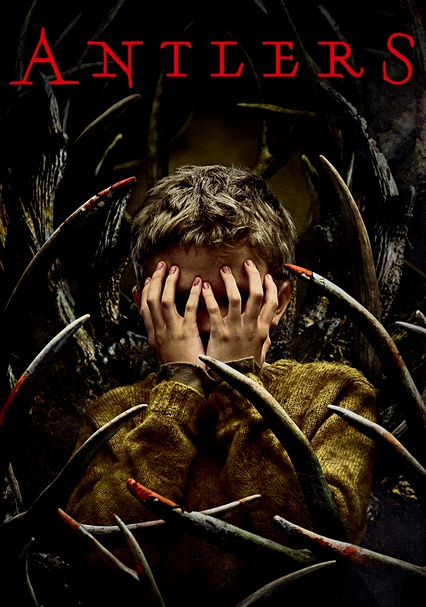
Antlers-2021

Antlers-2021

Director Scott Cooper

Starring Keri Russell, Jesse Plemons

Scott’s Review #1,255

Reviewed May 13, 2022

Grade: B+

Antlers (2021) is a film co-produced by Guillermo del Toro, who is famous for dark, humanistic treasures like Pan’s Labyrinth (2006) and the Oscar-winning The Shape of Water (2017).

His name attached to the project conjures images of supernatural and otherworldly creations, along with some murky elements. While the film does contain his influence, if looked at carefully, it’s in a tepid way, and I wouldn’t call it a del Toro-type film.

But it’s not as if he directed it either; he only helped fund it. Scott Cooper, known for films like Crazy Heart (2009) and Black Mass (2015), which are both very good, does a fantastic job of incorporating horror elements and impressive cinematography to create a bleak and grey atmosphere that is perfect for horror.

The plot is the weak point in an otherwise exceptional offering. The story has a standard setup and unsatisfying ending, except for an attempt to set the stage for a potential sequel.

Because of the COVID-19 pandemic, Antler’s release date was postponed twice and flew under the radar, as many films did in the early 2020s.

Plus, star Jesse Plemons received an Oscar nomination for The Power of the Dog (2021) by the time the film hit the screens, so it’s doubtful he’d make a return appearance.

I’m not sure the film is good enough to warrant a follow-up, but I did thoroughly enjoy the perfect trimmings and quality acting, even though the story didn’t completely satisfy me.

The film is based on the short story The Quiet Boy by Nick Antosca.

The action is set in a rural, isolated Oregon town where a middle-school teacher (Keri Russell) and her sheriff brother (Plemons) become entangled with her taciturn student Lucas (Jeremy T. Thomas), whose dark family secrets lead to terrifying encounters with a legendary ancestral creature known for creating debauchery.

The dazzling cinematography by Florian Hoffmeister perfectly encapsulates the setting of the Pacific Northwest, making it appear grim and constantly cloudy. The foreboding presence is only enhanced by incorporating a dark mine as the main set, where the dire events unfold.

Russell does a fine job carrying the film, and Cooper and the team provide a character-driven approach to the story. Julia has returned to her hometown after the suicide of her father, who we quickly learn was abusing her as a little girl.

She bonds with Lucas, who is also abused, and this portion of the story works well. We get the bond, and they connect well. He’s got a different set of daddy issues, though, since his wolf-like papa salivates at the sight of him and is diseased from an incident in the mine.

But the Julia/Lucas relationship ultimately has very little to do with a wild creature running around killing a student and a principal. A quick scene involving a local townsperson explaining an ancient curse is uninspired, even if Graham Greene plays him from Dances With Wolves fame (1990).

I was more invested in the Julia and Paul raising Lucas angle and what comes next over the silly folklore curse that we’ve seen countless times in films.

The texture of Antlers easily earns it a solid B+ rating because it’s spooky and scary in some sequences. When Julia and Principal Ellen (Amy Madigan) separately approach the run-down Weaver house, the camera follows the characters, making the audience feel like they are the ones entering the house.

We know bad things will soon happen, and that makes it fun.

Because of the excellent camera work and use of lighting, I’d never want to set foot in Cispus Falls.

As an aside for every film writer out there, it’s time to discard the anti-LBGTQ slurs once and for all. Aren’t we beyond this? Can’t we write one character calling another a ‘loser’ and leave it at that?

The visceral style of Antlers (2021) is more than enough reason to recommend it. A straight-ahead supernatural horror film with a grim veneer is the reason to see it.

The ho-hum story is somewhat secondary.

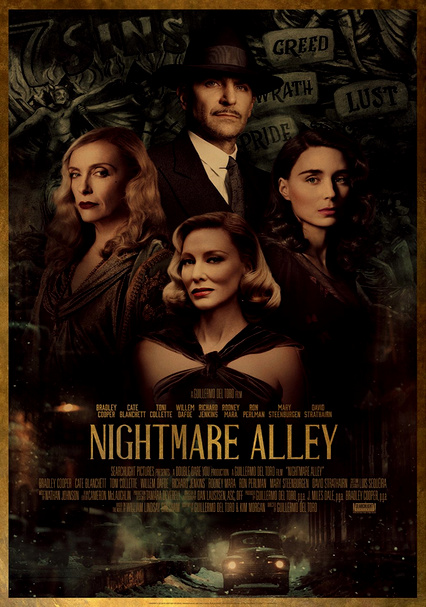
Nightmare Alley-2021

Nightmare Alley-2021

Director Guillermo del Toro

Starring Bradley Cooper, Cate Blanchett, Rooney Mara

Scott’s Review #1,229

Reviewed February 13, 2022

Grade: B+

I have not seen the original Nightmare Alley, made in 1947, so I can make no comparisons to how the film noir remake in 2021 compares, but I am a fan of respected filmmaker Guillermo del Toro.

His knack for creating such dark treats containing fantastical elements, as seen in Pan’s Labyrinth (2006) and The Shape of Water (2017), has similar tones.

Set back in the 1930s and the 1940s, when the United States of America suffered from the Depression and subsequently World War II, a midwestern carnival and then wintry Buffalo, New York, are the chosen settings for his latest film.

Nightmare Alley feels like two different films, and I prefer the first half by a small margin.

Del Toro is a major filmmaker, and while he creates an experience that is gorgeously shot and simmering with practical elements, it’s not one of his best films and certainly not on par with the gems mentioned earlier.

The story stretches believability at times and feels like the film noir elements from the original might have been included just for the sake of making it fit a defined category. The twist at the end shocks and disturbs, which cements the del Toro flavor.

To summarize, the film’s look is exceptional, and the story is engaging, but the two halves, one set in the Midwest and the other in Buffalo, feel disjointed.

When handsome and very charismatic but down-on-his-luck Stanton Carlisle (Bradley Cooper) meets the clairvoyant Zeena (Toni Collette) and her aging mentalist husband Pete (David Strathairn) at a traveling carnival, he creates a powerful act utilizing his ability to manipulate townfolks.

He has fled from a dark past involving his father and fire, but the exact details are unknown to us.

Moving on to Buffalo, he enshrouds the wealthy elite of 1940s New York high society. With the virtuous Molly (Rooney Mara) by his side, Stanton plots to con a wealthy yet vulnerable tycoon (Richard Jenkins) with the aid of a mysterious and pouty psychiatrist (Cate Blanchett) who might have tricks up her sleeve.

Since I adore Blanchett, I was eagerly awaiting her entrance, which unfortunately doesn’t come until midway through the film. Nonetheless, she makes quite an impression as she smokes and drinks in stylish glamour befitting gorgeous women of the time.

Moreover, her character of Lilith Ritter is cold and calculating, as the audience knows she is toying with Stanton, but we don’t know how or why.

While not quite a romantic triangle, Cooper has good chemistry with Mara but tremendous chemistry with Blanchett. Both actresses reunite from their turn together in Carol (2015), but have very little screen time together.

Each of the three delivers a mighty performance, with Cooper and Blanchett simply mesmerizing.

One can even forget the plot entirely and look at the film. It’s that good and polished.

From the dusty and depressing midwestern ordinary towns to the architecturally fabulous Buffalo, del Toro and team construct a lavish production design. Each costume and set piece is perfectly staged.

I was more attuned to the strange and creepy carnival characters, such as the ‘geek’, and the on-screen magnificence of Cooper and Blanchett than to caring as much as I should have about the storyline’s plot holes or inconsistencies.

The unsatisfying reveal about the relationship between Stanton and his father, or the backstory of the wealthy tycoon abusing young girls, only gave me mild interest. The story as a whole becomes too complex and unengaging for me to really care for a while.

The sweet spot of Nightmare Alley (2021) is the grand production design and the flawless acting. Besides an effective ‘oh, shit!’ moment at the conclusion, which confirms Cooper as a great actor, the story mainly meanders.

It’s a terrific effort, but not one of del Toro’s best.

Oscar Nominations: Best Picture, Best Cinematography, Best Production Design, Best Costume Design

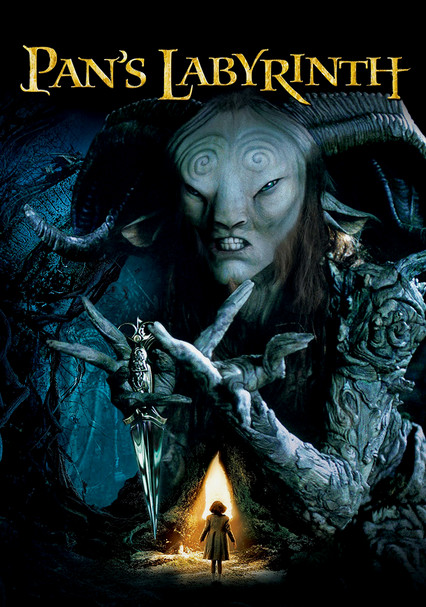
Pan’s Labyrinth-2006

Pan’s Labyrinth-2006

Director Guillermo del Toro

Starring Ivana Baquero, Sergi López

Scott’s Review #1,156

Reviewed June 25, 2021

Grade: A

Pan’s Labyrinth (2006) is a treasure of a film. I would classify it as a masterpiece for creativity alone.

It is not for children!

The fact that it has some fantasy trimmings and tells its story from a child’s perspective is misleading. The film deals with some heady and heavy stuff that will both frighten and be lost on the younger crowd.

A clue is that Guillermo del Toro directs the film, he of well-known note for creating films such as Hell Boy (2004), Hell Boy II: The Golden Army (2008), and The Shape of Water (2017) the latter winning the coveted Best Picture Oscar Award.

I adore that Pan’s Labyrinth is Spanish-Mexican. Somehow that makes the experience a bit mysterious and exotic right off the bat.

The frightening period of 1944, directly post World War II is also key to the good story since war and mayhem are themes.

The main character, Ofelia, meets several strange and magical creatures who become central to her story, leading her through the trials of the old labyrinth garden.

Young Ofelia (Ivana Baquero) and her pregnant and sick mother Carmen (Ariadna Gil) arrive at the post of her mother’s new husband (Sergi López), a sadistic army officer who is trying to prevent a guerrilla uprising.

Lonely and feeling lost, Ofelia explores an ancient maze, encountering the faun Pan, who tells her that she is a legendary lost princess and must complete three dangerous tasks to claim immortality.

She is completely and utterly spellbound and intrigued all at once. Finally, she can escape the ravages of real life and immerse herself in a fantasy world all her own. She hates her stepfather, worries for her mother, and can’t wait to traverse her new world. If only life were that simple.

In a fairy tale, Princess Moanna, who Ofelia becomes, visits the human world, where the sunlight blinds her and erases her memory. She becomes mortal and eventually dies. The king believes that eventually, her spirit will return to the underworld, so he builds labyrinths, which act as portals, around the world in preparation for her return.

Enter Ofelia.

About that creativity, I mentioned earlier. Pan’s Labyrinth is Alice in Wonderland for adults, taking some similar points and adding the horrors of both reality and fantasy blended into an extraordinary, spellbinding fable.

The darkness of the forest is the best and most memorable part.

The art direction is astonishing to see. Bewildering forest trimmings and haunting lighting make their appearance as Ofelia immerses herself in her new world. The viewer sees her new world through her eyes, that is through the eyes of a child.

So authentic are the sets and ruins that it is impossible not to be thrust full-throttle into the fantasy sequences.

The story can be downright horrifying at times. Carmen eventually dies and Ofelia is taken under the wing of Mercedes (Maribel Verdú), Ofelia’s stepfather’s housekeeper, and also a revolutionary harboring dangerous secrets.

Ofelia and Mercedes team up to save Ofelia’s baby brother from the hands of the dastardly.

The strange fantasy world may confuse some viewers. It’s simply not the imagination of Ofelia (or is it?) because Vidal, Mercedes, and the baby all play a part in the eerie labyrinth.

Guillermo del Toro creates a world so imaginative and magnificent that we see this world through the eyes of a child but also the clear glasses of the adults.

Scenes of torture mix with scenes of innocence so well that it is impossible not to be transported to a magical world where reality often disrupts the pleasurable fairy tale.

Pan’s Labyrinth (2008) is a visionary film and must be experienced to be believed.

Oscar Nominations: 3 wins-Best Original Screenplay, Best Foreign Language Film, Best Art Direction (won), Best Cinematography (won), Best Makeup (won), Best Original Score

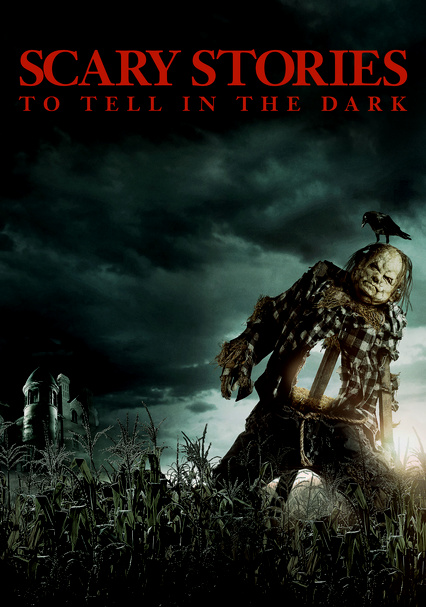
Scary Stories to Tell in the Dark-2019

Scary Stories to Tell in the Dark- 2019

Director Andre Ovredal

Starring Zoe Colletti, Michael Garza

Scott’s Review #997

Reviewed March 10, 2020

Grade: C+

Admittedly, not having read the series of books that Scary Stories to Tell in the Dark (2019) is based on, nor knowing the books even existed, may have influenced my opinion. Still, the film is lackluster at best, serving up some creative moments, but more silly ones.

The film is too polished, uneven, and feels too similar to modern projects like It (2017) or the television series Stranger Things to have its individuality.

A few interesting moments or sequences exist, but not enough to recommend.

The creepy children’s books written by Alvin Schwartz are adapted into film form, as the 1968 Halloween period is brought to life.

The small town of Mill Valley, Pennsylvania, serves as the backdrop for the historic Bellows family mansion, which has loomed over the city for decades and holds a haunting mystery.

Sarah, a young girl with dark secrets, has transformed her troubled life into a series of terrifying stories, written in a book that has transcended time.

After a group of impressionable teenagers discover Sarah’s terrifying home, they uncover her stories, and they become all too real.

The visual effects and images are the film’s high point.

Several visceral and stylistic sequences deserve admiration and mention. When one of the panicked teenagers scrambles into a mental institution, he is met with a horrific, blood-red glowing image that surrounds him.

As he attempts to escape, a ghastly, bloated figure slowly approaches him from all sides.

Later, a freakish person known as The Jangly Man, able to reconstruct itself from separate body parts, pursues one of the teens. These scenes are credible and inventive. The look of the film is its only real success.

The late 1960s time period both works and doesn’t work. Getting off to a splendid start, the theme song performed by Donovan, “Season of the Witch”, also incorporated over the closing credits, is a positive and provides a nice mystique.

Since the date is supposed to be Halloween, this is fitting, though too few other seasonal reminders ever exist so that the viewer soon forgets it is Halloween at all.

Attempts to make the characters look the part are feeble, resulting in modern actors clad in 1960s attire, which reduces authenticity.

Mentions of the Vietnam War, while politically left-leaning, are only added for story purposes, feeling staged.

Once and for all, a note to filmmakers: making a character wear glasses to appear intelligent is a gimmick done to death and no longer works.

Actor Zoe Margaret Colletti is fine in the central role of Stella and does her best with the material she is given.

Still, the realism is lacking, resulting in an overwrought quality. The character feels more like a Nancy Drew-type than anything more profound.

Viewers are supposed to believe the convoluted story that Sarah was abused and now resides, as an older woman, in a secret room and scripts a book of horror stories that come to life and wreak havoc on those who enter the haunted house.

Stella manages to channel Sarah, as an adult, and convinces her to stop writing and cease the terror with a weak message of female empowerment. The events are so far-fetched, and the storyline is dictated that it eliminates any character development from the film.

Scary Stories to Tell in the Dark (2019) struggles to determine its target audience. Is it young adults or an older audience seeking a Halloween-themed scare?

The story is too complex and confusing for both the audience and anyone else.

The visual effects are fantastic, especially the stylistic red and black end credits, but the overall context suffers from a lack of continuity and becomes a forgettable experience.

The Shape of Water-2017

The Shape of Water-2017

Director Guillermo del Toro

Starring Sally Hawkins, Richard Jenkins, Michael Shannon

Scott’s Review #705

Reviewed December 16, 2017

Grade: A

Director Guillermo del Toro created a lovely Beauty and the Beast-style film, The Shape of Water (2017). It is gorgeous to look at, and the story is intelligent and sweet to experience.

Thanks to a talented cast led by Sally Hawkins, the film is part drama, part science fiction, even part thriller, but touching to one’s heart and a lesson in true love regardless of outward appearances.

Vanessa Taylor co-wrote the story, giving it a needed female perspective to perfectly balance the traditional male machinations.

The setting is Baltimore, Maryland, in the early 1960s. The Cold War is ongoing, pitting the United States and the Soviet Union against each other.

Both sides are mistrustful of the other.

Kindly and mute, Elisa Esposito (Hawkins) is a curious and whimsical young woman who works as a cleaning lady at an Aerospace Research Center.

When she stumbles upon a mysterious “shape” being held prisoner for experimentation, she slowly communicates with and befriends the creature, eventually falling madly in love with him.

The “asset,” as the scientists like to call him, is an amphibian/humanoid that needs saltwater to survive. Elisa sees an opportunity to help her love escape captivity, and off she goes.

Hawkins exudes warmth and fills Elisa with courage and astounding determination. Not uttering a word is a tricky feat for an actor to challenge, but instead of words, Hawkins successfully provides a vast array of emotions to reveal how Elisa feels.

Despite her “handicap,” she is a strong woman who speaks her mind on more than one occasion, using sign language to express her frustration. Hawkins gives a fantastic and believable performance.

In excellent and vital supporting roles are Richard Jenkins as Elisa’s friend and neighbor, Giles, a closeted gay man who works as a commercial artist. Jenkins fills this character with intelligence, heart, and empathy as he struggles with his issues of alcoholism and loneliness- unable to be accepted for who he is.

Octavia Spencer shines as witty and stubborn Zelda Fuller, Elisa’s best friend and co-worker. Zelda has her domestic problems but is forever there for her friend, and Spencer gives her character zest, humor, and energy.

Finally, Michael Shannon plays the dastardly and menacing Colonel Richard Strickland, the man who found the “asset” in the rivers of South America and has a lovely family.

Each character is written exceptionally well and has a storyline rather than simply supporting Hawkins’s character.

The audience becomes involved in Giles, Zelda, and Strickland’s private lives, and we get to know and care for them—or hate them, as the case may be.

Giles, harboring a crush on a handsome pie shop owner, is afraid to reveal his feelings. Zelda, with a lazy husband, dutifully takes care of her man, though she is as sassy as they come. And Strickland lives in an all-American family with a pretty wife and two kids, unaware of his shenanigans.

The film is a gorgeous and lovely experience with a magical element. The opening and closing sequences, shot underwater, resound in beauty as objects float along in a dreamy way.

The narrator (Jenkins) takes us on a journey to explain the events of the story.

At its core, The Shape of Water is a romantic love story, and my favorite scenes—those of Hawkins and the “asset”—are to be treasured. Yes, the two do make love, which may be too much for some, but the scenes are tasteful and important, showing the depth of the characters’ love for one another.

Cherishing is how Elisa uses music and hard-boiled eggs to communicate with the “asset.” When Elisa imagines the two characters dancing, the sequence is an enchanting experience reminiscent of Beauty and the Beast.

Other underwater scenes involving Elisa and the “asset” are tender, graceful, and filled with loveliness.

A key part of the film involves a story of intrigue between the Americans and the Soviets. While both are portrayed negatively, the Americans are arguably written as more unsympathetic than the Soviets.

Thanks to Strickland—abusive and vicious—and his uncaring superior, General Holt, we do not root for the government officials at all but rather for ordinary folks like Elisa, Zelda, and Giles, who are outcasts.

Interestingly, Dmitri (Michael Stuhlbarg), a Soviet spy scientist, is the only character working at the center who wants to keep the “asset” alive and is written sympathetically.

My overall assessment of The Shape of Water is that it is a film to be enjoyed on many levels and by particular varied tastes- the film will cater to those seeking an old-style romance, complete with some tasty French music.

Then again, the film can be considered a political espionage thriller, with a cat-and-mouse chase and other nail-biting elements.

Overall, the film has heart and truth and will appeal to vast audiences seeking an excellent movie.

Oscar Nominations: 4 wins-Best Picture (won), Best Director-Guillermo del Toro (won), Best Actress-Sally Hawkins, Best Supporting Actor-Richard Jenkins, Best Supporting Actress-Octavia Spencer, Best Original Screenplay, Best Original Score (won), Best Sound Editing, Best Sound Mixing, Best Production Design (won), Best Cinematography, Best Costume Design, Best Film Editing

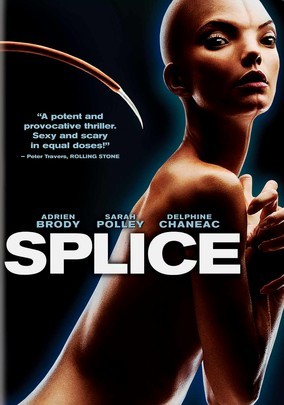
Splice-2009

Splice-2009

Director Vincenzo Natali

Starring Adrien Brody, Sarah Polley

Scott’s Review #564

Reviewed December 26, 2016

Grade: B-

If you are looking for a realistic, character-driven movie, this film is not for you. Rather, Splice, a 2009 effort, is a science-fiction, thriller, that must be viewed while suspending all disbelief.

It’s not a work of art and has lots of plot holes, but it provides decent entertainment, bordering on fluff.

The two main characters, Clive and Elsa, played by Adrien Brody and Sarah Polley, while admittedly neurological scientists are not the brightest people in the world, and their motivations change with the weather.

The basic plot involves a married couple (above-said scientists) who conduct an experiment to splice human and animal DNA into a new creation, a female hybrid named Dren.

Predictably, things go awry, once Dren is let loose on the world.

The plot is thin and there are questionable actions, motivations, and subplots, but somehow I still found it entertaining once I simply went with it.

There are cliches such as the scientists ignoring instructions, the one-dimensional supporting characters, and so on.

As a comical aside, I overheard the guy sitting behind me in the theater mutter as the closing credits rolled,  “This was the worst movie ever”. I understand where he is coming from, but did not think the film was that bad.

For fans of horror or thrillers I recommend it, anyone else might want to skip this one.

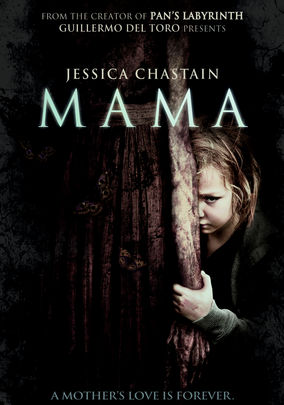
Mama-2013

Mama-2013

Director Andres Muschietti

Starring Jessica Chastain

Scott’s Review #112

70254522

Reviewed July 15, 2014

Grade: C

Mama is a horror film from 2013, surprisingly starring Jessica Chastain, who one might assume is too high-brow for horror given her recent Oscar nominations.

Mama tells the story of two little girls, involved in a car accident, who survive on their own for years until finally rescued and raised by Chastain.

This film had both positives and negatives.

The beginning sequence involving the girls’ troubled father and the drive through the countryside to the car wreck is realistically done and compelling.

The snow and the drifts have a picturesque and haunting beauty to them.

Throughout the film, some unique, effective visuals create a mysterious ambiance.

However, the primary negative of the film belongs to Chastain.

A top-notch actress, I did not for an instant buy her as a short-haired raven-dyed, rocker chick with tattoos and a tough-girl persona.

It did not work at all.

The story as a whole was convoluted and when the final credits rolled, made no sense to me at all.

As a whole, Mama (2013) was not scary (sadly rated PG-13) but had some nice moments.