Category Archives: David Selby

Up the Sandbox-1972

Up the Sandbox-1972

Director Irvin Kershner

Starring Barbra Streisand, David Selby

Scott’s Review #1,308

Reviewed October 18, 2022

Grade: B

Up the Sandbox (1972) is likely the least successful film in the Barbra Streisand collection and more obscure than likely desired. The star performs no songs, and the film is experimental, but it’s unclear whether it was intended to be.

Streisand takes a break from comedies and musicals to venture into unknown territory, risking a payoff that doesn’t always come through.

On the flip side, she never looked more beautiful in a film.

The film has its moments. It’s shrouded in early progressive feminism, which provides intrigue, and it’s tough to go wrong with a bankable star like Streisand in a lead role.

Still, the fantasy sequences get too weird and sometimes unnecessary, and the film doesn’t always make a lot of sense.

The film gets taken down at least a notch for two anti-gay slurs that are shamefully unnecessary to any plot direction.

I award Up the Sandbox credit for thinking outside the box and being unconventional. Still, the parts don’t come together into a cohesive unit, leaving me unfulfilled while recognizing the superior qualities.

The cover art (see above) is wacky and thought-provoking.

Margaret (Streisand) is a young wife and mother who is bored with her day-to-day life in New York City, playing second fiddle to her successful and too-busy husband, Paul (David Selby).

He is a professor at Columbia University, and they reside in a cramped yet fairly sophisticated apartment.

To combat boredom, she regularly escapes into increasingly outrageous fantasies: her mother breaking into the apartment, an explorer’s demonstration of tribal fertility music at a party causing strange transformations, and somehow joining terrorists to plant explosives in the Statue of Liberty.

Streisand is well cast, and while other actresses could have given a fine performance, she plays New York Jewish better than anyone. Her struggle to break out of her life of doldrums is perfectly conveyed as she yearns to achieve a balance between men and women.

She resents going down the path of a housewife, just like her mother did, and vows to be nothing like her, as the women bicker and feud throughout the film.

The sequences involving her mother are the best in the film. Played by Jane Hoffman, Margaret’s mother provides all of the expected Jewish mother stereotypes, like nagging and judging, hilariously.

The funniest mother/daughter sequence sees Margaret smash her mother’s head into a giant birthday cake. Naturally, it’s just her fantasy.

Up the Sandbox wins big for the large number of location sequences set in early 1970s New York City, which is absolutely fascinating to watch. One with an appreciation for Manhattan can be assured of a pleasant viewing experience.

The most heartfelt and sentimental moments occur during a long shot of the still-under-construction World Trade Center. Seeing the Twin Towers still being erected brings back teary memories of 9/11.

Lavish sequences are set in and around Columbia University in upper Manhattan, and the campus is frequently seen as Margaret and her friends trudge their baby strollers through the campus and surrounding areas.

Where the film fails is when it teeters too far out in fantasy land. It makes little sense why Margaret would join terrorists intent on blowing up Lady Liberty, or what the group’s intentions are.

Perhaps it is a metaphor for something that went over my head.

Even when the screenplay is a dud, Ms. Streisand holds her head high and plays the comedy or drama with sincerity and professionalism. With her well-known perfectionism, she would have been aware when things were not working.

A film not remembered well, Up the Sandbox (1972) scores some points with its locales, progressivism, and star power, but stumbles off course too many times to recommend.

If only Streisand had belted out a number or two amid her scripted fantasies, the film might have worked better.
Dark Shadows-2012

Dark Shadows-2012

Director Tim Burton

Starring Johnny Depp, Michelle Pfeiffer, Helena Bonham Carter

Scott’s Review #1,203

Reviewed December 3, 2021

Grade: C+

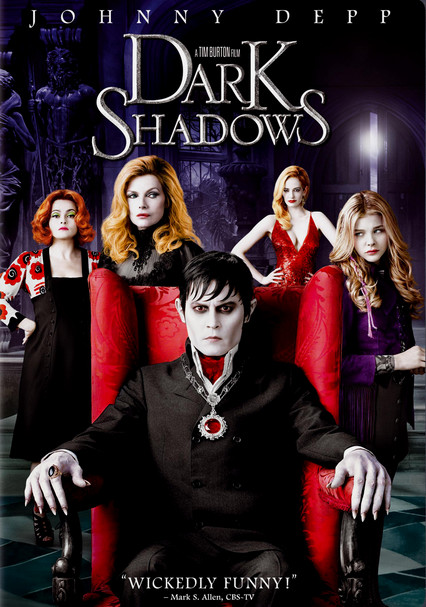
Sometimes a great idea doesn’t pan out. On paper, relaunching the unique and gothic 1960s daytime television series Dark Shadows with a tribute on the big screen with even bigger stars sounds wonderful.

The endless possibilities and the inevitable nods to history are head-spinning.

Sadly, the film version of Dark Shadows (2012) directed by Tim Burton is miscategorized and misunderstood by all involved. It’s billed as a dark comedy rather than horror or even fantasy and comes across as more of a mockery than a real nod to the series.

It’s completely over-the-top and misses any of the wonder and the spookiness that made the long-ago black and white show a daily adventure.

I do not profess to have seen the entire series but I have watched much of the first season and understand the appeal. Fans will be disheartened by Burton’s botched attempts to recreate a great idea.

Depp, a frequent guest star in Burton’s film works, strikes out as the iconic character Barnabas Collins, the eighteenth-century vampire who awakens in the twentieth century though he’s not as bad as he was when he feebly stepped into the Willy Wonka character in 2005.

Yikes.

The only saving grace is the creative and magical visual effects and set design which provides enough imagination and macabre fascination to at least partly save this otherwise messy experience.

The plot gives a brief explanation of the history.

In eighteenth-century Maine, Barnabas Collins (Depp) presides over the town of Collinsport. A rich and powerful playboy, Barnabas breaks the heart of a witch named Angelique (Eva Green) who deviously makes him pay.

Angelique turns Barnabas into a vampire and buries him alive.

Two centuries later, Barnabas escapes from his tomb when builders are erecting a Mcdonald’s and finds the current 1970s Collinsport a very different place. His once-grand estate has fallen into ruin, and the dysfunctional remnants of his family have fared no better.

His resurrection creates complications and drama for the entire family.

Burton knocks it out of the park with the visuals.

The gothic mansion, in particular, is right up his alley and he embraces the possibilities with gusto. Every creak or wind sound heard within the mansion co-aligns with the dark and dreary purples and brown colors.

Frequent candles mark the proper mood and investigating the vast number of rooms was something to look forward to.

Since the rest of the film sucked I had nothing better to do than fully embrace and focus on the art and set designs.

Heavyweights like Michelle Pfeiffer, Helena Bonham Carter, and Depp do their best but oddly overact in nearly every scene. Their direction must have been skewed toward comedy instead of adding any meat or emotional relevance to the characters.

The original series created something strangely dramatic and compelling on a shoestring budget. There was a delicious haunting and grabbing nature that made you anticipate the next episode and who might fall victim to the vampire.

The film veers into a vastly different territory.

Burton and Depp’s Barnabas struts around emitting one-liners for intended giggles. The other characters appear to be dressed for Halloween and are dumb and morose.

The feeling I got was that of a retread to a situation comedy like The Addams Family rather than a horror soap to be taken seriously.

The sexual references and the occasional bloody vampire effects are okay but seem peppered in to justify the dark comedy.

Even an uninspired cameo by shock rocker Alice Cooper is perceived as a weak attempt to add something frightening or dangerous.

Unsurprisingly, Dark Shadows (2012) performed poorly at the box office and was derided by true fans of the series and almost every other film critic.

This caused Barnabas and his family to slink back into their coffins possibly for good.

What a shame.

The Social Network-2010

The Social Network-2010

Director David Fincher

Starring Jesse Eisenberg, Andrew Garfield, Armie Hammer

Scott’s Review #753

Reviewed May 3, 2018

Grade: A

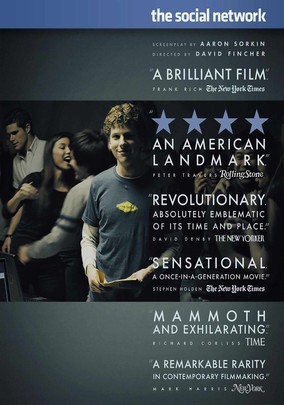
When released in 2010 The Social Network was a timely and brazen look into the world of social media and the powers and dangers it encompassed.

Any film of this nature that chooses to incorporate either a current event or a current fad runs the risk of either being forgotten soon after or becoming irrelevant as the years go by.

So far, almost a decade later, The Social Network is even more of an interesting film in the age of embattled political turmoil involving the social media world- with Twitter and Facebook constantly in the headlines.

Director David Fincher (Zodiac-2007, Fight Club-1999) creates a stylistic piece masked behind the biography of Facebook CEO Mark Zuckerberg (still relevant in 2018) and tells of his rise to fame from a Harvard student to an internet genius.

Throughout all of his meteoric success, the driven young man let his relationships suffer as feuds and backstabbings encircled his life resulting in bitter legal entanglements.

The film is flawless in every way- the screenplay, the score, the acting, the cinematography, and especially the editing all lend themselves to a memorable experience.

We first meet Zuckerberg (Jesse Eisenberg) as a teenager, recently dumped and bitter, he posts a scathing editorial on his blog and somehow hacks into the college site to allow the student body to read.

Along with his friends Eduardo (Andrew Garfield) and Cameron and Tyler Winklevoss  (both played by Armie Hammer), they came up with the initial concept of Facebook.

This leads to others becoming involved in the project including Napster co-founder Sean Parker (Justin Timberlake) as events spiral out of control due to deceit, jealousy, and conflicting accounts.

Fincher’s style is riveting and fast-paced with snappy edits and lightning-fast scenes giving the film a crisp and sharp look. The story is told via the Harvard events interspersed with the numerous courtroom scenes as each of the principal characters is represented by legal counsel adding drama.

The point of the film is cynical and despite being a biography of Zuckerberg’s rise to fame, the overall theme is the effects that social media has had on the entire world- in this way, the film elicits a message without being preachy.

Trent Reznor, from the industrial rock band Nine Inch Nails, creates an amazing musical score that adds a modern touch with both techno and electronic elements.

This is not so overdone as to take away from the main theme of the film nor is it too distracting, but rather provides a moody yet intensive element that is highly effective to the overall film.

What riveting acting The Social Network provides!

Young upstart Eisenberg is perfectly cast as Zuckenberg and the similarities between the two are uncanny. With his quick wit and neurotic mannerisms, intelligent yet insensitive to others, Eisenberg not only looks the part he seems to embody the character and deservedly received an Oscar nomination for the role.

Garfield and Timberlake are nearly as compelling in supporting yet important roles. Finally, Hammer portrays indistinguishable twins with a smug, cutting edge perfect for the way the parts are written.

The Social Network (2010) is a tremendous film with modern technologies and a brilliant screenplay. Beyond the spectacular writing, the film contains other top-notch qualities that make for a memorable experience.

The film holds up exceptionally well with current relevance and features a stellar cast of young actors (Eisenberg, Garfield, Hammer, and Timberlake) who all went on to become heavy hitters in the world of cinema years later.

Oscar Nominations: 3 wins-Best Picture, Best Director-David Fincher, Best Actor-Jesse Eisenberg, Best Adapted Screenplay (won), Best Original Score (won), Best Sound Mixing, Best Cinematography, Best Film Editing (won)