Category Archives: Will Hare

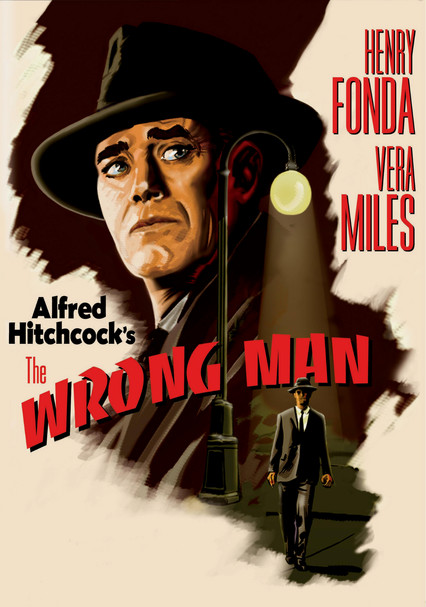
The Wrong Man-1956

The Wrong Man-1956

Director Alfred Hitchcock

Starring Henry Fonda, Vera Miles

Top 250 Films #233

Scott’s Review #902
Reviewed May 24, 2019

Grade: A-

The Wrong Man (1956) is not an Alfred Hitchcock film typically mentioned when lists of the greatest of all the director’s works are in conversation.

Although it flies completely under the radar and is absent from most “Best of” collections, the film is a lovely gem ready to be dusted off and appreciated for its worth.

It features the legendary Henry Fonda, perfectly cast in a story point frequently used in Hitchcock films: that of the wrongly accused man.

Set in New York City, Manny Balestrero (Fonda) is a struggling musician who requires three hundred dollars for dental work that his wife Rose (Vera Miles) needs. Determined not to let his wife suffer, he decides to obtain the money by borrowing against her insurance policy.

The life insurance employees mistake Manny for another man who recently held them up. He is arrested and forced to perform a test for the police, which he fails, leading them to assume he is their man.

Attorney Frank O’Connor (Anthony Quayle) sets out to prove that Manny is not guilty since he has perfect alibis for the nights of both holdups. However, complications erupt during his trial as proper witnesses either cannot be found or have died, leaving Manny in dire straits.

Meanwhile, Rose teeters towards the brink of insanity as she suffers from severe depression.

The Wrong Man differs from many Hitchcock films in that its story is based on a real-life quandary one man faced. As such, viewers can relate to the story immensely and imagine themselves in Manny’s shoes.

I often wonder, “What would I do if this were me?” as one could find the story implausible, one could just as easily find it plausible. Mistaken identity can happen, and proving one’s innocence may not be as easy as it may seem.

Mainly set on location is another tidbit unique to many Hitchcock productions as the man cringed at the thought of any scene that studio luxuries could not manipulate. The New York City locales are splendid and provide an artistic and genuine element.

Many scenes were filmed in Jackson Heights, where Manny lived when he was accused. Most of the prison scenes were filmed among the convicts in a New York City prison in Queens. The courthouse was at the corner of Catalpa Avenue and 64th Street in Ridgewood.

Careful not to be too dissimilar to standard Hitchcock fare, the use of every man being falsely accused is every day in some of his films.

Other films like North by Northwest (1958) and The 39 Steps (1935) delivered the same elements with a man being mistakenly accused of murder. While the others were more of “chase stories” involving flight, The Wrong Man stays firmly planted in one city.

The film has some jazz elements, representing Fonda’s appearance as a musician in the nightclub scenes. These elements add sophistication to the film’s overall tone, especially as we see Manny as worldly yet kind.

He is a performer but comes home to his wife and adores her, doing anything he needs to for her comfort. The music and the black-and-white cinematography exude harshness and coldness but also good style.

Fans of either the police force or the justice system may be in for a challenging ride watching The Wrong Man, as neither group is written very sympathetically. The police are the worst offenders as they go to unethical methods to accuse a man of a crime and seem not to care who is convicted, only that someone is.

The one detraction to The Wrong Man is the chemistry between Fonda and Miles. The passion is underwhelming but not terrible, either. Instead, the main point is the false accusations instead of the romance. A bit more of the latter might have made the film more unique.

With suspenseful and dramatic elements and a charismatic leading man, The Wrong Man (1956) perhaps lacks the flair of other well-known Hitchcock films. Still, it is a solid achievement that deserves more acclaim than traditionally given.

Yes, it’s sullen, but it’s also poignant, frightening, and a terrific effort. Henry Fonda carries the film and provides compassion and realism.

Pennies from Heaven-1981

Pennies from Heaven-1981

Director Herbert Ross

Starring Steve Martin, Bernadette Peters

Scott’s Review #1,480

Reviewed May 10, 2025

Grade: A

Pennies from Heaven (1981) may be Steve Martin’s best film role and Bernadette Peters’s most excellent cinematic performance. Audiences did not receive the film well upon release, but many of the best movies are not.

Critics, however, applauded the film, which earned writer Dennis Potter an Academy Award nomination for Best Adapted Screenplay.

Watching (for the first time) in 2025, the film doesn’t feel dated, as many 1980s films do. Furthermore, Pennies from Heaven doesn’t feel like a 1930s set film in the 1980s either.

The opening sequence features credits amid clouds, later dances on the tops of bars, and kids in a schoolhouse playing white pianos, which is fresh and authentic.

These aspects enhance the dazzling musical production numbers. The songs are lip-synced, which strangely works after a brief period of adjustment, given that they are popular songs of the 1920s–30s, such as ‘Let’s Misbehave,’ ‘Life Is Just a Bowl of Cherries,’ ‘Let’s Face the Music and Dance,’ and the terrific ‘Pennies from Heaven’.

Unconventional in film, sometimes the action in a scene suddenly stops, and a musical number begins. The songs reflect the times with an overpowering sadness.

The story follows Arthur Parker (Steve Martin), a Depression-era sheet-music salesman with dreams of becoming a big success. When Arthur faces relationship problems with his wife, Joan (Jessica Harper), he begins an affair with a shy and beautiful teacher, Eileen (Bernadette Peters).

Though Arthur and Eileen connect, societal and financial obstacles threaten their happiness.

The film is highly stylized and looks stunning. The darker lighting, especially during musical numbers, looks muted to reflect the bleak nature of the Depression period.

I was continually surprised by this film. Situations arose that threw me for a loop, especially Eileen’s pregnancy and subsequent journey into the world of prostitution. At first meek and virginal, she becomes a savvy and more demanding character as the film progresses.

Eileen is my favorite character.

Peters was robbed of an Oscar nomination, which is surprising because she is emotionally invested in the character. Although she expects to hate sleeping with men for money, she doesn’t find it so bad, and it’s an easy way to make money during a time when most had no resources.

I adore Peter’s facial expressions as she embarrassingly looks away or her eyes well with tears.

A shocking death devastated me towards the film’s end, even though the character was minor.

I wasn’t as enamored with Arthur’s character as with Martin’s performance. Arthur, horny and a bit of a cad, disappoints me when he is mean to troubled and struggling accordion player (played wonderfully by Vernal Bagneris). He also doesn’t treat his wife very well.

Nonetheless, his dramatic turn is refreshing compared with his typical slapstick roles, and he and Peters have great chemistry.

Christopher Walken, in a small role as Tom a stylish pimp, brings down the house with a wacky dance.

The rich and complex writing showcases an anti-hero with layers of complexities and supporting characters looking to survive. The 1930s setting is crucial as characters scramble like mice to find a bit of cheese and navigate a complex maze.

Pennies from Heaven (1981) is not a film for mainstream moviegoers. Instead, the film will be a surprising treat for those eager to peel back an onion and immerse themselves in good cinema.

Oscar Nominations: Best Adapted Screenplay

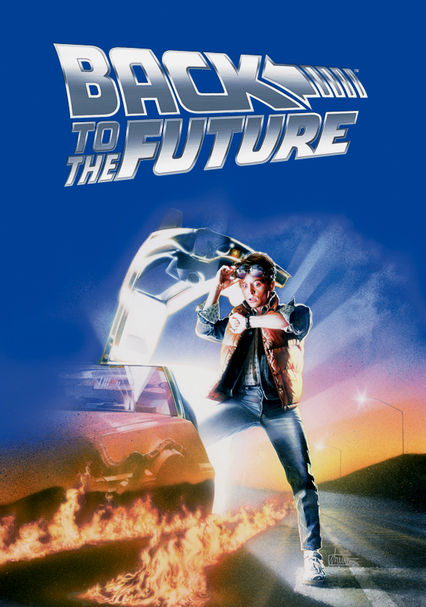
Back to the Future-1985

Back to the Future-1985

Director Robert Zemeckis

Starring Michael J. Fox, Christopher Lloyd

Scott’s Review #1,205

Reviewed December 5, 2021

Grade: A-

Being a child of the 1980s films like Back to the Future (1985) left an indelible mark on me. I fondly recall excitedly going to the movie theater on a Saturday afternoon with a giant tub of popcorn in tow and enjoying the hell out of this film.

I’ve subsequently seen it several times since.

There exists a magical, futuristic element that left me and countless other youngsters and adults alike with a sense of wonder. And one amazing car!

Michael J. Fox, a huge television star of the 1980s largely thanks to the sitcom Family Ties, powered through to the big screen with the help of this film and others.

The 1980s was a wonderful decade to grow up in.

Small-town California teen Marty McFly (Fox) is thrown back into the 1950s when an experiment by his eccentric scientist friend Doc Brown (Christopher Lloyd) goes awry.

Traveling through time in an amazing DeLorean car, Marty encounters younger versions of his parents (Crispin Glover, Lea Thompson), and must make sure that they fall in love or he will cease to exist.

To further complicate matters, Marty has to then return to his own time and save the life of Doc Brown.

Back to the Future is one of those films that has something for everyone and the stars perfectly aligned to make it a blockbuster popcorn hit. Besides the science fiction elements, there is humor, a cool 1950s throwback vibe, romance, and natural chemistry between Fox and Lloyd who together carry the film.

It’s hardly an art film and goes for the jugular with mainstream additions like a killer soundtrack led by The Power of Love by Huey Lewis and the News which was all over top 40 radio in the summer of ’85. Counterbalancing the current times was another smash hit Johnny B. Goode, a 1958 Chuck Berry tune.

There is a safe vibe for sure and director Robert Zemeckis knows his action-adventure romantic comedies. This may be his best work but he also skews adding much diversity or heavy topics. He simply creates a fun, entertaining film.

Fox is perfectly cast in the role of Marty and I cannot imagine anyone else in the part though method actor Eric Stolz was the original choice and spent several dismal weeks filming scenes until he was replaced.

Fox is the ultimate boy next door, cute but goofy, and relatable to teenage boys across middle America.

Lloyd is perfect as the zany Doc Brown. He is wacky without being too ridiculous and bridges the gap between generations. The character is presumed to be old enough to be Marty’s (in present-day) grandfather and the two characters rely on each other. Back to the Future shows that an unlikely friendship can develop.

The film is also great at depicting the vast differences between the 1950s and the 1980s. At a simpler time, the 1950s are viewed as wholesome while the 1980s are perceived as the decade of excess and some fun is poked at both generations. But, both generations can also connect.

In an acute moment, Marty helps secure his parent’s bond and ensures he is created. This could be viewed as icky to some but the romance between the two parents is tender and sweet. The interactions between all characters are sentimental without being saccharine.

Back to the Future was the feel-good film of 1985 and a must-see for those living in the period. It holds up surprisingly well with then state-of-the-art special effects not now looking dated or laughable. It also explores growing up as an adolescent and identifying with one’s parents and the differences they have.

Who can’t relate to that in some way?

Oscar Nominations: 1 win-Best Original Screenplay, Best Original Song-“The Power of Love, Best Sound, Best Sound Effects Editing (won)

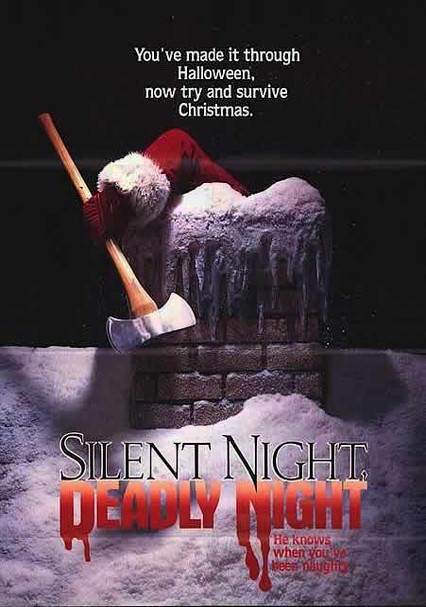
Silent Night, Deadly Night-1984

Silent Night, Deadly Night-1984

Director Charles E. Sellier Jr.

Starring Robert Brian Wilson

Scott’s Review #974

Reviewed December 30, 2019

Grade: B

Silent Night, Deadly Night (1984) is a fun, holiday-themed horror/slasher flick that is cheery mayhem in the spirit of the season, and a worthy addition to any horror fan’s collection.

The film is best watched late at night for the intended effect, and it is obvious to see around the holiday it celebrates.

It would make a great companion piece to Black Christmas (1974), a superior film, but both contain eerily similar musical scores, the former updated with electronic beats for the 1980s.

The horror film was met with ridicule and protest upon release for promoting a killer Santa Claus, despite the story being slightly overreacted to and misinterpreted.

The ‘real’ Santa Claus does not perform the slayings, but rather a mentally unstable young man dressed in the red suit does the dirty deeds.

Nonetheless, the film was unceremoniously yanked from theaters after parents expressed fear that their kids might be traumatized by the film. Silent Night, Deadly Night has graduated to cult-classic status and is entertaining, perhaps embracing its derision instead of running from it.

The action begins in rural Utah in 1971, as the Chapman family drives to a retirement home to see their catatonic grandfather. When left alone, the elder warns five-year-old Billy to fear Santa Claus, but his parents disbelieve him.

On their way home, they stop along the roadside to help a man dressed as Santa Claus, whose car appears to have broken down. The man robs and kills the parents, sparing Billy and his brother from death.

Three years later, Billy and Ricky reside in an orphanage led by the sadistic Mother Superior and a kindly nun, Sister Margaret (Gilmer McCormick).

Ten years later (present times), the now-grown Billy (Robert Brian Wilson) is benevolent and friendly, obtaining a job as a stock boy at a toy store with the help of Sister Margaret.

As Christmas Eve approaches, Billy has flashbacks of his parents’ murders and later is forced to play Santa Claus for the Christmas party when a co-worker falls ill.

As the staff becomes inebriated, a female co-worker is nearly raped, causing Billy to go berserk and kill both the assailant and the victim, who blames Billy. He then spends the night prowling the area for victims he can stab or behead.

Fun is the name of the game with Silent Night, Deadly Night.

The film is a macabre treat for slasher fans. The kills are respectable with the traditional methods used- an ax to the head and a bow and arrow death, along with more elaborate deaths like strangling with a chain of Christmas lights, and a bare-chested female victim being impaled on a moose head.

The highlight is the beheading of a mean teenage bully as he gleefully sleighs down a hill on a stolen sled.

Plenty of gratuitous bare chests (female) common in these types of films are in store for the lusty male viewer, but a nude male is glimpsed as well to make for some R-rated diversity.

Par for the course with slasher films made decades ago is the omission of cultural diversity. Not one Black, Latin, or Asian character is ever seen. The pure-as-snow Utah setting might be one justification.

If one were to attempt to analyze Silent Night, Deadly Night (not recommended), one could deduce a specific religious message, or at least a questioning of Catholicism, specifically the harshness of Mother Superior and her interpretation of punishment as good, implemented in the name of god.

Or maybe she is just a sadistic character? In perfect contrast, Sister Margaret is loving, protective, and nurturing to the orphans.

Whatever the filmmakers’ intention, humor is the recipe, as their strictness and rigidity are played for laughs.

Proper for any horror film, the final scene leaves room for a sequel. Indeed, four follow-up films were made, with the younger Ricky taking over as the serial killer.

In satisfying form, Ricky glares at Mother Superior and exclaims “Naughty!” before the credits roll. The unrated version of Silent Night, Deadly Night is the preferred version to watch.

Pull up the covers, light the fire, and kick back with a six-pack of Bud Light, roast some marshmallows, and enjoy Silent Night, Deadly Night (1984) for what it is.

Bad acting, sins of the flesh, and a delightful holiday slaughter, with unintentional (or intentional) humor and clichéd characters, make for robust enjoyment on a lightweight scale.