Category Archives: John C. McGinley

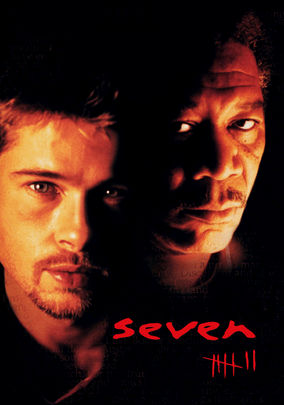
Seven-1995

Seven-1995

Director David Fincher

Starring Brad Pitt, Morgan Freeman

Top 250 Films #230

Scott’s Review #780
Reviewed June 29, 2018

Grade: A-

Many films containing a similar theme as Seven (1995) have come along over the years- some good, most mediocre. The mixture of homicidal detectives tracking crazed killers has been done ad nauseam and more often than not, done with either poor writing or a predictable outcome-or both.

Instead of being a run-of-the-mill film, Seven serves as a representative blueprint of the tautness and unpredictability that can be achieved by using a familiar yet compelling concept, provided there is good writing and good direction.

The film is incredibly brutal and riveting.

Respected director David Fincher gathers an all-star cast of Hollywood heavies including Brad Pitt, Morgan Freeman, Kevin Spacey, and Gwyneth Paltrow, all of whom add to the well-crafted script.

It also brings the talent level to respectability and, as great as the story is, with weaker actors, the stakes would not have been as high and the film may have even been ruined.

A serial killer is on the loose in Los Angeles- detective duo William Somerset (a very good Freeman) is set to retire and is tasked with finding the killer. He is partnered with David Mills (Pitt), a young, hot-tempered man who has just moved to the city with his wife Tracy (Paltrow).

Unbeknownst to David, Tracy is pregnant and unsure whether to keep the child- this point factors in heavily as events unfold.

The killer is using the seven deadly sins: greed, gluttony, sloth, lust, pride, envy, and wrath, as his motivation for the creative slayings.

In retrospect Seven is very similar to the still-to-come Fincher work, 2007’s Zodiac, so much so that both films could be watched in sequence- one being a true story, the other pure fiction.

Both focus on the serial killer element with a message, they each have marvelous psychological intrigue and purpose. There are cat-and-mouse scenes aplenty for fans to enjoy.

At the risk of this point being a total stretch, I’d also argue that 1971’s Dirty Harry influenced Zodiac, Seven, and The Silence of the Lambs (1991).

A heinous killer shrouded in intelligence, danger, and motivation is a commonality of all of the aforementioned films, and numerous studies of each of the killers could be dissected if time permits.

Each killer is calculating and manipulative.

On that note, Kevin Spacey gives a tremendous performance as the cold and villainous John Doe. Clever and inventive, his victims are intended to suffer and suffer greatly.

Some of the kills could be included in the best of the torture-horror franchise, Saw (2004), as they are very twisted and carved in brutality.

A supermodel is disfigured after being given a choice to call for help or overdose on pills, representing pride. A man is forced to consume food until his stomach ruptures, representing gluttony. Spacey portrays his role as calm, cool, and collected, eliciting a terrifying response from audiences, especially as he toys with the detectives.

Still coming into his own as an actor in 1995, Pitt proves he can almost measure up (though not quite) with big-boy acting talents Spacey and Freeman. Playing an ambitious man eager to prove himself in “the big city” with his pretty wife in tow, Pitt’s David is wholesome and family-oriented, yet has an edge.

All around the likable hero, Pitt is perfectly cast in the role and a large part of its success.

The frightening final sequence still resonates with me after all of these years since Seven was released. In a classic standoff between Doe and the detectives, as is typically the case in these types of films, the ultimate climax is twisted, psychological, and gruesome.

I did not see this shocker coming as it culminates in lives being forever changed. The expressions and actions of Freeman, Pitt, and Spacey are superlative.

Seven (1995) is a film basking in riches. On par with the best of the best in serial killer films, it is powerfully directed by Fincher. The film is fraught with grisly symbolism and its share of suspenseful sequences.

With powerful acting, it is a film relevant and watchable decades after the original release. Perhaps not quite on the level as Dirty Harry or The Silence of the Lambs, but pretty damned close and that is impressive in itself.

Oscar Nominations: Best Film Editing
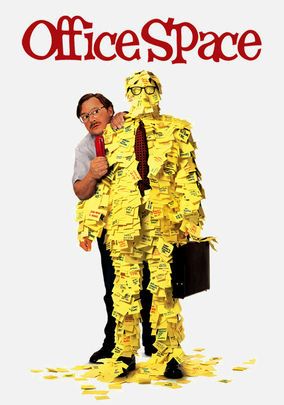
Office Space-1999

Office Space-1999

Director Mike Judge

Starring Ron Livingston, Jennifer Aniston

Scott’s Review #811

Reviewed September 16, 2018

Grade: B+

Having become somewhat of a cult classic since its theatrical release in 1999, Office Space is delightful to watch for anyone who works in a corporate environment- or ever has- they will undoubtedly “get” this movie.

The dark humor and antics may be lost on those who have not, but for the rest of us, the film is quite the treat.

One may never view a stapler or the common office cake party in the same manner. Yes, the story and characters are somewhat over-the-top but more than a few clever scenes ring with truth.

But over time will the film become dated?

Writer and Director, Mike Judge, tells a story about life within a 1990s software firm.

Reportedly, the story is based on Judge’s cartoon series Milton, and his first foray into live-action filmmaking. His first film was Beavis and Butt-Head Do America (1996) if this gives any indication of the type of humor that resounds. Fraternity boy-minded, yes, but the writing is crisp and oftentimes rife with fun.

The film was not a box-office smash at the time of release yet is well-regarded by critics.

Peter Gibbons (Ron Livingston) is a frustrated IT programmer who works for a company named Initech. Alongside two colleagues, one of whom is comically named Michael Bolton (not that Michael Bolton), they despise their sneaky boss, Lumbergh (Gary Cole).

The situation gets worse when two consultants are brought in to downsize the company, leaving everyone in panic mode.

After a failed hypnotherapy session Peter becomes relaxed and confident, even winning praise from the consultants and scoring a promotion. This puts him at odds with Lumbergh, especially after he begins dating a waitress, Joanna (Jennifer Aniston), and assumes she has also slept with him.

Office Space shines the most with the crackling dialogue and clever scenes that take place within the confines of the office. With stuffy cubicles for miles and the standard corporate jargon to make into witty lines, the subject matter is ripe for the picking.

With Cole’s sly requests for his employees to work weekends, Judge creates authenticity and freshness that is incredibly appealing to corporate workers. He successfully knocks down office politics with intelligent, wisely crafted, memorable satire.

In the supporting role of Milton Waddams, character actor Stephen Root is successful at stealing the show with his mumbling and bumbling character. Nearly invisible to all his colleagues, Milton is eventually moved to a basement desk and left out of the cake party.

When somebody borrows his prized red stapler, all hell breaks loose. Increasingly disgruntled, Milton’s fate is instrumental to the hilarious conclusion of the film and he ultimately gets his revenge satisfyingly to all.

The romantic element between Peter and Joanna is okay, but not at all the highlight of the film. The romance seems unnecessary to me but undoubtedly added since comedies of this sort usually require something heartfelt to appeal to mainstream audiences.

Aniston, popular at the time for her role on the television show Friends, was on her way to becoming a marquee movie star, but not quite yet, so she must be content with the standard “girlfriend” role.

She’s cute, but hardly anything more.

Office Space is a fun ride, but the film is not a groundbreaking experience in great film techniques, inventive ideas, or any other technical or story achievements.

What it offers to fans, it does very well and feels like a breath of fresh air in its genre.

The film is a comedy, but not a dumb comedy as a myriad of similar style offerings have been released since the beginning of cinema. With witty one-liners and comic gold, Office Space (1999) is a film to be remembered.

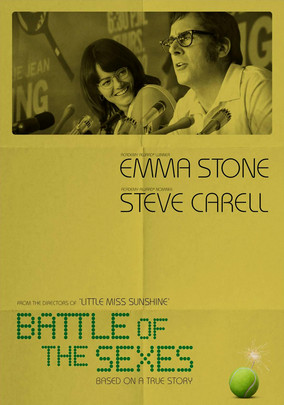
Battle of the Sexes-2017

Battle of the Sexes-2017

Director Jonathan Dayton, Valerie Faris

Starring Emma Stone, Steve Carell

Scott’s Review #691

Reviewed October 11, 2017

Grade: A

Battle of the Sexes (2017) is a film worth watching on many levels. Equal parts sports film, drama, and biography, it excels across all genres with exceptional acting and crowd-pleasing storytelling.

To boot, the film is a true story based not only on the very famous pro tennis match of 1973, termed the “Battle of the Sexes,” but also a story of the sexual identity conflict of one of the opponents in a time where being ones true self was not easy, especially for a public figure.

Emma Stone might have given her best portrayal of her young career as Billie Jean King, the talented tennis pro featured in the film.

She was kind and fair but a fierce proponent of women’s rights in the United States when feminism began taking shape and women and their male supporters demanded equal treatment.

Although initially uncertain whether Stone could pull the role off (not because of a lack of talent, but because the women seem so different), she truly shines as the tomboy athlete with shaggy, feathered locks and a toothy grin.

Equally worthy of praise is Steve Carell, who bolsters his film credo by tackling the role of King’s opponent and foe in the big match, Bobby Riggs.

Portrayed as a certifiable “jerk” and a sexist pig, Carell somehow pours the perfect amount of sympathy and likability into the part.

We witness scenes of Riggs’ playfulness with his young son and tender yet troubled relationship with his wife, Priscilla (Elisabeth Shue in a well-cast role), that never seem trite or contrived but rather quite genuine.

The acting in Battle of the Sexes is, across the board, good.

Sarah Silverman drips with confidence and humor as Gladys Heldman, founder of World Tennis magazine and leader of the troupe of female tennis players who parade around southern California seeking the same respect and pay as their male counterparts.

Bill Pullman makes the most of his one-dimensional role as Jack Kramer, a wealthy and male chauvinistic promoter, while the talented Andrea Riseborough is brilliant as Marilyn, Billie Jean’s bisexual, closeted lover—giving her role a blend of vulnerability and toughness.

The romantic scenes between Stone and Riseborough smolder with tenderness and heart as they forge ahead with their forbidden romance.

The film makes clear that a same-sex romance in those days, while accepted by those around them, would be met with shame and rejection by a large part of King’s legions of fans- this is a heartbreaking reality.

One of the most tear-jerking scenes comes at the end of the film when a victorious King is unable to acknowledge Marilyn. Her openly gay male dresser earnestly whispers to her that one day, she will be free to love who she truly loves.

The scene is poignant.

Directors Dayton and Faris carve a finale that is careful not to fall into the cliched territory. Given that Battle of the Sexes is a sports film, this is a real risk, as typically, these genre films teeter into the “good guys beat bad guys” fairy tale land.

While the film does champion King in the end, the moment is laced with good humor, drama, and sentimentality that does not seem forced but rather honest and real—I enjoyed the final act immensely.

As the film progressed, I found myself drawing parallels to the ever-dramatic and historic 2016 Presidential election—sure to have films made in years ahead- and King, in many ways, mirrors Hillary Clinton, while Riggs resembles Donald Trump in the sexist department.

The political and sports “Battles of the Sexes” warrants much analysis.

My point is a sad one. As much as I love the film, I was left with a cold feeling that forty-five years after the famous Billie Jean King versus Bobby Riggs match, male superiority, and chauvinism are alive and well in the United States—we still have so much progress to make.

Battle of the Sexes (2017) is a film with fantastic acting, stellar casting, passion, excitement, and a telling of a historical, true story.

The film contains all the elements of a compelling cinematic experience.

Wall Street-1987

Wall Street-1987

Director Oliver Stone

Starring Michael Douglas, Charlie Sheen, Daryl Hannah

Scott’s Review #511

60003330

Reviewed November 5, 2016

Grade: B+

Rather late in the game, but 2011 was my first time seeing the film Wall Street (1987), and it was a very good film.

Michael Douglas and Charlie Sheen have great on-screen chemistry, and the numerous scenes of New York City are pleasing- pre- 9/11, they capture a haunting feeling.

Despite being made in 1987 (not a great year for cinema), it does not feel dated except for the soundtrack.

Unfortunately, the circumstances in this movie still ring true today. There is a lot of dishonesty and greed in the financial world (check out the documentary Inside Job (2010) for proof).

The 2008 financial collapse is a strong indicator.

Michael Douglas is excellent as Gordon Gekko, a power-hungry, greedy financial mogul.

He encompasses the role in every way and deservedly won the Best Actor statuette for this year.

Oscar Nominations: 1 win-Best Actor-Michael Douglas (won)