Category Archives: Tracy Letts

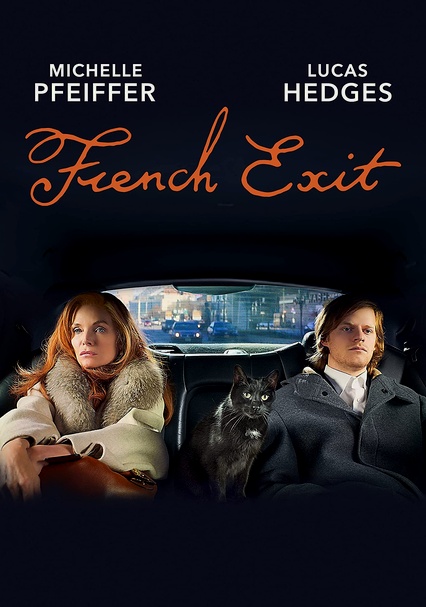
French Exit-2020

French Exit-2020

Director Azazel Jacobs

Starring Michelle Pfeiffer, Lucas Hedges

Scott’s Review #1,188
Reviewed October 29, 2021

Grade: C+

French Exit (2020) is a mediocre effort that left me disappointed. I expected to be dazzled by the eccentric French culture and sequences that I had anticipated.

While there are some location shots in historic Paris, they are not enough to compensate for the lackluster writing and unlikable characters the film offers.

Plot-wise, the intriguing premise teeters into the far-fetched, to the point where the result becomes banal and silly.

The film is a miss and should be skipped in favor of other films, such as Midnight in Paris (2011) and Last Tango in Paris (1972), which both offer a better French flair and superior storytelling.

A widowed New York socialite named Frances (Pfeiffer) and her meandering son Malcolm (Hedges) move to Paris after she spends the last of her husband’s inheritance.

Sixty years old and now penniless, she borrows a friend’s apartment where she plans to live out the rest of her days anonymously. Her husband, Franklin, has been dead for twelve years, and all that’s left of him is a cat named Small Frank, who may or may not embody his spirit.

Based on the previews, I anticipated an adventure involving cobblestone Parisian streets, delicious bakeries, and cultural French music. A glimpse of the famous Louve or Eifel Tower would have been a cherry on top.

While there are a few sequences of Frances and Malcolm walking along Parisian streets and an apartment that provides good French flavor, there is not enough to be considered an achievement.

Michelle Pfeiffer plays the main character.

As a fan of some of her more recent projects, like Mother! (2017), a brilliant film directed by Darren Aronofsky, the character didn’t catch fire for me. She’s pretty snobbish throughout and never really gets her comeuppance or learns any lesson.

As the protagonist, I was baffled as to why I was expected to root for a woman who is a bitch.

Hedges, a fantastic actor, plays his part according to the script. Still, the morose, one-dimensional Malcolm is uninteresting, and a so-so romantic plot involving his girlfriend Susan (Imogen Poots) is even less so.

On the plus side, Valerie Mahaffey steals the show with her quirky, comedic performance as Reynard.

A fan of Frances’s, she befriends the woman who initially shows no interest in her and dismisses her coldly. An eccentric, her odd demeanor and style are infectious, and she won me over immediately, especially when placed side by side with the other, less flavorful characters.

She was deservedly rewarded with recognition and received a Spirit Award nomination. Hopefully, this leads to more juice roles from Mahaffey.

Azazel Jacobs, who has had modest success on the independent film circuit, offers moderately impressive direction but loses me with the addition of not one but two tired seance sequences. A cat inhabiting a dead body and coming to life with the deceased person’s voice is drab and better suited for low-brow light comedy.

To make matters worse, the inclusion of a plump medium Madeleine (Danielle Macdonald) is about as clichéd as you can get.

There is not enough substance to give French Exit (2020) higher than average marks. Pfeiffer, taking center stage and doing her best, deserves better roles as she enters her senior years. She’s got gusto, so let’s give her better material.

Independent Spirit Award Nominations: Best Supporting Female-Valerie Mahaffey
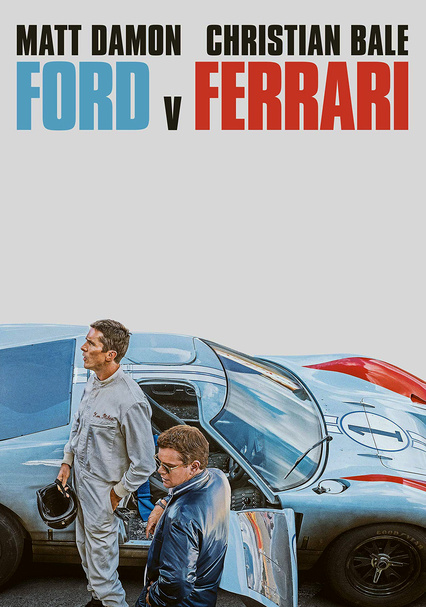
Ford v Ferrari-2019

Ford v Ferrari-2019

Director James Mangold

Starring Matt Damon, Christian Bale

Scott’s Review #1,041

Reviewed July 18, 2020

Grade: B-

Ford v Ferrari (2019) is a film based on a real-life situation in the world of race car driving featuring two of Hollywood’s most recognizable leading men, Matt Damon and Christian Bale.

Co-leads share equal screen time and independent storylines that merge nicely. Bale gives the best performance and is the best part of an otherwise mediocre film.

The rest is quite formulaic and traditional in plot and filmmaking sensibilities.

Receiving several Academy Award nominations, I expected more from the experience. Granted, car racing isn’t the subject I’m most intrigued by.

Carroll Shelby (Damon) is an American car designer and entrepreneur, who the Ford Motor Company hires to build a car that will beat the Italian-owned Ferrari after a feud erupts between the two owners.

Shelby is tasked with building the car to debut at the upcoming 1966 24 Hours of Le Mans car race in France.

The rebellious race car driver, Ken Miles (Bale), who has no fear, is chosen to drive the new car. He and his wife have money troubles and need the payday.

Director James Mangold certainly adds his share of pomp and circumstance, making this a testosterone-fueled guy’s film. Traditional styles ensue as the climactic race fills the last act of the way-too-long production.

There is a story of loyalty and brotherhood between Carroll and Ken that feels forced and dated.

Ford v Ferrari is formulaic to a tee, with a clear modus operandi of providing entertainment and action.

The pieces are all in play. The Ford corporation is pissed at being tricked into a deal by a foreign country (Italy). They vow revenge with a big, American car that can defeat the foreign vehicle. There is a climactic finish, with the American car emerging as the clear victor.

However, first, there are hurdles to overcome to increase the tension and drama. Ken’s driver door malfunctions, causing him to have to gain laps to catch up to Ferrari.

Ford is written as the underdog, which is a tough sell.

Since the real-life events took place during the Cold War, Mangold spins a definitive Americana, good old boys’ creation that feels too patriotic to be genuine.

Many other films share a similar vibe, such as Apollo 13 (1995), The Martian (2015), and especially Rush (2013), which is similarly themed.

The Ford guys, though cagey and gruff, are meant to be the characters the audience roots for, and the Italian characters are not.

And is there a need to still show the cliched scene of a dedicated wife obediently watching television at home and cheering on her husband as he races?

The gripes are not to say the film is a bad experience- it’s not. It’s just that it’s on par with good Mexican takeout from your favorite restaurant.

You know precisely what you are going to get, and there is some comfort and satisfaction in that. Ford v Ferrari is an easy watch, and one can sink into their sofa and enjoy the revving engines, squealing tires, and smoking mufflers.

The film is machismo at its finest. Think of a better version of The Fast and the Furious (2001-present) franchise.

Let’s talk Oscar nominations.

There is no way Ford v Ferrari should have received a Best Picture nomination. Either Us (2019), Hustlers (2019), or A Beautiful Day in the Neighborhood (2019) could have deservedly taken its spot.

Warranted are nominations for Film Editing, Sound Editing, and Sound Mixing, for which it won the first two. More realistic is for Christian Bale to have been awarded a Best Supporting Actor nomination, which he did not receive.

Sometimes the Academy gets it right, sometimes they don’t.

Being a non-race car enthusiast might have hindered my enjoyment of the film compared to a more passionate viewer.

For those seeking a standard, rev ’em up, male-driven race car film, kick up your heels and enjoy the ride —you’ll love it. Ford v Ferrari (2019) will only marginally please those seeking a deeper meaning in film or film as an art form.

The film will undoubtedly be remembered as one of the most mainstream and Hollywood-produced films possible.

Oscar Nominations: 2 wins- Best Picture, Best Sound Editing (won), Best Sound Mixing, Best Film Editing (won)

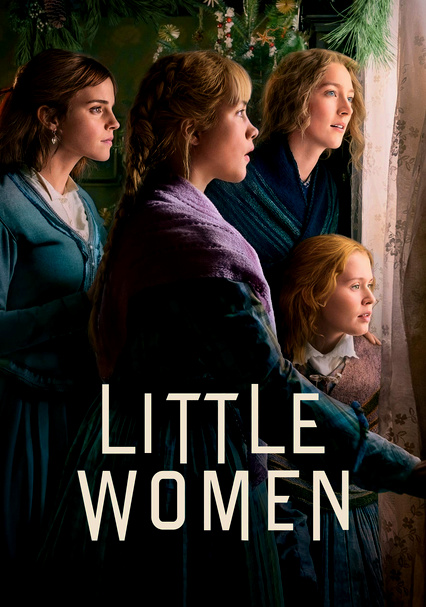
Little Women-2019

Little Women-2019

Director Greta Gerwig

Starring Saoirse Ronan, Florence Pugh

Scott’s Review #982

Reviewed January 21, 2020

Grade: A-

Numerous adaptations of the 1860s classic novel by Louisa May Alcott have been forged upon the silver screen, some good and some not as good.

The consensus is that Little Women (2019) is one of the better offerings, if not the best.

Director Greta Gerwig crafts a clear feminist, progressive version of the trials and tribulations of the March family, led by the spirited, spitfire Jo (Saoirse Ronan). Gerwig’s telling is fantastic, breathing fresh life into a classic story.

The story fluctuates heavily between 1868 and 1861, spanning both the United States Civil War and its aftermath.

Liberal, the Marches reside in Massachusetts, led by matriarch Marmee (Laura Dern), who mainly lives life while their patriarch, Father March (Bob Odenkirk), is off at war. The rest of the household includes sisters Jo, Meg (Emily Watson), Amy (Florence Pugh), and the youngest daughter, Beth (Eliza Scanlen).

The family endures joy, hardship, romance, love, and death as they navigate the decade.

The focal point is Jo, a determined young lady, who moves to New York City, frequently reflecting on her life through back-and-forth sequences.

She begins, as an aspiring writer, and as she grows up, eventually becomes a success, having her novel published boldly. She resists the tried and true and questions why a woman must rely on a man for success rather than her efforts and talents.

During the story, she is pursued by two young men, Laurie (Timothee Chalamet) and Friedrich (Louis Garrel).

Little Women is a fantastic and emotional story and a film that has no need for CGI, car chases, explosions, or any ingredients meant to enliven a film. It does not need them.

The excitement is in the plot, as we thirst for more of the ups and downs that the March family faces. With any successful drama, there are nuanced characters, each taking a turn at a story.

While Jo is the headliner, Amy, Meg, and Beth are much more than opening acts. They each have their own lives, dreams, triumphs, and hardships, and the audience cares about each of them.

To capitalize on this point, the casting is dynamite. In a small, but brilliant role, Meryl Streep gives a bombast to her character of Aunt March, the wealthy widow who owns a gorgeous house and vacations in Paris.

She is cranky, but wise, only wanting the very best for her nieces, which is, of course, to marry rich!

Ronan is well-cast and charismatic as Jo, the actress who loses her Irish accent for an American one. She utilizes her acting skills to imbue Jo with determination and just enough empathy to win over the audience.

Gerwig assures that the audience is reminded of the times and what it meant to be female during the 1860s, with a minimal chance at self-achievement, having to rely on a man for nearly everything.

She is in no way demeaning or ridiculing the male gender, though. She paints no villains in her film, instead showing men as supportive at times, enamored at other times, but never exerting their power over women.

Little Women receives a minor demerit in the pacing department. The film sharply shifts back and forth, in a too rapid manner, from period to period, at times leaving the viewer unclear as to which section of the film they are in.

Blessedly, this ceases about midway through, but the technique is jarring and unnecessary. One wonders what the action was intended to achieve and why a more straightforward approach to storytelling was not used.

A key facet of any outstanding film is the emotional reaction, and Little Women had this viewer with tears streaming down his face. Sometimes for joy, sometimes for sadness, all in an organic way given oomph by a powerful musical score that resonates but never overwhelms.

The film is one in which all its elements come together in perfect harmony.

The film received six nominations, including Best Picture, Best Actress (Ronan), Best Supporting Actress (Pugh), and Best Adapted Screenplay. Sadly, and in a never-ending slight for female directors, Gerwig was overlooked.

Before the 2019 film adaptation of Little Women, the novel had been adapted for film six times, with the most successful versions being in 1933 and 1949.

Seventy years later, the most modern version is arguably the best, with a left-leaning stance that is oh so necessary in modern times.

Oscar Nominations: 1 win- Best Picture, Best Actress- Saoirse Ronan, Best Supporting Actress- Florence Pugh, Best Adapted Screenplay, Best Original Score, Best Costume Design (won)

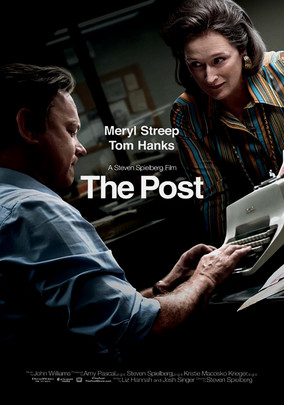
The Post-2017

The Post-2017

Director Steven Spielberg

Starring Meryl Streep, Tom Hanks

Scott’s Review #715

Reviewed January 15, 2018

Grade: A-

Amid the current political upheaval in the 2017 United States, comes a fresh and timely film named The Post, created by esteemed director Steven Spielberg and starring two of today’s biggest Hollywood film stars: Tom Hanks and Meryl Streep.

The film is a political, historical thriller set during the tumultuous year 1971, as the controversial Vietnam War raged on. It tells of the bravery of a female newspaper owner (Streep) who risked everything to publish the truth with her team of mostly male editors and staff.

The film is an intelligent piece of writing.

Its crisp script and quick editing allow for a believable foray into a different time, when newspapers were hot and rotary telephones, telephone booths, and polyester outfits were all the rage.

Spielberg is brilliant at setting just the right mood and tone to transport the audience back to 1971, on the eve of the enormous Watergate scandal.

While all of the elements are in play, and the truthful story is important, the film is very good but not quite brilliant—it falls just shy of that bombastic one or two scenes that would land it over the top.

The Post begins in the jungles of Vietnam in 1965, as military analyst Daniel Ellsberg documents the progress of military activities among the soldiers during battle.

On the journey home, he briefs then-President Lyndon Johnson that the war is hopeless and should be stopped. As history unfortunately shows, the brutal war continued with thousands of lives lost.

The film then continues on a journey of uncovering top-secret Pentagon papers documenting the White House’s knowledge of the war’s useless nature. Each administration chose to continue with the bleeding to avoid the United States being “humiliated.”

Streep gives her best performance in years as Katharine Graham, the Washington Post newspaper heiress, a woman who struggles to be taken seriously in a man’s world, especially given the period, many men were uncomfortable taking direction from a woman.

Streep infuses the role with the perfect amount of emotion, insecurity, and charm. Despite her wealth and control, she is frequently overruled by the all-male board of directors, so much so that she often doubts her confidence.

Hanks, however, underwhelms as the gruff editor-in-chief of the Post, Ben Bradlee. Given the actor’s enormous talents, I was expecting a meatier performance, which does not materialize.

I also anticipated an equal balance of Hanks and Streep, but the film belongs to Streep.

Perhaps because Hanks (the ultimate nice guy) portrays Bradlee as a challenging, yet family man, the performance does not quite work.

Also, the chemistry between Hanks and Streep is not the specialty of the film.

Evident is the correlation between 1971’s President Nixon and 2017’s President Trump—both administrations were shrouded in controversy.

A neat trick Spielberg creates is to only show Nixon in shadows, wildly gesturing and threatening, similar to Trump’s mannerisms—this is no accident.

The entire work of The Post seems to be a big call-out by Spielberg, a devout liberal, to the Trump administration.

This comparison of past and present makes The Post incredibly timely and topical for 2017.

Clever is the intriguing ending—as the Watergate scandal begins with a security guard catching intruders at the complex, Spielberg seems to be saying, “Watch out, Trump!”

In 2017, the current state of the media versus the White House has never been more controversial, disdainful, and even hateful, as the “truth” is often tough to come by or even to distinguish.

“Fake news” is now a thing and Twitter rants are now a daily occurrence, making the “truth” a precious commodity.

For this reason alone, The Post (2017) must be a film we celebrate and model ourselves after—how timely indeed.

Oscar Nominations: Best Picture, Best Actress-Meryl Streep

Lady Bird-2017

Lady Bird-2017

Director Greta Gerwig

Starring Saoirse Ronan, Laurie Metcalf

Scott’s Review #700

Reviewed November 28, 2017

Grade: A

Lady Bird is a 2017 independent film released by actor-turned-writer/director Greta Gerwig. It is a tremendous effort in her solo directorial debut.

No stranger to the indie syndicate herself, Gerwig puts her unique stamp on the film with a rich, female-centered perspective that works quite well and seeps with charm and wit.

It is worth noting that the story is semi-autobiographical, based on Gerwig’s life and her stormy dealings with her mother. The story is well-written, well-paced, and empathetic as the audience views a slice of life through the eyes of a restless yet kindly teenager on the cusp of womanhood.

Saoirse Ronan gives a bravura performance in the title role. Her given birth name is Christine, but she defiantly changes it to Lady Bird in a show of adolescent independence, and much to her parents, Marion and Larry’s (Laurie Metcalf and Tracy Letts ) chagrin.

Christine lives in suburban Sacramento, California, and yearns for a more exciting life in New York City, far from what she considers Dullsville, USA. Now, in her senior year, she is attending a Catholic high school.

Christine applies to college after college, hoping to escape her daily dilemmas. Christine’s best friend Julie and somewhat boyfriend Danny (Lucas Hedges) are along for the ride.

The period is 2002- shortly after 9/11.

The brightest moments in Lady Bird are the plentiful scenes between Christine and her mother. The chemistry between Ronan and Metcalf is terrific, and I genuinely buy them as a real mother/daughter duo, warts and all. They fight makeup, get on each other’s nerves, fight, cry, do makeup, etc.

I especially love their knock-down drag-outs, as each actress stands her ground while allowing the other room to shine—feeding off of each other.

My favorite Metcalf scene occurs while she is alone. Having gotten into a tiff with Christine and giving her the silent treatment while Christine flies to New York, Marion reconsiders as she melts into tears. At the same time, she drives away, regretting her decision and missing her daughter already.

Metcalf fills the scene with emotional layers as she does not speak- we watch in awe as her facial expressions tell everything.

Comparably, Ronan—likely to receive her third Oscar nomination at the ripe old age of twenty-three (Atonement, 1997, and Brooklyn, 2015, are the other nods)—successfully gives a layered performance as a teenage girl struggling with her identity and restless to see different worlds and get out of what she sees as a bland city.

Of Irish descent, Ronan is remarkable in her portrayal of a California girl- sometimes selfish, sometimes sarcastic, but always likable and empathetic.

The casting from top to bottom is terrific, as the supporting players lend added meat to the story. Christine’s best friend, Julie, played by young upstart Beanie Feldstein (Jonah Hill’s sister), is compelling as the lovable, chubby, and nerdy theater geek.

Letts is perfect as Christine’s father, depressed at losing his job in the tough economy and having to compete with young talent as he sees his career slip away.

Legendary actress Lois Smith adds heart to Sister Sarah Joan’s role- a by-the-book nun who is an incredible old chick.

Finally, Hedges, seemingly in every film from 2016 to 2017, is emotionally resounding as Danny, Christine’s troubled boyfriend, struggles with his sexuality.

Gerwig does it all with this film—she directs and writes, scripting laugh-out-loud moments and eliciting heartfelt emotion from her enchanted audience.

A hilarious scene occurs as Christine attends a dreary class assembly- an anti-abortion-themed one- by a woman who almost did not exist but for her mother’s decision not to have an abortion.

When a bored Christine icily points out that had the woman’s mother had the abortion, she would not be forced to sit through the assembly, it is a laugh-out-loud moment.

Lady Bird (2017), thanks to a fantastic writer and director and superlative casting, is a film that has its all heart, emotion, humor, and great acting.

The film is intelligently written and forces the audience to embrace its characters quite willingly. Gerwig carves a story, perhaps done many times before in film, but with a fresh and energetic feel.

Oscar Nominations: Best Picture, Best Director-Greta Gerwig, Best Actress-Saoirse Ronan, Best Supporting Actress-Laurie Metcalf, Best Original Screenplay

Independent Spirit Award Nominations: 1 win-Best Feature, Best Female Lead-Saoirse Ronan, Best Supporting Female-Laurie Metcalf, Best Screenplay (won)

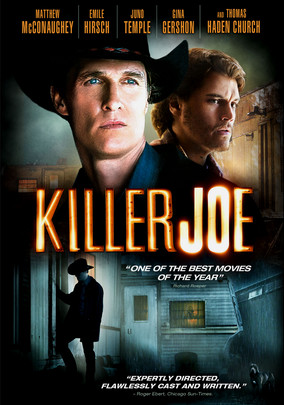
Killer Joe-2011

Killer Joe-2011

Director William Friedkin

Starring Matthew McConaughey, Emile Hirsch

Scott’s Review #450

70209632

Reviewed July 14, 2016

Grade: A-

Killer Joe (2011) is a must-see for any fan of director Quentin Tarantino because this small, independent, gem of a feature is worth checking out.

Tarantino’s films influence the film in style, characters, and violence. The violence mixed with humor, wit, and great writing is stamped on the film.

Surprisingly, given the influence of another director, Killer Joe is directed by William Friedkin, who is a very acclaimed filmmaker in his own right. Classics such as The Exorcist (1973) and The French Connection (1971) were created by this talent.

Matthew McConaughey owns Killer Joe and he has thankfully graduated from silly, fluffy, romantic comedies to smart, delicious roles in independent films of late. He has come to be a respected Hollywood actor.

His lengthy nude scene is daring for such an A-list actor.

The film is satirical, without being too campy, and the setting of a suffocating, trailer-trash, Texas town is extremely well done.

I loved the violent and gruesome fried chicken dinner table scene the best.

I especially liked the overall food references throughout the film which adds even more macabre comedy to this dark (on the surface) film.

Independent Spirit Award Nominations: Best Male Lead-Matthew McConaughey

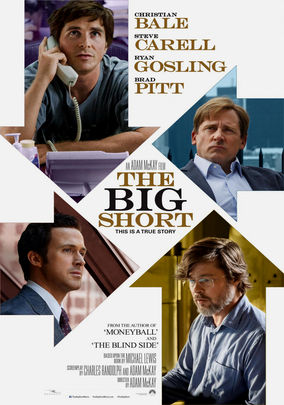
The Big Short-2015

The Big Short-2015

Director Adam McKay

Starring Christian Bale, Steve Carell

Scott’s Review #369

80075560

Reviewed January 10, 2016

Grade: A-

The Big Short (2015) is a confusing film and is its intention and also its genius.

Throughout some of the film, I was uncertain how much I liked it (or got it) and found many of the characters unlikeable, but at the conclusion, I realized that is exactly what the filmmakers intended is a clever tactic and makes The Big Short a success.

On the surface, the film has some humor but a very dark story at its core and left me a bit depressed and terrified at the conclusion.

I am happy that the film is receiving accolades and is the “thinking man’s” hit movie of the season.

To attempt to summarize the film, the film begins in 2005, approximately two years before the financial crisis of 2007-2008.

Eccentric hedge fund manager Michael Burry (Christian Bale), realizes the U.S. housing market is unstable and predicts a crash.

He attempts to profit by betting against the market, a move laughable to all around him, especially the banks who anticipate a windfall at Michael’s expense. Trader and fellow market managers, Jared Vennett and Mark Baum (played by Ryan Gosling and Steve Carrell) catch wind of Michael’s theory and try to get in on the action.

There is a sub-plot involving two younger investors also attempting to profit through the guidance of a retired banker (played by Brad Pitt).

The financial collapse is a tender subject and certainly no laughing matter, especially since it is so recent and affects many people.

The Big Short is touted as a comedy, which is strange. I found the audience didn’t know exactly what to laugh at or when. The film’s “laughs” were cynical, witty, and sometimes wicked. Many people do not get this type of humor.

In real life, people were kicked out of their homes and lost their jobs, pensions, etc. and it was all the result of greed, which The Big Short hammers home.

Several scenes include frat-boy investor/trader types getting rich by enabling almost anyone to afford a new house. Little did these people realize that there was a catch.

The film paints a jaded picture of Wall Street. The rich get richer at the expense of the middle class and the poor. It is an age-old sad tale.

Performance-wise, Carrell and Bale are the standouts. They both play characters who are damaged. Bale’s Michael is socially awkward, and has a false eye, but is also a genius. Carrell’s Mark is angry, grizzled, and is in therapy as a result of his brother’s suicide.

Both actors are great and have developed into worthy, credible acting talents. Worth mentioning, are small, but meaningful roles by Melissa Leo and Marisa Tomei.

The Big Short is shot interestingly, and highly unusual. From time to time, the action will stop and a famed celebrity (Selena Gomez, a world-renowned chef, or a model in a bubble bath) will explain the events, thus far, or give some review.

Also, more than once the actors will turn to the camera and speak directly to the audience. A personal touch that I found effective.

In the end, not much in life has changed, which is the message, and a frightening one. As one character brilliantly puts it “people will go back to blaming the poor and the immigrants”, which is a sad message.

After millions lost everything, not much has changed in the world and The Big Short makes that very clear. The people responsible have gotten away with crime, the banks bailed out, and a new scheme is undoubtedly in place.

It’s a sad world.

The Big Short (2015) is a gritty, harsh look at reality and a terrific film.

Oscar Nominations: 1 win-Best Picture, Best Director-Adam McKay, Best Supporting Actor-Christian Bale, Best Adapted Screenplay (won), Best Film Editing