Category Archives: Danny Glover

The Color Purple-1985

The Color Purple-1985

Director Steven Spielberg

Starring Whoopi Goldberg, Oprah Winfrey

Top 250 Films #153

Scott’s Review #358

60026621

Reviewed January 9, 2016

Grade: A

Steven Spielberg, admittedly a director who focuses more on sentimentality, mixes heartbreak with the courage to blend a recipe that makes for a perfect, mainstream film from 1985.

It is a different direction for him- far extreme from the summer blockbusters he was known for until this time.

Exceptional acting and cinematography lend themselves to The Color Purple, a film based on the much darker novel by Alice Walker. Certainly, one of the best films of the 1980s.

A relative unknown when the film was made, Whoopi Goldberg gives an astounding performance in the lead role.

The film spans approximately forty years in the early twentieth century and is set in rural Georgia.

Celie Harris (Goldberg) is an oppressed black woman, her sister and best friend Nettie is sent away, leaving Celie a virtual prisoner with a man, Albert Johnson (Danny Glover), whom she is forced to marry and care for in addition to his children.

Raped and beaten, Celie is left with little self-worth until two women, rotund, feisty, Sophia (Oprah Winfrey), and Shug (Margaret Avery) inspire her to be something better.

The Color Purple is a very sentimental film filled with inspiration for anyone beaten down or otherwise abused by people or by society.

The depiction of southern life for blacks, especially black women is depicted well, though softened I have no doubt. Liberties must be taken for the sake of film as black men, in particular, are not portrayed well- surely there must have been some decent black men in this time?

But, despite Spielberg being a male, The Color Purple is told from a definite female perspective.

Her role of Celie is Goldberg’s finest and hers is a case of the Academy getting it all wrong; she should have won an Oscar for this performance instead of a conciliation win a few years later for her secondary (and unremarkable) role in Ghost.

Goldberg never achieved any roles as great as Celie.

Her expressions and mannerisms spoke volumes and her occasional wide, beaming smile would melt the coldest heart.

Winfrey, equally brilliant as Sophia (and also robbed at Oscar’s time), is a completely different character. Angry, abrasive, and outspoken, she fills Sophia with life and energy, which makes her big scene heartbreaking to watch.

Defying a white man she is beaten and arrested and reduced to living out her days as a limping maid to a white woman- who she swore she would never serve.

The cinematography and direction of The Color Purple are grand.

Spielberg does a believable job of depicting time accurately. The costumes worn by the cast and the lighting, in general, are bright and colorful, and I think this gives the film a flavor that is nice to watch.

Again, Walker’s novel and the real-life experience were undoubtedly much darker, but for the film’s sake, this adaptation (numerous stage versions preceded and followed) makes for a wonderful film.

Oscar Nominations: Best Picture, Best Actress-Whoopi Goldberg, Best Supporting Actress-Margaret Avery, Oprah Winfrey, Best Screenplay Based on Material from Another Medium, Best Original Score, Best Original Song-“Miss Celie’s Blues (Sister)”, Best Art Direction, Best Cinematography, Best Makeup, Best Costume Design

Dreamgirls-2006

Dreamgirls-2006

Director Bill Condon

Starring Beyonce, Jennifer Hudson, Eddie Murphy

Top 250 Films #159

Scott’s Film Review #792

Reviewed July 20, 2018

Grade: A

Dreamgirls (2006) is a glossy show business-style drama with plenty of glitz and glamour. Adapted from the Broadway production of the same name, the story is loosely based on the trials and tribulations of The Supremes, a popular all-girl group from the 1960s.

Despite the film being heavily focused on the drama and tension between the characters, it boasts a wonderful soundtrack and fantastic acting- most notably newcomer Jennifer Hudson, who garnered a surprising Best Supporting Actress Oscar win for her role.

The film tells the story of the evolution of American R&B music during the 1960s and the 1970s- the action mainly taking place in Detroit, Michigan, where the genre began.

Taking center stage is the incarnation of a girl group called The Dreams, who are controlled by their manipulative record label executive.

A womanizer and creep, Curtis Taylor (Jamie Foxx), guides the girls to stardom, but beds both the beautiful Deena (Beyonce) and the talented yet overweight Effie White (Jennifer Hudson). This leads to conflict as Curtis decides that less talented Deena is more marketable and thus should be the central figure of the band.

With a stellar cast in tow, Dreamgirls contains a plethora of talent and a good history lesson to boot. The main draw in the acting department is the revelation of the talented Jennifer Hudson.

Winner of the talent show American Idol, many pooh pooed her film direction, apparently assuming she was a flash in the pan and a “reality television” star. The challenging role of Effie is perfectly suited for Hudson- brazen, pipes for days, and plenty of attitude.

Her acting aside, Hudson scorches through an unforgettable rendition of “And I Am Telling You I’m Not Going”, which is assuredly what won her the Oscar.

Otherwise, the supporting cast is worthwhile and impressive is Beyonce in a pivotal role. Surely, the singer/actress faced her share of detractors, along with Hudson, but their chemistry is amazing and she nails all of her songs.

Eddie Murphy is a gem in the role mirrored after James Brown, James “Thunder” Early.  The role is perfect for Murphy- a far cry from his standard comedic roles that have grown stale over the years.

This role rejuvenates the actor’s credibility.

Dreamgirls does at times falter a bit with the drama, almost soap opera-like situations. A triangle develops between Effie, Curtis, and Deena, which leads to tension, bad blood, cattiness, and melodrama.

If the film were a standard drama this would undoubtedly make the film suffer from a tired script or generic writing.

But the musical numbers are so riveting that these flaws can be overlooked completely. The ritzy glamour and sparkles that erupt during “Dreamgirls” and “One Night Only” are wonderful fun and the songs are memorable leaving audiences humming along as they dance in the aisles.

The story has been told many times before. A dream of rising to musical stardom and the many trials and tribulations that go along with these hopes and desires.

Comparisons can be made to Chicago (2002), Valley of the Dolls (1967), or even Gypsy (1962), but the mostly black cast and the 1960s Motown theme is interesting, particularly as the Civil Rights movement of the time was upon us.

The film does not invest much time in politics, sticking mainly with drama and music, which may be a wise move to avoid too much of a message theme.

As the film concludes in 1975, Effie is reaffirmed as a meaningful member of The Dreams after her career has tanked and she has wound up on welfare.

A paternity twist is also thrown in for good measure, but the film has a clear “happily after ever” vibe to it which softens the film and keeps it more on the PG-13 level instead of going for darker themes.

Dreamgirls (2006) is a musical that is highly memorable for me because it made Jennifer Hudson a household name and confirms the talent and glory that she is rightfully due.

In subsequent years the star lost weight, softened her image a bit, and became, well, more generic. But thankfully we have a gorgeous performance to always appreciate her for.

Oscar Nominations: 2 wins-Best Supporting Actor-Eddie Murphy, Best Supporting Actress-Jennifer Hudson (won), Best Original Song-“Listen”, “Love You I Do”, “Patience”, Best Sound Mixing (won), Best Art Direction, Best Costume Design

Saw-2004

Saw-2004

Director James Wan

Starring Cary Elwes, Leigh Whannell

Top 250 Films #222

Top 40 Horror Films #34

Scott’s Review #1,285

Reviewed August 4, 2022

Grade: A

One of the many reasons that I love the horror genre so much is how it changes and develops over time. Many classic horror films are influential to more modern ones and that’s all well and good.

But then sometimes a new idea or style comes along that throws everything topsy turvy and influences other films for years to come.

Saw (2004) is one of those films. It smacked everyone who thought they knew horror films upside the head with a relentless and pulsating gore-fest.

I was fortunate enough to see the film when it premiered and boy was it the ‘water cooler’ film of its day. The clever writing and intricate plot and set pieces were unheard of in a world of maniac-wielding knife setups and redundant endings.

It invented the grisly ‘torture porn’ moniker that became popular with films like Hostel (2005) and many more that would come after it.

The Saw franchise ultimately produced perhaps one too many sequels that left it feeling stale and exhausted, but what an influence the original Saw had, and continues to have.

I still remember the hold the film had over me and how much it resonated in nastiness, butchery, and enough creative killings to last a lifetime.

Needless to say, it’s not for the squeamish or faint of heart, and watching Saw now knowing the surprise twist doesn’t pack quite the same punch that it did in 2004, but I’ll never forget how I felt when first watching this film.

The twist ending is unforgettable.

Events get off to a kick-ass start when two men awake in peril. Photographer Adam Stanheight (Leigh Whannell) and oncologist Lawrence Gordon (Cary Elwes) who do not know one another, regain consciousness while chained to pipes at either end of a filthy bathroom.

As the confused men realize they’ve been trapped by a sadistic serial killer nicknamed “Jigsaw” and must complete his perverse puzzle to live, flashbacks unravel the mystery of other character connections.

Meanwhile, Dr. Gordon’s wife (Monica Potter) and young daughter (Makenzie Vega) are forced to watch his torture via closed-circuit video.

A massive clue to the puzzle that Saw presents is lying right there in the bathroom but of course, the unwitting audience knows none of this. The fun of the film is to sit back and let the filmmakers slowly unpeel the onion and reveal the who’s who of the backstory.

And let the blood drip.

Unlike legacy films like Halloween (1978) and Friday the 13th (1980) or even later efforts like Scream (1996) that brought thousands of rabid horror fans back to movie theaters, nobody is being chased with a knife in Saw.

It’s much more cerebral than that.

Who can ever forget the sound of Jigsaw’s grave voice pouring out of a tape recorder stating “I want to play a game” in a robotic tone? It is still as ominous a sound as one could imagine, and the big reveal still comes as a genuine shock.

Most of the characters have secrets to reveal and most of those secrets are dirty.

Director James Wan and writer Leigh Whannell who also stars in Saw, brilliantly craft a web of deceit amongst their players. The characters who suffer the most have committed a hateful act of deception or schemed their way to benefit based on someone else’s ruin.

In perfect form, all the victims almost deserve their fates like being caught in a shotgun trap, shot in the chest, or being forced to ‘saw’ off their foot to escape death.

The final reveal is downright freaky and will make the audience quickly rewind the events of the film in their heads. The character thought to be the main killer, and wonderfully played by creepy actor Michael Emerson (star of television’s Lost) is merely a pawn of someone more sinister.

Saw (2004) savagely hacked its way into viewers’ heads with a sophisticated, plot-driven experience with a film style enhanced by an independent look.

It’s had its day but it must never be forgotten for the influence left behind.

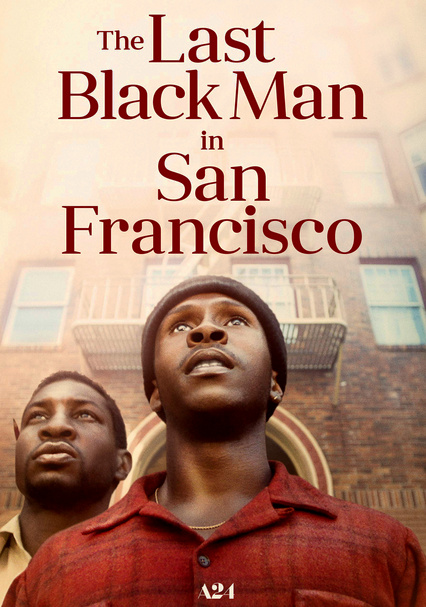
The Last Black Man in San Francisco-2019

The Last Black Man in San Francisco- 2019

Director Joe Talbot

Starring Jimmie Fails, Jonathan Majors

Scott’s Review #1,018

Reviewed May 1, 2020

Grade: A

The brilliance of The Last Black Man in San Francisco (2019) is multi-fold. The immediate call-out is that the work is the creation of up-and-coming director Joe Talbot, an artist with an excellent eye for both the visual and humanistic aspects of cinema.

Whoever influenced this young man deserves props, for he has a great future ahead of him. Given that this is his film debut and he also co-wrote it, the future is indeed bright. The film is loosely based on the life of Jimmie Fails, his childhood best friend, who also stars.

A24 is arguably the new “it” film studio for independent entertainment offerings, and this is to be celebrated.

Indie films provide creative artists with the means and time to develop their products and tell stories that are fraught with meaning, and in many cases, dare to go where other films have not ventured, at the risk of turning off a mainstream audience.

This is to be celebrated and championed, and has resulted in many fantastic and unique films. Hereditary (2018), Midsommar (2019), and The Lighthouse (2019) immediately spring to mind.

The Last Black Man in San Francisco gets off to an interesting start as two young black men, Jimmie (Fails) and Mont (Jonathan Majors), wait for the bus as men clad in protective gear appear to clean polluted waters.

The implication is clear that residents are not protected while the men are. Protesters chant while images of the changes San Francisco has experienced over the years are shown.

The two then skateboard to a Victorian house in the city’s Fillmore District, where Jimmie grew up and says it was built by his grandfather in 1946.

Their skateboard trip is cerebral and surrealistic and has ten glorious cinematic moments.

It is evident that Talbot is channeling either an autobiographic story or one of a friend- it proves to be the latter. Unclear is if Mont is supposed to be Talbot, but my guess would be in the affirmative.

Jimmie and Mont are inseparable, residing both at Mont’s grandfather’s house (played by a startlingly elderly Danny Glover) and the house that Jimmie’s grandfather built.

The friends trudge along with their daily lives by enduring insults hurled at them by a neighborhood gang and fixing up the Victorian house whose owners neglect it, only to be subsequently evicted.

Jimmie and Mont are fantastically nuanced, rich characters, each for different reasons. Jimmie is pained that his city has forgotten his grandfather and his legacy, which have been cast aside for progress and wealth.

His father (Rob Morgan) is angry, his mother, a recovering drug addict, is barely in his life, as they run into each other by chance on the city bus. Jimmie’s Aunt (Tichina Arnold) resides outside the city and serves as his confidante.

Mont is creative, yearning to write a play based on the local gang, but struggles to create the words or authentically express his voice. He works in a fish shop and frequently acts out his thoughts about others down by the water. Considered odd, he is a good guy and loyal to his grandfather.

Since a female love interest is never mentioned (another high point of the film), neither Jimmie’s nor Mont’s sexuality is ever discussed, nor is a potential relationship between the two ever mentioned.

The ambiguity works remarkably well and evokes comparisons to the groundbreaking Moonlight (2016).

When a sudden death erupts, the proceedings, Mont finally finds his voice and composes an improvised stage play which he stars in as a dedication to the fallen victim.

He elicits responses from the people in attendance (including all principal cast members) as a shocking secret erupts, resulting in disarray. This takes the already layered film in a new direction as all Jimmie thought to be true is suddenly shattered.

In a word, the film feels fresh, both visually and from a story perspective.

Fails and Majors are a top young talent with bright futures who add a patient climb to their characters amid a film that paces slowly but steadily, letting the events unfold in a thought-provoking way.

I eagerly await the next project by the talented Talbot.

In a film industry hungry for new ideas, the creator of The Last Black Man in San Francisco (2019) offers a journey into the minds of two black men, written not as stereotypes, but as interesting and intelligent individuals, who are not looking forward, but looking backward.

The film provides characters who are not standard but are so much more than that.

Independent Spirit Award Nominations: Best First Feature, Best Supporting Male-Jonathan Majors

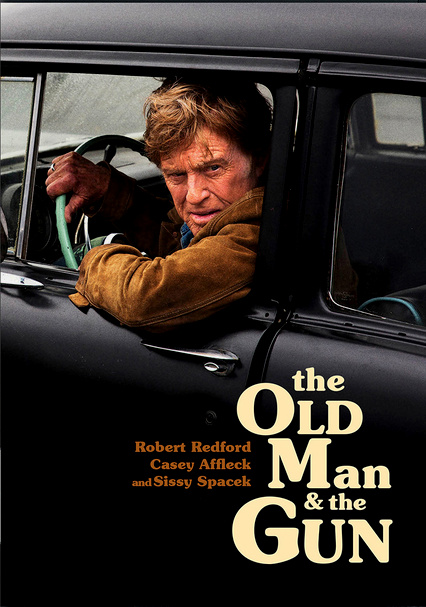
The Old Man & the Gun-2018

The Old Man & the Gun-2018

Director David Lowery

Starring Robert Redford, Sissy Spacek

Scott’s Review #945

Reviewed October 11, 2019

Grade: B

Quiet films centered on older characters are not the norm in youth-obsessed Hollywood, where profits are always in fashion.

The Old Man & the Gun (2018) spins a tale offering adventure and a good old-fashioned love story, with appealing stars. The film is slow-moving and not groundbreaking, but it possesses a fine veneer and a snug plot that gives viewers a fuzzy feeling of watching something wholesome.

The script is loosely based on David Grann’s 2003 article “The Old Man and the Gun”, which was later collected in Grann’s 2010 book The Devil and Sherlock Holmes.

Career criminal Forrest Tucker (Robert Redford) is wanted for his daring escape from San Quentin State Prison in 1979. The current period is 1981.

Addicted to petty bank robberies for relatively small dollar amounts because he is addicted to the rush. A charmer, he is unassuming and unsuspecting. As he flees the scene of a recent heist, he meets a kind widowed woman named Jewel (Sissy Spacek), whose truck has broken down.

The pair have lunch at a diner and quickly bond.

Forrest is in cahoots with two other bank robbers as the trio makes their way across the southwest United States, garnering a reputation. Detective John Hunt (Casey Affleck), a Dallas detective, is tasked with finding and arresting Tucker until the FBI takes the case away.

Hunt cannot give up the search, and the duo embarks on a cat-and-mouse chase across the area, sometimes crossing paths in the local diner.

Where The Old Man & the Gun succeeds is any scene featuring Forrest and Jewel together. Their chemistry is radiant during calm scenes of the couple eating pie and sipping coffee at the diner, simply getting to know each other organically.

During their first encounter, Forrest slips her a note, adding mystery to their bond. It is unclear whether he reveals his shady career to her, but it is alluded that he has confessed something that she is not sure she believes.

Redford carries the film as if he were still a leading man from his 1970s and 1980s blockbuster days, which is a testament to his Hollywood staying power.

With his charismatic smile and still dashing good looks, it is little wonder that the bank tellers he holds up describe him as friendly and polite, easily wooing the folks into his good graces.

A crowning achievement for the actor, he narrowly missed an Academy Award nomination but did score a Golden Globe nod.

The film suffers from predictability during the final act, when one of his accomplices turns him in to the police, and a chase ensues between Forrest and Hunt.

This is not the film’s best part, and it feels like dozens of other crime dramas. Affleck looks to be in a role he didn’t particularly enjoy; at least, that is how it seems to me watching the film.

The actor is an Oscar winner playing cops and robbers and second fiddle to Redford. Can you blame him for looking glum?

Speaking of misses, Hunt is in an interracial relationship with Maureen, a beautiful black woman who has a mixed-race daughter. Rural Texas in 1981 must have posed racial issues for the family, but this is never mentioned. Maureen and her daughter also look straight out of 2019 with fashionable hairstyles and clothes.

The relationship is progressive, a plus, but it is written unrealistically.

Although rumored to be retiring from the film industry (we’ll see if that happens), Robert Redford gives a terrific turn as a man who reflects upon his life and treats the audience to the same effect.

Spacek is a delicious role and a crowning achievement for a great career and is a perfect cast and a treasure to have along for the ride, celebrating two fantastic careers.

The Old Man & the Gun (2018) is a touching, romantic bank heist film with more positives than negatives.

Witness-1985

Witness-1985

Director Peter Weir

Starring Harrison Ford, Kelly McGillis

Scott’s Review #754

Reviewed May 7, 2018

Grade: A-

Witness (1985) is a slick crime thriller that may at first glance seem like a by-the-numbers genre film but instead is well above average.

As the plot unfolds there are key nail-biting and edge-of-your-seat scenes that build the tension in a way that the suspense master himself, Alfred Hitchcock would be proud of.

Decades later it is tough to watch the film and not notice a slightly dated quality, but at the time it was well-regarded and terrifically paced.

Charismatic Harrison Ford and novice child actor Lukas Haas make the film more than it could have been.

The setting of the film is twofold and presents two different cultures- rural Pennsylvania’s Amish country and the bustling metropolitan Philadelphia.

The death of her husband leads Amish woman Rachel (Kelly McGillis) and her son Samuel (Haas) to the big city to see her sister. While transferring trains Samuel witnesses a brutal murder in the men’s room- unbeknownst to the killers.

This riveting scene (explained more below) triggers the rest of the story.

When Detective John Book (Ford) is assigned to the case and questions Samuel, he is unable to determine who the assailants are. After Samuel’s fingers, an unthinkable suspect, events escalate and John uncovers a mighty corruption circuit within the police force.

John, now targeted, must assimilate into the Amish culture as he strives to protect both Samuel and Rachel (as well as keep himself alive) while embarking on a relationship with Rachel.

The story wisely focuses on the differing lifestyles of the principal characters.

What I enjoy most about Witness is the nice mix between both types of people and different cultures and how they can learn from one another. John is so used to and desensitized by being in the midst of the rat race that he often forgets the nicer things in life- peace or even love.

Rachel and Samuel, of course, are highly sheltered, living in a bubble, and are fish out of water amid the bustling streets of Philadelphia. The counter-cultures offer a nice balance in this masculine film with female sensibilities.

Not to be usurped by pure romance, Witness is at its core, a fleshy, male-driven crime thriller. Adding some softer edges, Weir pleases both male and female audience members and appeals to the masses.

John’s precinct, filled with detectives, police officers, and criminals, gives the film appropriate “guy elements”.

So director Peter Weir offers a good balance here.

I like how Weir chooses to portray the Amish- not caricatures, stereotypes, or to be made fun of, they are sweet, stoic, and intelligent, accepting of John in their lives.

As John learns more about the Amish culture and becomes one of them, this is even more prevalent as an immersion of different cultures- a good lesson to even apply to other differences between peoples.

The acting is a strong component of Witness. Charismatic and handsome, Ford is believable as a fast-paced, busy detective. To add further substance, Ford transforms his character (written as one-note in typical films of this nature) into a sympathetic and inspiring man as he slowly becomes a father figure to wide-eyed youngster Samuel and falls in love with Rachel.

Ford is the standout, but the film would not work with fewer supporting actors. Both innocent and gentle characters, McGillis and Haas add layers to their roles with pronounced toughness and resilience- saving John as much as he saves them.

Two scenes are pure standouts and successfully elicit tension and dramatic effect.

As Samuel witnesses the murder in the bathroom, he is seen in a stall peeking through a crack with only one eye exposed. When he makes a slight noise the assailant violently goes through each stall intent on shooting whatever he finds.

Samuel must think quickly to avoid being caught. The camera goes back and forth between Samuel’s looks of panic and the assailant getting closer and closer to catching him.

Viewer’s hearts will pound during this scene.

Later, as Samuel sees a newspaper clipping framed among a case of awards, he recognizes one man as the assailant. Weir shoots it in slow motion so that the reactions of John and Samuel’s characters are palpable and effective.

The scene is tremendously done and cements the bond and trust between these characters.

Thanks to a wonderful performance by Ford and the cast surrounding him, Witness (1985) successfully widens the traditionally one-dimensional masculine crime thriller into something deeper.

Providing slick entertainment with a great story and substance, the film crosses genres and offers a substantial cinematic experience woefully needed in the mid-1980s.

Oscar Nominations: 2 wins-Best Picture, Best Director-Peter Weir, Best Actor-Harrison Ford, Best Screenplay Written Directly for the Screen (won), Best Original Score, Best Art Direction, Best Cinematography, Best Film Editing (won)

Saw V-2008

Saw V-2008

Director David Hackl

Starring Tobin Bell, Donnie Wahlberg

Scott’s Review #532

70098905

Reviewed December 1, 2016

Grade: B

The Saw franchise films are fun, bloody, late-night flicks.

It is quite helpful if you see them close together, and in sequence, as they either continue or backtrack to previous films- past knowledge is very helpful.

Saw V (2008) is no exception, as we learn the hows and the whys of serial killer Jigsaw, an apprentice, and detective Mark Hoffman.

What would possess this man to follow in the footsteps of Jigsaw?

In their heyday, the Saw films were intriguing and more cerebral than the standard slice and dice ’em offerings.

I like these films because there is usually a plot twist or some other surprise connection to an earlier entry to look forward to.

Also, the victims are not merely innocent but are in the wrong place at the wrong time, nor are they killed for the sake of killing.

They typically have embezzled someone, maimed an innocent party, or caused someone pain in some fashion, so the audience does not feel sorry for them, making their various tortures tolerable to watch, if not satisfying.

In Saw V, as far as the kills go, we are treated to somebody being sliced in half, a decapitation, another blown to bits by a detonating bomb, bloodletting, a crushing to death, and various other forms of mutilation.

This is all well and good, but by Part V in a franchise, even the most clever of stories run out of gas, and by this point, the series is feeling a little tired, although still enjoyable for the puzzle of story connections.

Saw V (2008) is a very bloody film, so not intended for the squeamish.

Dirty Grandpa-2016

Dirty Grandpa-2016

Director Dan Mazer

Starring Robert De Niro, Zac Efron

Scott’s Review #432

80049285

Reviewed June 29, 2016

Grade: D-

It’s a sad day when the only interesting aspect of a film is the gratuitous nudity of one of its stars, but that is precisely the case with Dirty Grandpa (2016).

Zac Efron bravely bares all for the sake of art….or a big paycheck, whichever the case may be.

Otherwise, Dirty Grandpa is complete drivel.

It is crass, rude, mean-spirited, and blatant in its raunch. It also aspires (successfully) to be politically incorrect, quite surprising in these times of fairness and equality for all.

If the film intends to be outrageous, it succeeds in spades.

Unfortunately, there is not much comedy, and the film is quite bad, even where dumb comedies are concerned.

Starring one of the film’s most extraordinary talents of all time, Robert DeNiro, one wonders why he would sign on to appear in this film. Perhaps it has to do with playing a role he has yet to do. We will probably never know unless we ask him.

DeNiro plays Dick Kelly, a retired Army veteran, recently widowed after forty years of marriage. Faithful for decades, he embarks on a road trip to Daytona Beach, Florida, with his grandson, Jason (Efron).

Dick’s goal is to conquer a slutty college girl he and Jason meet while they are eating at a roadside diner.

Lenore (Aubrey Plaza) is a college girl with her friend Shadia (Zoey Deutch). Shadia knows Jason from school. To complicate matters, Jason is engaged to self-absorbed Meredith. This sets off a chain of circumstances in which each pair falls in love while arguing various trivial issues.

Thrown in are scenes of partying, acting silly, and outrageous crude remarks and behavior. The standard bathroom humor is not spared.

Dirty Grandpa’s subject matter is not uncharted territory; the “road trip/buddy movie” has been done many times in film history.

My gripe is not so much with the film’s raunchiness, but it is not funny. Over the top in raunch comedy, it has worked many times- think Pink Flamingos (1972) and other John Waters films.

But those films had characters to root for and who were interesting.

DeNiro’s character is the pits; Efron’s not so bad. The motivation of Dick Kelly is to have sex- almost like the guys in American Pie (1999), but with them, it was cute.

DeNiro plays a man in his 70s.

That is fine, but he is so blunt about his need for sex and whines about not having sex for fifteen years because of his wife’s cancer. So, the audience is to think of him as a nice guy because he waits for his wife to die to score on spring break.

Lame.

Efron is my favorite character. As mentioned above, he has a lot of skin, which is the most appealing aspect of this sorry film.

The chemistry between Efron and DeNiro is not terrible, and I bought them as a grandfather and grandson.

Efron is unafraid to poke fun at his beefcake image and deserves praise. He has a fantastic, chiseled body, and showing it off is good for him.

Efron has the talent. Does anyone recall The Paperboy (2012)? He was superlative in that underrated independent gem. In Dirty Grandpa, he plays the straight man and is the only “normal” character.

He is the voice of reason, if you will.

The supporting characters are as stereotypical as possible.

It is almost as if the film intends to offend but with no good reason. Dirty Grandpa has the dumb jocks, the horny teen girl, the weak, effeminate gay character, the Hispanic drug dealer, and so forth.

Danny Glover’s brief cameo appearance as a horny wheelchair-bound nursing home resident (and old buddy of Dick) is as much laughable (not in a good way) as forgettable.

Most characters are thinly written.

Dirty Grandpa (2016) appeals to unsophisticated moviegoers who find crude, mean-spirited characters funny and deem stock characters acceptable. Every other sensible person will dislike this film.