Category Archives: Martin Kove

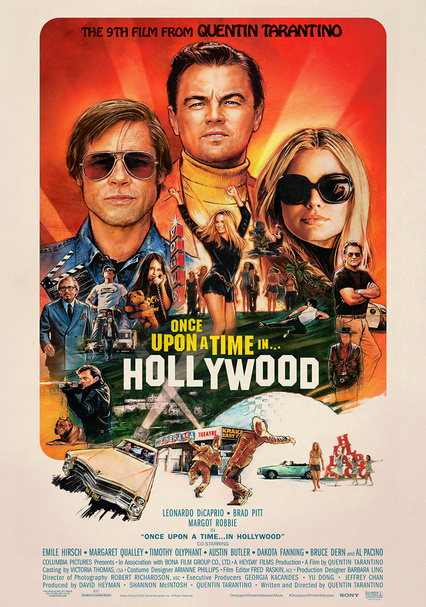
Once Upon a Time in Hollywood-2019

Once Upon a Time in Hollywood-2019

Director Quentin Tarantino

Starring Leonardo DiCaprio, Brad Pitt, Margot Robbie

Top 250 Films #84

Scott’s Review #926
Reviewed August 1, 2019

Grade: A

Once Upon a Time in Hollywood (2019) is another brilliant offering by one of the most (deservedly) respected directors of the modern film era.

This film may be his most personal, as it includes many cinematic references and immerses itself in Hollywood life. Toned down considerably from the violence standard in his other films, the first half lays the groundwork for a startlingly good second half, with every detail of utmost importance.

A bevy of riches awaits any viewer enthusiastically feasting their eyes on this film.

The time is 1969, as actor Rick Dalton (Leonardo DiCaprio) struggles to reinvent himself and revitalize his career in Hollywood amid a changing cinematic landscape.

Famous for a popular western television series from the 1950s, Bounty Law, a pursued film career has not taken off, and he is reduced to guest appearances as the villain, then considered throwaway roles, in other episodic series.

His stunt double and best friend, Cliff Booth (Brad Pitt), accompanies him almost everywhere, serving as both sidekick and errand boy.

Meanwhile, famous director Roman Polanski and his wife, actress Sharon Tate (played by Argot Robbie), have moved into the house next door, which Dalton hopes will help him revitalize his career aspirations.

As Tate goes about her daily life of running errands and watching her movies in the theater, she is visited by Charles Manson one day, looking for the former resident of her house.

Historical viewers are familiar with the subsequent events that unfolded in real life, while Tarantino presents a fictional, tantalizing version of them.

The film’s length is two hours and thirty-nine minutes, quite robust but typical for a Tarantino production. Some may complain about the bloated running time, but the film never drags; instead, the director lays out all the pieces carefully like a fine chess game.

By the mid-point, all hell breaks loose with one of the most suspenseful and edge-of-your-seat scenes in film history. When Cliff drives a flirtatious young hippy hitchhiker, Pussycat (Margaret Qualley), to a range populated by Manson followers, he is in for the adventure of his life…..if he survives.

Once Upon a Time in Hollywood is an orgy of cinematic tidbits, featuring a myriad of clips from forgotten films of the late 1960s and popular songs from that era.

This is just the tip of the iceberg in greatness as Tarantino perfectly immerses the viewer into the time with fury and zest. Every set piece, costume, hairstyle, or car is flawlessly placed. Kraft macaroni and cheese, Velveeta cheese, and popular dog food from the period are featured.

Tarantino is a fan of cinema and makes cinema lovers fall in love with cinema all over again.

The cast is humongous, but each character is necessary and perfectly represented in both large and small roles.

The haunting troupe of Manson followers, specifically Tex Watson (Austin Butler), Squeaky Fromme (Dakota Fanning), and Susan Atkins (Mikey Madison), are all real-life figures. They are foreboding, dangerous, and crucial to the story.

Al Pacino shines in the small but pivotal role of Schwarz (not Schwartz), Dalton’s agent, while Steve McQueen’s look-alike, Damian Lewis, is memorable on-screen for merely seconds.

The list of cameo performances goes on and on and on, and the fun is wondering who may appear next.

Despite the incorporation of big-name stars in important minor roles, the best performances belong to DiCaprio and Pitt. DiCaprio’s best scene takes place alone in his trailer as the washed-up star botches his lines thanks to a hangover, causing a delay in filming.

He abuses himself into nailing the scene, receiving kudos all around, while becoming teary-eyed after a compliment from a young actress.

Pitt has never given a better performance than he does as Cliff, sharing his best scenes with his adorable dog Brandi and with DiCaprio.

Who can ever forget his chest-baring rooftop scene?

Quentin Tarantino scores again with a bombastic and flawless picture, his ninth release. Rumored to retire after his tenth film, one can hardly fathom the reality of that statement. Hismovis can be watched and watched again, continuously absorbing new and noteworthy details of rich texture.

Once Upon a Time in Hollywood (2019) easily joins the ranks of great works, not just of the director’s catalog, but of all time.

Oscar Nominations: 2 wins-Best Picture, Best Director-Quentin Tarantino, Best Actor-Leonardo DiCaprio, Best Supporting Actor-Brad Pitt (won), Best Original Screenplay, Best Sound Editing, Best Sound Mixing, Best Production Design (won), Best Cinematography, Best Costume Design
The Last House on the Left-1972

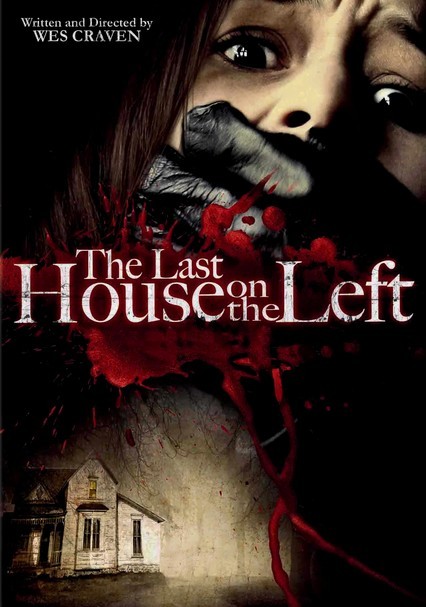
The Last House on the Left-1972

Director Wes Craven

Starring Sandra Peabody, Lucy Grantham, David Hess

Top 250 Films #218

Top 40 Horror Films #32

Scott’s Review #1,387

Reviewed August 6, 2023

Grade: A

Heavily influenced by Ingmar Bergman’s 1960 masterpiece The Virgin Spring, The Last House on the Left (1972) is essentially the same story.

The time is modern, the locale is switched from Sweden to New York, and the religious exploration is absent. But rest assured, both films are brutal and not for the faint of heart.

It’s not violence for violence’s sake, though, and a powerful revenge tale emerges amid unique camera styles and settings.

Wes Craven, who put the horror genre back on the map in 1996 with Scream, writes and directs the raw, independent The Last House on the Left.

He was accused of going too far in the film and exploiting pain and suffering, mostly by victimizing female characters, but the truth is, the situation can and has occurred in real life.

The film brings powerful realism to the terrifying actions of horrible people; if that’s too much for some, they shouldn’t watch it.

But lovers of experimental cinema should.

Craven’s genius is mixing sunny, cheery sequences, poppy music, and comic relief with uncomfortable scenes of rape and torture so well that the audience’s reaction is guttural and rage-infused. The dark scenes unfold on a sunny afternoon in the woods, set to upbeat music, making what would otherwise be a pleasant day feel unsettling.

Many horror sequences use darkness, thunderstorms, or other special effects to set the right mood, but Craven goes way off center.

Perky teenagers Mari (Sandra Peabody) and Phyllis (Lucy Grantham) head into New York City for a concert where they look for some marijuana. They stumble upon a foursome (three men and one woman) of escaped convicts who force them to endure a night of rape and torture.

The following day, the gang kills the girls in the woods, not realizing they’re near Mari’s house. When they pose as salesmen and are taken in by Mari’s mother (Eleanor Shaw) and father (Richard Towers), the parents quickly figure out their identities and plot revenge.

A side story involves two incompetent police officers who unsuccessfully try to pursue the escaped convicts.

I was immediately made aware of the very low-budget filmmaking, with muted, grainy visuals. The cinematography is what makes The Last House on the Left work so well. With high caliber and glossy texture, it would seem too polished.

The acting isn’t brilliant, and the overall look and feel is reminiscent of a John Waters film. Again, this only enhances the bare bones, late-night viewing experience.

There are warnings galore. The pain and suffering endured by Mari and Phyllis are hard to watch, and I felt their degradation in my bones. I won’t go into gory details, but it isn’t fun.

However, there is some satisfaction to be had. When Mari’s parents cleverly set traps inside their house for the murderers to fall into, there are cheer-out-loud moments of celebration for the audience.

One murderer even gets his penis bitten off.

Suspension of disbelief must be given to justify how this chain of events could occur. What are the chances the convicts would happen to bring the girls to Mari’s house in the middle of nowhere?

Wouldn’t the parents be in shock or have a meltdown over the realization of Mari’s death? Somehow, they find the wherewithal to construct a stagey revenge plot on the fly.

The dumb cops will do no favors for police officers looking for some respect.

Still, the utter depravity and brutality of The Last House on the Left (1972) make it one of the most genuine-feeling horror films of all time. Add the fact that the situation could happen, and the result is a frightening one.

The Karate Kid-1984

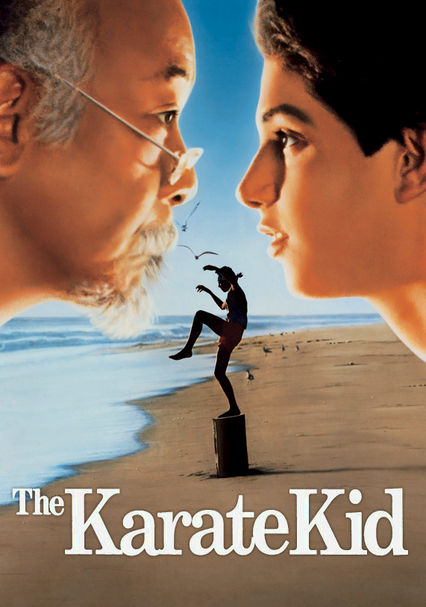
The Karate Kid-1984

Director John G. Avildsen

Starring Ralph Macchio, Pat Morita

Scott’s Review #1,241

Reviewed April 2, 2022

Grade: B+

The Karate Kid (1984) is a wholesome and predictable film from the commercial era of the 1980’s cinema.

With a clever marketing pitch about a bullied boy overcoming obstacles, the film is utterly predictable. But the warm message and chemistry between the two leads make the film work marvelously.

It’s a truthful film that showcases the power of friendship.

The film was a smash at the box office, becoming one of Hollywood’s biggest sleeper summer hits of 1984, making the lead actor, Ralph Macchio, an enormous star and household name. It also successfully brought karate to American households, spanning a new trend and appreciation for Asian sports.

Three tired sequels before the franchise finally ran out of steam. A relaunch emerged in 2010 with mixed results.

Daniel (Macchio) moves to Southern California with his mother, Lucille (Randee Heller). Still, he quickly finds himself the target of a group of bullies who study karate at the Cobra Kai dojo.

This heightens in severity when he becomes smitten with the ex-girlfriend (Elisabeth Shue) of the lead bully, Zabka (Johnny Lawrence), who vows revenge on Daniel.

Fortunately, Daniel befriends Mr. Miyagi (Noriyuki “Pat” Morita), a kindly repairman who is a martial arts master himself. Miyagi takes Daniel under his wing, training him in a more compassionate form of karate, and prepares him to compete against the brutal Cobra Kai.

The Karate Kid is very sweet but never too saccharin-laced, and is easy to compare to Rocky (1976).

In a clear example of manipulation and copycatting, Robert Mark Kamen, who wrote the screenplay, was instructed to write something similar to Rocky, which won the Academy Award for Best Picture.

Avildsen also directed that critically acclaimed film.

The result is Rocky-lite. The Karate Kid would be a great warm-up film before the headliner, Rocky, takes the screen.

The mission is to tell a story about an underdog rising to glory while staying true to himself. The Karate Kid is a product, but it is extremely likable and a fist-pumping good time. It’s not the sort of film one necessarily needs to see repeatedly, nor will it be studied in film school.

The main reason The Karate Kid works is the chemistry and connection between Macchio and Morita. The latter is terrific casting since Morita was usually known for comedic roles, but he works against type in his memorable role.

His character is kind and humble, and it’s impossible not to fall in love with him. As a mentor, he coaches Daniel on valuable, truthful life lessons.

Macchio surprisingly carries the film. Handsome and charismatic, he also represents anyone who has ever felt like an outsider or different from everyone else. He’s the boy next door but with an ethnic overtone.

He is clearly different and, therefore, disliked by some.

The elements that don’t work as well are the traditional love triangle, hardly a triangle because one of the three is the villain, and the stereotypical nature of the bully gang.

Shue plays her part well, but the romance between Ali and Daniel is the supporting act to the fight scenes, which inevitably show up mostly towards the end of the film.

The finale is very familiar in sports-type films because it’s all too obvious how events will play out. Surprisingly, though, it’s a satisfying payoff as every character wins out, even the villainous Johnny.

Though he is soundly defeated, he learns a lesson from Daniel and comes to respect him. So, he repents.

It’s a powerful message that stayed with me and made me appreciate the approach to valued storytelling.

Safe and sturdy for a PG audience, The Karate Kid (1984) may feel dated and struggle to resonate with modern audiences, but the message remains poignant and fresh—hard work, determination, and respect equal success and satisfaction.

This may be a point easy to ridicule and pick apart, but the film works well.

Oscar Nominations: Best Supporting Actor-Pat Morita