Category Archives: Julianne Nicholson

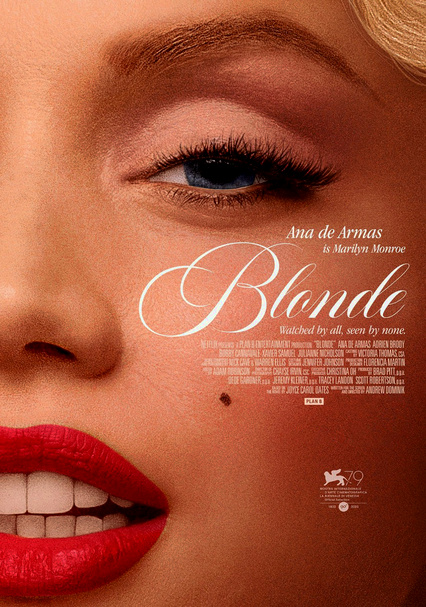
Blonde-2022

Blonde-2022

Director Andrew Dominik

Starring Ana de Armas, Adrien Brody, Bobby Cannavale

Scott’s Review #1,305
Reviewed October 7, 2022

Grade: A

Blonde (2022) is not the kind of film that I expected.

When I became aware that a new film vehicle showcasing the legendary film icon Marilyn Monroe was in the works, I assumed it would be a biographical-style effort. After all, this is hardly the first time the star’s life has been explored.

Throw in bits about her struggles, her love life, her famous screen roles, and her rise to fame, and there you’d have it.

My only real thought was who would be playing her?

Films about Marilyn have been made before, including the most recent effort I can recall, My Week With Marilyn (2011), starring Michelle Williams, a superior film but hardly groundbreaking or well remembered ten years later.

Released via the Netflix streaming service, director Andrew Dominik kicks the shit out of any preconceived notions about glamorous, happy, and prosperous Marilyn.

He creates a story focused on the dark side of the star: her failures, her insecurities, her forced abortions, and her humiliations. The result is a film that is both tragic and profound, and it should be well remembered.

Blonde delves into facts and some of the more profound thoughts of the legend herself, creating a muddy and dreamlike quality that makes the viewer apprehensive about what’s going on.

Since it’s based on Joyce Carol Oates’ 2000 fictional memoir, which is her interpretation of events, it makes truth and imagination all the muddier.

It’s not happy days watching Blonde, which left me wondering if Marilyn had a happy day in her life. From her abortions to sexual harassment, drug addiction, and physical abuse by her husband, she excitedly scampers off to a date with President Kennedy, only to be forced to give him oral sex.

Ana de Armas, known for Knives Out (2019) and No Time to Die (2021), is brilliant as Marilyn. Her mannerisms, speech patterns, and facial expressions reveal a genuine, layered portrayal rather than a carbon copy imitation of her.

Blonde boldly reimagines the life of one of Hollywood’s most enduring icons in two hours and forty-seven minutes of storytelling. It is advisable not to watch the film in one sitting, but instead spread it over three nights to let the story unfold.

Events begin with her volatile childhood as Norma Jeane, marked by an abusive mother and an absent father, and her rise to stardom and romantic entanglements. Blonde blurs the lines of fact and fiction to explore the widening split between her public and private selves.

In a way, Marilyn suffered from a split personality, longing to be Norma Jeane and despising Marilyn.

Enhancing the ambiguity, Dominik elects to use cinematography that is sometimes blurry as if in a sleepy haze, and sprinkles color with the primarily black and white filming. He even films one abortion scene from the perspective of Marilyn’s vagina.

These creative details lead me to classify Blonde as an art film and a highly interpretive one.

While not a crowd-pleaser, Blonde is not all doom and gloom either.

Tidbits about her most famous films, Gentlemen Prefer Blondes (1953) and Some Like It Hot (1959) are featured, showcasing one or two neat camera tricks, so it appears that de Armas is acting opposite Tony Curtis.

I worry that poor reviews for Blonde may hinder de Armas’s chances of receiving an Academy Award nomination. Positive reviews usually help secure Oscar recognition.

Thankfully, despite many critics and viewers having issues with the film, de Armas has received worldwide acclaim.

Bobby Cannavale and Adrien Brody are excellent as Marilyn’s husbands, controlling Joe DiMaggio and insecure artist Arthur Miller. Both actors combine effective acting with distinguished portrayals, allowing the audience to appreciate the appeal of both men.

Other interesting subplots involve Monroe’s ‘throuple’ romance with bisexual actors Cass and Eddy, and a haunting exposure of the abuse suffered by Marilyn at the hands of her mother, Gladys, wonderfully played by Julianne Nicholson.

There is little doubt that Blonde (2022) is an unconventional film that may not appeal to everyone. However, it’s the down-and-dirty texture and tour-de-force portrayal of Monroe that won me over.

It chilled me to the bone in the best possible way.

Oscar Nominations: Best Actress-Ana de Armas
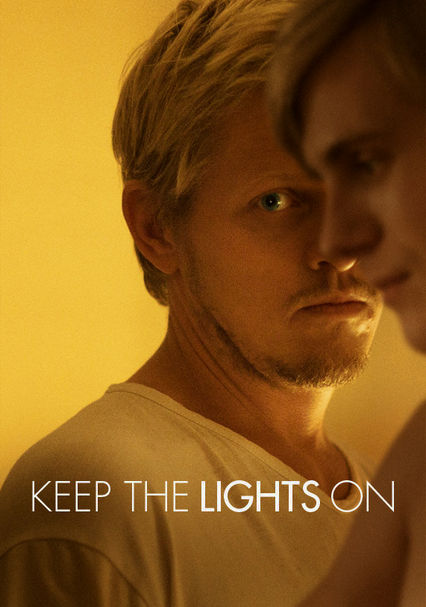
Keep the Lights On-2012

Keep The Lights On-2012

Director Ira Sachs

Starring Thure Lindhardt, Zachary Booth

Scott’s Review #1,100

Reviewed January 16, 2021

Grade: A

With such a healthy dose of LGBTQ+ films released during the 2010s, most independent productions enough exist to please nearly everyone striving for good diversity in film.

Over the years in cinema, it was tough to find specific genre films, rather than being forced to seek out subtle clues that filmmakers would incorporate.

LGBTQ+ films are now a dime a dozen, which is good but makes some films fall under the radar.

Keep The Lights On (2012) is a romantic drama, rather mysterious, about two men and the nine-year-long love affair they share. It’s not a happy watch because drug addiction is a large part of the story.

It portrays the men as human beings with passion, and feelings, and experiencing joys and pains, instead of being written as caricatures or comic relief.

This is progress, and worthy of much praise.

The only issue with the film is that by 2012, and the decade as a whole, there were so many similar films being made that there’s not enough to distinguish it from other high-profile works.

The LGBTQ bar was set very high with Brokeback Mountain in 2006, and recent offerings like Carol (2015) and Moonlight (2016) thrust the LGBTQ+ community into the spotlight.

Keep The Lights On has many positives, especially cinematically, but it risks getting lost in the shuffle matched up against other genre films.

Advisable, is to check out this gem.

It might best be compared to the exceptional same-sex love story, Call Me By Your Name (2017). Both are character-driven and are both happy and tragic.

Keep The Lights On is technically an American film. It feels like an international film, though, because it centers around a Danish filmmaker who lives in New York City.

Erik (Thure Lindhardt) is a troubled, creative soul, struggling to complete a documentary about an artist named Avery Willard. He meets and enters into a loving but complicated long-term relationship with Paul (Zachary Booth), a lawyer in the publishing industry who struggles with drug addiction.

Therein lies the complicated nature of their relationship. They are bonded but plagued with outside challenges. It began in 1998 and ended in 2006.

They meet via a phone sex chatline which adds to the sexual mystique. Erik is gay and happily out, but Paul indulges in both men and women and is conflicted sexually.

He gets Erik high. Will he lead Erik down a dark path? Will Paul clean up his act or die? Erik and Paul bed numerous other men throughout the story. This is an intriguing addition to the complicated events.

Since the film is about a filmmaker it ought to include cool and inventive camera angles and trimmings, and it does. Ira Sachs, an American director, provides flourishing shots of New York City and gazes through the lens of an actual creative spirit, which justifies the character of Erik.

The story builds quite slowly and plenty of times I awaited something exciting to happen. But real life is composed of many small moments and I loved how the film simply is instead of big momentous scenes being added for effect.

The audience is meant to root for Erik and Paul to trot into happily ever after territory. This may or may not happen.

Keep The Lights On has a vague ending open to interpretation.

Erik and Paul look similar to each other which I found very interesting. They say that many same-sex couples are attracted to individuals who look like themselves. I’m not sure how true this is, but I wondered if Sachs had a point to make.

Can a person have multiple sides to themselves they see through other people? Keep The Lights On is told more from Erik’s perspective and sees in Paul the dark side of himself.

Key to the honesty that exudes from Keep The Lights On is that the story is based on Sach’s relationship with a publisher he met and fell in love with. The truthfulness comes across on screen, which is the main appeal to the overall experience.

I love the title which can be interpreted in a few different ways, especially once the conclusion is upon us.

I admire the fact that Keep The Lights On (2012) was made and the characters provide a longing and yearning that is quite humanistic. It feels like it was created based on fact rather than a studio idea conjured up around a boardroom table.

Ira Sachs creates an excellent, quiet film about two men and the love story they share. Their troubles come and go but their passion and bond never waver.

Independent Spirit Award Nominations: Best Feature, Best Director-Ira Sachs, Best Male Lead-Thure Lindhardt, Best Screenplay

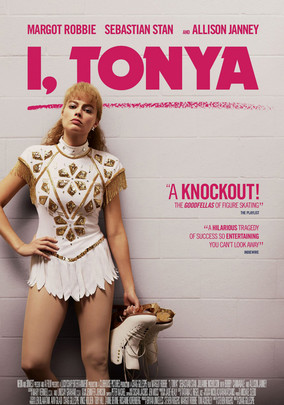
I, Tonya-2017

I, Tonya-2017

Director Craig Gillespie

Starring Margot Robbie, Allison Janney

Scott’s Review #712

Reviewed January 10, 2018

Grade: A-

I, Tonya is a 2017 biopic telling of the life and times of the infamous American Olympic figure skater, Tonya Harding, notorious, of course, for her alleged involvement, along with her husband and his friend, in the attack of fellow skater, Nancy Kerrigan during the 1994 Winter Olympics.

The event drew monumental media coverage after the attack, with the uncertainty of Harding’s knowledge or involvement, and her subsequent guilt or innocence continues to be debated.

The film itself is a dark and violent comedy, never taking itself too seriously. It immediately presents the disclaimer that the stated “facts” in the film are open to interpretation and depend on who you ask.

I, Tonya isn’t preachy or directive to the viewer but instead offers up the skater’s life and times in story form.

The film features tremendous performances by Margot Robbie and Allison Janney, as well as Tonya and her despicable mother, LaVona.

I, Tonya, is told chronologically, culminating with “the incident” in 1994.

However, the story begins in the mid-1970s, as Tonya, just a tot at the tender age of four, is as cute as a button and shrouded in innocence. One cannot help wonder if director Craig Gillespie, known for independent films, purposely made this wise casting choice.

We see Tonya, once an innocent child, journey into a life of violence, abuse, and tumultuous living. Harding grew up cold and hard and endured an abusive, complex relationship with her mother, the pressures to be the best skater never ended.

Even upon achieving success, Tonya never felt good enough or loved by her mother.

We then experience Tonya as a fifteen-year-old girl, fittingly first meeting her boyfriend and later, husband Jeff, Gillooly played well by actor Sebastian Stan. The early scenes between the two are sweet, tender, and fraught with the emotions of first love.

As explained by the actors, this was a short-lived time of bliss, and the relationship soon disintegrated into abuse, rage, and chaos.

The main point is to debate Harding’s guilt or innocence, which Gillespie peppers throughout, so it is unclear what to believe or how the audience should think.

“Interpretation” is the key here. Some may see Harding as a victim of life’s circumstances and the hardships she had to endure and may place sympathy upon her. Others may view Harding as off-putting, potty-mouthed, and even icy and violent herself, with a big chip on her shoulder.

In one scene, she publicly belittles the hoity-toity judges who never give her a break and give her less-than-perfect scores.

A clever technique that the film delivers is to have the actors frequently speak to the camera, thus the audience. This is achieved by either interview style or for the action in the film to cease and either Robbie, Janney, Stan, or whomever, turn to the camera and express their version of the events.

I, Tonya possesses a creative, edgy, indie feel.

How brilliant are the performances of both Robbie and Janney?

Robbie, a gorgeous woman, portrays a “red-neck” to the hilt. Through her bright blue eyes, her face is quite expressive—relaying pain, anger, and a seldom triumph. The film often slants the scales in a sympathetic way towards Harding, but it is Robbie’s talents that make us feel this sympathy.

Janney hits the jackpot with a delicious role she sinks her teeth into. A cold-hearted, vicious character, through facial expressions, we occasionally glimpse LaVona, perhaps softening, but as we do, the character does something even more despicable.

A good surprise for fans who remember the real-life events and the real-life players will be treated to a sequence of the honest Tonya, LaVona, Jeff, and Shawn Eckhardt, which play over the film ending credits.

How similar in looks are Robbie to Harding, with her feathered, frizzy, 1980s-style hairdo, and Janney, a dead-ringer for the boozy, chain-smoking LaVona, with her mousy brown bob haircut, complete with scruffy bangs?

Viewers will leave theaters confused, unsure, or perhaps perplexed by what they have just seen, but they will most certainly feel thoroughly entertained and may even depart chanting some upbeat 1980s rock tunes that the film uses throughout.

Thanks to fantastic acting and a strong story, I, Tonya is a success.

Oscar Nominations: 1 win-Best Actress-Margot Robbie, Best Supporting Actress-Allison Janney (won), Best Film Editing

Independent Spirit Award Nominations: 2 wins-Best Actress-Margot Robbie, Best Supporting Female-Allison Janney (won), Best Editing (won)

Black Mass-2015

Black Mass-2015

Director Scott Cooper

Starring Johnny Depp, Joel Edgerton

Scott’s Review #278

Black_Mass_(film)_poster

Reviewed September 28, 2015

Grade: B+

A dark tale of crime, corruption, and Irish mob ties encompass Black Mass (2015), a drama based on the life and times of infamous Boston crime lord Whitey Bulger.

Set primarily in Boston, with a segue to sunny Miami during the 1970s and 1980s, the film mainly focuses on the intricate dealings between Bulger and childhood friend John Connelly. Now FBI, he uses Bulger as an “informant” to secretly bring down an Italian mafia figure, but slowly becomes more involved in Bulger’s sinister world.

Beginning in 1975, the film is authentic in its use of the styles, cars, and looks of the times in Boston during that period. Plausibility is apparent, and powerful acting is shown from top to bottom.

The stellar cast of Black Mass and the hefty cast features an array of well-known and capable actors, adding realism.

Led by Johnny Depp as Whitey, Depp gives an eerie, hypnotic performance as his bright blue eyes sparkle in a devious way.

Whitey is ruthless and will do whatever is needed to keep power and control. Like Connelly, Joel Edgerton is arguably the film’s lead character, though Depp gets top billing. Edgerton, in real life handsome, appears frumpy, and as a regular Joe type.

Supporting turns by Benedict Cumberbatch, as Whitey’s powerful Senator brother, is crafty and sleek, but corruption shrouds him.

Kevin Bacon, Dakota Johnson, Peter Sarsgaard, and Julianne Nicholson portray smaller yet pivotal roles and all do a fine job.

The screenplay is intelligently written. The story is quite dark and there are no laughs or light moments.

There are numerous deaths, the victims shot at point-blank range, but also two deaths in particular, where the victim’s suffering is prolonged and the scenes are cringe-worthy. The film is very violent and given the subject matter, is riddled with foul language.

One impressive aspect of Black Mass is the character-driven tale and that it is based on a real-life person adds to this.

Not only is Bulger fleshed out, but John Connelly is written very well. Gradually becoming immersed in the crime world as opposed to the world of law, we see Connelly sink deeper and deeper into Bulger’s world, and not so unwillingly either.

He loses his wife Marianne (Nicholson) along the way as she tires of the danger and corruption surrounding her. A chilling scene occurs when Bulger confronts Marianne in her bedroom, after observing negative vibes from her, and warns her in a flirtatious way, never to cross him.

As he caresses her face and slowly firms his grip, it is a rather frightening scene.

The dialogue is crisp. When Bulger is invited to a steak dinner at Connelly’s house, there is awkward tension at the dinner table. Jovial small talk over the preparation of the delicious marinated steak everyone is eating comes to the forefront as Bulger asks Connelly’s partner to reveal his family secret recipe for the favorite steak he has ever eaten.

When the partner eagerly confesses the recipe, he is coldly quizzed whether he would give up Bulger’s secrets as easily.

This is one of the best scenes in the film.

Comparisons to Goodfellas (1990) are evident but without the fun. I thought of The Departed (2006) throughout the viewing as well.

I think director Scott Cooper goes for and successfully achieves, good straight-forward, dark story-telling. Take the number of killings. The organized crime world is dirty, intense, and unkind and Black Mass portrays this well.

Black Mass (2015) is a success on many levels. The superior acting, detailed writing, and truthfulness create a good film. Just be sure to remember it’s a heavy one.

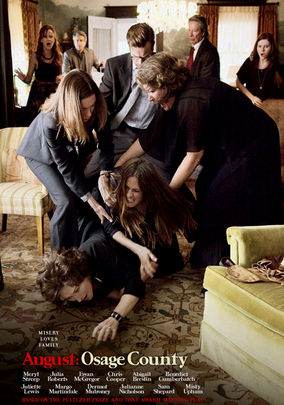
August: Osage County-2013

August: Osage County-2013

Director John Wells

Starring Meryl Streep, Julia Roberts

Scott’s Review #32

70276334

Reviewed June 17, 2014

Grade: B+

Based on the play of the same name, August: Osage County (2013) is a family drama led by the incomparable Meryl Streep.

The family reunites after the patriarch disappears and drama and sniping ensue in no time.

The setting of stifling hot Oklahoma is effective and lends a smothering, suffocating, aspect to the film, much like many of the characters.

It’s a bleak, depressing film, and reminded me of Who’s Afraid of Virginia Woolf-1966, or A Streetcar Named Desire-1951 in tone.

This film has exceptional acting all around, especially Streep and Julia Roberts, as well as Chris Cooper and Margo Martindale.

It’s a raw, angry movie, and the intensity builds throughout.

Oscar Nominations: Best Actress-Meryl Streep, Best Supporting Actress-Julia Roberts