Category Archives: British

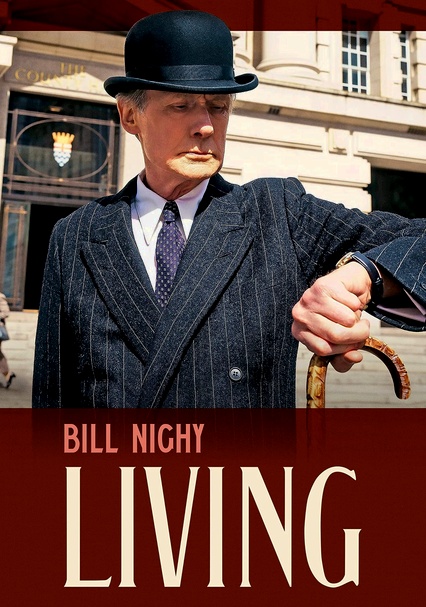
Living-2022

Living-2022

Director Oliver Hermanus

Starring Bill Nighy, Aimee Lou Wood

Scott’s Review #1,380

Reviewed July 20, 2023

Grade: B+

Living (2022) is a British film remake of a Japanese movie named Ikiru, made in 1952. That screenplay was partly inspired by Leo Tolstoy’s 1886 novella The Death of Ivan Ilyich. I have not seen that film, but my best bet is that it is either equal to or superior to Living.

The remake is quiet yet powerful. It teaches a poignant lesson about living life to its fullest and not wasting time on trivial and meaningless things that most people stress over.

Before you know it, life is over.

The brilliance of this message is that it can be applied to anyone’s life at any age and in any given situation. At least that is what I took from the film, and therefore, the film is inspiring to me personally.

In this particular case, the focus is on an older man who has just been diagnosed with terminal cancer and given a maximum of six months to live.

With high reliability, Living tells the story of an ordinary man named Rodney Miller (Bill Nighy) who has so far lived years of dull office work and a careful routine. In other words, he has led a bland existence and rarely does anything exciting.

To be clear, he is not a loser but is quite polished, prim, and proper. Well-dressed, has a good job, and is highly responsible. He resides with his son and daughter-in-law.

Once his doctor gives Mr. Miller his diagnosis, he becomes determined to turn his dull life into something extraordinary with the help of a young office worker, Miss Margaret Harris, played by Aimee Lou Wood.

While the supporting actors are fine, they are not given much to do or explored deeply, except perhaps Wood. She is compelling as a girl-next-door type who bonds with her much older boss. We root for her to find happiness, and she does.

Living works best as a character study, and Nighy quietly takes charge with a ferociously understated performance that justifiably landed him with an Academy Award nomination.

The actor has a gorgeous voice, so very poised, deep, and oozing with polish and sophistication. I fell in love with the character right away, even before his diagnosis with deadly cancer.

He’s not an evil man, just a boring one, and Nighy is successful at showing his appeal. This is evident in his personal life, where he is unable to communicate with his son, despite his desperate desire to do so.

His life has so far avoided any ruffling of feathers that he cannot even adequately express himself.

The film avoids exploring much of Mr. Williams’s personal life, and he has no designs on Miss Harris other than his envy of her joy and passion for life. He does not seem to be gay, but nothing is said about a wife or ex-wife.

The film’s overall pace is slow, which may not appeal to some viewers. Since the running time was merely one hour and forty-two minutes, I wasn’t bored, though I wasn’t energized either, until the ending, which I found moving.

The experience is not a downer despite the subject matter, and no scenes of Mr. Williams dying a painful death or any hospital scenes are featured.

Instead, it portrays life.

The filmmaking is clean and polished, much like Mr. Williams, and there is a rich London texture. Rainy days, a sophisticated swagger, and crisp, structured sets and art design are what I mainly notice.

The title “Living” (2022) is apt for the lesson being presented to the audience. Spend an enormous amount on that savory dinner, eat a giant ice cream sundae, or help someone before looking the other way.

Because one day it will be too late.

Oscar Nominations: Best Actor-Bill Nighy, Best Adapted Screenplay

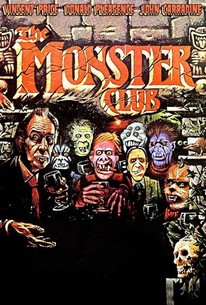
The Monster Club-1981

The Monster Club-1981

Director Roy Ward Baker

Starring Vincent Price, Donald Pleasence, John Carradine

Scott’s Review #1,378

Reviewed July 16, 2023

Grade: B

Any horror feast including Vincent Price and Donald Pleasence is worth a watch and The Monster Club (1981) features both actors though not in any scenes together.

The British horror anthology is uneven and a tad too silly with only two of the three chapters recommended. They are based on the works of the British horror author R. Chetwynd-Hayes.

The graphics and art direction are surprisingly superior for such a low-budget production.

In between chapters, there is a jarring and unnecessary musical performance by one of the creatures. While sort of fun, it takes away from the continuity and feels thrown in rather than serving any real purpose.

Below is a summary, review, and rating of each vignette.

Prologue: B

Author R. Chetwynd-Hayes (John Carradine) is approached on a city street by a strange man (Vincent Price) who turns out to be a starving vampire named Eramus.

He bites the writer and takes the confused man to an odd club. It’s a haven for supernatural creatures as they dance, drink, and carry on together.

Eramus introduces three stories about his fellow creatures of the night.

This chapter is relevant to tie the chapters together and any scene involving Price is good in my book. It also serves as a learning experience to explain the different types of creatures but little more.

The Shadmock: A-

Angela (Barbara Kellerman) is a financially struggling woman who takes a job at a secluded mansion owned by Raven (James Laurenson), a creature called a Shadmock.

Along with her greedy boyfriend (Simon Ward), they hatch a plot to steal Raven’s great wealth after he proposes to Angela. When she is caught unlocking Raven’s safe his demonic whistle comes into play at the expense of Angela and her boyfriend.

This chapter has a great setup and an unrequited love vibe. With a Beauty and the Beast comparison, the audience sympathizes with Raven. All he wants is love and the ultimate climax is heartbreaking with the knowledge that he is being duped.

I longed for Angela to come to her senses, dump her boyfriend, and be carried away by Raven but it’s horror after all, and not romance.

Starting slowly, the grotesquely exquisite gothic mansion and the fine luxuries contained are fun to feast one’s eyes on and the sinister conclusion is not to be missed.

The Vampires: B-

A shy young boy (Warren Saire) from a kind family of vampires lives a lonely life where he is bullied at school and his father (Richard Johnson) spends little time with him.

The father is hunted by a team of vampire killers led by Pickering (Donald Pleasance) who attempt to drive a stake through the father and kill him. But the tables are soon turned.

This chapter is cute but uninspired adding more humor than horror to the mix. Pleasance isn’t given a great role and neither is former ‘Bond girl’ Britt Eklund as the supportive mother.

It pales sharply against ‘The Shadmock’ and ‘The Ghouls.

The Ghouls: A

A movie director (Stuart Whitman) scouting locations for his next film pays a visit to an isolated village, Loughville, where the sinister residents refuse to let him leave.

While imprisoned by the ghouls, he meets Luna (Lesley Dunlop), the daughter of a ghoul father (Patrick Magee) who agrees to help him escape. But can Luna or the resident police be trusted?

The Ghouls is my favorite because it feels the most unpredictable and I love the early shots of a movie production studio. The ghostly-looking creatures are appealing because there is an ambiguity about their motives and the secrets beheld in the village.

It’s also fun balancing the sophisticated style of the movie producer against the drudgery of the villagers. Also, the inclusion of actor Magee from A Clockwork Orange (1971) is a win.

Epilogue: B 

At the end of the film, Eramus cheerfully tells the other club members all the imaginative ways that humans have of being horrible to each other and declares that humans are the most despicable monsters of all.

Thus Chetwynd-Hayes is made an honorary monster and member of the club.

The quick chapter is a clever wrap-up to the story and culminates as a bit of a ‘message’ about kindness and humanity.

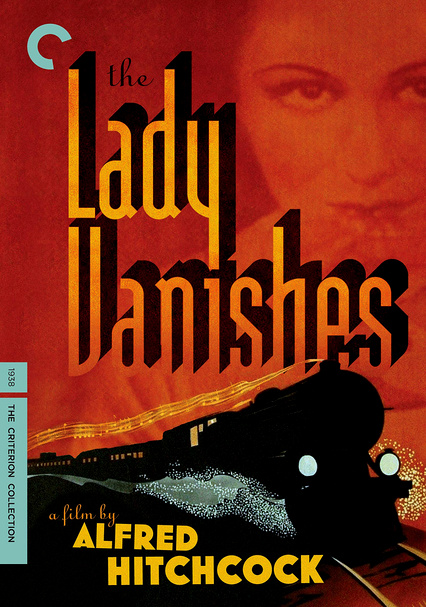
The Lady Vanishes-1938

The Lady Vanishes-1938

Director Alfred Hitchcock

Starring Margaret Lockwood, Michael Redgrave, Dame May Whitty

Scott’s Review #1,303

Reviewed September 30, 2022

Grade: A-

The Lady Vanishes (1938) is a film directed by Alfred Hitchcock that I’m embarrassed to admit I’ve only seen once. Nonetheless, it resonated well with me after that sole viewing, and its influence is palpable.

It’s a film made when Hitchcock was still making films in his native Britain before he took over Hollywood during the 1950s and 1960s. You may wonder why a dusty old film made in the 1930s and not a household name is essential, but The Lady Vanishes is.

If the film had not been made and, more importantly, not been a box-office success, films like Vertigo (1958), Psycho (1960), and The Birds (1963) might never have been made.

The Lady Vanishes followed three relatively unsuccessful efforts by Hitchcock, whose success assured his new film career in America was a go.

The film is not as brilliant as the others, but pretty close. It serves as a blueprint for future Hitchcock films.

The train sequences alone conjure thoughts of Strangers on a Train (1951) and North by Northwest (1959), while the romance between the lead actors would become a staple of Hitchcock films.

Finally, the subdued but noticeable inclusion of gay characters is forever a good debate among cinema lovers, especially Hitchcock fans, as to whether it is or isn’t showcased.

So, The Lady Vanishes is to be celebrated for its influence, but it also stands up well on its own.

A dangerous avalanche delays a group of travelers on a train to England. Forced into a hotel in the lush European country, beautiful young Iris Henderson (Margaret Lockwood) befriends an older woman named Miss Froy (Dame May Whitty).

When the train resumes travel, Iris is unconscious after being hit by a potted plant and wakes to find the older woman has mysteriously disappeared. The other passengers vehemently deny that Miss Froy ever existed, causing Iris to wonder if she has lost her marbles.

Iris determinedly begins investigating the matter with the help of another traveler, Gilbert (Michael Redgrave). The pair searches the train for clues and naturally falls in love.

They uncover a mystery, political intrigue, and peculiar characters with secrets to keep hidden.

Lockwood and Redgrave have fantastic chemistry. It’s no secret that Hitchcock intends to bring them together even though Iris is to marry when she returns home. Lockwood and Redgrave are easy on the eyes, which helps make them believable.

The pacing of The Lady Vanishes is perfect, but nowhere as astounding as the sequence of events in North by Northwest, which is the film it most resembles. That’s why the rough-cut analogy springs to mind—the film is a perfect warm-up act for the 1959 masterpiece.

From an LGBTQ+ perspective, my money is on the characters of Charters and Caldicott. Ferocious cricket enthusiasts whose only initial concern is returning to England to see the last days of a Test match. The ‘friends’ proved so popular with audiences that they returned to the film Night Train to Munich 1940, also starring Lockwood.

The revelations at the end of The Lady Vanishes surprise and satisfy, with political and espionage overtones. Frequently, in Hitchcock films, there is a McGuffin or someone who cares about the plot element.

The plot shouldn’t be overthought in the film, as the real fun is the trimmings that make the suspense so strong. The wit and snappy dialogue make the characters a pleasure to watch.

The Lady Vanishes (1938) is a terrific effort that provides strong character and stiff-upper-lip British humor. It is also the most fun to watch, highlighting the many elements that makeup Hitchcock’s masterpieces.

A Countess From Hong Kong-1967

A Countess From Hong Kong-1967

Director Charlie Chaplin

Starring Marlon Brando, Sophia Loren, Tippi Hedren

Scott’s Review #1,287

Reviewed August 8, 2022

Grade: B-

I hesitated to list Tippi Hedren among the main cast above, since she only appears in the final ten minutes of A Countess From Hong Kong (1967). I then realized that her appearance also helped make the film better than it would have been without her, so I decided to give her some deserved props.

A Countess From Hong Kong needs all the help it can get to lift it above mediocrity, which it only does by a hair. This is surprising, given the directorial talent of Charlie Chaplin and the marquee-name recognition of heavyweights like Marlon Brando and Sophia Loren.

Somehow, the stars agreed to appear in the film. Maybe they hadn’t read the script before signing on the dotted line.

Perhaps the incessant door-opening and shutting sequences that go on endlessly are symbolic of the stars attempting to flee from this film.

It’s not all drivel and doom as the set decoration is flawless in beauty and style, and, of course, Miss Hedren’s appearance in the final act is splendid stuff.

The trivial storyline features a Russian countess named Natascha (Loren) who stows away in the stateroom of a married United States diplomat Ogden, (Brando) bound for New York. They must scheme to ensure she arrives safely and undetected in Hawaii by marrying her off to another man.

Predictably, Natascha and Ogden fall madly in love.

Let’s feature a couple of positives before delving into the shit.

Whoever dressed and decorated the sets for A Countess From Hong Kong practically deserves an Oscar nomination for their work. Brimming with the relevant mid-1960s style and sophistication, the sets are right out of television’s Mad Men.

The colorful yellows and navy blues pair perfectly with black and grey furniture and whatever costume Loren is wearing, especially when she is clad in an ill-fitting green getup during one hijink scene.

Especially noteworthy is any scene set away from one of the ship’s cabins, which is completely overused to enhance the farcical elements.

The open-set ball sequence is like a breath of fresh air, and it immediately flourishes with wide-open brightness. Easy to do (and recommended) is to forget the plot altogether and escape with pleasure into each artistic design of the dance number.

When Hedren appears dressed to the nines in glittery, royal outfits, it showcases both her star power and the costume team’s talent. She is given little to do as Martha, Ogden’s suspicious wife, except to be jealous, but she knocks it out of the park with her bit of screen time.

Loren and Brando surprisingly have little chemistry, even when Natascha and Ogden bark and banter with each other endlessly. Their characters are hardly developed, and hers turns into a bitch before too long, while he does enough fuming and pouting to last a lifetime.

Based on the title, you’d expect Natascha to be Asian, but instead, the character is Russian and being played by an Italian actress.

I understand the need for big Hollywood stars to be incorporated into a film to achieve solid box-office returns, but Chaplin seems to be without a clue how to make the pair connect.

A feeble attempt to add sophistication by giving English actress Margaret Rutherford one scene as a dotty, bedridden older woman does nothing other than waste the legendary actress’s time.

Though I shudder at the thought of how poor the film would have been without these talented actors.

A Countess From Hong Kong (1967) is a botched effort at creating what undoubtedly was supposed to be a fun romantic comedy romp. The film might have worked in the silent film era, but forty years later, it feels tired.

Instead, we must traverse the tedious story to find glimpses of brightness just beneath the surface.

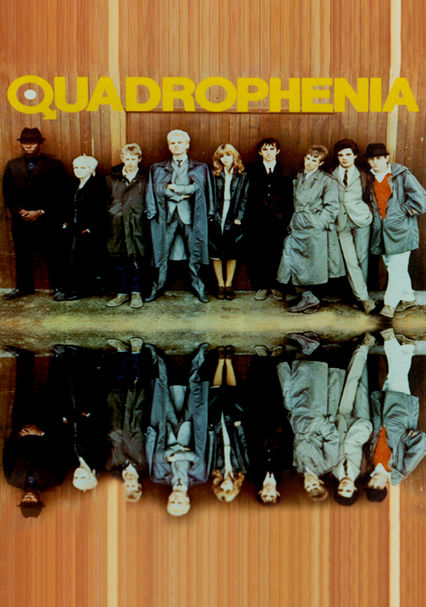
Quadrophenia-1979

Quadrophenia-1979

Director Franc Roddam

Starring Phil Daniels, Leslie Ash, Sting

Scott’s Review #1,269

Reviewed June 23, 2022

Grade: A-

Fans of the British rock band, The Who will perhaps be mystified by the film Quadrophenia (1979). More specifically, The Who and fans of the exceptional oddity-filled musical film Tommy (1975) will be surprised and somewhat disappointed that Quadrophenia is not patterned after Tommy.

I was uneasy when I realized that very few of the songs from the groundbreaking album of the same name would not be incorporated and that the band themselves would not be appearing.

But that apprehension was short-lived.

Instead, Quadrophenia the film quickly grasped me for the storyline alone and makes up for the lack of music with a gripping tale of teenage angst and conflict amid the streets of London.

Reportedly, the story is at least somewhat derived from the life of Who member Pete Townshend and the concept behind Quadrophenia in the album is the same in the film.

To classify Quadrophenia as a musical or musical drama (I decided to do both) is most generous because that only enhances the fact that it almost isn’t either one. But since it is based on the album and was co-written by Townsend, I decided to throw caution to the wind.

An insecure and angry London youth, Jimmy Cooper (Phil Daniels) escapes the dullness of his mailroom job and the chilliness of London and joins the Mods, a sharply dressed gang constantly feuding with their rivals, the Rockers.

When the Mods and Rockers clash in the coastal town of Brighton, England, it leads to both trouble and an encounter with the lovely Steph (Leslie Ash) whom Jimmy has become smitten with over encounters at the grocery store where she works.

Returning to London and his life of drudgery, Jimmy, who aspires to be like handsome and charismatic Mod leader Ace Face (Sting), becomes even more disillusioned and longs to return to Brighton.

Quadrophenia the film is exceptional because it gets the mood of the lead character right and the audience will undoubtedly respond in turn. He feels that his life is going nowhere and most people can relate in some way to being stuck in first gear or reverse and unable to get out of the mud.

In Jimmy’s mind, his parents are assholes and the girl he longs for is out of his league and therefore out of reach. It’s typical adolescence 101. All he needs are the pimples and a bad hairstyle and he encompasses what it feels like to be a teenager.

This may sound comical but anyone remembering youth will undoubtedly find a glimmer of pain and panic.

Filmmaker, Franc Roddam gets it right.

The best part of the film occurs in the final fifteen minutes when finally and blessedly superior songs by The Who commence, most notably the astounding Love, Reign O’er Me.

In addition to the brilliance of the actual song is the way it’s included. As the camera provides a birds-eye view of the stunning cliffs as Jimmy rides recklessly on his scooter it’s a perilous scene with hints of danger.

Will he crash and burn?

Finally, the scooter is seen crashing over the cliff-top, which is where the film begins with Jimmy walking back against a sunset backdrop. It’s unclear what happens to Jimmy and interpretation can be used.

It raised Quadrophenia from a very good film to an exceptional one.

Another treasured Who song, The Real Me, is included early on amongst the title credits. Other songs appear but are either shortened and/or different versions of what’s expected.

Sometimes fun and comic, other times showing the ugliness of gloomy London and the pains of growing up, Quadrophenia (1979) excels at reminding its audience what it’s like to be restless and unhappy.

Life usually changes for the better but the film is an important reminder of feelings at that age.

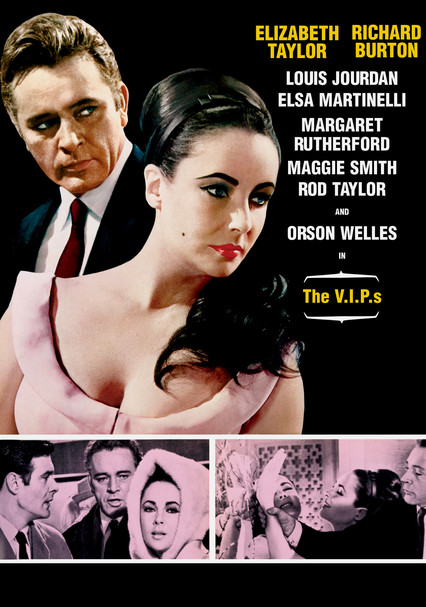
The V.I.P’s-1963

The V.I.P’s-1963

Director Anthony Asquith

Starring Elizabeth Taylor, Richard Burton, Louis Jourdan

Scott’s Review #1,263

Reviewed June 4, 2022

Grade: B+

The V.I.P.’s (1963) is a sweeping drama set against a foggy London airport. It’s a good film but hardly a masterpiece, as the trials and tribulations of the stranded passengers are explored and sometimes intersect in standard ways.

The film is formulaic and offers little surprise, but I enjoyed it and was entertained by the parade of stars shuffling through the vast airport.

Some stories are more interesting than others, and the film is in a soap opera style with glamorous and rich characters.

One wonders if The V.I.P. influenced the creation of the film Airport (1970) seven years later. The film is patterned after 1932’s Grand Hotel, both of which were distributed by Metro-Goldwyn-Mayer.

Real-life couple and Hollywood A-listers Elizabeth Taylor and Richard Burton star and are the main draws of the film.

The all-star cast also features Louis Jourdan, Maggie Smith, Rod Taylor, Orson Welles, and the scene-stealing Margaret Rutherford.

Inclement weather has delayed a flight from London’s fabulous Heathrow Airport to New York City. A cross-section of elite passengers (V.I.P.s) impatiently wait to board the plane as they experience various life crises in the airport.

The main storyline revolves around Frances (Taylor), a gorgeous woman who is fleeing a loveless marriage to her millionaire husband, Paul (Richard Burton), and is in love with the dashing Marc Champselle (Jourdan).

Supporting stories feature a dotty duchess (Rutherford) who has fallen on hard times and a handsome businessman (Rod Taylor) trying to thwart a hostile takeover.

At the same time, his secretary (Smith) lusts after him, and Gloria (Elsa Martinelli), an aspiring actress, and her money-grubbing producer, Max (Welles).

Despite the heavy-sounding plots, the film is not overly severe and provides comical moments in small doses, which secures the pacing and offsets too much doom and gloom.

Liz and Richard have big, soapy moments, and writer Terence Rattigan was reportedly inspired to write the screenplay by a real-life situation.

Actress Vivien Leigh was planning to leave her husband Laurence Olivier for another man but was delayed at Heathrow Airport.

How scandalous!

Nonetheless, Taylor stoically gives an acceptable performance as a conflicted actress in love with a man other than her husband. The setup plays out as tired as it sounds, except for the juicy reality that Taylor and Burton were married, providing the only interest.

Taylor and Burton have terrific chemistry, though she also does with Jourdan. Still, there is something uncompelling and unsatisfying about the story.

Shockingly, they are all upstaged by Rutherford, who steals the entire film, resulting in her surprising Best Supporting Actress victory. She may have won because of the Academy’s tendency to sometimes award an older actor with the prize for a lifetime body of work.

Her riveting story is my favorite as she desperately seeks a way to save her historic home.

The actress hits a home run, providing much-needed comic relief and the liveliest of performances. Her peril offsets her cleverness, and her performance is filled with heart.

Many critics hastily insisted that Rutherford was the only reason to see The V.I.P.’s. Personally, the combination of an airport, peril, and big stars was more than enough to have me hooked.

The only addition that might have made the film better was an enormous fire or a hijacking crisis.

The V.I.P.’s (1963) will only appeal to fans of Taylor and Burton or those seeking something sudsy. Otherwise, the film is not too well remembered.

Oscar Nominations: 1 win-Best Supporting Actress-Margaret Rutherford (won)

The Phantom of the Opera-1962

The Phantom of the Opera-1962

Director Terence Fisher

Starring Herbert Lom, Michael Gough, Heather Sears

Scott’s Review #1,254

Reviewed May 12, 2022

Grade: B+

It’s not the best-known film adaptation of Gaston Leroux’s famous 1910 French novel, but it is the most horrific.

Hammer Horror Productions’s acquisition of this is a significant win since the story is ideally suited for the horror genre.

I’ve not yet seen the 1925 silent film version of The Phantom of the Opera starring Lon Chaney, which I hear is terrific, so I cannot compare that to this.

The possibilities for a macabre telling are endless. Terence Fisher, a familiar director in Hammer films, is back at the helm to mix the dreariness of a musty London theater with the creepy face mask of its lonely and wounded inhabitant.

I’ve said it before, but it bears repeating in this review: The horror films achieved astounding achievements by making lemonade out of lemons budget-wise. The limited funds necessitated creativity, seen in every series frame, especially the colorful sets and costumes.

The Phantom of the Opera (1962) is no different and even better than some others in the brilliant mix of mood and sympathy for its primary victim, specifically the luminous and disfigured ‘phantom’ played by Herbert Lom.

Dastardly Composer Lord Ambrose D’Arcy, wonderfully played by Michael Gough, and his bullied backer, Harry Hunter (Edward De Souza), struggle to find a replacement for the female lead in their new opera after she quits and flees town in the wake of a gruesome theater murder.

When a new prospect, the virginal Christine Charles (Heather Sears), disappears after the advances of Ambrose, Harry cautiously investigates, unaware that there is a lonely figure inhabiting the theater.

Meanwhile, a mysterious masked man (Lom) who is eerily familiar with the opera holds Christine captive and offers to groom her to play the part.

He is a mix of crazy and passionate, and his plight is sympathetic when what he’s been through is finally explained.

The atmosphere sets The Phantom of the Opera apart from similar films of the 1960s, even Hammer films.

This is never more evident than in an early scene when the camera follows the characters on the misty streets of London. The darkness and shadows become prominent as they walk through the streets and dark alleys.

Five years into his association with the production company, Fisher has hit his stride. A limited budget might reduce another director to a fretting basket case, but the result and ease he parlays to The Phantom of the Opera is quite beautiful.

Many scenes are set in the theater, adding a foreboding element to the events. Dusty yet brimming with musicianship and artistry, it’s fun to watch the characters sneak around and scheme within the confines of this structure.

Therefore, the mood and trimmings are exquisite without actually being so.

The music sequences are impressive without going on for too long. Although the locale is switched from Paris to London for obvious reasons, the foremost being that the actors are British, this doesn’t hamper the overall experience.

The best and most gruesome scene occurs when a poor chap swings across the theater stage in a neck rope, dead as a doornail. The creaking sound of the rope as the man swings back and forth is chilling and dubious.

Lom is my favorite actor in the film. His character’s backstory is impressive and humanistic. Who can’t relate to being cheated out of work that is rightfully theirs?

Gough, also familiar to Hammer Horror fans, is tremendous as the treacherous main villain.

Sears is okay, but perhaps not the greatest actress or best choice for the role. She’s rather bland and unmemorable.

The Phantom of the Opera (1962) falters when its ending is too sudden, and many Hammer films suffer the same fate.

This film is not for those expecting a grandiose Andrew Lloyd Webber-style musical, but for fans of down-and-dirty horror, it’s just what the doctor ordered.

Modesty Blaise-1966

Modesty Blaise-1966

Director Joseph Losey

Starring Monica Vitti, Terence Stamp, Dirk Bogarde

Scott’s Review #1,243

Reviewed April 9, 2022

Grade: B

Modesty Blaise (1966) is a campy, over-the-top escapist film loosely based on a British comic strip. It features a relaxed style but a convoluted plot.

The story doesn’t matter much, and the film feels based on the James Bond film series with some Dick Tracy and Brenda Starr comic elements thrown in.

Throughout the action, I chuckled at the characters’ situational comedy antics. Both heroes and villains get mixed up in one hokey situation after another, and all the actors seem well aware that they are not performing Shakespearean comedy.

They forge ahead, making it as much of a zany offering as humanly possible.

Much of the film is reminiscent of television, Get Smart, a foolish but sweet-natured 1960s spy-genre offering.

I challenge the odd decision to make a film of this genre a bloated one hour and fifty-seven minutes. A spry ninety or ninety-five minutes would have been ample time to wrap up the experience and allow audiences to head for the exits.

This might prevent some from realizing how silly a film they’d just sat through

Modesty Blaise is not a traditionally good film but grooviness and pizazz are the main attractions as characters indulge in an orgy of colorful situations and preposterous setups.

Lavish locales like Amsterdam, and London, and the roaring beaches off the coast of the Mediterranean Sea bring the film back from going too far off the rails and pepper it with some cultivation.

If you’re in the right mood, Modesty Blaise is a chuckle fest, but don’t waste your time if you’re aching for high art. The psychedelic, groovy art design and Mad Men-like sets won me over.

I quickly forgot to try and piece together the complicated plot.

I didn’t care who was who or who was trying to outwit who and why. And I was okay with that.

Gorgeous Italian actress Monica Vitti leads the charge, followed by the dashing English actor Terence Stamp. Together, they make a lusty and good-looking pair, though Vitti gets no acting accolades.

Her looks are the primary reason for her casting win.

The actress plays a beautiful former criminal named Modesty who decides to go straight and work for the Secret Service. They send her to infiltrate a ring of jewel thieves, but the stuck-up older regime does not especially respect her.

She shrugs it off and offers her best services.

Soon after she joins the gang, sophisticated and dangerous head honcho Gabriel (Dirk Bogarde) grows suspicious of his new charge; Modesty realizes that British Intelligence gave her a mission they could care less if she survives.

She then enlists her former partner, Willie (Stamp), to help her out of her peril while outsmarting both sides.

Most action scenes are ludicrous, and the likelihood of any of the stories being true is slim to none. Plenty of sequences are set on a luxury yacht or some other water transportation, and Vitti and Stamp are clad in as little as possible.

I smirked at more than one James Bond nod, though some influence on the still-to-be-made Diamonds Are Forever (1971) is noticed.

If I’m making Modesty Blaise out to be a terrible film, it’s not.

The gimmicky angle of having Modesty appear with a different hairstyle in every sequence is clever and enjoyable (my preference is for her as a blonde).

When she is imprisoned in a spiraling-colored basement cell and must climb out the roof for help, the set design is one of the best I’ve ever seen. The creative team gets an A-plus for expressiveness and imagination, which is why Modesty Blaise is so fun.

Dirk Bogarde and Rossella Falk play cartoonish criminals Gabriel and Clara, who are deliciously wicked. I was amazed at Gabriel’s towering purple cocktail and craved a sip to see exactly what he was drinking.

Satisfyingly, both main villains get their comeuppance.

The film is foolish, campy, and a silly time wrapped up in fantastic artistry from a creative team that deserves more credit than they probably received.

Modesty Blaise (1966) is a messy but enjoyable film. I found it endearing more than I probably should have. It’s the guiltiest pleasure in a chest of sub-par spy comedy films.

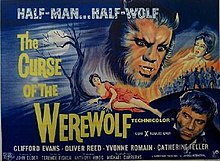
The Curse of the Werewolf-1961

The Curse of the Werewolf-1961

Director Terence Fisher

Starring Oliver Reed, Clifford Evans

Scott’s Review #1,219

Reviewed January 15, 2022

Grade: B

Oliver Reed, who was later famous for films like Oliver! (1968) and Women in Love (1969) made his first starring role in the low-budget Hammer Horror film The Curse of the Werewolf (1961). He carries the latter third of the film simply because his character doesn’t appear until then.

The film is divided into parts and is only slightly over one hour and thirty minutes long. The finale is the best chapter, and the others, while good, move too slowly, considering the brief running time.

This is the first werewolf film to be colorized and was heavily censored upon release.

Hammer Horror’s regular director, Terence Fisher, is at the helm, so the viewer feels soothed and secure. We know the quality will persevere, and I adored the setting of Spain, which has gothic steeples and a flavorful culture.

The Curse of the Werewolf is above average but not one of the best in the Hammer series.

Reed plays Leon Corledo, a man with brutal and macabre origins. He is adopted and raised in the home of a kind and respectable Don Alfredo Corledo (Clifford Evans). When he leaves Don Alfredo to find work, Leon discovers that he has increasingly violent urges.

Although Leon’s love for the beautiful Cristina (Catherine Feller) somewhat calms these fits, he regularly transforms into a werewolf and terrorizes the Spanish countryside.

Before the central part of the story, Leon’s mother is imprisoned and raped by a homeless beggar gone mad. Unfortunately, she gives birth on Christmas when the werewolf curse is started. She soon dies, and little Leon is taken in by Don and his motherly housekeeper, Teresa.

The middle sequence explains how Leon, as a little boy, escapes out his bedroom window to kill animals, thinking it’s all just a dream. Don and others try to hide Leon’s secret.

The curse doesn’t make a whole lot of sense. Why does the Christmas holiday make an unwanted newborn “unlucky” and a vicious werewolf? Why is Leon the only werewolf around? Indeed, others are born on Christmas day.

Reed is the main draw as the handsome Leon, and he makes a lovely mate for Cristina, though too few scenes of them exist. It’s not explained why they fall in love other than that both are beautiful and that Cristina’s current intended mate is boorish.

But, then again, The Curse of the Werewolf is not a love story, so we accept some details with a grain of salt.

Any fan of Hammer horror films wants blood and mayhem, and there is a good smattering of each. The dastardly Marquis Siniestro who humiliates the beggar and nearly rapes the servant girl (Leon’s mother) gets it in the back from her with a jagged mirror and the death is bloody and satisfying.

Later, a slutty girl with designs on Leon is ravaged to death by him after he turns into a werewolf on a night with a full moon.

The finale is bittersweet and almost tender when Don must make a horrible decision to kill his son with a silver bullet made with a crucifix to prevent the tortured Leon from killing anymore and suffering a life of misery and regret.

The Curse of the Werewolf (1961) is not as satisfying as the Hammer horror films featuring Dracula or containing Christopher Lee or Peter Cushing.

Nobody will ever usurp Lon Chainey Jr.’s frightening portrayal of the wolfman decades earlier, but it’s fun to see Reed take center stage in the film.

There’s also enough to keep Hammer fans entertained.

The Brides of Dracula-1960

The Brides of Dracula-1960

Director Terence Fisher

Starring Peter Cushing, Yvonne Monlaur

Scott’s Review #1,218

Reviewed January 9, 2022

Grade: B+

It’s always impressive to me what Hammer Film Productions do with such a limited budget, mainly from a set and art direction perspective. With small funds, they can create gloomy yet beautiful set structures that are highly creative and appear lavish.

To the savvy viewer, this tidbit can make each film a treasure trove of enjoyment if only to look beyond the central activity and notice the style.

The Brides of Dracula (1960) is no exception.

The film is a sequel to the 1958 film Dracula (also known as Horror of Dracula), though the character of Count Dracula does not appear and is instead mentioned only twice. Fans of these films know that Christopher Lee portrays Dracula. Instead, the vicious vampire at the film’s center is Baron Meinster, a disciple of Dracula, played by David Peel.

The villain even bites his mother, played by Martita Hunt, making her undead and terrifying to the residents of a Spanish village.

Van Helsing (Peter Cushing) is the hero and must drive a stake through the heart of the vampire baron before he deviously makes innocent Marianne (Yvonne Monlaur) his bride.

Cushing is a familiar figure in Hammer horror film lore. He leads the charge as the film’s hero. I love the character because he is heroic and unflinching, always calm, cool, and collected in the face of sheer horror.

The sets are gothic and brilliant, especially the gloomy castle owned by the Baroness and her son. When she invites Marianne to spend the night, a threatening servant named Greta treats her to a stylish room and a ravishing dinner.

The exteriors are as good as the interiors and portray the village within Transylvania as cozy and homespun. Outside, the prominent inn run by the locals is inviting as much as it feels forbidden and haunted.

When Marianne is abandoned in the village by her terrified coach driver, we know that secrets or living creatures are waiting to be unearthed.

These atmospheric additions will compel audiences to tune in and enjoy the horrific moments.

Speaking of horror, The Brides of Dracula feels enough like camp and not scary, and comic elements exist throughout. No better example of this is the bumbling and boozy Doctor Tobler, played by character actor Miles Malleson.

While many moments are over the top, especially when a vampire character bares their fangs in the best hammy way, the film never feels foolish or amateurish.

A considerable misstep is naming the film The Brides of Dracula when no Dracula is ever found. I incorrectly assumed the Baron was Dracula until after the final credits rolled. This is a sneaky way to capitalize on the name recognition of Dracula.

There are too many fun moments in the film to harbor much resentment. Of the brides, my favorite is Gina, played by Andree Melly, who looks the most frightening.

The Brides of Dracula (1960) is an entertaining and pleasing chapter in the Hammer horror catalog. The expected elements include a crucifix and a healthy dose of holy water.

The 39 Steps-1935

The 39 Steps-1935

Director Alfred Hitchcock

Starring Robert Donat, Madeleine Carroll

Scott’s Review #1,212

Reviewed December 26, 2021

Grade: A-

Before Alfred Hitchcock conquered American audiences in the 1950s and 1960s, he made many British films, many of which are overlooked gems.

The 39 Steps (1935) is a film nestled among that category, providing thrilling escapism and a spy-tinged subject matter that has an everyman on the run.

The plot pattern is very familiar because Hitchcock used it later in his American films, such as The Man Who Knew Too Much (1956) and The Wrong Man (1956).

Rather than a carbon copy, The 39 Steps is a pure delight for any Hitchcock fan because the viewer can see facets and ideas the director would later bestow on his other films. There is enough originality to please anyone looking for a good thrill.

It is very loosely based on the 1915 adventure novel The Thirty-Nine Steps by John Buchan.

The story centers on Richard Hannay (Robert Donat), a Canadian civilian on holiday in London. He unintentionally becomes involved in preventing an organization of spies nicknamed “The 39 Steps” from stealing British military secrets.

After being mistakenly accused of the murder of a counter-espionage agent, Richard flees to Scotland. He becomes tangled up with an attractive woman named Pamela (Madeleine Carroll) while hoping to stop the spy ring and clear his name.

It’s a simple story that immediately compels viewers to root for Richard since we know he is innocent. Perhaps he can find romance along the way with Pamela and stop the bad guys. So, there is little ambiguity with how the story is supposed to wind up.

The fun is getting there.

Assuming this isn’t one’s first time watching a Hitchcock film, and it has been nearly a hundred years since The 39 Steps was made, I sincerely doubt it. There are oodles of sequences to enjoy. If one asks, “Does this scene seem familiar?” it is because many of them are.

The London Music Hall Theatre and the London Palladium brim with recognition, especially after a catchy tune that Richard cannot forget comes into play. It’s too easy not to think of Doris Day’s hit “Que Sera, Sera (Whatever Will Be, Will Be),” featured as a key element of The Man Who Knew Too Much or even the London setting itself.

To switch for a moment to another Hitchcock masterpiece, North by Northwest (1959), the frequent dashing across the lands by foot or locomotion comes into play in a big way in The 39 Steps.

I loathe making comparisons because The 39 Steps delivers some goods on its own merits. The action in the Scottish Highlands is fantastic and a treat for anyone who has visited the lovely and picturesque area.

Richard’s daring trip aboard the Flying Scotsman expresses that the train to Scotland is a compelling adventure.

The chemistry between Richard and Pamela is decent but not great. It’s not the focal point of the film, so I didn’t necessarily mind that. The clear intent was for her to first fear him but then have the characters fall in love. We never really get there, but it seems to be the purpose.

The main villain is Professor Jordan (Godfrey Tearle), who Richard tries to prevent from sending secrets out of the country.

Sure, there are better-quality Alfred Hitchcock films to bask in once he got his groove decades later, and one can assuredly boast that Vertigo (1958) and Psycho (1960) are superior films.

But The 39 Steps (1935) is a blueprint of the brilliance the director had in his head at this time, and it is a pure treat to witness.

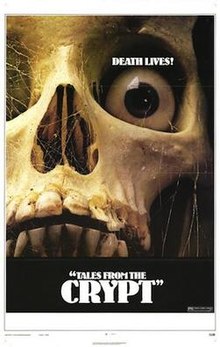
Tales from the Crypt-1972

Tales from the Crypt-1972

Director Freddie Francis

Starring Joan Collins, Ian Hendry, Robin Phillips

Scott’s Review #1,200

Reviewed November 25, 2021

Grade: A-

Tales from the Crypt (1972) is a delicious British anthology based on stories from the EC Comics series. Each of the five chapters is eerie storytelling that offers horror fans glimpses into the minds of depraved and devilish characters with sinister motivations.

The sheer joy is witnessing their comeuppance.

This film is the predecessor to Vault of Horror from 1973 and can easily be watched as a companion piece.

Below is a summary, review, and rating of each vignette.

Intro

Five strangers are suddenly compelled to go with a tourist group to view old catacombs.

Separated from the main group, the strangers find themselves in a room with the mysterious Crypt Keeper (Ralph Richardson), who details how each of them may die.

…And All Through The House- A

Joanne Clayton (Joan Collins) brutally kills her husband Richard (Martin Boddey) on Christmas Eve to get her hands on their insurance money.

She prepares to hide his body but hears a radio announcement of a homicidal maniac (Oliver MacGreevy) on the loose.

She sees the killer (who is dressed in a Santa Claus costume) outside her house, but cannot call the police without exposing her crime.

Her daughter is upstairs in her bedroom, unaware.

This is my favorite chapter and is non-stop action. Collins is terrific as the greedy English woman put in peril. The audience will cheer for her to get her just desserts especially after she callously disregards a lovely Christmas gift her husband bought for her.

Reflection of Death- B+

Carl Maitland (Ian Hendry) abandons his family to be with his secretary, Susan Blake (Angela Grant). After they drive off together, they are involved in a car accident. He wakes up, having been thrown clear of the burned car. He tries to hitchhike home, but everyone he meets screams with horror when they see him.

This vignette is slightly confusing as far as the timeline of the events but compelling as we wait to see what Carl’s face looks like and what has happened to Susan and his wife.

Poetic Justice- A

James Elliott (Robin Phillips) lives with his father Edward (David Markham) across from the home of elderly dustman Arthur Edward Grimsdyke (Peter Cushing), who owns several dogs and entertains children in his house.

James hates Arthur’s ramshackle lawn and embarks on a scheme to rid the neighborhood of the old man.

I love seeing Cushing play against type as a kindly grandfatherly character and this chapter is the ultimate revenge fantasy and quite satisfying to see what happens to James.

It’s also a perfect watch on Valentine’s Day since the holiday comes into play.

Wish You Were Here- A-

Businessman Ralph Jason (Richard Greene) is on the verge of financial collapse. His wife Enid (Barbara Murray) notices the inscription on a Chinese statue the couple owns.

They are granted three wishes. Enid decides to wish for a fortune and, surprisingly, the wish comes true, but with dire results.

This one wonderfully cascades a chain of events that leaves the characters in peril. The theme is once again about greed specifically surrounding insurance money. The fast-paced nature is appealing and the ancient Chinese wishes leave one character into eternal suffering.

Blind Alleys- A-

Major William Rogers (Nigel Patrick) becomes the new director of a home for the blind and exploits his position to live in luxury with his dog Shane, while his drastic financial cuts on food and heating lessen the residents’ living conditions.

Led by George Carter (Patrick Magee) the residents revolt after a fellow resident dies of hypothermia. Rogers and Shane are locked in the basement where Rogers must navigate through a maze of razor blades and a now ravenous wild dog who will hungrily eat his owner.

Though far-fetched, Blind Alleys is delicious fun and contains my most hated character. This is all the more satisfying as he ‘gets it’ in the end!

Finale

After completing the final tale, the Crypt Keeper reveals that he was not warning them of what would happen, but telling them what has already happened: they have all “died without repentance.

The conclusion does nothing more than put a satisfying cap for the viewer as each character once again pays for their shenanigans.

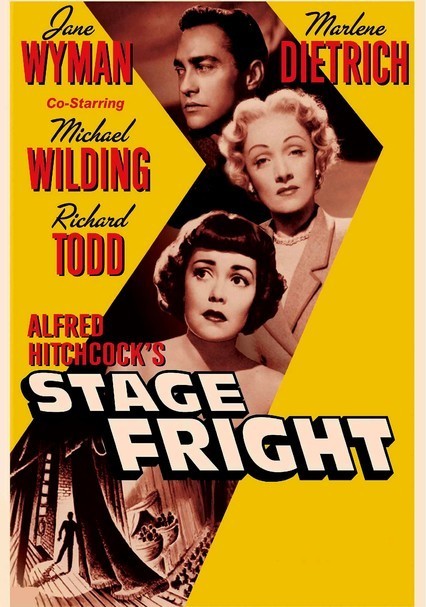
Stage Fright-1950

Stage Fright-1950

Director Alfred Hitchcock

Starring Jane Wyman, Marlene Dietrich, Michael Wilding

Scott’s Review #1,160

Reviewed July 9, 2021

Grade: A-

Stage Fright (1950) is a British film directed by Alfred Hitchcock before his American invasion.

The film feels like a hybrid British/American project with the leading lady, Jane Wyman, being American, but otherwise, it is set in London with many British actors.

Hitchcock mixes plenty of film noir influences with the typical thrills and suspense, creating an excellent film that flies under the radar compared to his other films.

Wyman is cast as an attractive aspiring actress who works on her craft by going undercover to solve a mystery. The film has elements of Nancy Drew, and it’s fun to watch Wyman, who would become Mrs. Ronald Reagan before he entered politics and later became President of the United States.

She reportedly divorced him because she had little interest in entering the political spectrum by association.

The action gets off to a compelling start with two characters driving in a car in apparent peril. Hitchcock loved driving scenes like these. It is learned that the police think actor Jonathan Cooper (Richard Todd) is a murderer, and now they’re on his tail.

He seeks shelter with his ex-girlfriend Eve (Wyman), who drives him to hide with her father, Commodore Gill (Alastair Sim).

He explains that it was his lover, the famous and snobbish actress Charlotte Inwood (Marlene Dietrich), who killed the victim (not coincidentally, her husband). Convinced that Jonathan is innocent, Eve plays detective and assumes multiple disguises, slowly developing feelings for Detective Inspector Wilfred O. Smith (Michael Wilding).

Once embroiled in a web of deception, she realizes that Shakespeare was right and that all the world is a stage.

Wyman is the Hitchcock brunette as opposed to his later fascination with the blonde bombshell. Therefore, her role is more sedate and astute than the sex appeal that would come with Hitchcock’s later characters.

Eve closely resembles Charlie, the character Teresa Wright played in 1943’s Shadow of a Doubt. They are both astute and investigative, with a mystery to unravel. Interestingly, they both fall for detectives.

All the glasses! Hitchcock’s fetish for women wearing glasses is on full display, especially with the character of Nellie, a cockney opportunist played by Kay Walsh. Look closely, and one can spot several minor or background ladies sporting spectacles, and even Eve dons a pair as a disguise.

The director’s daughter, Pat Hitchcock, plays a small role as she would in Strangers on a Train (1951) and Psycho (1960).

Speaking of Strangers on a Train, there are similarities to mention.

Both involve a tit-for-tat exchange in which one character requests another kill someone for a payoff or other motivation.

Marlene Dietrich is as sexy as ever in Charlotte’s pivotal role. She is also self-centered, self-absorbed, and thoughtless. She constantly mispronounces Eve’s fictitious name and barely notices that she is covering for her regular maid/dresser.

But is she evil and capable of killing her husband?

Stage Fright has a thrilling finale. In the climax, the audience finally finds out who has been telling the truth, who has been lying, and what explanations are revealed. There is a pursuit, an attempted killing, and a shocking death by way of a falling safety curtain in the theater, naturally.

What one would expect from a Hitchcock final act.

The focus on theatrical stage actors is a nice topic and adds to the existing drama, as the implications of playing various roles are prominent. So is the prominence early on of the Big Ben landmark in London and other location trimmings.

Stage Fright (1950) doesn’t get the love saved for other Hitchcock masterpieces, and that’s a shame because the film is excellent.

The Day of the Jackal-1973

The Day of the Jackal-1973

Director Fred Zinnemann

Starring Edward Fox, Michael Lonsdale

Scott’s Review #1,155

Reviewed June 22, 2021

Grade: A

Political thrillers can run the gamut of taut plots involving espionage assassinations, and car chases all woven into the political landscape. They often run the risk of being overly complicated and losing their audience with too much wordiness and not enough meat and potatoes.

The Day of the Jackal (1973), telling the story of an assassination attempt on a world leader is perfectly paced and intriguing offering some titillating elements and nothing run of the mill. It’s not lazy and can be classified as a thinking man’s film.

I loved it.

Certain complexities and trysts experienced by the deadly title character add extra pizazz and spiciness to the already compelling plot.

And the sequences of Paris and its lovely metropolis can aid any film.

A cagey and intelligent underground French paramilitary group is determined to execute President Charles de Gaulle (Adrien Cayla-Legrand), but when numerous attempts on his life fail, they resort to hiring the infamous hitman known as “The Jackal” (Edward Fox).

As he plots to assassinate de Gaulle, he takes out others who stand in his way. Meanwhile, Lebel (Michel Lonsdale), a Parisian police detective, begins to solve the mystery of the killer’s identity.

The film is not in French but in English.

Fox is the major draw. Charismatic, handsome, and athletic, he hardly looks like a fiend.  But that’s just the point. A lesser film would have cast an actor who looks like a killer. With Fox, we get many more intricacies. He beds women…..and men.

Think- a bisexual James Bond.

This is enchanting to see in 1973, though the film is British, and sometimes the Brits were well ahead of American filmmakers in this regard.

The director, Fred Zinneman, is Austrian and boy can he direct.

I wasn’t sure how engaged I would be. After all, the history books can tell us how the assassination attempt ended. It failed. What was the motivation for watching a film, especially one destined to be complicated? I quickly realized that The Day of the Jackal had that special sauce. It’s more than engaging, it’s enthralling.

The audience is meant to root for Lebel to best Fox but there is so much more bubbling under the circumstance. The villain is mysterious and we know almost nothing about him. The ambiguity continues after the film ends. This is a positive to the character and subsequently to the film.

Meanwhile, the hero of the film, the guy after the “Jackal”, is your average, everyday, Joe. He is unexciting but very smart and determined to capture Fox.

Lebel is quite likable for his savviness alone but I still argue many will root for Fox to escape the clutches of Lebel. I know I did.

Great scenes occur in a swanky hotel when Fox becomes intrigued by Madame de Montpellier, played by Delphine Seyrig. He picks up the rich and mysterious woman as they chat in the dining room. He later sneaks into her room and gets the girl.

Whoever cast this woman must have seen the Hitchcock classic Frenzy (1972) because she’s a dead ringer for Brenda Blaney (Barbara Leigh-Hunt).

Is it an accident that both meet grisly ends?

Not to be satisfied with merely bedding rich women he goes to a Turkish bath to avoid the police and picks up a French gentleman. It is implied they have a romantic date before the gentleman catches onto Fox’s identity (he is now on the run from the police) and meets his maker in his kitchen.

The Day of the Jackal (1973) is a meticulously crafted film that should be the blueprint for anyone intent on creating a political thriller. It avoids hokey stereotypes or predictability instead offering an edge-of-your-seat experience with nuances for miles.

It’s exceptional on all levels.

Oscar Nominations: Best Film Editing

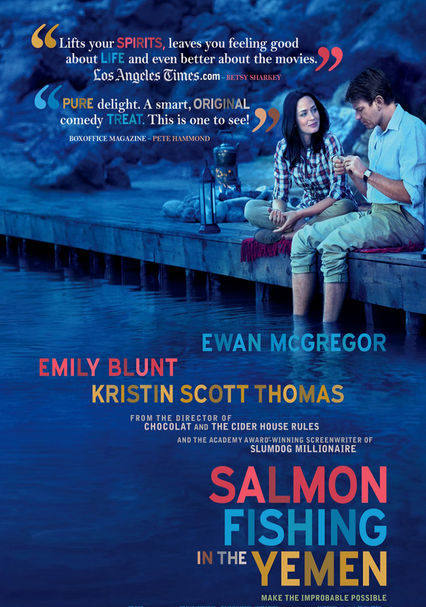
Salmon Fishing in the Yemen-2011

Salmon Fishing in the Yemen-2011

Director Lasse Hallstrom

Starring Ewing McGregor, Emily Blunt

Scott’s Review #1,152

Reviewed June 15, 2021

Grade: B-

Despite exceptional chemistry between leads Ewing McGregor and Emily Blunt, who were also bankable stars in 2011, the romantic comedy Salmon Fishing in The Yemen (2011) is predictable, dull, and lacks a good identity.

It is the feel-good film of the year and that is not meant as a compliment.

Don’t get me wrong, it’s above par as compared to the usual drivel emerging from one of my least favorite genres, the rom-com, but it should offer more than the by-the-numbers plot it churns out.

Someone either felt lazy or was instructed to create a banal film.

With good actors and fabulous locales, I expected more edge from Swedish director, Lass Hallstrom. But, alas, we get something merely adequate.

Doctor Alfred Jones (McGregor) is a fisheries scientist who one day receives an unusual request from a strong businesswoman named Harriet Chetwode-Talbot (Blunt). She wants his help in fulfilling a request from a wealthy sheik played by Amr Waked who wants to bring sport fishing to Yemen.

Jones declines at first, but when the British prime minister’s spokeswoman (Kristin Scott Thomas) latches on to the project as a way to improve Middle East relations, he joins in.

Romance blooms as Jones and Harriet work to make the sheik’s dream come true.

If this brief synopsis sounds like it’s taken from a novel that’s because it is and it is as straightforward as you can imagine. The film is based on a 2007 novel which must have been better than the film.

Let’s be fair and clear. McGregor and Blunt are as good as they can be with the material they are given and they succeed in bringing some life to the big screen. The trouble is there isn’t very far to go with their characters. Harriet is a businesswoman with a task at hand. Alfred is a handsome doctor with something she needs. Did I mention he’s a doctor?

Harriet’s romantic interest is hardly a surprise and Hallstrom puts nary any real obstacles in their path towards getting together.

The fact that early in the film Harriet is dating British Special Forces Captain Robert Meyers played by Tom Mison and Alfred is married to a woman named Mary (Rachael Stirling) is laughable after Robert is quickly killed off and Mary is sent away to Geneva for a conference.

Predictably, Alfred and Mary realize their marriage is over.

But wait, there’s more! Robert resurfaces from the dead alive and well. Harriet struggles with her emotions and quickly realizes that her feelings for him have changed leaving her to be with Alfred.

The setup for Harriet and Alfred is as predictable as what peanut butter and jelly sandwiches will taste like.

Poor Kristin Scott Thomas, a fantastic actor is reduced to playing the cliched role of Public Relations Patricia Maxwell. She straightforwardly plays her as aggressive, impatient, and bitchy. The performance doesn’t work well.

Second, to the sweetness of McGregor and Blunt, the locales are thankfully plentiful. Visits to London, Scotland, and Morocco are blessed treats.

A silly subplot of the salmon being removed from British rivers and something about farming goes nowhere and is not worth the effort to go into. Suffice it to say it does little for the film or as a companion to the main plot. The only thing viewers should focus on is Harriet and Alfred’s romantic involvement.

I only recommend Salmon Fishing in The Yemen (2011) for those fans of either McGregor or Blunt or who yearn to escape to a fantasy world with a happily ever after ending.

If one enjoys fishing or fly-fishing (is there a difference?) that may be enough cause to give the film a twirl too.

Otherwise, the film offers nothing that hasn’t been seen countless times before. By the conclusion of the film, I felt weary and bored for so much unchartered potential left on the cutting room floor….or somewhere else.

The Witches-1967

The Witches-1967

Director Cyril Frankel

Starring Joan Fontaine, Kay Walsh, Alec McCowen

Scott’s Review #1,096

Reviewed December 29, 2020

Grade: B

Legendary film actress Joan Fontaine chose a Hammer horror film as her final role. While not high-brow art, these films are an entertaining treat for horror fans.

They are frequently macabre, clever, and make the most of a small budget.

In The Witches (1967), Fontaine leads the way, adding class and huge star quality. The film is good, but not great, with an unfulfilling ending. The cinematography and Fontaine’s involvement are the best aspects.

Also worthy of mention in the acting department is Kay Walsh, a talented British actress, who is terrific as the seemingly kind woman who becomes a crazed witch. She adds professionalism to a pivotal role. The other supporting actors play their parts well, ensuring that the craft of acting is respected.

I adore the British flair that Hammer films always have.

Fontaine plays Gwen Mayfield, an English schoolteacher who accepts a new job as the headmistress of the local school in the quaint village of Heddaby. The quiet town is exactly what Gwen needs after suffering a nervous breakdown while residing in Africa.

She experiences a small flirtation with the Reverend Alan Bax (Alec McCowen), who confesses that he is not overly religious. Stephanie is his sister, played by Walsh.

Before long, Gwen becomes immersed in the worlds of two of her students, Ronnie (Martin Stephens) and Linda (Ingrid Brett). Ronnie insists that Linda is being abused, which prompts Gwen to investigate. Meanwhile, Gwen discovers a voodoo doll and sleuths to find out what is going on in the village.

Events lead her to a sanitarium, and finally to a coven of witches, intent on human sacrifice.

The Witches has a late-1960s look and feel, which adds some sophistication. Gwen is draped in stylish clothes and jewelry and wears a cute, trendy bob haircut.

The set design is cool, with groovy, colorful furniture that makes the tight budget work to its full advantage.  Alan and Stephanie’s estate is particularly impressive with modern furniture, drapes, and various trimmings.

Another positive is the hefty amount of exterior sequences offered.

Director Cyril Frankel, who directed many episodes of the popular British television series The Avengers, provides a similar production, so The Witches feels like a long episodic series. The luxurious English village is sunny, calming, and atmospheric, brightening the film’s atmosphere.

This nicely counterbalances the themes of demons, voodoo, and witches.

Frankel builds the story momentum throughout The Witches at a good pace, but this is lost in the final act, which is way too abrupt. During the first three-quarters of the production, we are led to believe that Gwen is either crazy, imagining the strange events, or that one of the townspeople is gaslighting her.

It’s easy to deduce that the latter is what is going on, and the fun is figuring out who is doing the dirty deeds.

When the culprit is revealed (and it’s displayed on the cover art!), the conclusion is underwhelming. An attempted cemetery human ritual to remove life from Linda and infuse it into Stephanie so that she can live forever is weak.

After an odd sequence of the townspeople dancing and writhing around like nutcases in an unintentionally laugh-out-loud example of overacting, Gwen foils Stephanie’s plan. The witch succumbs to death, a victim of her heinous plan backfiring.

It is hinted that Gwen and Alan (who are revealed to be good) will forge a romance in the future, but I would have liked to have gotten a stronger sense of their budding attraction during the film. Still, it is likely the two will ride off into the sunset together, safely.

While not as gory as other Hammer films, The Witches (1967) instead features exceptional performances and tells a decent story, interesting until the low-key finale.

I expected a bit more from the ending, which simmers out instead of electrifying.

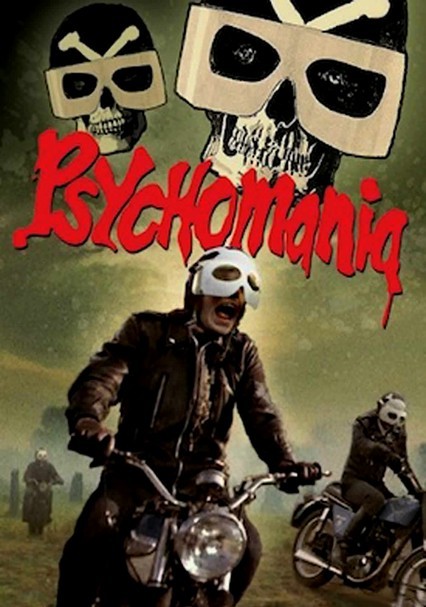
Psychomania-1973

Psychomania-1973

Director Don Sharp

Starring Nicky Henson, Mary Larkin, George Sanders

Scott’s Review #1,084

Reviewed November 19, 2020

Grade: B-

Psychomania (1973) is a film that has an intriguing premise turned messy and confusing by aspects not coming together.

A motorcycle gang wreaking havoc on their English small town decides to kill themselves and come back from the dead to live forever. They intend to do so with the aid of witchcraft and a sinister cult.

Unfortunately, neither the gang comes back to everlasting life nor does the premise provide an adequate payoff. The film meanders along without much intrigue or interest except for an above-average finale.

But even that is too little, too late.

Renowned film and television actor, George Sanders, famous for powerful roles in classics like Rebecca (1940) and All About Eve (1950), in which he won an Academy Award, and numerous other roles, co-stars as a butler.

His role in Psychomania is barely more than a throwaway part since he does not have much to do. Hardly the crowning achievement of his long career, he committed suicide soon after the shooting wrapped.

Star, Nicky Henson joked that Sanders saw the finished film and overdosed on pills, realizing how far his career had descended. Hopefully, that’s an urban legend.

Beryl Reid, wonderfully bitchy in The Killing of Sister George (1968) as a lesbian soap opera star is similarly downgraded, playing a glamorous matron who gets her kicks by holding seances for her neighbors.

She is the mother of the psychopathic leader of a violent teen gang.

Tom Latham (Henson) is the handsome leader of “The Living Dead”, said motorcycle gang, who enjoy driving around town intimidating folks. He is joined by his pretty girlfriend, Abby (Mary Larkin), who is good-natured and not as rebellious as the others.

Tom has time to flirt with other girls and uses his good looks to his advantage. He is in cahoots with his mother (Reid), and they have a penchant for frogs and black magic.

The gang decides, through Tom’s encouragement, to commit suicide and if they believe in it, they will return as one of the “undead”.

Each follows suit, except for Abby, and engages in ritualistic activities at their hangout, “The Seven Witches”, which is a poor man’s Stonehenge. They decide to kill Abby because of her defiance.

The DVD quality (mine anyway) was atrocious and did the film no favors. My enjoyment would have increased if the luscious English landscape and its vibrant colors could have been capitalized on.

Mrs. Latham’s home, filled with creative antiques and oddities, would have been enhanced with better quality.

The story never comes together. I like the main character Tom and find his sneering and posturing appealing in a light-hearted way. Henson is way too good-looking to be believable as a foreboding and crazy guy, but he sure is easy on the eyes.

No chemistry is to be found between him and Larkin, but they are cast well for this type of film- looks over acting talent. Neither is terrible in the acting department nor great either.

The supporting characters look very British and of the 1970s, which is to be expected. This isn’t an annoyance as much as an astute observance. From the doctors who perform the autopsies to the constables, to the chief inspector, everyone looks their part.

Psychomania has a 1970s look and feel, so it ultimately feels like a dated film because there is not much else to distinguish it from others.

It’s adequate, but not much more.

On the positive, some of the music is chirpy and hip, which adds a bit of an upbeat, contemporary vibe. The numerous motorcycle scenes make me wonder if a motorcycle company has stock in the film but surprisingly works.

The film, targeted as a horror film, is a strange one to categorize. The cult and witchcraft elements give off that vibe. The title of Psychomania (1973) creates a motorcycle/horror effect.

I’m not sure what to make of this film other than a sleazy, greasy, devil-worshipping mess. Poor Don Sharp, well-known for directing many Hammer horror films, seems not to know what to do with the silly script he is handed.

Is it a goofy comedy or straight-ahead horror?

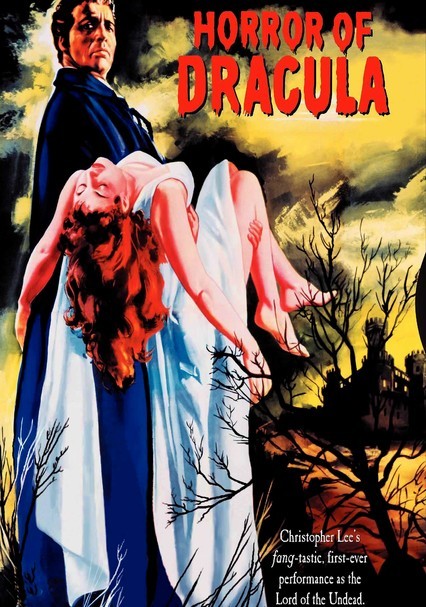
Horror of Dracula-1958

Horror of Dracula-1958

Director Terence Fisher

Starring Peter Cushing, Christopher Lee

Scott’s Review #1,083

Reviewed November 17, 2020

Grade: B+

The first colorized retelling of the classic vampire film starring Bela Lugosi from 1931, Horror of Dracula (1958) infuses style and a modern feel into the production making it a formidable entry compared to the original.

The film launched the popular and delightful British Hammer Horror film series, which included eight Dracula sequels.

British horror films nearly always add macabre elements and a British sophistication that merges class with gothic. For maximum effect, they are perfect late-night watches during the Halloween season.

The atmospheric tone is key and will delight horror fans. The addition of horror stalwarts Peter Cushing and Christopher Lee enhances the pleasures.

On a gloomy night in 1885, a librarian named Jonathan Harker (John Van Eyssen) arrives at Count Dracula’s castle in Romania to begin his new assignment.

Secretly a vampire hunter, he is bitten by a desperate woman, really a vampire, begging for help. Jonathan manages to kill the woman but is then killed by Dracula (Lee). Doctor Van Helsing (Cushing) arrives at the castle to investigate, but Dracula already has designs on Jonathan’s fiancée, Lucy (Carol Marsh).

A battle of good versus evil ensues.

Lee brings sexuality to Dracula, which Lugosi lacks, though Lugosi is the creepier of the two. I love the close-up scenes where Dracula bears his enormous fangs and his eyes turn red in a good close-up style.

The casting of Lee is perfect as he becomes identifiable even in the first installment. I also love how Lee is tall, giving the character a menacing, foreboding, distinguished look.

Many might secretly welcome him nibbling on their necks!

Cushing, later to be cast as the villain, is terrific as the empathetic Van Helsing. Lee and Cushing play well against each other. Van Helsing is stoic and confident as he smoothly leads the charge against Dracula and guides Jonathan’s loved ones into unchartered and unimaginable territory. It’s almost as if he has been through this before.

A great scene occurs when Van Helsing arrives in town for a brandy and a drink at the local pub. Its inhabitants are suspicious and frightened, draping garlic over the entryway and hoping he will leave soon.

The best part of House of Dracula is the atmosphere we are treated to, and the color razzles dazzle. The story is good, but the texture powerfully shines through.

Careful not to be too showy, director Terence Fisher, soon to be a Hammer horror prominent fixture, uses his limited budget to his advantage in clever form.

Fisher realized his project was a colorized version and created a polished-looking, colorful stained glass window, which is prevalent in several scenes. Dracula’s castle, especially the bedroom where Jonathan stayed, is part cozy and homespun, part gothic and chilling. The cellar crypt is equally vast yet confining, as the open coffins reveal who lies in them.

The plethora of books elicits a cerebral feeling.

The finale is well done but not as spectacular as expected. Other parts are better. Van Helsing chases Dracula in a race against the sunrise, ripping curtains down to provide harsh light and turning Dracula to dust.

I was expecting a little more and more blood or a good stake through the heart. Fortunately, that entertainment was provided earlier in the film.

Having never read the 1897 Gothic horror novel by Bram Stroker (it’s on my list!), the film is pretty on target.

The film bestows creepy elements and sexuality with great color, lighting, and set design. The lesson learned is that a hefty budget and CGI can’t replicate the creative design and sound effects.

The Blood on Satan’s Claw-1971

The Blood on Satan’s Claw-1971

Director Piers Haggard

Starring Patrick Wymark, Linda Hayden

Scott’s Review #1,050

Reviewed August 7, 2020

Grade: B

I am always up for a good British horror film, with a creepy musical score, satanic elements, and eclectic, good actors. Especially embraceable are offerings from the late 1960s and early 1970s.

The Blood on Satan’s Claw (1971), also released as Satan’s Skin, is very reminiscent of both Witchfinder General (1968) and The Wicker Man (1973), the three often lumped together in a small, brief sub-genre termed folk horror.

The film is not high art nor is it intended to be. Taking itself too seriously would ruin the experience.

Instead, a gruesome low-budget offering is just what the doctor ordered for late-night sipping cocktails or doing your preferred enlightenment or sedative.

The elements are all there- thunder and lightning, a perfect score, and English countryside.

The Blood on Satan’s Claw would have been dynamite if the choice to cast horror legend Peter Cushing or Christopher Lee came to fruition, but Cushing’s wife was dying of cancer and Lee wanted too high a salary, or so the story goes.

Anyway, Patrick Wymark was awarded the lead role of a village judge. The actor had a penchant for booze and had to be watched closely.

Sadly, he died soon after filming wrapped.

Those expecting a concise plot will be disappointed. Reportedly, the script was changed and changed and changed in a dizzying fashion before filming commenced. Some plot points and characters are introduced only to be unceremoniously dropped or forgotten.

Little wonder why the story confused me to no end.

Many characters have strange reaction shots as if they are reacting to different scenes. No matter though, the film is a good time despite the inconsistencies.

In a nutshell, a cute plowman Ralph (Barry Andrews) uncovers a hideously deformed skull with one gouging eye and strange fur. When he reports his finding to the local judge (Wymark), the skeptical man is disbelieving especially when the skull disappears before he lays eyes on it.

The village and its inhabitants quickly succumb to a group of teenage devil-worshipers led by beautiful but fiendish Angel Blake (Linda Hayden) who begins to perform blood sacrifices to bring the skull back to life.

Director, Piers Haggard, who also did some scriptwriting along with Robert Wynne-Simmons, does a great job with adding the appropriate elements to create a satisfactory mood.

The ancient setting of early-eighteenth-century England is always a juicy horror add-on since the unfamiliar time adds mystique.

The cinematography is gorgeous with lavish fields and stone buildings. I could have done without the laughably bad wigs the male actors were forced to wear, though.

Hayden is the standout for me.

A dead ringer for The Brady Bunch’s Maureen McCormick, only British, mixes deadly with beautiful in an underappreciated role. The actress was at that time a sex symbol appearing in other horror film treats such as Taste the Blood of Dracula (1970) and Vampira (1974).

As the teenage ringleader, her best scene is when she serves as a temptress to the local Reverend (Anthony Ainley). She seductively disrobes and confidently walks over to the intimidated man offering full-frontal nudity and the obvious daydreams of schoolboys everywhere.

Those not turned off by witch hunts, devil fur shavings, or characters sawing off their limbs will find The Blood on Satan’s Claw (1971) a real treat.

The film will please those classic horror fans expecting what the expected is in British horror which is a good thing. The demonic and religious trimmings mix well with a cast that is classically trained with most appearing in similarly themed horror films.

The story is weak and haphazard but the film is recommended to just enjoy the moment with.

Vault of Horror-1973

Vault of Horror-1973

Director Roy Ward Baker

Starring Curd Jurgens, Daniel Massey

Scott’s Review #1,038

Reviewed June 26, 2020

Grade: A-

Horror anthologies are usually a vast treat and a reminiscent memory of childhood afternoons watching Twilight Zone re-runs on television.

This is hardly much of a stretch since Vault of Horror (1973) is a British anthology based on Tales from the Crypt (1972), which in turn was based on stories EC Comics series.

Each chapter is superior storytelling providing bloodthirsty horror viewers with suspense, adventure, and surprise endings.

Below is a summary, review, and rating of each vignette.

Framing Story- A

Events get off to an intriguing start as one-by-one five businessmen enter an elevator in a corporate office in downtown London. They are taken to the basement level though none of them has pressed that floor and emerge to find a gentlemen’s club.

With no way to get back onto the elevator, they begin to drink, each discussing a reoccurring nightmare.

This segment immediately grasps the viewer as we ponder questions. Is someone holding the men there for a reason, who is behind it, and why? Are the men’s nightmares only nightmares or are they revealing deeper secrets?

Midnight Mess- A

Harold Rodgers (Daniel Massey) is a suave, well-dressed man who tracks down his missing sister Donna (real-life sister, Anna Massey!) in a peculiar village. He fiendishly kills her to acquire her share of their father’s inheritance.

Working up an appetite he dines at a local restaurant that serves blood soup and blood clots as the main course. The village is inhabited by sophisticated vampires and his sister is one of them!

This vignette is my favorite as the restaurant decor is warm and toasty, the village provides a stylish ambiance, and clever writing exists throughout. The bloody feast the eatery serves is a devilish delight in macabre humor.

And the fangs are great.

The Neat Job- A

Arthur Critchit (Terry-Thomas) is an elegant man suffering from obsessive-compulsive disorder. He is married to Eleanor (Glynis Johns), a trophy wife, who despite wanting to please her husband, is a lousy housekeeper.

Constantly criticized for being incompetent, Eleanor loses it and kills Arthur with a hammer. She proudly cuts him to bits and stores his remains in glass jars, all neatly labeled.

This story is simply delicious, offering elegant British furniture to salivate over and macabre, witty comedy as the viewer eagerly anticipates what Eleanor will do when she finally snaps, and we just know she will snap.

Bravo!

The Trick’ll Kill You- A-

Sebastian (Curd Jurgens) is a magician on holiday in India, where he and his wife Inez (Dawn Addams) are searching for new tricks for their act.

Frustrated, they encounter a girl charming a rope out of a basket with a flute. The couple persuades her to come to their hotel room where they murder her and steal the enchanted rope. They gleefully plot how to incorporate the rope into their act assuring them of riches.

Inez experiments with climbing the rope only to disappear with a scream. An ominous patch of blood appears on the ceiling, and the rope coils around Sebastian’s neck and hangs him. Their smirking victim reappears alive in the bazaar.

This vignette provides a good glimpse of the Far East and is culturally outstanding. The story is compelling though a letdown from the earlier entries.

Bargain in Death- B+

Maitland (Michael Craig) is buried alive as part of an insurance scam concocted with his friend Alex (Edward Judd). They each plan to double-cross and kill the other to get the money.

Two trainee doctors bribe a gravedigger to dig up a corpse to help with their studies. When Maitland’s coffin is opened, he jumps up gasping for air, and the gravedigger kills him. At the same time, Alex’s car crashes into a tree and he dies.

In humorous comedy, when trying to close the sale of the corpse the gravedigger apologizes to the doctors for the damage to the head.

This segment is more comical than the others and a nice aside is that the trainee doctors are named Tom and Jerry. The plot is a bit convoluted and doesn’t succeed as much as the other stories.

Drawn and Quartered- A

Moore (Tom Baker) is a struggling painter living in Haiti. When he learns that his paintings have been sold for high prices by art dealers after being praised by a critic, he goes to a voodoo priest for help exacting revenge.

He is instructed that whatever he paints or draws can be harmed by damaging its image.

Returning to London, Moore paints portraits of the three men who cheated him and mutilates the paintings to exact his revenge. After the displays, his portrait, each one, including Moore, suffers an agonizing experience.

This story is top-notch, and the loss of the eyes and the hands are the highlights of fun.

As the film wraps, we learn the mysterious puzzle involving the five men in a satisfying form.

Vault of Horror (1973) is a horror anthology that hardly disappoints. I am eager to watch this one again which is a major achievement for a cinematic offering to have on a viewer.

Night of the Demon-1957

Night of the Demon-1957

Director Jacques Tourneur 

Starring Dana Andrews, Peggy Cummins

Scott’s Review #1,037

Reviewed June 25, 2020

Grade: B+

There is something very soothing about 1950’s British horror films. Whether it’s the intelligence, the accents, or the elements, they differ from American horror films of the decade.

Arguably, they are just better. The horror genre, which has existed in cinema for decades, creates a clever story about a curse.

Night of the Demon (1957) has excellent visual effects and effective black-and-white cinematography, which makes the look work well. That said, the hype surrounding this film as one of the greatest horror films is unwarranted.

When I think of the greatest of all horror films, selections such as Halloween (1978), The Shining (1980), and Rosemary’s Baby (1968) come to the forefront on the American front, while Peeping Tom (1960) and Frenzy (1972) must be mentioned as for British films.

Night of the Demon, while above-average and has risen to prominence and rediscovery as a cult classic, doesn’t ultimately deliver the goods.

To provide a bit of contextual background, the film was plagued with issues and differences of opinion that are plausible proof of messiness upon dissection.

The original ninety-five-minute British feature was trimmed to eighty-three minutes and retitled Curse of the Demon for the United States market. It played there in 1958 as the second half of a double feature.

Additionally, the director and producer disputed whether to show the creature on-screen. The producer edited footage before release, which resulted in continuity issues.

Night of the Demon is the pure British version.

Dana Andrews, best known for The Best Years of Our Lives in 1946, stars as Doctor John Holden, an American psychology professor who visits Britain to attend a conference led by the deceased Professor Harrington.

Harrington is killed by electrocution after seeing a creature emerge from the trees. His niece Joanna (Peggy Cummins) also arrives to attend her uncle’s funeral and teams with Holden to determine a connection between Harrington and satanic cultist Dr. Julian Karswell (Niall MacGinnis). The cultist lives with his mother in a lavish, stately manner. 

Let’s outline what works best in Night of the Demon.

The visual aspects are superb and deserving of accolades. During a party at the Karswell home, the cultist wills a swirling windstorm to develop that is as frightening as it is realistic.

I wonder whether Alfred Hitchcock studied this scene as a similar one in The Birds (1963), in which the female star shuffles a group of children at a party in danger. The scene is professional and authentic.

The climax, amid a dark train track, is one of the best. The ambiance is frightful and well-paced, just what a finale to a film is supposed to be. Karswell, eventually followed by a piece of parchment with runic writing on it, supposedly part of an ancient curse, is terrifying.

It’s like he is being chased and pursued. Holden can pass the curse (meant for him) back to Karswell, who is inevitably ripped to ribbons by a speeding train. Why is a scene of peril amid a train always so compelling? The sense of adventure, dread, horror, and the macabre all reconvene in this crucial scene.

Naturally, the creature reappears.

The romance between Holden and Joanna is mediocre at best and unnecessary to the main plot. It’s as if someone decided a romance between the male and female principles was needed, and Holden and Joanna were it.

There is little chemistry, nor does the duo need to be romantically intertwined- it serves little purpose other than providing a reason to sleuth together. The decision seems more like a measure of the cinematic tradition of that time than any actual story purpose. It’s not an irritant, nor is it a positive.

The creature is not scary, and the film would have been better leaving it out. Sometimes, especially in horror, what is not seen is more terrifying than what is seen. The creature is preliminary and amateurish at best and provides no fright value. It appears to be made of clay or plastic.

Night of the Demon (1957) is a horror film I would like to see again and perhaps study more deeply. Its rich special effects and outstanding black-and-white cinematography enhance the visual treats.

The story of an ancient curse and a riveting speeding train climax that would make Hitchcock take notice are praiseworthy. But I still do not understand the categorization of the greatest of the horror greats.

Torture Garden-1968

Torture Garden-1968

Director Freddie Francis

Starring Burgess Meredith, Jack Palance, Peter Cushing

Scott’s Review #1,027

Reviewed May 28, 2020

Grade: B

A horror offering made up of multiple vignettes is a treat, offering numerous stories, especially with some late-1960s British sophistication peppered in.

Torture Garden (1968) contains four stories- Enoch, Terror over Hollywood, Mr. Steinway, and The Man Who Collected Poe, each with some intrigue. The structure may be most comparable to The Twilight Zone television series, but in a British way.

The Terror over Hollywood is my personal favorite.

Burgess Meredith (yes, that Burgess Meredith of the Batman television series) stars as Doctor Diabolo, a sinister con artist who runs an attraction at a fairground sideshow.

Having shown them a handful of tepid haunted-house-style gimmicks to whet their appetites, he promises a frightening experience if they pay extra.

Of course, they are immediately taken, and when they follow him behind a curtain, one by one, they view their fates through a transfixed female deity, Atropos (Clytie Jessop).

The stories commence through a hallucinogenic method.

Below is a summary and review of each vignette.

In Enoch, Colin Williams (Michael Bryant), a greedy playboy with money troubles, takes advantage of his elderly uncle (Maurice Denham) by causing his death and falling under the spell of a man-eating cat.

Colin is determined to find his uncle’s riches, leading him to desperation. The plot is far-fetched, but the black cat with glowing green eyes is memorable, as are the beheadings of a homeless man, a nurse, and finally, the Playboy himself.

When the cat finally puts another person under the spell, the conclusion is satisfying.

Terror over Hollywood travels across the pond to the United States, where it introduces a tale of jealousy, schemes, and intrigue in La La Land.

The vignette most resembles Invasion of the Body Snatchers in theme and is quite compelling.

Carla Hayes (Beverly Adams) is a beautiful, aspiring actress intent on clawing her way to the top by any necessary means. After she ruins her roommate’s dress and steals her date, she embarks on a strange journey that leads her to a role in a film, but there is a price to pay.

Adams is a stellar star who brings life and energy to the story.

Providing the most bizarre of all the vignettes, Mr. Steinway involves a possessed grand piano by the name of Euterpe, who becomes jealous of its owner, Leo’s (John Standing) new lover, Dorothy (Barbara Ewing), and goes on the attack seeking revenge.

The story is about Dorothy, a sideshow patron, so the events are told from her perspective.

The story contains plenty of loopholes, but it’s fascinating to see the enormous, gorgeous piano come to life as a character and push Dorothy out the window, sending her plummeting to her death.

Finally, in The Man Who Collected Poe, a Poe collector (Jack Palance) murders another collector (Peter Cushing) over collectibles he refuses to show him, only to find that the keepsake is the real Edgar Allan Poe (Hedger Wallace).

Seeing both the esteemed real-life figure and horror legend Cushing makes this chapter enjoyable, even though it is the least compelling of the bunch. Knowing that Torture Garden was meant initially to star Cushing and Christopher Lee detracts from the film just a bit.

One can only imagine the possibilities.

In the epilogue, which proves to be a clever twist, the mysterious fifth patron (Michael Ripper) scares the others into fleeing for their lives before revealing that he is a conspirator of Doctor Diabolos.

The group is proven to be merely gullible rubes, left with the belief that a murder has occurred and their fates will come true.

The film presents black magic and the occult in a fun, not a frightening, way. This is both a positive and a negative since witchcraft never felt so family-friendly.

Torture Garden (1968) is neither the best nor the worst horror anthology ever created. The plots are uneven but entertaining and never dull.

The creative additions of a killer piano, a killer cat, and famed storyteller Edgar Allen Poe are worth the price of admission, as is the centerpiece villain played by the great actor Burgess Meredith, who helps keep the plot moving along.

1917-2019

1917-2019

Director Sam Mendes

Starring George Mackay, Dean-Charles Chapman

Scott’s Review #979

Reviewed January 14, 2020

Grade: A

My tastes do not always lean towards the standard war film, so when I first heard about 1917 (2019), I was less than enthusiastic for no other reason than my pre-conceived perceptions.

Though it peaked with the idea of a World War I film rather than the standard World War II or Vietnam War film, I anticipated a run-of-the-mill experience or a story that had already been told.

Boldly told with incredible intensity and a brilliant technical style, director Sam Mendes creates a memorable cinematic treasure.

In April 1917, during the height of World War I, two British soldiers are tasked with a daring assignment: to hand-deliver crucial news to the 2nd Battalion of the Devonshire Regiment, calling off their planned attack on the German forces.

The Germans have faked a retreat to the Hindenburg Line and are ready to ambush the battalion, intending to kill sixteen hundred soldiers.

Schofield (George MacKay) and Blake (Dean-Charles Chapman) are chosen, with Blake’s brother Joseph among the soldiers bound to meet their fate.

As they journey, the young men face a myriad of hurdles including booby traps left by the Germans, terrain littered with dead bodies of their comrades, a precarious helicopter crash, giant rats, and the rapidly approaching deadline to deliver their message.

If they do not accomplish their mission in a timely fashion (twenty-four hours), the results will be devastating. Mendes keeps the tension high because he tells his story in real-time.

1917 is raw and emotional, hitting a hard punch.

Powerful scenes of dead bodies riddle the land, fat and pale from days spent immersed in cold water, young soldiers once handsome, now dead and bloated, remind the viewer what a terrible thing war is, and the ravages it causes.

Unlike other war films, patriotism and nationalist pride are not present.

Instead, the soldiers are weary and angry, confused as to why they are sent to fight for land as ugly as where they are, to die for land that is not even their own. They are depressed and confused.

The relationship between Schofield and Blake is excellent. Both men are weary and afraid, but have each other’s backs throughout their assignment.

It is not clear how long they have known each other, but they are at least acquaintances. They each come to the other’s rescue, and a pivotal scene occurs in a dusty hideout where they nearly die after a cave-in.

The characters possess grit and determination, but it is their humanity and connection with each other that resonate powerfully with the viewer.

An incredible scene unfolds as the day turns into night, and Schofield is well into enemy territory. To avoid a pursuing German soldier, he hides in a dusty basement area and finds a cowering young French girl. At first fearful, the pair quickly bonds, and a realization occurs to Schofield.

A newborn child accompanies the girl.

Assumed to be hers, the soldier immediately parts with his stash of food, not realizing the baby can have only milk. A ghastly realization is that the baby is not the French girl’s at all, but was instead found and rescued to prevent its death. The scene is tender and beautiful, perfectly contrasting the ugliness of the war.

The fantastic scene gives the viewer pause, prompting them to wonder what will become of the girl and the baby.

Nearly rivaling this lovely scene, another poignant moment occurs when Schofield stumbles upon a group of soldiers watching another soldier perform a rendition of the melancholy war tune, “Wayfaring Stranger”.

This moment slows the action down to a crawl, dedicated to loneliness and sadness amid the terrible battles.

The technical aspects that Mendes creates are spectacular and meant to be enjoyed on the largest screen possible. He uses a one-take approach, which keeps the action fast and furious.

The lavish and grandiose exterior scenes of immense dry land perfectly counterbalance a terrific watery scene when Schofield is chased into the river and soon embarks on wavy, grand rapids.

The camera remains on the soldier throughout the scene, as the viewer is taken on a wild adventure, sweeping every morsel of up and down motion with the tide.

To piggyback on this point, a scene occurs when one of the young men is knocked unconscious. It is daylight, but when he regains consciousness, it is night. The cinematography is brilliant, with a sharp left turn to translucent colors and blurry images of buildings.

The viewer is as disoriented as the soldier and fears what lurks in the shadows, as is found out when an unknown approaching figure begins to fire his gun.

1917 (2019) is a progressive-leaning gem with an anti-war message and a genuine approach to a “day in the life of a soldier”. It is not glossy or contrived, but a candid, realistic view of the savagery of war.

With a creative technical style, it is one of the best of its genre ever made.

Oscar Nominations: 3 wins-Best Picture, Best Director-Sam Mendes, Best Original Screenplay, Best Original Score, Best Sound Editing, Best Sound Mixing (won), Best Production Design, Best Cinematography (won), Best Makeup and Hairstyling, Best Visual Effects (won)

The Reptile-1966

The Reptile-1966

Director John Gilling

Starring Ray Barrett, Jennifer Daniel

Scott’s Review #978

Reviewed January 10, 2020

Grade: B

Hammer horror film productions offer treats to be enjoyed. The budgets are always small, adding to the mystique, fun, and wonderment of what can be done.

Impressive is how creative they get with a shoestring budget.

The Reptile (1966) is an excellent film with enough murder and intrigue to satisfy, though it has many plot holes and illogical sequences.

The British class and murky locales are fantastic.

Set in Cornwall, England, events begin in a macabre way when a middle-aged bachelor hears noises coming from a nearby estate. When he investigates, he is bitten by a demonic figure and rapidly develops the “Black Death,” which kills him.

Many locals succumb to a similar fate. The bachelor’s brother, Harry Spalding (Ray Barrett), inherits his brother’s cottage and moves in despite the warnings of the resident tavern owner, Tom (Michael Ripper). Tom is the only one of the townspeople to befriend Harry and his wife, Valerie (Jennifer Daniel).

Meanwhile, the sinister Dr. Franklyn (Noel Willman), the owner of the nearby estate, is the only resident near the cottage. He lives with his daughter Anna (Jacqueline Pearce). The Doctor treats his daughter with contempt as she is attended to by a silent servant (Marne Maitland).

When Anna asks Valerie for help, Valerie and Harry are led to the estate, where dire events occur. But could this be a trap?

The setting of the coastal town is well created, and scenes in cemeteries, par for the course with Hammer productions, add a good vibe. The cottage and the estate are well-manicured, and the film feels like a British gem.

Since the sets are low-budget, the exterior sequences add to The Reptile. Assumed is that the film was shot with a “day for night” technique, a trick used to simulate a night scene while filming in daylight. This makes for positive cinematography.

The film’s final thirty minutes are best when Harry and Valerie are invited to dinner at the Doctor’s estate. Banished to her bedroom for most of the evening, Anna emerges looking ravishing in an evening dress but is soon revealed to have been met with a curse, sheds her skin, and becomes a frightening reptile.

The servant has a hold over Anna and her father while a sweet black kitten comes into play.

The characters are interesting. Benevolent Harry and Valerie mix well with the dark and cynical Dr. Franklyn and the servant. Franklyn is irritable, and the servant, though he does not speak, is devious and riddled with mystery.

Ignoring warnings to flee the town and never return, the newlyweds refuse. Blissful in their new cottage and filled with the promise of fresh life, their spirit counterbalances their neighbors’, and when the characters intersect, the real fun begins.

The creature is a bit corny and hardly scary. The makeup, reportedly complex for actress Jacqueline Pearce, looks amateurish. The cover art makes the creature look much better than in the film, but budgetary limitations tightened things.

Kudos for introducing the female creature. It was tough to root for or against her, though, since we know little about why she went from gorgeous to evil.

From a plot perspective, the viewer is encouraged not to try too hard to figure out how circumstances relate. Why and how did Anna become cursed? Did the servant curse her, and why was he there? Is the group of caged animal creatures that Anna eats?

It is mentioned that Anna needs a hot environment—is the hot molten metal in the basement enough to keep her human? Many other inquiries could be made, but they don’t matter much.

The Reptile (1966) is worth a watch, especially for fans of classic Gothic horror. Although the cast is unfamiliar, the project would have been enhanced by adding Peter Cushing or Christopher Lee, mainstays of Hammer films, in either of the central male roles.

Still, the film succeeds, and the low budget creates a fabulous texture. The main appeal is that it is a good, fun horror film with little expectations.

Yesterday-2019

Yesterday-2019

Director Danny Boyle

Starring Himesh Patel, Lily James

Scott’s Review #952

Reviewed October 29, 2019

Grade: B-

Yesterday (2019) is a film that is silly but sentimental, oozing with a nice quality that becomes tiresome towards the conclusion.

For those seeking a safe experience, the film will be deemed as wonderful, but for those with an appetite for a left-of-center grit, the film will only marginally entertain. It’s safe.

Director Danny Boyle (2008’s Slumdog Millionaire) chooses a charismatic British-Indian actor, Himesh Patel, for the starring role in a film that any fan of the rock band The Beatles should see.

Jack Malick (Patel) is a struggling musician who resides in Lowestoft, England, a suburb of London. Unsuccessful, he is nonetheless encouraged by his manager and childhood friend, Ellie (Lily James), to reach for the stars and never give up his dreams of achieving success.

One day, he is hit by a bus during a global blackout and is hospitalized with a head injury and missing teeth. When he performs the Beatles song “Yesterday” for his friends, they are blown away by its genius.

Jack realizes that the entire world has never heard of the legendary band and capitalizes on the stroke of luck, becoming a rock n roll superstar.

The massive song catalog of the Beatles featured in Yesterday is the best part of the film. The pleasure is in wondering which songs will appear next and in what context. Jack awkwardly “debuts” the song “Let it Be” to his parents, who continuously botch the name of the song, only showing mild interest.

Next, Jack furiously attempts to remember the lyrics to “Eleanor Rigby”, a difficult song lyrically. Other gorgeous classics featured are “The Long and Winding Road”, “Here Comes the Sun”, and “Something”.

A sentimental nod and appearance of a John Lennon figure is a nice touch and a worthy dedication to the deceased legend. The key here is wondering what would have become of the assassinated star had he not been famous.

The film approaches this when revealing that Lennon would be an older man today. Lennon tells Jack in a sentimental scene that he has lived happily with his wife by his side. If only this had been the case.

Patel is charming and a character to root for. As the butt of jokes made by his friends, who truly adore him, he is neither the handsome lead nor the wimpy co-star, more of a hybrid of the two.

We want him to achieve musical success because he is a nice guy, but we are glad when he finally confesses to the phony plot, as predictable as that revelation is to the film. Patel’s best scenes occur on stage when he either rocks out to the guitar or adorns us with a piano ballad.

Other than the above notes, Yesterday was only mildly entertaining, as it mixed a musical with a romantic story that does not work. If the audience is expected to root for Jack and Ellie to get together, then the idea falls flat.

The pair has no chemistry, nor is Ellie even remotely written as being the type who would live the rock ‘n’ roll lifestyle or want to. She is an elementary school teacher and asks Jack to give up his dream and lead a simple life in the suburbs. Who would do that?

Yesterday is riddled with stock characters, some of whom may or may not exist in real life. As much as I love actress/comedian Kate McKinnon, her overbearing character of Debra Hammer doesn’t showcase her best work.

Driven and cold, the character is played for laughs with her over-the-top behavior, but it feels too much like a part written to showcase McKinnon. Jack’s parents are cliche-filled characters, doting around with confused expressions and seeming to be overwhelmed by all events.

A musical film that cringes with a safe and saccharine feel, saved only slightly by the bevy of mostly 1960s hits by the Beatles, some of which lyrically are dissected and showcased.

Yesterday (2019) features pop star Ed Sheeran, who does not act or contribute to the film. Way too polished and superfluous for its good, Boyle, a worthy director, should have added some edginess rather than going for safe pop.

Thank goodness the film is about the Beatles rather than the Backstreet Boys.