Category Archives: Michel Auclair

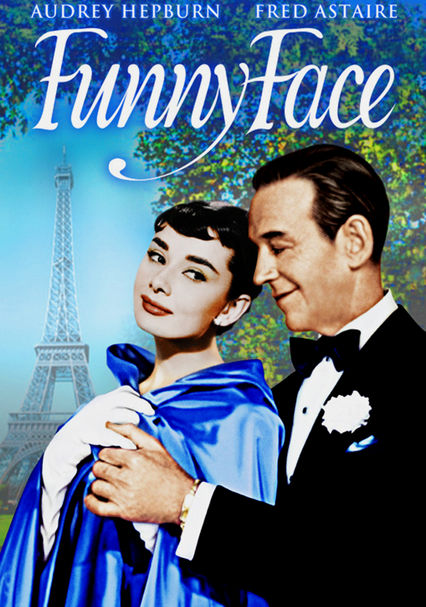
Funny Face-1957

Funny Face-1957

Director Stanley Donan

Starring Audrey Hepburn, Fred Astaire

Scott’s Review #1,375
Reviewed July 7, 2023

Grade: B

The results of Funny Face (1957) are mixed, and the word ‘cute’ pops to mind on more than one occasion.

On the one hand, audiences are served a sophisticated look at the fashion industry and the sleek style of Paris, France, in the 1950s. The outfits and set design are fab, revealing the cultured and colorful modeling world, while the makeup and hairstyles match the time with fragrant gusto.

The screenplay is riddled with plausibility issues bordering on offensiveness and silliness. It also provides a good look at the patriarchal mindset of the time. The message is twofold: The fashion industry and Hollywood equally embraced these norms when the film was made.

In a word, the overall film is dated.

New York City fashion photographer Dick Avery (Fred Astaire) is tasked with finding a model for a new assignment. Discouraged, he is struck by the beauty of Jo Stockton (Audrey Hepburn), an intellectual bookstore employee he photographed by accident.

He convinces Jo to accompany him to France, where he continues photographing her against Parisian backdrops. At the same time, they scramble to pull together a fashion show along with crusty Maggie Prescott (Kay Thompson), a fashion magazine publisher.

Dick and Jo fall for one another, only to find hurdles to overcome along the way.

The musical numbers are plentiful but second-tier. Bouncy songs like ‘Funny Face’ and ‘On How to Be Lovely’ are decent but not memorable. The highlight is ‘S, Wonderful,’ which appears during the finale and perfectly wraps the Paris experience and the film in a shiny bow.

Comparisons can be made to An American in Paris (1951), not just because both are set in Paris, use the same tune (S Wonderful), and were composed by George Gershwin. There’s more buried beneath the surface that ties the two films together.

Both lead characters, Jerry and Jo, wind up with the wrong partners, who are, in reality, inappropriate for each other. Jerry should be with the comparable Milo, while Jo should be with the dashing and artistic Flostre (Michael Auclair). Instead, Jerry chooses the waifish Lise while Jo lands the ancient Dick.

Astaire is old enough to be Hepburn’s grandfather, which makes the romance odd.

Of course, Milo and Flostre are made to be the foils in An American in Paris and Funny Face. They are merely obstacles to be overcome by the preferred couple.

Another irritant is the demeaning nickname that Dick calls Jo, ‘funny face.’ Hardly a dog, Hepburn is quite beautiful, although the film makes the audience assume she is wrong for the modeling world. She fits right in, looking perfect in every dress or costume she dons or photograph she appears in.

A better casting choice would not have been classically beautiful singers or actors such as Barbra Streisand or Bette Midler, though admittedly, neither had surfaced at that point.

Though shot on a soundstage, Funny Face rebounds from implausibility with gorgeous ariel views of historic Parisian landmarks that envelope the glitter of the theme.

Shots of the Eifel Tower, Arc de Triomphe, and the broad Champs-Elysees are robust and made me rewatch this sequence again.

In parallel, the Greenwich Village, New York City setting, where other events in the film take place, is an intelligent choice to define the artistic and bookish characters.

The opening titles of Funny Face (1957) are creative and polished, reflecting the maturity of the subject matter and style of the 1950s.

With no chemistry, Hepburn and Astaire carry the film as best they can with a dated and tame screenplay.

Oscar Nominations: Best Writing, Story, and Screenplay-Written Directly for the Screen, Best Costume Design, Best Cinematography, Best Art Direction-Set Direction

The Day of the Jackal-1973

The Day of the Jackal-1973

Director Fred Zinnemann

Starring Edward Fox, Michael Lonsdale

Scott’s Review #1,155

Reviewed June 22, 2021

Grade: A

Political thrillers can run the gamut from taut plots involving espionage, assassinations, and car chases to the political landscape. They often risk being overly complicated and losing their audience through too much wordiness and not enough meat and potatoes.

The Day of the Jackal (1973), telling the story of an assassination attempt on a world leader, is perfectly paced and intriguing, offering some titillating elements and nothing run-of-the-mill. It’s not lazy and can be classified as a thinking man’s film.

I loved it.

Certain complexities and trysts experienced by the deadly title character add extra pizazz and spiciness to the already compelling plot.

And the sequences of Paris and its lovely metropolis can aid any film.

A cagey and intelligent underground French paramilitary group is determined to execute President Charles de Gaulle (Adrien Cayla-Legrand). Still, when numerous attempts on his life fail, they resort to hiring the infamous hitman known as “The Jackal” (Edward Fox).

As he plots to assassinate de Gaulle, he takes out others who stand in his way. Meanwhile, Lebel (Michel Lonsdale), a Parisian police detective, begins to solve the mystery of the killer’s identity.

The film is not in French but in English.

Fox is the major draw. Charismatic, handsome, and athletic, he hardly looks like a fiend.  But that’s just the point. A lesser film would have cast an actor who looks like a killer. With Fox, we get many more intricacies. He beds women…..and men.

Think- a bisexual James Bond.

This is enchanting to see in 1973, though the film is British, and sometimes the Brits were well ahead of American filmmakers in this regard.

The director, Fred Zinneman, is Austrian, and boy, can he direct.

I wasn’t sure how engaged I would be. After all, the history books can tell us how the assassination attempt ended. It failed. What was the motivation for watching a film, especially one destined to be complicated? I quickly realized that The Day of the Jackal had that special sauce. It’s more than engaging, it’s enthralling.

The audience is meant to root for Lebel to beat Fox, but there is so much more bubbling under the circumstances. The villain is mysterious, and we know almost nothing about him. The ambiguity continues after the film ends.

This is a positive for the character and, by extension, for the film.

Meanwhile, the hero of the film, the guy after the “Jackal”, is your average, everyday Joe. He is unexciting but very smart and determined to capture Fox.

Lebel is quite likable for his savviness alone, but I still argue many will root for Fox to escape the clutches of Lebel. I know I did.

Great scenes occur in a swanky hotel when Fox becomes intrigued by Madame de Montpellier, played by Delphine Seyrig. He picks up the rich and mysterious woman as they chat in the dining room. He later sneaks into her room and gets the girl.

Whoever cast this woman must have seen the Hitchcock classic Frenzy (1972) because she’s a dead ringer for Brenda Blaney (Barbara Leigh-Hunt).

Is it an accident that both meet grisly ends?

Not to be satisfied with merely bedding rich women, he goes to a Turkish bath to avoid the police and picks up a French gentleman. It is implied they have a romantic date before the gentleman catches onto Fox’s identity (he is now on the run from the police) and meets his maker in his kitchen.

The Day of the Jackal (1973) is a meticulously crafted film that should be the blueprint for anyone intent on creating a political thriller. It avoids hokey stereotypes or predictability, instead offering an edge-of-your-seat experience with nuances for miles.

It’s exceptional on all levels.

Oscar Nominations: Best Film Editing