Category Archives: Mark Strong

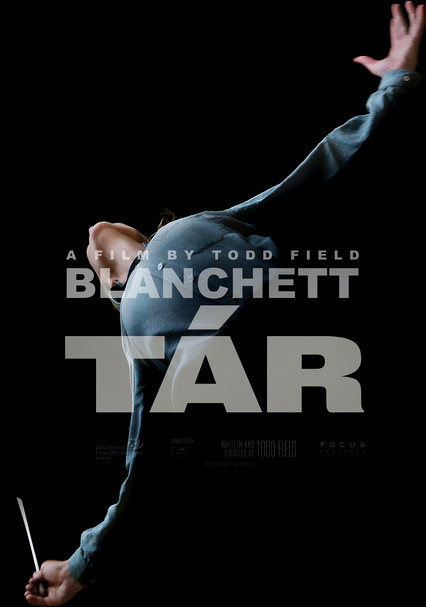
Tár-2022

Tár-2022

Director Todd Field

Starring Cate Blanchett, Nina Hoss, Noémie Merlant

Scott’s Review #1,315
Reviewed November 18, 2022

Grade: A

Tár (2022) is a brilliant film that truly belongs to Cate Blanchett. I cannot picture any other actress in this role but her.

I can pretty much watch any film that she appears in, with my favorite being her self-titled role in Carol (2015). But Tár is a close second.

In Tár, again in the title role, she plays a brilliant woman whom the audience admires but slowly discovers pieces of her personality are tarnished and brittle beneath the surface. As the film progresses, her character’s psyche is gradually peeled back, like an onion.

This lofty praise of Blanchett is in no way meant to diminish the rest of Tár because it revels in grandiose riches. The pacing, musical score, and other acting performances are to be championed.

When I found out that Todd Field was directing Tár, my spirits began to soar.

After all, he directed In the Bedroom (2001) and Little Children (2006), two tremendous films set a quiet, small-town settings that brim with secrets and scandals, which slowly rise to the surface.

The subdued locales are scrapped in favor of Berlin, a busy, behemoth of a city in Germany. Some of the events take place in New York City, resulting in a large, cosmopolitan atmosphere. A cold, grey, stark quality encompasses the luminous settings.

Tár requires the viewer’s absolute patience to get the most out of it. It can be tough to follow with very long sequences, but the Field/Blanchett combination culminates in a muddy and dazzling conclusion.

Blanchett plays Lydia Tár, the groundbreaking conductor of a major German Orchestra. We meet Tár at the height of her career, in high demand, as she’s preparing both a book launch and a much-anticipated live performance of Mahler’s Fifth Symphony.

What could go wrong? In Lydia’s case, just about everything.

Over a few weeks, her life begins to unravel. The result is an examination of power and its effect on those who have it and those who don’t.

The timely #MeToo movement is in top form.

The gender flip is also quite interesting since typically it’s males who have and abuse the power, but Lydia is a female and a lesbian.

I spent a good part of Tár feeling perplexed, anxious, and compelled. It’s a slow burn, but I always knew, with Field in the director’s seat, that a big payoff awaited me. I happily jumped into his arms and waited for the shit to hit the fan.

The key to Tár is that many of the events have happened off-screen and before the current events of the film. There is a mysterious, suicidal, former student of Lydia’s in the mix. She sends desperate, pleading emails to Lydia and her assistant.

We wonder how the former student is connected to the events.

Lydia relies on Francesca (Noémie Merlant), her attentive personal assistant, and Sharon (Nina Hoss), her ailing wife and concertmaster, for almost everything.

Soon, a new and gifted Russian cellist named Olga (Sophie Kauer) arrives on the scene. With Lydia smitten, how will Olga fit in with the other women?

Francesca, Sharon, and Olga are three pivotal female characters, and each actress is exceptional in the role.

Tár reminds me of both Whiplash (2014) and Black Swan (2010) for different reasons. It envelops the world of classical music like Whiplash did for jazz and Black Swan did for the ballet world.

All three films can be watched closely together, and more similarities can be noticed.

Tár is a film that can be owned and watched again to piece together the jagged puzzle pieces. It’s a rare moment in modern cinema that can be rewatched.

Since it contains music, the orchestra and maestro sequences are wonderfully constructed, so the coldness of the events mirrors the song choices.

Stark and boiling over with gems like mystique, uncertainty, and sophistication, Tár (2022) rejuvenates modern film with a bleak yet thought-provoking story of a powerful woman.

It’s a film that engrosses and thrills.

Oscar Nominations: Best Picture, Best Director-Todd Field, Best Actress-Cate Blanchett, Best Original Screenplay, Best Cinematography, Best Film Editing

Independent Spirit Award Nominations: 1 win-Best Feature, Best Director-Todd Field, Best Lead Performance-Cate Blanchett, Best Supporting Performance-Nina Hoss, Best Screenplay, Best Cinematography (won), Best Editing
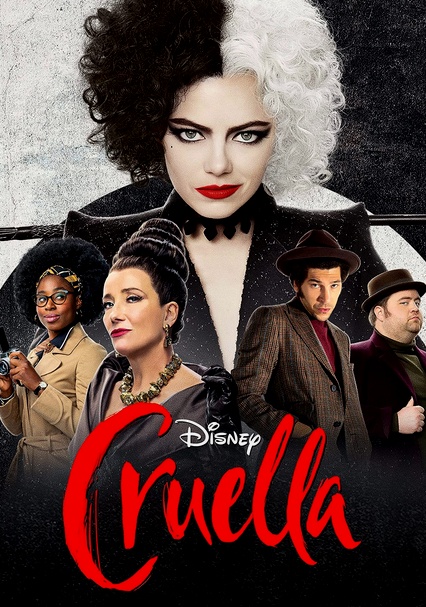
Cruella-2021

Cruella-2021

Director Craig Gillespie

Starring Emma Stone, Emma Thompson

Scott’s Review #1,197

Reviewed November 19, 2021

Grade: A-

One of the first red carpet premieres to emerge amid the deadly Covid-19 pandemic, Cruella (2021) is a wickedly funny delight and celebrates the return of cinema to the theaters.

What a fabulous choice.

The makeup, hairstyling, costumes, musical score, and the title character herself make this film loud, proud, and lots of fun.

It’s not too dark for the entire family to enjoy, but far from fluff, either. Suspension of disbelief is mandatory since it’s pure fantasy and not to be dissected for its numerous plot holes and ridiculous antics.

Dogs, people, and costumes fly around in frantic motion to fulfill their every motivation.

The film is way better than anticipated, which is always a treat. It’s not that I wasn’t expecting quality, but I didn’t expect to be entertained and enthralled quite as much as I was.

The experience carried me away.

The live-action force sheds light on the backstory of Cruella de Vil, made famous, of course, as the dastardly villain in the animated Disney feature 101 Dalmatians from 1961.

Her life and intentions are explored in a story similar to Oliver Twist, with a 1970s style. Orphaned young, she must survive the mean streets of London during the punk rock era. She becomes an expert pickpocket and ingenious thief while doubling as the humble fashion upstart Estella.

Estella befriends a pair of young thieves who adore her appetite for mischief, and together they construct a cozy life for themselves and their furry friends. While working as a cleaning lady, Estella is discovered by the ruthless and unkind Baroness von Hellman (Emma Thompson), a fashion legend.

Their complex relationship sets in motion revelations that harken back to Estella’s deceased mother, causing her to embrace her wicked side and become the fashionable, revenge-bent Cruella.

Emma Stone basks in the spotlight as Cruella with ravaging fury and a twinkle in her eye. An incredible actress who has played roles in Birdman (2014), La La Land (2016), and The Favourite (2018), Stone goes full-throttle in her dual role, making them as opposite as possible.

She’s terrific and carries the bombastic film with seeming ease.

Thompson is just as good as the Baroness, a woman with a heart of stone and most similar to Miranda in The Devil Wears Prada (2006). With a snap of her fingers or a glance, she expects to be served and pleased, happy to take credit for other people’s work. It’s a toss-up which character I hate more.

Stone and Thompson are delicious together and chew up the scenery, especially when they spar and attack each other. These scenes are wickedly delightful, and a key to their past may link them forever.

The Baroness is difficult to like, as she attempts to kill Estella/Cruella twice.

The actresses make magic together.

Besides the clear parallels to Oliver Twist, Cruella also mirrors Spider-Man with the alter-ego premise. I saw her as a superhero. Traditionally, Cruella is portrayed as evil and fiendish, but here she is the rooting favorite. This may turn some off, but I loved this facet and the complexity of the character.

To go deeper, the Baroness is more like the animated Disney character Cruella than Cruella is!

I joyously anticipated which 1970s rock song would come next, as nearly every sequence incorporated this genre of music. Bands like Blondie, Queen, and Black Sabbath appear, along with fascinating, modern takes on some of the best hits of the period. This adds a wealth of depth and relevance.

What about the costumes? Oh, how gorgeous they are! Numerous dresses, gowns, and other accessories are featured. The sheer number of outfits and designs in the film is astounding.

My favorite appears as Cruella unfolds a flowing dress from a limousine that stretches for miles and miles, much like a domino effect. It’s flashy and beautiful.

Rumors abound that Stone has signed on for a sequel to Cruella (2021). As long as a more thought-out story continues to be developed, the character can remain as complex as she is entertaining. The style, locale, and time make the film a fantastical retelling of a fantasy.

Oscar Nominations: 1 win-Best Costume Design (won), Best Makeup and Hairstyling

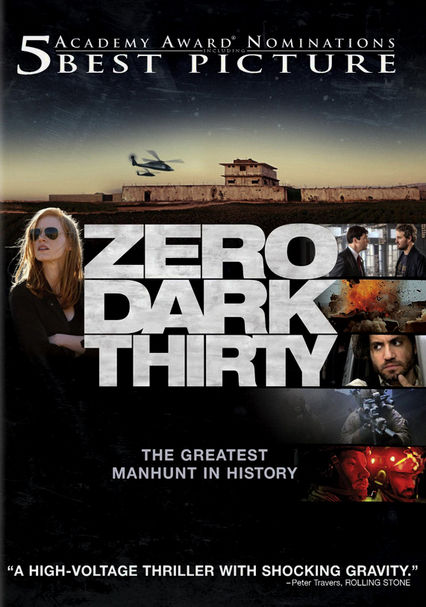
Zero Dark Thirty-2012

Zero Dark Thirty-2012

Director Kathryn Bigelow

Starring Jessica Chastain

Scott’s Review #1,133

Reviewed April 14, 2021

Grade: A-

Director Kathryn Bigelow, not far removed from her Oscar win for The Hurt Locker (2008), returns with a similar style of film centering around war and more specifically about the emotional tolls and psychological effects from not just the battlefields but from dangerous missions.

The main character suffers from many conflicts and inevitably the viewer will as well.

Zero Dark Thirty (2012) is unique for the genre by having a female in the lead role and star Jessica Chastain is front and center and terrific.

She is calm, restrained, and in control. She is tough to rattle and a powerful and inspirational character to be admired.

Chastain exudes cool in the face of danger.

Chastain does have a brilliant emotional scene at the end of the film. Her character, Maya, boards a military transport back to the U.S., as the sole passenger. She is asked where she wants to go and begins to cry. The emotion finally gets the better of her as it would to anyone.

The film is not all Chastain’s to brag about and there is little wrong with the film.

Beautifully directed, Bigelow layers her film with enough tension and magnificence to enshroud the moral questions viewers will ask, specifically about torture.

It’s somewhat fictionalized, and in fact, Chastain’s character is made up, but Zero Dark Thirty is a gem nonetheless.

But we also know the events happened.

The film starts incredibly well and immediately grabs the viewer’s attention with a brilliant first scene. Amidst a dark screen and soundtrack of actual calls made to the 911 operator from inside the World Trade Center Towers on 9/11, the scene is about as powerful an opening as a film can have and bravely sets the stage for what follows.

These include many scenes of Arab detainees being interrogated (that is, tortured) for information about Al Qaeda. Is this justified or unnecessary abuse?

The viewer is immediately saddened and in tears and conflicted about whether the torture is justified having just heard the 911 calls.

I know I was.

From there, the viewer also is told a summary story putting the pieces of the first scene together.

After the terrorist attacks of Sept. 11, 2001, Osama bin Laden becomes one of the most wanted men on the planet. The worldwide manhunt for the terrorist leader occupies the resources and attention of two U.S. presidential administrations.

This is the crux of the film and the story told.

Ultimately, it is the work of a dedicated female operative  (Chastain) that proves instrumental in finally locating bin Laden. In May 2011, Navy SEALs launched a nighttime strike, killing bin Laden in his compound in Abbottabad, Pakistan.

We all know this but troubling is the use of torture. I keep coming back to this point.

I think what I like most about the film besides the riveting pacing, action sequences, and psychological appeal is the controversy that surrounds it.

The fact that it ruffled feathers at the CIA and in Congress about whether the info was leaked to the filmmakers makes me think that at least some of it is based on facts, despite what other reviewers (likely with a strong political bias) might claim to the contrary.

But as a political junkie that’s just my belief.

The film’s reproduction of enhanced interrogation techniques is brutal. Some critics, in light of the interrogations being depicted as gaining reliable, useful, and accurate information, considered the scenes pro-torture propaganda.

Acting CIA director Michael Morell felt the film created the false impression that torture was key to finding bin, Laden. Others described it as an anti-torture exposure of interrogation practices.

I guess we may never know the truth. But the film compels and provokes feeling.

Bigelow is at the top of her game with Zero Dark Thirty (2012) crafting a genre film (the war one) way too often told from only a masculine “us versus them” mentality and leaving behind the fascinating nuances that can make the genre a more interesting and less one-note one.

The masterful director does just that and makes us think, ponder, and squirm uneasily.

Oscar Nominations: 1 win-Best Picture, Best Actress-Jessica Chastain, Best Original Screenplay, Best Sound Editing (won), Best Film Editing

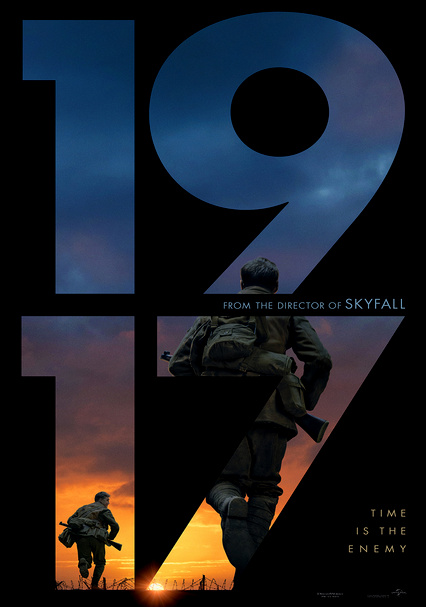
1917-2019

1917-2019

Director Sam Mendes

Starring George Mackay, Dean-Charles Chapman

Scott’s Review #979

Reviewed January 14, 2020

Grade: A

My tastes do not always lean towards the standard war film, so when I first heard about 1917 (2019), I was less than enthusiastic for no other reason than my pre-conceived perceptions.

Though it peaked with the idea of a World War I film rather than the standard World War II or Vietnam War film, I anticipated a run-of-the-mill experience or a story that had already been told.

Boldly told with incredible intensity and a brilliant technical style, director Sam Mendes creates a memorable cinematic treasure.

In April 1917, during the height of World War I, two British soldiers are tasked with a daring assignment: to hand-deliver crucial news to the 2nd Battalion of the Devonshire Regiment, calling off their planned attack on the German forces.

The Germans have faked a retreat to the Hindenburg Line and are ready to ambush the battalion, intending to kill sixteen hundred soldiers.

Schofield (George MacKay) and Blake (Dean-Charles Chapman) are chosen, with Blake’s brother Joseph among the soldiers bound to meet their fate.

As they journey, the young men face a myriad of hurdles including booby traps left by the Germans, terrain littered with dead bodies of their comrades, a precarious helicopter crash, giant rats, and the rapidly approaching deadline to deliver their message.

If they do not accomplish their mission in a timely fashion (twenty-four hours), the results will be devastating. Mendes keeps the tension high because he tells his story in real-time.

1917 is raw and emotional, hitting a hard punch.

Powerful scenes of dead bodies riddle the land, fat and pale from days spent immersed in cold water, young soldiers once handsome, now dead and bloated, remind the viewer what a terrible thing war is, and the ravages it causes.

Unlike other war films, patriotism and nationalist pride are not present.

Instead, the soldiers are weary and angry, confused as to why they are sent to fight for land as ugly as where they are, to die for land that is not even their own. They are depressed and confused.

The relationship between Schofield and Blake is excellent. Both men are weary and afraid, but have each other’s backs throughout their assignment.

It is not clear how long they have known each other, but they are at least acquaintances. They each come to the other’s rescue, and a pivotal scene occurs in a dusty hideout where they nearly die after a cave-in.

The characters possess grit and determination, but it is their humanity and connection with each other that resonate powerfully with the viewer.

An incredible scene unfolds as the day turns into night, and Schofield is well into enemy territory. To avoid a pursuing German soldier, he hides in a dusty basement area and finds a cowering young French girl. At first fearful, the pair quickly bonds, and a realization occurs to Schofield.

A newborn child accompanies the girl.

Assumed to be hers, the soldier immediately parts with his stash of food, not realizing the baby can have only milk. A ghastly realization is that the baby is not the French girl’s at all, but was instead found and rescued to prevent its death. The scene is tender and beautiful, perfectly contrasting the ugliness of the war.

The fantastic scene gives the viewer pause, prompting them to wonder what will become of the girl and the baby.

Nearly rivaling this lovely scene, another poignant moment occurs when Schofield stumbles upon a group of soldiers watching another soldier perform a rendition of the melancholy war tune, “Wayfaring Stranger”.

This moment slows the action down to a crawl, dedicated to loneliness and sadness amid the terrible battles.

The technical aspects that Mendes creates are spectacular and meant to be enjoyed on the largest screen possible. He uses a one-take approach, which keeps the action fast and furious.

The lavish and grandiose exterior scenes of immense dry land perfectly counterbalance a terrific watery scene when Schofield is chased into the river and soon embarks on wavy, grand rapids.

The camera remains on the soldier throughout the scene, as the viewer is taken on a wild adventure, sweeping every morsel of up and down motion with the tide.

To piggyback on this point, a scene occurs when one of the young men is knocked unconscious. It is daylight, but when he regains consciousness, it is night. The cinematography is brilliant, with a sharp left turn to translucent colors and blurry images of buildings.

The viewer is as disoriented as the soldier and fears what lurks in the shadows, as is found out when an unknown approaching figure begins to fire his gun.

1917 (2019) is a progressive-leaning gem with an anti-war message and a genuine approach to a “day in the life of a soldier”. It is not glossy or contrived, but a candid, realistic view of the savagery of war.

With a creative technical style, it is one of the best of its genre ever made.

Oscar Nominations: 3 wins-Best Picture, Best Director-Sam Mendes, Best Original Screenplay, Best Original Score, Best Sound Editing, Best Sound Mixing (won), Best Production Design, Best Cinematography (won), Best Makeup and Hairstyling, Best Visual Effects (won)

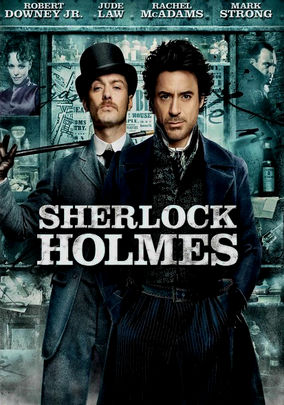
Sherlock Holmes-2009

Sherlock Holmes-2009

Director Guy Ritchie

Starring Robert Downey, Jr., Jude Law

Scott’s Review #575

Reviewed December 31, 2016

Grade: B-

From a technical perspective. Sherlock Holmes, a 2009 attempt at revitalizing the famous detective story into something of a modern franchise for the masses, achieves a measure of success in style and editing but ultimately fails in character development or story.

Traditionalist fans of the detective and his partner will undoubtedly be displeased with this film.

This film is very well made, with snappy editing, fast-paced wit, and attempts at humor, but it does not work all so well when put together as a film.

The re-birth of Sherlock Holmes was made to entice modern audiences.

Director Guy Ritchie even brings in superhero elements to Sherlock Holmes- suddenly he can kick ass as well as solve a complex mystery, which is so far removed from the original character.

Downey Jr. and Jude Law as Sherlock Holmes and his partner Watson, have some humorous moments, but the chemistry is not wholly there-it appears they are both trying too hard to create some magic where there is none.

All in all, though a well-made, entertaining two hours well spent, the story and characterization ultimately do not work.

Downey Jr. gives a great performance and shows why he is one of today’s most versatile actors, but this cannot ultimately make the entire film a success.

Oscar Nominations: Best Original Score, Best Art Direction

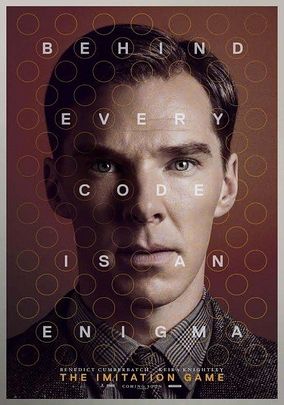
The Imitation Game-2014

The Imitation Game-2014

Director Morten Tyldum

Starring Benedict Cumberbatch, Keira Knightley

Scott’s Review #213

70295172

Reviewed January 15, 2015

Grade: A

The Imitation Game (2014) tells the story of Alan Turing, a confident and brilliant British mathematician who was responsible for cracking Nazi Germany’s Enigma code, which led to the Allied forces winning World War II.

The film also delves into Turing’s complex and sad personal life and the audience grows to know his upbringing largely told via flashbacks as a small boy at boarding school.

The film is tragic yet wonderfully made and is a powerful viewing experience in human storytelling.

The film has two aspects going on. The first is the hiring of Turing by the Government Code and Cypher School at Bletchley Park to crack the code and the numerous struggles faced in accomplishing this feat.

Turing is not easy-going. He is arrogant, quick-witted, and even smug. However, through his friendship with Joan (Keira Knightley), an intelligent woman on the team of scholars, we see a human side to him as they forge a lifelong bond.

The other is of his personal life which is a bit more mysterious and comes into play during the second half. Keeping a secret about his personal life, he is homosexual, which in the time the film is set (1940’s England), is illegal.

Alan and Joan agree to marry, in large part to appease her parents, but circumstances change these plans.

Benedict Cumberbatch, who portrays Turning, deserves praise for his impressive portrayal. He successfully gives depth and a wide range of emotions to the character.

He begins as a self-centered man but becomes layered, guarded, and protective due to his private life of which he is forced to hide a great deal.

Keira Knightley’s character supports Cumberbatch’s character of Alan as she becomes engaged to him and later in life becomes his biggest champion. Her character, besides being quite intelligent, is also kind and giving.

The ending will give the viewer many tears and cause to think of the enormity of World War II in terms of the vast amount of casualties. The facts listed just before the credits roll are awe-inspiring and gut-wrenching.

The Imitation Game is not a war movie per se since it does not deal with battle scenes. It is more of a drama dealing with the effects of war. Many figures are presented and some characters are affected.

For instance, in one scene, the group (led by Turing) must make a heartbreaking decision not to stop an impending attack, which will cause many deaths- including a character’s brother- instead of choosing to keep mum to save thousands more.

It is a powerful scene.

The Imitation Game (2014) successfully and heartbreakingly tells the story of a heroic figure who received no accolades while living, instead of being ostracized, and not until posthumously, did he receive his due.

Sadly, this was too little too late.

Oscar Nominations: 1 win-Best Picture, Best Director-Morten Tyldum, Best Actor-Benedict Cumberbatch, Best Supporting Actress-Keira Knightley, Best Adapted Screenplay (won), Best Original Score, Best Production Design, Best Film Editing