Category Archives: Richard Madden

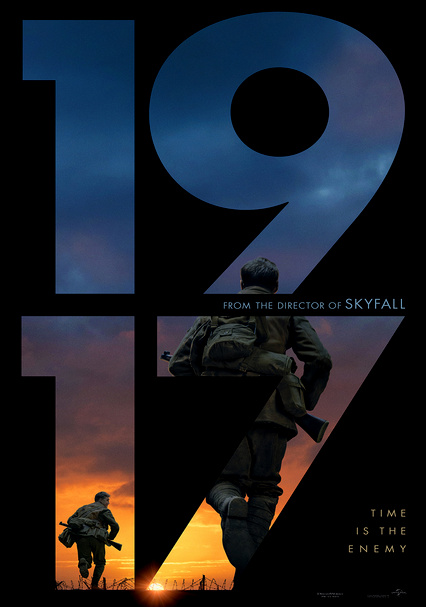
1917-2019

1917-2019

Director Sam Mendes

Starring George Mackay, Dean-Charles Chapman

Scott’s Review #979
Reviewed January 14, 2020

Grade: A

My tastes do not always lean towards the standard war film, so when I first heard about 1917 (2019), I was less than enthusiastic for no other reason than my pre-conceived perceptions.

Though it peaked with the idea of a World War I film rather than the standard World War II or Vietnam War film, I anticipated a run-of-the-mill experience or a story that had already been told.

Boldly told with incredible intensity and a brilliant technical style, director Sam Mendes creates a memorable cinematic treasure.

In April 1917, during the height of World War I, two British soldiers are tasked with a daring assignment: to hand-deliver crucial news to the 2nd Battalion of the Devonshire Regiment, calling off their planned attack on the German forces.

The Germans have faked a retreat to the Hindenburg Line and are ready to ambush the battalion, intending to kill sixteen hundred soldiers.

Schofield (George MacKay) and Blake (Dean-Charles Chapman) are chosen, with Blake’s brother Joseph among the soldiers bound to meet their fate.

As they journey, the young men face a myriad of hurdles including booby traps left by the Germans, terrain littered with dead bodies of their comrades, a precarious helicopter crash, giant rats, and the rapidly approaching deadline to deliver their message.

If they do not accomplish their mission in a timely fashion (twenty-four hours), the results will be devastating. Mendes keeps the tension high because he tells his story in real-time.

1917 is raw and emotional, hitting a hard punch.

Powerful scenes of dead bodies riddle the land, fat and pale from days spent immersed in cold water, young soldiers once handsome, now dead and bloated, remind the viewer what a terrible thing war is, and the ravages it causes.

Unlike other war films, patriotism and nationalist pride are not present.

Instead, the soldiers are weary and angry, confused as to why they are sent to fight for land as ugly as where they are, to die for land that is not even their own. They are depressed and confused.

The relationship between Schofield and Blake is excellent. Both men are weary and afraid, but have each other’s backs throughout their assignment.

It is not clear how long they have known each other, but they are at least acquaintances. They each come to the other’s rescue, and a pivotal scene occurs in a dusty hideout where they nearly die after a cave-in.

The characters possess grit and determination, but it is their humanity and connection with each other that resonate powerfully with the viewer.

An incredible scene unfolds as the day turns into night, and Schofield is well into enemy territory. To avoid a pursuing German soldier, he hides in a dusty basement area and finds a cowering young French girl. At first fearful, the pair quickly bonds, and a realization occurs to Schofield.

A newborn child accompanies the girl.

Assumed to be hers, the soldier immediately parts with his stash of food, not realizing the baby can have only milk. A ghastly realization is that the baby is not the French girl’s at all, but was instead found and rescued to prevent its death. The scene is tender and beautiful, perfectly contrasting the ugliness of the war.

The fantastic scene gives the viewer pause, prompting them to wonder what will become of the girl and the baby.

Nearly rivaling this lovely scene, another poignant moment occurs when Schofield stumbles upon a group of soldiers watching another soldier perform a rendition of the melancholy war tune, “Wayfaring Stranger”.

This moment slows the action down to a crawl, dedicated to loneliness and sadness amid the terrible battles.

The technical aspects that Mendes creates are spectacular and meant to be enjoyed on the largest screen possible. He uses a one-take approach, which keeps the action fast and furious.

The lavish and grandiose exterior scenes of immense dry land perfectly counterbalance a terrific watery scene when Schofield is chased into the river and soon embarks on wavy, grand rapids.

The camera remains on the soldier throughout the scene, as the viewer is taken on a wild adventure, sweeping every morsel of up and down motion with the tide.

To piggyback on this point, a scene occurs when one of the young men is knocked unconscious. It is daylight, but when he regains consciousness, it is night. The cinematography is brilliant, with a sharp left turn to translucent colors and blurry images of buildings.

The viewer is as disoriented as the soldier and fears what lurks in the shadows, as is found out when an unknown approaching figure begins to fire his gun.

1917 (2019) is a progressive-leaning gem with an anti-war message and a genuine approach to a “day in the life of a soldier”. It is not glossy or contrived, but a candid, realistic view of the savagery of war.

With a creative technical style, it is one of the best of its genre ever made.

Oscar Nominations: 3 wins-Best Picture, Best Director-Sam Mendes, Best Original Screenplay, Best Original Score, Best Sound Editing, Best Sound Mixing (won), Best Production Design, Best Cinematography (won), Best Makeup and Hairstyling, Best Visual Effects (won)
Rocketman-2019

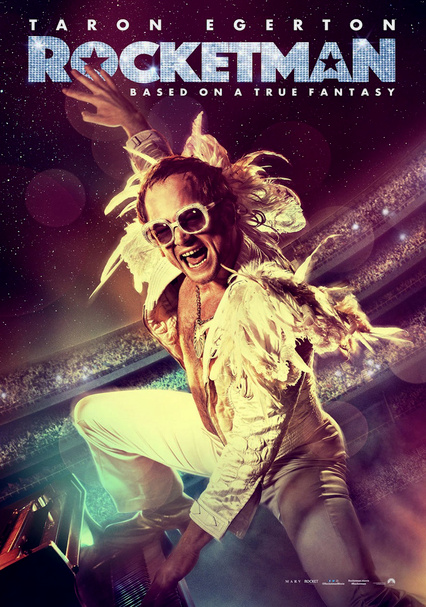
Rocketman-2019

Director Dexter Fletcher

Starring Taron Egerton, Jamie Bell

Scott’s Review #906

Reviewed June 5, 2019

Grade: A

Following the unexpected success of 2018’s rock biography Bohemian Rhapsody comes the similarly themed Rocketman (2019).

This time, the subject at hand is Elton John, rather than Freddie Mercury, but both storied figures share unquestionable comparisons, as their successes, failures, and struggles are well-documented.

Both films take their names from popular title songs, and both feature the same director, Dexter Fletcher.

Freddie Mercury and Elton John are both larger-than-life onstage personas, yet both reportedly suffered from shyness, creating characters to portray that helped ease their difficulties.

Rocketman gets the slight edge over Bohemian Rhapsody when comparing the two, with experimental and psychedelic sequences making the experience more left of center than the latter and lacking a hefty feel-good component.

I would venture to assess that Rocketman has darker overtones.

The film opens impressively as an adult, successful Elton John (Taron Egerton) attends a support group therapy session in rehab, begrudgingly. This scene will recur throughout the film as John slowly reveals more to the group about his childhood, rise to fame, and struggles with numerous demons.

This is key to the enjoyment of the film, as it frequently backtracks in time, allowing us to see John’s development both as a musician and on a personal level.

Many scenes unfold like a Broadway play, which is an ingenious approach, not only a treat for fans of John’s vast catalog of songs but also immensely creative from a cinematic perspective.

At the film’s high point, the scenes are not only showy but also propel the direction of the film, rather than slowing down the events.

Fantastic are the offerings of hit songs like “Tiny Dancer”, as shown during John’s first trip to Los Angeles, where he is forced to witness the then-crush, Bernie Taupin (Jamie Bell), take up with a supermodel at an LSD-infused Hollywood party.

The musical numbers offer glimpses into the mind and heart of Elton and other characters through song. A teary number occurs early on when a pained, boyish Elton is learning to play the piano, facing struggles at home.

When the song begins, it is Elton’s tune to carry, but then his father sings a few lines, followed by his mother and then his grandmother. Each person offers their perspective based on the lyrics they are singing.

The beauty of this scene is powerful and sets the tone for the scenes to follow.

Rocketman is an emotionally charged film, evoking laughter and tears throughout its duration. Thanks to Egerton, who carries the film, the audience cares for him as a human being instead of a larger-than-life rock star.

We feel his pain, cry his tears, and smile during rare moments when he is content. He faces insecurity, sex addiction, drug and alcohol addiction, and an eating disorder. Through Egerton, we face the battles alongside him.

Elton John serves as Executive Producer of the film, providing a measure of truth and honesty in storytelling, something Bohemian Rhapsody was accused of not containing. John’s parents are portrayed accurately and decidedly, and both mother and father are dastardly, nearly ruining Elton’s self-esteem for life.

Dallas Bryce-Howard, as his mother, is happy to capitalize financially on his fame, but sticks a dagger in his heart when she professes he will never be loved since he is a gay man.

His father is nearly as bad. Abandoning his loveless marriage to Elton’s mother, he eventually finds happiness with another woman and produces two boys. He can never love his eldest son, despite Elton’s efforts to reconnect.

To add insult to injury, his father asks him to cross out the words “to Dad” on an album autograph, instead requesting that it be given to a colleague. Elton is devastated.

Events are not all dire and dreary, as with his parents and a major suicide attempt. Happier times are shown, and his grandmother (wonderfully played by Gemma Jones) remains an ardent supporter.

His relationship with Taupin is one of the most benevolent and life-long causes of trust and respect, and once his act is cleaned up, Elton can appreciate the finer things in life more completely.

Egerton performs beautifully in both acting and singing capabilities, but lacks the singing chops that Elton John has. The decision was made not to have Egerton lip-sync, which deserves its measure of praise.

It’s interesting to wonder what the opposite choice would have resulted in. Like with Bohemian Rhapsody, we are left with a brilliant portrayal of John by Egerton.

Watched in tandem with Bohemian Rhapsody, a great idea given the back-to-back releases, is one recommendation for comparison’s sake.

Offering a more creative experience, again, the musical numbers are superb. Both switching through the back and forth timelines, Rocketman (2019) squeaks out the victory for me, and doesn’t the victor get the spoils?

If Rami Malek won the coveted Best Actor Oscar statuette, what would that mean for the tremendous turn that Egerton gives?

Oscar Nominations: 1 win-Best Original Song-“(I’m Gonna) Love Me Again (won)