Tag Archives: Nicky Henson

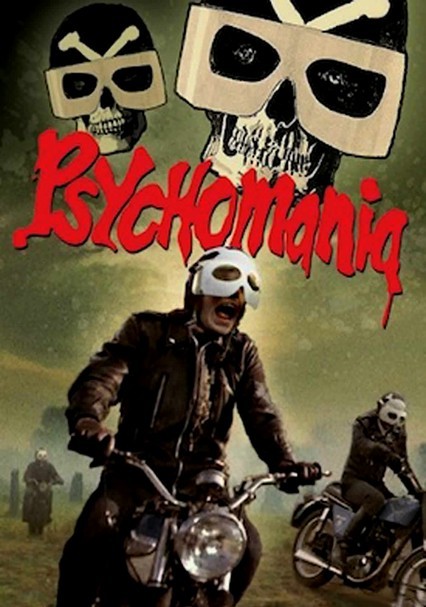
Psychomania-1973

Psychomania-1973

Director Don Sharp

Starring Nicky Henson, Mary Larkin, George Sanders

Scott’s Review #1,084
Reviewed November 19, 2020

Grade: B-

Psychomania (1973) is a film that has an intriguing premise, but it becomes messy and confusing because elements don’t come together.

A motorcycle gang wreaking havoc on their English small town decides to kill themselves and come back from the dead to live forever. They intend to do so with the aid of witchcraft and a sinister cult.

Unfortunately, neither the gang comes back to everlasting life nor does the premise provide an adequate payoff. The film meanders along without much intrigue or interest except for an above-average finale.

But even that is too little, too late.

Renowned film and television actor George Sanders, famous for powerful roles in classics like Rebecca (1940) and All About Eve (1950), in which he won an Academy Award, and numerous other roles, co-stars as a butler.

His role in Psychomania is barely more than a throwaway part since he does not have much to do. Hardly the crowning achievement of his long career, he committed suicide soon after the shooting wrapped.

Star, Nicky Henson joked that Sanders saw the finished film and overdosed on pills, realizing how far his career had descended. Hopefully, that’s an urban legend.

Beryl Reid, wonderfully bitchy in The Killing of Sister George (1968) as a lesbian soap opera star, is similarly downgraded, playing a glamorous matron who gets her kicks by holding seances for her neighbors.

She is the mother of the psychopathic leader of a violent teen gang.

Tom Latham (Henson) is the handsome leader of “The Living Dead,” a motorcycle gang that enjoys driving around town intimidating folks. He is joined by his pretty girlfriend, Abby (Mary Larkin), who is good-natured and less rebellious than the others.

Tom has time to flirt with other girls and uses his good looks to his advantage. He is in cahoots with his mother (Reid), and they have a penchant for frogs and black magic.

The gang decides, through Tom’s encouragement, to commit suicide, and if they believe in it, they will return as one of the “undead”.

Each follows suit, except for Abby, and engages in ritualistic activities at their hangout, “The Seven Witches”, which is a poor man’s Stonehenge. They decide to kill Abby because of her defiance.

The DVD quality (mine anyway) was atrocious and did the film no favors. My enjoyment would have increased if the luscious English landscape and its vibrant colors could have been capitalized on.

Mrs. Latham’s home, filled with creative antiques and oddities, would have been enhanced by higher-quality pieces.

The story never comes together. I like the main character, Tom, and find his sneering and posturing appealing in a light-hearted way. Henson is way too good-looking to be believable as a foreboding and crazy guy, but he sure is easy on the eyes.

No chemistry is to be found between him and Larkin, but they are cast well for this type of film- looks like overacting talent. Neither is terrible in the acting department nor great either.

The supporting characters look very British and of the 1970s, which is to be expected. This isn’t an annoyance as much as an astute observation. From the doctors who perform the autopsies to the constables, to the chief inspector, everyone looks their part.

Psychomania has a 1970s look and feel, so it ultimately feels dated because there is not much else to distinguish it from other films.

It’s adequate, but not much more.

On the positive, some of the music is chirpy and hip, which adds a bit of an upbeat, contemporary vibe. The numerous motorcycle scenes make me wonder whether a motorcycle company has a stake in the film, but surprisingly, it works.

The film, targeted as a horror film, is a strange one to categorize. The cult and witchcraft elements give off that vibe. The title of Psychomania (1973) creates a motorcycle/horror effect.

I’m not sure what to make of this film other than a sleazy, greasy, devil-worshipping mess. Poor Don Sharp, well-known for directing many Hammer horror films, seems not to know what to do with the silly script he is handed.

Is it a goofy comedy or straight-ahead horror?
Witchfinder General-1968

Witchfinder General-1968

Director Michael Reeves

Starring Vincent Price, Ian Ogilvy, Hilary Dwyer

Scott’s Review #904

Reviewed May 31, 2019

Grade: B+

Witchfinder General (1968) is a macabre horror film that creates an intense atmosphere amid a gruesome story centered on witch-hunting.

By the late 1960s, violence and bloodletting in cinema had become more lenient and acceptable. Hence, the film takes full advantage of the timing with an unusual amount of torture, cruelty, and brutality.

The mid-seventeenth-century English period is highly effective, as is the ghastly religious angle, making for compelling filmmaking.

Vincent Price is delicious in any film he appears in, having amassed over one hundred cinematic credits alone, to say nothing of his television appearances.

Practically trademarking his over-the-top comic wittiness and campy performances, his role in Witchfinder General may be his best yet, as he plays the character straight and deadly serious.

This succeeds in making his character chilling and, maybe, the best role of his career, despite numerous disputes with director Michael Reeves over motivation.

During the English Civil War, Mathew Hopkins (Price) took advantage of the unrest, profiting from witch-hunting. He travels from town to town, accusing the unfortunate of witchcraft, until they are mercilessly executed, after which he is paid handsomely.

Matthew is assisted in the accusations and torments by John Stearne (Robert Russell), a man his equal in brutality. Knowing these two men were real-life historical figures makes the action even more challenging to watch.

When he arrests and tortures Father Lowes (Rupert Davies), Lowes’s niece’s fiancĂ© (Ian Ogilvy) decides to put an end to Hopkins’s sleazy practices and goes on a quest to seek vengeance.

The mixture of a romantic love story, as Richard Marshall (Ogilvy) and Sara (Hilary Dwyer) marry, and a revenge tale, as Marshall vows to destroy Hopkins, is a nice combination, as are the numerous outdoor scenes.

Witchfinder General has much going on, and the pieces all come together.

The most horrific moments of the film come during the death scenes as the victims, whom logical viewers can ascertain are innocent. The characters are merely perceived as peculiar, therefore deemed to be up to witchcraft, and do not stand much of a chance despite their endless pleas and cries.

Before they are murdered, they are typically tortured until they ultimately confess to crimes out of desperation and perceived relief. The standard mode of death is either hanging or burning to death.

In one sickening scene, victims are assumed to be witches if they can swim and then are subsequently burned at the stake; if they drown, they are innocent, but of course die anyway.

One unfortunate victim has her hands and legs bound and drowns, followed by one of the witch hunters professing how her death was tragic because she was innocent all along.

In horror films, the most frightening situations are the ones that can conceivably occur in real life, whether it be a home invasion, a psycho with a knife, or being burned at the stake in the 1600s.

The fact that witch-hunting did happen is shocking and resoundingly makes Witchfinder General creepier, especially given that most scenes take place in the daytime. Anyone can create a studio monster, but the realism of the events is the key to the film’s power.

As an aside, while watching the film, I was keen to keep in mind how many countries still treat certain classes and groups of people differently, or even oppress them in the name of God.

Food for thought and an additional component that makes Witchfinder General relevant.

The story and the screenplay are not brilliant, nor do they necessarily need to be, given the treasures existing among the elements. The writing is your basic villains getting their comeuppance with a love story thrown in, standard fare, and adequate.

While pointing out some negatives is “Witchfinder General,” the best title that Reeves could come up with, or anyone else, for that matter? The title does not exactly roll off the tongue, nor does the renamed United States release, The Conqueror Worm, sound much better.

Witchfinder General (1968) is not an easy watch, and the faint of heart may want to avoid it, but its realism and rich atmosphere make it a success.

The lit candles, an old castle, potent red and blue costumes, and one of the greatest horror legends of all time make this a must-watch among horror fans.