Category Archives: Maggie Smith

Gosford Park-2001

Gosford Park-2001

Director Robert Altman

Starring Maggie Smith, Helen Mirren, Ryan Phillippe

Top 250 Films #105

Scott’s Review #350
60021796

Reviewed January 9, 2016

Grade: A

Somewhere between the brilliant PBS series of the 1970s and the ultra-modern cool of Downton Abbey (also PBS) lies the masterpiece that is Robert Altman’s 2001 gem, Gosford Park.

Ironic is that the creator, writer, and executive producer of Downtown Abbey, Julian Fellowes, wrote the screenplay of Gosford Park.

No wonder, combined with Altman’s direction, they created genius.

The period is 1932 and the wealthy, along with their servants, flock to the magnificent estate of Gosford Park, a grand English country home. The guests include both Americans and Brits and everyone is gathered for a shooting weekend- foreshadowing if ever there was.

Following a dinner party, a murder occurs and the remainder of the film follows the subsequent police investigation, and the perspectives of the guests and the servants as a whodunit ensues.

Many of the character’s lives unravel as secrets are exposed.

Sir William, the murder victim, is a powerful industrialist. After he announces he will withdraw an investment, the ramifications affect many of the guests so that the set-up is spelled out for the audience.

At the risk of seemingly nothing more than a plot device- it is so much more than that.

During a pheasant shoot, Sir William receives a minor wound thanks to a stray birdshot- is this intentional or merely an accident? When Sir William meets his fate that evening, the potential suspects pile up.

If there are two compelling aspects to a great film, they are a good old-fashioned whodunit and an enormous cast, all potential suspects.

What makes Gosford Park exceptional is that every character is interesting in some way and all are written well.

Secrets abound for miles in this film and are revealed deliciously. Torrid affairs, sexuality secrets, and blackmail abound as revelations make their way to the surface and Altman knows exactly how to cast doubt or suspicion on many of his characters.

The compelling relationship between American film producer Morris Weissman and his valet, Henry Denton (Ryan Phillipe), along with the domineering head housekeeper, Mrs. Wilson (Helen Mirren) are my favorite characters and dynamics.

How clever that Maggie Smith would play similar roles as stuffy aristocrats in both Gosford Park and Downton Abbey.

Rich in texture is the balancing between the haves and the have-nots and how those characters mix (sometimes in secret rendezvous!)

Typical of Altman films, the character dialogue commonly overlaps, and the actors largely improvise the script. In addition to being an actor’s dream, this quality gives a dash of realism to his films and Gosford Park is no exception.

Since there are so many characters and so many plots and sub-plots going on at once, my recommendation is to watch the film at least twice to fully comprehend the layers of the goings-on.

Gosford Park (2001) will become more and more appreciated.

Oscar Nominations: 1 win-Best Picture, Best Director-Robert Altman, Best Supporting Actress-Helen Mirren, Maggie Smith, Best Screenplay Written Directly for the Screen/Original Screenplay (won), Best Art Direction, Best Costume Design
The V.I.P’s-1963

The V.I.P’s-1963

Director Anthony Asquith

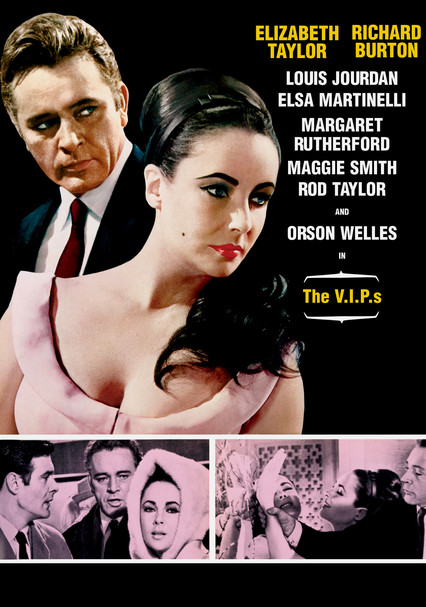
Starring Elizabeth Taylor, Richard Burton, Louis Jourdan

Scott’s Review #1,263

Reviewed June 4, 2022

Grade: B+

The V.I.P.’s (1963) is a sweeping drama set against a foggy London airport. It’s a good film but hardly a masterpiece, as the trials and tribulations of the stranded passengers are explored and sometimes intersect in standard ways.

The film is formulaic and offers little surprise, but I enjoyed it and was entertained by the parade of stars shuffling through the vast airport.

Some stories are more interesting than others, and the film is in a soap opera style with glamorous and rich characters.

One wonders if The V.I.P. influenced the creation of the film Airport (1970) seven years later. The film is patterned after 1932’s Grand Hotel, both of which were distributed by Metro-Goldwyn-Mayer.

Real-life couple and Hollywood A-listers Elizabeth Taylor and Richard Burton star and are the main draws of the film.

The all-star cast also features Louis Jourdan, Maggie Smith, Rod Taylor, Orson Welles, and the scene-stealing Margaret Rutherford.

Inclement weather has delayed a flight from London’s fabulous Heathrow Airport to New York City. A cross-section of elite passengers (V.I.P.s) impatiently wait to board the plane as they experience various life crises in the airport.

The main storyline revolves around Frances (Taylor), a gorgeous woman who is fleeing a loveless marriage to her millionaire husband, Paul (Richard Burton), and is in love with the dashing Marc Champselle (Jourdan).

Supporting stories feature a dotty duchess (Rutherford) who has fallen on hard times and a handsome businessman (Rod Taylor) trying to thwart a hostile takeover.

At the same time, his secretary (Smith) lusts after him, and Gloria (Elsa Martinelli), an aspiring actress, and her money-grubbing producer, Max (Welles).

Despite the heavy-sounding plots, the film is not overly severe and provides comical moments in small doses, which secures the pacing and offsets too much doom and gloom.

Liz and Richard have big, soapy moments, and writer Terence Rattigan was reportedly inspired to write the screenplay by a real-life situation.

Actress Vivien Leigh was planning to leave her husband Laurence Olivier for another man but was delayed at Heathrow Airport.

How scandalous!

Nonetheless, Taylor stoically gives an acceptable performance as a conflicted actress in love with a man other than her husband. The setup plays out as tired as it sounds, except for the juicy reality that Taylor and Burton were married, providing the only interest.

Taylor and Burton have terrific chemistry, though she also does with Jourdan. Still, there is something uncompelling and unsatisfying about the story.

Shockingly, they are all upstaged by Rutherford, who steals the entire film, resulting in her surprising Best Supporting Actress victory. She may have won because of the Academy’s tendency to sometimes award an older actor with the prize for a lifetime body of work.

Her riveting story is my favorite as she desperately seeks a way to save her historic home.

The actress hits a home run, providing much-needed comic relief and the liveliest of performances. Her peril offsets her cleverness, and her performance is filled with heart.

Many critics hastily insisted that Rutherford was the only reason to see The V.I.P.’s. Personally, the combination of an airport, peril, and big stars was more than enough to have me hooked.

The only addition that might have made the film better was an enormous fire or a hijacking crisis.

The V.I.P.’s (1963) will only appeal to fans of Taylor and Burton or those seeking something sudsy. Otherwise, the film is not too well remembered.

Oscar Nominations: 1 win-Best Supporting Actress-Margaret Rutherford (won)

Downton Abbey: A New Era-2022

Downton Abbey: A New Era-2022

Director Simon Curtis

Starring Hugh Bonneville, Michelle Dockery, Maggie Smith

Scott’s Review #1,261

Reviewed May 30, 2022

Grade: B+

Following the success of the 2019 film adaptation of the television series Downton Abbey, which aired on PBS from 2010 to 2015, a sequel was produced. This was unsurprising, given that the fan-favorite was both critically and commercially well-received.

Downton Abbey: A New Era (2022) will undoubtedly please fans of the series and may even attract new audiences who have not yet been exposed to it.

The trials and tribulations of the Crawleys, their friends, and staff are a treat as new situations and drama arise for the group to navigate, discussed over tea and crumpets.

The film is like visiting a cherished friend after a long absence.

Award-winning creator Julian Fellowes is thankfully still involved and was given screenwriting credit. This means that the formula is still the same, and nobody has tried to reinvent the wheel or veer the characters off course.

The year is 1928.

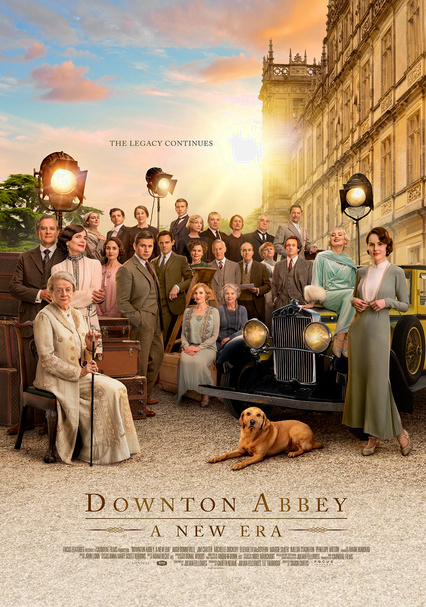
The main action centers around the sudden news that grand dame Violet Crawley, Dowager Countess of Grantham (Maggie Smith), has inherited a villa in the south of France from a former suitor who has just died. Some of the family must travel to France and figure out the mystery.

Secondly, A film production company requests to use Downton for a silent film. Robert (Hugh Bonneville) and retired butler Mr. Carson (Jim Carter) disapprove. Still, Robert’s eldest daughter and estate manager, Lady Mary Talbot (Michelle Dockery), says the income would cover the cost of replacing Downton’s leaking roof.

The household staff is eager to see the film stars and scrambles to make things as lovely as possible for the incoming actors.

The terrific thing about Downton Abbey: A New Era is that nearly all of the almost thirty principal characters are given some storyline.

Plus, there are a handful of new characters to give screen time to.

Surprisingly, as in Downton Abbey (2019), the main ‘super couple’, servants Anna (Joanne Froggatt) and Bates (Brendan Coyle) are given almost nothing to do. They are seen, but their child is not, and some drama would have been nice. Perhaps a mysterious illness or a malady for the couple to endure?

Maybe next time.

Still, everyone else is represented, and the feeling for viewers is warm and fuzzy.

Below are some highlights.

Robert frets at the possibility that he may be half French and his birth a result of a tryst between Violet and the villa owner. Mary’s absent husband allows for a flirtation to develop between her and a member of the film.

Gay butler Thomas (Robert James-Collier) finds himself pursued by the film’s big star.

Cora (Elizabeth McGovern) keeps a health secret, while a bedridden Violet’s health declines in bed. Newlywed servants Daisy (Sophie McShera) and Andy (Michael Fox) scheme to unite his lonely father with the cook, Mrs. Patmore (Lesley Nicol).

Finally, Miss Baxter (Raquel Cassidy) eagerly awaits a marriage proposal from nervous Mr. Molesley (Kevin Doyle).

In addition, new characters, such as actors Guy Dexter (Dominic West), Myrna Dalgleish (Laura Haddock), and director Jack Barber (Hugh Dancy), are instant fan favorites, immediately connecting with the mainstay characters.

This is ingenious writing that can serve as a valuable lesson for any soap opera writer. Always write new characters by sharing stories with existing ones rather than writing in silos. It works wonders.

The historical relevance of approaching the 1930s is not missed, as ‘talkies’ taking over the film industry meant the kiss of death for most silent film stars.

The popular LGBTQ+ storyline is wonderfully written. A gay man in 1928 was doomed to either a life of hiding or one of loneliness, and one character wisely references a ‘cruel world’ regarding the viewpoint of the lifestyle.

Times were not changing just yet.

I am crossing my fingers that a third Downton Abbey film will be made. The characters and storylines remain vibrant, especially as the timeline progresses into the 1930s and the dire 1940s, when World War II breaks out.

Downton Abbey: A New Era (2022) proves that in the COVID-19 era, a trusted old friend is needed tremendously, even on the silver screen.

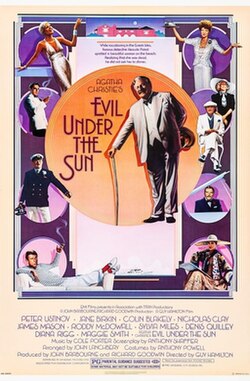
Agatha Christie’s Evil Under the Sun-1982

Agatha Christie’s Evil Under the Sun-1982

Director Guy Hamilton

Starring Peter Ustinov, Diana Rigg, Maggie Smith

Scott’s Review #1,065

Reviewed September 29, 2020

Grade: B+

Following the success of Murder on the Orient Express (1974) and Death on the Nile (1978), Agatha Christie’s Evil Under the Sun (1982) is of a similar formula and is an entertaining yarn.

The experience is like savoring a favorite meal- we know what we will get, and we dive in with pleasure.

Director Guy Hamilton, famous for directing four James Bond films, takes the director’s chair and keeps the action moving quickly crafting an enjoyable effort with a bit more humor than Christie’s novel in which it is based. Nearly on par with the two films save more predictability, this one nonetheless is a fine and joyous offering.

The setup remains the same, only the setting changed, as the affluent characters flock to a swanky resort area for fun and frolicking amid the Adriatic island with a saucer full of secrets and enough intrigue to last a lifetime.

Peter Ustinov returns as Detective Poirot in a very good effort. The man sleuths his way to a final revelation common in these films as the whodunit culminates in unmasking the murderer or murderers and bringing them to justice.

Spoiler alert- there are two killers. The juicy reveal takes place as all suspects are gathered and nervously fret possible accusations.

I found it easy to figure out the culprits since they are written as the most secretive, but it’s fun watching the unraveling and the explanation of their motivations. Also enjoyable is how each character has a specific ax to grind with the victim.

Agatha Christie’s Evil Under the Sun is a solid, classic, whodunit done very well, and the characters are rather well-written and the acting stellar.

The action starts mysteriously in the North York Moors when a hiker finds a strangled, female victim. Quickly, Hercule Poirot is asked to examine a diamond belonging to rich industrialist, Sir Horace Blatt (Colin Blakely).

The diamond is deemed a fake, and Blatt’s mistress, famous actress Arlena Stuart Marshall (Diana Rigg) has suspicion cast upon her. Events then switch to the resort island as we are left to ponder what the dead woman at the beginning has to do with anything. In good time the audience finds out and this is ultimately satisfying.

As usual, a large principal cast is introduced along with well-known stars.

Daphne Castle (Maggie Smith) owns the lavish hotel and caters to Arlena’s put-upon husband, Kenneth (Denis Quilley), and stepdaughter, Linda (Emily Hone), while Arlena openly flirts with the yummy Patrick (Nicholas Clay), who has fun prancing and preening wearing next to nothing.

Other characters are the husband and wife producers Odell and Myra Gardener (James Mason and Sylvia Miles), gay writer Rex Brewster (Roddy McDowell), and Patrick’s ailing wife, Christine (Jane Birkin).

Each has an issue with Arlena, who is the intended murder victim.

Like Murder on the Orient Express and Death on the Nile, the setting is the character itself. Though not a train or a boat, the sunny and sandy island is the perfect locale. The water, a noon cannon, suntan lotion, and a watch are the items most important in the whodunit but wait there’s more!

A tennis match, the cliffs, and a by-the-minute timeline are of utmost importance to figure out the mystery. The point of a film like this, as with the treasured Agatha Christie books, is deducing the why’s and how’s of the murder.

Delicious are the scenes featuring Daphne and Arlena going toe-to-toe and there are just not enough of them. Bitch versus bitch, as they trade barbs and snickering insults with glee, Smith and Rigg enjoy their roles, and the audience is treated as such.

Rigg is great as the bad girl, relishing in offending nearly everyone she encounters, and Smith speaks volumes with her eyes.

As for the male characters, Nicholas Clay gets my vote for the sexiest man of the year. With his lean, toned, bronzed chest and white shorts which he confidently pulls up to reveal his bare butt cheeks as he struts near the pool, he can have any girl he wants (and possibly guys) and adds layers to the film.

The biggest riddle is what he has in common with his wife, Christine, who is saddled with health issues, and simply not fun.

Staying largely true to the novel, Agatha Christie’s Evil Under the Sun (1982) will satisfy its intended audience.

A herculean author penning characters like Hercule Poirot and Miss Marple, everyman, and everywoman sleuths, this film was the last to be a big-screen affair. Made for television movies would soon follow.

A lavish landscape, bitchy characters, scheming characters, murder, and mayhem, are the recipe of the day for a good time.

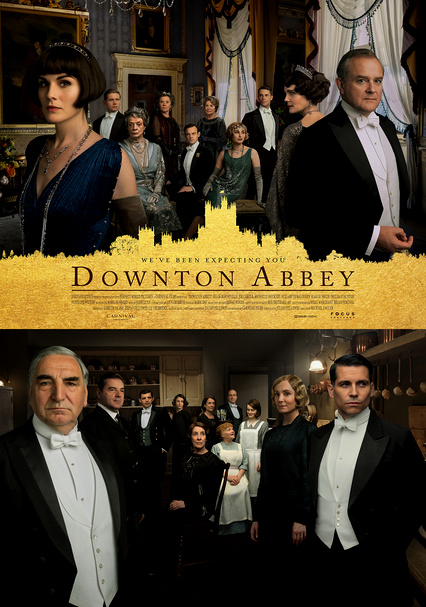
Downton Abbey-2019

Downton Abbey-2019

Director Michael Engler

Starring Hugh Bonneville, Michelle Dockery, Maggie Smith

Scott’s Review #947

Reviewed October 16, 2019

Grade: B+

Capitalizing on the tremendous success of the television series, which ended in 2015, Downton Abbey (2019) is a British historical period drama film written by Julian Fellowes, creator and writer of the series.

Beloved fans will devour the film, as the familiar formula and characters are brought to the big screen, giving it an even grander feel.

The film plays more like a two-hour episode arc over reinventing the wheel, but the result is a resounding crowd-pleasing affair with drama, scandals, and a good dose of nostalgia.

The Crawleys and their servants reside in the lavish fictional estate of Downton Abbey during the year 1927, a year and a half after the series ended.

Little has changed, and most of the characters are in similar situations, enjoying their daily lives.

Robert (Hugh Bonneville) and Cora Crawley (Elizabeth McGovern), the Earl and Countess of Grantham, are notified that King George V and Queen Mary will visit their home as part of a royal tour throughout the country.

The family and staff are excited yet skittish as they prepare to ensure the lavish event goes off without a hitch.

Situations arise such as the Downton Abbey servants feuding with the Buckingham Palace staff, Violet Crawley’s (Maggie Smith) dismay at Robert’s cousin Maud (Imelda Staunton) being in attendance, and attempted plot to kill the King which is thwarted by Tom (Allen Leach).

A new job offer for Edith’s (Laura Carmichael) husband, Mary’s (Michelle Dockery) frustration with maintaining the vast estate, and potential romances for several characters, including a scandalous same-sex relationship.

A few contemporary issues are created – among them, women’s rights and the plight of gay men. And though welcome, neither changes the overall blueprint of what the series is about, which is just what the series fans ordered.

Smith is the main attraction as she chews up the scenery with her insults, sarcasm, and blunt honesty. But the best scene, coming late in the film, gives Smith a chance to burst with sentimentality and limit the hamminess for at least one treasured scene.

The costumes and art direction are lovely, with luscious gowns, tuxedos, suits, jackets, hats, and shoes found in every scene.

The sprawling grounds of Downton Abbey and the ravishing interiors are front and center.

The film ventures to the neighboring city of York to offer a more progressive and metropolitan vibe, but each scene looks perfect, which is what fans have come to expect.

Not every character is front and center, but with an unwieldy cast of close to thirty principals, some are destined to accept back-burner status.

Surprisingly, yet agreeably, is the toned-down story for “super-couple” Bates (Brendan Coyle) and Anna (Joanne Froggatt), having enjoyed their share of trials and tribulations during the original run.

Wonderful moments feature supporting characters like Carson (Jim Carter), Thomas (Robert James-Collier), and Molesley (Kevin Doyle), who nearly steals the show with his hysterical fascination with royalty.

The balance and pace of the film are nearly perfect, and every character has at least something to do.

This characteristic has always helped huge ensemble casts succeed, and Fellowes wisely balances humor with drama but avoids tragedy or dark situations, hoping for mainstream success with his move to the big screen, opting to play it safe.

The attempt succeeds as the film adopts the “if it ain’t broke, don’t fix it” approach.

Downton Abbey (2019) is a splendid winner, primarily due to its impressive production values and costumes.

For fans of the television series, the film is a must-see and offers no more or no less than expected, providing more than enough to please those who want what the popular stories initially offered.

Despite the drama, the film does not feel “soapy” or contrived, and the tender moments may evoke a need for a hankie.

If the writing can remain fresh, I see no reason for another offering not to be green-lit, primarily due to the significant box-office returns.

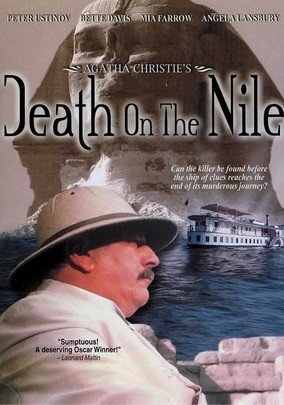
Death On The Nile-1978

Death On The Nile-1978

Director John Guillermen

Starring Peter Ustinov, Mia Farrow, Bette Davis

Scott’s Review #714

Reviewed January 14, 2018

Grade: B+

Death On The Nile is a 1978 British thriller that follows up the successful 1974 offering, Murder On The Orient Express- both films based on the fabulous Agatha Christie novels of the 1930s.

This time around, Belgian detective Hercules Poirot (Peter Ustinov) investigates a string of deaths aboard a luxurious steamer carrying the lavishly wealthy and their servants.

The film is a good, old-fashioned whodunit, perhaps not on the level of storytelling as its predecessor-the murder mystery contains not the oomph expected- but features exquisite Egyptian historical locales- worth its weight in gold.

Featuring a who’s who of famous stars and tremendous actors of the day, Death On The Nile carves a neat story right off the bat in such a way that the murder victim is fairly obvious right away- most of the characters have reason to celebrate her demise.

Rich and reviled heiress, Linnet Ridgeway (Lois Chiles), has stolen best friend Jacqueline’s (Mia Farrow) beau, Simon, sparking a bitter feud between the women. While honeymooning in Egypt, the newlyweds are continually taunted by angry Jacqueline.

Once the cruise ship departs with all on board, Jackie is the prime suspect when Linnet is murdered.

Poirot must find the killer as numerous other suspects all with grudges against Linnet, begin to emerge.

Death On The Nile serves up a stellar cast including legendary Bette Davis in the role of Marie Van Schuyler- an eccentric American socialite with an eye for Linnet’s necklace. The casting of Davis is reason enough to watch the film, though the character is not center stage but rather a supporting role.

The lead female honor is held for Farrow, who has the meatiest and most complex role in the film.

Jackie’s unstable actions make her the most likely to commit the deed, but the fun is to figure out the “whys” and the “hows” of the murder. Is there more than one killer? Are they working in cahoots or independently? As the body count increases these questions begin to resonate more and more.

The costumes and sets are gorgeous and it is no wonder the film won the Oscar for Best Costume Design. At a ball, the women are dripping with jewels and gorgeous gowns.

Along with Davis, boozy author Salome Otterbourne, hilariously played by Angela Lansbury, is granted the prize of wearing the most luxurious and interesting of all the costumes. She drips with jewels and, with a cocktail always in hand, is the film’s comic relief.

Director John Guillermin makes the film an overall light and fun experience and, despite the murderous drama, does not take matters too seriously.

Offering humorous moments, this balances nicely with the inevitable murders.

The fun for the audience is deducing whodunit- most of the characters have the motive and the cast of characters is hefty.

I had memories of the famous board game Clue- Was it Jackie in the ballroom with the revolver? You get the idea. The film makes for a good, solid game of mystery.

Comparisons to 1974’s Murder On The Orient Express cannot help but be drawn, especially in the lead casting of Hercules Poirot.

Truth be told, Albert Finney’s portrayal in “Murder” is superior to Peter Ustinov’s Poirot in “Death” and I am not sure what purpose Colonel Race (David Niven) as Poirot’s friend offers other than to be a loyal sidekick and present a character that Poirot can explain events to- think what Watson was to Sherlock Holmes.

Regardless, Finney is the superior Poirot as he musters more strength and charisma than Ustinov does.

How lovely and historic to witness the wonderful Egyptian locales- the Sphinx and the Great Pyramids are featured amid an attempt on the life of the romantic pair by way of falling rocks- this sets the tone for the perilous cruise about to be embarked upon.

Perhaps a perfect film for a Saturday stay-at-home evening with friends, complete with a serving of quality wine and cheese, Death On The Nile is a sophisticated, yet fun, British mystery film, fantastic to watch in a party setting where the audience can be kept guessing until the nice conclusion and the big reveal of who killed whom and why.

Oscar Nominations: 1 win-Best Costume Design (won)

A Room with a View-1986

A Room with a View-1986

Director James Ivory

Starring Helena Bonham Carter, Julian Sands

Scott’s Review #695

Reviewed November 3, 2017

Grade: B+

A Room with a View (1986) is one of four major films to be based on famed British author E.M. Forster’s novels- Howards End (1992) and A Passage to India (1986), and Maurice (1987) being the other three.

The foursome contains common elements such as the vast English countryside and class distinctions, leading to heartaches and passion.

In the case of A Room with a View, the film traverses from artistic Florence, Italy to a cozy village in England.

The film is a period drama mixed with lots of authentic, unforced, good humor and at its core is a solid romantic drama, though if compared with the aforementioned other films, is not quite on par, though is still an entertaining watch- given the dismal year of cinema circa 1986.

The film was considered one of the best releases that particular year and was awarded a handful of Oscar nominations- winning Costume Design, Adapted Screenplay, and Art Direction.

Cultured and oftentimes brooding, Lucy Honeychurch (Helena Bonham Carter), goes on holiday to Florence with her rigid and conventional older cousin Charlotte (Maggie Smith), who also serves as her chaperone.

While enjoying the artistry of the European city, Lucy meets and falls madly in love with free-spirited George Emerson (Julian Sands), who is also visiting Florence with his easy-going father, Mr. Emerson (Denholm Elliott).

The men seem oblivious to Lucy’s (and Charlotte’s) Victorian-era upbringing, which attracts Lucy and appalls Charlotte.

Months later, the would-be lovers reunite in England and spend time averting obstacles thwarting their love, while admitting to themselves that their love is blossoming.

As Lucy has become engaged to snobbish Cecil Vyse (Daniel Day-Lewis), a sophisticate deemed suitable by her family to marry Lucy, the pair lacks the romantic connection that she shares with George.

Day-Lewis, on the cusp of becoming a breakout star and brilliant talent, gives Cecil a somewhat comical, yet endearing persona, that makes him the main foil, but also breathes sympathy into the character. This is especially evident during the Lucy/Cecil break-up scene.

The standout performance in A Room with a View is the comic brilliance of Smith as the manipulative and witty, Charlotte Bartlett, and this is evident throughout.

Smith injects vigor and comic wit into her character, as Charlotte seemingly makes one blunder after the other in the self-deprecating way she manages to use to her advantage to humorously manipulate other characters into doing things her way.

A risqué and quite hysterical all-male frontal nudity scene occurs mid-way through the film and, while not advancing the plot in any way, steals the entire film in its homoerotic and free-spirited way.

As the Reverend, young George, and Lucy’s energetic brother, Freddy, walk along a beautiful path, they decide to skinny dip in a pond where they horseplay and wrestle with each other completely in the buff.

As they chase each other around the pond, grab each other, and lightly smack bottoms, one cannot help but wonder if this scene set the tone for 1987’s gay-themed period piece based on another E.M. Forster novel, called Maurice.

A coincidence? I think not. As the trio of rascals come upon the properly dressed girls on the path, hilarity takes over the scene.

The art direction and costumes are of major excellence to A Room with a View as the film “looks” like a 1910 period rather than seeming like it is 1986 with the actors donning early twentieth-century styles.

Every scene is a treat from this perspective as we wonder who will wear what attire in the next scene.

As with the other aforementioned E.M. Forster films, class distinctions, and expectations are a major element in A Room with a View and make Lucy and George all the more likable as a couple.

Still, from an overall standpoint, there is something slightly amiss in the story department.

I did not find Helena Bonham Carter, an actor I like, overall very compelling as Lucy, and I think this leads to the story being slightly less than it might have with another in the role.

We may root for Lucy and George, but if the pair do not wind up together it is more of a pity rather than a travesty.

To summarize A Room with a View, the story is good, not great, and other key components to the film are much better than the central love story of Lucy and George but are therefore secondary to the main action.

Given a Charlotte romance, the film’s best character, that would have catapulted this film to the exceptional grade. Imagine the possibilities.

Or more of the two Miss Alan’s and their gossipy nature, or even a story to the rugged nude horseplay among men.

Many of the aspects that could have made A Room with a View (1986) great, were too often on the sidelines.

Oscar Nominations: 3 wins-Best Picture, Best Director-James Ivory, Best Supporting Actor-Denholm Elliott, Best Supporting Actress-Maggie Smith, Best Screenplay Based on Material from Another Medium (won), Best Art Direction (won), Best Cinematography, Best Costume Design (won)

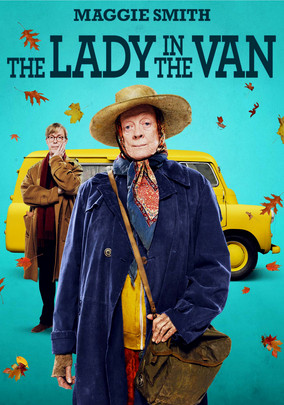
The Lady in the Van-2015

The Lady In The Van-2015

Director Nicholas Hytner

Starring Maggie Smith

Scott’s Review #610

Reviewed January 19, 2017

Grade: B

Maggie Smith can do no wrong and I will happily enjoy watching her in anything- anytime. Around in film since the 1950s this lady deserves a starring film role.

Utterly distinctive she is, as legendary actress Bette Davis was,  Smith has a style purely her own. Her facial expressions and exasperated gasps make her one of the great film stars.

The Lady in the Van (2015) is specifically made for her, but besides her talents, the movie is a decent offering, but very safe.

It lacks the depth that it could have had.

Written by Alan Bennett, the film tells the true story of Mary Sheperd, an elderly woman living in a broken-down van, who befriends Bennett and eventually lives in his driveway for fifteen years before her inevitable death.

Set in northern London, a quaint and gorgeous part of the world, Mary harbors a deep secret involving her van and is revealed to have been a star piano pupil in her day.

Smith has no qualms about playing unflattering characters.

Shepherd is grizzled, abrupt, and rude, but Smith puts a lot of heart into her too, so the audience senses her vulnerability and falls in love with her. With her sad protruding blue eyes, wrinkles for miles, and chirpy voice, Smith is fantastic at giving her all to the role.

The rest of the cast adequately play their roles but are limited and out-shadowed at every turn. Most notable is the wasted talents of Jim Broadbent, appearing in a small and quite meaningless role.

Besides Smith’s brilliant performance, The Lady in the Van lacks layers. The story is good, but we never see many of Mary’s struggles. How does she afford food? How is she not sick? The film skims over the darker elements of homelessness in favor of a lighthearted tale.

Fine, but what about her inevitable issues?

Other less important stories are mentioned but not fully explored. Alex speaks to what looks like his twin brother, but is it his alter ego?

Young men come and go at night, so the presumption is that Alex is gay, and in the end, we do see Alex living with a man, but why is this so vaguely written? Why mention it at all?

This story would have been interesting to delve deeper into given that the real Alex Bennett wrote the film.

Other side stories are introduced but remain on the surface. Alex’s mother suffers from Alzheimer’s, but this is not explored much, and Mary’s brother, who institutionalized her at a young age, offers no explanation as to why this was done she had a mental illness- but the brother’s motivations are not clear.

I wanted more from the supporting characters than was offered.

Still, the bottom line is that The Lady in the Van (2015) is a Maggie Smith film, and any in which she has the lead role, is pretty damned good for that reason alone.

Quartet- 2012

Quartet-2012

Director Dustin Hoffman

Starring Maggie Smith, Tom Courtenay

Scott’s Review #122

70243583

Reviewed July 20, 2014

Grade: B+

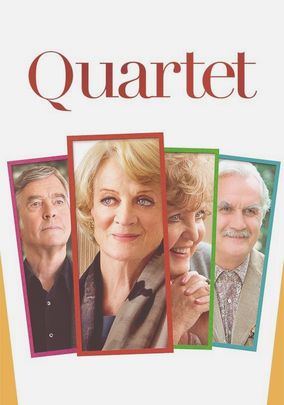
Quartet (2012) is a fantastic little British film, directed by Dustin Hoffman, and starring the always wonderful Maggie Smith, whom one might argue could be watched in anything.

I certainly could.

Smith stars as a stubborn retired opera singer who begrudgingly settles in at Beecham House, a luxurious senior retirement home for former musicians in their final years.

There she reunites with colleagues from years past who attempt to reunite for a concert for the public to save the home from foreclosure.

The cast of senior citizens in Quartet is quite likable in one of the few smart films handling aging gracefully.

There is comedy and drama mixed in as the intelligent characters are treated as such in their final years with a hint of soap opera to the film as some of them were intimate with others in years past and the current hijinks are hysterical.

The subject of aging is treated with respect and dignity and not played for laughs, which is one aspect of the film that I adore.

A talent-filled cast of British theater actors, along with some real-life musicians make this film a treat.

It is terrific to see Pauline Collins (Upstairs/Downstairs) in a large role.