Category Archives: David Markham

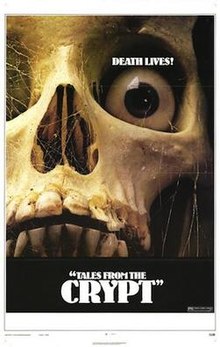
Tales from the Crypt-1972

Tales from the Crypt-1972

Director Freddie Francis

Starring Joan Collins, Ian Hendry, Robin Phillips

Scott’s Review #1,200
Reviewed November 25, 2021

Grade: A-

Tales from the Crypt (1972) is a delicious British anthology based on stories from the EC Comics series. Each of the five chapters is eerie storytelling that offers horror fans glimpses into the minds of depraved, devilish characters with sinister motives.

The sheer joy is witnessing their comeuppance.

This film is the predecessor to Vault of Horror (1973) and can be watched as a companion piece.

Below is a summary, review, and rating of each vignette.

Intro

Five strangers are suddenly compelled to join a tourist group to visit the old catacombs.

Separated from the main group, the strangers find themselves in a room with the mysterious Crypt Keeper (Ralph Richardson), who details how each of them may die.

…And All Through The House- A

Joanne Clayton (Joan Collins) brutally kills her husband Richard (Martin Boddey) on Christmas Eve to get her hands on their insurance money.

She prepares to hide his body but hears a radio announcement of a homicidal maniac (Oliver MacGreevy) on the loose.

She sees the killer (who is dressed in a Santa Claus costume) outside her house, but cannot call the police without exposing her crime.

Her daughter is upstairs in her bedroom, unaware.

This is my favorite chapter, and it’s nonstop action. Collins is terrific as the greedy Englishwoman put in peril. The audience will cheer for her to get her just desserts, especially after she callously disregards a lovely Christmas gift her husband bought for her.

Reflection of Death- B+

Carl Maitland (Ian Hendry) abandons his family to be with his secretary, Susan Blake (Angela Grant). After they drive off together, they are involved in a car accident. He wakes up, having been thrown clear of the burned car. He tries to hitchhike home, but everyone he meets screams with horror when they see him.

This vignette is slightly confusing in terms of the events’ timeline, but compelling as we wait to see what Carl’s face looks like and what has happened to Susan and his wife.

Poetic Justice- A

James Elliott (Robin Phillips) lives with his father Edward (David Markham) across from the home of elderly dustman Arthur Edward Grimsdyke (Peter Cushing), who owns several dogs and entertains children in his house.

James hates Arthur’s ramshackle lawn and embarks on a scheme to rid the neighborhood of the older man.

I love seeing Cushing play against type as a kindly grandfatherly character, and this chapter is the ultimate revenge fantasy, and quite satisfying to see what happens to James.

It’s also a perfect watch for Valentine’s Day, since the holiday is in play.

Wish You Were Here- A-

Businessman Ralph Jason (Richard Greene) is on the verge of financial collapse. His wife Enid (Barbara Murray) notices the inscription on a Chinese statue the couple owns.

They are granted three wishes. Enid decides to wish for a fortune and, surprisingly, the wish comes true, but with dire results.

This one wonderfully cascades a chain of events that leaves the characters in peril. The theme is once again about greed, specifically surrounding insurance money. The fast-paced nature is appealing, and the ancient Chinese wishes leave one character in eternal suffering.

Blind Alleys- A-

Major William Rogers (Nigel Patrick) becomes the new director of a home for blind people and exploits his position to live in luxury with his dog, Shane. At the same time, his drastic cuts to food and heating worsen the residents’ living conditions.

Led by George Carter (Patrick Magee), the residents revolt after a fellow resident dies of hypothermia. Rogers and Shane are locked in the basement, where Rogers must navigate through a maze of razor blades and a now ravenous wild dog who will hungrily eat his owner.

Though far-fetched, Blind Alleys is delicious fun and contains my most hated character. This is all the more satisfying as he ‘gets it’ in the end!

Finale

After completing the final tale, the Crypt Keeper reveals that he was not warning them of what would happen, but telling them what has already happened: they have all “died without repentance.

The conclusion does nothing more than put a satisfying cap on the viewer as each character once again pays for their shenanigans.
Gandhi-1982

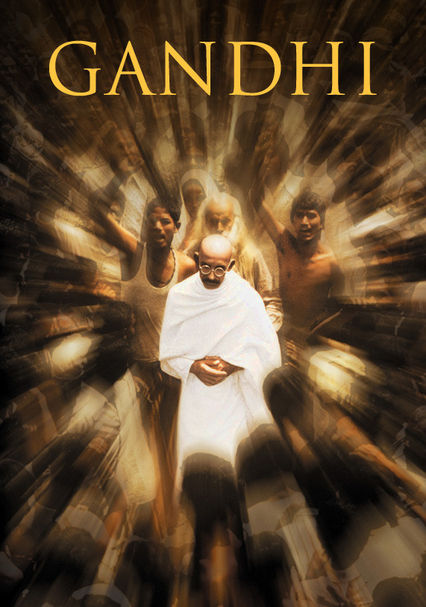
Gandhi-1982

Director Richard Attenborough

Starring Ben Kingsley

Scott’s Review #1,189

Reviewed October 30, 2021

Grade: A

Ben Kingsley delivers an astonishing performance as Mahatma Gandhi,  the steady-handed lawyer who stood up against British rule in India and became an international symbol of nonviolence and peaceful understanding until his tragic assassination in 1948.

Entitled simply Gandhi (1982) the film is directed by Richard Attenborough who has created masculine offerings such as The Great Escape (1963) and The Sand Pebbles (1966) before.

Calmly, the director creates a grandiose epic but one that is thought-provoking and introspective in its humility.

I was incredibly affected by this picture.

As beautiful as the cinematography and other such trimmings are the message is what stands out to me most. One man’s spirit and thirst for fairness and human equality are beyond inspiring decades after the film was made.

Thanks to Kingsley, the biography infuses an infectious channeling of what being a human being is all about and how human decency is the desired goal.

The film belongs to Kingsley. Despite hosting a cast of literally thousands he is the only name worth mentioning. He is that superior.

Attenborough, who teams with screenwriter John Briley presents major events in the life of Mohandas Gandhi (Kingsley). The film starts suddenly in January 1948, when an elderly Gandhi is on his way to an evening prayer service and is shot point-blank in the chest in front of a large number of dumbfounded greeters and admirers.

His state funeral is shown, the procession attended by millions of people from all walks of life, with a radio reporter speaking beautifully about Gandhi’s world-changing life and projects.

The film then returns to decades earlier when Gandhi, a young man, has a violent and racist experience. He vows to dedicate himself to the concept of nonviolent resistance. Initially dismissed, Gandhi was eventually internationally renowned, and his gatherings of passive protest moved India towards independence.

Gandhi has been criticized for its extraordinary length with a running time of three hours and ten minutes. A suggestion is to watch the film in multiple sittings though the best recommended approach would be to see it on the big screen.

Unfortunately, I didn’t but fantasize about the massive sequences and how gorgeous they would appear at the cinema.

The story, acting, production, and pretty much everything else about Gandhi is a ravishing spectacle.

It’s worth its weight to sit back and watch Kingsley completely immerse himself in the role. The actor deservedly won the Best Actor Academy Award and despite his oodles of other film roles is best remembered for this one.

I’m half surprised that it didn’t typecast him since he is so identifiable in the role.

I’d like to mention two aspects that some might not notice as much as others but that is simply astounding. The cinematography of the deserts, towns, and cities of India is plush with detail and accuracy. If one cannot go on a trip to India the next best thing is to watch this film instead. You’ll get a good dose of realism.

South Africa is also featured.

The costumes brilliantly showcase Indian flair and culture so well that I felt that I had been to an interesting country at the time that the film portrayed the events and felt nestled amid the luxurious colors and good taste.

Post-1982, the film genre of the epic exists rarely if ever anymore.

Long gone are the days of brilliance like Gone With the Wind (1939) or Lawrence of Arabia (1962) which are truly a delight to simply lay one’s eyes on.

Gandhi deserves to be appreciated as much as those other films despite being released in less than an artistic decade in cinema.

Gandhi (1982) is a wonderfully tragic film and leaves the viewer feeling sad but also inspired to carry the torch picked up by one brave man.

A history lesson it’s also as much a lesson in humanity and the courageous fight that one man fought. Military power is not the way to achieve change in the world.

Oscar Nominations: 7 wins-Best Picture (won), Best Director-Richard Attenborough (won), Best Actor-Ben Kingsley (won), Best Screenplay-Written Directly for the Screen (won), Best Art Direction, Best Cinematography (won), Best Costume Design (won), Best Film Editing (won), Best Makeup, Best Original Score, Best Sound