Category Archives: Michael Bryant

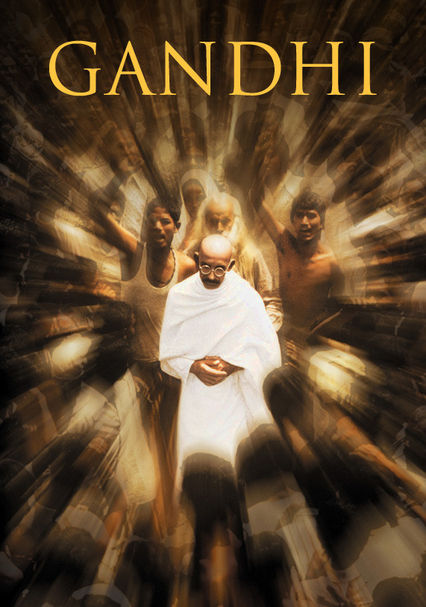
Gandhi-1982

Gandhi-1982

Director Richard Attenborough

Starring Ben Kingsley

Scott’s Review #1,189
Reviewed October 30, 2021

Grade: A

Ben Kingsley delivers an astonishing performance as Mahatma Gandhi,  the steady-handed lawyer who stood up against British rule in India and became an international symbol of nonviolence and peaceful understanding until his tragic assassination in 1948.

Entitled simply Gandhi (1982) the film is directed by Richard Attenborough who has created masculine offerings such as The Great Escape (1963) and The Sand Pebbles (1966) before.

Calmly, the director creates a grandiose epic but one that is thought-provoking and introspective in its humility.

I was incredibly affected by this picture.

As beautiful as the cinematography and other such trimmings are the message is what stands out to me most. One man’s spirit and thirst for fairness and human equality are beyond inspiring decades after the film was made.

Thanks to Kingsley, the biography infuses an infectious channeling of what being a human being is all about and how human decency is the desired goal.

The film belongs to Kingsley. Despite hosting a cast of literally thousands he is the only name worth mentioning. He is that superior.

Attenborough, who teams with screenwriter John Briley presents major events in the life of Mohandas Gandhi (Kingsley). The film starts suddenly in January 1948, when an elderly Gandhi is on his way to an evening prayer service and is shot point-blank in the chest in front of a large number of dumbfounded greeters and admirers.

His state funeral is shown, the procession attended by millions of people from all walks of life, with a radio reporter speaking beautifully about Gandhi’s world-changing life and projects.

The film then returns to decades earlier when Gandhi, a young man, has a violent and racist experience. He vows to dedicate himself to the concept of nonviolent resistance. Initially dismissed, Gandhi was eventually internationally renowned, and his gatherings of passive protest moved India towards independence.

Gandhi has been criticized for its extraordinary length with a running time of three hours and ten minutes. A suggestion is to watch the film in multiple sittings though the best recommended approach would be to see it on the big screen.

Unfortunately, I didn’t but fantasize about the massive sequences and how gorgeous they would appear at the cinema.

The story, acting, production, and pretty much everything else about Gandhi is a ravishing spectacle.

It’s worth its weight to sit back and watch Kingsley completely immerse himself in the role. The actor deservedly won the Best Actor Academy Award and despite his oodles of other film roles is best remembered for this one.

I’m half surprised that it didn’t typecast him since he is so identifiable in the role.

I’d like to mention two aspects that some might not notice as much as others but that is simply astounding. The cinematography of the deserts, towns, and cities of India is plush with detail and accuracy. If one cannot go on a trip to India the next best thing is to watch this film instead. You’ll get a good dose of realism.

South Africa is also featured.

The costumes brilliantly showcase Indian flair and culture so well that I felt that I had been to an interesting country at the time that the film portrayed the events and felt nestled amid the luxurious colors and good taste.

Post-1982, the film genre of the epic exists rarely if ever anymore.

Long gone are the days of brilliance like Gone With the Wind (1939) or Lawrence of Arabia (1962) which are truly a delight to simply lay one’s eyes on.

Gandhi deserves to be appreciated as much as those other films despite being released in less than an artistic decade in cinema.

Gandhi (1982) is a wonderfully tragic film and leaves the viewer feeling sad but also inspired to carry the torch picked up by one brave man.

A history lesson it’s also as much a lesson in humanity and the courageous fight that one man fought. Military power is not the way to achieve change in the world.

Oscar Nominations: 7 wins-Best Picture (won), Best Director-Richard Attenborough (won), Best Actor-Ben Kingsley (won), Best Screenplay-Written Directly for the Screen (won), Best Art Direction, Best Cinematography (won), Best Costume Design (won), Best Film Editing (won), Best Makeup, Best Original Score, Best Sound

Torture Garden-1968

Torture Garden-1968

Director Freddie Francis

Starring Burgess Meredith, Jack Palance, Peter Cushing

Scott’s Review #1,027

Reviewed May 28, 2020

Grade: B

A horror offering made up of multiple vignettes is a treat, offering numerous stories, especially with some late-1960s British sophistication peppered in.

Torture Garden (1968) contains four stories- Enoch, Terror over Hollywood, Mr. Steinway, and The Man Who Collected Poe, each with some intrigue. The structure may be most comparable to The Twilight Zone television series, but in a British way.

The Terror over Hollywood is my personal favorite.

Burgess Meredith (yes, that Burgess Meredith of the Batman television series) stars as Doctor Diabolo, a sinister con artist who runs an attraction at a fairground sideshow.

Having shown them a handful of tepid haunted-house-style gimmicks to whet their appetites, he promises a frightening experience if they pay extra.

Of course, they are immediately taken, and when they follow him behind a curtain, one by one, they view their fates through a transfixed female deity, Atropos (Clytie Jessop).

The stories commence through a hallucinogenic method.

Below is a summary and review of each vignette.

In Enoch, Colin Williams (Michael Bryant), a greedy playboy with money troubles, takes advantage of his elderly uncle (Maurice Denham) by causing his death and falling under the spell of a man-eating cat.

Colin is determined to find his uncle’s riches, leading him to desperation. The plot is far-fetched, but the black cat with glowing green eyes is memorable, as are the beheadings of a homeless man, a nurse, and finally, the Playboy himself.

When the cat finally puts another person under the spell, the conclusion is satisfying.

Terror over Hollywood travels across the pond to the United States, where it introduces a tale of jealousy, schemes, and intrigue in La La Land.

The vignette most resembles Invasion of the Body Snatchers in theme and is quite compelling.

Carla Hayes (Beverly Adams) is a beautiful, aspiring actress intent on clawing her way to the top by any necessary means. After she ruins her roommate’s dress and steals her date, she embarks on a strange journey that leads her to a role in a film, but there is a price to pay.

Adams is a stellar star who brings life and energy to the story.

Providing the most bizarre of all the vignettes, Mr. Steinway involves a possessed grand piano by the name of Euterpe, who becomes jealous of its owner, Leo’s (John Standing) new lover, Dorothy (Barbara Ewing), and goes on the attack seeking revenge.

The story is about Dorothy, a sideshow patron, so the events are told from her perspective.

The story contains plenty of loopholes, but it’s fascinating to see the enormous, gorgeous piano come to life as a character and push Dorothy out the window, sending her plummeting to her death.

Finally, in The Man Who Collected Poe, a Poe collector (Jack Palance) murders another collector (Peter Cushing) over collectibles he refuses to show him, only to find that the keepsake is the real Edgar Allan Poe (Hedger Wallace).

Seeing both the esteemed real-life figure and horror legend Cushing makes this chapter enjoyable, even though it is the least compelling of the bunch. Knowing that Torture Garden was meant initially to star Cushing and Christopher Lee detracts from the film just a bit.

One can only imagine the possibilities.

In the epilogue, which proves to be a clever twist, the mysterious fifth patron (Michael Ripper) scares the others into fleeing for their lives before revealing that he is a conspirator of Doctor Diabolos.

The group is proven to be merely gullible rubes, left with the belief that a murder has occurred and their fates will come true.

The film presents black magic and the occult in a fun, not a frightening, way. This is both a positive and a negative since witchcraft never felt so family-friendly.

Torture Garden (1968) is neither the best nor the worst horror anthology ever created. The plots are uneven but entertaining and never dull.

The creative additions of a killer piano, a killer cat, and famed storyteller Edgar Allen Poe are worth the price of admission, as is the centerpiece villain played by the great actor Burgess Meredith, who helps keep the plot moving along.

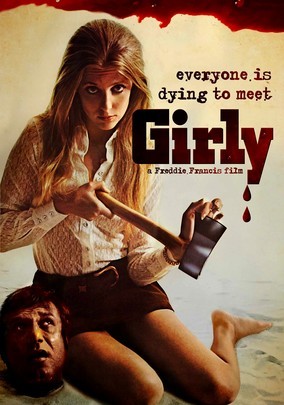
Girly-1970

Girly-1970

Director Freddie Francis

Starring Vanessa Howard, Michael Bryant

Scott’s Review #11

70132676

Reviewed June 14, 2014

Grade: B-

Girly (1970) is an unusual British horror film about an affluent, clearly deranged family who kidnaps victims and forces them to become “members” of the family by participating in game-playing escapades for their delight.

The premise of the film is appealing and intriguing, and it’s unclear how it will play out. The family members (Mumsy, Nanny, Girly, and Sonny) are played with gusto by the cast but are never over the top.

My favorite is “Mumsy”, wickedly played by British actress Ursula Howells.

The film itself has a fairy-tale quality, with the sets of the house they share. The primary victim (a male gigolo) is a miscast (too old, not sexy enough). It begins a cat-and-mouse game of trickery, plotting the family against one another until the inevitable bodies pile up.

The film loses steam midway through, and its ending is unsatisfying.

Why are the victims not able to escape the vast property, which is weak (a 7-foot-tall flimsy fence??)?

“Curious” film that becomes a tad boring towards the conclusion.