Category Archives: Drama

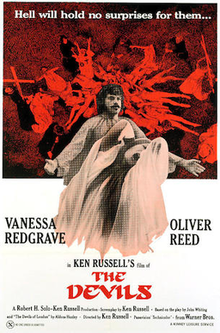
The Devils-1971

The Devils-1971

Director Ken Russell

Starring Oliver Reed, Vanessa Redgrave

Scott’s Review #1,403

Reviewed October 4, 2023

Grade: A

Ken Russell, best known for directing the outstanding Women in Love (1970) and The Who’s Tommy (1975), creates a disturbing opus about perversion and scandal within the Roman Catholic Church in medieval times.

The film’s graphic portrayal of violence, sexuality, and religious blasphemy ignited shocked reactions from censors, and it initially received an X rating in both the United Kingdom and the United States.

It was banned in several countries and heavily edited for exhibition in others. This alone will pique the interest of open-minded, curious viewers.

It sure did mine.

The film is ironically entitled The Devils (1971) and stars Russell regular Oliver Reed, who also appeared in the aforementioned films.

Reed leads the charge as a sexy, rugged man who beds many women and is the center of a convent full of nuns’ nasty and naughty thoughts.

Vanessa Redgrave also appears as a lustful and evil nun with a hunchback.

During the period of seventeenth-century France, Father Grandier (Reed) was a priest whose unorthodox views on sex and religion influenced a passionate following of nuns, including the sexually obsessed Sister Jeanne (Redgrave).

When the power-hungry Cardinal Richelieu (Christopher Logue) realizes he must eliminate Grandier to gain control of France, Richelieu vows to destroy the man. He portrays Grandier as a Satanist and spearheads a public outcry to destroy the once-loved priest’s reputation.

The Devils is outrageous and bizarre in the best possible way. Who doesn’t love a healthy dose of nun orgies and simulating fellatio on a large candlestick?

One nun violently masturbates as another looks on, giggling sadistically.

The camera loves Reed and Redgrave, who, interestingly, are not a couple in the film. These British actors were at the height of their careers in 1971, and both portrayed roles that must have been tremendously challenging.

Despite being set in France, the film opens in a naughty way with a nearly nude dance performed by skinny Louis XIII (played with wacky delight by Graham Armitage). Rumored to be gay, the king traipses around in colorful costumes and later shoots protestants dressed as gorillas for sport.

There are themes of exorcising and burning at the stake, and mentions of the warring Catholics and Protestants, so there is a seriousness amid the antics and shenanigans.

It took me a little while to become fully immersed in the chaotic land of Loudon, a town in western France where the film is set. In truth, a second viewing really helped me settle in and have a sense of what was going on.

The best films really are like fine wines.

Russell’s attempts to irritate and incite the overly religious are quite satisfying in a wicked way. As much as he mocks religion by making the traditionally sexually conservative filled with lust and animalistic sexual prowess, there is much more going on.

Beneath the surface, he challenges the ridiculousness of religion, which cinema lovers will embrace and delight in. There are history lessons to be had, though, and the film provides exceptional details of the political upheavals and tyranny that occurred.

The thunderous musical score by Peter Maxwell Davies is fabulous, especially during The Devil’s final act, when a central character endures a broiling on a wooden stake.

Those who own the wonderful Blu-Ray version of the film can enjoy various outtakes, cast interviews, and behind-the-scenes information.

An added delight for knowledgeable film fans is the inclusion of character actor Murray Melvin, famous for playing Reverend Runt in the classic Barry Lyndon (1975). He plays Father Pierre Barre.

The Devils (1971) is a perverse and operatic extravaganza of lunacy. It’s caked with sex and nudity and blasphemy that I loved every bit of.

The dangerous tone can be studied and thought about long after the film ends.

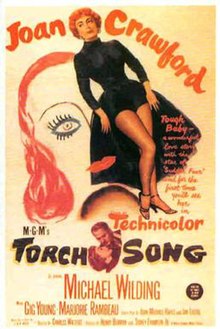
Torch Song-1953

Torch Song-1953

Director Charles Walters

Starring Joan Crawford, Michael Wilding, Gig Young

Scott’s Review #1,402

Reviewed September 25, 2023

Grade: B

Since I’m a huge fan of legendary Hollywood Actress Joan Crawford, I’ll willingly watch any of her films, both quality and mediocre.

Her style, confidence, clothes, makeup, and, yes, those eyebrows capture me every time I see her. She’s also a damned good actor.

Torch Song (1953) is a film made when her career was waning despite just scoring an Oscar nomination the year before for Sudden Fear (1952).

She would find success in the 1960s with Whatever Happened to Baby Jane? (1963).

The film is fun to watch because it reportedly best captures her true personality in a role that is realistic to who she was. Faye Dunaway even studied the role closely before she portrayed the star in 1981’s cult classic Mommie Dearest.

The story is about a talented and demanding Broadway star named Jenny Stewart, played by Crawford. She is used to snapping her fingers and having her every whim catered to without question. She rewrites scenes and fires talent for shows she stars in if she deems them beneath her.

One day, she meets her blind rehearsal pianist, Tye Graham (Michael Wilding), and finds herself attracted to him. At first, clashing over his refusal to put up with her bullshit, she comes to realize she admires him.

The feeling is mutual,l and the lovebirds tenderly nurture their budding relationship.

I’m unsure if non-Crawford fans would appreciate or enjoy Torch Song as much as we die-hards would. The story is essential, with few twists and turns, and it’s not hard to imagine that Jenny and Tye will wind up together.

Torch Song was famously spoofed by comedienne Carol Burnett in the 1970s on her television show when she replicates a dress rehearsal scene from the film in a hilarious fashion.

But Crawford is devilish and fierce in the film. She prances confidently in each scene wearing getups as outlandish as a haughty yellow nightgown with high-heeled slippers and a garish scene from the production wearing  ‘black face’!

When she yanks off her wig, revealing her messy red hair, black face, and wide, emotion-infused eyes as she desperately watches Tye exit the auditorium, the scene rivals any scary scene from a horror film.

Jenny is the star as much as Crawford is, and one wonders if she had the same ferocious clout as the fictitious character. We’ll have to ask the cast if any are still alive.

India Adams dubbed Crawford’s singing voice. She lip-syncs to the recording Adams originally made for Cyd Charisse in a number discarded from the 1953 film The Band Wagon.

When she belts emotional numbers like ‘Two-Faced Woman, the comic relief is unintentional. Adams sounds nothing like Crawford, which makes the dubbing glaring and nearly pitiful. Crawford had a decent voice and sang songs that were only available on the home video release.

Oddly, actress Marjorie Rambeau, who played Crawford’s mother, received an Oscar nomination for the role. Her performance is adequate but not Academy Award-worthy.

This must have irritated Ms. Crawford, who wasn’t known for being a gracious co-star. She must have felt usurped.

Crawford seamlessly carries the film from beginning to end credits like the seasoned professional she always was. She pokes her co-stars and chews up the scenery like nobody’s business.

Deserving of mention is actor Michael Wilding since he is equal to Crawford in performance. He never appears outshined or swallowed whole during a scene; instead, he relays good chemistry with her.

A mediocre Torch Song (1953) is made better by the mix of the competitive Broadway lifestyle and the star playing a ferocious and seasoned veteran.

Oscar Nominations: Best Supporting Actress-Marjorie Rambeau

Spoiler Alert-2022

Spoiler Alert-2022

Director Michael Showalter

Starring Jim Parsons, Ben Aldridge, Sally Field

Scott’s Review #1,399

Reviewed September 15, 2023

Grade: A-

Spoiler Alert (2022) comes dangerously close to being classified as a Hallmark Television Movie of the Week tearjerker with standard cliches and a predictable storyline. While the ending is no surprise, the film works incredibly well and fires on all cylinders.

I laughed, cried, and felt an enormous connection to the central characters in what could become a seasonal holiday watch.

I recently reviewed another film that, on the surface, sounded saccharin and contrived but pulled me in nonetheless. The lesson learned is not to make assumptions about the quality of films.

The direction is conventional, but the story and characters are absorbing and heartwarming with spectacular acting, especially among the two lead actors, Jim Parsons and Ben Aldridge. An added gift is the appearance of Sally Field in a supporting role as an overbearing but lovable mom.

In 2001, Michael Ausiello (Parsons), a writer for TV Guide, begrudgingly goes to a gay nightclub with his best friend in Manhattan. There, he meets photographer Kit Cowan (Ben Aldridge), and the two instantly connect.

As they begin dating, Michael struggles with insecurities about not being attractive enough for Kit, since he was an overweight child. Kit is athletic and good-looking, oozing confidence. Michael was a ridiculed kid watching soap operas with his mother and creating a pretend sitcom family.

He also overindulges in the Smurfs collection.

They both admit their fears of being in a long-term relationship since neither of them has been in one before, but they decide to continue dating.

Hurdles then plague the couple as Kit must come out to his parents, Bob (Bill Irwin), and Marilyn (Field), to explain who Michael is, and ultimately they all must face Kit’s stage IV cancer diagnosis.

I recognize how Spoiler Alert doesn’t possess the most original screenplay, written by David Marshall Grant and LGBTQ+ advocate Dan Savage, and based on a story written by real-life Michael Ausiello.

The tried and true story point of a gay male character struggling to come out to his parents has been done for decades in LGBTQ+ films.

The insecure partner feels inferior to the more confident partner, and it affects their relationship. This point has also been discussed before. Michael is convinced that Kit will dump him for someone else.

Hell, we’ve seen both of these cliches as recently as 2022 in Bros., a fantastic LGBTQ+ mainstream film that used both.

In Spoiler Alert, they work because of Parsons and Aldridge and the chemistry they have together, and the nuanced delivery of the characters separately.

While they each want love and a relationship, neither is desperate. As they banter back and forth, Michael awkwardly removes his clothes during their first intimacy, and the actors playfully frolic immediately at ease with one another.

Many cute scenes follow.

Events then grow serious as we move beyond Kit’s uneven coming out to his parents (of course, they embrace Kit and Michael instantly!) and dive headfirst into Kit’s cancer battle.

The film makes no secret that Kit will die of cancer. It’s practically shown in the opening scene as he and Michael lie in a hospital bed together, and Michael narrates the story.

It’s called Spoiler Alert for a reason. But instead of ruining the film, it only enhances the love story to come. We know that Kit and Michael become soul mates, and the pleasure is watching them grow and flourish together.

Since Michael’s mother, and presumed best friend, died of cancer, it only strengthens the investment in the character.

As Kit becomes weaker, my fondness for the two men becomes stronger. The maturity and love for one another are apparent, especially when Michael selflessly invites a man whom Kit had an affair with to say goodbye to Kit.

It’s a touching scene, but not as touching as the scene where Michael and Kit’s parents sob over Kit’s hospital bed.

Yes, Spoiler Alert (2022) may have manipulated me with a conventional film, but Parsons and Aldridge have better chemistry than most opposite-sex couples.

I thoroughly enjoyed my way through the film without dry eyes.

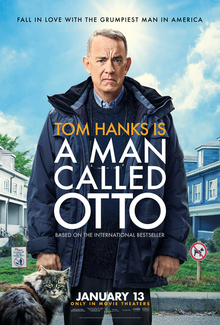
A Man Called Otto-2022

A Man Called Otto-2022

Director Marc Forster

Starring Tom Hanks, Mariana Trevino, Truman Hanks

Scott’s Review #1,398

Reviewed September 13, 2023

Grade: A-

I hedged slightly on seeing the film A Man Called Otto (2022) because it looked like an overly sentimental, predictable melodrama. It also missed out entirely during the 2022-2023 awards season, which means that the film had its share of critical detractors.

But I do love and admire Tom Hanks, both professionally and personally, even though he can be accused of choosing marginally safe material.

Though the film explores a tried and true formulaic setup, my heartstrings were immediately and severely pulled by the events in the movie. I may have been manipulated into teariness, but in the best of ways, and I didn’t mind a bit.

I enjoyed A Man Called Otto much more than I ever thought I would.

It is an American remake of the 2015 Swedish film A Man Called Ove, based on the 2012 novel by Fredrik Backman.

Otto Anderson (Tom Hanks) is a grumpy widower whose only satisfaction comes from abiding by and enforcing his neighborhood rules and regulations and criticizing and judging his exasperated neighbors.

When a young Hispanic family moves in next door, he connects with the no-nonsense and very pregnant Marisol (Mariana Trevino), leading to an unexpected friendship that softens and unnerves the crotchety man.

As the pair bond, the audience learns more about Otto and his deceased wife Sonya (Rachel Keller) through flashbacks. The once youthful and determined couple faces terrible obstacles as we realize why Otto has become so depressed and irritable.

A Man Called Otto is very conventional, polished, and sentimental, and could arguably be accused of being a tad dramatic. It’s not a dangerous film, nor does it present material viewers have never seen before.

Nonetheless, it works!

The reasons it works so well start with Tom Hanks. A two-time Oscar winner who has played many types of characters before, he portrays his character with flourishing comedy and dramatic gusto.

We like Otto even though he could be classified as an asshole.

Despite Hanks’s acting ability, he is only part of the enjoyment of the film.

Worth mentioning is that the very liberal Hanks and his wife Rita Wilson co-produced the film, and I’m glad they did.

A heavy dose of diversity and inclusivity is plopped into the film. Otto’s neighbors are a black couple who have been Otto and Sonya’s best friends for decades.

Otto confronts a teenager named Malcolm for delivering advertising circulars, and the boy recognizes Otto as his former teacher’s husband, recounting that Sonya supported him as a transgender student when nobody else did.

Sonya courageously led an effort to convince the other teachers to call Malcolm by his desired name respectfully.

Another win is the frequent flashbacks to when Otto and Sonya first met. A nervous but smitten Otto intentionally gets on the wrong train to bring Sonya a book that she has accidentally dropped on the platform.

They eventually dine in a nice restaurant, where he encourages Sonya to have a lovely entrée while he dines on a meager bowl of soup because of financial issues.

Truman Hanks (Tom’s son), Rachel Keller, and Mariana Trevino deliver outstanding performances in supporting roles.

Finally, a feral cat that reminds me of my darling cat Zeus stole my heart. He also steals Otto’s.

It’s these trimmings that make the film a crowd-pleaser and a charming sentiment. The story feels fresh even though other films have had the same type of message. A case could be made that Otto is Ebenezer Scrooge in a non-Christmas film.

I may not necessarily need to see A Man Called Otto (2022) again since it’s a one-shot deal type of movie, but I’m glad I did. The film reaffirms that there are good people in the world who selflessly look out for each other without needing personal gain.

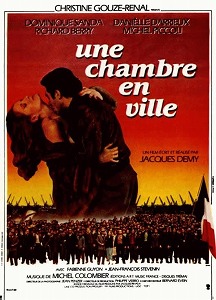
Une Chambre en Ville-1982

Une chambre en ville-1982

Director Jacques Demy 

Starring Dominique Sanda, Richard Berry

Scott’s Review #1,397

Reviewed September 10, 2023

Grade: A

Une chambre en ville (also known as A Room in Town) is a 1982 French musical drama film written and directed by Jacques Demy, with music by Michel Colombier, and starring Dominique Sanda, Danielle Darrieux, and Michel Piccoli.

Those familiar with Demy’s other works, such as The Umbrellas of Cherbourg (1964) and The Young Girls of Rochefort (1967), will be aware that his preferred genre is musical drama. In Une Chambre en Ville, the dialogue is entirely sung.

And those unfamiliar with his work are recommended to give his films a chance. They are flavorful and offer exceptional production design, to say nothing of other ingredients.

I liken the film most to The Umbrellas of Cherbourg because the story involves two people destined to be together, but who are thwarted by many obstacles that threaten to ruin their happiness.

Demy creates a distinct Shakespearean Romeo and Juliet final ending in the best possible way.

The story is set during a workers’ strike in Nantes, France, in 1955. A steelworker named Francois (Richard Berry) has a fling with the married daughter, Edith (Dominique Sanda), of his widowed landlady, Margo (Danielle Darrieux).

His girlfriend Violette (Fabienne Guyon), who works in a shop and lives with her mother, wants to get married, but he is unwilling, partly because they have no money and nowhere to live.

Oh, and he has also met Edith.

On the street, François is accosted by Edith, a beautiful woman who wears only a fur coat and has decided to take up part-time prostitution to pay bills. Her husband owns a struggling television shop.

The two have a blissful night together in a cheap hotel and fall madly in love.

Une Chambre en Ville is at first jarring because the dialogue is in the form of a song. But after merely a few minutes, I became invested and enamored with the characters. This occurs when Francois and Margo discuss the strike, and although she is upper class, she supports the workers.

They quickly bond.

Before this, though, the tone is set with black-and-white cinematography of the workers’ strike that quickly turns to color. My hunch is that Demy wanted to promote the seriousness of the situation and alert the audience that they were not watching a rosy musical with tap-along tunes.

There’s a message of pain, struggle, and depression, which doesn’t make the film a downer either.

As with Demy’s other films, the art direction and set designs are gorgeous. The director has a talent for introducing the most fragrant colors like red, yellow, blue, and green, which are powerful and enshroud the characters in pizazz and vibrancy.

The highlights are Margo’s apartment, drizzling with red color and contemporary patterns and furniture, and Edith’s husband’s television shop. The greenish hue reveals a tacky yet sophisticated French style. These and other sets are superior efforts.

The main attraction is Francois and Edith, and I was smitten with them almost immediately. Some may think this is odd because basically, Francois dumps his nice girlfriend for a sexy prostitute who flashes her naked body to him and then beds him.

Nonetheless, I became enraptured. They make ‘love at first sight’ seem believable and possible. The thing to remember is that they are both wounded by their circumstances and are reaching for their desires out of desperation.

The finale of Une chambre en ville is dazzling but painful to watch. I alluded to a Romeo and Juliet catastrophe, and this is no joke, as the star-crossed lovers meet a dire ending.

I won’t spoil the fun by revealing what happens.

Jacques Demy creates a film made in 1982 that feels nothing like a 1982 film, as we are believably transported to 1955.

Une chambre en ville holds up as well as Demy’s films made two decades earlier, and he proves none of his creativity and romantic dramatics have waned.

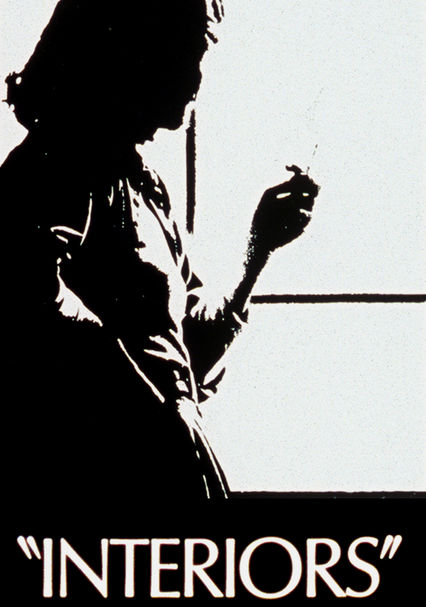
Interiors-1978

Interiors-1978

Director Woody Allen

Starring Diane Keaton, Geraldine Page, Mary Beth Hurt

Scott’s Review #1,392

Reviewed August 24, 2023

Grade: A

Woody Allen films are not everyone’s cup of tea.

Typically, offbeat or even downright wacky comedies with quick-witted dialogue and irritating characters are not everyone’s preferred taste in film.

I’ve always adored the director’s works.

Allen hits a home run with Interiors (1978), his first dramatic film and my favorite. It even rivals classics like Annie Hall (1977) and Manhattan (1979), which most people frequently consider his best.

The famous director turns down the volume and slows the pace with a dark story about mental illness and the ravaging effect it has on a family, the struggling individual, and the other extended members.

Missing from this Woody Allen film are the prevalent one-liners and gimmicks mostly associated with his comedies. The only standard is the inclusion of frequent collaborator Diane Keaton, who plays a successful poet, Renata.

The story centers on a middle-aged and upper-class couple’s disintegrating marriage. It forces their three grown daughters (Keaton, Mary Beth Hurt, and Kristin Griffith) to reveal their feelings about themselves and each other. They also have their share of difficulties.

Renata is successful, but her husband is a struggling writer with marginal talent. He lusts after Renata’s sister, Flyn (Kristin Griffith), an actress only known for her good looks. Joey (Hurt) is a restless soul unable to decide on a career and jealous of Renata.

Mental illness is only one of their trials and tribulations.

The family resides in Manhattan, Connecticut, and Long Island, most likely the Hamptons, so they are wealthy and assumed to be happy, healthy, and thriving.

They are anything but.

None of the daughters is successful at providing ample support to their devastated mother (played by Geraldine Page), who has a mental illness and is extremely fragile.

The cast is tiny, with only eight principals, each with a perspective. There are no villains. Only complicated characters with rich texture and substance.

I love the brilliant characterization and development, and the many layers most of the characters possess. Each character, especially the father, mother, two of the daughters, and the new wife, Pearl, played exceptionally by Maureen Stapleton, can be examined in depth.

One might assume that the father Arthur played stoically by E.G. Marshall might be unlikable. After all, he requests a ‘separation’ from Eve, which the audience knows is a soft-touch way of ultimately asking for a divorce.

He then meets a new woman, a different type from his wife, and plans to marry her!

This does not go over well for anyone.

But Arthur is sympathetic, and so is Pearl (the new wife). I rooted for the pair even though I felt bad for Eve.

The film culminates in a stunning sequence at the family’s Hampton residence amid Arthur and Pearl’s wedding. The family begrudgingly attends the simple, dinner-party-style wedding and pretends to be happy.

From a visual perspective, the art direction is flawless. Muted grey and brown tones perfectly complement the drab, depressing subject matter.

People have compared Interiors to an Ingmar Bergman film, and I completely understand that. The film is dark, cold, and bleak, but it contains a sophistication and thought-provoking quality mirroring Bergman’s films like Wild Strawberries (1957) and others.

Woody Allen crafts an astonishingly good screenplay with confidence and precision that only he can do. Interiors (1978) could easily have turned into a soap opera melodrama, but it remains enthralling and devastating throughout.

Oscar Nominations: Best Director-Woody Allen, Best Actress-Geraldine Page, Best Supporting Actress-Maureen Stapleton, Best Screenplay-Written Directly for the Screen, Best Art Direction

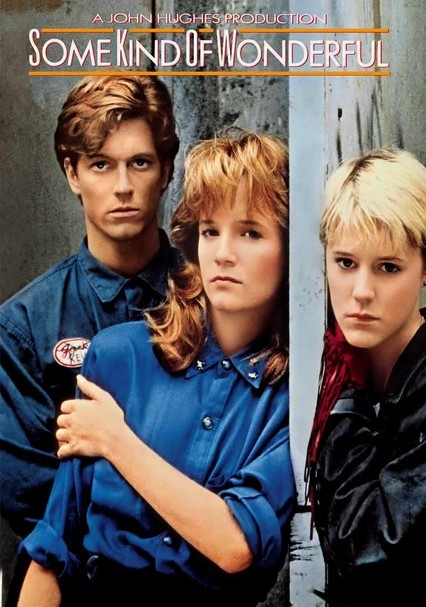
Some Kind of Wonderful-1987

Some Kind of Wonderful-1987

Director Howard Deutch

Starring Eric Stolz, Mary Stuart Masterson, Lea Thompson

Scott’s Review #1,386

Review August 4, 2023

Grade: B+

Some Kind of Wonderful (1987) is one of many John Hughes-written teenage romantic dramas to emerge in the 1980s.

It’s familiar territory in terms of storytelling and quite similar to the 1986 hit Pretty in Pink.

I’ll call it what it is: essentially a remake of Pretty in Pink.

Hughes attempts to ‘right the wrong’ of the ending of Pretty in Pink, which he was forced to rewrite because of pesky test audiences. Truth be told, I was happy with who wound up with whom in the film, but I guess I’m in the minority.

A romantic quadrangle is front and center, with differing social classes explored amidst the already tricky teenage years. Characters battle for status as they deal with powerful feelings and angst with their parents and friends.

A fun fact about Some Kind of Wonderful is that Hughes assumed his muse, Molly Ringwald, would star in the film. When she turned him down for more adult roles, he never forgave her, which led to the dissolution of their film collaboration.

But the show must go on.

Keith Nelson (Eric Stoltz) is an artistic high school outcast who bravely tries to land a date with the most popular girl in school, Amanda Jones (Lea Thompson).

His tomboy best friend, Watts (Mary Stuart Masterson) is secretly in love with him while Amanda’s rich on-again-off-again boyfriend, Hardy Jenns (Craig Sheffer), vows revenge on Keith.

Watts tries to convince Keith to stop pursuing Amanda, while his father (John Ashton) is dead set on Keith attending business rather than art school.

Before you start thinking this sounds like a corny story arc from the afternoon soap opera Days of Our Lives, it’s a pretty well-written story with many ups and downs and good, sincere acting.

Stolz is compelling as the boy-next-door/leading man. He is relatable and, therefore, easy to root for to get the girl.

The main attraction and best part of the film is the triangle between Keith, Watts, and Amanda. Hardy is merely along for the ride, serving as both a foil and necessary eye candy. Every girl wants him, so why would Amanda want Keith and not him?

When Hardy refers to Amanda as his ‘property,’ it makes him unforgivable to audiences. It might have been interesting if Hughes had made the character a viable romantic option for Amanda or Watts by softening him.

There are arguments for Keith winding up with either Amanda or Watts, and a tantalizing mention is that Watts could be gay, but this story goes nowhere.

1987 would have been too early for this quality to be featured much in mainstream film, but at least the thought is there.

Despite being popular, Amanda is not a bitch. Her best friend, Shayne (Molly Hagan), is though.

In a bit of irony, the character Keith, at the end of the film, feels rushed, jagged, and like an added-on scene. The similarities to the reshoot they did with the ending of Pretty in Pink are uncanny.

Other characters are added purely for comic relief and to offset the romantic-heavy drama. Keith’s tough guy friend Duncan (Elias Koteas) and Keith’s younger sister Laura (Maddie Corman) provide the film with some cute moments.

Teenagers, whether in 1987 or today, can relate to the well-meaning pressure Keith’s father puts on him, so the message is universally appreciated.

Nothing will surpass my top ranking of The Breakfast Club (1985) as my favorite John Hughes film, but Some Kind of Wonderful (1987) does a good job of capturing a slice of teenage angst we can all relate to.

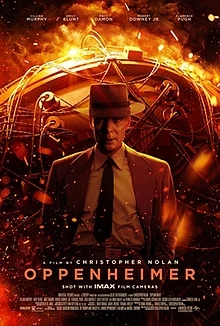
Oppenheimer-2023

Oppenheimer-2023

Director Christopher Nolan

Starring Cillian Murphy, Robert Downey Jr., Emily Blunt

Scott’s Review #1,384

Reviewed August 1, 2023

Grade: A

Knowing the films of Christopher Nolan who directed works like The Dark Knight Trilogy (2005-2012), Inception (2010), and Dunkirk (2017) I expected what I would be served with by his new film Oppenheimer (2023).

This would include a big booming soundtrack and an arguably more ‘guys’ genre film, but with intelligence, than other contemporary hits like Barbie (2023).

Dark and looming with complexities are usual for Nolan so I settled in for a three-hour epic journey centered on the atomic bomb and physics that has unexpectedly become a blockbuster.

Speaking of the pink phenomenon its simultaneous release with Oppenheimer led to the “Barbenheimer” phenomenon on social media, which encouraged audiences to see both films as a double feature.

This forever links the two vastly different films that were responsible for filling movie theaters once again.

I expected to enjoy Oppenheimer but was jarred (in a good way) by the sheer brilliance of its construction. Prepared for more mainstream fare that typically follows a biography or historical piece I was instead overly fascinated by the experimental elements enshrouding a more conventional film.

During World War II, Lieutenant Colonel Leslie Groves Jr. (Matt Damon) appoints physicist J. Robert Oppenheimer (Cillian Murphy) to work on the top-secret Manhattan Project.

Oppenheimer and a team of scientists spend years developing and designing the atomic bomb. Their work came to fruition on July 16, 1945, as they witnessed the world’s first nuclear explosion, forever changing the course of history.

The film is constructed marvelously in every way and is authentic to the eye. The first notice is that it feels like it’s the 1940s 1920s or 1960s or anywhere in between depending on where the film goes.

The art design, costumes, and makeup feel natural rather than stagey which helps its audience escape into the scientific world.

Speaking of, Nolan constructs the film in a series of pockets and goes back and forth between periods. We see Oppenheimer many times as an aspiring upstart with visions, a confident, established physicist, and in 1963 when President Lyndon B. Johnson presented him with the Enrico Fermi Award as a gesture of political rehabilitation.

His personal life is also explored.

Many, many scenes shift back and forth involving different characters at different ages. Most of the scenes in the 1940s take place in the desert at Los Alamos, New Mexico while the later years are set in a stuffy conference room where Oppenheimer is grilled for his left-leaning and suspected Communist politics.

The cinematography led by Hoyte van Hoytema provides some edgy moments especially when Oppenheimer descends into frightening and psychedelic hallucinations of those suffering the aftereffects of the atomic bomb. Images of peeling and melting faces are terrifying.

Cillian Murphy successfully makes Oppenheimer sympathetic especially after he creates the bomb and is left forgotten by his government.

Various moments in the film showcase Murphy at his best. After relinquishing his deadly bomb after a test the government callously tells Oppenheimer that ‘they’ll take it from here’. The look of dread, regret, and sadness in Murphy’s crystal blue eyes speaks volumes.

Another great scene occurs when President Harry S. Truman (Gary Oldman) a left-leaning democrat calls Oppenheimer ‘a crybaby’ when he expresses interest in returning land to the American Indians.

The supporting cast is a bevy of riches with several top-caliber actors appearing in cameos. My standouts in larger roles are Robert Downey Jr. shredding his Iron Man superhero persona as a slighted and venomous Lewis Strauss, intent on revoking Oppenheimer’s security clearance, and Emily Blunt as the boozy biologist and former communist wife of Oppenheimer.

My biggest takeaway from Oppenheimer (2023) though is a powerful one. The difference between the United States of America during and post World War II and in present times, 2023.

Then, a patriotic infrequently questioned nation brimming with pride and glory, where nationalism was rampant and expected and those with foreign respect were cast aside as traitorous.

Now, a divided country half of whom support an ideology based on hate, racism, and cultlike dedication to a corrupt ex-president, and the other focused on diversity inclusion, and equality for all.

This film resonated so powerfully well and in so many different ways.

Oscar Nominations: 7 wins-Best Picture (won), Best Director-Christopher Nolan (won), Best Actor-Cillian Murphy (won), Best Supporting Actor-Robert Downey Jr. (won), Best Supporting Actress-Emily Blunt, Best Adapted Screenplay, Best Film Editing (won), Best Cinematography (won), Best Costume Design, Best Production Design, Best Original Score (won), Best Sound, Best Makeup and Hairstyling

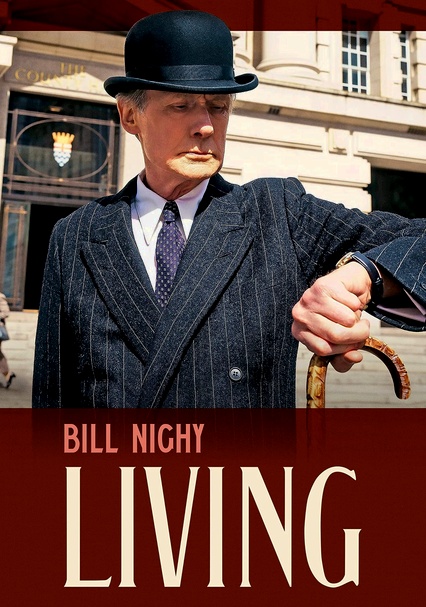
Living-2022

Living-2022

Director Oliver Hermanus

Starring Bill Nighy, Aimee Lou Wood

Scott’s Review #1,380

Reviewed July 20, 2023

Grade: B+

Living (2022) is a British film remake of a Japanese movie named Ikiru, made in 1952. That screenplay was partly inspired by Leo Tolstoy’s 1886 novella The Death of Ivan Ilyich. I have not seen that film, but my best bet is that it is either equal to or superior to Living.

The remake is quiet yet powerful. It teaches a poignant lesson about living life to its fullest and not wasting time on trivial and meaningless things that most people stress over.

Before you know it, life is over.

The brilliance of this message is that it can be applied to anyone’s life at any age and in any given situation. At least that is what I took from the film, and therefore, the film is inspiring to me personally.

In this particular case, the focus is on an older man who has just been diagnosed with terminal cancer and given a maximum of six months to live.

With high reliability, Living tells the story of an ordinary man named Rodney Miller (Bill Nighy) who has so far lived years of dull office work and a careful routine. In other words, he has led a bland existence and rarely does anything exciting.

To be clear, he is not a loser but is quite polished, prim, and proper. Well-dressed, has a good job, and is highly responsible. He resides with his son and daughter-in-law.

Once his doctor gives Mr. Miller his diagnosis, he becomes determined to turn his dull life into something extraordinary with the help of a young office worker, Miss Margaret Harris, played by Aimee Lou Wood.

While the supporting actors are fine, they are not given much to do or explored deeply, except perhaps Wood. She is compelling as a girl-next-door type who bonds with her much older boss. We root for her to find happiness, and she does.

Living works best as a character study, and Nighy quietly takes charge with a ferociously understated performance that justifiably landed him with an Academy Award nomination.

The actor has a gorgeous voice, so very poised, deep, and oozing with polish and sophistication. I fell in love with the character right away, even before his diagnosis with deadly cancer.

He’s not an evil man, just a boring one, and Nighy is successful at showing his appeal. This is evident in his personal life, where he is unable to communicate with his son, despite his desperate desire to do so.

His life has so far avoided any ruffling of feathers that he cannot even adequately express himself.

The film avoids exploring much of Mr. Williams’s personal life, and he has no designs on Miss Harris other than his envy of her joy and passion for life. He does not seem to be gay, but nothing is said about a wife or ex-wife.

The film’s overall pace is slow, which may not appeal to some viewers. Since the running time was merely one hour and forty-two minutes, I wasn’t bored, though I wasn’t energized either, until the ending, which I found moving.

The experience is not a downer despite the subject matter, and no scenes of Mr. Williams dying a painful death or any hospital scenes are featured.

Instead, it portrays life.

The filmmaking is clean and polished, much like Mr. Williams, and there is a rich London texture. Rainy days, a sophisticated swagger, and crisp, structured sets and art design are what I mainly notice.

The title “Living” (2022) is apt for the lesson being presented to the audience. Spend an enormous amount on that savory dinner, eat a giant ice cream sundae, or help someone before looking the other way.

Because one day it will be too late.

Oscar Nominations: Best Actor-Bill Nighy, Best Adapted Screenplay

Through a Glass Darkly-1961

Through a Glass Darkly-1961

Director Ingmar Bergman

Starring Harriet Andersson, Gunnar Björnstrand, Max von Sydow

Scott’s Review #1,377

Reviewed July 15, 2023

Grade: A

I recently acquired a robust Ingmar Bergman collection featuring over three dozen of the great director’s works, so I have much introspective filmmaking to look forward to.

Considered visionary, influential, and many other stellar adjectives, his films are personal and human. They are frequently dark and not easy to watch, but the payoff is significant for the patient cinephile.

His 1961 work, Through a Glass Darkly (1961), tells the story of a schizophrenic young woman, Karin (Harriet Andersson), vacationing on a remote island with her husband Martin (Max von Sydow), novelist father David (Gunnar Björnstrand), and frustrated younger brother Minus (Lars Passgård).

She has been released from the hospital and plans to enjoy the summer tranquility at the family’s quaint cottage.

She slowly unravels as the reality sets in that she may not get better, and the family is aware of this.

The story is told in a brisk twenty-four-hour period and consists of only four characters. It is structured as a three-act play that runs for ninety-one minutes.

Let’s remember that mental illness was not as advanced in 1961 as it is decades later. Most who suffered from it were tossed away into a ‘loony bin’ and quickly discarded from society.

Delving into such controversial and unpleasant territory in 1961 deserves enormous accolades.

The brilliance of Through a Glass Darkly is how Karin realizes her mental illness and its fateful ravages. She is aware of what’s happening to her and that she will never recover. After all, the hen’s mother also had a mental illness.

Her rich characterization is powerfully played by Andersson, who stands out in the film. This could be because of Sven Nykvist’s cinematography, but sometimes Karin looks like a little girl and, at other times, a haggard older woman.

I wonder if Bergman was trying to show the parallel between Karin and her mother.

Speaking of the camerawork, as in Bergman’s films, the black-and-white style only enhances the quality of the picture. The contrast between black and white and the frequent close-ups of the characters reveal glowing and ghostlike facial images.

I champion shots like this because they enrich the visual perspective and shift away from the story.

Andersson is not the only excellent actor; second place belongs to Björnstrand as the father. His character is a writer and deeply pained. Revealed to have tried to commit suicide,e he is riddled with guilt, regret, and desperation.

Von Sydow is decent as Karin’s husband, but the actor has much better Bergman roles to reflect on. Any cinema lover will associate the great actor with The Seventh Seal (1957).

Towards the end of Through a Glass Darkly, I didn’t quite connect the dots when the characters go into detail about how god is equated with love.

I focused on Karin and the other characters coming to terms with the fact that she would go to an asylum and never return.

What Bergman does so well in Through a Glass Darkly is making the audience envelop the characters, accepting and feeling their pain. I despair with Karin when she imagines a spider emerging from the walls and crawling on her.

Of course, the audience doesn’t see what Karin imagines, which makes the scene much scarier than if Bergman had shown a giant spider.

One’s imagination is always worse than what is on the screen.

Requiring patience and a deep dive into despair, Through a Glass Darkly (1961) is worth the work. Lovely beachside images and beautiful sunlight mix perfectly with anguish and depression, creating an intimate experience.

Oscar Nominations: 1 win-Best Foreign Language Film (won), Best Original Screenplay

Pretty in Pink-1986

Pretty in Pink-1986

Director Howard Deutch

Starring Molly Ringwald, Andrew McCarthy, Jon Cryer

Scott’s Review #1,376

Reviewed July 10, 2023

Grade: B+

A ‘B+’ grade may surprise some who know that I’m not a big fan of generic 1980s films, romantic comedies, or dramas.

Formulaic or nostalgic doesn’t always sit well with me, but I was baited hook, line, and sinker for an implausible coming-of-age sweet story.

Pretty in Pink (1986) and its writer, John Hughes, epitomize the 1980s and teen-angst films in general, but beneath the surface, the film has a lot of heart.

Star Molly Ringwald was the ‘it’ girl of the decade, perfectly portraying the girl next door facing the trials and tribulations of ordinary sixteen-year-olds.

Of course, my favorite Hughes film is The Breakfast Club (1985), also starring Ringwald, but Pretty in Pink is hardly as daring as that film. It’s softer and kinder with a lovely message of individuality and romance.

The film’s secret weapon is the spectacular musical soundtrack featuring, among other songs, the groovy title track by Psychedelic Furs and the mega-hit ballad ‘If You Leave’ by Orchestral Maneuvers in the Dark.

Andie (Ringwald) is an outcast at her high school in the American Midwest. From a working-class household with an unemployed father (Harry Dean Stanton) and an absent mother, she makes her clothes and has an individual fashion sense.

She’s not exactly popular with the bitchy and materialistic cheerleaders.

She works at a record store for her older boss and friend, Iona (Annie Potts), and is usually seen with her best friend and fellow outcast, Duckie (Jon Cryer), who has a crush on her.

When one of the rich and famous kids at school, Blane (Andrew McCarthy), asks Andie out, it seems too good to be true. As Andie starts falling for Blane, she realizes that dating someone from a different social class comes with its challenges.

Pretty in Pink has a few different angles, including a social sphere, a romantic triangle, and themes of conformity.

The triangle is ultimately divisive. Should Andie choose a best friend and confidante, Ducky or Blane, the boy she is truly smitten with? Her choice has divided audiences since the film was released decades ago.

She has so much in common with Ducky, who also has blue-collar roots, but her heart belongs to Blane, who could offer her so much more. Andie is headed for University and couldn’t Blane be the proper sophistication for her?

I’m on team Blane.

Strangely and off-putting is Ducky. Meant to be cute, he all but harasses Andie, smothering her and pressuring her. His repeated phone calls would make me run the other way.

Social class is a wise topic explored and one that many audiences can relate to. The classic upper-class boy falls in love with a working-class girl, and family and friend pressures develop.

Hughes doesn’t delve much into the upper-middle-class parents, focusing only on the students, which I find interesting. The character of Steff (James Spader) is the villain, antagonizing Andie because he can’t get her into bed.

Andie has inspired, and continues to inspire, teenage girls everywhere who refuse to conform to norms and standards. The film offers a strong female character with real emotions and hopes, fears, and dreams.

Thanks to an outstanding performance by Ringwald, we see all her emotions, and a beautiful dynamic forms between father and daughter.

The conclusion of the film (related to the triangle) occurs at the high school prom, where a jilted Andie attends alone. A quick sequence where she reconnects with a character is very rushed, and the film ends quickly.

Unsurprisingly, this is the result of the finale being rewritten at the last minute after the original ending didn’t go over well with test audiences.

There is something to be said for the writer and director having complete creative control, but sadly, this isn’t the case in Pretty in Pink, and the audience can see the void.

Pretty in Pink (1986) may scream ‘1980s film’ and the tacky hairstyles and outfits that go along with the decade and the genre, but the messages relayed hit their mark.

Though dated in some ways, the film is timeless in others.

Europa Europa-1990

Europa Europa-1990

Director Agnieszka Holland

Starring Marco Hofschneider

Scott’s Review #1,373

Reviewed June 29, 2023

Grade: A

Europa Europa (1990) is a unique film that depicts a young Jewish man’s plight and experiences during a dangerous period in world history.

There have been many films made that examine German Naziism in some way, shape, or form, but the film is German, which only authenticates the story.

The secret sauce of this film is the remarkable storytelling by Agnieszka Holland, who also directed.

The fact that it is based on real-life events only adds emotion, heartbreak, and just a little hope.

It is based on the 1989 autobiography of Solomon Perel, a German-Jewish boy who escaped the Holocaust by masquerading as a Nazi and joining the Hitler Youth.

Perel himself appears briefly as “himself” in the film’s finale.

Speaking of German war films, Europa Europa doesn’t eclipse the power of the 1930 masterpiece All Quiet on the Western Front or the 2022 remake, for that matter.

It’s not as raw, but it does personalize the experience by focusing on one character and his perspectives.

The film adds a tinge of humor, homosexuality, and full nudity in a way that lightens the mood and almost makes it fun instead of pure doom and gloom.

But the concentration camp horror is never taken for granted.

Handsome Jewish teenager Salek (Marco Hofschneider) is separated from his family when they flee their home in Germany for Poland.

Salek ends up in a Russian orphanage for two years. Still, when Nazi troops reach Russia, he convinces them he is a German Aryan and becomes an invaluable interpreter and then an unwitting war hero.

While he can hide his Jewish blood on the surface, he is uncircumcised, which makes him vulnerable and at risk of being found out at any moment.

His deception becomes increasingly difficult to maintain after he joins the Hitler Youth and finds love with beautiful Leni (Julie Delpy), a staunch anti-Semite.

Hofschneider easily carries the film. With dashing good looks and a trusting smile, the audience can see how he might be able to fool the German regime.

As shown during a powerful scene where the Hitler Youth is taught how to spot a Jew, scrawny, rat-like, and mistrustful-looking are the characteristics they are told to be wary of.

Salek is the opposite.

The actor appears completely naked in several scenes, including full-frontal. This is not done frivolously because his penis is central to the plot and his potential discovery.

Delpy plays the gorgeous yet tragic character of Leni. She at first appears humane and kind, but her true colors and anti-Semitic hate soon shine through, which troubles Salek.

He is startled at how much hate a young girl could harbor for human beings she knows nothing about.

The realization hits home to the audience as the power and influence that Hitler possessed, with the ruination of human life in so many different ways.

A groundbreaking sequence occurs when a German soldier named Robert (André Wilms) attempts to molest Salek when he is privately bathing. Revealing his homosexuality to Salek while realizing Salek is Jewish makes them the best of friends.

They both have secrets that would get them instantly killed.

When Robert is mortally wounded, he and a devastated Salek share a deathbed kiss, forever cementing their bond. The human connection is more powerful than a sexual one.

A reunion with a family member at the conclusion will melt the hardest of hearts.

Europa Europa could have been a darker film than it was because of the subject matter, and perhaps should have been.

It’s not quite on par with All Quiet on the Western Front or Schindler’s List (1993) in the annals of Nazi war films, but it is not far behind, blending hate and kindness in an exploration of human feeling and emotion amid chaos.

Shamefully, due to a ridiculous decision that the film didn’t meet the eligibility requirements, Europa Europa (1990) was not nominated for the Best Foreign Language Film Oscar, but it easily won the Golden Globe.

Despite the film’s omission, it went on to be a critical and commercial success in the United States, achieving just desserts.

Oscar Nominations: Best Screenplay Based on Material Previously Produced or Published

Camelot-1967

Camelot-1967

Director Joshua Logan

Starring Richard Harris, Vanessa Redgrave, Franco Nero

Scott’s Review #1,370

Reviewed June 21, 2023

Grade: A-

Camelot (1967) is an adaptation of the well-known Broadway spectacle that explores the creation of the Knights of the Round Table. It’s the Middle Ages, and King Arthur is the main character.

Unfortunately, the original stars of the stage, Richard Burton and Julie Andrews, declined to participate. Still, their replacements, Richard Burton and Vanessa Redgrave, are more than adequate in their prominent roles.

At an epic length of nearly three hours, not every moment is the edge of your seat, and some lagging exists, but the film does justice to the stage production, only with a big budget to add extravagance.

The setting and experience are pure magic, not only because of the far-removed time. The Shakespearean elements are strong as royalty and entitlement mesh with scheming, jealousy, and dangerous romance.

This makes for some juicy soap opera drama.

After the arranged marriage of Arthur (Harris) and Guinevere (Redgrave), the king gathers the noble knights of the realm to his Round Table. The dashing Lancelot (Franco Nero) joins but soon falls in love with Guinevere.

When Arthur’s illegitimate and conniving son, Mordred (David Hemmings), reappears in the kingdom and exposes the secret lovers, Arthur finds himself, by his own rules, trapped into taking action against his wife and closest friend.

There are some dull moments to face at epic length, especially in the first half. I tuned out once or twice, but then I was whisked back to the dramatic events.

The great moments are genuinely outstanding, with enough punch to pack a emotional wallop.

During a sequence when Lancelot is challenged to a game of jousting with some knights, events turn deadly, and one knight, Sir Dinadan, is critically injured. Horrified, Lancelot pleads for Sir Dinadan to live, and as he lays hands on him, Dinadan miraculously recovers.

The scene is fraught with emotion as a decisive moment occurs between the men. It’s also pivotal to the storyline because it links Lancelot with Guenevere and sets off a romantic chain of events.

Guenevere is so overwhelmed and humbled that her feelings for Lancelot begin to change. Despite his vows of celibacy, Lancelot falls in love with Guenevere.

More than one song is lovely in Camelot, and as the production went on, I yearned for more musical numbers.

My favorite is the coy  “The Lusty Month of May,” which appears when Guinevere and the women frolic and gather flowers to celebrate the coming of spring. Later, Lancelot and Guenevere sing of their forbidden love and how wrong life has all gone in ‘I Loved You Once In Silence.’

In the eyes of the law, the lovers are to be punished so they are aware they are not long for this world.

Visually, Camelot is a spectacle rich in style and pizazz. Whimsical colors and a ton of vibrant and fragrant flowers appear regularly amid fields of greens and forests of trees.

The castles and battlefields also support Gothic structures and masculine power, which perfectly balance the exquisiteness of the other aspects.

This more than makes up for any drudgery the story might have. It’s nice to sit back and be fulfilled by the cinematic beauty, especially considering the romance at the heart of the picture.

So when the story drags, one can enjoy the visuals and escape for a moment.

Also impressive is the story of friendship and how a woman’s affection for a man can tear apart two male friends.

Camelot (1967) is a behemoth epic that requires patience. Some parts flat-out drag. But the daring, compelling triangle among the three leads usually turns the experience into an above-average thrill ride.

Oscar Nominations: 4 wins-Best Art Direction (won), Best Cinematography, Best Costume Design (won), Best Costume Design (won), Best Original Song Score or Adaptation Score (won), Best Sound

Babylon-2022

Babylon-2022

Director Damien Chazelle

Starring Margot Robbie, Brad Pitt

Scott’s Review #1,365

Reviewed June 4, 2023

Grade: A-

Babylon (2022) is a film that will likely divide audiences broadly. Slightly late to the table, I viewed the film after the awards season hoopla had ended, and the film came up empty-handed.

Sure, a few nominations were received, but much more was expected from the epic Hollywood-themed venture.

I’m a fan of director Damien Chazelle, most famous for the similarly set Los Angeles film La La Land (2016), which I adore.

His direction style reminds me a great deal of Baz Luhrmann’s, with the incorporation of intense musical numbers during many scenes and a strong, chaotic, and frenetic nature.

I realize this style is not for everyone, so I’m not surprised that Babylon is both revered and reviled. This isn’t always a bad thing, as a good film debate can be fun.

I adore Babylon primarily for the potent silent-era Hollywood story and the terror stars of the 1920s faced with the realization that sound had entered their pictures and they were expected to keep up with the times.

Sadly, many careers ended devastatingly, sinking one-time big stars into depression and despair.

The acting is superb, and major props go especially to Margot Robbie as debaucherous film star Nellie LaRoy and newcomer (to me) Diego Calva as handsome Mexican immigrant Manny Torres.

Both actors elicit superb performances that should have landed them Oscar nominations.

The major themes that Chazelle incorporates into Babylon are those of ambition and outrageous excess, as well as belonging and acceptance. The rise and fall of multiple characters during an era of unbridled decadence and depravity in early Hollywood are explored.

As Hollywood transitions from silent films to talkies, ambitious up-and-coming actress Nellie and aging superstar Jack Conrad (Brad Pitt) each struggle to adapt to the new medium, as well as a rapidly changing world.

And Manny wants a seat at the table.

Another reason I love the film is the dedication and exposure given to pre-sound Hollywood movies, which are often forgotten. I struggle to recall ever having viewed a film from that era, with my earliest film being the 1930 film “All Quiet on the Western Front.”

The hit film The Artist (2011) may have paid tribute, but it’s not the same, and Babylon goes for the jugular in showcasing an entire movement that is now largely forgotten.

Cinema fans will respect Babylon.

Besides the film’s characters, there is much to appreciate in the movie itself. A Hollywood movie set, repeated takes, scripts, dialogue, lighting equipment, and rehearsals make for a feast of riches for any cinephile.

The weak point is the film’s excessive length. At three hours and nine minutes, an epic length, the erratic structure is a challenge to get through. A piecemeal approach can sometimes affect the continuity, and it did detract a bit in this case for me.

If one can sit still long enough, the final thirty minutes are superb. A tidy wrap-up and truthful storytelling give several characters a proper sendoff.

The film ends in 1952, so a fitting conclusion is in order.

Before we get to this point, though, a nailbiting sequence involving Manny and a fiendish Los Angeles gangster played by Toby Maguire is second to none. Fake money, a rat-eating entertainer, and pornographic dwarves make for an odd adventure that one can’t look away from.

A fascinating and bombastic experience, Babylon (2022) delves loudly into the silent film world and pays a proper head nod to a long-forgotten era.

The film has made me appreciate Hollywood and its history even more than I already do.

Oscar Nominations: Best Musical Score, Best Production Design, Best Costume Design

Air-2023

Air-2023

Director Ben Affleck

Starring Matt Damon, Ben Affleck

Scott’s Review #1,358

Reviewed April 19, 2023

Grade: B+

Ben Affleck both directs and co-stars in Air (2023), a sports drama that is surprisingly neither cliched nor enshrouded in a big climactic showdown at the conclusion. This happens in way too many sports-centered films.

Other than basketball game clips occasionally playing in the background the action takes place within boardrooms rather than on the court.

Being a basketball fan is not required.

There is a measure of predictability in Air which I didn’t mind, again surprising. Anyone superficially familiar with National Basketball Association superstar Michael Jordan knows about his famous  Air Jordan sneakers. His colorful footwear overtook the nation during the 1980s and 1990s.

This film is based on the true story of its origin and the circumstances surrounding it.

Air is a crowd-pleaser in every sense of the word with energy and affection and not a slow moment to be found.

An unlikely partnership develops between a then-rookie Michael Jordan and Nike’s struggling basketball division revolutionizing the world of sports and contemporary culture with the Air Jordan brand.

A Nike basketball talent scout Sonny Vaccaro (Matt Damon) comes up with an unusual and risky offer to land Jordan, a rising college star who would become the most successful NBA player in history.

His parents, Deloris and James (Viola Davis and Julius Tennon) cleverly negotiate for their son to earn his share of the pie usually saved only for executives and business people rather than the sports star. Deloris knows the worth of her son’s immense talent and unmovingly sticks to her guns.

A treat for anyone who grew up in the 1984 era, countless pop songs and pop culture references are included. Every few minutes, snippets of upbeat tunes emote from the screen adding pleasure and nostalgia to the film.

Peppered throughout also include automobiles, office telephones, fax machines, and basic computers. There’s even an early car cell phone included.

Other famous sneaker brands of the time like Adidas and Converse are represented during a time when celebrities and the like were starting to align with sneakers to make large profits.

I’ve said this too many times but in films set during a different time it either looks authentic or it looks like modern actors dressed for the times.

Affleck as a director knows his stuff in this regard. He is a good actor but a very good director.

Damon is the film lead and does so convincingly. Either wearing a padded suit or chunking up to fit the character of Sonny, it’s unclear which, the actor appears as a ‘regular guy’ rather than a Hollywood movie star. This is tricky to pull off for a big star but here it works.

Sonny’s earnestness to save Nike and his connection to the Jordan family feels fresh and unassuming. He’s painted as a good guy and counterbalances other scheming and bloodthirsty sports agents like David Falk, impressively played by Chris Messina.

Jason Bateman also shines brightly as Sonny’s colleague, Robby Strasser, a man revealed to be lonely. In a touching moment, Sonny brings Robby a birthday cake on a working Sunday, when his special day would otherwise have been forgotten.

Davis can never do wrong but is the anchor of the film and the role of common sense.

Finally, the character of Michael Jordan is portrayed in the film, though his face is not seen, and has limited dialogue.

Thanks to a crackling screenplay and genuine sincerity, Ben Affleck’s Air (2023) has gotten butts back in movie theater seats. It proves that people do love the theater when served a satisfying offering.

Cat on a Hot Tin Roof-1958

Cat on a Hot Tin Roof-1958

Director Richard Brooks

Starring Paul Newman, Elizabeth Taylor

Scott’s Review #1,356

Reviewed April 12, 2023

Grade: B+

If not for a drastically modified ending that completely changes the scope and message of the film version of Cat on a Hot Tin Roof (1958), it has ranked a solid ‘A.’

Instead, it is reduced to a grade of ‘B+,’ which is a shame because the film, for the most part, is fabulous-themes such as greed, jealousy, and heartbreak are explored.

Director Richard Brooks, who never shied away from controversial subject matters in later films like In Cold Blood (1967) and Looking for Mr. Goodbar (1977), created the screenplay with James Poe as a collaborator.

The film is based on Tennessee Williams’s 1955 Pulitzer Prize-winning play of the same name. It stars the titular talented actors  Elizabeth Taylor, Paul Newman, Burl Ives, Jack Carson, Madeleine Sherwood, and Judith Anderson.

After Brick Pollitt (Newman) injures himself while drunkenly revisiting his high school sports-star days, he and his tempestuous wife, Maggie (Taylor), visit his family’s Mississippi plantation for the sixty-fifth birthday of his aggressive father, Big Daddy (Ives).

In declining health, Big Daddy demands to know why Brick and Maggie haven’t given him a grandchild, unlike Brick’s brother, Gooper (Carson), and his overbearing wife, Mae (Sherwood).

The accusations result in shadowy secrets involving an unseen ‘football buddy’ and best friend of Brick’s that brim close to the surface but are never wholly unleashed.

In 1958, Newman and Taylor were each at the top of their game, and their talent, good looks, and chemistry nearly smoldered off the screen. Easy on the eyes, to say the least, one can relax with the comfort of witnessing good-looking people with tremendous acting talent hash it out.

The rest of the cast, especially Ives and Anderson, give bravura performances as fury and family drama emote most of the film’s running time.

Nearly rivaling the ferocity of the bitter scenes between Brick and Maggie is a lengthy and ultimately tender scene between Brick and his father. The sequence is for the ages and infuses some sympathy for the materialistic Big Daddy, who tearfully admits to loving his father. This drifter loved his son more than life itself.

Ives should have won the Best Supporting Actor Oscar but missed a nomination for Cat on a Hot Tin Roof entirely. Instead, the actor won the Academy Award for a film called The Big Country.

Shot like a play because it’s based on one. Cat on a Hot Tin Roof feels claustrophobic and stuffy despite the glamour of the family estate where most of the action takes place.

Servants serve and scamper after the four little rascals belonging to Gooper and Mae, nicknamed ‘Sister Woman, ‘ while cutting the cake and dealing with party favors of the rich and powerful.

Sadly, the film is nearly ruined with a piss-poor and severely botched wrap-up reuniting Brick and Maggie, cementing their sexual union and ascertaining the fact that they are a straight couple.

You see, in the original play, Brick’s sexuality is in question heavily, but the film removes almost all of the homosexual themes.

The hated Hays Code limited Brick’s portrayal of sexual desire from Skipper and diminished the original play’s critique of homophobia and sexism.

These items are the basis of the story, and their removal leaves a massive void in the film. We assume that Brick had erectile difficulties due to his injuries and drinking, but the point is weak and uneven, and also makes the continued mention of Skippy irrelevant.

Newman, in particular, was unhappy with the film.

Brooks wonderfully portrays Southern traditions and the hot summer atmosphere, making the characters feel suffocated and anxious. Doom and gloom hover over the film.

However, a stark change in the writing and Williams’s original concept is unforgivable, save for all the other elements of Cat on a Hot Tin Roof (1958).

After seeing the film twice, I yearn for the authenticity of seeing or reading the play.

Oscar Nominations: Best Picture, Best Director-Richard Brooks, Best Actor-Paul Newman, Best Actress-Elizabeth Taylor, Best Screenplay-Based on Material from Another Medium, Best Cinematography-Color

She Said-2022

She Said-2022

Director Maria Schrader

Starring Zoe Kazan, Carey Mulligan

Scott’s Review #1,353

Reviewed April 7, 2023

Grade: B

Telling a highly relevant story that also happens to be topical, She Said (2022) is a film I champion people to see for its powerful message. The importance of its mere creation, with the added urgency of a female director being tied to it, is critical.

The #MeToo movement and uncovering sexual harassment in liberal-minded workplaces like Hollywood only make this project more relevant.

As dynamic as the story is, the overall package could have been a bit better in my evaluation of the encompassing project. Director Maria Schrader mostly goes the safe route, choosing to craft the message carefully, but hardly in a dark way.

The film, at times, feels almost wimpy and lacks some crucial elements that might have made it more impactful. The screenwriter is Rebecca Lenkiewicz, who deserves much credit but plays softball rather than hardball.

The film is good but not great, and unsurprisingly, it completely whiffed of any Academy Award nominations. There are a few transparent misses that leave She Said with a courageous yet unfulfilling feeling.

Carey Mulligan and Zoe Kazan star as New York Times reporters Megan Twohey and Jodi Kantor, respectively, who together break one of the most important stories in a generation. This story helped propel the # MeToo movement.

The revelations and eventual conviction of multi-millionaire film production mogul Harvey Weinstein shattered decades of silence around the subject of sexual assault in Hollywood and altered American culture forever. This led to a needed examination of the industry.

Mulligan and Kazan are terrific, delivering strong, charismatic lead performances as female reporters with a vested interest in getting to the truth.

It’s tough to say who the lead is, since both characters’ personal lives and their sympathetic husbands run parallel.

I’m a bigger fan of Mulligan’s, and I’m still smarting from her Best Actress loss for Promising Young Woman in 2020. Hers is the more hardened of the two characters, and her one gritty scene in a local bar, when she angrily rebuffs the advances of a jock, is excellent.

Another impressive aspect of She Said is Ashley Judd’s appearance as herself. News junkies will recall that Judd was instrumental in coming forward and telling her story, even though she could have kept it hidden, as other victims did.

Finally, the jarring first sequence sets the tone quite well as disgraced former President Donald J. Trump is examined pre-2016 election, when sexual harassment allegations were hurled at him.

The point of this is to show that powerful men have historically gotten away with sexual abuse against women.

She Said tones down too considerably when it never shows Trump, Weinstein, or the pivotal actress Rose McGowan. Only their voices and the back of Weinstein’s head are used.

This sparks a peculiar feeling and a watered-down approach. It’s unclear why real video footage or actors couldn’t or wouldn’t be used, but it gives off a weird vibe.

It’s nice to see the legendary Patricia Clarkson in any film, but her role as news reporter Rebecca Corbett is limited and one-dimensional.

Finally, the climactic wrap-up, when finally one of Weinstein’s abused victims agrees to go public, feels anti-climactic and is better served for a Hallmark Movie of the Week moment.

Ouch!

The film is overall good, with the message being the most important takeaway. She Said might serve as a warm-up act to the much meatier, yet similarly themed, All the President’s Men from 1976, or the recent Bombshell from 2019.

Based on the vitality of the real-life events that She Said (2022) was created from, I expected something much more than I was served. It’s like trying for a grand slam home run and instead flying out to the shallow center field.

Paper Moon-1973

Paper Moon-1973

Director Peter Bogdanovich

Starring Ryan O’Neal, Tatum O’Neal, Madeline Kahn

Scott’s Review #1,352

Reviewed March 23, 2023

Grade: A-

Peter Bogdanovich’s follow-up to the 1971 brilliance of The Last Picture Show is a film called Paper Moon (1973), named after a song introduced during the opening sequence.

While similar in texture and tone to the former, the latter takes much more time to become absorbed in. But the payoff finally arrives. There are also hints of comedy in Paper Moon, which The Last Picture Show had virtually none of, but they are companion pieces for sure.

The cinematography could even be classified as a carbon copy, and the isolated Midwest (this time, Kansas and Missouri rather than Texas) is on full display, rather than a 1950s Korean War dilemma.

In Paper Moon, the time is the 1930s Depression Era United States, when everyone and their brother was looking for a way to survive.

To make things interesting, real-life father and daughter star together. Ryan O’Neal and Tatum O’Neal are a remarkable dynamic duo, and the connection is evident.

They portray slick con artists Moses Pray (Ryan) and Addie Loggins (Tatum), who play off each other in a relaxed, easy manner.

When “Moze” is unexpectedly saddled with getting the nine-year-old Addie to relatives in Missouri after her mother’s death, his attempt to dupe her out of her money backfires, and he’s forced to take her on as a partner.

Swindling their way through farm country, the pair is nearly done in by a burlesque dancer (Madeline Kahn) and an angry bootlegger (John Hillerman).

Knowing that years later, Ryan would unwittingly proposition his daughter at a funeral, unaware of who she was, is both comical and sad.

But, I digress.

The chemistry makes Paper Moon work, though Bogdanovich’s direction is second to none in creating the proper mood, as he did so well two years earlier. The muddy, crusty atmosphere is palpable with miles and miles of desolate land on full display for the viewer.

Everything looks dirty, dusty, and depressing, which is to the film’s credit.

The small characters are a winning formula as they hope against hope that the scheme Moze is selling (a first-rate Holy Bible inscribed to them by their recently deceased loved one) could be true, and it is heartbreaking.

I’d give the first half a B or a B+, but the second half earns a solid A. The events start slowly and are a bit tough to get into from a storyline perspective.

I wasn’t so enamored of Madeline Khan’s character, though the actress is one of the film’s strongest aspects. Moze is hot and heavy for Miss Trixie Delight, but besides being busty, she has little else to offer.

She doesn’t treat her downtrodden teenage maid, Imogene (P.J. Johnson), very well and makes a spectacle of herself wherever she goes.

Satisfyingly, Addie and Imogene make quick work of her when they conspire to have Moze catch Trixie in bed with a hotel clerk. Khan is a hoot, but Trixie is mediocre.

When events get back to the Moze and Addie story, it’s off to the races. An enthralling final sequence occurs when the pair uncovers a bootlegger’s store full of whiskey, steals some of it, and sells it back to the bootlegger.

Unfortunately, the bootlegger’s twin brother is the local sheriff, and he quickly arrests Addie and Moze. The climax is on par with 1967’s Bonnie and Clyde without the killings- instead, the pair are on the run and foraging for an uncertain future.

The characters may not have the best morals, but they are survivors, and that makes them appealing. I’d venture to say Tatum O’Neal is the standout, though Ryan’s good looks are hard to ignore.

Paper Moon (1973) starts slow but becomes infectious during the final thirty minutes or so.

Oscar Nominations: 1 win-Best Supporting Actress-Madeline Kahn, Tatum O’Neil (won), Best Screenplay-Based on Material from Another Medium, Best Sound

All Quiet on the Western Front-2022

All Quiet on the Western Front-2022

Director Edward Berger

Starring Felix Kammerer

Scott’s Review #1,350

Reviewed March 10, 2023

Grade: A

With the escalating situation in vulnerable Ukraine, with Russia’s dictator invading the neighboring country, the timing for the release of All Quiet on the Western Front (2022) couldn’t be more perfect.

The clear anti-war message that the film presents remains nearly as powerful as when it was first made in 1930, but the original version wins out by a sliver.

The human destruction, loss of life, and futility of battle still resonate nearly one hundred years later with a very different rendition.

In both a timely and timeless way, the film reminds its audience of the horrors of war through countless battlefield scenes that devastate and scar the main character.

As I asked in my original review, have we learned nothing at all?

The time is 1918, amid World War I. Furious patriotism prompts seventeen-year-old Paul (Felix Kammerer) to enlist in the German Army. He and his peers are duped into believing they will receive a hero welcome and fulfill their duty to the country.

Their perception is shattered as they are sent to the muddy trenches and stinking foxholes, where they receive little food, water, or training.

They quickly learn about the horrors of war.

While keeping the terrible message close to my heart during my viewing of the film, I was nonetheless constantly comparing the 2022 version to the 1930 version, directed by Lewis Milestone.

Especially intriguing is how a film can be remade so well after many decades have passed

The remake significantly alters the final scene, with mixed results. The powerful ‘butterfly scene’ in which Paul reaches for the gorgeous creature from a bloody foxhole is eliminated.

Instead, a scene nearly equivalent is presented involving Paul’s fate. It’s more drawn out but resonates nonetheless.

Both are exceptional endings, but I’ll forever remember Milestones, and neither is a happy one.

Also missed are Paul’s furlough and subsequent visit to his small hometown. Instead of being embraced, he is ridiculed and called a coward for questioning the war.

This is a precursor to the sheep-like support of Adolf Hitler by the German people several years later.

However, the remake introduces a powerful musical score featuring a loud and bombastic drumbeat. Its eeriness and unexpected appearances are foreboding and tragic, assuring that death is right around the corner.

The cinematography is more modern and slickly created, which is beautiful to witness, especially in the wintry France sequences. The snow-coated farmland and cloudy skies perfectly encompass the mood of the film.

Enough praise for Kammerer, an Austrian actor. His clean-cut appearance quickly turns waif-like as he is traumatized by one death after another. His piercing blue eyes offer a mesmerizing depth, conveying a profound pain.

He should have received an Oscar nomination for Best Actor.

The battle scenes are not softcore, and nor should they be. A heaping amount of bodies are bludgeoned, run over by tanks, self-mutilated, or otherwise torn apart. This reinforces the destruction that war has on lives, especially the young ones.

But the best scenes occur when Paul forms a bond with another soldier. His best friend, Kat, played by Albrecht Schuch, has nothing in common with him in ‘real life’. Coming from different backgrounds, they would normally not cross paths, and yet they became close.

A tender moment occurs when Paul and a French soldier engage in a physical altercation, only to see each other as human beings, and a level of kindness emerges. They wonder why they are intent on killing each other.

Just as its predecessor does, All Quiet on the Western Front (2022) successfully portrays the ravages of war while also highlighting examples of friendship and humanity.

Sadistic and brutal, the film presents the case for a world that is anti-war and wins out in spades. It’s more terrifying than any horror film because of its reality.

In the end, the staggering numbers of human casualties are listed with somber and quiet end credits.

Oscar Nominations: 4 wins-Best Picture, Best Adapted Screenplay, Best Cinematography (won), Best Production Design (won), Best Original Score (won), Best Sound, Best Makeup and Hairstyling, Best Visual Effects, Best International Feature Film (won)

The Banshees of Inisherin-2022

The Banshees of Inisherin-2022

Director Martin McDonagh

Starring Colin Farrell, Brendan Gleeson, Kerry Condon

Scott’s Review #1,348

Reviewed March 2, 2023

Grade: A

Martin McDonagh, who directed The Banshees of Inisherin (2022), is known for films such as In Bruges (2008) and Three Billboards Outside Ebbing, Missouri (2017).

His films typically feature dark humor stories about humanity and unpleasantness, and require some reflection to consider the characters’ true nature.

This film stars Colin Farrell and Brendan Gleeson, who reunite after their collaboration in In Bruges for another turn playing men dealing with depression, loneliness, and the complexities of friendship.

McDonagh is British/Irish, so the period and surroundings likely resonate well with him. The gorgeous islands off the coast of Ireland are integral to the story and serve as a counterbalance to the troubles and tribulations of the characters.

Pádraic (Farrell) and Colm (Gleeson), are lifelong friends and inhabitants of an island off of mainland Ireland. They find themselves embroiled in a feud after Colm one day announces he is ending their friendship.

This confuses Pádraic, who vows to mend the relationship at all costs.

Their reunion is thwarted by severed fingers, a fire, and the mysterious death of Pádraic’s beloved pet donkey, Jenny.

Mixed into the events are Pádraic’s sister, Siobhán (Kerry Condon), and the troubled young islander, Dominic (Barry Keoghan), who have their own problems to face.

The Banshees of Inisherin is a slow-paced and cerebral film, and many questions will be pondered but left unanswered. This will likely disappoint viewers who prefer a clear conclusion to the characters’ lives.

However, this is a key part of the film’s beauty. I might have liked a big, no-holds-barred argument scene between Pádraic and Colm, or more closure in Dominic’s or Siobhán’s stories. Instead, McDonagh challenges the audience to feel perplexed or unsure and use their interpretations.

For example, I wonder if Dominic was being sexually abused by his policeman father, who has a penchant for sitting naked in the living room chair and masturbating.

Or, what does Siobhán leave the island for, and will she ever return?

On a separate note, I wonder if McDonagh was influenced by the epic 1970 gem Ryan’s Daughter, directed by David Lean. The flowing Irish landscapes and unpleasant, embittered townspeople have key similarities.

The winning formula is ambiguity. The audience is treated to terrific acting all around, particularly among the four principals (Farrell, Gleeson, Condon, and Keoghan), all of whom were awarded Academy Award nominations.

Each provides subdued performances dripping with contained emotion and complexities buried beneath the surface.

Audiences can draw their conclusions, but my takeaways were loneliness, longing for new adventures, depression, and begrudgingly accepting a meager existence amid the most lavish countryside one can find.

The 1920s Irish Civil War serves as the backdrop, although those events are not central to the plot.

Since Colm’s desire to create music is a central part of the story, the accompanying music is crucial to the film. The use of fiddles is incorporated rather than traditional Irish music, except in the sprinkling of pub scenes.

A hearty round of applause is due to McDonagh and company for crafting and performing a thinking man’s film. The comic bits are not syrupy but tragic in their honesty and cadence.

The Banshees of Inisherin (2022) separates cinematic thinkers from passive viewers with a quiet story about the friendship between two men and the layers that exist beneath the surface.

Oscar Nominations: Best Picture, Best Director-Martin McDonagh, Best Actor-Colin Farrell, Best Supporting Actor-Brendan Gleeson, Barry Keoghan, Best Supporting Actress-Kerry Condon, Best Original Screenplay, Best Film Editing, Best Original Score

Women Talking-2022

Women Talking-2022

Director Sarah Polley

Starring Rooney Mara, Claire Foy, Jessie Buckley

Scott’s Review #1,341

Reviewed February 7, 2023

Grade: B+

Women Talking (2022) is a quiet film faithful to its title because it is about a group of women, well, talking. But, instead of idle gossip, these women have something powerful to say. They debate and discuss their fates throughout the film’s one hour and forty-four-minute running time.

It is written and directed by Sarah Polley, a former actress, and adapted from the recent 2018 novel of the same name written by Miriam Toews.

Shockingly, the film is inspired by actual events that took place in the ultraconservative Manitoba colony in Bolivia.

For years, the women of a rural colony have been drugged and raped nightly by demons punishing them for their sins. They have, until recently, acquiesced.

But when the women discover that these “demons” are the men of their community, they boldly decide to take a vote to determine what action to take.

The year is 2010, but the woman’s dress makes it seem like it’s the 1800s. I wasn’t sure of the year going in, save for a 1960s pop tune bursting from the speakers of a pushup truck, so the viewer can easily be misled or unclear.

A male rapist is caught and imprisoned, which leads the men to conveniently be out of town while the women have two days to make a decision. They will either stay and do nothing, stay and fight, or leave.

One male remains with the females; the kind teacher, August, played by Ben Whishaw. There also exists a transgender man who has been raped by men and no longer speaks to adults.

While the film is a slow one, it has something intelligent and interesting to offer. Despite the women being repressed and abused a feminist overtone is readily apparent which uplifts the dire tone.

Hollywood heavyweights like Frances McDormand and Brad Pitt executive-produced and produced, respectively, so Women Talking has big-time backing, deservedly so.

Comparisons to a female version of the classic play, Twelve Angry Men, cannot be overlooked by the astute viewer. The women are divided and not in agreement or harmony…..at first. The lone juror would be most similar to Ona (Rooney Mara), a sensible woman who reasons and weighs the pros and cons.

McDormand also appears in a small role as the grizzled and beaten-down ‘Scarface’ Janz, who has accepted her lot in life.

Mara, Claire Foy, and Jessie Buckley are the standouts; the latter two characters are fueled with anger at the revelations and mistrust of the men.

Liberties must be taken.

It’s mentioned that the women are not taught to read or write, but the characters are wise, cagey, and well-spoken. The ambiguity of what’s to become of the women slightly let me down. A decision has been reached, but what’s next?

Polley has directed a gem and garnered considerable notice for her project, and the kudos can’t come loudly enough. I thought it wise that, besides August, the male characters are either not seen or seen only from a long distance. Some are blurred entirely.

This adds to the mystique and grotesqueness of their actions.

An accurate ensemble picture that could easily be shaped into a stage play, Women Talking (2022), led by Polley and backers, produces a compelling narrative.

The point is well-intentioned and well-received that repression and victimization are alive and well.

Oscar Nominations: 1 win-Best Picture, Best Adapted Screenplay (won)

Independent Spirit Award Nominations: 1 win-Best Feature, Best Director-Sarah Polley, Best Screenplay, Robert Altman Award (won)

When Love Comes-1998

When Love Comes-1998

Director Garth Maxwell

Starring Rena Owen, Dean O’Gorman, Simon Prast

Scott’s Review #1,340

Reviewed February 3, 2023

Grade: B+

When Love Comes (1998) is a New Zealand film, spoken in English, by filmmaker Garth Maxwell.  It starts slow and muddled but quietly captures me with its thoughtful and humanistic tones of emotion, conflict, and sexuality.

There are no subtitles which makes the dialogue hard to follow given the accents and may knock the film down a smidgen for me but the main stories are enthralling with deep texture.

More or less an ensemble of six acquaintances, and three of the characters get the most screen time.

The main character is washed-up singer Katie Keen (Rena Owen) who struggles to create a new life for herself while coping with her absent admirer Eddie and living with her best friend, Stephen.

Stephen is in love with sexually confused ex-hustler Mark, while, band members Fig and Sally, smitten with each other, yearn for success while traipsing around town and the beaches together.

The most interesting storyline is LGBTQ+ centered. Given the time was 1998 when gay films were just starting to make their presence known, Stephen and Mark have the most depth.

Admittedly, a couple of story points are disjoined like why the men have trouble admitting their feelings for each other and Mark’s anger issues cause him to smash a window. In the end, their story wraps nicely and Maxwell gets points for making the audience appreciate the couple.

The lesbians get short shrift. Are they gay or bisexual? If bisexual, are they a couple or what is their arrangement? Don’t get me wrong, they are fun to watch shred the guitar and beat mercilessly on the drums as they raucously perform but little is known about their lives.

Even though When Loves Comes is an ensemble the lead character is Katie. I fell in love with her character because she is the most well-written. At one time a big pop singer, her star faded and she is at a crossroads.

As she whimsically gazes at the crashing waves the expression on her face reveals the deep thought and regrets in her life.

Unfortunately, her love interest, Eddie, is heard from but does not appear in the flesh until pretty deep into the film. Therefore, there is not much rooting value for the couple and we don’t know much about Eddie.

Surprisingly, despite this miss, there is a connection I felt for Katie and Eddie. Rena Owen is a terrific actress revealing expressions and a veneer we deeply want to explore.

There is a decent amount of flesh in the sex scenes which makes for some fun but the wise move is to stick to the character motivations and watch them develop.

This can be said with only three of the characters and I wished for more grit from Eddie, Fig, and Sally.

When Love Comes feels lopsided at times but succeeds as a slow-build film. Nothing is done quickly or forcefully instead crafting long scenes of dialogue but the conversations have something to say rather than existing as filler or a bridge to get to more important scenes.

I respect the cinematography because it has a softer independent film look which is of course what it is. A big budget is not needed for a film about people and the sequences showing Aukland are wonderful.

Keeping the time frame in mind, I wish I saw When Love Comes (1998) at the time it was released. It would have packed a harder punch than it does twenty-five years later when plenty of similar-toned films have been made.

The Phantom of the Opera-2004

The Phantom of the Opera-2004

Director Joel Schumacher

Starring Gerard Butler, Emmy Rossum, Patrick Wilson

Scott’s Review #1,336

Reviewed January 23, 2023

Grade: A-

Having been fortunate enough to see the legendary Broadway production of The Phantom of the Opera makes any film version impossible to usurp compared to the live stage show.

The lights, the sets, the booming music, the dreaded chandelier, and presumably phenomenal acting all make for an unforgettable experience.

Since we are talking film, the cinematic version of The Phantom of the Opera (2004) is breathtaking and nearly twenty years late to the game, I should be scolded for having not seen it earlier like when it was initially released.

It’s based on Andrew Lloyd Webber’s 1986 musical of the same name, which in turn is based on the 1910 French novel Le Fantôme de l’Opéra by Gaston Leroux.

Critics were not kind to the film though most audiences liked it so I almost didn’t see it save for my hubby renting it and encouraging us to watch it.

I am glad I did because this film encompasses a feast of riches.

I wonder aloud if the fact that it was directed by Joel Schumacher who created the dreadfully bad Batman & Robin, made seven years earlier in 1997 influenced bad reviews. After all, nobody likes their superhero movies butchered and payback’s a bitch after all.

For the novice fan, the summary is as follows. Gerard Butler stars as the disfigured, reclusive Phantom who roams beneath the Paris Opera and takes budding star Christine (Emmy Rossum) under his wing.

But as he falls for her, she finds love with handsome and porcelain-like Raoul, played by Patrick Wilson, leaving the Phantom none too pleased.

If nothing else, and there is something else, the film is a spectacle. Gorgeous Parisian sophistication drips from the screen in nearly every scene from the gloomy catacombs to the enthralling opera stage.

The costumes reek of French style, glamour, and texture, and the principle cast is easy on the eyes, to say the least.

These treats are merely a warmup to the astounding and professional art direction, making the winter sequences dreamlike and gothic, capturing the tone perfectly.

This encapsulates the dire story sequence and aids in the viewer feeling the pain of the Phantom.

The all-too-familiar numbers are modernized in just the right places especially “The Music of the Night” which could have been played on popular radio stations. The lively “Masquerade” parlays into the lovely “The Phantom of the Opera” duet between the Phantom and Christine in his ugly lair.

I didn’t feel the chemistry between Rossum and Wilson the same way I did between Butler and Rossum and maybe that’s the point. Wilson doesn’t have much to work with since the character isn’t the main attraction.

I never wanted Christine to ride off into the unknown with Raoul but ached for the pain that the Phantom felt for Christine’s kindness.

As much as I like Wilson the actor I champion the casting of Rossum (unknown at this time) and Butler who is the top draw in the talent department.

His loud and colorful musical numbers enrapture me as a viewer and grip me with his pain. The passion and magnificence are on full display. Butler is my favorite actor.

Minnie Driver is perfect as the spoiled diva, and the supporting cast, including veteran Simon Callow, gives the cast further credibility.

I was transported to another world while watching The Phantom of the Opera (2004) by the sheer extravagance of what was on the screen. Schumacher more than deserves top accolades and respect for his production.

Oscar Nominations: Best Art Direction, Best Cinematography, Best Original Song-“Learn To Be Lonely”

Cinderella-1977

Cinderella-1977

Director Michael Pataki

Starring Cheryl Smith, Brett Smiley

Scott’s Review #1,333

Reviewed January 14, 2023

Grade: B

This telling of the legendary fairy tale Cinderella (1977) differs significantly from the sentimental, wholesome story of a rags-to-riches Disney princess we all know and love.

It’s for adults only; even many adults will scurry to grab the remote and turn it off before their significant other or, god forbid, children, catch them slyly peeking at what emerges from the screen.

The film is pornographic. This fact doesn’t offend me or influence my critique, and in reality, piques my interest tremendously in how the filmmakers turn Cinderella into a porn film.

It’s 1970s-style pornography with the bulk of the nudity going to the female characters, with barely any male flesh to view, though there is some.

During the fleshy numbers, there is music and dancing to be had, usually with the female performers singing while topless.

The familiar story involves a lonely prince (Brett Smiley) who tries several young women in his kingdom in his search for the one he met at a royal ball. Naturally, it’s Cinderella (Cheryl Smith), the gorgeous yet abused waif who sings and dances while doing her chores, longing for a better life.

The prince is jaded and feels no satisfaction from traditional sex as he boldly reveals in the musical number ‘My Kingdom Won’t Come’. His sex-crazed father the King (Boris Moris) decides to host a lavish ball so that his son can find what he wants.

You see, the weapon that Cinderella possesses is a special snapping female genitalia that the prince experiences at the ball while blindfolded and in an orgy. This quality is irresistible to him and he must find and be with the woman who is the one who has the magic vagina.

The film is naughtily personified, and the fun is seeing how far out director Michael Pataki and screenwriter Frank Ray Perilli will go for a shock. Pataki was mostly an actor who dabbled in directing, which makes sense since Cinderella feels widely experimental.

Events get off to a perfectly indecent start when the royal chamberlain, played by Kirk Scott, wanders the forest, encountering nude females who coquettishly make out with each other for fun and the affection of the handsome man.

There is more than the sex scenes to keep one thrilled. The costumes and makeup, especially the disgraceful pancake colors applied to Cinderella’s devilish stepsisters, are in-your-face and gratifying. The gowns at the ball are professional and stylish.

The film teeters into art-film territory at times, like when Cinderella performs a musical number while soaping in the tub and parading through the forest.

Her wacky Fairy Godmother is a black man played by Sy Richardson, who is just a burglar intent on robbing Cinderella’s home, but he does provide her with her special ‘gift’.

These many idiosyncrasies make the film Cinderella a cross between a lewd John Waters film and a bombastic Russ Meyers party film.

Cheryl Smith is excellent in the title role, providing a gorgeous face and figure with a lovely voice. She perfectly delivers the numbers and carries the film.

Among all the many incarnations of Cinderella, circa 1977 is the most outrageous and courageous. How this film was even made, and with an R rating, baffles me. It’s nearly impossible to find on streaming platforms or in stores, and it was only a spontaneous purchase that let me see it.

My suggestion is for cinematically creative film fans to give Cinderella (1977) a whirl, but with extreme caution. Viewed with the wrong companions could be disastrous, and a 3 am start time with adult nibbles is highly encouraged.

No kiddies allowed.

The Whale-2022

The Whale-2022

Director Darren Aronofsky

Starring Brendan Fraser, Sadie Sink, Hong Chau

Scott’s Review #1,328

Reviewed December 28, 2022

Grade: B+

The Whale (2022) is the latest film from director Darren Aronofsky, a filmmaker that I have been a big fan of since viewing the disturbing Requiem for a Dream in 2000. That film made me cringe and squirm in the best possible ways.

His knack for creating psychologically dark yet enthralling films continued with The Wrestler (2008), Black Swan (2010), and mother! (2017).

Any release by Aronofsky will be watched by yours honestly, though I am well aware I will likely leave the theater, drawing deep breaths and trying not to feel disgusted.

On the other hand, there is a good chance that I will feel a sense of accomplishment and satisfaction knowing that I have seen something of artistic distinction.

Not an easy watch, The Whale left me satisfied, in an Aronofsky way, but recognizing the overwhelming dirtiness and nastiness of the supporting characters and the pitiful nature of our protagonist, a good, decent guy.

Charlie (Brendan Fraser) is an obese, six-hundred-pound English teacher who makes his living teaching online classes from the safety of his meek apartment. Embarrassed by his weight, he refuses ever to turn on his camera.

Racked with guilt over abandoning his family and grieving the loss of the male partner he left them for, Charlie is slowly eating himself to death. Over a week, he tries to find redemption when he reconnects with his angry teenage daughter.

He is cared for by a night nurse and the sister of his deceased partner, named Liz (Hong Chau), while visited by a church missionary, Thomas (Ty Simpkins), and his estranged daughter, Elle (Sadie Sink, and his ex-wife, Mary (Samantha Morton).

Let’s give Brendan Fraser the Oscar right now. His performance is a primary reason to see the film, and he envelops himself in the role while making a ‘comeback’ to the Hollywood circle.

The actor does more than wear a fat suit. He delivers an emotional turn as a lost soul who has spiraled out of control since his partner’s death. A recluse, he wheezes and struggles to walk to the bathroom while downing two meatball subs with extra cheese for lunch and two pizzas for dinner.

In a heartbreaking scene, he goes on an eating binge fueled by anger, vomiting it all up soon after. Charlie is a kind and decent person, having faced demons most of his life and trying to live out his final days in peace. He is suffering from heart failure and will not go to the hospital.

Fraser delivers his best work of the career. He channels the proper emotional honesty that makes the character believable. He is hurting, and the audience is along for the ride as he journeys to find purpose before the inevitable occurs.

Before I criticize the supporting characters, I want to stress that the acting by Sink, Morton, Chua, and Simpkins is excellent. Any award recognition provided to any of them will be well-deserved. For upstarts like Sink and Simpkins, this could be the boost they need for a lengthy career.

With that said, the cruelty heaped on Charlie is astonishing and challenging to watch, making the characters of Elle and Mary unlikable. Thomas and Liz are a bit better until Thomas reveals that both Charlie’s weight and sexual orientation disgust him.

Liz is Charlie’s best friend and the most relatable, but she is unnecessarily harsh with him when he chokes on food and doesn’t exude much warmth. Of course, she has her demons like the other characters.

A controversy regarding The Whale has emerged, and there is a certain ‘fat shaming’ to be endured. If I were overweight, I would not see the film since the face stuffing and cruel fat criticisms are part of the experience.

I ruminated throughout The Whale on how easily it could be a stage version. Only one set, Charlie’s dark and dusty apartment in rural Idaho, is used, and only five principal characters exist.

Fraser’s performance is pure genius and worth the price of admission, but there is difficulty with some other aspects of The Whale (2022).

Aronofsky fans should see the film, but fair-weather fans or non-fans should be forewarned that it is a heavy and depressing journey.

Oscar Nominations: 2 wins-Best Actor-Brendan Fraser (won), Best Supporting Actress, Hong Chau, Best Makeup and Hairstyling (won)