Tag Archives: Cheryl Smith

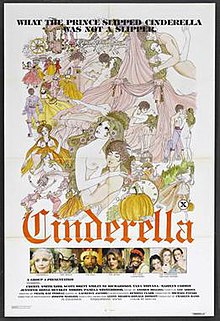
Cinderella-1977

Cinderella-1977

Director Michael Pataki

Starring Cheryl Smith

Scott’s Review #1,333

Reviewed January 14, 2023

Grade: B

This telling of the legendary fairy tale Cinderella (1977) differs significantly from the sentimental and wholesome story of a rags-to-riches Disney princess that we all know and love.

It’s for adults only; even many adults will scurry to grab the remote and turn it off before their significant other or, god forbid, children, catch them slyly peeking at what emerges from the screen.

The film is pornographic. This fact doesn’t offend me or influence my critique and in reality, piques my interest tremendously in how the filmmakers turn Cinderella into a porn film.

It’s 1970s-style pornography with the bulk of the nudity going to the female characters with barely any male flesh to view though there is some. During the fleshy numbers, there is music and dancing to be had usually with the female performers singing while topless.

The familiar story involves a lonely prince (Brett Smiley) who tries several young women in his kingdom in his search for the one he met at a royal ball. Naturally, it’s Cinderella (Cheryl Smith) the gorgeous yet abused waif who sings and dances while doing her chores, longing for a better life.

The prince is jaded and feels no satisfaction from traditional sex as he boldly reveals in the musical number ‘My Kingdom Won’t Come’. His sex-crazed father the King (Boris Moris) decides to host a lavish ball so that his son can find what he wants.

You see, the weapon that Cinderella possesses is a special snapping female genitalia that the prince experiences at the ball while blindfolded and in an orgy. This quality is irresistible to him and he must find and be with the woman who is the one who has the magic vagina.

The film is naughtily personified and the fun is seeing how far out director Michael Pataki and screenwriter Frank Ray Perilli will go for a shock. Pataki was mostly an actor who dabbled in directing which makes sense since Cinderella feels widely experimental.

Events get off to a perfectly indecent start when the royal chamberlain played by Kirk Scott wanders the forest encountering nude females who coquettishly make out with each other for fun and the affection of the handsome man.

There is more than the sex scenes to keep one thrilled. The costumes and the makeup, specifically the disgraceful pancake colors applied to Cinderella’s devilish stepsisters are in your face and gratifying. The gowns at the ball are professional and stylish.

The film teeters into art film territory at times like when Cinderella performs a musical number while soaping in the tub and while parading through the forest.

Her wacky Fairy Godmother is a black man played by Sy Richardson who is just a burglar intent on robbing Cinderella’s home but he does provide her with her special ‘gift’.

These many idiosyncrasies make the film Cinderella a cross between a lewd John Waters film and a bombastic Russ Meyers party film.

Cheryl Smith is excellent in the title role providing a gorgeous face and figure with a lovely voice. She perfectly delivers the numbers and carries the film.

Among all the many incarnations of Cinderella, circa 1977 is the most outrageous and courageous. How this film was even made and with an R rating baffles me. It’s nearly impossible to find on streaming or in stores and a mere spontaneous purchase was how I was even able to see it.

My suggestion is for cinematically creative film fans to give Cinderella (1977) a whirl but with extreme caution. Viewed with the wrong companions could be disastrous and a 3 am start time with adult nibbles is highly encouraged.

No kiddies allowed.
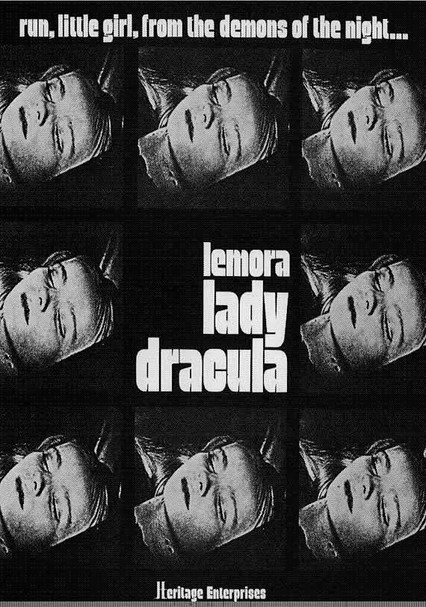
Lemora: A Child’s Tale of the Supernatural-1973

Lemora: A Child’s Tale of the Supernatural-1973

Director Richard Blackburn

Starring Cheryl Smith, Leslie Gilb

Scott’s Review #1,036

Reviewed June 22, 2020

Grade: A-

Lemora: A Child’s Tale of the Supernatural (1973) is a bizarre and fascinating horror film and a great example of 1970s experimental cinema.

At the risk of stating that there may be a tad too much exploration going on, since aspects go in many directions, the film is the perfect watch for a late weekend-night extravaganza of the weird and wild, and a joy to view.

The fact that I am still thinking about the film days after watching is a tremendous sign. Vampires, creepy clown-like figures, a reverend, a blood-thirsty woman, and a thirteen-year-old girl make up the cast of unusual characters to feast one’s eyes upon in delight.

During the Prohibition era in the southern United States of America, a young, angelic girl named Lila Lee (Cheryl Smith) slips out one night to look for her gangster father after receiving an anonymous, cryptic tip.

Lila is someone of note in her small town, envied by many in the church where she preaches with the local Reverend (Richard Blackburn).

She treks along swampy territory to the strange town, Astaroth, where her father is being held. After vampires attack Lila, a strange woman named Lemora (Lesley Gilb) helps her and offers her a place to live, but Lila soon begins to wonder whether Lemora is a friend or a foe.

For such a low-budget affair, the visual details are superb.

The photography and lighting are particularly commendable. Many characters ooze with glowing fright, especially Lemora. The ghostly white color enhances her blood-red lips, creating a pasty, haunting image that is ghastly to the eye.

If done at a sloppy level, the result could easily have been juvenile or comedic (not in a good way. Still, the elements fall together in an easy flow, combining horrific details that fascinate.

The best characters are Lila and Lemora, and their scenes together are immense. Gilb is the standout, bringing a monotone, wide-eyed performance reminiscent of a talking Bride of Frankenstein.

She frightens the audience, to say nothing of Lila, and is a fantastic villain.

Beautiful and erotic, her sexuality is in question.

Lila, young, fresh-faced, and developing, is ripe for the picking by Lemora, but I was perplexed whether Lemora wanted her blood or her other parts. The vague, but suggested, lesbianism and sexual abuse of a child only enhance the mystique and macabre qualities. When Lemora bathes Lila, this is where it’s most evident.

I adore films that challenge the norm and attempt to break the mold of the typical carbon-copy film or a formulaic script, but there is none to be had in Lemora: A Child’s Tale of the Supernatural, and it keeps the viewer guessing.

Comparisons to the brilliant The Night of the Hunter (1955) have been made, and while I don’t quite see it, a chilling fairy-tale concept exists. Think Hansel and Gretel, the Brothers Grimm’s German fairy tale, sans Hansel.

Lila’s pigtails and little girl’s dress give her a childlike vulnerability and appearance.

While deserving credit for bravery and letting loose from a story perspective, there is a measure of disorder and confusion about what is going on that perplexed me.

Blackburn, who also plays the Reverend, brings out many creatures on the attack, coming out of nowhere to scare Lila. Unclear is who they are (or were!) and what their motivations are.

Why does Lemora like to feed on children? Is she holding Lila’s father captive to lure her into her clutches? Is Lila’s blood more desirable than that of other children? The plot points are uneven, but maybe that doesn’t matter.

A suggestion, if plausible, is to check out the film’s uncut version. I saw the cut version, which was trimmed by nearly forty minutes and released theatrically in late 1974.

Tough to find, I wonder if this would provide more clarity to several plot items. Lemora: A Child’s Tale of the Supernatural (1973) was heavily criticized by the Catholic Legion of Decency, who deemed it “anti-Catholic”, which is more than enough reason to give it a whirl.