Category Archives: Gabriel Bateman

The Fabelmans-2022

The Fabelmans-2022

Director Steven Spielberg

Starring Gabriel LaBelle, Michelle Williams, Paul Dano

Scott’s Review #1,324

Reviewed December 17, 2022

Grade: A

At seventy-five years old, Steven Spielberg continues to produce heartfelt films that are personal and resonate with anyone who sees them. Rebounding with creative energy with the remake of the brilliant West Side Story in 2021, he continues to impress the older he gets.

In what is undoubtedly his most personal film, The Fabelmans (2022) is semi-autobiographical, telling the story of a young boy’s venture into the world of filmmaking.

The boy is presumed to be Spielberg himself.

The Fabelmans is Spielberg’s thirty-third film, and I’d be hard-pressed not to say it’s one of his best. He loses no ground in creating a lovely tale of family, dreams, human bonds, and a bit of scandal.

The director takes a fond look back at his boyhood in New Jersey and the family’s subsequent move to his primary childhood home in Arizona. From there, he goes to California to launch his film career.

Of course, the Fabelman family’s obstacles, trials, and tribulations sometimes get in the way.

Young Sammy Fabelman (Gabriel LaBelle) falls in love with movies after his parents take him to see ‘The Greatest Show on Earth,’ a film about a carnival, in 1952. His life changed forever after viewing the riveting train crash.

Sammy begins making his films at home, much to the delight of his supportive mother, Mitzi (Michelle Williams), who is, at heart, a dreamer and an artist like Sammy. His father, Burt (Paul Dano), a computer engineer, views filmmaking as merely Sammy’s hobby and something he will outgrow.

The story is heartfelt and compelling, with sentimentality and emotion that only Spielberg can create, without ever feeling phony or forced.

To my surprise, I was teary-eyed more than I ever thought I would be, mainly because the characters feel genuine and filled with humanistic sensibility. They are good people trying to do good things for each other.

Particular standouts are LaBelle, Williams, and Dano, but the cast is tremendous all around. Seth Rogen gives a career-best as Sammy’s father’s best friend and colleague, who harbors a family secret.

Judd Hirsch hits it out of the park in the small but powerful role of Mitzi’s uncle. He provides invaluable words of wisdom to Sammy and a bit of understanding about his mother.

Williams most enthralled me, and several of her scenes brought tears to my eyes. She delivers a beautiful performance as an artist who never saw her dreams realized, instead living vicariously through her son, another dreamer.

That doesn’t mean that Mitzi is unhappy, quite the opposite. She is often childlike in her approach, buying a monkey for entertainment simply because she needs a laugh. When a secret about his mother is revealed to Sammy while editing his film, it threatens to ruin their close relationship.

Dano, stoic as the methodical and quiet Burt, has deep-seated thoughts and emotions. The actor is brilliant as his range of emotions remains within himself while brimming to be let out.

Finally, LaBelle anchors the film in his debut effort. Showcasing his talent as the insecure, lone Jewish boy living in affluent, predominantly white, Christian Northern California, he nonetheless finds love and companionship with a classmate.

Besides the wonderful characters and storytelling, Spielberg crafts tremendous editing to reinforce the beauty of the creative filmmaking process.

Technically impressive, it also exudes a passion for creating the film. As Sammy intertwines bits of film and videotapes together to make art, it’s inspiring to any lover of cinema.

The Fabelmans (2022) may be a personal story. Still, Spielberg masterfully shares it with his audience as an homage to his own family, revealing experiences and secrets that have been held close to him over the years.

The viewer will overwhelmingly connect with his silver screen family and his love of cinema, allowing them also to conjure a feeling of belonging. The film contains tremendous acting, cinematography, storytelling, and everything else.

Oscar Nominations: Best Picture, Best Director-Steven Spielberg, Best Actress-Michelle Williams, Best Supporting Actor-Judd Hirsch, Best Original Screenplay, Best Original Score, Best Production Design
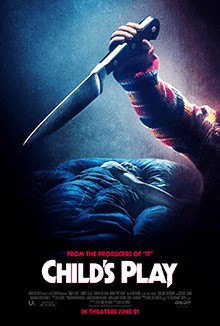
Child’s Play-2019

Child’s Play-2019

Director Lars Klevberg

Starring Aubrey Plaza, Mark Hamill

Scott’s Review #948

Reviewed October 17, 2019

Grade: B

In the horror cinematic genre, when a successful franchise has been dormant for a period, a reboot will inevitably be among the offerings.

Child’s Play (2019) resurrects the series of films popular in the late 1980s and early 1990s with a modern stamp.

The film is formulaic, but it adds a bit of macabre dark humor that lifts it above mediocrity. However, the freshness turns too silly in the final act, and neither the film nor the killer is terrifying.

Kaslan Corporation has launched a successful new global product called Buddi, a revolutionary line of high-tech dolls designed to be human-like companions to their owners, learning from their surroundings and acting accordingly.

Buddi dolls can also connect to and operate other Kaslan products, quickly becoming a phenomenon for kids worldwide. A disgruntled employee tweaks one of the dolls to turn sinister and then commits suicide.

Single mom Karen Barclay (Aubrey Plaza) works as a retail clerk in Chicago, raising a thirteen-year-old son named Andy (Gabriel Bateman), who wears a hearing aid.

New to the area, he struggles to make friends, so Karen takes the defective doll from her store as a substitute friend and picks me up for her son.

As Andy makes acquaintances within the building and takes a dislike to Karen’s new beau, Shane (David Lewis), Buddi names himself Chucky and seeks vengeance against those surrounding Andy, eventually turning on the boy.

Child’s Play takes a modernized approach by making the new Chucky a more high-tech doll, significantly advanced from the original Chucky introduced in 1988.

2019’s Chucky is creepier and more lifelike than the original Chucky, which lends the film a fresh look rather than merely a retread of the 1980s.

Set in present times, the film feels relevant and glossy. New Chucky is more human than old Chucky, with more capabilities and room for thought and deduction, making him more devious.

A treat for Star Wars (1977) fans and any fan of cinema history is the inclusion of Mark Hamill as the voice of Chucky. While Hamill’s voice is not sinister nor particularly distinguishable to the naked ear, the star power adds fun and familiarity, a throwback and ode to film lore.

Hamill’s voice is pleasant and kind, which adds a foreboding and sinister quality.

The film has some clever moments and bits of chilling dark humor that make it a fun experience. When Shane becomes the first victim of Chucky’s wrath and meets a dire fate at the hands of a tiller while hanging Christmas lights, he is beheaded, and Chucky leaves the head in a disgusted Andy’s room.

In hilarious and laugh-out-loud form, the head ends up as a wrapped Christmas present for Andy’s elderly neighbor Doreen, who props it on her mantle until she can open it.

Bryan Tyree Henry, known for his prominent roles in Widows (2018) and the wonderful If Beale Street Could Talk (2018), brings comedy and a likable edge as Andy’s neighbor, Detective Mike Norris.

Plaza, like Karen, is given limited material and unable to shine in her role, not seeming old enough nor motherly enough to add much realism. A big fan of the actress, she is more talented than this part allows her to be.

The film misfires with the cliched misunderstandings and incorrect assumptions that Andy is responsible for the deaths Chucky caused.  Andy’s two apartment buddies are caricatures, and the big finale set inside the retail store is disappointing.

Chucky brilliantly hacks the Buddi toys on the shelves, and chaos ensues as parents and children are massacred as a stampede tries to escape the store. The scene does not work as well as it should at a climax.

Sticking closely to the script and offering a predictable formula film, the 1988 film Child’s Play is remade in 2019 with added star power. Familiar faces (and voices), Plaza, Henry, and Hamill, raise the film slightly above B-movie status, though the dumb finale made me tune out a bit after the main kills were over.

I doubt the film performed well enough at the box office to secure the known actor’s returns, and hopefully, this will be a one-and-done project.

Annabelle-2014

Annabelle-2014

Director John R. Leonetti

Starring Annabelle Wallis

Scott’s Review #186

80013775

Reviewed October 17, 2014 

Grade: B+

Annabelle (2014) is a classic, edge-of-your-seat, ghost story that is effective in its creepiness and element of surprise.

Set in California circa 1969, John (Ward Horton) and Mia Gordon (Annabelle Wallis) are an all-American happy young couple.

He is a Doctor and she is beautiful and pregnant with their first child. They attend church each Sunday, are friendly with the neighbors, and have a strong sense of community.

As a surprise, John bestows a life-sized doll on Mia as a present and addition to her existing collection of interesting dolls. Soon strange events begin to occur: a home invasion, a fire, a bizarre experience in an elevator, and creepy drawings by the neighbor’s children.

The film eventually dives into murkier territory when a strange, religious woman, played by Alfre Woodard, is introduced, and the film then shifts focus to spirits, taking one’s soul, and the occult.

What sets Annabelle apart from similar horror contemporaries is the power of suspense. We as the audience know something bad will happen, but we don’t know when.

Unlike many horror films that slice and dice for shock value, Annabelle does not. Rather, foreshadowing and anticipation are common within the film, making the eventual jumps scarier!

Mia’s constant use of an electric sewing machine and Mia’s attentive watching news coverage of the Manson murders are clues as to what will come next.

A scene set in the middle of the night as a home invasion takes place next door is shot exceptionally well, like Alfred Hitchcock’s Rear Window (1955), with no dialogue. What the audience sees inside the house from across the yard as violence occurs- is frightening.

Within the same scene we know the home invasion will gravitate to Gordon’s house, but when will it strike?

Another effective scene shows a seemingly innocent little girl running towards another character in a separate bedroom but turns into a maniacal fiend and the foot thudding makes this terrifying.

I found myself genuinely scared during a few scenes!

Wisely choosing to avoid the all too frequent CGI effects, Annabelle instead goes the traditional route with genuine scares harvested from the unknown and the feeling of anticipation and dread of events to come.

The fantastic musical score composed by Joseph Bishara adds to the anticipation. Annabelle is a prequel to the equally scary The Conjuring (2013). The very first scene is, in fact, the same scene from that film where two nurses explain how they obtained the doll, named Annabelle, and cannot get away from her.

The final act delves into the spiritual world of evil- a soul (presumably Mia’s or her babies) must be sacrificed to relinquish the curse put upon her by Annabelle’s original owner.

A surprising figure aids in the conclusion of this film. Annabelle (2014) is an old-school horror film done very well.