Category Archives: Richard Brooks

Looking for Mr. Goodbar-1977

Looking for Mr. Goodbar-1977

Director Richard Brooks

Starring Diane Keaton, Tuesday Weld, Richard Gere

Scott’s Review #1,485

Reviewed July 25, 2025

Grade: A-

Diane Keaton won the Academy Award for Best Actress in 1977 for Annie Hall, an excellent film by Woody Allen, but as has happened in Oscar history, she won for the wrong role.

She delivers her best acting performance of her distinguished career in Looking for Mr. Goodbar (1977), a raw crime drama in which she plays Theresa, a liberated and carefree young schoolteacher living in a metropolitan area.

The film, directed by Richard Brooks (Cat on a Hot Tin Roof, 1967, and In Cold Blood, 1968), is based on Judith Rossner’s 1975 best-selling novel. The setting is inexplicably changed from New York City to San Francisco, but it feels exactly like the troubled urban metropolis during its late 1970s crime-ridden period.

I nearly felt as if Theresa’s dingy, windowless apartment was a character in itself.

The musical soundtrack is a significant win, featuring disco anthems from the time, such as ‘Don’t Leave Me This Way’ by Thelma Houston and ‘Love Hangover’ by Diana Ross.

Film lovers familiar with Taxi Driver (1976) and Cruising (1980) (both set in New York City) will notice similarities and draw parallels.

Theresa (Diane Keaton) teaches deaf children during the day and cruises singles bars and discos at night. Despite being raised a devout catholic ‘good girl’, she favors quick nights of passion with random suitors, ignoring the advances of well-meaning but nerdy social worker James (William Atherton).

She pursues the likes of Tony (Richard Gere), whose threatening knife and swagger excite her. As the film progresses, Theresa becomes increasingly entangled in perilous encounters, putting her life in danger.

Despite a jarring shift in story direction towards the end of the film and the geographical change, I found more than enough to merit a superior rating, especially Keaton’s performance.

Keaton flawlessly carries the film as an unapologetic, progressive character. She lives life, enjoys life, and sees nothing wrong with her chosen lifestyle. Keaton is fearless, delivering a likable character we probably shouldn’t like.

She can be cutting, self-centered, and moody, but takes sheer delight in teaching deaf kids who have problems at home, almost fostering them as her own.

Richard Kiley and Priscilla Pointer play Theresa’s parents in rather one-note performances. They are devout Irish Catholics, but too much time is spent showcasing their traditional values.

Theresa’s sister, Katherine, played by Tuesday Weld, is more like Theresa but more needy, and clinging to any man she meets. The sisters are close, even living in the same building, and constantly have each other’s backs.

Looking for Mr. Goodbar perfectly depicts life in an inner city in the mid-1970s: booze, sex, parties, and drugs.

Rinse and repeat.

The male characters that Theresa interacts with are of different types. Her first fling is with her married professor, whom she fantasizes about living with. When this doesn’t work out, she has urges for more dangerous experiences.

Tony (Gere) is sexy, unreliable, and dangerous, and Theresa is titillated. It’s with him when she teeters over the brink.

The film transitions from a sexual thriller into a deadly final sequence, leaving my mouth hanging open with surprise. The ending will leave audiences on the edge of their seats and may not please those seeking a happily-ever-after story.

Is the audience supposed to learn a lesson? Does Theresa get what she deserves? How dare she live her life as she sees fit? These are questions easily worthy of further discussion.

The introduction of Gary (Tom Berenger), a tortured gay man Theresa meets in a bar, comes so late in the film that there is barely time to get to know the character. But, he doesn’t put the LGBTQ+ community in such a positive light.

Still, the gay men who yearn to be straight cannot be dismissed since this was commonplace when the story was created.

With a spot-on atmosphere filled with juicy late 1970s coolness and danger, and a brilliant starring turn by Diane Keaton, Looking for Mr. Goodbar (1977) has more than enough to warrant a watch and a follow-up chat.
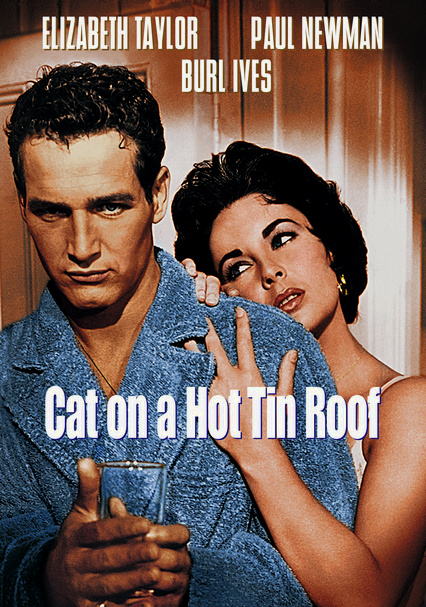
Cat on a Hot Tin Roof-1958

Cat on a Hot Tin Roof-1958

Director Richard Brooks

Starring Paul Newman, Elizabeth Taylor

Scott’s Review #1,356

Reviewed April 12, 2023

Grade: B+

If not for a drastically modified ending that completely changes the scope and message of the film version of Cat on a Hot Tin Roof (1958), it has ranked a solid ‘A.’

Instead, it is reduced to a grade of ‘B+,’ which is a shame because the film, for the most part, is fabulous-themes such as greed, jealousy, and heartbreak are explored.

Director Richard Brooks, who never shied away from controversial subject matters in later films like In Cold Blood (1967) and Looking for Mr. Goodbar (1977), created the screenplay with James Poe as a collaborator.

The film is based on Tennessee Williams’s 1955 Pulitzer Prize-winning play of the same name. It stars the titular talented actors  Elizabeth Taylor, Paul Newman, Burl Ives, Jack Carson, Madeleine Sherwood, and Judith Anderson.

After Brick Pollitt (Newman) injures himself while drunkenly revisiting his high school sports-star days, he and his tempestuous wife, Maggie (Taylor), visit his family’s Mississippi plantation for the sixty-fifth birthday of his aggressive father, Big Daddy (Ives).

In declining health, Big Daddy demands to know why Brick and Maggie haven’t given him a grandchild, unlike Brick’s brother, Gooper (Carson), and his overbearing wife, Mae (Sherwood).

The accusations result in shadowy secrets involving an unseen ‘football buddy’ and best friend of Brick’s that brim close to the surface but are never wholly unleashed.

In 1958, Newman and Taylor were each at the top of their game, and their talent, good looks, and chemistry nearly smoldered off the screen. Easy on the eyes, to say the least, one can relax with the comfort of witnessing good-looking people with tremendous acting talent hash it out.

The rest of the cast, especially Ives and Anderson, give bravura performances as fury and family drama emote most of the film’s running time.

Nearly rivaling the ferocity of the bitter scenes between Brick and Maggie is a lengthy and ultimately tender scene between Brick and his father. The sequence is for the ages and infuses some sympathy for the materialistic Big Daddy, who tearfully admits to loving his father. This drifter loved his son more than life itself.

Ives should have won the Best Supporting Actor Oscar but missed a nomination for Cat on a Hot Tin Roof entirely. Instead, the actor won the Academy Award for a film called The Big Country.

Shot like a play because it’s based on one. Cat on a Hot Tin Roof feels claustrophobic and stuffy despite the glamour of the family estate where most of the action takes place.

Servants serve and scamper after the four little rascals belonging to Gooper and Mae, nicknamed ‘Sister Woman, ‘ while cutting the cake and dealing with party favors of the rich and powerful.

Sadly, the film is nearly ruined with a piss-poor and severely botched wrap-up reuniting Brick and Maggie, cementing their sexual union and ascertaining the fact that they are a straight couple.

You see, in the original play, Brick’s sexuality is in question heavily, but the film removes almost all of the homosexual themes.

The hated Hays Code limited Brick’s portrayal of sexual desire from Skipper and diminished the original play’s critique of homophobia and sexism.

These items are the basis of the story, and their removal leaves a massive void in the film. We assume that Brick had erectile difficulties due to his injuries and drinking, but the point is weak and uneven, and also makes the continued mention of Skippy irrelevant.

Newman, in particular, was unhappy with the film.

Brooks wonderfully portrays Southern traditions and the hot summer atmosphere, making the characters feel suffocated and anxious. Doom and gloom hover over the film.

However, a stark change in the writing and Williams’s original concept is unforgivable, save for all the other elements of Cat on a Hot Tin Roof (1958).

After seeing the film twice, I yearn for the authenticity of seeing or reading the play.

Oscar Nominations: Best Picture, Best Director-Richard Brooks, Best Actor-Paul Newman, Best Actress-Elizabeth Taylor, Best Screenplay-Based on Material from Another Medium, Best Cinematography-Color