Category Archives: Annie Potts

Pretty in Pink-1986

Pretty in Pink-1986

Director Howard Deutch

Starring Molly Ringwald, Andrew McCarthy, Jon Cryer

Scott’s Review #1,376
Reviewed July 10, 2023

Grade: B+

A superior grade of ‘B+’ may surprise some who know that I’m not a big fan of generic 1980s films, romantic comedies, or dramas.

Formulaic or nostalgic doesn’t always sit well with me but I was baited hook, line, and sinker for an implausible coming of age sweet story.

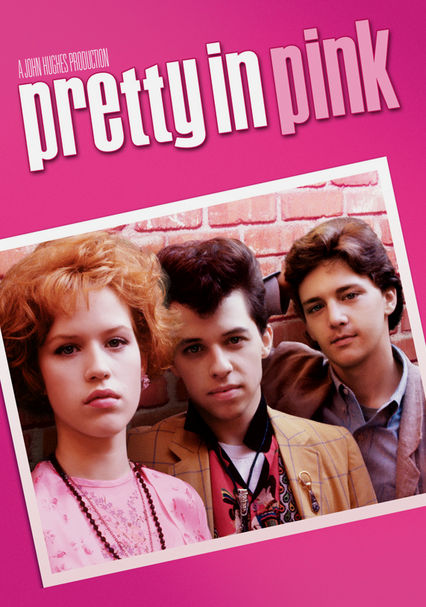
Pretty in Pink (1986) and its writer John Hughes epitomizes the 1980s and teen angst films in general but looking beneath the surface the film has a lot of heart.

Star Molly Ringwald was the ‘it’ girl of the decade perfectly portraying the girl next door facing the trials and tribulations ordinary sixteen-year-olds faced.

Of course, my favorite Hughes film is The Breakfast Club (1985), also starring Ringwald but Pretty in Pink is hardly as daring as that film. It’s softer and kinder with a lovely message of individuality and romance.

The film’s secret weapon is the spectacular musical soundtrack featuring among other songs the groovy title track by Psychedelic Furs and the mega-hit ballad ‘If You Leave’ by Orchestral Maneuvers in the Dark.

Andie (Ringwald) is an outcast at her Midwest USA high school. From a working-class household with an unemployed father (Harry Dean Stanton) and an absent mother she makes her clothes and has an individual fashion sense.

She’s not exactly popular with the bitchy and materialistic cheerleaders.

She works at a record store for her older boss and friend Iona (Annie Potts) and is usually seen with her best friend and fellow outcast Duckie (Jon Cryer), who has a crush on her.

When one of the rich and famous kids at school, Blane (Andrew McCarthy), asks Andie out, it seems too good to be true. As Andie starts falling for Blane, she begins to realize that dating someone from a different social class has its challenges.

Pretty in Pink has a few different angles going on including a social sphere, a romantic triangle, and conformity.

The triangle is ultimately divisive. Should Andie choose a best friend and confidante Ducky or Blane, the boy she truly is smitten with? Her choice has divided audiences since the film was released decades ago.

She has so much in common with Ducky who also has blue-collar roots but her heart belongs to Blane who could offer her so much more. Andie is headed for University and couldn’t Blane be proper sophistication for her?

I’m on team Blane.

Strangely and offputting is Ducky. Meant to be cute he all but harasses Andie, smothering her and pressuring her. His repeated phone calls would make me run the other way.

Social class is a wise topic explored and one that many audiences can relate to. The classic upper-class boy falls in love with a working-class girl and family and friend pressures develop.

Hughes doesn’t delve too much into the upper-middle-class parents but only into the students which I find interesting. The character of Steff (James Spader) is the villain antagonizing Andie because he can’t get her into bed.

Andie inspired and continues to inspire teenage girls everywhere who refuse to conform to norms and standards. The film offers a strong female character with real emotions and hopes, fears, and dreams.

Thanks to an outstanding performance by Ringwald we see all her emotions and a beautiful dynamic forms between father and daughter.

The conclusion of the film (related to the triangle) occurs at the high school prom where a jilted Andie attends alone. A quick sequence where she reconnects with a character is very rushed and the film ends quickly.

Unsurprisingly, this is the result of the finale being re-written at the last minute after the original ending didn’t go over well with test audiences.

There is something to be said for the writer and director having complete creative control but sadly this isn’t the case in Pretty in Pink and the audience can see the void.

Pretty in Pink (1986) may scream ‘1980s film’ and the tacky hairstyles and outfits that go along with the decade and the genre but the messages relayed hit their marks.

Though dated in some ways the film is timeless in others.

Toy Story 4-2019

Toy Story 4-2019

Director Josh Cooley

Voices: Tom Hanks, Tim Allen, Annie Potts

Scott’s Review #966

Reviewed December 10, 2019

Grade: B

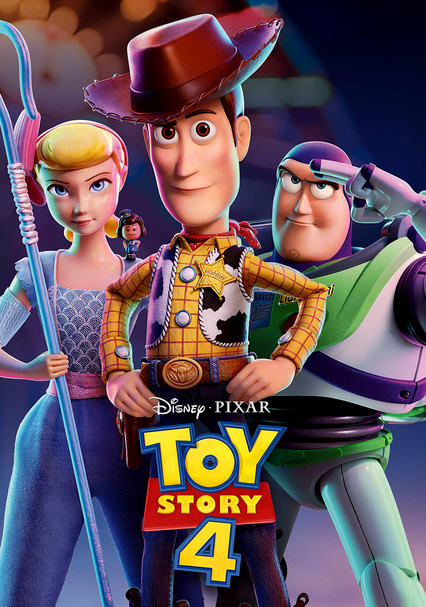
Toy Story 4 (2019) is the fourth installment in the Pixar/Disney-produced Toy Story series, now nearly twenty-five years old!

The glitter is beginning to fade on a once-endearing franchise, and hopefully, this is the last one- additional segments are not needed unless desperation develops.

After a slow start and too many retread moments, the film shows bombast and familiar heart and tenderness in the finale, presumably wrapping up the long story with a neat bow.

The animation is vivid and colorful, almost astounding, and makes up for an otherwise unnecessary story.

In a flashback sequence, nine years after Toy Story 2, Bo Peep (Annie Potts) is donated to a new owner, and Woody (Tom Hanks) begrudgingly decides to maintain his loyalty to the owner, Andy.

Years later, and now a teenager, Andy donates a forgotten Woody to a young child named Bonnie, who lacks the affection for the toy that Andy had. When Bonnie makes and bonds with Forky, a toy made of plastic, Woody struggles to convince Forky that each is more than garbage.

When Bonnie and her parents embark on a summer road trip to an amusement park, Woody and other familiar faces are along for the ride.

The group meets other forgotten toys, some benevolent and some sinister, at the park and a nearby antique store. Woody’s dear friend and comic relief, Buzz (voiced by Tim Allen), is in the mix and helps all the toys realize that they are not forgotten and that they can still bring joy to children.

The film provides an unwieldy list of celebrities in major and minor roles. The incorporation of characters like Chairol Burnett, Bitey White, and Carl Reineroceros (voiced naturally by Carol Burnett, Betty White, and Carl Reiner) may not be necessary.

Still, it’s fun to watch the credits roll and see who’s who from the cast.

The minor characters are little more than window dressing, but the creativity is admirable.

The main story of abandonment, loyalty, and discarding of one’s toys is ample and pleasant, but has occurred in every segment thus far in the series.

Do we need to see this again? Yes, it is an essential message for both children and adults, but why not simply watch the first three installments of Toy Story, each brilliant in their own right?

Toy Story 4 plays by the numbers with little surprises.

One glaring notice is how almost every single adult is either incompetent or played for laughs.

I understand that the main draw is the toys and outsmarting the adults is half the fun, but when Bonnie’s father assumes his navigation system is on the fritz, rather than catching on to the fact that one of the toys is voicing the system, one must shake one’s head.

Suspension of disbelief is increasingly required in these types of films.

Toy Story 4 picks up steam in the final twenty minutes with a thrilling adventure through the amusement park and a cute romance between Woody and Bo Peep.

When the long-forgotten toy Gabby Gabby (Christina Hendricks) emotionally rescues a lost child, she is rejuvenated and breathes new life into both the child’s life and her own.

In a darling moment, Forky meets another creation named Knifey. Knifey suffers from the same existential crisis as Forky once did, and Forky immediately becomes smitten with her, both realizing that even though they are odd-looking, they still matter.

The nice lesson learned is that even toys from the 1960s and 1970s can provide warmth and comfort to a young child and are more than “of their time”.

This is a clear and bold message that resonates with human beings and acknowledges that advanced age does not come with an expiration date.

Everyone matters and brings importance. The underlying theme is heartwarming and central to the film, bringing it above mediocrity.

What should certainly be the final chapter in a tired franchise that continues to trudge along, the bright message and strong animations remain, but the film feels like a retread.

Given that Toy Story 3 was released in 2010, Toy Story 4 (2019) needs to bring the series to a conclusion before installments 5, 6, 7, or 8 result in a dead-on-arrival sequel.

Oscar Nominations: 1 win-Best Animated Feature Film (won), Best Original Song-“I Can’t Let You Throw Yourself Away”