Category Archives: Henderson Forsythe

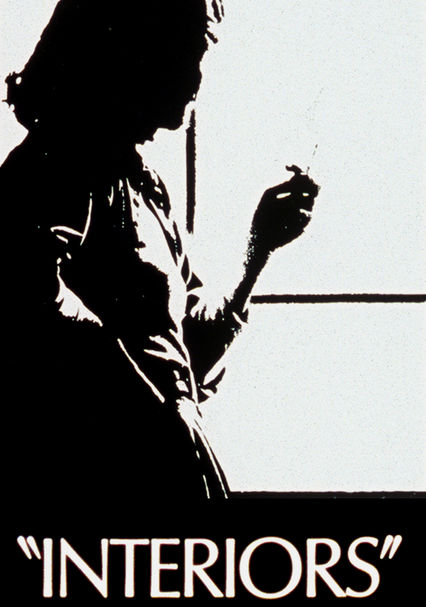
Interiors-1978

Interiors-1978

Director Woody Allen

Starring Diane Keaton, Geraldine Page, Mary Beth Hurt

Scott’s Review #1,392
Reviewed August 24, 2023

Grade: A

Woody Allen films are not everyone’s cup of tea.

Typically, offbeat or even downright wacky comedies with quick-witted dialogue and irritating characters are not everyone’s preferred taste in film.

I’ve always adored the director’s works.

Allen hits a home run with Interiors (1978), his first dramatic film and my favorite. It even rivals classics like Annie Hall (1977) and Manhattan (1979), which most people frequently consider his best.

The famous director turns down the volume and slows the pace with a dark story about mental illness and the ravaging effect it has on a family, the struggling individual, and the other extended members.

Missing from this Woody Allen film are the prevalent one-liners and gimmicks mostly associated with his comedies. The only standard is the inclusion of frequent collaborator Diane Keaton, who plays a successful poet, Renata.

The story centers on a middle-aged and upper-class couple’s disintegrating marriage. It forces their three grown daughters (Keaton, Mary Beth Hurt, and Kristin Griffith) to reveal their feelings about themselves and each other. They also have their share of difficulties.

Renata is successful, but her husband is a struggling writer with marginal talent. He lusts after Renata’s sister, Flyn (Kristin Griffith), an actress only known for her good looks. Joey (Hurt) is a restless soul unable to decide on a career and jealous of Renata.

Mental illness is only one of their trials and tribulations.

The family resides in Manhattan, Connecticut, and Long Island, most likely the Hamptons, so they are wealthy and assumed to be happy, healthy, and thriving.

They are anything but.

None of the daughters is successful at providing ample support to their devastated mother (played by Geraldine Page), who has a mental illness and is extremely fragile.

The cast is tiny, with only eight principals, each with a perspective. There are no villains. Only complicated characters with rich texture and substance.

I love the brilliant characterization and development, and the many layers most of the characters possess. Each character, especially the father, mother, two of the daughters, and the new wife, Pearl, played exceptionally by Maureen Stapleton, can be examined in depth.

One might assume that the father Arthur played stoically by E.G. Marshall might be unlikable. After all, he requests a ‘separation’ from Eve, which the audience knows is a soft-touch way of ultimately asking for a divorce.

He then meets a new woman, a different type from his wife, and plans to marry her!

This does not go over well for anyone.

But Arthur is sympathetic, and so is Pearl (the new wife). I rooted for the pair even though I felt bad for Eve.

The film culminates in a stunning sequence at the family’s Hampton residence amid Arthur and Pearl’s wedding. The family begrudgingly attends the simple, dinner-party-style wedding and pretends to be happy.

From a visual perspective, the art direction is flawless. Muted grey and brown tones perfectly complement the drab, depressing subject matter.

People have compared Interiors to an Ingmar Bergman film, and I completely understand that. The film is dark, cold, and bleak, but it contains a sophistication and thought-provoking quality mirroring Bergman’s films like Wild Strawberries (1957) and others.

Woody Allen crafts an astonishingly good screenplay with confidence and precision that only he can do. Interiors (1978) could easily have turned into a soap opera melodrama, but it remains enthralling and devastating throughout.

Oscar Nominations: Best Director-Woody Allen, Best Actress-Geraldine Page, Best Supporting Actress-Maureen Stapleton, Best Screenplay-Written Directly for the Screen, Best Art Direction
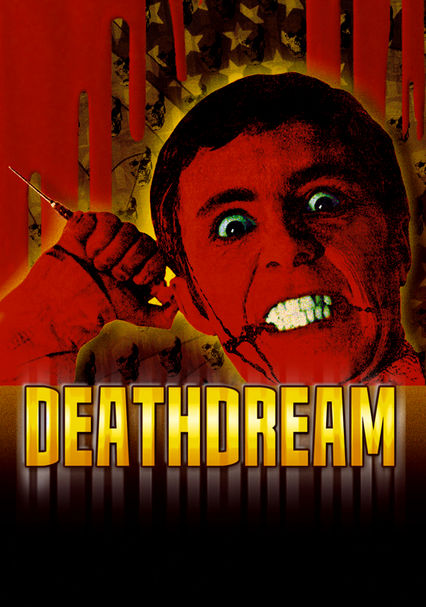
Deathdream-1974

Deathdream-1974

Director Bob Clark

Starring Richard Backus, John Marley, Lynn Carlin

Scott’s Review #1,175

Reviewed September 3, 2021

Grade: B+

Deathdream (also known in some circles as Dead of Night) is a 1974 horror film directed by Bob Clark and written by Alan Ormsby that plays like a very good science-fiction-meets-gruesome-horror episode of The Twilight Zone.

This is not to say it’s amateurish, though in certain ways it is; mostly, it’s just that the dialogue is spotty. Rather, it has the feel of an episodic adventure more than an actual film. This makes perfect sense, since it was inspired by W. W. Jacobs’s short story “The Monkey’s Paw”.

The film was shot in a town named Brooksville, Florida, which is unusual in itself and provides a genuine Southern quality, like when the family sits down for a hearty meal.

Usually, horror films stick to Hollywood studio locales or cheaper areas like Canada to film.

Deathdream stars Richard Backus, John Marley, and Lynn Carlin.

The premise immediately intrigues me. A middle-aged married couple, Charles and Christine,  (Marley and Carlin) receives the devastating news that their son Andy (Backus) has died in the line of duty during the Vietnam War. They’re overcome with grief, to say the least.

Before the news, Christine seems overly chatty and a bit peculiar, while Charles is much older than his wife.

Soon after, Andy, very much alive, hitches a ride with a truck driver whom he then murders. He arrives home and is not the same, seeming to be zombie-like and in a trance, not the same boy who left for Vietnam a year earlier.

As a classic film lover, I was immediately tickled pink by actor John Marley’s appearance onscreen.

Associated with Love Story (1970) and The Godfather (1972), with the latter forever etched in my memory as the film director who is made “an offer he can’t refuse” by way of his gorgeous horse Khartoum, it was a treat to see him in a horror film.

I noticed facets of Deathdream that reminded me of one of my favorite horror films, Black Christmas (1974), not realizing they were both directed by Bob Clark. Deathdream serves as the perfect opening act to that most influential horror film.

An organ/synthesizer effect immediately caught my ear with more than a tad of fright. I instantly recognized it as the spooky noise emitting from the Black Christmas musical score. And both use a rocking chair prop with fantastic results. The creaking sound brought chills up and down my spine.

Can you believe this guy also made Porky’s (1981) and A Christmas Story (1983)? Talk about versatility.

It’s clear the film was made on a shoestring budget, but it proves, in a mighty way, that, as with British Hammer horror pictures, creativity can ooze out of a small budget. Terrific is what the crew does with the special effects. Instead of cheesy or campy, they are thrilling.

The story could be construed as silly or ridiculous. Andy is some vampire or zombie who needs others’ blood to reinvigorate his decaying body, which, on paper, makes little sense. The only reason he comes back from the dead (we see him killed in combat onscreen) is because he promised his mother he’d return home.

Beyond that, under the surface is a message about the war that I found powerful and that usurps the horror genre the film inhabits. It’s not just another horror film- it has a deeper subtext.

Though Clark is never overt about it, Andy has post-traumatic stress disorder, something not yet realized in the early 1970s and certainly not talked about. Clark’s message is clear.  Andy is a young man whose life has been ruined unnecessarily.

Despite being a film aficionado, I had not heard of Deathdream (1974) until quite recently. It’s an overlooked gem like so many others in the horror genre, but horror fans, fans of message films, and those looking for a good scare can appreciate this one.

It deserves some love.