Category Archives: Ciarán Hinds

The Phantom of the Opera-2004

The Phantom of the Opera-2004

Director Joel Schumacher

Starring Gerard Butler, Emmy Rossum, Patrick Wilson

Scott’s Review #1,336
Reviewed January 23, 2023

Grade: A-

Having been fortunate enough to see the legendary Broadway production of The Phantom of the Opera makes any film version impossible to usurp compared to the live stage show.

The lights, the sets, the booming music, the dreaded chandelier, and presumably phenomenal acting all make for an unforgettable experience.

Since we are talking film, the cinematic version of The Phantom of the Opera (2004) is breathtaking and nearly twenty years late to the game, I should be scolded for having not seen it earlier like when it was initially released.

It’s based on Andrew Lloyd Webber’s 1986 musical of the same name, which in turn is based on the 1910 French novel Le Fantôme de l’Opéra by Gaston Leroux.

Critics were not kind to the film though most audiences liked it so I almost didn’t see it save for my hubby renting it and encouraging us to watch it.

I am glad I did because this film encompasses a feast of riches.

I wonder aloud if the fact that it was directed by Joel Schumacher who created the dreadfully bad Batman & Robin, made seven years earlier in 1997 influenced bad reviews. After all, nobody likes their superhero movies butchered and payback’s a bitch after all.

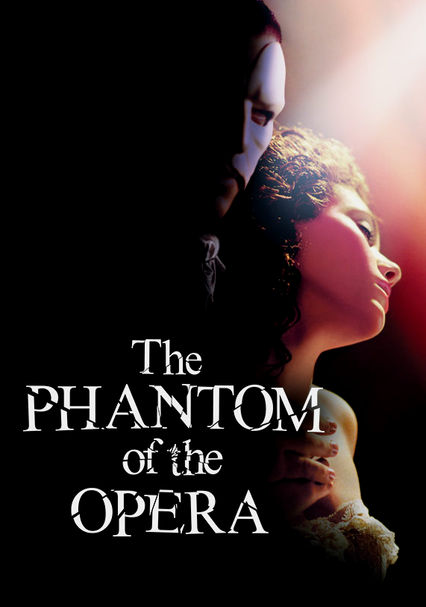
For the novice fan, the summary is as follows. Gerard Butler stars as the disfigured, reclusive Phantom who roams beneath the Paris Opera and takes budding star Christine (Emmy Rossum) under his wing.

But as he falls for her, she finds love with handsome and porcelain-like Raoul, played by Patrick Wilson, leaving the Phantom none too pleased.

If nothing else, and there is something else, the film is a spectacle. Gorgeous Parisian sophistication drips from the screen in nearly every scene from the gloomy catacombs to the enthralling opera stage.

The costumes reek of French style, glamour, and texture, and the principle cast is easy on the eyes, to say the least.

These treats are merely a warmup to the astounding and professional art direction, making the winter sequences dreamlike and gothic, capturing the tone perfectly.

This encapsulates the dire story sequence and aids in the viewer feeling the pain of the Phantom.

The all-too-familiar numbers are modernized in just the right places especially “The Music of the Night” which could have been played on popular radio stations. The lively “Masquerade” parlays into the lovely “The Phantom of the Opera” duet between the Phantom and Christine in his ugly lair.

I didn’t feel the chemistry between Rossum and Wilson the same way I did between Butler and Rossum and maybe that’s the point. Wilson doesn’t have much to work with since the character isn’t the main attraction.

I never wanted Christine to ride off into the unknown with Raoul but ached for the pain that the Phantom felt for Christine’s kindness.

As much as I like Wilson the actor I champion the casting of Rossum (unknown at this time) and Butler who is the top draw in the talent department.

His loud and colorful musical numbers enrapture me as a viewer and grip me with his pain. The passion and magnificence are on full display. Butler is my favorite actor.

Minnie Driver is perfect as the spoiled diva, and the supporting cast, including veteran Simon Callow, gives the cast further credibility.

I was transported to another world while watching The Phantom of the Opera (2004) by the sheer extravagance of what was on the screen. Schumacher more than deserves top accolades and respect for his production.

Oscar Nominations: Best Art Direction, Best Cinematography, Best Original Song-“Learn To Be Lonely”

Belfast-2021

Belfast-2021

Director Kenneth Branagh

Starring Jamie Dornan, Caitríona Balfe, Jude Hill

Scott’s Review #1,202

Reviewed November 28, 2021

Grade: A-

Belfast (2021) is a film I wanted to see based solely on the year-end awards buzz it is receiving as of this writing. The trailer would lead you to believe that the film is a sentimental and heartwarming journey through the lives of a group of people living in Belfast, Ireland.

This is nothing but strategic marketing.

The film is significantly better than the trailer suggests, offering a dark and raw exploration of a family torn between their current lives in Belfast and the opportunity to leave the troubled city for new prospects in England.

However, it’s not all doom and gloom, and in fact, Belfast offers enough humor, entertainment, and drama to please a broad audience. There also exists a lesson in kindness, decency, and respect that is so needed in the world today.

Belfast is a movie rich in real-life experiences from director Kenneth Branagh’s own life, which successfully lends realism and honesty to the picture.

The film is told through the eyes of a nine-year-old boy named Buddy, wonderfully played by Jude Hill. He struggles to forge a path from childhood to manhood in a world that has been turned upside down.

It is 1969, and battles over religion have overtaken his neighborhood with radical Protestants wanting the Catholics out.

Buddy experiences the joys and sorrows of young love, loss, joy, laughter, music, and the magic of the cinema.

His family surrounds him- Ma (Caitríona Balfe), Pa (Jamie Dornan), Granny (Judi Dench), Pop (Ciarán Hinds), and a brother. They each fill Buddy’s life with kindness and fun.

The film starts slowly for me, despite an immediate, wonderfully compelling slow-motion sequence in which Buddy is surrounded by violence and terror as he walks home from school on a pleasant afternoon.

As I ponder Belfast, I realize that much of the film is slow, yet rich in texture and goodness. Every so often, an emotional scene erupts, but then a great deal of it is Buddy’s everyday experiences.

The black and white cinematography is crucial in portraying the bleakness of Belfast and how its residents strive to add some life. Most are born and die where they live.

Branagh adds an occasional glimpse of color, which is effective to show a burst of delight in the characters’ lives. This is most powerful when the family goes to the cinema and enjoys an afternoon watching Chitty Chitty Bang Bang.

The lighting and extreme close-ups of some characters’ faces reveal their emotions, while the landscape shots are appropriately smoky and bright. This fits the mood perfectly.

The film features music by Belfast native Van Morrison, including eight classic songs and a new song Morrison wrote for the film.

The acting is superb by all the principal cast, and Dornan and Balfe provide the emotional core. Both actors are beautiful, and their performance of ‘Everlasting Love’ is simply delightful.

Providing proper role models for their children, Dornan’s Pa nearly had me in tears when he told Buddy that a person’s religious beliefs are unimportant, but their kindness is what truly matters.

He is a progressive man trapped in a traditional world.

In the end, the family chooses to reach for the stars, and the moment is fulfilling for both the characters and the viewers.

Belfast (2021) did not completely win me over until it ended, when I realized that I had witnessed a superior film. Branagh fuses heart and decency into a tale of a family’s struggles and trials.

It’s a message film that doesn’t scream or preach that message, but instead gives a quiet lesson in humanity.

Oscar Nominations: 1 win-Best Picture, Best Director-Kenneth Branagh, Best Supporting Actor-Ciarán Hinds, Best Supporting Actress-Judi Dench, Best Original Screenplay (won), Best Original Score-“Down to Joy”, Best Sound

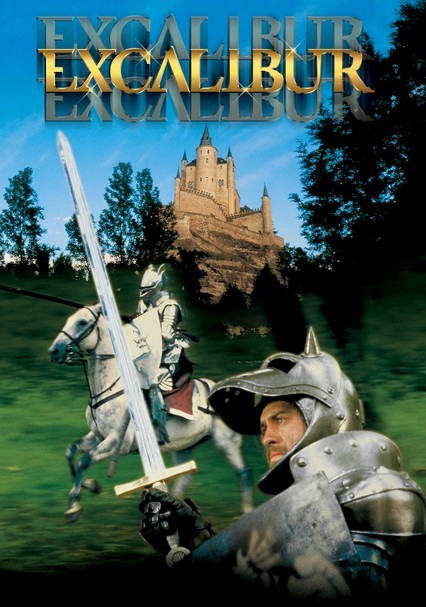
Excalibur-1981

Excalibur-1981

Director John Boorman

Starring Nigel Terry, Nicholas Clay, Helen Mirren

Scott’s Review #1,108

Reviewed February 4, 2021

Grade: B+

John Boorman, most famous for directing a 1972 disturbing classic film Deliverance returns to the fold with steamy fantasy rich with lavish sets, visual treats, and an incredible atmosphere.

This is where the film succeeds.

We are taken to a medieval world where we embrace jealousy, sex, and schemes.

Boorman not only directs but produces and co-writes the project along with the screenwriter Rospo Pallenberg.

Excalibur (1981) retells the legend of King Arthur, a British leader from the fifth and sixth centuries mostly told by folklore, and the Knights of the Round Table, based on the 15th-century Arthurian romance Le Morte d’Arthur, at behemoth length, by Thomas Malory.

The table is symbolic because it implies that there is no head and therefore a democratic forum.

This telling is quite adult and not suitable or comprehensible for children.

Famous legends like Merlin (Nicol Williamson), Lancelot (Nicholas Clay), Queen Guenevere (Cherie Lunghi), and Morgana (Helen Mirren) appear alongside Arthur (Nigel Terry) in a furious battle for control.

In a flurry of handsome European actors who would later become famous, Patrick Stewart and Liam Neeson both appear.

Most of the male cast are masculine, hunky, and very handsome. These traits cascade to how good they look in full body armor, shields, and swords doing bloody battles with each other.

Homoerotic scenes exist just as they did in Deliverance. Lest we only focus on the male cast, Helen Mirren is delightful as an evil seductress who oozes sex appeal.

The magical sword of Excalibur starts in the hands of a British lord Uther Pendragon (Gabriel Byrne) and then, years later, finds its way to his bastard son, Arthur, who is destined to become king but doesn’t realize why.

Merlin helps Arthur fulfill his fate by bringing together the Knights of the Round Table at Camelot and unifying the country.

Years later Arthur faces greater tests ahead in pursuit of love, the Holy Grail, and his nation’s survival as some attempt to steal the treasure for their advantage.

Excalibur had me with the visuals and I was able to immerse myself in the spectacular style and artistic set design with gorgeous sequences.

Several creative and glimmering shots of someone either emerging from or submerged underwater are featured. They are startlingly beautiful.

I pretended I had been whisked away to an otherworld of enchantment that I could sit back and enjoy.

The knowledge that the entire film was shot in Ireland captured and enraptured me. The breathtaking greenery and waterfalls are dreamlike. When Lancelot beds Guenevere in the forest they both appear nude. Their pale white flesh against the green is both magical and seductive.

And a treat for one’s curious eyes.

The story is overly complicated with reality mixed with either dreams or fantasy and some of the plots confused me. I finally got to a point where the intricacies became too much for me to comprehend especially against the stunning backdrops.

The plot became too jumbled and messy so it is advisable to drift off and take it all in rather than trying to make sense of everything.

A visual marvel Excalibur (1981) will delight the apt film fan. I fantasized about how the picture would look and feel on the big screen but I wasn’t that lucky.

The story is obviously far-fetched and ludicrous at times, but somehow that doesn’t matter and didn’t hinder my enjoyment of it.

I was treated to good-looking people in armor, unique costumes, and various states of undress. And that’s just fine with me.

Frozen II-2019

Frozen II-2019

Director Chris Buck, Jennifer Lee

Starring Kristen Bell, Idina Menzel

Scott’s Review #1,043

Reviewed July 22, 2020

Grade: B

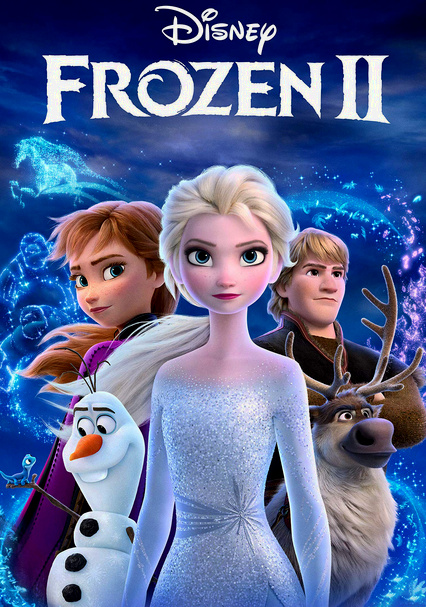
Six years after the enormous success of Frozen (2013) comes the follow-up, Frozen II (2019).

Surprisingly, the long gap of time between creations is a long gap of time between creations, but the beauty of animation is that these characters do not age unless creators want them to.

The adventure story is fun, incorporating a bit of history, which always creates depth, but also charts familiar territory as the first installment.

The film showcases lovely visuals and songs, which usurp the other elements. Breeding so much familiarity, there seems little need for a third chapter, though I’d bet my bottom dollar another will emerge.

We are reintroduced to Anna (Bell) and Elsa (Menzel) as little girls when they are tucked into bed by their father, King Agnarr of Arendelle, one night.

He relays a story about his father (their grandfather), a treaty made with a neighboring tribe, a dam, and a magical Enchanted Forest.

As a youngster, Agnarr barely escapes alive after a fight erupts with the other tribe, causing his father’s death, and enraging the spiritual elements of the forest. There is also a key mention about Anna and Elsa’s parents’ lost ship, which is apparently how they died.

Fast-forward to the present day, Elsa and Anna are adults, three years after the events of the first film. Elsa, the one with ice powers, runs her happy kingdom with Anna serving as Princess.

They live in peace and harmony with familiar characters, Olaf, the snowman created by Elsa, Kristoff, Anna’s boyfriend, and Sven, his reindeer.

When Elsa begins hearing mysterious voices calling to her from the mountains, she pursues them only to reawaken the spirits and threaten her kingdom and her people. The group must come to the rescue to retain harmony, learning the reason for Elsa’s powers in the process.

Frozen II has a “nice” feel, which is positive and negative. A family-friendly film with a feminist, female perspective is beneficial, crafting a positive and inspiring message for youngsters, especially females, who watch it.

Anna and Elsa control their destiny, are empowered to go after what they want, and achieve results.

They also support each other, share sisterly love rather than being rivals, and treat people fairly.

The adventure that the girls and their friends face will end happily, that much we know. Slight peril emerges when Anna goads and then flees from gigantic earth spirits, Olaf melts and is assumed dead, and Elsa is also thought dead in the forest.

Still, these are aspects added for dramatic effect, and the safe feel of the film ensures that all major characters will remain in happily ever after harmony.

When Kristoff awkwardly attempts to propose to Anna throughout the film, we are sure he will eventually do the deed, which he does.

I criticized Frozen for limiting diversity in its production, which is corrected in Frozen II. Mattias, leader of a group of Arendelle soldiers, is a strong and protective character and is black.

As an LGBTQ presence, one is only hinted at.

When Kristoff befriends Ryder over their love of reindeer, Ryder admits he knows nothing about girls. Mention must be made of Elsa’s barbie doll-like appearance with her bright blue eyes and long blonde hair.

Does she have to look that stunning? Might impressionable girls get the idea that looks are most important?

Let’s hope not.

The best parts of the film are the musical numbers, which feel more enhanced than those in the first Frozen. Using the same song composers, the tunes feel slightly less poppy. The most emotional number is “Into the Unknown”, which possesses a mysterious quality and powerful, compelling lyrics.

Its message is to go for it, which can be interpreted as conquering fears or trying something new. The sound is anthem-like and superior to “Let it Go”.

Frozen II (2019) is a predictable yet fun affair, infused with Scandinavian elements, featuring mountains, fjords, and a gorgeous landscape that provides the necessary cold-weather ambiance and magical quality.

The visuals are lavish, bright, and sophisticated.

Part II is a slightly more mature affair but on par with Frozen and wisely targets the right audience. Tastes change, so if Part III is made, filmmakers might want to consider a deeper plot or additional details to maintain interest.

Oscar Nominations: Best Original Song-“Into the Unknown”

First Man-2018

First Man-2018

Director Damien Chazelle

Starring Ryan Gosling, Claire Foy

Scott’s Review #915

Reviewed July 4, 2019

Grade: B+

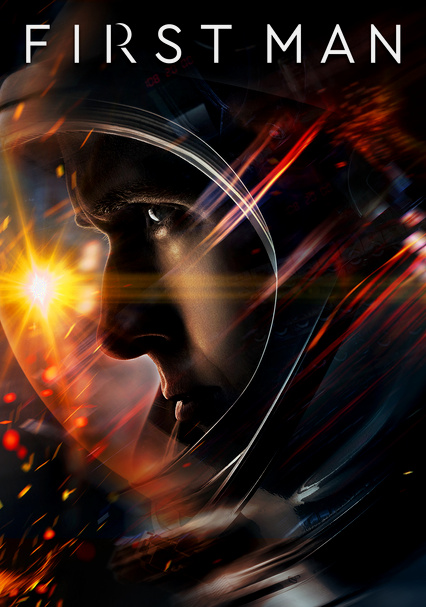
First Man (2018) is a reteaming of efforts by director Damien Chazelle and actor Ryan Gosling, following the 2016 critical and commercial smash hit La La Land.

The former could not be more different from the latter, and the direction is unrecognizable for those expecting a comparison. First Man is a mainstream Hollywood production with good camerawork and edgy quality.

The necessary full-throttle action approach is interspersed nicely with a personal family story and humanistic spin that is never too sappy nor forced.

The focus of the story is on Neil Armstrong (Gosling) and the events leading up to the historic Apollo 11 mission, which made him the first United States astronaut to walk on the moon.

Buzzy Aldrin (Corey Stoll), the second man to walk on the moon, is featured to a lesser degree, and his character is portrayed as self-centered and complex, though screen time is limited.

The overall message is of the triumphs and the costs to families, the astronauts, and the country during an already tumultuous decade in history.

The events of the film begin in 1961, as we see Armstrong as a young NASA test pilot struggling with mishaps due to his problems, and culminate in 1969 after the successful mission concludes.

Chazelle wisely balances human and personal scenes with the inevitable rocket take-offs and outer space problems that the astronauts face.

Both segments turn out well and keep the action moving, allowing for tender moments between the characters, mainly showcasing the relationship between Neil and his wife, Janet (Claire Foy).

Lacking (thankfully) are the scenes of machismo or “guy talk” that sometimes accompany films in this genre.

During one of the first scenes, the audience quickly witnesses the couple’s two-and-a-half-year-old daughter Karen retching and suffering from learning disabilities, only to promptly die from a brain tumor, forever destroying the couple.

This critical aspect reoccurs as Neil imagines his daughter playing with neighborhood kids and enjoying life.

In a wonderful moment, he tearfully drops Karen’s tiny bracelet into a giant crater, hoping to keep her memory alive forever.

These additions give the film a character-driven quality.

Worthy of analysis before and after viewing the film is the young director’s decision to tackle such a project, heartily appealing to the mainstream audience undoubtedly in mind.

Legendary director Clint Eastwood was initially slated to direct, and the historically rich story seems right up his alley.

It’s interesting to wonder if, during the 1990s, Tom Hanks might have been cast as Armstrong in his younger days, playing a similar part in Ron Howard’s 1995 film Apollo 13.

Well-known character actors appear in supporting roles, fleshing out the production and further adding name and face recognition. Kyle Chandler, Jason Clarke, and Ciaran Hinds appear as astronauts or various NASA Chiefs. Viewers who may not be able to name the actors will certainly recognize them as actors seen in other films.

This only brings First Man to the big leagues with a hearty and talented central cast.

Gosling and Foy are the main draws, and both actors were mentioned as possibilities for Oscar nominations throughout awards season, but a slot in the big race did not come to fruition.

While the film drew a couple of nominations for Best Editing and Best Score, a Best Picture nomination was not to be, probably due to the film not being as big a blockbuster success as expected.

The film is also more brooding and less patriotic than a Howard or Eastwood production would have been.

To expand on this, First Man came under attack by Senator Marco Rubio from Florida and President Donald Trump for Chazelle’s decision to omit any mention of the famous planting of the American Flag on the moon by Armstrong and Aldrin.

Chazelle refused to admit that this was a political statement, instead insisting that he chose to focus more on the lesser-known aspects of the moon landing rather than facts that everybody already knew.

Young director Damien Chazelle proves to be a multi-faceted filmmaker by changing course and creating a historic biopic that is quite different from a story of singing and dancing in Los Angeles.

He proves to be no one-trick pony and gets the job done, creating a brave and robust effort that does not limit action at the hands of humanity, successfully weaving a good dose of both.

First Man (2018) may not be a classic in the making, but it deserves to be seen.

Oscar Nominations: 1 win- Best Sound Editing, Best Sound Mixing, Best Production Design, Best Visual Effects (won)

The Woman in Black-2012

The Woman in Black-2012

Director James Watkins

Starring Daniel Radcliffe, Janet McTeer

Scott’s Review #429

70206133

Reviewed June 21, 2016

Grade: C

The Woman in Black (2012) is an example of a recent trend in modern horror films. The positives are great effects (shadows, lighting, ghosts, some scares), but the story is not compelling and makes no sense causing it to be a negative.

The eerie setting of foggy London and a creepy seaside village are perfect.

The cinematography dynamic instantly elicits a feeling of dread, coldness, and secrets.

From that point, the story sinks into a chaotic mess of unbelievable twists that, instead of compelling, only confuses the viewer until he or she no longer cares.

That is a shame.

I give Daniel Radcliffe credit for trying to shake his Harry Potter image by going the horror route. I suspect that is the entire point of the film, as it centers around Radcliffe, but it seemed like I was still watching a Harry Potter movie.

Nice effects, but poor story. This Woman in Black (2012) will be forgotten before long.

Frozen-2013

Frozen-2013

Director Chris Buck, Jennifer Lee

Starring Kristen Bell, Idina Menzel

Scott’s Review #43

70279000

Reviewed June 18, 2014

Grade: B

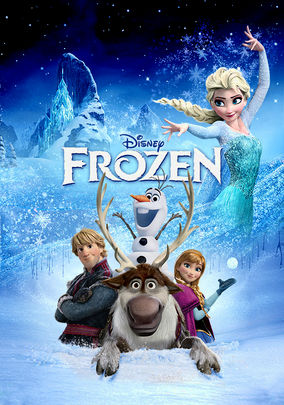
The adjective that springs to mind about the latest hit animated film Frozen (2013) that has overtaken the nation is “cute”.

The story is loosely based on the Hans Christian Anderson story (which is modified immensely) and tells the story of two royal sisters (Elsa and Anna), one of whom has special “ice” powers and accidentally injures the other causing a rift.

From this point, there are a series of misunderstandings, love interests, a handsome prince, an adventure through the snow, and a Snow White-type theme.

The story is uplifting, sweet, and targeted to kids and parents seeking a wholesome, safe experience, but is it too safe?

My one criticism is the lack of diversity and culture in the main characters as they are all similar in looks, which doesn’t set the best example for kids watching.

The musical numbers stuck in my head as I hummed them for days. The songs are very trendy, and pop-leaning which may make this film age quickly and have an overly current flavor.

I loved the frozen, icy, wintry animation sets that are perfect while watching in the winter months.

Olaf, the sidekick, the mini snowman is witty and steals the show.

Oscar Nominations: 2 wins-Best Animated Feature Film (won), Best Original Song-“Let It Go” (won)