Forrest Gump-1994

Forrest Gump-1994

Director Robert Zemeckis

Starring Tom Hanks

Scott’s Review #362
60000724

Reviewed January 9, 2016

Grade: A

Awarded a bevy of Academy Awards in 1994, Forrest Gump is a film that is ingrained in many people’s memories, as it was a monster hit in the mid-1990s.

Some complained that the film’s unrealistic nature was silly and the story too saccharine. Still, it is an innocent, sweet piece about a simple-minded man’s journey through life and the insurmountable success he achieves.

I adore the film largely from a sentimental standpoint and for the memories it conjures up when I watch it years later.

I find the film to be a comfort.

Zemeckis, a feel-good film director (Back to the Future, 1985, Who Framed Roger Rabbit?, 1988), carves a whimsical tale of a fellow, Forrest Gump (played brilliantly by Tom Hanks), a slow-witted, but gentle soul, from Alabama, and his decades-long journey through life.

His lifelong love is Jenny (played by Robin Wright), a troubled girl who relies on Forrest throughout their decades-long friendship.

Forrest is always in the right place at the right time and influences historical events in his innocent way.

Forrest Gump is unique in its clever use of editing to incorporate Forrest into real-life historical events, which is a big part of the film’s appeal.

In one instance, Forrest meets with Richard Nixon and reveals the Watergate scandal. He also met President John F. Kennedy after winning a football scholarship.

And who can ever forget the numerous lines made famous from the film- “Stupid is as stupid does”, and “Life is like a box of chocolates. You never know what you are going to get.”, to name just two.

What I love most about the film is its heart, and the relationships Forrest shares with the central characters in his life are rich in depth. Forrest’s haggard but kind mother (Sally Field) loves her son, and they share a tender, emotional relationship.

When Forrest enlists in the Army during the Vietnam War, his grizzled commanding officer, Lt. Dan Taylor (an Oscar-nominated performance by Gary Sinise), surprisingly becomes one of Forrest’s closest friends.

The film takes a darker turn when we begin to see a more human side to Taylor after a horrible accident, which leaves him without legs. To counterbalance this tragedy, Forrest is comically wounded in the buttocks.

I am not sure whether I love or loathe Jenny as a character.

Wright is perfect at giving her some vulnerability, and her terrible upbringing can excuse some of her actions and lead her to take advantage of Forrest, arguably for her own gain.

Still, she has Forrest’s heart, so she cannot be all that bad.

A favorite scene takes place in Washington, where Forrest speaks at an anti-war rally. Jenny, in the crowd, recognizes Forrest, and their reunion is sweet. Jenny, now a hippie and expelled from school, returns to Forrest’s life.

The fates of both Jenny and Mrs. Gump are scenes that will undoubtedly require tissues to get through, as they are tender and emotional as can be.

Zemeckis’s Forrest Gump (1994) has emotion, sweetness, and heart, and those are nice qualities for a film to have.

It is not too sappy, overwrought, or manipulative; instead, it provides an honest story.

Oscar Nominations: 6 wins-Best Picture (won), Best Director-Robert Zemeckis (won), Best Actor-Tom Hanks (won), Best Supporting Actor-Gary Sinise, Best Screenplay Based on Material Previously Produced or Published (won), Best Original Score, Best Sound Effects Editing, Best Sound, Best Art Direction, Best Cinematography, Best Makeup, Best Film Editing (won), Best Visual Effects (won)
The Hand That Rocks the Cradle-1992

The Hand That Rocks The Cradle-1992

Director Curtis Hanson

Starring Rebecca De Mornay, Annabella Sciorra, Matt McCoy

Scott’s Review #360

569891

Reviewed January 9, 2016

Grade: A

One may argue that the slick 1992 thriller The Hand That Rocks The Cradle is a direct rip-off of the 1987 blockbuster hit Fatal Attraction, which spawned countless imitators, and they may be accurate, but I adore this film.

It contains great tension and is well-acted, but above all, The Hand That Rocks The Cradle features Rebecca De Mornay in a wonderful performance as one of the screen’s most memorable villains, Peyton Flanders.

This is a film that will admittedly not win any awards for originality, but that I love all the same.

Peyton Flanders is very pregnant when we meet her. Her husband is creepy Dr. Mott, an obstetrician who sexually molests Claire Bartel (Sciorra) in his office during an exam.

Humiliated and upset, Claire, after being encouraged by her husband, Michael, files charges against Dr. Mott. He commits suicide, and Peyton loses her child.

Filled with vengeance, she vows to destroy Claire.

The plot may sound like a tawdry daytime soap plot device, but The Hand That Rocks The Cradle somehow works like a charm.

Unlike Fatal Attraction, there is little rooting value between Peyton and Michael- we know she is a crazed lunatic- the fun is seeing how she gets hers.

She manipulates him and insinuates herself into their home- she pretends to be a nanny and subsequently manipulates Michael and Claire’s daughter.

Julianne Moore, in an early role in her storied film career, is believable as Claire’s best friend, who is the only one who sees Peyton for the monster she truly is.

Sadly, her screen time is limited.

Regardless of the other fine performances from the rest of the cast, this is De Mornay’s film- she is psychotic, then sweet, and plays both to the hilt.

I suppose a film like The Hand That Rocks The Cradle (1992) isn’t meant to be analyzed too much, since it tries to thrill, scare, and make the audience uneasy, but boy, is it sure fun.

Caddyshack-1980

Caddyshack-1980

Director Harold Ramis

Starring Chevy Chase, Rodney Dangerfield

Scott’s Review #353

343044

Reviewed January 9, 2016

Grade: A

Caddyshack is one of the funniest slapstick comedies of the 1980s, arguably the decade of “mindless comedy”.

Made in 1980, the cusp of the decade, it led the pack during a time when, one after another, comedy films were churned out in a cookie-cutter style, based largely on the success of Caddyshack.

While not every aspect of the film works, the parts that do are hysterical, and its influence on film history is unquestionable.

More than merely a “dumb comedy”, Caddyshack features funnymen of the day (Bill Murray, Chevy Chase, and Rodney Dangerfield), and the talent and timing are good.

Clean-cut teenager Danny Noonan works as a caddy at a posh resort named Bushwood Country Club. An “underachiever”, he lacks direction in life while being pressured by his parents to attend college.

While spending the summer at work pondering his future, high jinks ensue as a rivalry develops between the club co-founder, Judge Smails (Ted Knight), and the outrageous Al Czervik (Rodney Dangerfield), who is a nouveau riche real estate developer.

Meanwhile, bordering on psychotic, Bill Murray as groundskeeper Carl Spackler is engrossed in his feud with a gopher running rampant on the golf course.

Mixed in with all of this are the standard teen romance themes, bathroom gags, and sexual jokes.

Caddyshack is not high art, nor does it need to, or intend to be. It is simply pure juvenile fun. It is not even that well written, but it works. The portions that work so well do not even involve the caddies who were originally set to be the focal point of the film.

Rather, the real scene-stealers are the two oldest members of the cast- Rodney Dangerfield and Ted Knight. The bickering and barbs traded between the two characters are delicious and downright funny.

When Al mocks Smail’s hat, or dances with his snobbish wife, or crashes into his new boat, each scene is rich with goofy comic timing.

Without a doubt, my favorite scene is the “doody” scene in the resort pool. It is laugh-out-loud raucous, as a candy bar tossed into the water is mistaken for something else.

The star of this scene is Lois Kibbee, who plays Judge Smail’s wife.

Her comic mannerisms and upper-crust looks make her a perfect choice for the role, and she arguably steals the show in her limited appearances.

When Al jokes that she must have been something before electricity, her facial expressions perfectly emit comic horror.

There are points of the film that really are unnecessary and do not work well- I have never understood Bill Murray’s character, Carl. Bordering on silly, with a stuffed animal as the gopher, Murray himself is fantastic- improvising, but the role does not seem necessary to the rest of the film.

More scenes between the Judge and Al, or more from Chevy Chase’s character, Ty, and the Judge’s wife, would have been preferable.

Also, the attempted teen triangle between Danny, Maggie, and Lacey is dullsville- plain Maggie cannot compete with gorgeous and slutty Lacey.

These criticisms, however, are small gripes compared to the hilarity and perfect timing of the rest of the film, which is why it ranks among my favorites.

Caddyshack, along with Animal House, paved the way for the plethora of slapstick comedies to follow- a few good, most bad, but must be recognized as the influence that it was, and a must-see for fans of golf, sports, and good, clean fun.

The elements of Caddyshack (1980) come together and work so well.

Burn Witch Burn (Night of the Eagle)-1962

Burn Witch Burn (Night of the Eagle)- 1962

Director Sidney Hayers

Starring Peter Wyngarde, Janet Blair

Scott’s Review #316

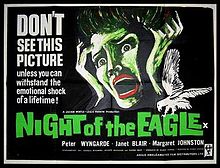
220px-Night-of-the-eagle-poster

Reviewed January 1, 2016

Grade: B

Burn Witch Burn, retitled for U.S. release from the original British title Night of the Eagle, is a 1962 black-and-white horror film.

It is based on a 1943 novel entitled Conjure Wife.

The film is quite decent and delves into the fascinating and arguably unusual subject of witchcraft. It’s careful not to be too dark a film, and it resembles more of an extended episode of the Twilight Zone. It’s a good episode.

I enjoyed the film’s wit and charm. It never took itself too seriously and added humor and lightness.

Norman, a psychology professor at the local university, is intelligent, successful, and well-adjusted. He has a blonde, pretty, sophisticated wife named Tansy.

The perfect housewife, she coordinates Friday night bridge parties with fellow professors and staff and a Mrs. Cleaver type, the mother character from the famous 1950s television series Leave it to Beaver.

When Norman discovers Tansy is practicing witchcraft and possesses various charms, dolls, and weird things, he forces her to destroy all of them.

This leads to a series of bad events.

Norman is accused of rape by a student, and other dire circumstances occur. Tansy assumes this is a result of the destruction of her witchcraft.

Burn Witch Burn is a fun film that doesn’t take itself too seriously despite its heavy subject matter. Tansy certainly does not look like the stereotypical witch. She is more like a PTA mom; we almost cheer for her.

At the same time, the film is not so over-the-top that it becomes ridiculous, either. I found it entertaining but not a masterpiece or scary.

As the film progressed, I found the action confusing from a story-line perspective, but that was admittedly okay. I went with it and enjoyed it.

For instance, the plot thickens when an enormous eagle affixed to the front of the university building comes into play or the sinister university secretary’s motives are revealed.

The special effects and ambiance of the thunderstorm are worth mentioning. The heavy storm was crucial in making Burn Witch Burn a compelling horror film. It added a heavy dose of spookiness to the events, and the atmosphere was spot on.

Burn Witch Burn (1962) is a fun, late-night horror flick that does not take itself too seriously. It is a worthy film for horror fans to enjoy.

An underappreciated British horror flick.

Horror Express-1974

Horror Express-1974

Director Eugenio Martin

Starring Christopher Lee, Peter Cushing, Telly Savalas

Scott’s Review #311

Reviewed December 30, 2015

Grade: B

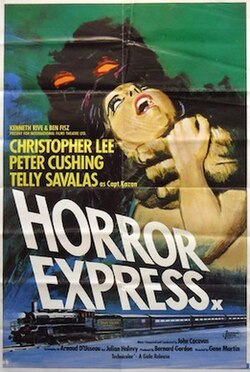
Horror Express (1974) is a fun 1970s Spanish/British horror film starring legendary horror actors Christopher Lee and Peter Cushing.

A horror version of Agatha Christie’s Murder On The Orient Express, with a bit of camp thrown in, it is an entertaining late-night experience on a low budget.

It is the early 1900’s, and while traveling from Shanghai to Moscow via the Trans-Siberian Express, a British anthropologist named Professor Alexander Saxton (Lee) brings an enormous, mysterious crate on board containing a creature he discovered in a cave.

What we know is that it has something to do with human evolution.

A fellow passenger, Doctor Wells (Cushing), and other passengers become suspicious of the crate and demand that it be opened.

Things go awry, and victims begin to be murdered by the creature (an ape-like monster) and left with eyes completely white with missing pupils and irises.

The best part of Horror Express is the setting. The cozy train is a perfect backdrop for the events, and it makes the film exciting as the different cars are nicely set-decorated.

This lends itself to a sense of entrapment and being unable to escape the creature as it roams freely from car to car.

For a low-budget film, the train sets are quite believable, as are the train sounds. It feels like the actors are on a real train as the tooting horns and the sounds of the tracks are authentic.

Having actors as big as Lee and Cushing lends the film respect in horror circles, and both deliver believable performances.

This film would not have been as good without the talents (and name recognition) of both.

There are also interesting supporting characters, and I didn’t find the acting to be too over-the-top, as is common in similar horror films.

Specifically, the countess’s role and Telly Savalas’s appearance as a Cossack officer investigating the events are interesting.

Fans of this genre of horror will understand that suspension of disbelief is necessary as the plot gets a bit goofy- something about the creature taking the information from the victim’s brain and the victims subsequently turning into zombies- it doesn’t make a whole lot of sense.

Especially towards the end, as some drunken Russians and some weird resurrections happen, but that is somehow okay.

For a late-night viewing with some spirits, you can’t ask too many questions, and Horror Express (1974) is a decent flick.

The Danish Girl-2015

The Danish Girl-2015

Director Tom Hooper

Starring Eddie Redmayne, Alicia Vikander

Scott’s Review #310

80058477

Reviewed December 29, 2015

Grade: A-

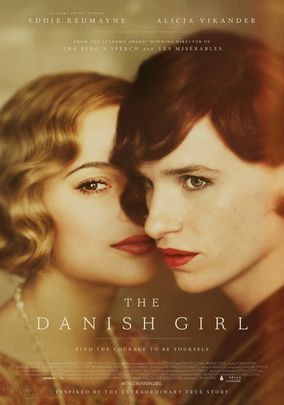
The Danish Girl (2015) tells the loosely based story of Danish painters and married couple Lili Ebe and Gerda Wegener and Lili’s struggles as the first known recipient of sex reassignment surgery, unheard of at the time that it was (1930).

The film showcases terrific acting (Eddie Redmayne and Alicia Vikander especially) and a journey of one person’s struggle with gender identity.

The subject matter is important and timely as the recent transgender movement has emerged at the forefront of social issues today.

A happy, young couple living in Copenhagen, and married for six years, Gerda and Einar are inseparable and madly in love. They are best friends and help each other with their art. Because of a female model’s tardiness, Gerda convinces Einar to stand in for the female model.

This event triggers a lifelong identification as a female named Lili Elbe. Lili has emerged sporadically since childhood.

Through painful self-assessment and encouragement from progressive loved ones, Lili decides to go through with a highly experimental and risky sex change operation.

Gushing with sensitivity and tenderness and groundbreaking, though I bet even more so if made ten years ago, one feels for both lead characters as it is important to note that they both go through emotional turmoil.

It would be easy to lessen Gerda’s emotions and, perhaps with a lesser actress this might have happened, but Vikander (unknown to me before seeing this film) gives an emotional performance that is raw and exudes empathy.

One can imagine how they would feel if their spouse identified as the opposite sex. Confusion, blame, anger, and sorrow, would all be common reactions. Gerda is strong, brave, and helpful while crumbling beneath the surface.

Vikander brings all of this to the screen flawlessly.

Similarly, Redmayne brings depth and empathy to his role.  Redmayne’s Einar is masculine, but there is something sensitive and slightly feminine to him from the start.

Was this purposely done to soften the blow? He also appears to be very slightly built. Redmayne lost weight to portray this role and have a softer appearance.

Actors can easily dress up in drag, but the emotional investment needs to be there and Redmayne makes the viewer care about Lili. One is teary-eyed along with Lili as she sees no other choice but to undergo the risky operation. We see the desperation in Lili’s eyes thanks to Redmayne’s acting skills.

I loved how supportive the characters are in the film. Granted, Einar/Lili and Gerda travel in liberal and progressive circles, but for 1930, this was wonderful to see.

Of course, Copenhagen and Paris are open-minded cities, but Lili’s childhood friend Hans, a sophisticated, macho guy, offers support. The same goes for the Doctor taking on Lili’s surgery.

These aspects lend to a delicate, peaceful film of encouragement.

To be clear, Lili is not gay, and this is made crystal clear during the film as she meets a gay man, and the distinction between them is made. She does, however, identify and feel that she is a woman. She was born with the wrong parts.

The greatest aspect of The Danish Girl is its powerhouse acting and compelling subject matter. One’s gender is a given for most, but watching a riveting drama about someone who is unrestful with their gender is eye-opening and still rather taboo.

2015 was a year of progressive transgender films and The Danish Girl is towards the top in its class and graceful in dealing with the subject matter in a judgmental-free way.

Oscar Nominations: 1 win-Best Actor-Eddie Redmayne, Best Supporting Actress-Alicia Vikander (won), Best Production Design, Best Costume Design

Jurassic World-2015

Jurassic World-2015

Director Colin Trevorrow

Starring Chris Pratt, Bryce Dallas Howard

Scott’s Review #307

80029196

Reviewed December 23, 2015

Grade: C

Jurassic World (2015) is a film I expected to like much more than I did.

Sure, it is a summer, blockbuster, popcorn flick. Based on the success of the earlier franchise efforts,  and, if memory serves, finding enjoyment in the 1993 original, Jurassic Park, I expected a fun ride.

Unfortunately, I was treated to a formulaic, escapade with uninteresting characters and mediocre writing.

The premise is standard. A behemoth of an amusement park exists in Central America, on Isla Nublar, where a dinosaur theme park has been running without incident for ten years.

A genetically modified dinosaur, created because a magnificent new attraction is needed, breaks loose and runs rampant.

A silly love story exists between the two leads Owen and Claire (Chris Pratt and Dallas Bryce Howard), as well as the inclusion of two young boys (Zach and Gray) sent by their divorcing parents to be with their Aunt Claire, who works as the Operations Manager at the park.

Owen is the dinosaur trainer. Predictably, there are “bad guys” who are greedy and desire to advance science at the risk of human life.

The special effects are fine, albeit completely CGI-laden, which is to be expected because the main stars are dinosaurs after all. I did anticipate better writing or, at least, more of a creative attempt at coming up with something a bit edgy.

The story was completely redundant. Where was the character development? There was none. We know very little about any of the principal characters.

One might argue that an adventure film does not necessitate this but it’s important. We know that Claire is a workaholic and has none time for her nephews- why? What makes her tick?

Here is a slight complaint. Why kill off only extremely minor characters or villains? I could see this (and the ending) a mile away. The whole film seems forced and sloppy.

Jurassic World is also filled with clichés. Owen and Claire initially dislike each other having had one unsuccessful first date back in the day. The film tries to push the love/hate, opposites attract element and it feels contrived.

How many times have we seen this in film history?

Also, Chris Pratt is perfect as the hunky, muscular “hero saves the day” type, and Dallas Bryce Howard running through the forest in a tight tank top is not unintentional.

This is not to say that the film is bad. It is a decent adventure film and the special effects are cool. I did enjoy the homage to the original 1993 version as the boys stumble upon the original visitor station complete with the 1992 jeep from the original Jurassic Park film.

I thought this was a neat little nod to history and I love that in a franchise film, but that is it for the positives.

Yes, this film was a blockbuster smash and made oodles of money. It, however, feels forced and clichéd and quite formulaic.

I was hoping for much more and deeper, stronger, material.

It Follows-2014

It Follows-2014

Director David Robert Mitchell

Starring Maika Monroe, Debbie Williams

Scott’s Review #306

It_Follows_(poster)

Reviewed December 23, 2015

Grade: A-

It Follows (2014) is a mysterious, unique, dreamlike (or shall I say nightmarish!) independent horror film that is a pleasant throwback to old-school horror films (my favorites!), with a supernatural twist thrown in.

The film is directed very well by newcomer David Robert Mitchell containing wonderful cinematography and creative camera angles.

This film is not glossy and has a raw, almost videotaped feel, which I found quite wonderful. The film was shot entirely in and around Detroit giving it a cold, industrial look.

The film begins on a dramatic note leaving the viewer immediately curious.

A young woman flees her suburban home and nervously stands on the street looking back at her house.  A neighbor asks if she needs help. She returns, collects her things, and hurriedly drives to the beach. She suspects something or someone is watching her. She tearfully phones her father and tells him she loves him.

The next scene appears to be the following morning and the woman is lying murdered on the beach in a grotesque position- her leg strangely bent.

This is a fantastic way to begin the film.

From this point, the premise is quickly revealed. The main character is Jay (Maika Monroe), an attractive college-aged girl. She lives with her sister Kelly and is good friends with their next-door neighbors Paul and Yara. An additional neighbor and classmate, Greg, also figures into the plot.

Jay is on a date with Hugh and things are going well. They attend a classic film. They sneak into a deserted lot and have sex. Afterward, Hugh chloroforms Jay and the weirdness begins.

A strange woman appears and Hugh tells Jay she must pass on a curse. Otherwise, an entity in the form of another person that nobody else can see but the victim will get Jay and she will be doomed.

I love the throwback elements to 1970s and 1980s horror but it’s vague when the film is set- purposely so I imagine- as many cars are 1970s and 1980s models. Only one cell phone is used throughout, but mostly the time could be present or past.

Even the houses appear dated.

Story-wise, It Follows is tough to figure out and open to a certain level of interpretation. Is the film anti-sex? Is the story a metaphor for sexually transmitted diseases?

The victims become possessed by the entity after sex and then must pass it to another unwitting victim, sexually.

I notice some similarities to John Carpenter films- specifically the classic Halloween from 1978. Jay sits in a classroom (ironically in the back row next to the window ala Jamie Lee Curtis in Halloween) and sees a strange old woman slowly lumbering towards her, eyes fixed on her.

Later, the three principal girls casually walk around the neighborhood engaging in small talk similar to the characters of Laurie, Lynda, and Annie on Halloween.

The ending- a scene in the indoor community swimming pool where the kids try to catch the spirit is a bit hokey and unresolved. However, I did enjoy the final scene- a peaceful one in which I was unsure if the entity had been destroyed or remained.

A sequel perhaps?

I give It Follows (2014) major props for its styling, and creativity while giving classic horror fans a good old-fashioned treat without much CGI necessary.

Independent Spirit Award Nominations: Best Director-David Robert Mitchell, Best Cinematography, Best Editing

The Peanuts Movie-2015

The Peanuts Movie-2015

Director Steve Martino

Starring Noah Schnapp, Francesca Capaldi

Scott’s Review #304

80057058

Reviewed December 20, 2015

Grade: B-

Having adored the Peanuts comic strips in the “funnies” papers every Sunday as a wee child, as well as the wonderful classic A Charlie Brown Christmas special (1965) that aired every holiday season, I was eager to see a full-length film released in theaters.

The Peanuts Movie commemorates the Fiftieth anniversary of the Christmas special.  The Peanuts gang is so All-American and ingrained in our culture that I could not resist seeing it.

I expected “cute” and that is exactly what I received. The film is nice but quite safe and predictable.

The Peanuts gang is much more than just the antics of Charlie Brown and his faithful dog Snoopy, who take center stage in the film.

The entire beloved gang is featured. Woodstock, Peppermint Patty, Marcie, Linus, Lucy, Frieda, Pig-Pen, and others, albeit in supporting roles.

There are two main stories featured in the film. The long-suffering and (in his mind) friendless (despite actually being loved by the gang), Charlie Brown is enamored with his new neighbor, the Little Red-Haired Girl, well-known from the original comic strips as Charlie Brown’s schoolyard crush-yet never seen.

The other is Snoopy’s writing of a book about the Flying Ace, in which he saves his crush, Fifi, also a pilot, from the dangerous Red Baron and his army.

As usual, the film is really about Charlie Brown’s endless insecurities prompted by bad luck and always screwing things up no matter that his intentions are noble.

When the Little Red-Haired Girl moves in across the street from Charlie Brown, he is immediately smitten and does numerous things to impress and acquire her attention, with difficulties arising.

A talent show in which he plays a magician goes wrong. To his delight, he is partnered with the Little Red-Haired Girl on a book report, but when she is called out of town he is forced to write the report himself, thereby foiling his attempts at getting close to her.

As usual, all parents remain unseen and speak garbled as the story is about the kids.

An interesting element is, that while the Little Red-Haired Girl is seen and does indeed speak, most of this occurs towards the end. For most of the film, we see her only from behind allowing an element of mystery to surround her.

It would have been interesting to see some of the supporting characters explored more- is Peppermint Patty gay and is Marcie her love interest? How about a love interest or background for some of the others? A side story explored is a growing romance between Pig-Pen and Patti.

The film does a nice job of featuring the familiar settings of the original comic strip- Lucy’s psychiatrist’s booth, the wall,  and the skating pond are prominently featured, which is a treat for long-time fans.

The Peanuts Movie (2015) is a nice film. I would have preferred a bit more of an edge or more creativity as original creator Charles Schultz had, but it is nice to be reminded of a simple time in life and this film is a good time.

The Seven Year Itch-1955

The Seven Year Itch-1955

Director Billy Wilder

Starring Marilyn Monroe, Tom Ewell

Scott’s Review #302

Reviewed December 18, 2015

Grade: B

Following a string of successful hits by director Billy Wilder (best known for films in the 1940s and 1950s), The Seven Year Itch features Marilyn Monroe at her prime and finest.

It is a cute film made charming by the likable legend. While not high art, it is a fun experience in classic romantic comedy cinema, and its innocence is undoubtedly lost in today’s genre.

Playing a familiar character to what she was known for (sexy, flirty, sweet blondes), it is arguably Monroe’s best role (though Some Like it Hot still wins out for me as her best film role).

Richard Sherman, a successful New York publisher, finds himself alone for the summer when his wife and son leave for a vacation in the country.

Middle-aged and bored, he immediately is enamored with his gorgeous new upstairs neighbor, known as The Girl, played by Marilyn Monroe.

The Girl is a commercial actress and former model, and is quite friendly and bubbly. She is conveniently staying in New York City while filming a new television ad for toothpaste.

Richard finds himself awkwardly tempted by the curvaceous Girl in one situation after another.

The Seven Year Itch is pure innocence and fantasy. The Girl has no designs on Richard, and his flirtation with her is harmless and juvenile.

Richard is nerdy and socially awkward, not to mention fearful of his wife’s stern nature if she discovers that he is even spending a moment with The Girl.

Much of the film features scenes in which Richard imagines conversations with his wife or sees her with another man, justifying his attraction to The Girl.

These scenes are done hilariously as he imagines conversations with his wife, and his thoughts are exaggerated.

Humorous scenes transpire, such as the “champagne scene,” in which The Girl and Richard attempt to open a champagne bottle while cooling off with Richard’s new state-of-the-art air conditioner.

The Girl keeps her underpants in a freezer to cool off. The Girl appearing in her toothpaste commercial is, comically, also a treat.

And who can forget Marilyn Monroe’s famous scene in which she stands over a subway grate, clad in a sexy white dress and high heels, the wind from the subway blowing her dress in the air, which is one of the most memorable scenes in film history and priceless.

Some would argue that The Seven Year Itch (1955) is nothing but fluff, and they essentially are correct.

Still, in an age of crude and obnoxious films disguised as romantic comedies, with cheesy jokes and canned humor, it is refreshing to look back to the 1950s culture, primarily an innocent era, and enjoy a fun film romp with one of cinema’s forever stars.

Golden Globe Nominations: 1 win-Best Performance by an Actor in a Motion Picture-Musical or Comedy-Tom Ewell (won)

Tangerine-2015

Tangerine-2015

Director Sean Baker

Starring Mya Taylor, Kitana Kiki Rodriguez, James Ransone

Scott’s Review #301

80037676

Reviewed December 17, 2015

Grade: A

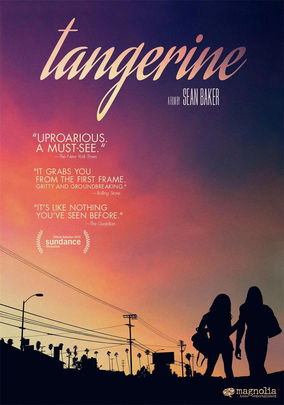
On the rare occasion that I am lucky and privileged enough to stumble upon a gem like Tangerine (2015), it reaffirms my faith in film and creative filmmakers in general.

Here is a universal lesson- it does not require oodles of money to make a great film. This film was shot with three smartphones!!

It takes talent and creativity.

Tangerine is a groundbreaking film- the first (that I am aware of anyway) to feature transgender actresses at the forefront of the feature.

The film has been honored with multiple Independent Spirit Award nominations.

Shot documentary style, with grittiness and a frenetic pace, while mixing in unique styles of music (hip hop to classic) as the musical score (a child-like tune begins the film), Tangerine is unique from both a story perspective and a visual style.

The film’s first scene begins with two transgender sex workers- Sin-Dee Rella and Alexandra, having a conversation in a coffee shop. Sin-Dee has just been released from jail and learns that her boyfriend, and pimp, Chester (James Ransone), has been cheating on her.

It is Christmas Eve.

The film explores Sin-Dee’s rage and subsequent search all over Los Angeles for Chester, and the girl he has been with. She vows revenge on them both.

However, beyond this story point, the heart of the film is of loneliness and isolation that most of the characters (trans and otherwise), share, in one form or another.

Interspersed with the Sin-Dee story, are stories involving Alexandra’s feud with a “john”, and her pursuit of a singing career.

Another interesting story is that of a straight male, Razmik, an Armenian cab driver who is enamored with transgender sex workers.

This may sound bizarre or too out there for some, but Razmik’s story is quite tender and compelling. He has a wife, child, and other relatives and is the breadwinner. He is also very conflicted. He does not “use” the sex workers, but rather cares for them and admires them.

I found all three principal characters interesting in different ways- Sin-Dee and Alex are over-the-top, yet sensitive. While Sin-Dee is aggressive and vengeful, Alex is the kinder of the two and the more sensible and rational.

She is a sex worker but aspires for more out of life. Razmik is even more interesting- does he have a fetish? Is he shameful for spending money on prostitutes while supporting a wife and child?

All of the characters are victimized in one form or another and all are dysfunctional- at the same time, they are all weirdly likable.

I witnessed moments of Quentin Tarantino’s film style coming across the screen- most notably in the coffee-shop scenes (the beginning and final scenes) as all hell breaks loose, and the characters delve into all sorts of crazy behavior.

Tangerine is a sweet tale about friendship too.

It is a memorable and powerful film experience.

In the end, all the characters are hurting, living such sad lives, especially since the time is present-day Christmas Eve, which might make this film sound depressing, but it is not.

I found it almost uplifting in a way.

Tangerine (2015) is a completely original, groundbreaking film that I hope will be remembered and appreciated fifty years from now.

Independent Spirit Award Nominations: 1 win-Best Feature, Best Director-Sean Baker, Best Female Lead-Kitana Kiki Rodriguez, Best Supporting Female-Mya Taylor (won), Piaget Producers Award

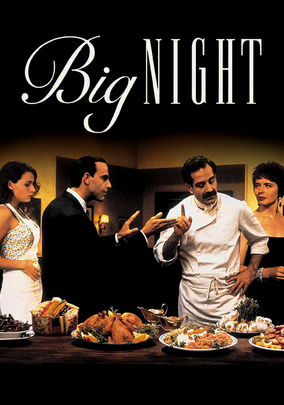
Big Night-1996

Big Night-1996

Director Stanley Tucci, Campbell Scott

Starring Stanley Tucci, Tony Shalhoub

Scott’s Review #300

305300

Reviewed December 16, 2015

Grade: B+

Big Night (1996) is a sweet, whimsical little film that is a food lover’s dream come true, since the story’s focal point is food, with multiple dishes prepared on-screen, lending it realism.

It centers on the restaurant business and, specifically, how two brothers struggle to keep their failing restaurant afloat through their love and passion for food.

The story tells of two Italian immigrant brothers, Primo and Secondo, played by Tony Shalhoub and Stanley Tucci, respectively.

The time is the 1950s, and they reside in blue-collar New Jersey. Times are tough for them as they try to succeed in the difficult restaurant business- they specialize in Italian food, of course.

Secondo is a playboy of sorts- suave and handsome, he dates Phyllis (Minnie Driver) while galavanting with a sophisticated older woman named Gabriela, the wife of a competitor.

Primo, on the other hand, is quiet and serious, yet an all-star chef. The food he prepares is wonderful, and his talent is evident.

But how can they market themselves to be successful?

At this point, their restaurant is dying, and they risk returning to Italy or eking out a meager existence working for someone else.

An idea is announced: a celebrity singer (Louis Prima) will perform for a one-night extravaganza at their restaurant, where they will make the meal of their lives and impress the town, thus achieving success.

The film is charming, and my favorite parts are on the “big night”. As the duo prepared the liquor order and shopped for flowers and other decorations, the mood and spirit left me with a warm feeling.

What a sense of togetherness Primo and Secondo, along with their friends, felt in achieving this challenging goal.

Inevitably, there is tension between the brothers and between Secondo and Phyllis, but truthfully, these are merely subplots, and the heart of the film is in the food.

The scenes set in the kitchen left my mouth watering. As Secondo prepares a baked pasta dish (Timpano), the meal oozes with love and tastiness. The entire story arc is grand and magnificent.

The group of diners revels in the restaurant’s dining room, enjoying spirits and dancing the night away. By morning, everyone is full and drunk, both with love and alcohol, but most are happy. They get merry as they eat the night away.

I could almost taste the main course!

A subplot that works for me is the burgeoning romance between reserved Primo and equally reserved flower shop owner, Ann. Both very timid, they finally muster the courage to admit their feelings for each other while enjoying (what else?) wine and food- what better way to begin a romance?

The tenderness and chemistry between these two are very innocent and captivated me while watching the film.

The final scene of the brothers making an omelet is also wonderful and a fitting way to stress togetherness and perseverance, which is what the small film is really about.

For lovers of food, Big Night (1996) is a shining moment.

Independent Spirit Award Nominations: 1 win-Best Male Lead-Tony Shalhoub, Stanley Tucci, Best First Screenplay (won), Best First Feature

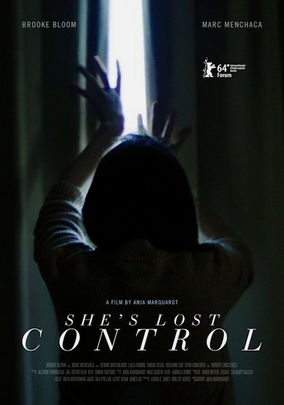
She’s Lost Control-2014

She’s Lost Control-2014

Director Anja Marquardt

Starring Brooke Bloom

Scott’s Review #299

70305205

Reviewed December 14, 2015

Grade: B+

She’s Lost Control (2015) is a dark, independent drama, and the directorial debut of Anja Marquardt.

This film is one reason I proudly support independent film, as it is otherwise a film that most would not know about, and will never know about, if not for good word of mouth and award recognition- think indie spirit awards.

Hopefully, Marquardt will one day be a household name.

The film is heavy yet intriguing and a character study.

It is a dark and dreary experience- some might argue depressing, centering on Ronah (Brooke Bloom)- a young, female, college student, aspiring towards her master’s degree in psychology, who works as a sexual surrogate in Manhattan.

The film explores her experiences with various clients, specifically, a disturbed, volatile man she takes on as a client. As she becomes better acquainted with Johnny, they forge a special bond, but will romantic feelings and jealousy get in the way of the therapy assigned to both parties?

How each of them explores their feelings is the focal point of the tale, and clearly, the feelings involved are not peaches and cream.

Ronah is not a prostitute and there is very little sex that goes on, albeit the implication is there. She is nurturing and emotionally invested and intends to become a psychiatrist one day.

It is unclear whether her “boss”, a shady seeming character, is her pimp or simply an employer. His role and motivations are unclear.

The most interesting aspect of the film is the title and throughout my viewing of the film I wondered about the title more and more- are any of Ronah’s experiences in her mind? Is she stable or does she have some emotional or mental issues?

She befriends a kind neighbor around her age and invites her for dinner- they bond. The neighbor invites her out to dance, but Ronah declines.

She also has an older female confidant- a former surrogate who gives Ronah tips and suggestions. Still, Ronah is lonely.

Again we wonder if perhaps all is not what it seems. This is a fascinating aspect of the story. One must watch to determine the answers to questions such as these.

New York City can be a tough, unkind world and She’s Lost Control does not sugar coat an individual’s difficult existence when not blessed with family money, strings, or some other advantage.

Ronah lives in a dump with holes in her shower and cramped quarters. In addition to the hardships, she is constantly kept abreast of problems concerning her brother and mother back home in upstate New York.

Quite simply, Ronah is overwhelmed by her life. Might she be spinning out of control?

The dreary aspect of the film is not so much the sexual aspect. Ronah is a therapist and everything is with mutual consent.  Unfortunately, she is challenged by some of the people she encounters in her profession.

I admire She’s Lost Control (2014) quite a bit for its insight, thoughtfulness, and compelling story of a woman with a difficult life, trying to make ends meet, and aspiring to something worthwhile.

She is brave, troubled, and interesting all rolled up in one fascinating lead character.

Independent Spirit Award Nominations: Best First Screenplay, Best First Feature

Brooklyn-2015

Brooklyn-2015

Director John Crowley

Starring Saoirse Ronan

Scott’s Review #298

80037688

Reviewed December 12, 2015

Grade: A

Brooklyn (2015) is a classic-style Hollywood film that I adored watching. It has a genuine innocence to it with wonderful, powerful acting and perfect cinematography/art direction.

The film is conventional and mainstream, but never sappy.

Based on Colm Toubin’s popular novel, Brooklyn takes place in the early 1950s and is set in Ireland and New York City.

Eilis Lacey, played by Saoirse Ronan, is a young Irish girl with good morals and traditional values. She is faithful and Catholic, with a good upbringing. Not rich by any means, she is intelligent and uses good sense, working hard on weekends in a grocery run by an unkind woman, to save money.

Thankfully, her older sister Rose, whom Eilis adores, has scrimped and saved enough for her to study in the United States, via a church program. Rose does not want Eilis to be trapped in the small Irish town.

While in New York City, an event occurs that necessitates Eilis’s return to Ireland. While home she develops a romantic dilemma that causes her to ponder whether to return to her new life in New York City or stay in Ireland.

Eilis is conflicted, which is the main focus of the story.

On paper, one might assume that Brooklyn is sappy, “chick flick” or a trite romance with predictability for miles- it isn’t. Everything about the film is perfect and is very detail-oriented.  The pieces somehow fit together- good direction, good camerawork, good acting, and good story-telling.

Throughout the film, I found myself in an emotional state.

When Eilis meets the young and charming Tony, a working-class Italian American, who becomes infatuated with her, I worried how their different backgrounds will be handled. Their courtship is sweet and tender and I cheered for them as their slow romance builds.

She is taught to eat pasta correctly to impress his traditional parents. He walks her home every night. Tony and Eilis have a sweetness and purity that is tough not to fall in love with as an onlooker.

On the other hand, when dramatic events unfold, the excellent acting makes Brooklyn a delight and quite emotionally powerful. One might find themselves in a flood of tears by the end.

Thanks to Ronan, an impressive talent since my discovery of her work in 2007’s Atonement, she elicits in Eilis a strength and stoicism that is tested when she breaks down at one point in the film.

Important to mention is the awe-inspiring performances by Fiona Glascott as Eilis’s sister Rose, and Jane Brennan as Eilis’s mother.

Unknown actresses (to me), both give dramatic and dynamic performances in their respective roles.

Wonderful to see are veteran character actors Jim Broadbent and Julie Walters as Father Flood and Madge, respectively.

What a visual treat Brooklyn is! As the title reveals, most of the action does take place in this New York City borough, and the influx of Irish and Italian immigrants during this period of history is apparent in the clothing and the cinematography.

The lush green and vast landscape of Ireland makes this divine to view.

A story of bravery, romance, and kindness, Brooklyn (2015) is a wholesome and feel-good film, but, I was immersed in the story and the look of the film from the very first shot.

Oscar Nominations: Best Picture, Best Actress-Saoirse Ronan, Best Adapted Screenplay

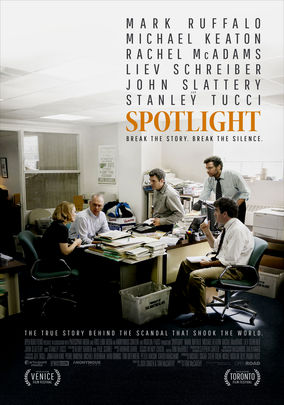
Spotlight-2015

Spotlight-2015

Director Thomas McCarthy

Starring Michael Keaton, Mark Ruffalo, Rachel McAdams

Scott’s Review #294

80061341

Reviewed December 9, 2015

Grade: B+

Spotlight (2015) is a film with an important story to tell.

A telling of true events that occurred within the Catholic Archdiocese for ages, Spotlight’s focus is specifically on the Boston scandals, as a team of reporters working for the Boston Globe uncovered and exposed a multitude of child molestation cases committed by priests.

They were subsequently covered up, leaving victims paid off to keep quiet. The number of proven cases in Boston alone is staggering.

Starring are a plethora of talents including Michael Keaton, Mark Ruffalo, and Rachel McAdams, who lead the pack.

They make up the “Spotlight” team at the newspaper,  an investigative unit that works on special stories as they arise.

Their new boss, Marty Baron (ironically a Jewish man), played compellingly by Liev Schrieber, takes over as head of the department. He quizzically asks why the story is not already a priority. Suddenly it is a hot-burner issue and the film delves into an investigation to uncover the facts.

Spotlight is a minimalist film. There is nothing cinematically unique or razzle-dazzle about it, but somehow that is okay.

In some aspects, the film reminds me of the 1975 thriller All The Presidents Men, starring Dustin Hoffman.

For instance, the bleak, bare news rooms-sterile in their look, are similar- cubicle after cubicle,  harsh lighting, and generic conference rooms.

This is the filmmaker’s intent.

Also, the fast, energetic pacing, successfully emitting the tight deadlines newspaper folks face, transfers perfectly on film.

The sexual abuse scandal is a cold, harsh reality and the film introduces several victims, who, now as adults, are forever scarred. Some attend support groups, some take drugs, one is sadly not “all there”. Another, now a gay man, was singled out by a priest during a vulnerable period in the then-young boy’s, life.

It is a heartbreaking reality that many victims in the film are based on real cases.

Let’s focus on Schrieber’s character for a minute.  He gives such an understated yet compelling performance there is a risk it will wind up being overlooked. He calmly, yet passionately initiates the case. It is not a showy performance and subdued but a compelling one if enough attention is paid to it. He is a standout.

Unfortunately, the film does not delve much into the defense (if any) of the Catholic church. Did they do anything but deny the allegations? Why were the victims paid off? Not much is noted from the church’s point of view.

In real life, the Catholic church did hide the abuse that transpired for decades.

A slight negative is that the film does not delve into the characters’ personal lives.

Michael Keaton’s character, Robby Robinson, is arguably the lead character, spearheading the case,  though very little is known about him.

Is he married? happily? Yes, he is a workaholic, but what else?

Ruffalo’s Michael Rezendes is separated from his wife, but little is known to the reasons.

Finally, McAdam’s Sacha is probably the most fleshed-out. She is happily married, close with her religious grandmother, and hurt by the scandal. But we do not know her in-depth either.

I found myself wanting to know more about these people.

All in all, Spotlight (2015) is a superior film deserving of the recognition it is receiving. Intense, gritty, and filled with honesty, it is a story that needed to be told and has been told well.

Oscar Nominations: 2 wins-Best Picture (won), Best Director-Tom McCarthy, Best Supporting Actor-Mark Ruffalo, Best Supporting Actress-Rachel McAdams, Best Original Screenplay (won), Best Film Editing

Independent Spirit Award Nominations: 5 wins-Best Feature (won), Best Director-Tom McCarthy (won), Best Screenplay (won), Best Editing (won), Robert Altman Award (won)

The Immigrant-2013

The Immigrant-2013

Director James Gray

Starring Marion Cotillard, Joaquin Phoenix, Jeremy Renner

Scott’s Review #293

70275521

Reviewed December 5, 2015

Grade: A-

The Immigrant (2013) is a lovely, classic, old-style Hollywood film set in early 1920’s New York City.

The film is a classic tale of a poor Polish immigrant who travels to America in hopes of a better life, only to be met with hardship, manipulation, and conflict.

However, The Immigrant is not a downer. Rather, a powerful and intriguing story of life and the clichéd pursuit of happiness, with a compelling love story mixed in.

Nominated for Best Actress for Two Days, One Night, eligible the same year as The Immigrant, this is a good example of how the Academy got it wrong, as Marion Cotillard should have been nominated for this performance instead.

The actress was, however, recognized with an Independent Spirit Award nomination for Best Actress for this role. A true talent, she gives a wonderful performance.

Little is known about Ewa’s (Cotillard) life before she arrives on Ellis Island with her sister Magda in tow.

We meet them as they disembark a ship and wait in line at the immigration station, weary from their escape from war-torn Poland.

They have escaped their native country in hopes of a better life in the United States.

Unfortunately, Magda is ill, cannot hide a cough, and is sent to the infirmary, most likely before being sent back to Poland.

Ewa desperately needs money and is told that her Aunt and Uncle have not shown up to collect her as she had originally thought.

She is now on her own and desperate in a land where she knows not a soul.

As the plot unfolds, Ewa encounters two men who enter her life- Bruno (Joaquin Phoenix) and Emil (Jeremy Renner)- brothers with a rivalry, both professionally and over Ewa.

They both fall in love with her- she is gorgeous and innocent, after all.

But can the men be trusted? Are their feelings true? We begin to get to know the men better, and not everything is as it seems or as it originally appeared.

The Immigrant perfectly captures the 1920s era cinematically with gorgeous cinematography and camera work.

Directed by James Gray, a director with a tendency to direct films set in New York City and feature a romantic element (Two Lovers comes to mind- also starring Joaquin Phoenix as a Jew pursuing a blonde girl).

In The Immigrant, I felt transported to the 1920s with Bruno’s dark coat and bowler and the characters’ costumes in general.

The Lower East Side, from the automobiles to the theaters, seems like that’s how it was back then- charming, artistic, and yet combustible too.

Marion Cotillard gives a soft yet tough performance as the long-suffering, heart-of-gold Ewa.

Her yearning to keep her traditional Catholic values while being transported into a new, dangerous world filled with corruption and the need to survive is heartbreaking, and Cotillard wears her heart on her sleeve.

She is also tougher and more stubborn than we first think she is- she will not be taken advantage of, and these aspects give the character complexity.

I did not see her as a victim.

Let’s not forget the men in the film; while it borders on turning into a “woman’s movie” towards the climax, and Cotillard is front and center, Phoenix and Renner are flawless.

Phoenix, with the larger role, is extremely complex, and it takes the audience until the final scene to entirely figure Bruno out.

I wish The Immigrant (2013) would have found a wider audience, but for fans of a traditional, classic, romantic Hollywood experience, this film is a treat.

It will take you back to an earlier time in the world- in a completely authentic way.

Independent Spirit Award Nominations: Best Female Lead-Marion Cotillard

Les Biches (Bad Girls)-1968

Les Biches (Bad Girls)-1968

Director Claude Chabrol

Starring Stephane Audran, Jaqueline Sassard, Jean-Louis Trintignant

Scott’s Review #292

Reviewed December 3, 2015

Grade: B+

Les Biches (translated as “Bad Girls” in English) is a French-Italian film from 1968 about a peculiar relationship between two women: one a wealthy, gorgeous, sophisticated woman named Frederique; the other a poor, waif-like, struggling street artist named Why.

They embark on a tumultuous love affair marred by competition for handsome Paul Thomas, the local architect.

At its core, the film delves into the class struggle, lust, and violence.

The beginning of the film sets the tone as Frederique gives a large sum of money to Why as she stops to admire her art on the streets of Paris. She invites Why back to her lush villa in gorgeous Saint Tropez, where Frederique lets two outrageous gay men cohabitate with her.

The household is a circus of sorts as the men prance around wildly, but Frederique teaches Why about high society and good living.

Soon, Paul is introduced to the story and takes a shine to Why. She calmly rejects him, and Frederique then begins to fancy him, thereby emotionally rejecting Why and leaving her feeling out in the cold.

The film then takes a psychologically dramatic turn as the characters turn against one another.

I admire this film for its unorthodox story, especially for 1968. Same-sex stories are not the norm these days, and the interesting key is that the classes are different.

Frederique has control and power over Why because she has money. Paul admires Why, but he cavorts with Frederique. Is he genuinely interested in her, or does he value her money most of all?

The film never makes the distinction crystal clear, but one speculates it is the latter. Frederique uses her wealth (and beauty) to obtain what she wants- namely, Paul to spite Why.

Why is younger and fresher, and has not been marred by the world… yet? The gay men are cartoon-like. It is not clear exactly who they are or why they live in the villa. Little background is known about any of the characters.

Foreign-language films, especially of the 1960s and 1970s, are fascinating- filled with life and interesting facets, and Les Biches is a prime example of interesting filmmaking.

A trip down the bi-sexuality lane with two gorgeous women at the forefront of the story, both struggling for power over the other, though one with a clear advantage.

Interesting to note that at the time of release, the film was touted as a lesbian skin-flick and humorously mis-thought to be entitled “Les Bitches” (perhaps to get audiences in the door), but it is hardly a sex romp- quite the contrary, as the psychological elements overtake everything else.

Les Biches (1968) is an odd little adventure, but one to be appreciated and traveled with an open mind if the mood is right. Stylish, interesting, and certainly non-mainstream, it challenges the social norms of the day and offers Hitchcock-like elements, especially in the final chapter.

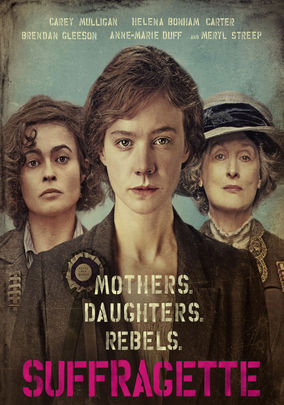
Suffragette-2015

Suffragette-2015

Director Sarah Gavron

Starring Carey Mulligan, Helena Bonham Carter

Scott’s Review #291

80046819

Reviewed December 1, 2015

Grade: A-

Led by an excellent performance by Carey Mulligan, Suffragette (2015) is a British film that tells the true story of the fight for women’s suffragette, as a team of women fought endlessly to obtain their right to vote, a vote that today most (men and women) take for granted.

Several characters are real-life portrayals, however, Mulligan’s central character Maud Watts is fictional. She is assumed to be a hybrid of other real-life characters.

Perfectly shot and giving a fantastic impression of life in England in 1912, the film centers around a bevy of working-class women- many of whom work endless and thankless hours in a sewing factory, working for and forced to tolerate a vicious, unkind man.

Their lives are bleak.

A women’s movement has developed, led by the mysterious Emmeline Pankhurst (Meryl Streep) and Edith Ellyn (Helena Bonham Carter), both financially successful, but very passionate women, spearheading the “women’s movement”.

The main character is Maud. The film is told from her perspective.

She is a hard-working laundress in her early twenties, married to her husband, Sonny, and with a young son. Plain, yet pretty, the audience knows this is all her life will ever be.

She has worked at the same sewing shop since a young age and has been sexually abused by her boss for years. While delivering a package, she witnesses a co-worker smashing a window protesting the women’s movement.

Initially reluctant to join the movement, Maud realizes the importance and loses her family and job because of her devotion to the cause.

When women were finally granted the right to vote in England in 1928, sixteen years after the movement began,  this took a brave group of women who risked (and lost) their families, and jobs and were imprisoned, and in one heartbreaking scene, loss of one’s life, all in powerful devotion to what they felt was right and just, despite numerous powerful figures beating them down.

How sad to think this happened.

The film accurately portrays the might and courage that the women possessed.

One of two of the most powerful scenes in the film is as follows and belongs to Mulligan. Left by her husband and community and having been imprisoned more than once, Sonny decides to give their son away to an affluent couple. The boy is ripped from Maud’s arms and we realize she will likely never see the boy again.

It is tragic and painful to watch and Mulligan nails it from an acting standpoint. I have always admired Carey Mulligan, she chooses wonderful and challenging parts, never succumbing to mainstream mediocrity.

Think portrayals in Shame (2011), Never Let Me Go (2010), and An Education (2009).

The second powerful scene comes at the end of the film. When a character sacrifices her life (a real-life person, mind you) at the Epsom Derby where King George V is present, simply so that the women’s movement can get major exposure by running onto the track and wielding a sign, she is brutally trampled to death.

Subsequently, a funeral parade results, finally leading the masses to take notice and realize how important an issue this was.

The filmmakers of Suffragette wisely dedicated real-life footage of the parade that occurred at the time.

An important film with a message, Suffragette (2015) is beautifully shot and led by bravura acting and a true, real-life historical story, to be appreciated for its honesty.

Magic Mike XXL-2015

Magic Mike XXL-2015

Director Gregory Jacobs

Starring Channing Tatum

Scott’s Review #290

80031499

Reviewed November 27, 2015

Grade: F

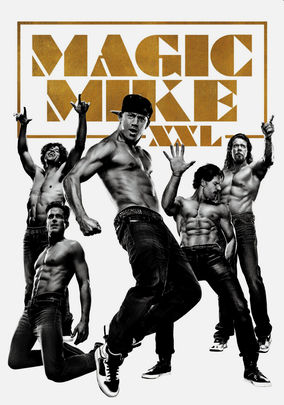
Magic Mike XXL might be the worst film of 2015.

In the follow-up to 2012’s Magic Mike (a predictable yet decent flick), this version has neither novelty nor the basic storyline that the original contained.

Instead, audiences are treated to a lame mess of nonsense, lack of a story that makes sense or is realistic, plot holes galore, and, to nitpick a bit given the subject matter at hand, scarcely any skin!

A road trip kind of movie, I can’t quite decide if the film was targeting frat guys looking for a buddy movie or teen girls and soccer moms looking for escapism.

Even in a less-than-adequate film, I always try to find something positive to mention, whether the characters, the story, or the cinematic elements, I cannot find any redeeming value to Magic Mike XXL.

Fortunately, Matthew McConaughey had the good sense not to sign on to appear in this drivel. The same is not the case with Channing Tatum as he is the star of this installment.

Poor guy. I hope the paycheck was worth it.

The premise is as follows: Mike (Tatum), who is out of the stripper business and now runs a furniture business, receives a call that his former boss is “gone”. Mistaking this to mean he has died, Mike returns to Florida to see his old buddies, who convince him to join a stripper convention in Myrtle Beach, South Carolina, to end their careers on a high note.

While on the road en route to the convention, problems, secrets, and past faces resurface to add to the drama.

Mike’s love interest from the first film is barely mentioned and dismissed in a weak story-dictated explanation. This is an attempt for Mike to have a new love interest in the character of Zoe, a photographer headed to New York, played by Amber Heard.

The film is messy from start to finish, but here are highlights (or low-lights). The silliness in conflict over coming up with a new routine fails miserably.

The character of Richie (Joe Manganiello) slinks into a convenience store and razzle dazzles a brooding cashier, making her burst with delight because she thinks he is dancing for her.

This scene is completely juvenile, watered down,  and unrealistic.

The stereotypes flow from Magic Mike XXL. En route to Myrtle Beach, the fellas make two stops that are the most ridiculous parts of the film and feature name actresses in silly roles.

When their van breaks down after an accident, a plot-driven way to allow the group to be sans vehicle,  Mike looks up an ex named Rome (a severely miscast and unappealing Jada Pinkett Smith), who runs a weird male stripper house for bachelorette’s in the middle of nowhere.

After a lame strip scene (PG-rated at best) to impress Rome, the boys are on their way again.

What was the point of introducing Rome to the story at all? And there is zero chemistry between Tatum and Smith. It seems like complete filler and the dancing scene is endless.

As if the film wasn’t bad enough already, one of the dancers looks up his love interest and the group winds up at her mother’s house.

Andie MacDowell plays a boozy fifty-something, sophisticate who is the mother of Nancy. With her group of cougar friends in tow, they flirt with the boys conjuring up every negative female stereotype imaginable.

The women are misunderstood by their husbands and feel needy and desperate.

And of course, they are all horny and drooling over the guys.

And what is with the lack of nudity or much skin? Is Magic Mike XXL not a stripper film?  Besides  Manganiello’s bare bum in one brief pool scene, there is nothing else and barely any stripping going on.

This truly makes the film weak.

Magic Mike XXL is a complete dud and I hope against hope that there will not be a third installment. If the target audience is giggly teen girls, the horrific bad writing does not say much for society these days.

Steve Jobs-2015

Steve Jobs-2015

Director Danny Boyle

Starring Michael Fassbender, Kate Winslet

Scott’s Review #288

80049358

Reviewed November 25, 2015

Grade: B+

Steve Jobs is a name that almost everyone has heard of. Most associate him with Apple products or at least know that he is some technological genius who has influenced the modern world in some fashion.

His name is a household one.

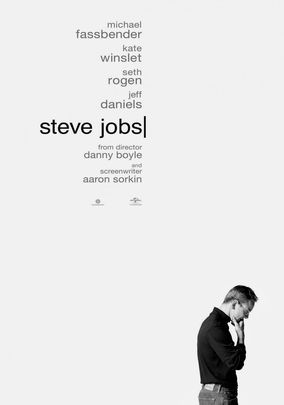
The film Steve Jobs (2015) presents a slice of his life, mostly focusing on his professional leap to success, his damaged personal life, and his inability to stay close to people within his circle.

Michael Fassbender plays the title role. He looks nothing like Steve Jobs, but this did not bother me.

It is quickly revealed that Steve Jobs is a competitive, cut-throat, and sometimes unkind man. He is driven, ambitious, and willing to do what it takes to succeed in business. He is also complex and as the film rolls along we witness the complexities of this man, arguably deemed a “genius”.

But where he has flaws is in his personal life as the film makes abundantly clear.

Kate Winslet is excellent in the supporting role she plays. Joanna Hoffman, Jobs’s loyal marketing executive, stays in his corner through the years, enduring ups and downs, yet their relationship never goes beyond the platonic. They are colleagues and both are absorbed in their creations.

Her character is a bit under-explored as we never are exposed to much of her personal life. Winslet in a rare “dowdy” role, makes the most of Joanna as she is the type of woman who throws herself into her work at the expense of her private life.

The film is primarily set during the three important software launches and, predictably, all are filled with issues and stress.

The bulk of the first act occurs in 1984 when Jobs and Hoffman struggle and fret during an Apple Macintosh launch in front of an auditorium filled with industry types eager to see the new technology.

The scene is tense as the new computer will not say “hello” as advertised and Jobs demands lead engineer, Andy Hertzfeld, fix it.  The scene escalates in its intensity.

We immediately bear witness to the fact that Steve Jobs is a shark. He is demanding and unlikable and the film is not afraid to stress that fact as the action continues.

We are next introduced to Jobs’s personal life. A beautiful young woman arrives at his office with a young girl. They are both on the brink of being destitute and thrown out of their home, yet Jobs refuses to help them and coldly calculates the probability that the young girl (Lisa) is biologically not his.

As the film chugs along Steve Jobs has a turbulent relationship with Lisa as the film spans the period from 1984-1998.

The film is a character study of sorts and we learn the complexities of Jobs. Fassbender gives a nuanced performance allowing the audience to absorb these character traits and ultimately feel emotional sympathy for him.

I admire this character study of Steve Jobs and feel that I know him quite a bit more, on a human level, than I once did.

Perhaps the supporting characters might have been fleshed out a bit more, but in large part, Michael Fassbender’s portrayal of a real-life person makes this film successful.

Oscar Nominations: Best Actor-Michael Fassbender, Best Supporting Actress-Kate Winslet

Mad Max: Fury Road-2015

Mad Max: Fury Road-2015

Director George Miller

Starring Tom Hardy, Charlize Theron

Scott’s Review #287

80025919

Reviewed November 20, 2015

Grade: C-

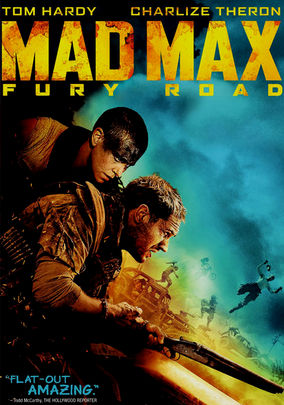
Having almost nothing to do with the original (and far superior) 1979 version of Mad Max, the 2015 Mad Max, sub-titled Fury Road (presumably for the endless car chases across the desert), looks great from a visual perspective.

The charisma of Tom Hardy and Charlize Theron is appealing, the story is non-existent and the film grows tedious after the initial admiration I first felt for the camera work and the dream-like vision the film possesses.

Initially, and admittedly, I was quite impressed with the film- a dreamlike, glossy look makes it a fantasy that one can escape into.

However, after some time, I began growing tired of the visuals, viewing it as a somewhat video game, instead of noticing the lack of story, which glared.

Sure, the thinly laid plot-line involved a rebel, Max Rockatansky (Tom Hardy), escaping the War Boys, where he has been kept as a blood donor against his will, joined by Furiosa (Charlize Theron) and a group of young, beautiful females escaping a life of breeding.

The group joins forces to allude, Immortan Joe, who chases them throughout the barren desert as they strive to reach safety in the beautiful “Green Place”, a land of prosperity that Furiosa remembers from childhood.

But this synopsis is similar to countless other action or adventure tales that have come and gone without distinction.

Again, compared to the original, I was expecting more from Mad Max: Fury Road and did not receive it.

The story fails because there is no rooting value. Since the film is a fantasy, per se, I did not find much investment in the characters getting to the “Green Place”.

The sweltering heat of the post-apocalyptic desert gives the film a roasting, tense look, and the action is almost non-stop.

Cartoon-like characters come and go, writhing on tops of cars or simply looking sinister with sneers and evil smirks, adding little to the story. Who are they? What is their purpose other than to look menacing?

I did admire the character of Furiosa. With a buzz-cut and a bad-ass swagger, the character is no-nonsense and in control throughout the film.

Certainly an inspirational female character, she adds zest to the film, which, on the surface, seems male-dominated. A female who can inspire and impress in this day and age is reasoning enough to mention.

Inexplicably, the reviews for Mad Max: Fury Road were positive and I do not get that. My overall perspective disagrees with these findings. I do not mean to imply that the film is “run of the mill” in an overall critique. It’s not.

There are fits and starts of creativity, as the glossy look of the film is admittedly a treat and a spectacle, but, alas, without a compelling story, this only goes so far before it begins to wear thin as an overall production.

Little chemistry or much dialogue between Hardy and Theron exists. Both are top-notch talents in their own right. Rather, grunts and facial expressions run rampant between the pair.

If the film was going for any sexual connection between the two, especially given the hot, steamy desert atmosphere, this intention fell flat as I noticed none.

To admire visually, the latest Mad Max (2015) may be worth a glimmer, but as a film that contains the entire package, this one is not worth its salt.

Oscar Nominations: 6 wins-Best Picture, Best Director-George Miller, Best Sound Editing (won), Best Sound Mixing (won), Best Production Design (won), Best Cinematography, Best Makeup and Hairstyling (won), Best Costume Design (won), Best Film Editing (won), Best Visual Effects

Sexy Beast-2001

Sexy Beast-2001

Director Jonathan Glazer

Starring Ray Winstone, Ben Kingsley

Scott’s Review #286

60020863

Reviewed November 13, 2015

Grade: B+

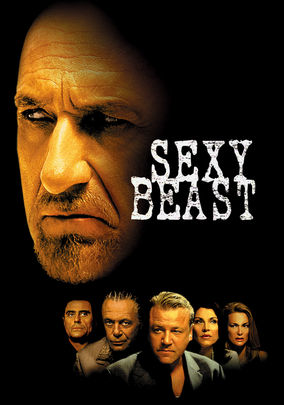
Sexy Beast is an interesting little indie gem that has garnered quite a cult following, deservedly so, since the year of its release, 2001, and I have recently viewed it for the first time.

In large part, the film belongs to Ben Kingsley, who gives a bravura and frightening performance as a crime lord attempting to convince a retired hitman, now sworn to the straight and narrow, to resurrect his career for one last heist.

The other principal characters are wonderful in their own right, as the film successfully mixes elements of Quentin Tarantino with Ocean’s Eleven- bank heist meets quirkiness, with smart and witty dialogue sprinkled in.

Gary Dove is happily retired and living a life of contentment with his ex-porn-star wife, Deedee, and his best friends, Aitch and Jackie.

Having all been involved in “the biz”, they are long since removed from their respective careers. They now enjoy evening parties of wine and martinis, and days relaxing by the pool in their Spanish villas.

One day, a former criminal associate, Don Logan (Kingsley), who is also a sociopath, arrives to disrupt their peaceful lives and to coordinate a bank heist in London, hoping to lure Gary back into the game.

As Gary and company nervously decline Don Logan’s offer to participate in his sinister plan, a wonderful and important scene unfolds early in the film.

The quartet sits around the dinner table at a swanky Spanish restaurant, anticipating a scrumptious meal.

Jackie reveals that Don has contacted her, and the scene’s tone immediately shifts to dread. All of them both fear and despise Logan.

They agonize over this sudden disruption to their lives, and we, the audience, fear Don Logan before he ever appears on-screen.

What fantastic storytelling.

Kingsley portrays a menacing character and brilliantly so. The character harbors frightening brutality beneath his normally calm demeanor, making the viewer shudder when he appears on-screen.

Lest we forget, Ian McShane also gives a nuanced performance as Teddy Bass, Logan’s right-hand man and wise businessman.

The cat-and-mouse scene towards the end, as Teddy and Gary have an important discussion in a car, is both chilling and integral to the film’s plot.

As Teddy slowly figured out certain events, I was left intensely anticipating his reactions.

The film introduces an intriguing sub-plot involving Don’s long-ago fling with Jackie and subsequent love for her, which adds layers to the plot and the dynamic and tension between Don and Gary.

Upon finishing the film, I loved the foreshadowing it contains. I found myself rewinding the events in my mind, pleasurably so.

From the pool to the young Hispanic kid to the thunderous boulder- all of these elements were crucial to the conclusion and fit like a puzzle.

A dark comedy of sorts, I chuckled after the film at the final reveal involving a double-heart insignia and a pool that gives the villain comeuppance and pleases the viewer.

Having alluded to viewing Sexy Beast (2001) over the years, I am glad that I finally found the time to witness a darkly comical gem that, admittedly, may take repeated viewings to absorb and therefore fully “get”, and I look forward to doing just that.

Oscar Nominations: Best Supporting Actor-Ben Kingsley

Independent Spirit Award Nominations: Best Foreign Film

This Gun For Hire-1942

This Gun For Hire-1942

Director Frank Tuttle

Starring Veronica Lake, Robert Preston, Alan Ladd

Scott’s Review #285

70000544

Reviewed November 3, 2015

Grade: B

This Gun for Hire (1942) is an early film noir that influenced later films of a similar genre. Starring marque headliners of their day, Alan Ladd and Veronica Lake, this film is a surprisingly violent experience for its period.

Shot in black and white, the film is wonderfully lit, adding style and substance.

The film begins with a bang, as hitman Philip Raven (Ladd) murders a chemist and blackmailer in exchange for a hefty amount of loot.

His wealthy boss double-crosses him and reports him to the Los Angeles Police Department. Detective Michael Crane, aided by his sexy girlfriend and nightclub singer Ellen Graham (Lake), takes the case.

The tangled love affair between Ellen and Raven, the film’s main draw, adds a wrench to the story.

I love this film’s black-and-white shooting, as many were in 1942. This enhances the tone because it is of the crime/hitman variety.

The chemistry between Lake and Ladd smolders, and Lake is great as a femme fatale with long blonde locks and a sultry pout.

She inspires the character conceived for L.A. Confidential in 1997, as Kim Basinger portrays a Veronica Lake look-alike. Ladd is doubly brooding as the hitman with a damaged childhood and ultimately sympathetic personality.

The setting of San Francisco and L.A. is wonderfully perfect and adds depth as the warm and sunny locales are mixed in with murder, corruption, and shenanigans. Who wouldn’t make comparisons to Chinatown (1974)??

A flaw I found in the film and which I found it difficult to buy into is the implausibility of Ellen falling in love with Raven as he tries to murder her-unsuccessfully so. This point seems plot-driven and a way to incorporate a mainstream love story amid the thrilling film noir.

Indeed, she would find satisfaction in a romantic sense with her detective boyfriend since the duo has no conspicuous problems. The love between her and Raven is all the more inexplicable. Still- sparks do indeed fly on-screen.

An action-packed crime affair, This Gun for Hire (1942) laid a crisp blueprint for film noir, hitmen, and action-type films for decades to come, and I admire it for this reason.

The Lego Movie-2014

The Lego Movie-2014

Directors Phil Lord, Chris Miller

Starring Chris Pratt, Elizabeth Banks

Scott’s Review #284

70289949

Reviewed October 24, 2015

Grade: D

A child’s movie in every sense of the word, The Lego Movie (2014) is silly and amateurish. It contains a hackneyed plot and a fast pace that makes the viewing experience quite unpleasant.

Computer-animated and primarily created by imagery, a scene involving two human beings interspersed among all the animations only makes the plot more sappy, overwrought, and predictable.

The film is a complete dud and a waste of energy save for one lone catchy song appearing throughout the film. I am perplexed why this film received mostly positive reviews as I did not share the same sentiment.

The premise is too complex for the target audience, in a Lego universe, where all of the characters are Lego pieces, a mysterious wizard- Vitruvius, attempts to protect a superweapon (Kragle) from the evil Lord Business.

While he fails, he prophesies that a person named “The Special” will one day find the Piece of Resistance capable of stopping the Kragle.

Kragle turns out to be superglue in the human world, as a cameo with Will Ferrell reveals he is the human version of Lord Business and refuses to let his young son play with Dad’s Lego set, thereby threatening to keep the set stationery with glue.

Inevitably, this leads to a tender scene with Dad and his son.

I did not find The Lego Movie engaging story-wise or visually and I was bored during most of the experience.

Admittedly, modern animated films are not my favorite genre- I miss the days of the classic Disney drawing-style films like Bambi or Dumbo both in the 1940s.

The major flaw is the frenetic pacing of the film. Did the powers that be think that all youngsters and parents dragged along suffer from attention deficit disorder? There was no time to pause and ponder what was going on in the story since immediately it was on to the next scene.

The action is non-stop so the film seemed like one long action sequence.

The main character of Emmett, a young Lego piece characterized by everyone as dull is voiced by Chris Pratt. Emmet stumbles upon a young woman named Wyldestyle looking for something at his construction site- she assumes he is The Special and they race to save the world from Lord Business.

Emmet, as far as a lead character goes, is likable enough, and predictably, a romance develops between him and Wyldestyle. We meet various creative characters like Batman and Princess Unikitty.

The film contains a sickeningly catchy song called “Everything Is Awesome” that will stick in the viewer’s head whether desired or not and that is the strongest part. It is not that the song is lyrically great or anything, but it is fun and hum along.

Overly high octane and an uninteresting plot make The Lego Movie (2014) perhaps appealing to young kids in the seven to ten range, but it is a forgettable and tedious experience for this grown-up.

The ending of the film leaves room for the inevitable sequel.

Oscar Nominations: Best Original Song-“Everything Is Awesome”

It Felt Like Love-2013

It Felt Like Love-2013

Director Eliza Hittman

Starring Gina Piersanti

Scott’s Review #283

70268905

Reviewed October 17, 2015

Grade: B

It Felt Like Love is a small, independent film from 2013 that garnered an Independent Spirit Award nomination.

A coming-of-age story encompassing a vulnerable and naïve fourteen-year-old girl, aware of her budding sexuality and developing a crush on an older, rebellious boy.

Quiet and subdued, the film tells an honest story of a young girl’s emotional struggles surrounding jealousy, loneliness, and fitting in.

Lila is a typical teenager living in New York City in what appears to be a blue-collar area of Brooklyn. Lila emulates her seemingly more mature best friend (she is turning sixteen) and much more sexually experienced, Chiara.

Never without a boyfriend and very popular, Chiara gains the attention of almost every boy she is around.

One day on the beach, a handsome friend of Chiara’s, named Sammy, passes by, when Chiara describes him as “sleeping with anyone”, Lila becomes fixated on him.

As she pursues him relentlessly, she puts herself in precarious situations and gets in way over her head.

Throughout this drama, Lila’s best male friend and neighbor, a child-like and innocent-looking kid, contrasts perfectly with the rugged, older Sammy.

Lila has two “men” in her life who could not be more opposite. The neighbor kid represents her youth, and Sammy, her adulthood, and she is stuck somewhere in the middle, wrestling between the two stages of her life.

The film is the debut of acclaimed director Eliza Hittman, who weaves an interesting and true-to-life premise. A fourteen-year-old girl’s feelings and emotions are powerful and often lead to risk-taking without thought of repercussions.

Liza is extremely vulnerable as anyone her age is, especially since the film reveals that she has recently lost her mother to breast cancer.

Her father is a caring yet no-nonsense type and is written well, as a typical blue-collar father would act.

The standout to me is the actress who plays Lila, Gina Piersanti. What a marvel! The youngster brilliantly portrays a range of emotions- gloominess, insecurity, and annoyance.

She is insecure but intelligent and savvy for her age. Her obsession with Sammy, clearly from the wrong side of the tracks, is dangerous, as he smokes pot regularly, parties, and works in a pool hall.

He ultimately isn’t for her, and I think Lila knows it deep down. But at her age, she is craving attention and sexually blooming.

All of the actors in the film are newcomers and do a fantastic job of relaying honesty. Lila’s motivations are not always clear, but then again, she is a teenager- moods and motivations change with the weather.

In one powerful scene, Lila hangs out at Sammy’s apartment (where she usually is and is seen as a pest). Sammy and his two friends are smoking pot and watching basketball on television.

Somehow, the subject matter turns to oral sex. As Sammy’s friends eagerly accept Lila’s awkward offer to pleasure them, Sammy rebuffs her advances and says that his “privates” do not like her.

This seems to lead Lila to leave him alone.

The audience hopes she musters her self-esteem and goes on with her life. The showing of full-frontal male nudity was surprising to me- very seldom is this shown in American cinema.

Interestingly, we never actually see Lila engage in any sexual activity. The point of the film is that she wants to desperately, but we cringe as we fear for the worst in each dangerous sexual encounter she experiences.

Perhaps it could have been further developed or fleshed out, but It Felt Like Love (2013) is a truthful, quiet film with powerful acting and writing from new talent sure to be around for years to come, with the wonderful skills they possess.

Independent Spirit Award Nominations: Best Cinematography

Welcome to my blog!1,552 reviews posted so far! I'm Scott Segrell and I reside in Stamford, CT. My site features hundreds of film reviews I have written since I launched the site in 2014. I hope you enjoy reading my latest reviews or searching for your own favorites to see if we agree. Please see my Recent Posts section, and don't forget to utilize the tags and category links.