A Serbian Film-2010

A Serbian Film-2010

Director Srđan Spasojević

Starring Srđan Todorović, Sergej Trifunović

Top 10 Most Disturbing Films #6

Scott’s Review #282

Serbian-film-poster-325x460

Reviewed October 13, 2015

Grade: B

A Serbian Film is a 2010 Serbian horror film that attempts, and succeeds, in breaking down every possible taboo barrier, albeit in a stylish, admirable, artistic way.

The film is not for the faint of heart, and even die-hard, gross-out horror fans might find it too shocking to view.

It is not so much the gore that is challenging- horror aficionados have seen this before.

But rather the blatant display of the subject matter at hand, which delves full speed ahead into pornography, including rape (both sexes), necrophilia (sex with corpses), and child sexual abuse, that is both tough and sickening to watch.

Priding myself on being able to take anything thrown my way in the world of film, I admired A Serbian Film’s bravery in going places rarely explored before.

I felt, however, that the story wasn’t very compelling or particularly well written, and that its primary goal was to shock the audience rather than tell a great story.

Intriguingly, Serbian films have been banned in several countries for their obviously controversial content.

Milos is a semi-retired porn star, now happily married to the beautiful Marija and living a peaceful existence. Although they struggle financially, they manage to get by while raising their six-year-old son, Petar.

One day Milos runs into a fellow porn star, Lejla, who suggests he contact a powerful porn producer and return to the business, citing an enormous windfall to be had since the producer is making more “artistic” films these days.

Milos cannot resist the potential money and meets with the mysterious man named Vukmir. One thing leads to another, and he is once again lured back into the porn industry.

What he is not told is the premise or details of the film he is to appear in, only to show up at the designated filming location.

Predictably, this leads to disaster, and the film’s main plot emerges. Milos is drugged to become a “stud”, bedding and beating almost anything that breathes…..or doesn’t breathe if you catch my drift.

Brazen is a polite way of describing this film. It is perverse and goes way out there. Milos, while drugged, begins to do crazy stuff, not realizing what he is doing, and spirals further out of control as the drugs increase.

The producer, in the film’s brief attempt at a social slant, cites child pornography as being in popular demand, as online viewers clamor for this new form of “art”.

Two scenes stand out as especially gruesome. One involves a pregnant porn star giving birth- she does so, and her counterpart proceeds to rape the screaming baby; the new mother grins in sinister pleasure.

In another, Milos rapes his son, Petar, while Milos’s brother rapes Milos’s wife. Of course, being heavily under the influence, Milos does not realize what he is doing, but the film succeeds in shocking and disgusting the audience.

Both of these horrific scenes have nothing to do with the story and are included to shock the viewer and elicit a reaction.

My criticism is that the grotesque scenes have little to do with the story and are arguably unnecessary to further the plot.

Shocking for the sake of being shocking, the film reminds me in a way of Salo, a brutal art film from 1975, which focuses not on horror, but on the horrific time of Nazi-ism.

Salo is a masterpiece because it contains a powerful, thought-provoking story.

A Serbian Film (2010) is a brave film, but ultimately the story achieves nothing more than being a disturbing, and I never need to see it again.

Guardians of the Galaxy-2014

Guardians of the Galaxy-2014

Director James Gunn

Starring Chris Pratt, Zoe Saldana

Scott’s Review #281

70301645

Reviewed October 9, 2015

Grade: C-

The summer blockbuster hit of 2014, Guardians of the Galaxy, a Marvel comics film popular among fans and critics alike, disappointed this viewer.

Too many superhero films are overly conventional, by the numbers fair, and this one contains these characteristics. Presumably targeted for teens (I would think), the film has cute jokes and decent special effects, but a bland, mediocre screenplay that lacks edginess.

Handsome Chris Platt plays Peter Quill, a space pilot from Earth, abducted by a pirate group named the Ravagers. Now a grown man, Peter attempts to steal a mysterious and powerful Orb known for special powers, for monetary gain.

The Orb is desired by many, including the evil Ronan, and his daughter Gamora.

Predictably, events turn into a battle of good vs. evil as Peter and Gamora (who turns good) team up with misfits Drax (a strongman), Groot (a tree), and Rocket (a raccoon) to thwart intentions by Ronan of destroying a peaceful planet, Nova Empire.

The meat of the story involves the team’s journey from imprisonment and escape to their efforts to save the world.

As traditional with these types of films, there is inevitable romantic chemistry between Peter and Gamora, who at first are rivals, but slowly develop a fondness for each other when it is revealed that she is plotting against Ronan and his valiant efforts.

The strengths are the 1970s soundtrack a cassette player and the Walkman, unheard of in today’s modern world, to the story.

I love how this is not simply backgrounded music but referenced throughout the film in various situations.

For example, Peter comically explains to a clueless bad guy what his treasured cassette tape consists of and how he cannot bear to part with it.

The creative sets and bright colors are other positives to Guardians of the Galaxy. The Xander planet is portrayed as clean and progressive, which counterbalances the dark, dreary nature of where Ronan and his entourage live.

However, the film is too conventional and not edgy or out of the ordinary story-wise. Let’s take the hero for example. He is clean-cut, all-American, and is humorous. But, why exactly is he the hero? He inevitably saves the world but makes him go from a pirate who is a thief to a golden boy leading a team to save a relatively unknown planet.

There is, of course, a scene involving a backstory of his mother dying of cancer and his regret over not taking her hand one final time. This is assumed to make him kind-hearted and one of the good guys.

This feels forced to me and what we have seen time after time in superhero films. The message I received from the film was basic- the powerful, strong, masculine guy with a sense of humor mixed in for good measure, saves the world from the bad guys while including a bunch of tag-along.

This is fine albeit predictable.

I was left with some questions. What were Ronan’s and Tharos’s motivations? They were simply evil with not much explanation as to why. What led them down this path? Did they each want theirs to be the only planet remaining in the galaxy?

A tender moment towards the end of the film, when one of the team members dies, is done in a rushed way that was a missed opportunity for more emotion.

Guardians of the Galaxy (2014) is a mediocre superhero/action film that might have been better if further fleshed out. This film left me forgetting about it soon after the credits rolled.

Oscar Nominations: Best Makeup and Hairstyling, Best Visual Effects

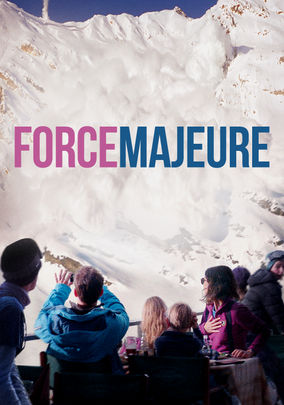
Force Majeure-2014

Force Majeure-2014

Director Ruben Östlund

Starring Johannes Bah Kuhnke, Lisa Loven Kongsli

Scott’s Review #280

80007252

Reviewed October 4, 2015

Grade: A

As a huge fan of foreign language films, I was delighted to stumble upon this inventive and thought-provoking treat Force Majeure (2014).

A Swedish film set in the Alps of eastern France, the film is a family drama that is powerful, emotional, and especially psychological. The best films leave you absorbed in thoughtful conversation or introspection, and this film successfully did both for me.

Tomas (Johannes Bah Kuhnke) and Ebba (Lisa Loven Kongsli) are an attractive couple in their mid-thirties vacationing with their two young children, Vera and Harry. Everyone is excited about the holiday as Tomas is away from work for a full week.

They are a family of affluence and sophistication based on the luxurious mountaintop hotel they stay in.

However, there is a subdued level of tension among them.

On the second day, they enjoy lunch at the hotel on an outdoor patio along the snowy mountainside. As a controlled avalanche begins to head their way there is suddenly panic as everyone flees for safety.

The avalanche is feared out of control, but thankfully only mist, and everyone safely returns to lunch.

However, Tomas’s instinctual reaction to the terror sets off a wave of debate for the remainder of the film. The family experiences a range of emotions and subsequently engages their friends in the conflict as they discuss and analyze the event.

The heart of the film is Ebba’s rage and Tomas’s guilt.

What I adore most about this film is its intelligence. It is smart and well-written. From a pacing perspective, it is slow and may turn some viewers off.

Simple scenes feature the family brushing teeth or napping- scenes in which not much happens.

But the intense psychological aspect lying beneath the surface makes up for these uneventful scenes. Smart dialogue between characters is my favorite. Ebba sits in the lobby sipping a drink with her friend, a sophisticated, promiscuous woman, who is vacationing alone to get a break from her husband and children.

She picks up men for fun and has no hang-ups about it. This particular scene is laced with interesting discussion. Ebba cannot understand her friend’s life choices and freedom and reveals that she is afraid of being left alone- she comes across as judgmental and insecure whereas the friend is confident and secure.

It is a “coffee talk” moment but reveals so much about the characters.

Later, Tomas and Ebba chat with their friends Matts and Fanni. When the discussion turns to the avalanche experience, the situation is analyzed by Matts, leading to tension for all. Matts sides with Tomas, whereas Fanni sympathizes with Ebba.

The disagreement stays with Matts and Fanni throughout the night as they reveal their conflict and put themselves in the other couple’s shoes.

Towards the end of Force Majeure events become strange as Matts and Tomas embark on a relaxing guy’s day out on the ski slope. As they sip drinks and listen to music an attractive female flirtatiously tells Tomas that her friend thinks he is the sexiest man she has ever seen.

Tomas feels like a million bucks and the audience is happy for him- however, the woman quickly returns and informs them that she was mistaken and her friend was referring to another man.

This escalates into a near fight and little dialogue is used throughout the scene. Rather, expressions are widely used. Later, a bizarre scene involves Tomas being accosted by frat boys and forced to guzzle beer- is this imagined or real?

We never find out.

Force Majeure is a spectacle. Scenes of the crisp, white, cascading snow are beautiful. The avalanche scene is amazing and creepy as the snow rapidly comes into view and gets closer and closer to the diners.

Will they be killed we wonder? The climactic scene as the departing vacationers travel by bus down a windy road is quite scary as the inept bus driver has difficulty navigating the bus. Will it crash killing everyone? Is he purposely driving recklessly on a suicide mission? The looming mountainside to the bottom is frightening and fascinating.

Intellectual, curious, and bizarre, Force Majeure (2014) is an international film worth checking out for a unique, cerebral experience.

Independent Spirit Award Nominations: Best International Film

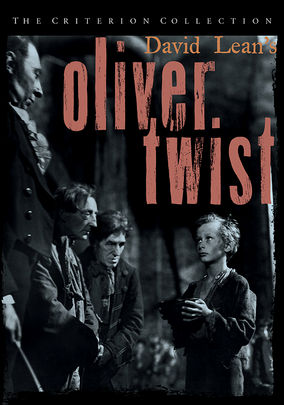
Oliver Twist-1948

Oliver Twist-1948

Director David Lean

Starring Alec Guinness, Kay Walsh

Scott’s Review #279

822333

Reviewed October 3, 2015

Grade: A-

Oliver Twist, the 1948 film version, is vastly different from the 1968 version, which turned the classic Charles Dickens novel into a musical, albeit a dark one, with colorful sets and brilliant art direction.

This version, made in black and white, is a better telling of the novel and contains masterful direction and cinematography.

Given the enormous length of the novel, some characters and details are inevitably trimmed or modified to fit a one-hour and forty-eight-minute film.

The film is a gorgeous cinematic treat, with glowing lighting and creative camera angles, thanks to the outstanding direction of legend David Lean (Lawrence of Arabia, 1963).

The film begins on a stormy night with the birth of poor little Oliver. His mother was frightened and died in childbirth, leaving him to live a life of hardship in a workhouse. His mother possesses a beautiful locket stolen by an old crone, who assists in the birth.

Now a young boy, Oliver draws the shortest straw, forcing him to utter the famous line “Please Sir, I want some more”, about desiring more bland gruel that the orphans are forced to eat.

From this point, Oliver is deemed troublesome and sold to an undertaker named Mr. Sowerberry. When this doesn’t work out, Oliver takes to the harsh streets of London to make his fortune among thieves such as Fagin, Bill Sykes, and The Artful Dodger, who become his friends but also his enemies.

Since I have seen Oliver’s musical version so many times and have also read the novel, it is difficult to watch this film without comparing it to the others.

Oliver Twist is a darker, gritty experience than Oliver! It precisely and closely resembles the novel, with details surfacing, such as the backstory of the locket, which takes on a more central role when the old crone repents on her deathbed, revealing all to the equally crooked Mrs. Corney.

Another example is the casting of less polished or average-looking actors than Oliver! Had. For example, Alec Guinness’s portrayal of Fagin is heavily disguised, with stringy hair and a prosthetic nose, a close comparison to the illustration of Fagin in the novel.

Bill and Nancy have more minor, though crucial, roles but are not as fleshed out as the other versions. The timing of particular events also plays a role —Nancy does not meet Oliver until later in the story.

The film does have light-hearted moments, which perfectly balance the heavy drama. The comic shenanigans of beadle Mr. Bumble and matron Mrs. Corney, both sinister characters but together a bickering, boorish couple who eventually marry each other, add humorous moments to the story as she becomes a domineering wife throughout their many fights and schemes.

The fact that the group of young thieves (boys) all live with Fagin in close quarters, the suggestion of child molestation is certainly implied but not pursued quite as much as in the novel.

I do not think that filmmakers in 1948 would have dared to go there in a film that was arguably meant to have a wholesome feel.

The certainty that Nancy is a prostitute and primarily sleeps in the streets is also addressed, though she is still rather glamorous and clean-looking. The class distinction is evident.

The bleakness of the workhouse and Fagin’s quarters counterbalances the rich and lush home of Oliver’s savior, Mr. Brownlow. I love his estate and housekeeper, the kindly and sweet Mrs.Bedwin.

A close retelling of the novel Oliver Twist (1948) is a fantastic film that can be enjoyed by parents and children alike and appreciated through generations of families.

Black Mass-2015

Black Mass-2015

Director Scott Cooper

Starring Johnny Depp, Joel Edgerton

Scott’s Review #278

Black_Mass_(film)_poster

Reviewed September 28, 2015

Grade: B+

A dark tale of crime, corruption, and Irish mob ties encompass Black Mass (2015), a drama based on the life and times of infamous Boston crime lord Whitey Bulger.

Set primarily in Boston, with a segue to sunny Miami during the 1970s and 1980s, the film mainly focuses on the intricate dealings between Bulger and childhood friend John Connelly. Now FBI, he uses Bulger as an “informant” to secretly bring down an Italian mafia figure, but slowly becomes more involved in Bulger’s sinister world.

Beginning in 1975, the film is authentic in its use of the styles, cars, and looks of the times in Boston during that period. Plausibility is apparent, and powerful acting is shown from top to bottom.

The stellar cast of Black Mass and the hefty cast features an array of well-known and capable actors, adding realism.

Led by Johnny Depp as Whitey, Depp gives an eerie, hypnotic performance as his bright blue eyes sparkle in a devious way.

Whitey is ruthless and will do whatever is needed to keep power and control. Like Connelly, Joel Edgerton is arguably the film’s lead character, though Depp gets top billing. Edgerton, in real life handsome, appears frumpy, and as a regular Joe type.

Supporting turns by Benedict Cumberbatch, as Whitey’s powerful Senator brother, is crafty and sleek, but corruption shrouds him.

Kevin Bacon, Dakota Johnson, Peter Sarsgaard, and Julianne Nicholson portray smaller yet pivotal roles and all do a fine job.

The screenplay is intelligently written. The story is quite dark and there are no laughs or light moments.

There are numerous deaths, the victims shot at point-blank range, but also two deaths in particular, where the victim’s suffering is prolonged and the scenes are cringe-worthy. The film is very violent and given the subject matter, is riddled with foul language.

One impressive aspect of Black Mass is the character-driven tale and that it is based on a real-life person adds to this.

Not only is Bulger fleshed out, but John Connelly is written very well. Gradually becoming immersed in the crime world as opposed to the world of law, we see Connelly sink deeper and deeper into Bulger’s world, and not so unwillingly either.

He loses his wife Marianne (Nicholson) along the way as she tires of the danger and corruption surrounding her. A chilling scene occurs when Bulger confronts Marianne in her bedroom, after observing negative vibes from her, and warns her in a flirtatious way, never to cross him.

As he caresses her face and slowly firms his grip, it is a rather frightening scene.

The dialogue is crisp. When Bulger is invited to a steak dinner at Connelly’s house, there is awkward tension at the dinner table. Jovial small talk over the preparation of the delicious marinated steak everyone is eating comes to the forefront as Bulger asks Connelly’s partner to reveal his family secret recipe for the favorite steak he has ever eaten.

When the partner eagerly confesses the recipe, he is coldly quizzed whether he would give up Bulger’s secrets as easily.

This is one of the best scenes in the film.

Comparisons to Goodfellas (1990) are evident but without the fun. I thought of The Departed (2006) throughout the viewing as well.

I think director Scott Cooper goes for and successfully achieves, good straight-forward, dark story-telling. Take the number of killings. The organized crime world is dirty, intense, and unkind and Black Mass portrays this well.

Black Mass (2015) is a success on many levels. The superior acting, detailed writing, and truthfulness create a good film. Just be sure to remember it’s a heavy one.

Interstellar-2014

Interstellar-2014

Director Christopher Nolan

Starring Matthew McConaughey, Jessica Chastain

Scott’s Review #277

70305903

Reviewed September 25, 2015

Grade: B-

Interstellar (2014) is an interesting film to review.

Science-fiction/futuristic epic with a run time of nearly three hours and is complex and intricate. It is the latest offering by director Christopher Nolan.

I cannot say I loved the film, however, I did appreciate and marvel at the visual and technical aspects of it, which completely usurps the convoluted plot, made difficult to follow due to changing worlds and galaxies.

The film reminds me of Inception (2010) with an obvious homage to 2001: A Space Odyssey (1968), the former directed by Nolan, but not quite as compelling from a story point of view as Inception was.

The complexities of different entities, worlds, and layers of worlds are featured and admittedly, mind-blowing, which is the weak part of the film.

Making the film arguably too intelligent, it loses the audience’s attention.

By too intelligent, I mean too complex. As I review the film, I see two halves-the story side and the visual side. In Interstellar, both are essential components and one fails and one marvels.

The story goes something like this. Matthew McConaughey plays Cooper, a widowed, former space expert stuck in a small town in the mid-west, where he begrudgingly runs a farm, living out an unsatisfying existence.

The Earth’s food and crops are slowly running out and the planet is dying. His two children, daughter Murphy and son Tom face a bleak world.

One day, a dust pattern with coordinates leads Cooper and Murphy to a secret NASA team intent on finding other worlds and attempting to save Earth. The team is led by Dr. Brand, a college professor, and science wizard, played by Michael Caine.

Cooper, naturally, is chosen to lead the venture, which could take him away from his family for years. He accepts much to Murphy’s chagrin. Once in outer space- assisted by Amelia Brand (Dr. Brand’s daughter), the team embarks on an endless mission leading them to different planets and one strange encounter with a rebel astronaut (played wastefully by Matt Damon).

Years later (on earth anyway) Murphy and Tom (now grown and played by Jessica Chastain and Casey Affleck) assume their father Cooper is dead.

Critically, the story is way too much to comprehend. I let go of the story instead of focusing on the visual spectacle I was treated to.

The plot eventually meanders off track as the team traverses through a space wormhole created by an alien intelligence and travels fifty years without aging. Life has gone on over planet Earth. Some characters age, others do not.

To summarize, the story is convoluted and impossible to follow.

Speaking of the story side of Interstellar, the writing contains an irritating wholesomeness, especially in the early stages- pre-outer space.

McConaughey was given this tough, machismo side to him that screams of Hollywood traditionalism- almost like “I am a man- I save the family”. Haven’t we seen this too many times in film?

I also found the relationship between Cooper and his young daughter Murphy incredibly saccharine and screamed of Hollywood schmaltz.

McConaughey was given and succeeded in delivering, one great crying scene.

The visual aspect of Interstellar is a spectacle and much, much better than the story, especially during the final third of the film. The sheer grandeur is astounding. When the crew lands on Miller’s planet, an ocean world, a great tidal wave topples their space ship killing one of the team.

The massive look of the tidal wave is monumental in size and ferocity. Later, when the crew lands on an icy planet, the immense coldness and shape of the planet work perfectly and one feels like they are in outer space.

How inventive and creative is the scene where Cooper attempts to contact a character through a bookshelf. The scene is set up like a maze with different periods, colors, and shapes, seemingly blending is very impressive and artistic.

Visually speaking, Interstellar has some similarities to the 1968 epic 2001: A Space Odyssey. Grandiose, artistic, experimental, and epic along with the obvious space theme allow the two films to be compared.

However, where 2001: A Space Odyssey was about life and contains a clear and powerful message, I did not find the same with Interstellar. Instead, I did not find a message, only a confusing story, mixed with spectacular visuals.

Oscar Nominations: 1 win-Best Original Score, Best Sound Editing, Best Sound Mixing, Best Production Design, Best Visual Effects (won)

The Visit-2015

The Visit-2015

Director M. Night Shyamalan

Starring Olivia DeJonge, Ed Oxenbould, Kathryn Hahn

Scott’s Review #276

80045505

Reviewed September 24, 2015

Grade: B

A modern-day thriller/horror/comedy hybrid (admittedly it is tough to classify this film as exclusive horror with the dreaded and watered-down PG-13 rating) directed by M. Night Shyamalan, The Visit (2015) has its moments of genuine scary frights and surprises.

It contains a wonderful twist at the end but suffers from some clichés, one severely unlikeable character, and suspensions of disbelief.

Bringing grandparents to the forefront of the film is a clever idea, albeit, stereotypically, The Visit is a decent watch, but laden with a few misfires.

Paula (Kathryn Hahn), a single mother on the outs with her parents for some years, but recently reunited, sends her two children- Rebecca and Tyler, for a week, to stay at their grandparent’s farmhouse, whom they have never met.

At the kids prompting, Paula decides to go on a romantic vacation with her new boyfriend.

Naturally, when the kids arrive at Grandma and Grandpa’s strange events happen. The children are warned never to go into the basement, not to leave their bedrooms after nine-thirty pm, plus the grandparents have a creepy, weird, look to them.

Rebecca and Tyler, in true modern horror fashion, arguably contrived at this point, record all the events (think Paranormal Activity from 2007) and begin to realize there is something rotten in the state of Denmark.

The Visit contains positives and negatives.

The mother and the two kids live in New Jersey and the grandparents in Pennsylvania. That is one state away, yet Rebecca and Tyler have never met, seen photographs, spoken to their grandparents on the phone, not even to discuss the impending visit.

The kids constantly use Skype to communicate with Mom throughout their visit, but doesn’t occur to anyone to chat with the grandparents before embarking on a week-long visit to introduce themselves.

This is a convenient plot manipulation.

Another negative is the film contains one of the most annoying characters in recent memory, Tyler. I am baffled as to whether this was intentional or unintentional.

The kid is about twelve years old and is written as dumb as possible. There are at least three to four endless scenes of him rapping, mostly to the video camera, that I found to be an utter waste of valuable screen time and lends nothing to the plot.

Filler and for a ninety-minute movie, unnecessary.

In the end, though, I got the last laugh, as the character, a germophobe, has his face smeared with human excrement.

The third negative I observed is the constant “old people jokes”, which bordered on the offensive after a while. The grandparent’s unusual behavior was blamed numerous times on their age as if all elderly people were scatterbrained, daffy, or just downright strange.

Many seniors are intelligent, useful, and lively so there was a feeling of disrespect towards the elderly that I could not shake. The film could have portrayed the grandparents with more dignity than it chose to.

Now for some positives, the compelling twist at the end of the film I did not see coming and I loved that about The Visit.

Rarely is the audience surprised anymore, especially in the horror genre, and I was. Having replayed the film in my mind the plot makes perfect sense, but is a positive in the heart of the climax.

On the subject of the conclusion, The Visit has a unique slow-motion/dreamlike feel and an odd, classical-type musical score playing throughout the ending that adds much depth to the typical thriller-type music heard in most genre films.

The oven scene inevitably viewed by all during early trailers for The Visit is excellent. When Grandma convinces Rebecca to crawl completely inside her oven to clean it we know this will not end well.

Additionally, the look and texture of the setting, an old deserted farmhouse in a small, rural town in the middle of nowhere has a feeling of being trapped.

This successfully provides a scary backdrop for the film and all the elements scream horror.

The Visit (2015) has genuine scares and will make the viewer jump, and perhaps even shriek. That is what good horror does yet I am still unsure if this film is more horror or comedy.

Unintentionally so, perhaps.

Grandma-2015

Grandma-2015

Director Paul Weitz

Starring Lily Tomlin, Marcia Gay Harden

Scott’s Review #275

Grandma_Movie_Poster

Reviewed September 21, 2015

Grade: B+

Grandma (2015) is clearly and deservedly, a showcase for the talented and interesting legendary Hollywood actress Lily Tomlin.

Years (twenty-seven to be precise) since she has had a starring turn in a film, the role of Grandma is custom-made for Tomlin, with the character’s sarcasm, wit, and downright bluntness emerging to the forefront.

The film is labeled a comedy/drama, which it is. It’s themed around a heavy topic of abortion and runs the risk of offending pro-life individuals, as the film undoubtedly contains a pro-choice slant.

Ellie (Tomlin) is a poet and former college professor in her seventies living in California. She is a lesbian and is mourning the recent death of her long-time partner. She has recently been dating a lovely young woman named Olivia (played by Judy Greer), whom she unceremoniously, and cruelly dumps, referring to Olivia as little more than a footnote in her life.

Afterward, Ellie breaks down in tears of guilt while showering.

One day her granddaughter, Sage, (her daughter Judy being the product of a one-night stand), appears on her doorstep asking for money for an abortion. Having just paid off her debts and destroyed her credit cards, Ellie is therefore broke.

The duo embarks on a quest for cash, and race against time to make the appointment in time for the scheduled procedure.

The film belongs to Tomlin but is enhanced by excellent supporting turns, specifically by Marcia Gay Harden as daughter Judy, and veteran actor Sam Elliot, as Ellie’s former flame Karl, to cite examples.

Judy and Ellie have experienced a tumultuous relationship their entire lives while Karl harbors resentment for Ellie for long-ago aborting their child. Harden is thrilling as a borderline, one-dimensional bitch character.

She is driven, angry, and self-centered, and it is mentioned that she has gone through numerous administrative assistants in her high-level corporate role.

I have not seen Harden in a role quite like this before. As unsympathetic as the character is, one cannot help wondering if Ellie’s mothering skills may have made Judy turn out this way.

Karl on the other hand is sympathetic. He is still wounded from his ages-ago relationship with Ellie and may still hold a flame for her, as unlikely a romance between them would be.

The film is darker than expected and is not the syrupy, mainstream, family story one might expect from the fuzzy one-word title.

Still, Tomlin’s cantankerous, sarcasm kept me in stitches and perfectly balanced the tough subject matter displayed in Grandma.

The relationships between the main characters are complex and tough to watch as they argue, swear, and insult each other.

Love is mixed in but complexities arise due to the controversial subject matter. The history of and, in many cases, painful memories are dredged up between characters.

Impressively, Grandma is not a film that debates the hot-button issue of abortion as one might assume. Sage never really considers keeping her baby and will have the procedure done as quickly as possible.  Ellie and Judy never try to persuade Sage to keep the child nor does Sage seriously contemplate keeping the baby.

The only instance of a pro-life perspective is when two ridiculous characters- a young mother and her ten-year-old daughter- suggest Sage not kill her baby. When Ellie steps in the young girl punches her in the face. Is this intended as comic relief or to make these characters appear as buffoons?

These characters are laughable.

The father of Sage’s baby is unsympathetic and a very minor blip on the radar. My theory is that the film chooses to go this route intentionally to avoid a debate over the abortion issue.

A debate is not the point, but the relationships between the characters are.

The scenes involving Ellie becoming irritated and sarcastic are priceless, successfully utilizing Tomlin. As she hilariously goes from situation to situation in an attempt to earn the $600 for Sage she resorts to various means as diverse as selling books, giving a kiss, or collecting an old debt.

This is the main draw of the witty little film, Grandma (2015).

Dear White People-2014

Dear White People-2014

Director Justin Simien

Starring Tyler James Williams, Tessa Thompson

Scott’s Review #274

70298948

Reviewed September 18, 2015

Grade: B+

Dear White People (2014) is a highly creative, independent satire that begs to be watched for no reason other than for its message of existing racism in present times, homophobia, and class distinction.

Set at an Ivy League college and written tongue and cheek, but also with a direct message from newly discovered director Justin Simien, it is a meaningful gem that challenges audiences to think and be entertained and emit an occasional chuckle at the wit and comical lines presented.

Set in the present day- assuming 2013 or 2014, and well beyond the Civil Rights era, the film features a hip, sharp look and a myriad of characters, all with differing perspectives, all Caucasian or black in racial identities.

All the characters attend the affluent and sophisticated Winchester University, a mostly white, conservative school with a small community of black students, who curiously all seem to reside in the same dorm house.

In addition, the Dean is a black man (played by Dennis Haysbert).

Sam White is a rebellious female student, of mixed race, who runs a radio show entitled “Dear White People”, which challenges the current state of racism in America, specifically at Winchester University.

Supporting characters include Lionel Higgins, a gay, bookish student with an enormous afro, excluded from almost all the sub-groups. Lionel is intrigued by Sam’s radio show.

Other characters include Coco- an attractive black girl with typically “white” mannerisms and friends, who try to fit in with the white culture. Troy, a very handsome black student (who tries to act “white”), dates a white girl (who tries to act “black”).

Finally, the film features Kirk, a white student whose father is the school president, who values an old-style way of thinking. Kirk, shockingly, hosts a blackface party, which leads to major controversy at the school and is the focus of much of the film’s drama.

The main theme is race, but different characters have different viewpoints on the subject matter, and all are explored, which makes the film unique and interesting.

Sam, for example, is a true advocate for racial equality and constantly challenges white people’s motivations and actions, blatantly so.

Coco, on the other hand, is resistant to being stereotyped as a woman of color and, in one scene is incorrectly assumed to be from the hood by a reality television producer she is auditioning for.

She is envious of white people and the advantages they have, even going so far as having straight hair and blue contact lenses. Then we have Lionel, who is both gay and black, and considered an outcast. He fits in with no group and curiously seems okay with being his own person.

What is unique and compelling about Dear White People is that it brings up a controversial issue, mixes it in satire, humorously, but presents compelling arguments against stereotypes, also bringing those stereotypes center stage, which most films avoid like the plague.

One black character is frustrated that, in their mind, most black people are content watching dumb black comedies, thereby supporting a negative racial stereotype.

One interesting aspect regarding the score is the use of lily-white classic film music- such as Barry Lyndon (1975)- the most lily-white of lily-white films (British and Irish).

Famous film director, Quentin Tarantino, is called out as being a racist director. What wonderful irony!

Dear White People (2014) is a witty, intelligent slice of inventive filmmaking that is worth seeing if only for its controversial subject of inequality and racism, which is too often forgotten.

An indie treat for those inclined to think a little.

Independent Spirit Award Nominations: 1 win-Best First Screenplay (won), Best First Feature

Inside Out-2015

Inside Out-2015

Director Pete Docter

Starring Amy Poehler, Diane Lane

Scott’s Review #272

80030684

Reviewed September 8, 2015

Grade: B+

Frequently, when I view a modern animated feature, (and by contemporary, I mean 1990 and beyond), I am either bored or left with a “meh” feeling, or both. It seems the trend is “Let’s create a manufactured film that will appeal to kids who will drag their parents to it”.

It is almost as if mediocrity is accepted in the animated film, but Inside Out (2015) challenges this trend with a thoughtful, interesting slab of story.

With this latest Pixar offering, we find a refreshing, intelligent film that makes the viewer think, containing a genuine cute factor, with lots of colors and interesting animation interspersed throughout.

Our story finds eleven-year-old Riley Anderson, and her five different personalities, working within her brain in unison. The emotions are five distinct little people representing (and named) Joy, Sadness, Disgust, Fear, and Anger. They overlap, conflict, and humorously strive to take control of Riley’s mind and thought processes.

Joy is central, and the happiest of emotions. They all live in Riley’s conscious mind, named Headquarters.

One day, Riley and her family pack up and move from Minnesota to the unknown and overwhelming city of San Francisco to capitalize on a job opportunity offered to Riley’s father.

The city is bustling and the family is thrown for a loop. Riley in particular has difficulty adjusting to this vastly different world and finds herself friendless and acting out of character.

Sadness accidentally begins touching other emotions within Riley’s mind, which sets off strange emotions causing her to behave erratically and become irritable.

Joy and Sadness struggle to return to Headquarters and fix the issues.

Inside Out is a complex animated film and will go way above the heads of many youngsters who will undoubtedly see it.

I find this rather refreshing.

It is a coming-of-age tale for adults and mature kids that challenges its audience rather than spitting out a retread or formulaic family story that we have seen countless times.

Riley and her parents are arguably supporting players in the story, taking a back seat to the small, interesting creatures in Riley’s mind. Her mind is a carnival of riches and cool characters emerge. I smiled as more characters were introduced. Riley’s imaginary friend from years ago, Bing Bong, was pulled to the forefront of her emotions, as he was sadly forgotten in her mind.

Who cannot relate to this? A childhood ritual of creating a friend.

I adored the trip through Riley’s mind and marveled at the revelation of the inner workings of her mind, with creative colors and bright interesting lights.

What a super-cool adventure for a young film lover to experience! Inside Out is quite sophisticated.

The main concern is the level of patience that this film requires. It is not a force-fed story but encourages one to experience and feel.

Touching scenes prevail, but the message I receive from Inside Out is important. A multitude of emotions in every human being is normal and the way the film shows them overlap and work together is ingenious. Nobody is one emotion, nor should they be as the movie promotes successfully.

Human beings are meant to feel.

The film also contains humor. I laughed out loud when one character saw a button labeled “puberty” and assumed it was unimportant. This inside joke is also alluded to after the film- a sequel perhaps? Since Riley is only eleven, puberty will be a natural progression.

Inside Out challenges the norm in animated films and entices audiences to think. It feels genuine, which is impressive in itself. It is sentimental without feeling contrived or corny.

The film succeeds on many levels.

Oscar Nominations: 1 win-Best Original Screenplay, Best Animated Feature Film (won)

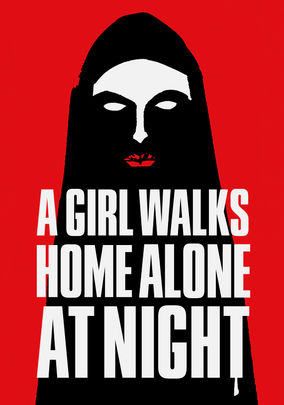
A Girl Walks Home Alone at Night-2014

A Girl Walks Home Alone At Night-2014

Director Ana Lily Amirpour

Starring Sheila Vand

Scott’s Review #271

70301280

Reviewed August 24, 2015

Grade: A-

A Girl Walks Home Alone At Night is a highly creative, unique, independent horror film from 2014.

One of the many reasons I am a fan of independent cinema is to discover and promote little-seen gems.

The dialogue is in Persian and the cinematography is in black and white, which is unique in modern film. I notice similarities between this film and Let the Right One In, 2008, (both the English and the Swedish versions) in the frigid mood and love story enveloped within.

This film is the debut of director Ana Lily Amirpour and what a marvel she could become. Despite obvious influences by other directors, A Girl Walks Home At Night has a brilliant freshness and seems original and unpredictable.

The title accurately depicts the main story. A teenage girl (Sheila Vand) walks around the dark streets of a city aptly named Bad City in the Iranian underworld.

The film is shot in southern California and could double for Detroit.

The girl, who has no name, has strange encounters with a myriad of peculiar individuals, including what appears to be a transgender prostitute, a vicious drug dealer, a nice yet mysterious young man named Arash, Arash’s father, who is hooked on drugs, and a mysterious cat.

She then embarks on a tender flirtation with Arash.

The overall plot, which I found secondary to the look of the film, centers around The Girl’s encounters with these individuals and their encounters and relationships with each other.

The Girl is a lonely vampire and feels isolated from society, but it is unclear what she is looking for. She is both destructive and sweet depending on the circumstance.

She takes her aggression out on the bad.

The most striking and impressive aspect is its dark moody atmosphere. Brooding and cold-looking, the city reeks of death and loneliness. The Girl speaks very little so her expressions are what the viewer will notice.

Her eyes delve into her soul.

She is the most interesting of the characters, but the others, specifically Arash and the transgender prostitute have potential and we are curious to explore more about them.

Arash and his father have more depth than any of the supporting characters- Arash painfully lets his drug-riddled father stay with him and attempts to assist him with his issues.

One assumes that since the father’s wife (Arash’s mother) has died suddenly, he has taken a downward spiral, but this is only suggested to the audience.

We do know for sure where she is- in one scene we see the father angrily look at a photo of a middle-aged woman and is destroyed by her absence. He believes that the woman has taken on the body of the mysterious cat.

Arash caring for his father is a fascinating role reversal.

Wouldn’t we expect the young man to have a drug problem and the father the caregiver? This is interesting in itself.

The influences are plentiful, but most notable from a director standpoint is David Lynch. The black and white filming along with the viewer’s point of view in one scene involving a car driving down a dark highway resembles the Lynch film Lost Highway (1997).

The moody background music and the slow but methodical pacing give A Girl Walks Home Alone At Night a Lynch feel. One curious element is The Girl’s interest in 1980′ pop music- her bedroom wall riddled with Madonna and similar pop stars from the 1980’s posters.

The Girl even admits to listening to a sappy Lionel Richie tune.

It is unknown if it even could BE the 1980’s as time seems unimportant. The film strangely combines edgy, alternative filmmaking with commercial pop references.

I half expected The Girl to break into a rendition of “Pour Some Sugar On Me”.

My thought is that perhaps Amir intends to portray the Girl’s desire to fit into mainstream society knowing that a vampire never can. This theory is proven when The Girl is melancholy when Arash buys her a hamburger, knowing she cannot enjoy it as he does.

Creative, with a dreary atmosphere, and intelligently thought out, A Girl Walks Home Alone At Night (2014) is a strange, murky experience in film experimentation.

Amirpour is a fresh, new director worth watching for.

Independent Spirit Award Nominations: Best First Feature, Best Cinematography

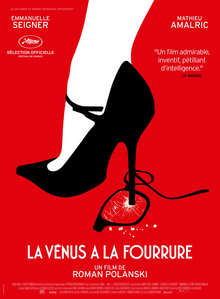
Venus in Fur-2013

Venus in Fur-2013

Director Roman Polanski

Starring Emmanuelle Seigner, Mathieu Amalric 

Scott’s Review #270

Reviewed August 23, 2015

Grade: C

Venus in Fur is a French-language film from 2013, directed by the enormously talented Roman Polanski, and based on the American play by David Ives.

Notably, Ives’s play is based on a novel by Leopold von Sacher-Masoch titled Venus in Furs.

Polanski’s film adaptation is a filmed play. It takes place entirely within the walls of a theater, except for the opening shot, as the camera pans through the doorway as if the audience were the eyes of an approaching theatergoer.

The subject matter is quite adult- sadomasochism and dominance- though there is little nudity, and it is not perverse in any way.

The story surrounds Thomas, a stressed-out writer-director of a new play set to open soon in Paris. Finishing touches must be handled as well as casting the lead actress!

His play is an adaptation of Venus in Furs, and a frustrated Thomas is on the phone complaining about an unsuccessful day attempting to cast the lead role of Wanda.

A disheveled actress named Vanda wanders into the theater and attempts to convince Thomas to let her read for the part, which she desperately wants.

Initially, Thomas is turned off by Vanda as she is dressed slutty and is on the middle-aged side and, in his mind, wrong for the part.

When she finally does convince him to let her read for the part, she becomes Wanda, and a strong, bizarre, sadomasochistic attraction develops between the pair as they run lines together.

Roman Polanski might rank in my Top 10 favorite directors of all time (Rosemary’s Baby-1968 is one of my favorite films), but this work disappointed me.

With a cast of only two characters, I found the story limiting, and it became tedious as it developed. It was hard to tell when Thomas and Vanda were in character and when they were expressing their true selves, and I didn’t find either particularly likable.

This may have been intentional, but it was confusing and dull nonetheless.

The sexual-fetish subject matter is prevalent, but not in a tasteless way. The initial roles reverse as Vanda goes from a whimpering, pleading actress needing some work to a dominatrix who obtains control over Thomas, who in essence becomes her slave.

Thomas begins as a powerful director with an ego and ends up catering to Vanda’s every whim. They develop a deep emotional connection that they both realize at the same time.

The main issue was that I didn’t feel much connection to either character. I detected no chemistry between them. The dominant soon becomes submissive, but who cares when you are invested in neither character?

On the plus side, I loved the basic theater set. This instantly reminded me fondly of my college days rehearsing and performing in a theater similar to the one in Venus in Fur, complete with rustic red audience seats and moody ambiance.

Venus in Fur (2013) has an interesting premise as people immerse themselves in the roles they play, but it is a disappointing film, especially coming from one of the greats.

For whatever reason, the film didn’t work for me. Interesting premise, but ultimately failed for me.

A Little Chaos-2014

A Little Chaos-2014

Director Alan Rickman

Starring Kate Winslet, Matthias Schoenaerts

Scott’s Review #269

80017099

Reviewed August 22, 2015

Grade: B-

A Little Chaos (2014) is a difficult film to review. The film does not kick into high gear, or much of gear until the final thirty minutes or so as the drama hits a crescendo and past events are suddenly explained.

At this point, it becomes a very entertaining film.

Until then, it is largely a bore and slow-paced.

Starring Kate Winslet and Alan Rickman, who also directs the film, A Little Chaos is a good film with beautiful period piece costumes to marvel over, and feels great, but misses the mark with a lack of balancing the momentum throughout the length of the film.

It is also largely fictionalized, making the viewing less enjoyable.

A period drama set at the gorgeous Versailles in France, the period in the late 1600s when King Louis XIV of France is in power and lives on the illustrious estate.

Landscaper, Andre Le Notre, hires unconventional gardener Sabine (Winslet) to create one of the gardens.

Sabine is progressive and does not live in the past. Rather, she has ideas for creating a unique pattern. Sabine is instructed to incorporate a wonderful fountain within the garden. She faces hostility from staff members for simply being a woman and they refuse to work for her.

Others admire her creativity.

As the plot unfolds, Sabine has romantic feelings for Andre, a man trapped in a loveless marriage with Francoise, and they begin a tender courtship.

Sabine is haunted by the past and frequently hears cries in her dreams. The audience does not know what her past life was, only that she is widowed.

The final act of the film brings everything together nicely. We learn about Sabine’s past and her suggested dalliance with Andre comes to fruition.

After the film, I was left thinking how exceptional it was, but then remembered the majority of it had dragged.

The themes of A Little Chaos are class systems, feminism, and societal views. At first, snubbed by some for being a commoner, Sabine slowly is accepted by the royal figures, including the King himself, whom Sabrine humorously mistakes for the gardener at one point.

Ideally, it would have been lovely if a woman had been hired to create the garden.

Sadly, events do not happen this way but is someone’s fantasy.

A Little Chaos (2014) has great potential and looks beautiful- my main complaint is for most of the film nothing happens.

Also disappointing is that the film was not filmed at the historical Versailles, nor was it even shot in France. Every exterior scene was filmed in England.

This is not a deal-breaker, but some genuineness would have been nice. Another major detraction is that Sabine De Barra is not even a real-life figure, but rather is fictionalized- sort of how the past should have been but wasn’t really.

Having been a real person would have made the film more interesting. What is the investment?

From an acting standpoint, the film succeeds. Winslet, a highly talented actress, is well cast and the chemistry between her and Matthias Schoenaerts is palpable. Both actors are believable in their roles.

Stanley Tucci, typically great in whatever he appears in, plays Phillippe, a silly, slightly effeminate Duke who does more to annoy than to amuse and is a trivial character.

Throughout my viewing of the film, I kept thinking of it as the type of film that should be liked because it looks great, but something was missing.

The royal drama, sexual dalliances, and antics were fun, but I felt like the film could have been much more than it ended up being.

Two Days, One Night-2014

Two Days, One Night- 2014

Director Luc Dardenne, Jean-Pierre Dardenne 

Starring Marion Cotillard, Fabrizio Rongione

Scott’s Review #268

70297803

Reviewed August 21, 2015

Grade: B

Two Days, One Night (2014) is a French-language drama starring the wonderful and highly talented Marion Cotillard, who received an Academy Award nomination in 2015 for this role and is the main draw.

I never tire of viewing any of her film performances, however, I felt the film itself lacked something special. Adequate, but below the standards I was expecting given the award recognition.

The film is good, with an interesting tale of morality, but becomes redundant as it goes along.

Sandra, played by Cotillard, is a working-class woman living in an industrial town in Belgium. She works in a factory and struggles to make ends meet with her supportive husband, Manu. They have two young children.

It is revealed early on that Sandra has a history of suffering from depression and has recently been forced to take a leave of absence from her job due to her struggles.

Now recovered, she is ready to resume normalcy but her boss forces a vote among her sixteen colleagues who decide to either save her job or eliminate her position, thereupon each will receive a hefty bonus.

Sandra and a co-worker she feels close with, convinced the boss to allow an anonymous vote the following Monday, leaving Sandra with one weekend to convince the others to save her job.

The conflict is that during Sandra’s absence, the department was able to run successfully so why is she needed?

The plot has an interesting moral concept. Will people sacrifice personal gain to assist someone else? The fact that Sandra is a kind woman makes the decision seem easy. However, many of her colleagues struggle to put food on the table for their families and could use any extra wages manageable.

The audience is on the side of Sandra and her equally kind husband, who continually talks her out of giving up and instead encourages her to spend the weekend convincing the others to vote for her come Monday morning.

The weak point is that it contains one basic formulaic story and does not branch into anything more. The plot is simple but I expected a bit more from this film.

The action takes place throughout one weekend and the entire plot is that of Sandra traversing the town looking for colleagues to persuade them to vote for her. Most of the people she encounters are sympathetic and, if they cannot help her, they empathize with her.

Soon, we get that she needs their votes. It becomes the same scene over and over.

The character of Manu is undeveloped. We learn nothing about him except he is a devoted husband and father, but what about his feelings? How did he deal with Sandra’s depression? Strangely, many co-workers Sandra looks for are not home at the time, requiring her to go to the park, the laundromat, or the pub to track them down.

I question the authenticity of the story.

Sandra’s boss has the power to pit colleagues against each other (supposedly approved by management) and to assume the destiny of one employee.

There is no Human Resources department mentioned throughout the story until almost the final scene when a manager appears, and it is never explained why the boss can get away with this. There is also no mention of a union, which in factory work is common.

Furthermore, Sandra and Manu never mention consulting an attorney- yes, they are poor, but surely a conversation might have occurred.

The title also does not make sense- Two Days, One Night- the film begins on a Friday and ends on a Monday morning. What does the title mean?

Two Days, One Night (2014) is a film featuring an honest performance from a talented actress (Cotillard), but a tad bit slow and tedious at times, and repeats similar scenes over again.

The film is a nice, simple, quiet story, but nothing spectacular.

Oscar Nominations: Best Actress-Marion Cotillard

Lake Placid vs. Anaconda- 2015

Lake Placid vs. Anaconda- 2015

Director A.B. White

Starring Robert Englund

Scott’s Review #267

80058483

Reviewed August 16, 2015

Grade: D

To say that Lake Placid vs. Anaconda (2015) is a bad film is being generous. It is poorly made, written, and acted.

Containing every horror and comedy cliché in the book, it is not a film to take seriously and is best watched late at night amongst adult spirits.

The premise is ludicrous, the acting way overdone, and all characters are “types” and one-dimensional.

Having seen the original Lake Placid (1999) and Anaconda (1999) films (and they were not so great themselves), I was unaware that this is the fifth film for both franchises and is a crossover.

Premiering on the Syfy network in mid-2015, it is a made-for-television feature, and the lack of any real gore is apparent for this reason.

Robert Englund and Yancy Butler, stars of other franchise installments, make return appearances. Sadly, this one has no Betty White or Jennifer Lopez (stars of the original Lake Placid and Anaconda, respectively).

Lake Placid vs. Anaconda is not trying to be great or necessarily art, but rather an idiotic late-night experience. I did not rate the film a solid ‘F’ since it knew what it was and did not try to take itself too seriously, which I respect at least.

The story begins in the middle of the woods near Clear Lake, Maine, as an illegal experiment occurs inside a truck. The serum is being illegally extracted from a sedated crocodile to sell to a giant corporation for profit.

Jim Bickerman (played by horror legend Englund) has been paid handsomely to provide information for the plot to happen.

A villainous corporate schemer is on hand to oversee the events. Inevitably, something goes wrong and the crocodile wakes up and gets loose, encountering large anacondas, also on the loose.

From this point, we are introduced to other inane characters that round out the film, including a group of bitchy sorority sisters on their way to Clear Lake presumably to pledge and party, and Sheriff Reba (Yancy Butler) and her bumbling team of police officers.

Also integral to the story is one of the sorority sisters (Bethany) fathers, Will, who attempts to help Sheriff Reba rescue everyone from the killer reptiles.

Side stories include the laugh-out-loud pledge attempts by some of the sorority wannabees (one is forced to dig a hole in the sand large enough for her to hide in within twenty minutes), a friendship between the only two sensible girls, Bethany and Margot, a high leveled female executive intent on capturing the serum for riches, and a burgeoning romance between Reba and Will.

Silly personified, the film is meant to be goofy and the actors play their roles as they are foolishly written. There is not a shred of realism to the film and none of the characters have any depth.

The worst offender from a character standpoint is humorously my favorite. Tiffani is the comically vicious sorority queen. With her constant berating of the new pledges, she regularly demands that they get in the water and swim for her entertainment.

Ultimately, the girls are attacked by the crocodile in the water, allowing for multiple camera shots of the girls swimming underwater while scantily clad.

Is this a 1980s low-budget horror throwback? When the crocodile emerges to land the remaining girls flee for safety.

In a hilarious scene, Tiffani and one of her minions are cornered by the vicious crocodile. The minion asks what they should do and Tiffani replies with, “I have an idea”, and promptly pushes the minion towards the crocodile where she is chewed to bits allowing Tiffani to escape.

Later, predictably, Tiffani receives her comeuppance.

I find myself perplexed as to why this film was even made. With a shoestring budget, dated CGI effects, little blood, and a silly plot one assumes that the franchise’s predecessors were similar ventures.

Laced with one dumb scene after another and tough to take seriously, Lake Placid vs. Anaconda (2015) is as poor filmmaking as they come, but certainly to be taken with a grain of salt and enjoyed for its campy badness.

Horror-comedy for a boozy Saturday night.

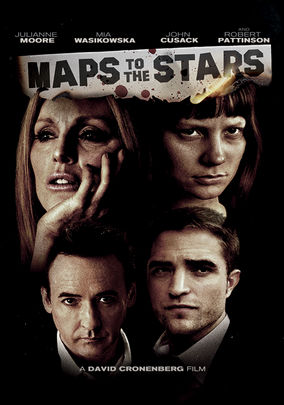
Maps to the Stars-2014

Maps to the Stars- 2014

Director David Cronenberg

Starring Julianne Moore, Mia Wasikowska

Scott’s Review #266

80013474

Reviewed August 14, 2015

Grade: A-

Maps to the Stars (2014) is a bizarre, unpleasant, film that is as dark and perverse as provocative and fascinating to observe and ponder.

It is more like an independent art film than a blockbuster Hollywood project and was made by an arguably mainstream director, David Cronenberg (Crash-1996, The Fly-1986), I am surprised it was able to be made on a large scale budget due to the negative portrayal of actors and celebrity types, specifically, troublesome starlet and child star.

One must be wary of biting the hand that feeds.

Maps to the Stars is a film where almost all the central characters are unlikable- difficult, unstable, self-absorbed, or all of the above.

The subject matter is ugly but fascinating to me.

The wealthy and glamorous are interesting and, at times the film is like a Greek tragedy containing Shakespearean elements- think Romeo and Juliet in an incestuous way times two. One must watch this film to see what I mean.

Hint- it contains the ick factor.

The plot centers on a Hollywood family, where the son is a famous child star and the primary breadwinner. They are the Weiss family- all struggling to either find success or hang on to it, all the while each of them is neurotic.

The father, Dr. Samuel Weiss, played by John Cusack, is a TV psychologist, hired by Havannah Legrand (Julianne Moore), a highly self-centered, aging actress, struggling to land a coveted role-playing her mother.

Her mother was a young actress in her day, who tragically died in a fire. Havannah despises her due to claimed childhood abuse.

Cristina Weiss (Olivia Williams) is Samuel’s wife. This controlling, ambitious woman strives to get the most money out of her son Benjie, a Justin Bieber-type character with a troubled streak.

Rounding out the family is Agatha Weiss, a troubled teenager, sent away for years after giving her brother pills and setting her parents’ house on fire. Though not directly related to Weiss’s, Havannah, and the limo driver, Jerome Fontana (Robert Pattinson) become heavily involved with the family as events transpire.

It reminded me of a myriad of other influential film directors in peculiar ways. I noticed elements of David Lynch’s Mulholland Drive (1992), for instance, in a dark clever mood and the obvious setting of Los Angeles- even the score is similar during parts of the film, as the moody monotone sounds played in the background.

The Ice Storm (1997), American Beauty (1999), and Magnolia (1997) also sprang to mind in their dark and strange worlds (Magnolia) and the inclusion of the dysfunctional family element (The Ice Storm and American Beauty).

Furthermore, to a lesser extent, I saw some Robert Altman ingrained in Maps to the Stars. These aspects are an enormous reason why I loved the film so much.

A prevalent theme throughout Maps to the Stars is one of burning- a victim of burning, a fire set, a character setting oneself on fire. Some characters see dead people. Havannah regularly sees her dead mother. Benjie sees a young girl whom he visited in the hospital before she died, her last wish of meeting the big star.

She suffered from non-Hodgkins lymphoma, who he foolishly thought had AIDS. He sees her in visions and tries to strangle her, instead of strangling an innocent living person.

The film is a weird trip, and the viewer will be dreading an oncoming dark moment.

When Benjie carelessly plays with a gun that he assumes is unloaded we know trouble will occur. He is showing off at an actor friend’s party along with equally obnoxious starlets while talking about poop, all selfish and wanting to party.

When Havannah belittles Agatha, her assistant, we see Agatha’s past anger come back into play as she slowly unravels with rage- Havannah is unaware of Agatha’s knowledge of her betrayal.

One small gripe is the continued use of gross toilet talk in multiple scenes including a raunchy discussion of a fan buying a well-known actor’s waste for thousands of dollars. What was Cronenberg’s motivation for this?

This was a silly, tasteless, unnecessary element of an otherwise great film.

Maps of the Stars (2014) is dirty and ugly but is also a quirky treasure about bad people in Hollywood. Unpleasant characters whom I could not take my eyes off of.

A brilliant film that delves into Hollywood shallowness and madness and does it in a daring, twisted, wonderful, sort of way.

The Gift-2015

The Gift-2015

Director Joel Edgerton

Starring Jason Bateman, Joel Edgerton

Scott’s Review #264

80046694

Reviewed August 9, 2015

Grade: A-

The Gift (2015) is a throwback to the type of psychological thriller made famous by Fatal Attraction in 1987 and similar films throughout their heyday into the 1990s.

An unstable psycho threatens a happy couple.

Interestingly, The Gift is similar in genre to a film also released in 2015, The Boy Next Door. The Gift is worlds superior to that film and contains surprises, frights, twists, and turns that I pleasantly did not see coming.

The film is not predictable which is refreshing in this particular genre.

Jason Bateman and Rebecca Hall star as Simon and Robyn, a successful young couple who have relocated from Chicago to sunny California, near Simon’s childhood hometown, to begin a new life with the intent of starting a family.

They soon run into a man named Gordo, played by actor/director Joel Edgerton, a high school chum of Simon’s from twenty years ago whom Simon barely remembers. Simon and Gordo plan to re-connect over dinner, but the audience can sense that something is not right with Gordo.

As Simon, Gordo, and Robyn get to know each other again, Gordo begins leaving pleasant little gifts on Simon and Robyn’s doorstep as well as showing up at their house unannounced, which is particularly unnerving to Robyn as she is home alone all day long. Simon is consumed with his new career and possible promotion.

Interestingly, their home is located in a secluded area.

The film soon reveals that Gordo was nicknamed “Gordo the Weirdo” in high school and that an incident involving Gordo occurred, though nobody seems to remember the exact circumstances.

Perhaps they choose not to remember?

The vagueness of this situation is appealing because the audience is sure that these circumstances will be revealed later in the story and play a large part in the climax, which it does.

We also learn that another incident took place with Robyn in Chicago and that she suffered a miscarriage. She does not drink and avoids pills. Could she be unstable, imagining things, or overly cautious?

It is revealed that she does not handle stress well.

A wonderful aspect of The Gift is its surprise factor. As the plot twists and turns, I switched alliances and wondered who the villain was. Gordo? Simon? Robyn?

Edgerton (along with a great acting performance) compellingly directed the film and was undoubtedly influenced by Alfred Hitchcock.

The camera angles and score are excellent in establishing the correct level of tension at just the right moment. In more than a few scenes the audience knows something will jump out at the screen, so there is anticipation, but when and how it will happen is a surprise.

Many scenes are when Robyn is alone, during the day thank goodness, and she hears a noise or notices the water running. These scenes are traditional fare in horror or the thriller genre but are well done in The Gift.

Simon is an interesting character. Sophisticated, educated, and with a high-level executive job, he has a strange fear of monkeys.

The past is a common theme of the film- past events encase the three lead characters leading to conflict and ultimately these events come back to haunt them. Most of Simon’s friends are unlikable and appear interested in style over substance. They seem drawn to Simon more for his success than because they care about him.

This contradicts his wife’s character. Robyn is down-to-earth, and kind, and does not place as much stock in wealth and achievements as she does with personality and being a kind individual. She and Simon bicker and disagree about Gordo and their conflict increases.

It is not often in films anymore that one is truly frightened and “jumps out of your seat”, but two intense scenes, one involving a dog, and the other a shower, made me jump, and the hairs on my arm stand on end. Everyone in the audience gasped together.

Now that is fun!

The only negatives in The Gift are continuity issues and the suspension of disbelief in some scenes. Without giving anything away, how is Gordo able to do some things he can do?

The Gift (2015) is an old-fashioned thriller with excellent acting, compelling characters, and a wonderful debut for Edgerton in the director’s chair.

The film will leave the viewer pondering moral questions, and relating to each of the three main characters.

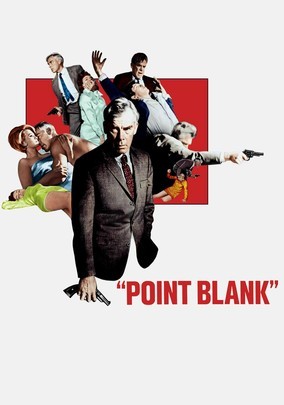
Point Blank-1967

Point Blank-1967

Director John Boorman

Starring Lee Marvin, Angie Dickinson

Scott’s Review #263

70033963

Reviewed August 8, 2015

Grade: B+

Directed by John Boorman, (later made famous for the masterpiece Deliverance in 1972), and based on the novel The Hunter, by Donald E. Westlake, Point Blank (1967) is a tense crime drama starring Lee Marvin as a man seeking revenge on those who have wronged him.

A criminal himself and involved in the mob world of deals and drugs, he is double-crossed by his partner, who takes off with his wife.

A relatively obscure film, Point Blank features obvious influences from the classics it preceded (The Getaway, 1972; Chinatown, 1974; The French Connection, 1971; and Dirty Harry, 1971) and contains some dynamic camera work and art direction.

In its day, it must have been quite a groundbreaking film.

The film begins muddled a confusing, catching the viewer off guard. We know nothing about any of the characters, who are suddenly introduced via flashbacks, interlaced with present and future scenes, so that chaos and tension fill the story immediately.

We know that someone has stabbed someone in the back, but we do not understand why or who the players are.

The film is set partly on deserted Alcatraz Island (the meeting point for a money drop, which we later learn), then moves to Los Angeles. Early on, we realize that Marvin’s character (Walker) has been tricked, shot, and left for dead by his partner Mal (John Vernon), who takes off with Walker’s share of cash…and his troubled wife Lynne.

Hell-bent on seeking revenge (and his money) on Mal and his wife (Lynne), he attempts to track the duo down using any means necessary, leading to the introduction of pivotal and mysterious characters such as Lynne’s sister Chris (played by Angie Dickinson), and Crime Organization leaders Carter and Brewster (played by Lloyd Bochner and Carroll O’Connor, respectively).

With little blood or overt violence, the film instead uses tense action scenes and a great style, and is told in a non-linear way.

One favorite scene involves Walker taking a new car for a test drive and interrogating the salesman for information. As he terrorizes the salesman, he repeatedly slams the vehicle into a pole using the car’s reverse and drive gears, increasing in intensity with each attempt by the salesman to avoid answering Walker’s questions.

Two other scenes that stand out and deserve mention are as follows: when a naked villain is nonchalantly tossed from a penthouse apartment to his death on the street, and subsequently becomes wedged under a passing car, the scene is as startling as it is well shot, especially considering the year was 1967.

In another scene, Lynne is at the beauty salon having her makeup and hair done by a stylist. Her face is captured in the mirror, and the camera shows a dozen or so images of the mirror layered on top of one another.

This looks great, inventive, and is a good example of some superlative camera shots that occur throughout the film.

A few interesting tidbits that I pondered following the film. Was the elevator scene containing Angie Dickinson (almost meaningless to Point Blank) the inspiration for the famous elevator scene from the 1980s Dressed to Kill?

Only Dressed to Kill’s director, Brian De Palma, would know the answer to that question.

How interesting to see Carroll O’Connor (later universally famous for portraying TV’s “Archie Bunker”) as a crime lord. Even though Point Blank was made before All in the Family premiered, it was tough to find him believable in this role.

Finally, I loved the scenes set high atop Los Angeles, in a gorgeous high-rise apartment- the sophisticated living room furniture arrangement and colors are great visual treats.

Taut, intense, and engaging, though admittedly a plot not always made crystal clear nor easy to follow, the film came along at a time when edgier, more experimental films were beginning to be released, which makes Point Blank (1967) a groundbreaking and influential film that undoubtedly helped bring about other crime dramas to follow.

Fifty Shades of Grey-2015

Fifty Shades of Grey-2015

Director Sam Taylor-Johnson

Starring Jamie Dornan, Dakota Johnson

Scott’s Review #262

80013872

Reviewed August 5, 2015

Grade: B-

To quote a humorous phrase I once coined years ago, when I decided to give in and see Fifty Shades of Grey (2015), despite negative reviews, “I was not expecting Citizen Kane” fit perfectly with this film as I pondered my review after the conclusion.

Based on the titillating book series by author E.L. James, the film is sudsy, steamy, and poorly acted. However, something is charming and sexy about the badness of it.

It’s not a terrible film, but the negatives outweigh the positives.

Dakota Johnson, daughter of Melanie Griffith and Don Johnson, and granddaughter of Hollywood royalty Tippi Hedren plays a shy literature student named Anastasia Steele.

She is pretty and grounded and meets and becomes enamored with a twenty-seven-year-old billionaire named Christian Grey after driving to Seattle to interview him for a sick friend.

The chemistry between the two is palpable and an instant romance ensues.

Christian courts Anastasia mercilessly, becoming somewhat controlling, and she is willing to be his “victim” as she adores his attention.

As the two get to know each other better, it is revealed that Christian is “dominant” and desires Anastasia to sign a contract, becoming his “submissive” and “belonging” to him. Anastasia is conflicted by this notion.

She loves Christian but wants a traditional romance with flowers and chocolates, something Christian has admitted he does not do.

I confess to having gotten caught up in the kinky romanticism of it.

The film has a smoldering, dreamlike style. The scenes in the “playroom” are hot and the film does its best to make the entire production erotic, but not going so far as to make it pure smut.

Boy meets girl, girl falls head over heels, boy conquers girl.

The film makes sure to portray Anastasia and Grey as complete opposites. He is wealthy, sophisticated, calm, cool, and collected while she is a struggling, naive girl ripe for the picking.

Perhaps this was part of her appeal to Grey.

The acting is not great, especially on the part of Johnson.

I did not find Jamie Dornan (Grey) to be so bad and he is likable enough to me. For the most part, the character of Anastasia irritates me, and I find her quite unlikeable.

Anastasia becomes enamored with Christian, allows herself to be pursued, showered with gifts, considers, then more or less accepts his offer to be his “submissive”, then gets furious and dumps him.

Huh?

Fifty Shades of Grey is told from a female point of view as evidenced by the marketing and the strategic opening on Valentine’s Day weekend.

I sense that the character of Anastasia is made to be sympathetic while Grey is drawn to be the cad and the bad character.

A brief backstory is mentioned as to what turned him into a dominant male who likes to have females submit to his desires coupled with his lack of desire for any affection, but this was not too deeply explored.

The film does not want the audience to really “get him” or delve too deep into the psychological reasons, instead of going for the kinkiness and the female side of the story.

A poorly structured film that made a ton of money and will undoubtedly spawn at least another sequel, Fifty Shades of Grey (2015) is a guilty pleasure and one I shamefully confess to having somewhat enjoyed.

Oscar Nominations: Best Original Song-“Earned It”

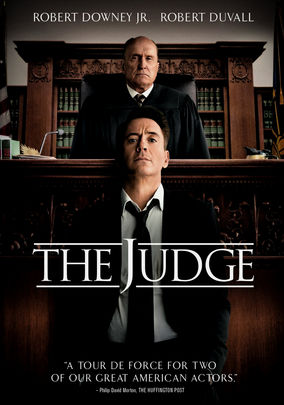
The Judge-2014

The Judge-2014

Director David Dobkin

Starring Robert Downey Jr., Robert Duvall

Scott’s Review #261

70305896

Reviewed August 2, 2015

Grade: B+

The Judge (2014) is a formulaic courtroom drama we have all seen many times before, but I found it rather enjoyable.

The main reason for this is the casting of Robert Downey Jr. and Robert Duvall in the pivotal central roles. The two actors play estranged father and son.

The clichés are numerous, but the excellent acting makes the story feel fresh, fun, and compelling, if not innovative. As seen by only a few, The Judge was on my radar only because of Duvall’s Oscar nomination for his role.

Hank Palmer (Downey Jr.) is a big-shot attorney from Chicago. Highly successful, he is selfish, driven, and a downright prick.

Going through a messy divorce with his gorgeous, athletic wife, he has a close bond with his daughter, despite not being home very often.

Suddenly, Hank’s mother dies tragically, and he must return to small-town Carlinville, Indiana, a place he despises, not simply because the town is in the sticks, but because he has bad memories.

When he arrives, he reconnects with his two brothers and his father (Duvall), the local judge. While staying at the family house, Hank once again butts heads with his father and runs into an old girlfriend (Vera Farmiga), who now owns the local diner.

On his way out of town for good, Hank is asked to defend his father when he is arrested and charged with murder.

The Judge is a family drama that contains suspense and a few twists.

The film reminds me of a slew of 1990s-era courtroom dramas based on John Grisham novels (A Time to Kill, The Client, The Firm), so I expected a bland, dated film.

I love the chemistry between Downey Jr. and Duvall, which I think is the film’s strongest aspect, along with the family-style drama and the trials and tribulations thrown in.

Hank is smarmy and ruthless, but has a humorous side and tells it like it is. I smiled at his wry wit.

Judge Parker is equally stubborn, and the battles are wonderful to watch. Conversely, the film also has tender bonding moments between the two men, which are sentimental and warm.

One scene, in particular, is tender and heartbreaking: one a cares for the other while he’s sick.

An interesting aspect is Indiana’s small-town sense of community, which I found charming. Everyone gravitates towards the cute diner in the center of town owned by Hank’s high school sweetheart.

The film has a nice, wholesome, small-town appeal.

I half expected a county fair or apple-pie-baking scene.

The film feels wholesome and comfortable- a slick, mainstream drama. Movie comfort food, if you will.

The relationships among the three brothers- Hank, Glen, a middle-aged man regretting never having moved from Carlinville, and Dale, a sweet-natured autistic man, determined to one day become a filmmaker- are interesting.

They are so different but stick together, bicker, and bond. Similar to real-life families.

The negatives are that the courtroom scenes sometimes run too long, and the film brings nothing new or exciting to cinema, playing it safe throughout.

Still, I was pleasantly surprised to be treated to a film above mediocrity, though it isn’t a reinvention of the wheel.

It is worth seeing for the simmering performances of the entire cast, especially film stalwarts Duvall and Downey Jr., who bring life and wit to an otherwise traditional film.

Oscar Nominations: Best Supporting Actor-Robert Duvall

Unbroken-2014

Unbroken-2014

Director Angelina Jolie

Starring Jack O’Connell

Scott’s Review #260

70305949

Reviewed August 1, 2015

Grade: B

Unbroken (2014) tells the true story of Olympic athlete Louis Zamperini, a runner during World War II, who also served in the military during this tumultuous time in history.

His story is one of bravery, courage, and endurance, as he survives a hellish experience in a Japanese prisoner-of-war camp after having crashed in the Pacific Ocean, stranded for forty-seven days as if that were not enough to break a man.

Mainstream Hollywood fare to the hilt, this film is surprisingly directed by Angelina Jolie (a woman) and written by the Coen brothers, who usually deliver less traditional, quirkier fare than this.

Jolie directs what is arguably a “guys movie” that contains very few women in the cast, and the ones who do appear are either loving mothers or giggling schoolgirl types, so the big names associated with Unbroken surprise me.

I would have taken this work as a Clint Eastwood film.

Unbroken, expected to receive several Oscar nominations, was shut out of the major categories.

Visually, Unbroken is slick, glossy, and shot very well- it looks perfect. The cinematography, sound effects, and costumes look great.

The cast of good-looking young men looks handsome even when battered, bruised, and half-starved. While this is a compliment in a way, it’s not one.

Unbroken lacks any grittiness and plays it quite safe. Even the scenes of abuse and beatings lack an edge to them.

This isn’t to say the film isn’t good. It is good.

I found myself inspired by the lead character, Louis, played by Jack O’Connell, for his resilience during his ordeals. O’Connell gives a very good performance as his motto, “If I can take it, I can make it,” is repeated throughout, and who will not cheer at his accomplishments?

Zamperini, who has traditional Italian parents who relocated to the United States, is strict but fair. Louis’s older brother, Peter, is his best friend and is the person who has the most faith in him.

At first, Louis is on the verge of becoming a punk and getting into trouble with the law, if not for his brother’s interference, which gets him interested in running.

As the years go by and war erupts, Louis embarks on a tour of duty in the military, and his plane crashes in the water, providing yet another test of courage and stamina. Louis is strong and always the leader of the group he’s with.

The scenes of the three survivors stranded on the raft for days become slightly tedious, but perhaps this is the intention, as they eat raw fish and raw birds to survive.

Much of the remaining action is set in two Japanese war camps as Louis (and others) struggle to survive until the massive war has ended- they do not know if they will live or die.

The central antagonist- a vicious Japanese sergeant named “Bird”- perplexed me.

Blatantly targeting Louis and administering cruel beatings and heaping tests of strength upon Louis, presumably out of jealousy because Louis was an Olympic athlete, why did Bird not simply kill him?

His motivations were also odd- in one scene, Bird tearfully tells Louis that he knew they would be friends from the beginning and seems to admire him. Bird’s father, going by a photo, seems a hard, mean man.

Is this why Bird is so vicious? Bird’s character is not well thought out.

Also, every Japanese character is portrayed in a very negative light, which, sadly, is common in war movies. Surely, despite being a war, there had to have been a few Japanese people who were not cruel.

Character development and depth are not this film’s strong suit.

Unbroken is a good, solid war drama with an inspiring message of triumph, faith, and determination.

It’s a positive message for viewers of all ages.

The abuse/torture scenes are tough to watch, but the result is a feel-good story.

The snippets of the real Louis Zamperini are wonderful to watch.

Oscar Nominations: Best Sound Editing, Best Sound Mixing, Best Cinematography

The Passenger-1975

The Passenger-1975

Director Michelangelo Antonioni

Starring Jack Nicholson, Maria Schneider

Scott’s Review #259

70042799

Reviewed July 19, 2015

Grade: A

A true art film in every sense of the word, The Passenger (1975) is a thinking man’s film, not for those content to munch on popcorn and escape the day’s stressors.

It’s custom-made for a film fan willing to ponder its meaning, revel in its slow pace, and appreciate it as an art form.

The Passenger is tough to “get” for most of its over-two-hour running time, but its complexities are also its most beautiful qualities.

To say that the film will leave the viewer with questions is quite an understatement, but it is pleasing to analyze and draw conclusions about its meaning.

Michelangelo Antonioni directed this film and is well known for Blowup (1966) and Zabriskie Point (1970), neither of which I have seen as of this writing.

Jack Nicholson stars as a journalist named David Locke, who is on location in Africa (specifically the Sahara Desert in Chad).

David’s assignment is to produce a documentary film. While there, he mysteriously assumes the identity of a businessman named Robertson, who he finds dead in his hotel room.

This task is easy because David and Robertson look very much alike. As events unfold, it becomes clear that Robertson is involved in arms dealing and smuggling related to the ongoing civil unrest in the country.

Flashbacks reveal David’s former life, including his friendship with the businessman and his relationship with his wife, Rachel, and these scenes are interwoven with the current action until the narrative becomes more linear.

The film is complex, to say the least. The initial scene, in which David spontaneously decides to switch identities, is excellent. We wonder what David’s motivations are, and what is the appeal of his taking over another man’s life? Who is the man? Why is David so unhappy in his own life?

The film succeeds immeasurably because the plot is not simply told to the audience, as in so many other mainstream films. Events seem genuine and not forced for plot purposes.

In the current time, wherever in London, Rachel sadly mourns the assumed “death” of her husband David, though we learn that Rachel has secrets of her own she has been hiding and suffers from tremendous guilt.

To further complicate matters for everyone, she is attempting to find the businessman, since she has learned that he was the last person to see her husband alive. Also mixed into the story is a mysterious young woman whom David meets when the story moves to Barcelona, Spain.

What makes The Passenger so compelling to me is its intricacies- story as well as camera styles. The seven-minute-long shot towards the end is brilliant filmmaking, and the climax is quietly intense.

The camera focuses on a hotel room, then switches to the parking lot, and returns to the hotel room. I was transfixed by the character of David, struggling to empathize with him while all the while enjoying an intelligent character study interwoven with a story of political intrigue.

I do not claim to understand everything about The Passenger and will surely need more viewings to make sense of it all, but the film fascinates me.

In a time of mediocre films, how refreshing to stumble upon a forgotten relic from 1975 and have a renewed appreciation for film as an art form.

Love and Mercy-2015

Love and Mercy-2015

Director Bill Pohlad

Starring John Cusack, Paul Dano

Scott’s Review #258

80017274

Reviewed July 17, 2015

Grade: B+

The life and times of the Beach Boys’ famous and troubled lead singer, Brian Wilson, is finally played out on the big screen (apparently many attempts were made to make a film) as Love and Mercy (2015) chronicles his difficult upbringing, unrivaled success, and his interesting life in later years.

He suffered from schizophrenia, traveled down a paranoid, nervous path, and was manipulated by a family friend who served as his doctor and main caregiver.

Thankfully, he weathered the storm due to his future wife, and remarkably still performs and entertains in 2015.

His musical career began in the 1960s.

The biopic features many well-known Beach Boys tunes to hum along to and be entertained by. It’s not a happy film nor a downer either.

It’s somewhere in the middle of the two and the life story of a rock star.

There is a risk in this. If the film is too sentimental it will fail. Love and Mercy do it correctly.

The film is not a sing-along, trip-down-memory lane film for lighthearted film fans. Rather, it is dark, murky, and troubling at times (the psychedelic scene when a young Brian is imagining different voices and noises in his head is rather frightening).

Wilson is played by two actors, first in the 1960s and later in the 1980s.

Paul Dano stars as a young Wilson in the early stages of his career, filled with passion for life, art, music, and talent beyond belief, but clearly in the onset stages of paranoia, thanks to his critical father. He is a demanding, angry man, possibly envious of Brian’s talents as a songwriter, who always wanted more from Brian.

Wilson’s father managed Brian and his brothers success but at a huge cost, and was ready to bail when the “next big thing” came along.

Miraculously, through conflict with his father and other members, Wilson completed the Beach Boys masterpiece, Pet Sounds, a groundbreaking album from the late 1960s. The film shows the struggles faced to achieve this success.

In later years John Cusack takes over the role of Brian. By this point in his life, he is damaged and he is a full-blown neurotic, insecure, and dependent on his psychotherapist, Dr. Landy, brilliantly played by Paul Giamatti.

Landy has control of Wilson’s assets and will destroy anyone who interferes in this.

The scenes in which he screams at and berates a drugged-out Brian Wilson to create music are tough to stomach. When Wilson romances their future wife Melinda Ledbetter, played by Elizabeth Banks, she ultimately saves his life as she is determined to rescue Brian from the wicked abuse and adjust the toxic levels of medications he was kept on.

I left the movie theater unsure of the factual accuracy and pondered the following questions.

Did Brian’s wife swoop into his life and “save” him as neatly as the film explains? How instrumental was the maid in this process? Was the Wilson brothers’ father as much a monster as the movie portrayed him? Was Giamatti’s vicious psychotherapist role true to life or were the aspects of Love and Mercy embellished ever so slightly for moviemaking magic?

One wonders, but from a film perspective, Love and Mercy (2015) works well as a work that takes risks, does not go for softness or niceness, and gives a character study that is quite admirable.

Independent Spirit Award Nominations: Best Supporting Male-Paul Dano

Cake-2014

Cake-2014

Director Daniel Barnz

Starring Jennifer Aniston, Adriana Barraza

Scott’s Review #257

80017263

Reviewed July 14, 2015

Grade: B+

Cake (2014) is a film about a woman suffering from chronic physical pain and depression that she constantly battles after a terrible accident that she was involved in.

Jennifer Aniston gives a wonderful performance as Claire Simmons, a grumpy, sarcastic, bitter victim of unimaginable loss. Aniston’s performance is the best part by far.

It is interesting to note that Aniston Executive produced this film.

Similarly and somewhat sadly, Reese Witherspoon had to produce her own 2014 film (Wild) centered on a female role for both women to showcase their powerful acting chops. Too few films about women are made these days unless female star power is used, which is too bad.

Claire has been through hell and back.

As the story opens, Claire sits angrily in a support group filled with other women with problems. One of the women, Nina, (played by Anna Kendrick) has just jumped off of a freeway overpass to her death—a giant photo of her glares jarringly at the other women.

When Claire prods about the details of the death and uses sarcastic tones, she is politely asked not to return to the group by the lead counselor, Annette, (played by Felicity Huffman).

Claire returns to her well-maintained Los Angeles home and the audience is introduced to her well-meaning housekeeper and confidant, Silvana, played by Adriana Barraza. Barraza herself gives a powerful performance.

Nina appears throughout the remainder of the film in visions as Clare debates suicide.

Let me discuss Jennifer Aniston’s performance in particular. I thought it was amazing and she was shamefully overlooked for an Oscar nomination.

She was superior to at least a couple of the other Best Actress nominees from 2014 (Felicity Jones immediately comes to mind as one).

Her character of Claire starts as a bit of a shrew but gradually becomes quite sympathetic as the story becomes layered and the audience gets to know what makes her tick.

We do not know how she came to be in her predicament initially. We know she was in a terrible accident, but it slowly takes time for all of the details to emerge. We only know she is in pain and angry. Claire’s relationship with Silvana is an interesting one.

They spar, Claire takes Silvana for granted at times, but throughout the film, a close friendship emerges between the women. In a touching scene, they hold hands as they sleep.

Two scenes in particular are heartbreaking and honest. A man played by William H. Macy emerges on the doorsteps of Claire’s house and she is engulfed in rage at his appearance.

The power that Aniston emits in this scene is unrivaled. In another scene she sees a portrait hanging on her living room fireplace mantle given by a friend- she bursts into tears and sobs emotionally. At this point, the plot makes more sense and we feel Claire’s raw pain.

The subject matter of depression and suicide is not a cheery one, and Cake delves deeply into this territory. The film is a bit of a downer, slow, and, at moments, drags a bit, and teeters on the verge of a lifetime television movie (yikes!), but MUCH better than that thanks to Aniston’s compelling portrayal.

With a lesser actress, the film might have felt watered down and safe.

Some light moments fail. For instance, when Claire “blackmails” Annette and bribes her with vodka for the address of Nina, this seems very trivial and silly.

Thanks in large part to a gripping performance by one of Hollywood’s underrated talents, Cake (2014) takes a film on the border of being one-dimensional to a grander level of dynamic acting by its leading lady.

A supporting cast of similar talents helps the film rise above the mediocrity it may have been if served by lesser casting choices.

The Nanny-1965

The Nanny-1965

Director Seth Holt

Starring Bette Davis

Scott’s Review #256

70089620

Reviewed July 11, 2015

Grade: B

The Nanny is a 1965 Hammer productions thriller starring legendary film icon Bette Davis as a mysterious nanny caring for a ten-year-old boy named Joey.

Joey has recently been released from a mental institution and returned home to resume everyday life, but has he been “cured”?

There is obvious tension between Joey and Nanny, but the audience doesn’t know what that tension is precisely. Why do they dislike each other? Why is Joey afraid of her?

As the plot unfolds, the suspense and tensions thicken as various events occur and Joey’s parents and Aunt Pen are further fleshed out. Past events are revisited, and the story becomes thrilling.

At one point, long before Joey’s return home, his younger sister has drowned, and the circumstances are vague. It has devastated the family, including Nanny. Joey has been blamed for her death, though he insists that Nanny is the culprit.

Nobody except the neighbor girl believes Joey, and the audience wonders who to believe and who to root for: Joey or Nanny. Davis, like Nanny, brings a warmness to her character, but is she sincere? Is it an act? Is Joey a sweet boy or maniacal?

These questions race through the audience’s minds as the film progresses. When Virginia, the mother, eats tainted food, the obvious conclusion is that the Nanny poisoned it since she prepared it. But why? Did she do this?

As the plot is slowly explained, there are a few chills, though the ending is not too surprising.

Any film starring Bette Davis is a treasure, though admittedly, it is not her finest work. Still, her finest work is challenging to match.

The Nanny is a good film, though not great. It is shot in black and white, which is a nice touch for a thriller.

The main reason to watch Davis’s performance is that it is always mesmerizing. Traditionally playing gruff, mean, or bitchy parts (especially in her later years), The Nanny allows Davis to play a sympathetic role.

She is seemingly sweet, proper, well-organized, and a perfect nanny on paper.

The role of Virginia, played by Wendy Craig, is a bit too neurotic and slightly over-acted. She is rather one-note as the fretting mother worried about her son. The character of the father is also a bit one-dimensional.

The Nanny is more of a classic thriller from the 1960s that is often lumped together with some of Bette Davis’s other films around the same period (Dead Ringer-1964, Hush, Hush, Sweet Charlotte-1964, and Whatever Happened to Baby Jane? -1966), and are in large part superior to The Nanny. As a stand-alone, it is a decent film.

Welcome to my blog!1,552 reviews posted so far! I'm Scott Segrell and I reside in Stamford, CT. My site features hundreds of film reviews I have written since I launched the site in 2014. I hope you enjoy reading my latest reviews or searching for your own favorites to see if we agree. Please see my Recent Posts section, and don't forget to utilize the tags and category links.