Category Archives: Kristen Stewart

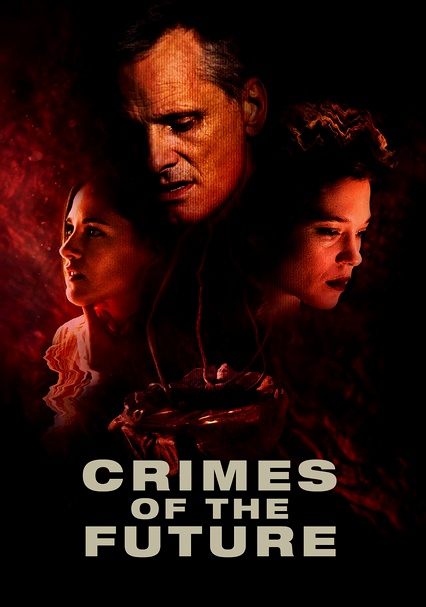
Crimes of the Future-2022

Crimes of the Future-2022

Director David Cronenberg

Starring Viggo Mortensen, Léa Seydoux

Scott’s Review #1,295
Reviewed September 2, 2022

Grade: B

Being somewhat familiar with the work of director David Cronenberg and the macabre and unsettling elements he incorporates into his films, I had a fair idea of what type of experience I was in for.

There was anticipation as I slipped the Blu-ray of Crimes of the Future (2022) into the player.

He’s responsible for such peculiar pleasures as Eastern Promises (2007), an annual Christmas time watch for my husband and me, and A History of Violence (2005) a gangster-flavored effort.

Cronenberg frequently teeters between psychological horror and science fiction, though he has dabbled in other genres.

Stalwart actor Viggo Mortensen once again graces the screen in one of Cronenberg’s films and leads the charge as the main protagonist in Crimes of the Future.

Visually, the film is astounding with creepy shapes and visceral red images floating about, mainly in the opening credits. It’s riddled with a subdued and mellow mood, taking its time to get going and allowing for somber tones and textures.

It’s a challenging and weird watch, but somehow slowly lures the viewer into its confusing web.

Be warned, though, that the story is inexplicable and impossible to figure out. I even read a post-film synopsis and was still unclear how the puzzle pieces are supposed to come together. But maybe they aren’t.

Crimes of the Future is the type of film that is recommended to be digested and left to ruminate in one’s inner being. The translation is not to overthink the events but rather to enjoy what is being served.

Sometime soon, the human species will have adapted to a new synthetic environment, causing bodies to undergo new transformations and mutations. With his partner, Caprice (Léa Seydoux), Saul Tenser (Mortensen), a celebrity performance artist, publicly showcases the metamorphosis of his organs in avant-garde performances.

In simpler terms, his body is cut open for all to see.

An odd character named Timlin (Kristen Stewart), an investigator from the National Organ Registry, obsessively tracks their movements. A mysterious group exists with a mission to use Saul’s notoriety to shed light on the next phase of human evolution.

The summary is tough to write and even more challenging to explain so that I won’t waste space on it. I’ll leave it to say that the above is the best that can be presented, and that only a fascinating story element is present in the events.

Something about science fiction and the future typically evokes mystique and wonder.

I could watch Mortensen in pretty much any film, which is the main reason to see Crimes of the Future. The actor is so keen on choosing just the right roles for himself, and each is so different from the last.

Comparing his recent films, such as Captain Fantastic (2016), Green Book (2018), and Crimes of the Future, reveals that the actor continues to challenge himself by exploring the depth of each character, rather than capitalizing on name recognition to secure a hefty paycheck, like other similarly aged Hollywood actors.

I won’t name names, but Liam Neeson could take a note or two from Mortensen.

Seydoux, a French actress, pairs well with Mortensen. She possesses a sophisticated European vibe that translates well within this distant future. She is sexy, and because of the subject matter, this is crucial to the film’s visual style.

I’m not quite sure what to make of Kristen Stewart as the nutty and nerdy Timlin, but it’s a shocking follow-up to a fabulous portrayal of Princess Diana. As she speaks rapidly with timidity, it’s a particular role, but it’s nice to see Stewart continue to go with edgy roles.

Because it’s Cronenberg, Crimes of the Future (2022) is cerebral and provocative with a fleshy and grim style. I’d expect nothing less from the director, but would have preferred a more cohesive package.

Ultimately, I couldn’t fully grasp the film, which makes it difficult for me to recommend it thoroughly.
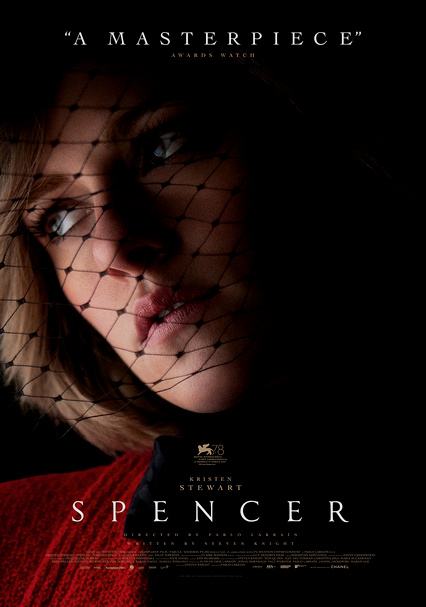
Spencer-2021

Spencer-2021

Director Pablo Larraín

Starring Kristen Stewart, Timothy Spall

Scott’s Review #1,193

Reviewed November 7, 2021

Grade: A

In the 2020s, there has been a sudden flurry of depictions of and attention given to Princess Diana, a tragic figure in British royalty who came to an untimely death in 1997.  The Netflix series The Crown and a documentary immediately come to mind.

While they offer tremendous offerings, they often stay on the mainstream or historic course.

But Director Pablo Larraín presents a daring and rather unpleasant portrayal of a miserable Christmas weekend the Princess spent with the royal family in 1991, a time when her marriage to Prince Charles had reached the point of no return.

Spencer (2021) is a brilliant art film focused on the troubled young woman’s dealings with her children, her eating disorder, her loneliness and despair, and, of course, relationships with the royal family.

Kristen Stewart delivers a career-defining performance as Diana and bravely puts on full naked display the shocking reality of the real-life figure’s innermost thoughts and demons.

Larraín prefaces the film with the sentence ‘a fable about a real-life tragedy’ or something to that effect.

The crumbling marriage of Princess Diana (Spencer) and Prince Charles (Jack Farthing) has sparked rumors of infidelity and an impending divorce. Still, peace is demanded during the Christmas festivities at the Queen’s Sandringham Estate.

The lavish spread of magnificent food, pheasant hunting, and family photos would be the dream of many. Still, Diana is counting down the minutes until she can escape the dreary experience.

Restless, Diana imagines her life without the royal family and yearns to escape her trapped life. She fantasizes, binges, and purges while spending time with her children, clinging to her friend and Royal Dresser, Maggie (Sally Hawkins), and befriending the kindly Equerry, Major Alistair Gregory (Timothy Spall).

He leaves a book about Anne Boleyn, the tragic wife of Henry VIII, which Diana becomes obsessed with.

My two biggest takeaways are Stewart’s performance and the musical score.

Stewart has long attempted to separate herself from her household name-making performances as Bella Swan in the Twilight Saga film series (2008-2012). Several supporting roles in independent features, such as Still Alice (2014) and Cafe Society (2016), followed, but with Spencer, she hits the jackpot.

Her vulnerability and insecurity infuse themselves into Diana with ferocity and power, to the extent that I became immersed in her mannerisms as much as in the words she spoke.

A long and painful dinner scene (my favorite scene) with no dialogue features a close-up of Stewart as she angrily glares at several members of the dinner party. Her disgust at both them and the life she now leads is apparent.

Stewart displays how much Diana desired to escape from her cage, where she felt as trapped as an animal would.

Jonny Greenwood crafts a haunting and powerful musical score. He is the lead guitarist of the alternative rock band Radiohead and has scored numerous film scores.

In the sequence listed above, he employs bombastic and eerie stringed instruments, accompanied by a powerful drum beat. Later, as Diana wanders the grand halls, he expresses her frustration with his music.

It’s an essential part of the film.

To lighten the mood, the 1986 hit song “All I Need Is A Miracle” by Mike and the Mechanics is played while Diana and her boys drive in their car on a sunny day, singing along.

Spall and Hawkins play vital supporting roles as Diana’s only true allies. Spall is quiet and reserved, but reveals a great deal through his facial expressions, as his sympathy for Diana is apparent. In a surprise twist, Hawkins’s Maggie admits both her sexuality and her love for Diana as the two grow even closer.

Diana was a powerful ally to the LGBTQ+ community during a time when few were, and the film serves as a poignant reminder of her open-mindedness and heart.

Spencer (2021) is not the crowdpleaser some, including myself, would have expected, and may even turn off some viewers with its depressing and embroiled cinematic fury.

However, it’s far superior to a popcorn feature, offering a more profound emotional experience and an exceptional psychological appeal that transports us into an imaginative state.

Oscar Nominations: Best Actress-Kristen Spencer

Adventureland-2009

Adventureland-2009

Director Greg Mottola

Starring Jesse Eisenberg, Kristen Stewart

Scott’s Review #1,066

Reviewed October 1, 2020

Grade: B-

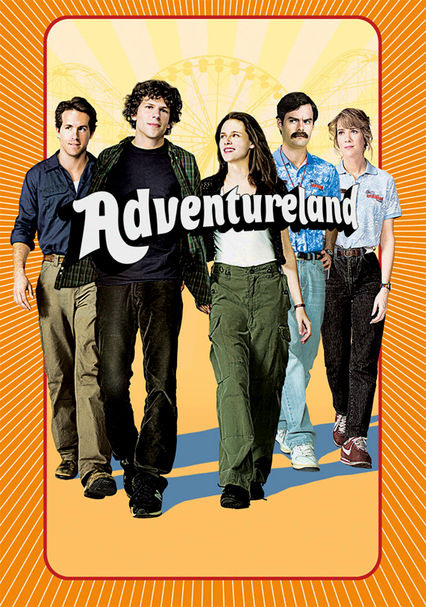
Adventureland (2009) is a cute film. That may seem like a compliment, but it’s not. There is nothing wrong with this film, but it’s a rather safe experience.

In a word, it is fine, nothing more, nothing less.

It plays like a romantic comedy and is mixed with a coming-of-age theme about two young adults merging from kid to adulthood. It’s a story that most of us can appreciate though it’s been done too many times in cinema for this film to do much more with.

The selling point is the excellent acting.

The theme park (aka Adventureland) and the nostalgic 1980s time is a nice touch though it feels like a 2009 film with the actors fitted into retro costumes and hairstyles.

Greg Mottola directed Superbad in 2007 so you can see the influence. He has a knack for directing films with a light comedic touch that will appeal to young adults going through some angst or young, blossoming feelings of love.

The stars of the film, Jesse Eisenberg and Kristen Stewart, terrific actors in their regard, have little chemistry together and that weakens the picture. They are helped immensely by a talented supporting cast, who pick up the slack and improve the film.

Bill Hader, Kristen Wiig, Wendie Malick, and Ryan Reynolds give a comic boost to the events. Unfortunately, despite positive trimmings, the film feels like your standard, every day, independent comedy with little left to separate it from other contemporaries.

It just has big stars.

Likable James Brennan (Eisenberg) anticipates a fabulous trip to Europe after graduating from Oberlin College, having earned it for his achievements.

Unfortunately, his parents Mr. and Mrs. Brennan (Jack Gilpin and Malick) break the bad news to him. They are in dire financial straits and can no longer support him. He must get a part-time job immediately.

The disappointing news disappointed me as well. I was savoring a nice adventure in London, Paris, and Rome.

Sadly, the rest of the film takes place in an amusement park in Pennsylvania.

Predictably, Mottola, who wrote the screenplay as well, offers banal and stereotypical characters such as Mike Connell (Reynolds), the resident mechanic, who is a rival for the affections of Em (Stewart), the love interest of James.

Thrown into the mix are various characters who are a bitch, a sarcastic college student, and a nerd. And, for good measure, James is a virgin. Naturally.

The film nosedives with some slapstick humor and misunderstandings worthy of American Pie (1999).

When Adventureland was made Eisenberg was on the brink of breaking out into a fantastic role in The Social Network (2010) that garnered him an Oscar nomination and credibility.

Stewart, meanwhile, was in the middle of her Twilight (2008-2012) years which made her a household name but was undoubtedly creatively very unfulfilling.

This film is a reminder that actors need to work and make the best of the material they are given.

Truth be told, the main attraction of watching Adventureland is to sit back and admire what was to become of Stewart and Eisenberg. Since the film’s release in 2009, they have traversed meatier and better projects.

Eisenberg has a Tom Hanks or James Stewart likeability. He is someone to whom the average young male can relate and the problems that James must face could easily be challenges the viewer might also have.

In the case of Stewart, what a star this girl is with the right roles. Since 2012 she has declined roles in big-budget films in favor of independent productions for the next few years. She took on a terrific supporting role in the drama Still Alice (2014) as a troubled daughter.

Still young, the future looks very bright for the talented actress.

But, back to Adventureland (2009). This film is only suggested for a glimpse at the early work of Eisenberg and Stewart. Two young stars who went on to enormous critical cinematic success.

Lizzie-2018

Lizzie-2018

Director Craig Macneill

Starring Chloë Sevigny, Kristen Stewart

Scott’s Review #925

Reviewed July 31, 2019

Grade: B+

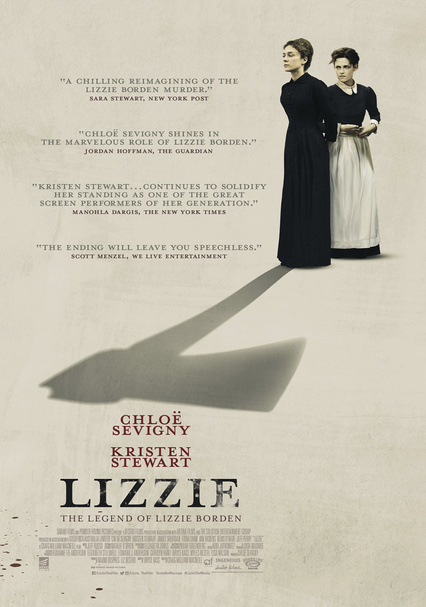
Lizzie (2018) is an odd and macabre interpretation of the life and times of the infamous Lizzie Borden, who was accused and acquitted of hacking her father and stepmother to bits with a deadly ax.

This offering is shrouded in controversy because of inaccuracies and interpretations of the events, specifically Borden’s sexuality, which is called into question. The film is quiet and a tad too slow, but it thunders to a grand climax, more than making up for any negatives.

The casting of its leads is perfect and key to success.

Thirty-two-year-old Lizzie (Chloë Sevigny) lives with her domineering and affluent father, Andrew (Jamey Sheridan), and rigid stepmother, Abby (Fiona Shaw).

Despising both, she lives out a lonely and depressing existence, her only outlet being occasional evenings at the theater. When an Irish immigrant, Bridget Sullivan (Kristen Stewart), moves into the Borden residence to work as a servant, the women form a strong bond, especially after Andrew abuses her.

Sevigny, one of my favorite modern actresses, possesses an astounding range in the myriad of characters she has played in her long career.

Debuting to the masses in the critically acclaimed and depressing Boys Don’t Cry (1999), she has churned out a multitude of independent features portraying one oddball character after another and deserves the strong influence she has achieved over the years.

Director Craig Macneill makes interesting choices with his film, which may or may not please audiences expecting a numbers horror offering. He dives into psychological thriller territory with more of a character study approach that provides layers to the finished product.

Sevigny is center stage, and plenty of camera close-up shots offer an introspective analysis of her feelings rather than from her parents’ perspective. Instead of a crazed killer spontaneously committing the crime, she is careful and calculating in her plan.

Macneill presents Lizzie as the victim and Andrew and Abby as the villains. This is to assume that Borden committed the crimes, which the film never doubts.

Historically, people assume that this is the truth, but Lizzie was set free by a jury refusing to believe a woman of such means would commit such a heinous crime. I wonder if Macneill directed the film with a bit of a smirk at this ridiculous decision of the times when the woman enjoyed the murders.

At the end of the film, what happened to Lizzie and Bridget is explained, which is a good decision and wraps the film up nicely.

Powerful is the quiet subtext that gives a moody and foreboding quality. I adore slow-moving films provided the reward is worth the wait and Lizzie sucker punches once the events begin rolling along.

Another positive is the gnawing feeling of terrible things about to happen but unsure when or how the attacks will occur. Most viewers watching this film will know the context and the reported murders committed.

The atmospheric additions succeed as the late eighteenth-century costumes and daily living are believable. The lavish Borden house is well-kept and brightly lit, offering a friendly New England feel.

Finally, the creaks and noises throughout the house perfectly encompass the danger lurking behind corners, and the fun is in wondering when Lizzie will strike.

Since the film moves back and forth through time, we know she will strike.

The film’s best work is in the relationship between Lizzie and Bridget. Sevigny and Stewart dazzle together with an unleashed chemistry that nearly rivals a similar dynamic seen in 2003’s Monster.

As with Aline Wuornos and Selby, Lizzie is dominant, and Bridget is submissive, following her lead. Both women share a lesbian relationship, and neither pair achieves happiness after the film.

A film sure to fly under the radar and likely to be forgotten before long, Lizzie (2018) is worth the effort. A spooky and controversial interpretation of the events leading up to, during, and after one of the most notorious crimes in United States history is dissected and analyzed from a human perspective.

Macneill makes Borden less maniacal and more sympathetic than some may prefer. He does a fine job and deserves praise for a rich story.

Café Society-2016

Café Society-2016

Director Woody Allen

Starring Jesse Eisenberg, Steve Carell

Scott’s Review #462

80106775

Reviewed August 11, 2016

Grade: B+

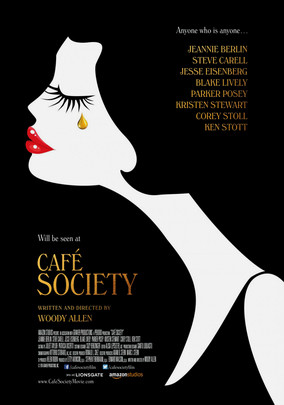
Having received sub-par reviews but wanting to see this film for myself, as it is a Woody Allen film, and I have yet to see an Allen film I did not like, I traversed to my local theater to see this flick.

I was not disappointed, though others did not share my opinion.

To love Woody Allen films is to love quirky characters who are either neurotic, damaged, or, more often than not, both.

Also notable to Café Society (2016) is the stellar cast of who’s who, many in minor cameo roles, another trademark of Woody Allen films.

Marisa Tomei, Daniel Radcliffe, and television stars Anna Camp (True Blood) have tiny roles, as do stars such as Sheryl Lee (Twin Peaks) and Tony Sirico (The Sopranos).

Additionally, Woody Allen himself narrates the film- a highlight.

The main stars of Café Society are Jesse Eisenberg and Kristen Stewart, both ideally cast.

The setting (which I adored) is 1930s Hollywood, and the action traverses between California and New York City, another common bond in Allen’s films.

Eisenberg plays Bobby Dorfman, a Jewish son of a working-class jeweler who has many siblings. Tired of New York, he flies to Los Angeles to obtain work with his hotshot Uncle Phil, played by Steve Carrell, who knows every celebrity.

There, he meets Vonnie (Stewart), and they fall in love, Bobby unaware of her on-and-off love affair with Phil.

The set and costume designs are to die for, and as a fan of this glamorous period in history, I find it an extraordinary visual treat.

Café Society is a prime example of a film that feels authentic to its time rather than appearing staged with actors merely dressed up in appropriate attire. This is tougher to achieve than one might imagine.

Despite contrary opinions, I enjoyed how most characters were wishy-washy and unsure of their motivations or feelings toward others.

Vonnie loves Phil, and then she warms to Bobby, who has been in love with her since their first meeting. She innocently shows him around Hollywood’s palatial mansions.

She is honest with Bobby but then makes a decision and becomes everything she once despised about Hollywood: a shallow, trophy wife.

Ironically, Bobby becomes involved with a stunning new woman named the same as his ex back in New York. This coincidence is crucial to the film’s point. He transfers his feelings to another woman, but is he pleased?

It did not bother me, though perhaps it should have, that several characters were introduced for a scene or two and then mysteriously dropped.

For instance, the novice hooker, Candy, having tried to make it as an actress and failed, has a heart of gold. However, after her awkward attempt at a tryst with Bobby, the character is never seen again.

Another characteristic of the film that I enjoyed is the natural, overlapping dialogue between the characters. It makes them more genuine and evokes my fondness for Robert Altman films, which used a similar technique with their actors.

The point of Café Society is that nobody ever gets what they want, and the film makes a point that nobody knows what they want.

Containing elements common to other Woody Allen films, Café Society (2016) is intended for fans of his lengthy work.

Still Alice-2014

Still Alice-2014

Director Richard Glatzer, Wash Westmoreland

Starring Julianne Moore, Alec Baldwin

Scott’s Review #224

untitled

Reviewed February 26, 2015

Grade: B+

Still Alice (2014) tells the story of a highly educated college professor who, at the young age of fifty, is afflicted with early-onset Alzheimer’s disease.

She wrestles with, not only the gloomy diagnosis but also the emotional effects of the disease and what effects they will have on her husband and three grown children.

Also explored are the hereditary aspects of the illness and the effects on the offspring of the inflicted person.

The film has a calm demeanor but is heartbreaking and a downer.

Alice Howland has always achieved success, she is a linguistics professor at the esteemed Columbia University in Manhattan and has a seemingly idyllic life. She lives an affluent lifestyle and has three grown, well-adjusted children.

Alec Baldwin plays John Howland and Kristen Stewart plays the most predominantly featured daughter, Lydia.

These points of perfection make the story and her gradual decline all the more tragic to watch. We root for Alice because she is an ideal character- kind, loving, and the perfect mother and wife.

How could a thing like this happen to her? When she goes for a jog near her campus and suddenly does not recognize her surroundings or where she is, the audience shares Alice’s confusion.

The primary reason to watch the film is for the astounding performance that Julianne Moore gives, as Alice. The film borders on a good Lifetime television movie, albeit, much better than that and arguably in the same vein.

The acting sets this one above the mediocre largely due to Moore- with a lesser actress, I ponder how the film would have succeeded.

The tender scenes are wonderful. When Alice wets her pants, the audience also feels her humiliation. When she breaks down in fear and anxiety we do the same with her.

The supporting cast also deserves praise, specifically Baldwin and Stewart. While not entirely fleshed out characters, their lending of support to their wife and mother respectively makes the characters themselves sympathetic and likable.

An important scene in an ice-cream parlor late in the film when John asks Alice if she “really wants to be here” is misunderstood by Alice making the importance of what he is asking even more profound.

A scene where a coherent Alice, early in her diagnosis, leaves instructions for herself via video, to be seen when she is further along in her illness, is suspenseful and left me rooting for the result to be one way, which could be interpreted as drastic, and left me conflicted.

Masterfully done.

My only criticism is that despite the subject matter of Alzheimer’s disease which is devastating and life-altering not only for the victim but for the family, the film has a safe feel to it.

I would have liked darker, grittier moments throughout the film to make it even more effective.

Not a happily ever after story, bleaker moments might have prevailed. And, centered on Moore, it also might have been interesting to explore more of the effects the family has and will go through, especially Baldwin’s John.

His character and Lydia could have been explored more deeply instead of merely supporting and comforting Alice.

Still Alice (2014) is worth seeing if only for the performance of Julianne Moore, a talented actress doing a brilliant job in the title role.

Oscar Nominations: 1 win-Best Actress-Julianne Moore (won)

Independent Spirit Award Nominations: 1 win-Best Female Lead-Julianne Moore (won)