Jezebel-1938
Director William Wyler
Starring Bette Davis
Scott’s Review #236
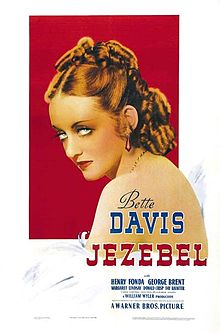
Reviewed April 18, 2015
Grade: B+
An excellent showcase for the young and lovely Bette Davis, Jezebel (1938) is a very early film role for Davis. It is similar to Gone with the Wind, a film Davis reportedly lost to Vivian Leigh.
One wonders how she would have made the character of Scarlett O’Hara her own, and Jezebel is on a journey exploring that possibility.
Acclaimed director William Wyler directed Jezebel, set in New Orleans in 1852 (pre-Civil War). Davis plays spoiled southern belle Julie Marsden, who is engaged to wealthy banker Preston Dillard, played by Henry Fonda.
After a dispute in which Julie selfishly feels her needs are unmet, she shockingly wears a red dress to a sophisticated ball where unmarried women are expected to wear white. This causes a scandal that results in Preston dumping Julie and leaving town.
Cocky Julie expects Preston to return to town and grovel for her forgiveness, but when he does return with a life-changing twist, the drama unfolds. Circumstances include a savage duel, longing for love, and atonement.
Fans of Davis will love Jezebel for the sheer excellence that she brings to the screen. Mesmerizing with those soulful, big eyes and excellent mannerisms, she exudes confidence and sophistication. Admittedly, this is my earliest Davis experience, and she shimmers on-screen.
Bette Davis is perfectly cast. Interesting to note are the innocent qualities early Davis possessed. Later afflicted with a hoarse, deep voice and ravaged beauty after years of alcohol and cigarette abuse, Davis in Jezebel is virginal and debutante-looking.
I find Julie’s wardrobe choices interesting. Her horseback riding outfit, the vixen-like red dress, the virginal white dress, and the dark raven cape at the climax of the film, as well as the various lighting techniques Wyler used to showcase Davis’s face, almost look like candlelight.
The film is similar to Gone with the Wind (preceded by a year). Julie, like Scarlett, is a rich, selfish girl who likes to manipulate men. Both films feature a love triangle prevalent in the story and broken hearts. The enslaved people in both films resemble each other, though they are a bit more glamorous in Jezebel.
The introduction of the yellow fever storyline and the sick and weak lying around in droves is similar to the wounded and dying soldier scene in Gone with the Wind, where the ill and dying lie in pain. The periods, triangle, and southern charms all heavily play in both. It is impossible not to compare the two films.
Melodrama did very well; Jezebel (1938) is to be admired as it is a film featuring a strong female character, something lacking in the film then (1938) and shamefully still lacking in cinema today! Jezebel is an actual “ambitious woman’s movie.”
Oscar Nominations: 2 wins- Outstanding Production, Best Actress-Bette Davis (won), Best Supporting Actress-Fay Bainter (won), Best Scoring, Best Cinematography