Category Archives: Kodi Smit-McPhee

The Power of the Dog-2021

The Power of the Dog-2021

Director Jane Campion

Starring Benedict Cumberbatch, Kirsten Dunst, Jesse Plemons

Top 250 Films #134

Scott’s Review #1,199
Reviewed November 21, 2021

Grade: A

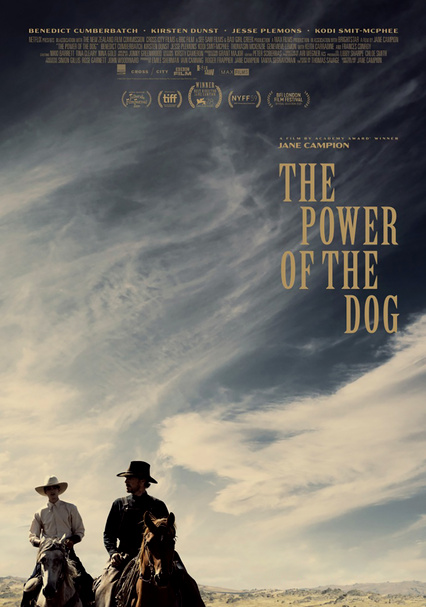
Benedict Cumberbatch delivers a harrowing and brutally honest performance in The Power of the Dog (2021), a thought-provoking and layered film by Jane Campion. Parts western, gothic, and drama, Cumberbatch leads the charge, but all players associated with the film knock it out of the park.

If the superior acting is not enough, the eerie subtext and gorgeous cinematography firmly place the viewer in 1925 Montana, where a vast and open range serves as the primary setting. Characters are riddled with secrets, and the fun lies in peeling back the layers to reveal their motives and true desires.

There are enough bare male butts to titillate most viewers, and Cumberbatch himself did not use the aid of a body double. He stated he wanted to be as raw and vulnerable as his character, the dastardly and cruel Phil Burbank.

Campion, who hasn’t made a film in over a decade, is back with a vengeance, paying homage to Ang Lee and his movie Brokeback Mountain (2006).

From the first moment on screen, we know something is mesmerizing about Phil. He is handsome and severe, an alpha male if there ever was one, and attributes his savvy to his deceased father figure, Bronco Henry. His relationship with this man is key to the whole story.

Along with his brother George (Jesse Plemons), the Burbank brothers are wealthy ranchers. One day, at the Red Mill restaurant on their way to market, the brothers meet Rose (Kirsten Dunst), the widowed proprietress, and her impressionable and effeminate son Peter (Kodi Smit-McPhee).

Phil behaves cruelly to Rose and Peter, but George becomes enamored with Rose and they marry, much to Phil’s chagrin. Now all living together, Phil taunts Peter and terrorizes Rose, but slowly begins to take the boy under his wing.

But what are his true intentions, and what will Peter do to save his mother from a complete breakdown?

The acting is so brilliant that I immediately became immersed in their lives. Particularly fascinating is Phil, but Rose, George, and Peter are all substantial characters. All the characters intertwine and have special relationships with each other, and all the principal actors are central to our fascination with them.

Rose may be Dunst’s best role yet, and Plemons is terrific as the kind and steady George. Smit-McPhee, unknown to me, is a revelation as the androgynous young intellectual.

There are enough homoerotic scenes to make the viewer question Phil’s sexuality. His secret stash of strong man magazines and his long gazes at nude male sunbathers may be enough to unlock the key. Still, when he rubs a handkerchief belonging to Bronco all over his body, the relationship between the two men oozes to the surface.

Campion has a lot of guts in taking on the male-driven western genre, and she brilliantly succeeds. Forgetting the storyline for a moment, the ravishing and oftentimes lonely landscape makes the film gorgeous to look at, especially on the big screen.

Plenty of long shots of the mountainous regions will inevitably captivate viewers and transport them to a bygone era.

The Power of the Dog was shot in New Zealand, but I was completely fooled into thinking Montana was the real filming location.

I adored seeing the costumes, whether it be Rose in a housedress or more distinguished characters like the governor and his wife dressed for a dinner party. All costumes appear authentic, peppered with a touch of glamour amidst the dirtiness of the range. Even the grubby ranch hands look great.

Discussions will certainly erupt once the film ends, and isn’t that the point of great films? The Power of the Dog (2021) takes the tried-and-true Western genre and infuses it with psychological depth.

Thanks to Campion and the team, she masterfully uses no gimmicks to draw the viewer into the world of the characters, instead offering authenticity and edge-of-your-seat drama.

Oscar Nominations: 1 win-Best Picture, Best Director-Jane Campion (won), Best Actor-Benedict Cumberbatch, Best Supporting Actor-Kodi Smit-McPhee, Jesse Plemons, Best Supporting Actress-Kirsten Dunst, Best Adapted Screenplay, Best Film Editing, Best Cinematography, Best Production Design, Best Original Score, Best Sound
Elvis-2022

Elvis-2022

Director Baz Luhrmann

Starring Austin Butler, Tom Hanks

Scott’s Review #1,299

Reviewed September 16, 2022

Grade: B+

Once I knew that Australia’s own Baz Luhrmann was directing the new film Elvis (2022), I immediately formulated an expectation of what the film-watching experience would be like.

I anticipated a specific type of filmmaking, where an auteur artist merges fast-paced music videos with a dramatic biopic into a cohesive film.

Other Luhrmann offerings, such as Moulin Rouge (2001) and The Great Gatsby (2013), incorporate contemporary musical elements and are highly visual and stylistic. I knew what I was going to get and was prepared for it.

Elvis is no different, and Luhrmann’s style is an unconventional risk not for everybody.

I mostly enjoyed the film, but I didn’t quite love it either, seeing both the good and the not-so-good aspects.

At two hours and thirty-nine minutes, it goes on way too long.

Perhaps contradicting this point is that Elvis does improve as it progresses, initially feeling jarring, overwhelming, and disjointed due to rapid editing and rapid camera work.

A Dramamine is suggested until one is comfortable with the sudden bursts of turbulence. I semi-joke, but there is a period of sinking into Luhrmann’s style that is necessary, especially if you have never seen one of them.

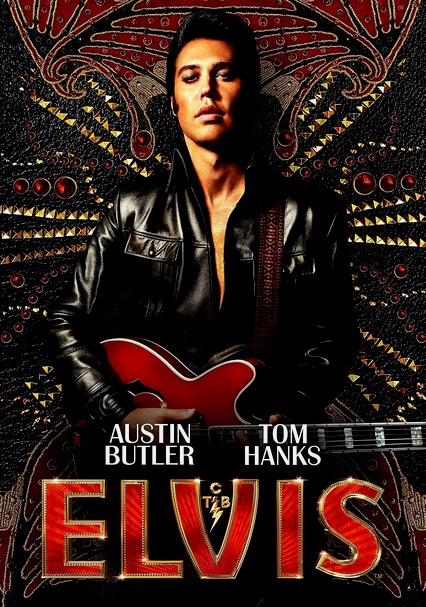
The film explores the life and music of Elvis Presley (Austin Butler), and his complicated relationship with his opportunist manager, Colonel Tom Parker (Tom Hanks), and his wife, Priscilla (Oliva De Jonge).

The story delves into the singer’s rise to fame and the evolving cultural landscape in the United States during the 1950s and 1960s.

Like many films, the events start much later than the main story, in this case, 1997. Parker is on his deathbed, ruminating about how he first met Elvis and helped make him a legendary icon.

Much of the film takes place in glitzy Las Vegas, where Elvis had a long-term residency. However, it’s worth noting that the star’s working-class roots and impoverished upbringing in a predominantly black neighborhood had a tremendous influence on his music.

The Vegas setting applies a sparkling veneer, mixed with a sense of isolation, especially in scenes that show Elvis’s million-dollar penthouse view of Sin City. The star frequently pulls all the black curtains to reside in solitude.

Butler starts slow but ends up doing a fabulous job of portraying the iconic star, no easy feat. At first, I had difficulty buying the actor as Elvis, but as time went on, he became more immersed in the role.

The best scenes, hands down, occur during the performances. The sheer rawness of his act and the famous wiggle that left fans dizzy with eroticism are compelling and authentic, to say nothing of titillating.

The young actor exudes charisma just as the real-life star does, and this is most evident on stage. The dramatic scenes don’t work as well, and Luhrmann strangely skims over the controversial weight gain years, the 1970s, that Elvis experienced.

I expected Butler to don a fat suit, but there was none of this.

This miss can almost be forgiven when a heart-wrenching final performance of ‘Unchained Melody’ by the honest Elvis is showcased. The number is fraught with emotion and tenderness, leaving me feeling sympathy.

Hanks is good as the slimy and curmudgeonly manager, but I never felt sympathy for the character. If the film can be believed, he ruined Elvis as much as he brought him success, but Hanks never made me forgive the man. I also wasn’t interested in his backstory.

It will be hard-pressed ever to make me enjoy Hanks more than in his Oscar-winning back-to-back turns in Philadelphia (1993) and Forrest Gump (1994), his two best roles.

Elvis, the film, does better when it serves as a musical performance rather than a biography. Sure, the drug use and the disputes with family and manager are dramatic but it’s the performances of ‘All Shook Up, ‘Unchained Melody’, and ‘Can’t Help Falling Into Love’ that win me over.

In pure Luhrmann form, many of the familiar songs are done in different tempos and interpretations, but that’s part of the fun.

Comparisons to recent musical biographies, such as Bohemian Rhapsody (2018) and Rocketman (2019), are fair.

Elvis (2022) is not as good as those films, but it’s above average and succeeds when it entertains, showcasing how the star’s determination and grit prevailed despite outside influences.

Oscar Nominations: Best Picture, Best Actor-Austin Butler, Best Cinematography, Best Production Design, Best Film Editing, Best Sound, Best Costume Design, Best Makeup, and Hairstyling

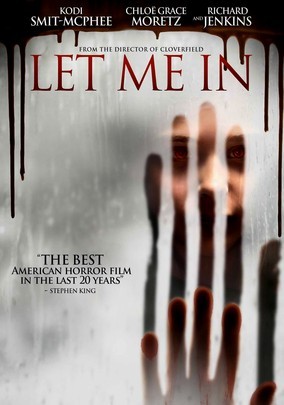
Let Me In-2010

Let Me In-2010

Director Matt Reeves

Starring Kodi Smit-McPhee, Chloe Grace Moretz

Scott’s Review #509

70135744

Reviewed November 4, 2016

Grade: A-

I loved Let Me In (2010).

It is nearly as exceptional as the original, Let the Right One In (2008), which is Swedish.

Billed as horror, it contains none of the typical horror cliches or corny dialogue- rather it is mysterious, compelling, and character-driven.

This in itself is refreshing.

Additionally, the cinematography is exceptional in its coldness, darkness, and good old-fashioned ambiance.

Let Me In is about a twelve-year-old outcast, named Owen (Kodi Smit-McPhee),  who befriends a neighbor girl-Abby (Chloe Grace Moretz)- who we learn is a vampire.

Owen is bullied at school and through Abby, learns to stand up to his tormentors.

I am partial to foreign language films so, to me, the American version lacks the engaging language a bit and is not…well, foreign, so that detracts slightly, but not much at all, and this effort is quite remarkable.

This film is a horror film- in the classic sense of containing vampires and not being played for goofs- and quite gory, but also a beautiful, emotional film, and the concepts of sadness and loneliness are explored.

Let Me In (2010) is one of the best horror films I’ve seen in recent years.

ParaNorman-2012

ParaNorman-2012

Director Chris Butler, Sam Fell

Starring Kodi Smit-McPhee, Anna Kendrick

Scott’s Review #453

70217914

Reviewed July 23, 2016

Grade: B+

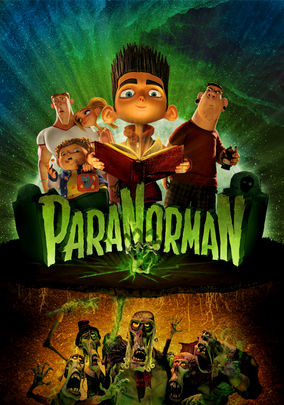
ParaNorman (2012) is a highly imaginative and very enjoyable, animated film that I admired a great deal.

Creative colors and images are key and the film is stop-motion.

Despite being animated it is not a kid’s movie but rather geared toward the teenager or older demographic.

It is among the strongest, along with Frankenweenie, a similar type film, of the five nominated films for Best Animated feature, in the year 2012.

ParaNorman is so similar to Frankenweenie that they could almost be simultaneously reviewed or watched on the same day.  Both center around an isolated young male coping with his surroundings and both contain a light horror feel to them.

In ParaNorman, an army of zombies invades a small, suburban town, and our hero, Norman, a strange young man who can communicate with the dead, must save the day.

The film contains sympathetic peers, but the adults in the film present various obstacles.

I have gone on record as being not much of an animated film fan, but I do view the best of each year and this one impressed me immensely.

Oscar Nominations: Best Animated Feature Film

Dawn of the Planet of the Apes-2014

Dawn of the Planet of the Apes-2014

Director Matt Reeves

Starring Andy Serkis, Jason Clarke, Gary Oldman

Scott’s Review #232

70300076

Reviewed March 29, 2015

Grade: C+

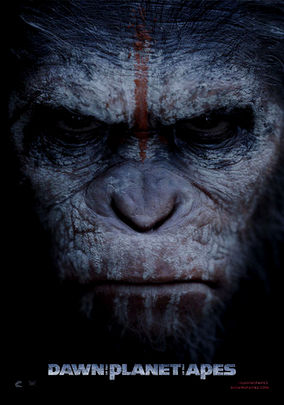
Dawn of the Planet of the Apes (2014) is a summer blockbuster hit that knocks it out of the park from a visual perspective- it is magnificent to look at with creative sets and realistic images, but the story is mediocre and predictable.

I think the filmmaker’s true intent was to focus on the look of this film, which is a splendid feature. The film is a slightly better-than-average big-screen adventure with more style than substance.

Set in San Francisco, or what was once San Francisco, the film is set in futuristic times. Apes have forged a new civilization after a deadly virus has eliminated 90% of the human population.

The apes are highly intelligent and manage a happy, unified existence. Then, one day, a human is encountered and, scared, shoots one of the apes. This leads to a peaceful resolution between Caesar, leader of the apes, and the humans, to each stay in their respective territories.

However, humans need access to a dam in the Apes area to provide electricity for themselves. Mutual distrust leads to tension, but the civilized apes and humans reach a truce.

Naturally, there is further conflict as sinister humans and apes vow revenge on each other. This leads to a waging war while the peaceful apes and humans strive to work things out.

A further angle of the story is the hunger for power within the ranks of the Apes, reminiscent of Lord of the Flies. The human protagonists, Malcolm and Ellie, played by Jason Clarke and Keri Russell- are a wholesome, decent couple.

Dawn of the Planet of the Apes pales to the original 1968 masterpiece, Planet of the Apes, starring Charlton Heston. To compare the two is unfair since, sadly, this one has nothing to do with the original.

It is simply the same franchise tag.

However, Dawn of the Planet of the Apes is weaker than its predecessor, 2010’s Rise of the Planet of the Apes. We had a charismatic star, James Franco, and an interesting story. The apes are experimented on and their intelligence is a strong angle.

With the sequel, the story is rather one-note and has a machismo, us against them angle, that is not unique.

The main drawback to this film is its limitations. The characters are portrayed as a) the good and sympathetic humans, b) the evil and destructive humans, c) the good and heroic apes, or, d) the evil, bad apes.

Everyone is defined for the audience and there is no ambiguity or complexities within the characters. This is a bit limiting. The evil ape Koba is purely bad and the drunken, gun-happy, humans are bad.

This is not to say that Dawn of the Planet of the Apes is not enjoyable, it is. It’s a fun, entertaining flick. For what it is, there is a somewhat message in the film, that there is a way to find peace and love between different species and types of people.

Hopefully, the audience gets that message.

Dawn of the Planet of the Apes (2014) is a summer blockbuster action/sci-fi flick that many will enjoy, however, it is a plot-driven extravaganza that could have been superior had it contained more layers to the story and more shape to some of the characters.

It is worth seeing as a visual cinema treat, but scarcely more than that.

Oscar Nominations: Best Visual Effects