Tag Archives: Romantic Drama

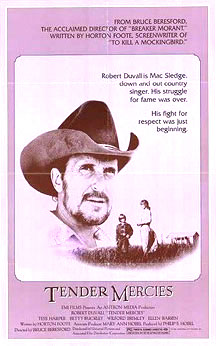
Tender Mercies-1983

Tender Mercies-1983

Director Bruce Beresford

Starring Robert Duvall, Tess Harper

Scott’s Review #1,279

Reviewed July 22, 2022

Grade: B+

Tender Mercies (1983) is a quiet, down-home film about a country musician struggling with alcohol addiction, god, and a tepid musical career. Anyone starting to elicit a yawn will have the same reaction I did when reading the premise.

It’s not the most original idea but the film works surprisingly better than I initially expected. The 1983 film is largely forgotten at this point but has a Cinderella story as its legacy.

Funding and a marketing push were limited, resulting in low box-office returns but the Academy sure took notice heaving five nominations it’s way.

It’s quite the departure for those expecting actor Robert Duvall to mirror his The Godfather (1972) and The Godfather: Part II (1974) characters.

Tender Mercies is an actor’s film, and it belongs squarely to Duvall who delivers a wonderful performance perfectly carved out for an Oscar nomination. He instills himself into the role of a drunken, washed-up, country star vowing to stay straight.

Duvall does more than act in it, crafting and performing his songs in a role standing side by side with his role in The Apostle (1998) as his very best.

He won the coveted Academy Award for Tender Mercies.

Though the tone is low-key, filming was anything but, and reports of disagreements and blow-ups between Duvall and director, Bruce Beresford, surfaced.

The Australian director was later made famous for Driving Miss Daisy (1989) at one point even considered quitting the production.

The story tells of alcoholic drifter Mac Sledge (Duvall), who awakens one day in the middle of rural Texas after a night of heavy drinking.

His surroundings are a run-down roadside motel and gas station.

He meets the owner, a young widow named Rosa Lee (Tess Harper), and offers to perform maintenance work at the motel in exchange for a room. Rosa, whose husband was killed in the Vietnam War, is raising her young son, Sonny (Allan Hubbard), on her own.

Mac and Rosa become smitten with one another, attending church, and forging a life of solitude together. Demons surface when it is revealed that Mac is a once-famous country singer with a currently famous ex-wife, Dixie Scott (Betty Buckley).

When the opportunity for a career comeback surfaces, Mac must choose between his new life and the life he let slip through his hands.

The story is very good for several reasons. At the forefront, Mac is a likable guy whom the audience pulls for. Instead of the tried-and-true story of a man battling his demons and being ‘saved’ by a woman, Mac is already on the road to recovery and has the desire to stay sober.

Rosa Lee and Sonny merely serve as steady influences versus the bright lights and broken hearts of the country music world.

Mac also has a chance to be a father figure to someone. The bad stuff has already transpired in the past, so the audience is spared having to endure a pile of shit in exchange for a big payoff at the end of the film.

There are a couple of negatives that keep the film from being a masterpiece.

On the wagon, Mac is tempted to down a bottle of whiskey after a tragedy, but he resists the urge choosing to pour the devil’s juice out onto the ground. Is that a big surprise?

Buckley does her best with a one-note character, clearly in existence as an obstacle to Mac’s happiness.

But, at its core, Tender Mercies is about relationships, and though a slow under texture, delicious are the low-key scenes between Mac and Rosa Lee, and Mac and Sonny. The scenes prove that good crisp dialog with grace and heart trumps car chases any day.

They discuss life!

The cinematography of remote Texas is magical in its vastness and its loneliness. Key expressions on the face of Duvall perfectly match the Western landscape.

I’m not a religious guy and I’m not a country & western guy but I enjoyed the story I was served up by Tender Mercies (1983) quite a bit.

The combination of superb acting, an emotionally charged character-driven story, and a fabulous glimpse at the dry state of Texas, made for a compelling, and relatively short viewing time of ninety minutes.

Oscar Nominations: 2 wins-Best Picture, Best Director-Bruce Beresford, Best Actor-Robert Duvall (won), Best Screenplay-Written Directly for the Screen (won), Best Original Song-“Over You”

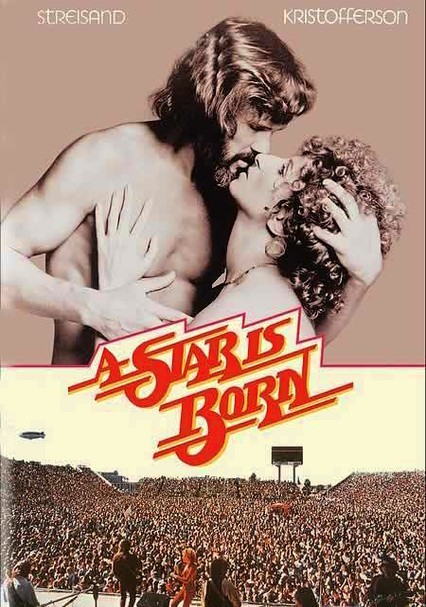
A Star Is Born-1976

A Star Is Born-1976

Director Frank Pierson

Starring Barbra Streisand, Kris Kristofferson

Scott’s Review #1,276

Reviewed July 13, 2022

Grade: B

Four incarnations of A Star Is Born: 1937, 1954, 1976, and 2018 have been created. Strangely enough, the most recent film starring Bradley Cooper and Lady Gaga is worlds above the others, though I haven’t yet seen the 1937 version.

The fourth time is rarely the charm in film remakes.

The focus of this review, however, is largely on the 1976 film starring Barbra Streisand and Kris Kristofferson. A hit movie at the time, and nonetheless despised by some, the film is perfectly fine though it bears multiple repeatings that it’s inferior to the 2018 film.

There is no question about that.

Amazingly, it was nominated for four Academy Awards and deservedly won for Best Song. The other nominations are generous.

Watching A Star Is Born circa 2022 the 1976 rendition suffers severely from a dated tone mostly because of the jaw-droppingly hideous perm hairdo worn by Streisand.

Did somebody think it was flattering in 1976?

The chemistry between Streisand and Kristofferson starts tepid but increases in intensity as the film plods along. The ending is underwhelming and I expected more emotional pizazz than I was given, leaving me with almost a ‘so what’ reaction to a devastating turn of events.

Until that is, Barbra sings her heart out in one unbroken, gut-wrenching shot of seven or eight minutes.

For those unfamiliar, the story surrounds John Norman Howard (Kristofferson), a troubled rock star on the decline, frequently indulging in excessive drugs and drinking and trying to write hit records.

He drunkenly wanders into a club one night and watches aspiring singer Esther Hoffman (Streisand) perform and is instantly smitten. The two begin dating, and soon John lets Esther take the spotlight during his concerts.

However, even as Esther finds fame and success with her singing, John continues his downward spiral.

Let’s face it. The main draw is who is playing the lead roles in a film like A Star Is Born. To make a love story work there must be sizzling chemistry so that the audience is invested in the romance. Streisand commands the center stage and her singing is the selling point.

Otherwise, Ms. Streisand suffers another bout of miscasting as she did in 1969’s Hello, Dolly. She’s simply too talented and established to be believable as an aspiring singer.

Her singing saves the film.

The gorgeous song “Evergreen” is a quite powerful moment and great strength. Without it, the film would have felt lacking and mediocre. The tune rises the overall experience up a notch.

The chemistry is merely the warm-up act. It’s ho-hum until a smoldering bathtub scene occurs where John and Esther soap each other down and fall madly between the sheets for a night of passion.

It’s Streisand’s sexiest scene and the romance takes off.

Back to Streisand’s vocals, the scene is preceded by a gorgeous songwriting sequence between John and Esther at the piano where they craft a new song. As they collaborate, the connection and bond between the characters are birthed.

Those are the romantic highlights.

Otherwise, the scene where John becomes infatuated with Esther holds no appeal since he is drinking and arguing with another patron and barely has time to notice her. This was thankfully changed in the 2018 version when John was mesmerized by the rising talent.

Additionally, when John invites Esther to his concert and she watches from backstage it goes nowhere. In the 2018 version, he drags her out to perform with him and it’s a moment. 

Some films are best reviewed on their own merits but what great fun to compare renditions of the same film because, why not?

The supporting characters have little to do except for an impressive turn by Gary Busey as John’s drug-pushing manager.

There is little reason to watch A Star Is Born (1976) more than once, or at most twice to confirm that the film lacks a bit. It’s not terrible but hardly memorable unless the desire is to giggle over an incredibly bad 1970s hairstyle by one of the greatest divas.

Then, move on to the outstanding Cooper/Gaga 2018 version.

Oscar Nominations: 1 win-Best Cinematography, Best Original Score, Best Original Song-“Evergreen” (won), Best Sound

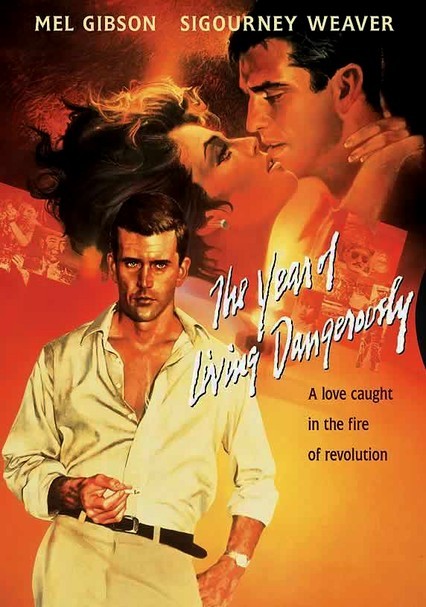
The Year of Living Dangerously-1982

The Year of Living Dangerously-1982

Director Peter Weir

Starring Mel Gibson, Sigourney Weaver, Linda Hunt

Scott’s Review #1,266

Reviewed June 16, 2022

Grade: B+

The Year of Living Dangerously (1982) is a solid political drama with enough intrigue, romance, and superior cinematography by Russell Boyd, to recommend it. It’s not an American film but Australian which gives it an authentic flavor even though events are primarily set in Indonesia.

If Mad Max (1979) didn’t make Mel Gibson a full-fledged pinup star The Year of Living Dangerously certainly did because it made him a romantic ladies’ man in addition to a rugged action star. He has a ton of good looks and charisma at this point in his career and arguably has never looked better.

One could say (okay, I flat out will) that Gibson is upstaged, unintentionally so, by stage actress Linda Hunt who gets the role of her life as a highly intelligent Chinese-Australian man suffering from dwarfism and key to the entire plot.

Hunt won the Academy Award for flipping gender norms on its head and making the film more progressive and memorable than it deserves to be. Her performance is timeless and rich in character flavor.

If not for Hunt and Gibson as the standouts the film is lost in the shuffle amongst the myriad of similar political dramas to emerge in the 1980s.

Missing (1982) starring Jack Lemmon and Sissy Spacek and Victory (1981) starring Sylvester Stallone are the films that The Year of Living Dangerously reminds me of.

Blow Out (1981) and No Way Out (1987) are two of the best political drama films to come out of the decade and all are assuredly influenced by All the President’s Men (1976) which is one of the best from the genre.

There are so many others that The Year of Living Dangerously feels forgotten and too similar to a standard formula to stand out. It also suffers at times from being either a romantic drama or a political thriller and it struggles to mesh the two satisfyingly.

After journalist Guy Hamilton (Gibson) arrives in Jakarta, Indonesia, he forms a friendship with dwarf photographer Billy Kwan (Hunt), through whom he meets British diplomat Jill Bryant (Sigourney Weaver).

Bryant falls in love with Hamilton, and she gives him key information about an approaching Communist uprising. As the city becomes more dangerous, Hamilton stays to pursue the story. However, he faces more threats as he gets closer to the government putting him and others passionate about the political turmoil, in great peril.

The romance between Guy and Jill is not bad but Weaver has had so many better roles than this one that it feels throwaway. She’s a smart lady who falls madly in love with Guy so easily that the formulaic context is obvious.

The movie poster makes the pair look like Rhett and Scarlett in Gone with the Wind (1939), unintentionally providing humor and ambiguity about what the film is going for.

It does best when it sticks to the political message.

The film is laden with foreign mystique and intrigue largely due to the exotic locale of Indonesia (the film was shot in the Phillippines which is a good double).

The plot is absorbing for what it is and the peril the journalists face is exciting. This parlays well with the real-life situation in which the film is based. In 1965, Indonesia was a hotbed of corruption and danger, and director, Peter Weir, managed to pull these sequences together well.

The main flaw is Weir doesn’t seem to know if he is crafting a political thriller or a romantic drama.

Back to the astounding Linda Hunt, the best scene of the film occurs when her character dies in Guy’s arms. Forget Weaver, the emotional core of the film belongs to Gibson and Hunt who have tremendous chemistry. The ambiguity of Billy, mostly because we know the gender of Hunt, is delicious.

In the end, the conclusion is mostly a happy one albeit predictable and the storyline feels unsatisfying.

A nice effort and relevant in 1982, The Year of Living Dangerously has energy and polish. It just feels too familiar and similar to other genre films to stand out, save for Linda Hunt and Mel Gibson.

Oscar Nominations: 1 win-Best Supporting Actress-Linda Hunt (won)

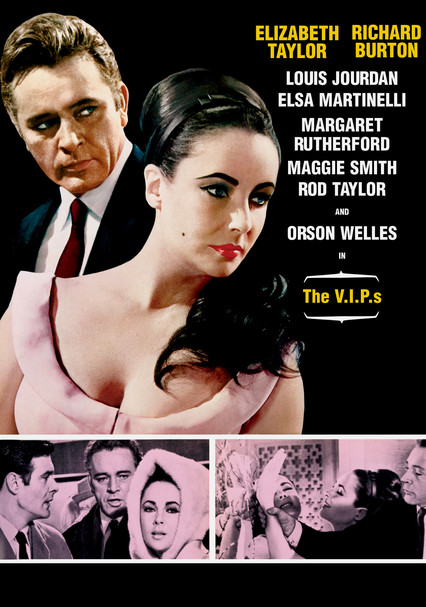
The V.I.P’s-1963

The V.I.P’s-1963

Director Anthony Asquith

Starring Elizabeth Taylor, Richard Burton, Louis Jourdan

Scott’s Review #1,263

Reviewed June 4, 2022

Grade: B+

The V.I.P.’s (1963) is a sweeping drama set against a foggy London airport. It’s a good film but hardly a masterpiece, as the trials and tribulations of the stranded passengers are explored and sometimes intersect in standard ways.

The film is formulaic and offers little surprise, but I enjoyed it and was entertained by the parade of stars shuffling through the vast airport.

Some stories are more interesting than others, and the film is in a soap opera style with glamorous and rich characters.

One wonders if The V.I.P. influenced the creation of the film Airport (1970) seven years later. The film is patterned after 1932’s Grand Hotel, both of which were distributed by Metro-Goldwyn-Mayer.

Real-life couple and Hollywood A-listers Elizabeth Taylor and Richard Burton star and are the main draws of the film.

The all-star cast also features Louis Jourdan, Maggie Smith, Rod Taylor, Orson Welles, and the scene-stealing Margaret Rutherford.

Inclement weather has delayed a flight from London’s fabulous Heathrow Airport to New York City. A cross-section of elite passengers (V.I.P.s) impatiently wait to board the plane as they experience various life crises in the airport.

The main storyline revolves around Frances (Taylor), a gorgeous woman who is fleeing a loveless marriage to her millionaire husband, Paul (Richard Burton), and is in love with the dashing Marc Champselle (Jourdan).

Supporting stories feature a dotty duchess (Rutherford) who has fallen on hard times and a handsome businessman (Rod Taylor) trying to thwart a hostile takeover.

At the same time, his secretary (Smith) lusts after him, and Gloria (Elsa Martinelli), an aspiring actress, and her money-grubbing producer, Max (Welles).

Despite the heavy-sounding plots, the film is not overly severe and provides comical moments in small doses, which secures the pacing and offsets too much doom and gloom.

Liz and Richard have big, soapy moments, and writer Terence Rattigan was reportedly inspired to write the screenplay by a real-life situation.

Actress Vivien Leigh was planning to leave her husband Laurence Olivier for another man but was delayed at Heathrow Airport.

How scandalous!

Nonetheless, Taylor stoically gives an acceptable performance as a conflicted actress in love with a man other than her husband. The setup plays out as tired as it sounds, except for the juicy reality that Taylor and Burton were married, providing the only interest.

Taylor and Burton have terrific chemistry, though she also does with Jourdan. Still, there is something uncompelling and unsatisfying about the story.

Shockingly, they are all upstaged by Rutherford, who steals the entire film, resulting in her surprising Best Supporting Actress victory. She may have won because of the Academy’s tendency to sometimes award an older actor with the prize for a lifetime body of work.

Her riveting story is my favorite as she desperately seeks a way to save her historic home.

The actress hits a home run, providing much-needed comic relief and the liveliest of performances. Her peril offsets her cleverness, and her performance is filled with heart.

Many critics hastily insisted that Rutherford was the only reason to see The V.I.P.’s. Personally, the combination of an airport, peril, and big stars was more than enough to have me hooked.

The only addition that might have made the film better was an enormous fire or a hijacking crisis.

The V.I.P.’s (1963) will only appeal to fans of Taylor and Burton or those seeking something sudsy. Otherwise, the film is not too well remembered.

Oscar Nominations: 1 win-Best Supporting Actress-Margaret Rutherford (won)

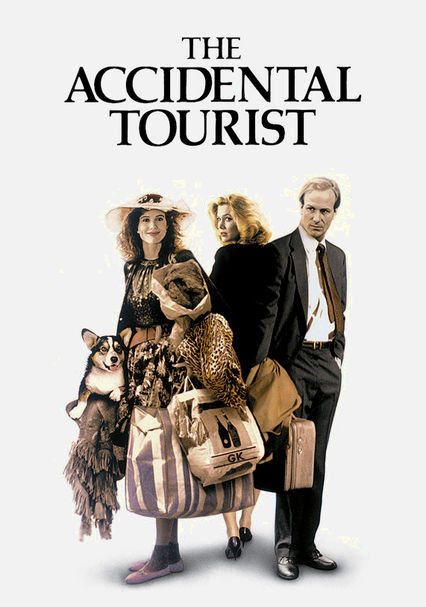
The Accidental Tourist-1988

The Accidental Tourist-1988

Director Lawrence Kasdan

Starring William Hurt, Kathleen Turner, Geena Davis

Scott’s Review #1,215

Reviewed January 1, 2022

Grade: B+

Reuniting stars William Hurt and Kathleen Turner from 1981’s smoldering Body Heat, director Lawrence Kasdan creates a triangle of sorts with the addition of Geena Davis in The Accidental Tourist (1988).

She brings a quirky character to the fold in a film about death, tragedy, and a disintegrating marriage.

Despite the subject matter, it’s not a downer at all but rather a romantic drama brimming with rich characters and relatable situations. There are laugh-out-loud moments and there are tender moments all about the human spirit and choices we must make.

It’s an above-average flick that received several Oscar nominations and feels patterned after a Woody Allen-style film. I didn’t necessarily relate to any of the characters nor need to see the film a second time but I respect that Kasdan creates a picture not needing car chases or gratuitous violence or nudity.

The Accidental Tourist is a quiet film about life. It is based on the 1985 novel of the same name written by Anne Tyler.

When their young son is suddenly murdered, the marriage between Macon (Hurt) and his wife Sarah (Turner) flounders, and she moves out. After an accident puts him on crutches, Macon goes to stay with his quirky siblings at the family home, where he meets the high-spirited Muriel (Geena Davis).

She is a dog trainer with a young son of her own. Macon develops a slow friendship with them that surprisingly blossoms into more with Muriel. When Sarah learns about the situation, she attempts a reconciliation with Macon who is forced to make a painful decision.

The intention feels like we, the audience, are supposed to root for Macon and Muriel to get together and not feel much sympathy for Sarah but I did. After all, she is the one ultimately ditched and there is nothing like a woman scorned.

I didn’t feel like there was even much of a triangle because the film is centered around Hurt’s character and the choices Macon must face. It’s about how he deals with change and the unexpected turns of events that life can throw at anybody. Sarah and Muriel must also deal with the same choices and life circumstances but the focus is more on Macon.

The viewer will likely immerse themselves in these characters as they think about their own life and the trials and tribulations that have occurred.

Though I never read the novel I suspect it is a tad better than the film which limits the amount of time to explore the characters. Novels always have more time to delve deeper.

With that said I got a fair share of backstory about Macon, Muriel, and Sarah but didn’t gravitate to any of them over the others.

Regarding the earlier note about The Accidental Tourist being like a Woody Allen film, it has an upbeat, quirky tone that masks much of the heartbreak Macon suffers from with some added comedy. When Muriel hops a flight to Paris to follow her heart and Macon it’s something a character in an Allen film would do.

Since Macon is a writer of travel guides the film contains rich flavor for culture and tourism which is pleasing. London and Paris are the central locales and Kadan does a great job at the international stuff.

A tad long and dragging at times The Accidental Tourist (1988) has enough juiciness to keep any viewer attracted to well-written screenplays about emotional characters and the ups and downs of life satisfied.

Oscar Nominations: 1 win-Best Picture, Best Supporting Actress-Geena Davis (won), Best Screenplay-Based on Material from Another Medium, Best Original Score

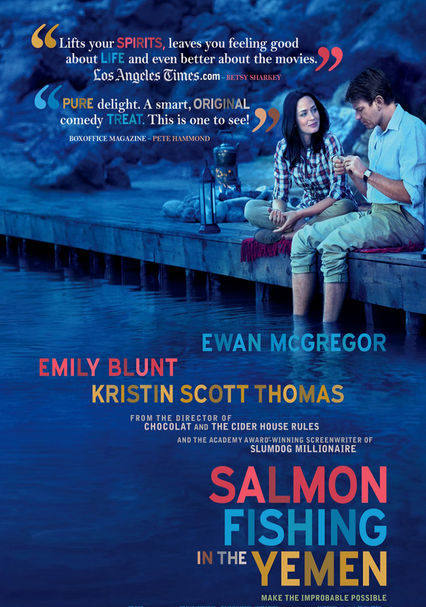
Salmon Fishing in the Yemen-2011

Salmon Fishing in the Yemen-2011

Director Lasse Hallstrom

Starring Ewing McGregor, Emily Blunt

Scott’s Review #1,152

Reviewed June 15, 2021

Grade: B-

Despite exceptional chemistry between leads Ewing McGregor and Emily Blunt, who were also bankable stars in 2011, the romantic comedy Salmon Fishing in The Yemen (2011) is predictable, dull, and lacks a good identity.

It is the feel-good film of the year and that is not meant as a compliment.

Don’t get me wrong, it’s above par as compared to the usual drivel emerging from one of my least favorite genres, the rom-com, but it should offer more than the by-the-numbers plot it churns out.

Someone either felt lazy or was instructed to create a banal film.

With good actors and fabulous locales, I expected more edge from Swedish director, Lass Hallstrom. But, alas, we get something merely adequate.

Doctor Alfred Jones (McGregor) is a fisheries scientist who one day receives an unusual request from a strong businesswoman named Harriet Chetwode-Talbot (Blunt). She wants his help in fulfilling a request from a wealthy sheik played by Amr Waked who wants to bring sport fishing to Yemen.

Jones declines at first, but when the British prime minister’s spokeswoman (Kristin Scott Thomas) latches on to the project as a way to improve Middle East relations, he joins in.

Romance blooms as Jones and Harriet work to make the sheik’s dream come true.

If this brief synopsis sounds like it’s taken from a novel that’s because it is and it is as straightforward as you can imagine. The film is based on a 2007 novel which must have been better than the film.

Let’s be fair and clear. McGregor and Blunt are as good as they can be with the material they are given and they succeed in bringing some life to the big screen. The trouble is there isn’t very far to go with their characters. Harriet is a businesswoman with a task at hand. Alfred is a handsome doctor with something she needs. Did I mention he’s a doctor?

Harriet’s romantic interest is hardly a surprise and Hallstrom puts nary any real obstacles in their path towards getting together.

The fact that early in the film Harriet is dating British Special Forces Captain Robert Meyers played by Tom Mison and Alfred is married to a woman named Mary (Rachael Stirling) is laughable after Robert is quickly killed off and Mary is sent away to Geneva for a conference.

Predictably, Alfred and Mary realize their marriage is over.

But wait, there’s more! Robert resurfaces from the dead alive and well. Harriet struggles with her emotions and quickly realizes that her feelings for him have changed leaving her to be with Alfred.

The setup for Harriet and Alfred is as predictable as what peanut butter and jelly sandwiches will taste like.

Poor Kristin Scott Thomas, a fantastic actor is reduced to playing the cliched role of Public Relations Patricia Maxwell. She straightforwardly plays her as aggressive, impatient, and bitchy. The performance doesn’t work well.

Second, to the sweetness of McGregor and Blunt, the locales are thankfully plentiful. Visits to London, Scotland, and Morocco are blessed treats.

A silly subplot of the salmon being removed from British rivers and something about farming goes nowhere and is not worth the effort to go into. Suffice it to say it does little for the film or as a companion to the main plot. The only thing viewers should focus on is Harriet and Alfred’s romantic involvement.

I only recommend Salmon Fishing in The Yemen (2011) for those fans of either McGregor or Blunt or who yearn to escape to a fantasy world with a happily ever after ending.

If one enjoys fishing or fly-fishing (is there a difference?) that may be enough cause to give the film a twirl too.

Otherwise, the film offers nothing that hasn’t been seen countless times before. By the conclusion of the film, I felt weary and bored for so much unchartered potential left on the cutting room floor….or somewhere else.

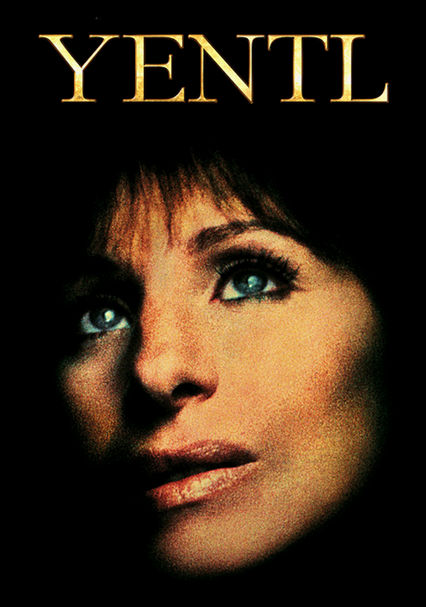
Yentl-1983

Yentl-1983

Director Barbra Streisand

Starring Barbra Streisand, Mandy Patinkin

Scott’s Review #1,144

Reviewed May 20, 2021

Grade: B+

Feeling slightly dated nowadays, perhaps for the year it was made, Yentl (1983) is nonetheless a very good watch if only for Barbra’s performance, in multiple ways, alone.

Who else could I be talking about other than superstar Barbra Streisand?

Astounding is that she also directed the film, rare for a female to direct in those days. Even circa 2021, there have only been two women to win the coveted Best Director Oscar prize.

Mind-blowing. Streisand was snubbed in this category and was understandably miffed.

But I’ll get down from my soapbox.

Streisand plays the title role. Yentl is a bookish girl and daughter of a respected Talmud teacher who instructs her although she is female and not male. This is forbidden in their culture.

Her father dies leaving Yentl to her own devices and determinations.

She disguises herself as a boy to gain entry to a yeshiva and meets Avigdor (Mandy Patinkin), who she becomes fascinated by. But he only has eyes for Hadass (Amy Irving) whom he is supposed to marry.

This results in a triangle of sorts but not in the traditional sense. Hadass develops feelings for Anshel (really Streisand as Yentl in drag). After they marry (unconsummated) Anshel falls in love with Avigdor.

This may sound like a comedy rather than drama and it does contain a bit of each but the romantic interludes, misunderstandings, and misinterpretations are not the best parts of the film.

The main themes of faith and romance are center stage. Streisand may have had feminism on her mind with the film but I didn’t find this a major point except for Yentl refusing to marry a man.

She pretends to be a boy because females are repressed in the religion. A real win would have been Yentl embracing faith as she is, but for 1983 the message isn’t a bad one.

Still, we are supposed to want Yentl and Avigdor to live happily ever after but I never felt very much of a connection to the couple.

The best parts of Yentl are the musical score and the songs the audience is treated to. The highlight is the emotionally charged “Papa, Can You Hear Me?” which is a gorgeous moment for Yentl.

Yentl leaves Europe on a boat bound for the United States, where she hopes to lead a life with more freedom. With a smile on her face, she rises above and into a new day.

It’s a dynamic singing performance and rises the film above where it would have been without the number. It’s like the perfect culminating Streisand moment.

The romantic moments are unfulfilling and predictable, but the film is about Streisand and Streisand alone. As good as Patinkin and Irving are they take a backseat to the illustrious star. We never even get to see Patinkin sing.

I’m okay with this. I watched Yentl (1983) for the enormous talents of its star. Her singing, acting, and directing all make the film a worthwhile and engaging experience.

It’s not a great film and other Streisand films are better- I’m thinking of Funny Girl (1968) and Hello, Dolly (1969), but it’s way above average.

Oscar Nominations: 1 win-Best Supporting Actress-Amy Irving, Best Art Direction, Best Original Score (won), Best Original Song-“Papa, Can You Hear Me?”, “The Way He Makes Me Feel”

Portrait of a Lady on Fire-2019

Portrait of a Lady on Fire-2019

Director Céline Sciamma

Starring Noémie Merlant, Adèle Haenel

Scott’s Review #1,114

Reviewed February 19, 2021

Grade: A-

A film with tremendous artistry and a cool LGBTQ+ vibe, gay director Céline Sciamma delivers the goods with interesting finesse in Portrait of a Lady on Fire (2019).

She takes modern-looking actors and transplants them to the era of France during the late 18th century.

The film tells the story of a forbidden affair between an aristocrat and a painter commissioned to paint her portrait.

The viewer will ask themselves the following questions. What would become of two young gay women in this long-ago age? How many people repressed their true feelings and desires because of the times they lived in?

Would their different classes and backgrounds cause strife within their burgeoning relationship? I know I constantly asked myself these questions.

To those with limited cinematic patience, be forewarned. A Portrait of a Lady on Fire is plodding.

I didn’t mind this aspect, but some might. The payoff is not bombastic in an act of violence or an explosion sort of way, but it’s well worth the effort put in.

In a common approach in modern film that is feeling more standard than special, the first scene often precedes the events in the rest of the movie, so that we know how the events will turn out. But we do not know the hows and the whys.

It is immediately assumed that one character has suffered some loss or misfortune related to a painting.

Painter, Marianne (Noémie Merlant), is summoned to a remote island inhabited by very few people. She is commissioned to paint the wedding portrait of Héloïse (Adèle Haene), who is destined to be married to a nobleman in Milan, Italy.

Héloïse is depressed and despondent, wanting nothing to do with her intended, whom she has not met.

The portrait is a gift to the never-seen husband-to-be. It is revealed that Héloïse’s sister leaped to her death from the cliffs on the family estate, so it’s suggested throughout that she may suffer the same fate.

Needless to say, Marianne and Héloïse fall madly in love.

Their love is hardly ever a question, as the chemistry is immediately noticed. Sciamma, who wrote the screenplay, avoids stereotypes that would give away the sexuality of the main characters. They are not butch nor do they possess masculine qualities.

Do we wonder if they are bisexual? They never struggle with their sexuality, a dramatic cliche in other LGBTQ+ films.

I adore this because it makes the love story more powerful, rather than one character pursuing the conflicted other.

As brilliant and artistic as I found Portrait of a Lady on Fire to be, there are a couple of unexplained or unclear aspects. I am not even sure how they relate to the main story.

Waifish housemaid Sophie has an abortion with assistance from Marianne and Héloïse. Later, the three go to a bonfire gathering where women sing, during which Héloïse’s dress briefly catches fire (just as shown in the painting featured in the beginning).

When Sophie is having the abortion, there is an infant and a child nearby. Are they her children? Who are the women who sing?

I didn’t understand the point of these items.

Fortunately, these missteps can be forgiven for the grander piece is exceptional filmmaking. The final shot of Héloïse sitting in a theater is phenomenal and borrowed from Call Me By Your Name (2017), which featured an identical scene.

The camera focuses on the face of actress Haene as she conveys a range of emotions during the flawless scene. What a win for an actor!

Despite some side story flaws, I adored Portrait of a Lady on Fire (2019).

The film is exceptionally shot, and almost all shots could be portraits in their own right. Charming are the beach sequences, as when Marianne and Héloïse first ignite the flames of their passion.

My takeaway is that it tells the story of fate, but doesn’t feel like a downer. Instead, it feels like life.

Independent Spirit Award Nominations: Best International Film

Keep the Lights On-2012

Keep The Lights On-2012

Director Ira Sachs

Starring Thure Lindhardt, Zachary Booth

Scott’s Review #1,100

Reviewed January 16, 2021

Grade: A

With such a healthy dose of LGBTQ+ films released during the 2010s, most independent productions enough exist to please nearly everyone striving for good diversity in film.

Over the years in cinema, it was tough to find specific genre films, rather than being forced to seek out subtle clues that filmmakers would incorporate.

LGBTQ+ films are now a dime a dozen, which is good but makes some films fall under the radar.

Keep The Lights On (2012) is a romantic drama, rather mysterious, about two men and the nine-year-long love affair they share. It’s not a happy watch because drug addiction is a large part of the story.

It portrays the men as human beings with passion, and feelings, and experiencing joys and pains, instead of being written as caricatures or comic relief.

This is progress, and worthy of much praise.

The only issue with the film is that by 2012, and the decade as a whole, there were so many similar films being made that there’s not enough to distinguish it from other high-profile works.

The LGBTQ bar was set very high with Brokeback Mountain in 2006, and recent offerings like Carol (2015) and Moonlight (2016) thrust the LGBTQ+ community into the spotlight.

Keep The Lights On has many positives, especially cinematically, but it risks getting lost in the shuffle matched up against other genre films.

Advisable, is to check out this gem.

It might best be compared to the exceptional same-sex love story, Call Me By Your Name (2017). Both are character-driven and are both happy and tragic.

Keep The Lights On is technically an American film. It feels like an international film, though, because it centers around a Danish filmmaker who lives in New York City.

Erik (Thure Lindhardt) is a troubled, creative soul, struggling to complete a documentary about an artist named Avery Willard. He meets and enters into a loving but complicated long-term relationship with Paul (Zachary Booth), a lawyer in the publishing industry who struggles with drug addiction.

Therein lies the complicated nature of their relationship. They are bonded but plagued with outside challenges. It began in 1998 and ended in 2006.

They meet via a phone sex chatline which adds to the sexual mystique. Erik is gay and happily out, but Paul indulges in both men and women and is conflicted sexually.

He gets Erik high. Will he lead Erik down a dark path? Will Paul clean up his act or die? Erik and Paul bed numerous other men throughout the story. This is an intriguing addition to the complicated events.

Since the film is about a filmmaker it ought to include cool and inventive camera angles and trimmings, and it does. Ira Sachs, an American director, provides flourishing shots of New York City and gazes through the lens of an actual creative spirit, which justifies the character of Erik.

The story builds quite slowly and plenty of times I awaited something exciting to happen. But real life is composed of many small moments and I loved how the film simply is instead of big momentous scenes being added for effect.

The audience is meant to root for Erik and Paul to trot into happily ever after territory. This may or may not happen.

Keep The Lights On has a vague ending open to interpretation.

Erik and Paul look similar to each other which I found very interesting. They say that many same-sex couples are attracted to individuals who look like themselves. I’m not sure how true this is, but I wondered if Sachs had a point to make.

Can a person have multiple sides to themselves they see through other people? Keep The Lights On is told more from Erik’s perspective and sees in Paul the dark side of himself.

Key to the honesty that exudes from Keep The Lights On is that the story is based on Sach’s relationship with a publisher he met and fell in love with. The truthfulness comes across on screen, which is the main appeal to the overall experience.

I love the title which can be interpreted in a few different ways, especially once the conclusion is upon us.

I admire the fact that Keep The Lights On (2012) was made and the characters provide a longing and yearning that is quite humanistic. It feels like it was created based on fact rather than a studio idea conjured up around a boardroom table.

Ira Sachs creates an excellent, quiet film about two men and the love story they share. Their troubles come and go but their passion and bond never waver.

Independent Spirit Award Nominations: Best Feature, Best Director-Ira Sachs, Best Male Lead-Thure Lindhardt, Best Screenplay

Across the Universe-2007

Across the Universe-2007

Director Julie Taymor

Starring Evan Rachel Wood, Jim Sturgess

Scott’s Review #1,057

Reviewed August 27, 2020

Grade: A

Across the Universe (2007) is a film that some will deem sappy or trite or classify as a cliched love story, and admittedly some of those elements exist. But the film offers so much more.

Truthfully, the romance genre is not usually for me, for those very reasons. Somehow the inclusion of The Beatles songs and the psychedelic backdrop of musical compositions makes the film beautiful, lovely, and charismatic.

The war effects and the healthy dose of chemistry by the lead actors make this a winner in my book.

I adore the pairing of lovebirds Lucy and Jude, played by Evan Rachel Wood and Jim Sturgess. The chemistry between them sizzles from the moment they appear together, though this takes a while to happen.

When it did, over a savory Thanksgiving meal and while bowling, I was hooked, and most audiences were too. The beauty is that we experience the characters separately first and get to know them well.

The love story is the meat and potatoes of Across the Universe. If the connection between Jude and Lucy were not there the film would not work.

This is far from merely a love story, though. That is only one facet. A hefty thirty-four Beatles compositions are included throughout the film, all strategically placed cleverly to match the scene.

For example, when Jude is working in a Liverpool shipyard in the 1960s, he reminisces about a girl he has loved and lost to the tune of “Girl”.

In a matching sequence, Lucy frets about her current boyfriend heading off to the Vietnam War while singing “Hold Me Tight”.

The 1960s period is brilliantly placed to add not only a clear juxtaposition to when the Beatles ruled the world but during a frightening time in world history when many young soldiers died needlessly during the ravaging war.

The mixture of the war, the songs, and the hybrid of live-action and animation provide a magical, other-worldly quality that is perfect. It provides a feeling of escapism to the deadly war. The visuals and the gorgeous colors are a complete contrast to the grey and dark war elements.

Julie Taymor takes an anti-war, activist stance created through the main characters when Jude and Lucy proclaim themselves revolutionaries. This occurs when the war hits home after Lucy’s brother is drafted. They sadly realize they may never see Daniel again, and they are right.

Taymor gives a personal touch to the characters and a political decision is made that shapes the film. I found the stance perfectly logical given the characters and their viewpoints, but some audience members could be turned off or feel slighted depending on their beliefs.

I love the point she makes that war is bad.

Twenty-five of the vocal tracks are performed by one or more of the six lead cast members. My favorite treasures are the new takes on classic songs, especially “Come Together” and “With a Little Help from My Friends” which are unusual and elegant.

When Daniel is killed in Vietnam and Detroit, a young boy is killed in the 1967 riot (combined “Let It Be”), the moment is sentimental and powerful.

A dry eye will not be left.

Locales such as Greenwich Village, and New York City show the creative artists who inhabit those streets. The riot-fueled streets of Detroit, Michigan are featured, and finally, the dirty and jungle-killing fields of Vietnam provide a diverse slate of experiences.

The love story and musical soundtrack provide exceptional emotion to an important and timeless film.

Across the Universe (2007) is artistic and inspirational.

Oscar Nominations: Best Costume Design

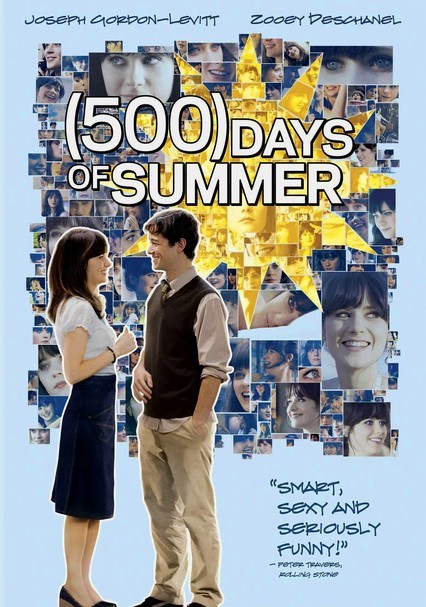
(500) Days of Summer-2009

(500) Days of Summer-2009

Director Marc Webb

Starring Zooey Deschanel, Joseph Gordon-Levitt

Scott’s Review #1,002

Reviewed March 20, 2020

Grade: B

(500) Days of Summer (2009) is an unconventional love story that deserves props for being different, but never completely catches fire as a film effort.

What it tries to do left-of-center from most conventional romantic comedies is to be admired, but I did not feel much connection to the characters and the result seemed pointless.

The independent film garnered some praise for being unique and clever, but this is out-shined by a gnawing, forced feeling, like the filmmakers are trying to be edgy for the sake of being edgy, adding in contrived story elements.

The lead characters conveniently both like an obscure band and an obscure artist, throwing them immediately together.

The film is a modest effort but will only be remembered as an indie project with a bit of unfulfilled potential.

When his girlfriend, Summer (Zooey Deschanel), unceremoniously dumps him, greeting card copywriter and hopeless romantic Tom (Joseph Gordon-Levitt) spins into depression and begins reflecting on the year-long relationship the pair spent together, looking for clues as to what went wrong.

As he rummages through the good times and the bad times, his heart reawakens to find what is most important.

The Los Angeles backdrop sets the tone for the five hundred days of Tom and Summer.

Director, Marc Webb, a first-time director at this point, now known more for The Amazing Spider-Man reboot franchise (2012-2014) steers in an experimental direction.

Shown somewhat like a “year in the life” of the young lovebirds blossoming relationship, the film is presented in a nonlinear narrative, jumping between various days within the five hundred days of Tom and Summer’s relationship. There is an on-screen timer showing the day, which is a nice addition.

Props are given for the creativity Webb infuses. The romantic comedy genre, not my favorite, is constantly saturated with formulaic films, predictable from the start.

Frequently told from the female perspective, (500) Days of Summer tells the story from the male perspective, even reversing the traditional gender stereotypes. Tom is the lovesick romantic, and Summer is the rough-and-tumble, one-night-stand type.

This is nuanced and throws the entire genre upside down.

The characters are questionable and the ablest to relate to is Tom. There is some confusion and mystery with some motivations. The audience can understand how Tom falls head over heels for Summer, immediately smitten.

His depression is deep and to be taken seriously, but he is depressed because of Summer, and any history or previous causes of depression are not mentioned. It feels like his depression is a convenient way of adding a story element.

Summer is even more perplexing and not deeply explored. Is she merely playing the field? After a song and dance scene where she explains she is not looking for anything serious and wants a casual romance, she suddenly marries another man.

She hurriedly tells Tom that she discovered her husband was her true love and that she now believes in love, whereas Tom doesn’t anymore.

Again, this feels more like storyline-dictated writing versus anything character-rich.

Despite receiving a Best Screenplay Independent Spirit Award nomination, two Golden Globe Award nominations, and oodles of praise, (500) Days of Summer (2009) is a non-conformist piece with some nice moments but feels irrelevant.

The lead actors are talented and do a decent job with the material given, but meander through the experience since it is more about the film than the acting.

The result is not a pure dud, but neither is it a pedigree winner.

Independent Spirit Award Nominations: 1 win-Best Feature, Best Male Lead-Joseph Gordon-Levitt, Best Screenplay (won)

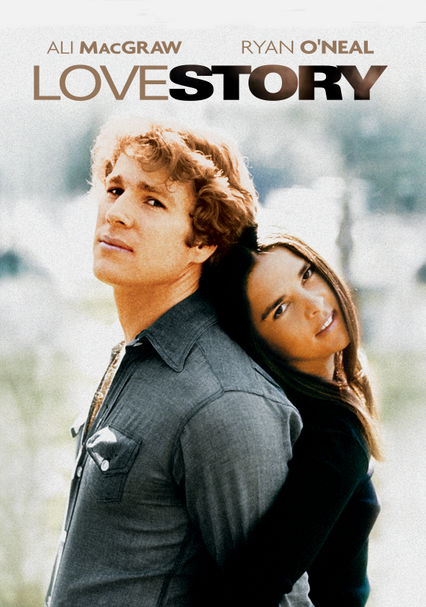
Love Story-1970

Love Story-1970

Director Arthur Hiller

Starring Ryan O’Neal, Ali MacGraw

Scott’s Review #950

Reviewed October 23, 2019

Grade: B+

Love Story (1970) was an enormous blockbuster hit at the time of release with two good-looking stars of the day immersed in a tragic romance. Almost fifty years later the story feels contrived and watered down with a “been there seen that” result.

While reviewing the film one must be mindful of the period in which the film was made (before similar films hit the circuit) and the chemistry between the leads holds up quite well.

Perhaps the film works best having seen it decades ago as it now feels dated.

Handsome Oliver Barrett IV (Ryan O’Neal) is a star ice hockey player attending Harvard University in Cambridge, Massachusetts. He is heir to the wealthy Barrett family led by father Oliver Barrett III (Ray Milland).

While at school he meets the blue-collar Jenny Cavilleri (Ali MacGraw), who attends neighboring Radcliffe College and studies classical music. The couple falls madly in love becoming inseparable.

Oliver is met with anger after he proposes to Jenny, She accepts, and they travel to the Barrett mansion so that she can meet Oliver’s parents. They are judgmental and unimpressed with her thinking she is nice, but hardly a companion for their son.

Later Oliver’s father tells him that he will cut him off financially if he marries Jenny. After graduation, Oliver and Jenny marry nonetheless and begin a life of financial struggle but filled with happiness. When they attempt to conceive they learn that Jenny is terminally ill and has weeks to live.

The prime appeal of the film is the romance between Oliver and Jenny which feels primal and honest. They are the cliched rich boy and poor girl equation but in this film the dynamic works.

O’Neal and MacGraw are good-looking and were on the cusp of Hollywood A-list classification so the stars aligned in the casting. They ebb and flow at the beginning of the film with Jenny’s sarcasm and Oliver’s quiet arrogance, but there is never a doubt the pair will fall madly in love and we, the audience, are hooked from the start.

On an atmospheric level, the icy northeastern climate and the myriad of exterior scenes throughout Massachusetts give the film a proper ambiance.

For anyone who has studied at a university in this area or has an interest, the film succeeds, and it adds a robust flavor to the surrounding events. The youthful wonder and the promise of a bright future are of paramount importance to the story being told and the foreshadowing is effective.

The film lacks guts in the pacing area though. Most of Love Story is spent focusing on the newness of Oliver and Jenny’s romance and their hurdles surrounding family members and a brief nod to class and societal roles.

At a brief one hour and thirty-five minutes, there is very little time left for the shocking turn of events surrounding Jenny’s illness. Coming out of nowhere, the character is alive and well, has a brief fainting spell, and is then seen lying on a gurney before dying off-screen.

There is no bedside death scene, no suffering or deteriorating health, and the entire tragedy is glossed over. Hence the title, the focus is on the “love story” but this seems like a scam.

So much is invested in the couple that the loss seems skimmed over. How can one die from leukemia (blood cancer) within a few days anyway?

The filmmaker’s clear attempts at playing it safe are at the expense of the overall film experience.

Love Story (1970) deserves praise for being one of the first of its kind- the romantic tearjerker. The genre would soon become soaked with imitators so cliched that they bring the original down a notch because it now feels trite.

The ‘chick flick’ contains good acting and nice scenery but lacks the emotional depth I was hoping for. Melodramatic to a fault the appeal of the leads surges the overall effort way more than it should.

Oscar Nominations: 1 win-Best Picture, Best Director-Arthur Hiller, Best Actor-Ryan O’Neal, Best Actress-Ali MacGraw, Best Supporting Actor-John Marley, Best Story or Screenplay Based on Factual Material or Material Not Previously Published or Produced, Best Original Score (won)

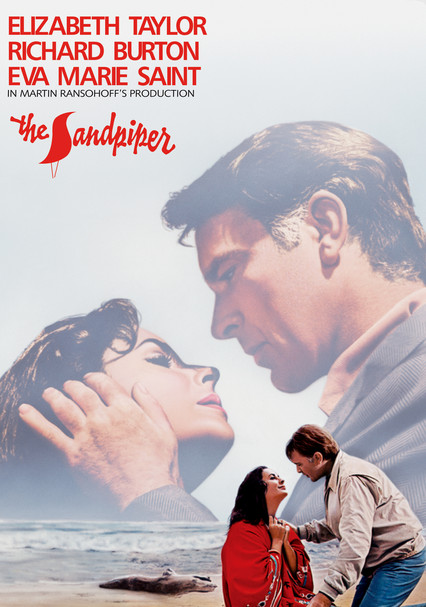
The Sandpiper-1965

The Sandpiper-1965

Director Vincente Minnelli

Starring Richard Burton, Elizabeth Taylor, Eva Marie Saint

Scott’s Review #897

Reviewed May 12, 2019

Grade: B+

The Sandpiper (1965) is a film that stars Elizabeth Taylor and Richard Burton, released at the very height of their fame.

It capitalized on their notoriety as one of the world’s most famous couples and their well-known romantic tribulations. Although they portrayed adulterous lovers, they were married shortly before filming began.

The film’s theme of adultery closely mirrored their own lives at the time, as each very publicly conducted an affair with each other while married to spouses.

The film is a lavish and sweeping production. It is one of the few major studio pictures ever filmed in Big Sur, and the story is expressly set there.

Big Sur is a rugged and mountainous section of the Central Coast of California between where the Santa Lucia Mountains rise abruptly from the Pacific Ocean. It is frequently praised for its dramatic scenery and is the perfect location for a film with romance.

The Sandpiper (1965) is a romantic drama featuring the two stars’ chemistry. It is a pure case of art mimicking real life, at least in some way. Watching the actors work off one another is fascinating and wonderful. It makes me wonder what life would have been like on the set amidst the dreamlike and steamy locale and the fresh romance.

The story is not dynamic but quite theatrical, the actors being the main reason for watching.

Taylor plays Laura Reynolds, a bohemian, free-spirited single mother who lives in Big Sur, California, with her young son, Danny. Laura makes a living as an artist while homeschooling her son, who has gotten into trouble with the law.

When Danny is sent to an Episcopal boarding school, Laura meets the headmaster, Dr. Edward Hewitt (Burton). The duo falls madly in love despite Edward marrying teacher Claire (Eva Marie Saint).

The melodrama only escalates as those close to the pair catch on to their infidelity.

The gorgeous locale of Big Sur is second to none and exudes romance and sexual tension with the crashing waves against the mountainous terrain, symbolic of a passionate love affair. As the characters capitulate to each other, the lavish weather only infuses the titillating experience.

Taylor is lovely to look at throughout the film, and the erotic nude chest of the character plays a significant role. I wondered if the inclusion had the desired effect or resulted in unintended humor, as the endowed sculpture is quite busty.

The film belongs to Taylor and Burton, but the supporting cast deserves mention for creating robust characters that add flavor.

Eva Marie Saint plays the amiable wife, distraught by her husband’s infidelity but later coming to an understanding. Charles Bronson plays Cos Erickson, Laura’s protective friend, who despises Edward’s hypocrisy.

Finally, Robert Webber is effective as Ward Hendricks, a former beau of Laura’s, eager for another chance with the violet-eyed bombshell.

The film’s title represents a sandpiper with a broken wing that Laura nurses as Edward looks on. The bird lives in her home until healed and then flies free, though it returns occasionally.

This sandpiper is a central symbol in the movie, illustrating the themes of growth and freedom. Its sweetness is appropriate for the love story between Laura and Edward.

The Sandpiper is an entertaining film but not a great one. It suffers from mediocre writing and cliched storytelling but is a vehicle for Taylor and Burton.

The fascination is watching the actors, not for a great cinematic experience; the film is not very well remembered but for fans of the supercouple.

The film was made one year before the dreary yet brilliant Who’s Afraid of Virginia Woolf? (1966) starring the same husband and wife duo as does The Sandpiper (1965).

Laura and Edward are worlds apart from George and Martha, and when watched in close sequence, one can marvel at the acting chops of each star.

The film won the Academy Award for Best Original Song for the sentimental “The Shadow of Your Smile.”

Oscar Nominations: 1 win-Best Song-“The Shadow of Your Smile” (won)

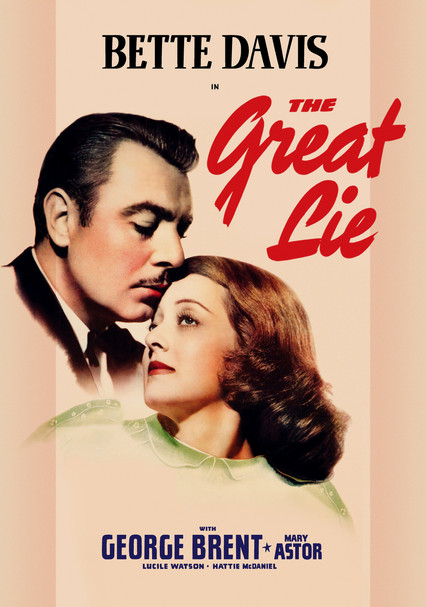
The Great Lie-1941

The Great Lie-1941

Director Edmund Goulding

Starring Bette Davis, Mary Astor

Scott’s Review #891

Reviewed April 28, 2019

Grade: B+

Breezing into her heyday of films at this point, Hollywood starlet Bette Davis had become an expert at portraying tarts and bitches in most of her movies. Desiring to turn left of center and play a more sympathetic character, the actress jumped at the chance to play an ingenue.

The Great Lie (1941) is the perfect showcase for her talents in a gripping, dramatic film that is purely predictable soap opera, but lovely escapism did well.

Maggie Patterson (Davis) is a demure and sensitive southern socialite vying for the affections of former beau, aviator Peter Van Allen (George Brent). Peter impulsively married sophisticated concert pianist Sandra Kovak (Mary Astor), and both were startled to learn that their marriage was invalid.

Confused, Peter decides to marry Maggie and is quickly sent off to Brazil on business when his airplane crashes into the jungle, leaving him presumed dead.

When Sandra realizes she is pregnant, Maggie proposes that she be allowed to raise the child independently in exchange for financially caring for Sandra. The two women go to Arizona to await the birth, and Sandra delivers a boy named after his father.

When Peter shows up alive and well, the women face a quandary. Sandra bitterly announces to Maggie that she intends to ride off into the sunset with Peter and her son. For the remainder of the picture, the women metaphorically scratch and claw at each other.

Despite being melodramatic and stellar for an afternoon daytime drama, the storyline is engaging and never suffers from too much contrivance.

Both Maggie and Sandra have appeal, and both women are likable—or at least the film does its best not to make one woman the clear villain. Sandra, dripping with gorgeous fashion and sturdy poise, is confident, pairing well with Maggie’s southern charm and sensibilities—to say nothing of her wealth. Peter would do well with either woman, and I found my allegiances shifting throughout the film.

Mary Astor’s terrific performance as Sandra nearly upstages Davis. The women are the reason for The Great Lie’s grit and gusto. They play the hell out of their roles, and according to legend, both hated the script and vowed to turn the project into gold together.

They nearly succeed as the best sequence is when the women travel to deserted Arizona to spend the remainder of Sandra’s pregnancy. They cooped up together. Seeing Davis’ Maggie play caretaker to a whiny and spoiled Sandra was delicious. Typically, Davis would play Sandra’s character, so the scenes are a treat.

Suspension of disbelief must be achieved as the film’s primary plot is jarring in incomprehension. Maggie offers to provide Sandra with a large sum of money to ensure her security. I did not buy this point as Sandra appears well-off, touring the world with incredible success and living a lavish lifestyle, including a staff of servants and a gorgeous apartment in New York City.

The character hardly appears to need a handout despite the incorporated dialogue of Sandra’s success predicted to wane as she ages.

Another oddity is the location of Maggie’s estate. Although Maryland is hardly a southern mecca, the area has all the trimmings of the deep South, perhaps Mississippi. With an all-black staff, magnolia trees, and southern-style cuisine, the Maryland backdrop is quite perplexing and a misfire.

More relevant would have been if the location were Mississippi, Louisiana, or Alabama. Finally, remiss would it be not to mention appearances by Hattie McDaniel and brother Sam as Violet and Jefferson, employed by Maggie, always a treat.

With high drama and terrific acting, The Great Lie (1941) offers tremendous chemistry between the female leads, resulting in a deserved Best Supporting Actress Oscar for Astor.

The dialogue may be silly and superfluous with plot gimmicks and obvious setups, but the film does work. Viewers can let loose and enjoy a sudsy drama with enjoyable trimmings.

Oscar Nominations: 1 win-Best Supporting Actress-Mary Astor (won)

Crazy Rich Asians-2018

Crazy Rich Asians-2018

Director Jon M. Hu

Starring Constance Wu, Henry Golding

Scott’s Review #860

Reviewed January 26, 2019

Grade: B+

Crazy Rich Asians (2018), the romantic comedy smash of 2018, is a fun romp that is memorable because it centers on the Asian population, which is shamefully underrepresented in mainstream American cinema.

For this point alone, the film is recommended and worthy of praise, but otherwise, it is a standard genre film with gimmicks, stock characters galore, and a predictable conclusion.

The numerous cultural tidbits included must be mentioned, which raise the film above mediocrity.

Rachel Chu (Constance Wu) and Nick Young (Henry Golding) are a happily dating New York City couple; she is a New York University college professor, and he is an entrepreneur.

They fly to Singapore to attend Nick’s best friend’s wedding, which results in antics and anguish. Rachel realizes that Nick comes from an extremely wealthy family and is Chinese royalty, owning a multitude of lavish hotels and real estate.

Most of Nick’s family, especially his traditional mother Eleanor (Michelle Yeoh), disapproves of the pairing, viewing Rachel as a typical American who prioritizes passion over family.

Nick is a sought-after commodity among the single women of Singapore, and Rachel is forced to endure harassment and mockery at every turn. Her allies are Nick’s kind sister Astrid (Gemma Chan), Rachel’s outrageous college pal Peik Lin (Awkwafina), and her equally garish family.

The plot thickens when Nick’s scheming mother does a background check on Rachel and discovers a family secret.

Crazy Rich Asians is a formulaic romantic comedy with the standard situations and characters expected of a genre film. The rivalry between the good girl and her boyfriend’s domineering mother, the comic relief of the gay sidekicks as Peik Lin and another friend of Rachel’s, provides.

The caricatures of Peik Lin’s wild family, her unattractive brother fond of taking secret photos of Rachel, and Eleanor’s snooty, judgmental circle of female friends are all well cast yet one-dimensional.

It is perplexing why the filmmakers decided to make Nick only half Chinese rather than authentically Asian. Sadly, this may have been a reassurance that the film would be more marketable to mass audiences.

The film is presented as an Asian film, but it is an American film.

The storyline justification is that Nick’s father (surprisingly never seen) is British and that he and Eleanor met in college, only she being Chinese. Nick and Astrid’s English accents gnawed at me throughout the film.

Despite the myriad of cliches and manipulations, Crazy Rich Asians has a nice flow and offers a fun two hours. The film is flavorful with bright colors and visual spectacles of stylish and sophisticated Singapore and its modern and sleek nuances.

I adored the locales featuring the skyline and a rich overview of the robust and relevant city/country.

Fantastic is how the filmmakers add spices of traditional Chinese culture throughout the film’s telling, quickly becoming more of an ode to the good history. Nick’s grandmother, Su-Yi (Lisa Lu), takes pride in her excellent and artistic flowers, and Rachel is introduced to the art of dumpling making.

Crazy Rich Asians introduces a history lesson for those unfamiliar with ancient Chinese customs.

Flavorful inclusions of Mandarin Chinese language versions of American pop hits are also lovely additions, so the film has some tidbits to revel in other than the story.

Most songs reference money, such as “Money Honey” by Lady Gaga and “Rich Girl” by Hall & Oates.

The pacing of the film is nice. There is never a dull or dragging moment, and a nice balance of comedy and drama. Humorous is when Peik Lin provides Rachel with a costume makeover, ensuring she looks dynamic for the grand wedding, as she convinces her to fight Eleanor with fire.

Drama ensues when someone casts a dead fish on Rachel’s bed, and Eleanor spits that Rachel will never be enough for her son.

The film’s conclusion is predictable, resulting in a marriage proposal aboard a jet heading from Singapore to New York City. With a movie like Crazy Rich Asians, it is guaranteed that the couple lives happily ever after, riding off into the sunset in great defiance of Nick’s roots.

Due to the film’s success, a sequel is a solid bet, though I am also not betting the follow-up will be any good. Are romantic comedy sequels ever decent?

Filled with cliches, but satisfying most mainstream film-goers, Crazy Rich Asians (2018) creates a film with enough shards of Asian culture to at least get the Asian population on the map with a Hollywood production.

Although the film has a polished look and some stereotypes, it breaks no new ground other than good inclusion, and that is a start.

If Beale Street Could Talk-2018

If Beale Street Could Talk- 2018

Director Barry Jenkins 

Starring Kiki Layne, Stephan James

Scott’s Review #854

Reviewed January 8, 2019

Grade: A

2018 proved to be a year where filmmakers of color prided themselves in telling stories of diversity, inclusion, social injustice, and the never-ending challenges of minorities.

One of the year’s best films is If Beale Street Could Talk (2018), a lovely piece of storytelling by director Barry Jenkins. His other major work, Moonlight (2016), is a similarly poignant and melancholy experience.

The film is based on a novel by James Baldwin.

The title is explained in the first dialogue of the film. Beale Street exists in New Orleans, but thousands of streets exist in other cities. It is a metaphor for discrimination and unnecessary struggles that black folks continue to endure.

Right away, the audience knows that an important story is to be told.

The wonderful part of If Beale Street Could Talk is the combined elements that lead to brilliance.

Tish Rivers (Kiki Layne) and Fonny Hunt (Stephan James) have known each other since childhood. Growing up in a Harlem neighborhood, their families are interconnected and community-centered.

Events begin in 1973 when Tish realizes she is pregnant. Ordinarily, a happy occasion, this situation presents a major challenge because Fonny is imprisoned for a crime he did not commit.

A woman has accused him of rape and a corrupt policeman has positively identified Fonny as the rapist despite this being a logistical impossibility. Tish is determined to prove his innocence before the baby arrives with the assistance of her family.

The story is non-linear. Jenkins begins the film in the present day with Tish breaking the news of her pregnancy to him and then notifying her family.

As the film progresses, more of Fonny and Tish’s love story is explored. The couple falls in love, has romantic dinners, and nervously makes love for the first time. In this way, the film becomes a tender story of young love.

The social injustice and family drama are carefully mixed amid the central romance.

The film impresses with warm touches, ingenious cinematography, and a musical score that left me resounding with pleasure at the intricate and intimate details. The frequent use of jazz music over dinner or as the Rivers family sips celebratory wine adds sophistication to many scenes.

The film’s texture is muted and warm, giving it a subdued look that is genuine to the quiet and timeless nature of the production.

A plume of cigarette smoke can be seen in nearly every scene, as most of the characters smoke. Since the period is the 1970s, the authenticity is there, and a glamorous image is portrayed.

Smoking enhances the sophistication of the characters and adds to the tremendous cinematography.

Several scenes of simple dialogue crackle with authenticity and passion. In one of the best scenes, Fonny’s friend Daniel, a recent parolee, stays for dinner, and the friends talk while consuming beer and cigarettes.

The lengthy scene is poignant and tremendous with meaning. Daniel recounts his experience in prison and how black men are victims of the whims of white men and the terror involved in that. The scene is powerful in its thoughtfulness and a foreshadowing of Fonny’s impending trauma.

The supporting characters are stellar and add to the bravura acting troupe.

Regina King as Sharon Rivers gives an excellent performance when she bravely travels to Puerto Rico and confronts Fonny’s accuser, hoping to get her to modify her story. The scene is laden with emotion and honest dialogue.

The other notable actors are Colman Domingo and Teyonah Parris, who play Tish’s father and sister, respectively. Both do wonders in fleshing out the Rivers family as strong and kind people.

Jenkins is careful to add benevolent white characters to offset the other dastardly white characters. An example is the kindly old woman who comes to the rescue of Fonny and Tish and berates the cop.

The Jewish landlord who agrees to rent a flat to the pair is portrayed as decent and helpful, and finally, the young lawyer who takes Fonny’s case is earnest and understanding.

If Beale Street Could Talk (2018) continues talented director Barry Jenkins’s plunge into the depths of being one of the modern greats. With a beautifully visual and narrative film, he creates an experience sure to win more fans.

The ending is moving yet unsatisfying, as there are so many more miles to go in the race for prison justice. Adapting an important story of race and repression based on skin color is a powerful and detailed affair.

I cannot wait to see what Jenkins comes up with next.

Oscar Nominations: 1 win- Best Supporting Actress- Regina King (won), Best Adapted Screenplay, Best Original Score

Independent Spirit Award Nominations: 3 wins- Best Feature (won), Best Director- Barry Jenkins (won), Best Supporting Female- Regina King (won)

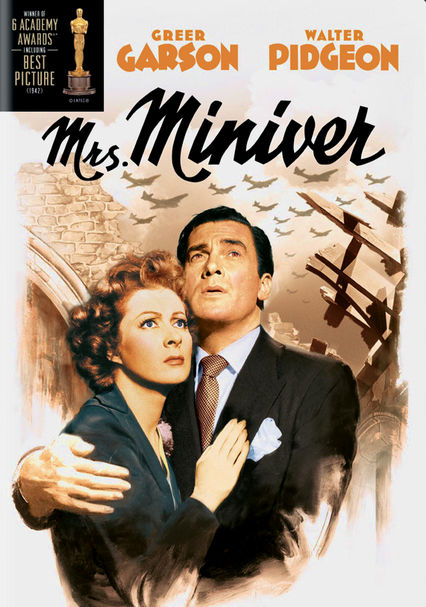
Mrs. Miniver-1942

Mrs. Miniver-1942

Director William Wyler

Starring Greer Garson, Walter Pidgeon

Scott’s Review #841

Reviewed December 13, 2018

Grade: A-

Released in 1942 amid the horrific World War II, Mrs. Miniver (1942) was a smash hit, winning over audiences concerned with the troubled and uncertain times.

Decades later, the film does not age as well as other similarly themed films, but still entertains and tells a good story with an important theme.

The film is nestled in the war drama genre with romance. The film won numerous Oscars the year of its release, including Best Picture and star Greer Garson won for Best Actress.

The story is told from the perspective of an affluent British family and the struggles they face to keep things together during growing peril. The focus primarily remains on an unassuming housewife, Kay Miniver (Garson).

The supporting players do much to flesh out the film with fantastic performances by Walter Pidgeon, Teresa Wright, and Henry Travers as Clem Miniver, Carol Beldon, and Mr. Ballard, respectively.

The direction by William Wyler is astounding and adds to the perfectly crafted ambiance and homey details.

The family lives a comfortable life in a whimsical village outside of London. Quite idealized, they own a large garden and a motorboat on the River Thames.

Along with Kay and Clem, their three children of varying ages and their housekeeper and cook reside with them. Besides the parents, the central couple is son Vin (Richard Ney) and the prominent Carol (Wright); the pair initially disagree on politics but finally fall madly in love.

As the soap opera-style family situations continue, the war grows closer and closer to their house.

As Mrs. Miniver progresses, Vin enlists in the army to assist with war efforts, a German Nazi breaks into the Miniver house, a central character dies, and bombs and planes crash.

Through it all, Kay remains stoic and takes the family through challenging situations, adding melodrama to the film. The woman’s journey and resolve to keep everything and everyone intact is at the core.

The film is mainly a family drama with the Minivers and the townspeople experiencing trials and tribulations. In this way, Mrs. Miniver risks being a one-trick pony, albeit an emotional and teary-eyed one.

The film’s rich characteristics and polished nature make it more than it ought to be, and the superlative cast, production values, and timely release undoubtedly made it what it was in 1942.

In present times, however, Mrs. Miniver seems diminished in importance and relevance with a sappy and overly sentimental feel, World War II in the distant past, and several other wars come and gone.

Wyler carefully packaged the film to hit every emotion, from the bombastic musical score to the proper English characters to the comic relief housekeeper.

The film is a giant Hollywood production, but perhaps a bit too perfect to age with any zest or reason to watch more than once.

The film might be better remembered for its strong female lead. Told from Kay’s perspective, it was unusual in 1942 for a movie (especially with a war theme) not to have the story from the male point of view. Still refreshing in 2018, this quality was downright groundbreaking at the time.

Kay stays strong and proud through the ravages of war that are closing in on her family with unbridled boldness and nary a simpering quality. Wright’s Carol is an early champion for strong, female-driven characters, and, in a more minor way, she is also a muscled female role model.

Mrs. Miniver (1942) is a well-crafted film of its time that displays lavish production values and strong characters worthy of admiration.

The film is a significant win for a glimpse of the 1940s, especially for fans of good, solid drama. There are no significant flaws to harp on, but the overall piece has not aged exceptionally well, and other similar films (Casablanca, 1942) are more memorable.

Oscar Nominations: 6 wins-Outstanding Motion Picture (won), Best Director-William Wyler (won), Best Actor-Walter Pidgeon, Best Actress-Greer Garson (won), Best Supporting Actor-Henry Travers, Best Supporting Actress-Teresa Wright (won), Dame May Whitty, Best Screenplay (won), Best Sound Recording, Best Cinematography, Black-and-White (won), Best Film Editing, Best Special Effects

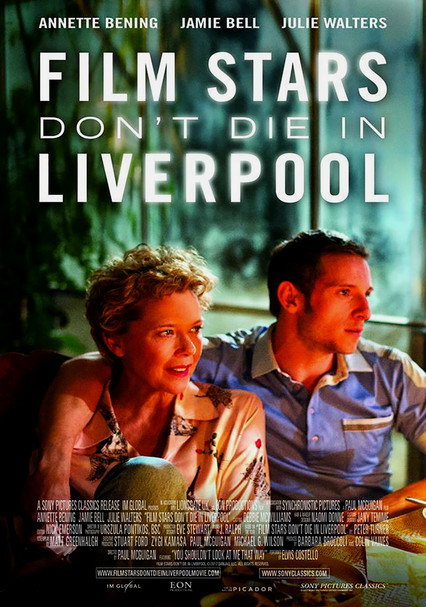
Film Stars Don’t Die in Liverpool-2017

Film Stars Don’t Die in Liverpool-2017

Director Paul McGuigan

Starring Annette Bening, Jamie Bell

Scott’s Review #840

Reviewed December 11, 2018

Grade: B+

Film Stars Don’t Die in Liverpool (2017) showcases a compelling performance by stalwart actress Annette Bening as she plays faded, insecure Hollywood glamour girl Gloria Grahame.

The film focuses only on Grahame’s final two years of life as she battles breast cancer and begins a relationship with a much younger man, Peter Turner (Jamie Bell).

The film is a sad yet poignant dedication to the star, featuring enough performance gusto from its actors to compensate for a limited period. However, there is too much back-and-forth within the timeline, which complicates the film too much.

As a result, Film Stars Don’t Die in Liverpool is endearing but does not hit it out of the park.

The entire film takes place between 1979 and 1981. In 1979, actress Gloria Grahame, with her best days behind her, resides in a rented Liverpool room. She finds some success in local theater and befriends her much younger male neighbor.

The pair become romantic partners and experience trials and tribulations as the film teeters back and forth between Grahame’s ailing final days in 1981 to happier times in Los Angeles and New York. Gloria also befriends and finally lives with Peter’s parents, who care for her unflinchingly.

The story is enveloped in sadness but is not a downer either.

The film begins towards the end of Gloria’s illness, though the audience is not yet aware of her disease’s seriousness. Insisting she has painful gas, the tender relationship between the actress and Peter is explored.

The story begins in 1979 when Peter and Gloria first met. He is an aspiring actor who is unaware of who she is until a bartender makes the connection.

In this way, the film makes it clear that this is not a story about a young man seeking the fortunes of a presumably wealthy woman. I like this point, as the story is about romance, not money-grubbing.

Film Stars Don’t Die in Liverpool belongs to Bening.

The supporting roles are well cast, and they do not diminish Bell’s performance or Julie Walters’s nice turn as Peter’s mum.

However, Bening does wonders emulating Grahame’s mannerisms with an innocent, damsel-in-distress nature (mirroring the roles she made famously).

Bening was amazing at revealing the actress’s insecurities, fear of aging, and older appearance. During a fight, Peter cruelly refers to her as an “old lady,” and we see the comment strike a deadly blow as if she had been physically slapped.

Bening is so good at portraying a myriad of emotions throughout the film.

Another high point comes towards the end of the film. I love how the film connects Gloria and Peter’s earlier argument (and breakup) with a later sequence.

Peter assumes she is carrying on with another man when he learns she has lied about her whereabouts. The haunting reality is later revealed, changing the audience’s perception of the events.

This is good writing by the screenwriters.

To counter the above point, the constant back and forth from 1981 to 1979 and everywhere in between detracts from my enjoyment of the overall film.

Although the film spans only two years, it spends way too much time in multiple locations without enough explanation. Suddenly, G, Loria, and Peter are in Los Angeles having dinner at Gloria’s modest house, and they are in New York City in her lavish Park Avenue apartment.

The film would have been better suited with a straightforward approach chronicling events from 1979 to 1981 in sequence.

Another negative is the omission of any scenes before 1979.

The actress’s career thrived during the 1940s and 1950s, so capturing those earlier days would have been interesting. If the fear was that Bening was too old to pass for a younger Grahame, another actress could have been used for those scenes.

While a clip of the real Grahame winning the Oscar and a few clips of her starring in films are nice, way more time could have been spent on more stories.

Thanks to a brilliant performance by Bening and an emotional story that in large part succeeds, Film Stars Don’t Die in Liverpool (2017) is a win.

The film was not recognized during awards season as initially anticipated. This could have been due to the overly complex timeline, which produced a limiting feeling. The production and writing are excellent but lack greatness.

Casablanca-1943

Casablanca-1943

Director Michael Curtiz

Starring Humphrey Bogart, Ingrid Bergman

Scott’s Review #838

Reviewed December 7, 2018

Grade: A

Casablanca (1943) is a classic style Hollywood film made during a decade when big studio productions were all the rage. The film may very well be in the top ten creations of its day and a movie that nearly everyone has either seen or is aware of.

A grand romantic World War II drama released at the perfect time, the film contains legendary stars Humphrey Bogart and Ingrid Bergman. It is flawless in nearly every way, as a lavish production should be.

Bogart stars as Rick Blaine, an expatriate who owns a lavish nightclub in Casablanca, Morocco. The film takes place in December 1941, before the United States entered the vicious World War II.

His clientele ranges from French and German officials to refugees attempting to flee the country, fearful of being stuck in a foreign land. Mixed in with the melee of varied characters is Ilsa (Bergman), a former flame of Rick’s, who appears with a new husband, Victor, a Czech leader.

Ilsa begs Rick for help escaping the country, and their romance begins to blossom again.

Through scenes, we see Rick and Ilsa living perfectly in pre-war Paris. They happily co-exist, sharing a happy life, unaware of the conflict and secrets that will emerge in Casablanca two years later.

Victor is initially presumed dead, which leads to Ilsa’s initial freedom and romance with Rick.

Back in Casablanca, Rick has essential letters that will allow the holder to escape the city and be bound for safety in another country. While Ilsa is desperate for these letters, she is also madly in love with Rick, and vice versa, adding a strong romantic element to the film.

Supporting characters are mixed into the plot as desperation and impending doom interplay.

Casablanca is a film with things happening simultaneously, which is a significant part of its draw. From the apparent romance of Rick and Ilsa- the focal point of the story part of the draw are the sub-plots weaved within.

The nasty Nazi Major Heinrich Strasser encompasses the future Third Reich and the devastation this group would ultimately cause. A multitude of supporting characters and extras perfectly flesh out both the cast and the look and feel of the film.

The most interesting character is Rick.

Once idealistic and moral, he has changed, becoming cynical and broken. In this way, the film nearly becomes a character study. The audience sees the change in Rick and slowly realizes he has given the war the culprit.

The final sequence reveals Rick and Ilsa’s fate. Their doomed romance is assuredly no surprise, true to the message. An “unhappily ever after” result was rare in a big studio production and is a testament to the well-written story.

The featured piano number and Casablanca’s “theme song” is the lovely yet melancholy “As Time Goes By.” Beautifully played by Sam (Dooley Wilson), the house pianist and close friend of Rick, the number is instrumental to the plot and specifically to Rick and Ilsa’s romance.

The song is a painful memory of the once-idyllic life the pair shared.

The film’s timing, made in 1941 and released in 1943, is the key to its unrelenting success. American audiences undoubtedly found it identifiable, and the uncertainties of the impending war threatened their current freedoms.

Casablanca was wonderfully marketed in this way, and its compelling nature resonated. Audiences shared Rick’s conflict and “for the greater good” perspective.

Casablanca (1943) is a film that educates, entertains, and romances without exhibiting a shred of pretension. The crisp black-and-white filming and the unique use of light and shadows to reflect the characters’ thoughts make the film lovely and has a lofty budget.

Immersed in the richness are sadness and a timely message about a changed man, a failed romance, and the ravages of war that still resonate decades later.

Oscar Nominations: 3 wins-Outstanding Motion Picture (won), Best Director-Michael Curtiz (won), Best Actor-Humphrey Bogart, Best Supporting Actor-Claude Rains, Best Screenplay (won), Best Scoring of a Dramatic or Comedy Picture, Best Cinematography, Black-and-White, Best Film Editing

That Hamilton Woman-1941

That Hamilton Woman-1941

Director Alexander Korda

Starring Laurence Olivier, Vivien Leigh 

Scott’s Review #779

Reviewed June 27, 2018

Grade: B+

That Hamilton Woman (1941) is an obscure, black, and white gem that stars legendary actors and real-life couple Vivien Leigh and Laurence Olivier.

Providing a story of an old-fashioned style romance, war battles, and dazzling cinematography, the film succeeds as a classic film that should be better remembered than it is.

The overall theme here is a tragic love story with a sad ending.

One of the best aspects of That Hamilton Woman is witnessing the super-couple team of Leigh and Olivier act opposite one another. The actor’s talents are reason enough, but it makes a fascinating viewing experience.

The curiosity of the pairing of big stars in their heyday is a delight and highly appealing, and both actors do not disappoint. One wonders whether they were acting or otherwise enjoying the experience.

Lady Hamilton begins with a jarring scene in which the title character, Emma Lady Hamilton (Vivien Leigh), is thrown into debtor’s prison after stealing booze in France.

The rest of the story is told via flashbacks as she regales her fellow prisoners with how she ended up in her current state. Her former life starkly contrasts Emma’s appearance as a young woman with hope, promise, and riches.

It is hard to imagine how her life turned out so severely, which gives the film quality of intense intrigue.

The film then has a “riches to rags” element as the story is reversed. Full of energy, British Emma moves with her mother to the Kingdom of Naples, where she marries the affluent (and much older) Sir William Hamilton (Alan Mowbray), presumably for his money.

When handsome Admiral Horatio Nelson (Olivier) appears on the scene, the pair fall madly in love. They face tremendous hurdles, however, as the war rages on and each is unfaithful to their respective spouses.

Since the film was made scarcely two years after the epic romance Gone with the Wind (1939), one cannot help but compare Leigh’s portrayal of Emma to Scarlett O’Hara.

Emma comes across as a British version of the southern lass, especially as she is clad in gorgeous gowns or romancing men.

However, as the film develops, she becomes a much more sympathetic character and certainly less of a vixen. Still, there are plenty of similarities for viewers to draw from.

The role of Lady Frances Nelson (Gladys Cooper) is completely one-note, so the rooting value is never doubted. The film intends for the audience to be in the corner of Emma and Horatio, and that said, Cooper does a fantastic job of making her character completely unlikeable. Her icy, vengeful spirit perfectly complements the sympathetic lead characters. The fact that Horatio and Emma are adulterers, especially for the year the film was made, is not fully explored.

To be critical, the video quality is not the greatest, presumably because the film is old. If the film had been in color, the gorgeous Italian landscapes and Leigh’s lovely costumes would have appeared even more lavish and picturesque.

However, due to the film’s age, not much can be done about it unless it is decided to repackage the disc or make it a Blu-ray offering.

Still, the film frequently features southern Italy’s luminous mountains and lush oceans, which is a real treat.

Purely a showcase for newlyweds Olivier and Leigh to dish their real-life romance for mainstream audiences, That Hamilton Woman (1941) must have been a big deal at the release.

While suffering from lackluster film quality, the story is quite hearty, featuring romantic scenes, loud, bombastic battle scenes, and a bit of British and Italian history.

Sadly, this film is largely forgotten, but it is a good watch for fans of the legendary stars.

Oscar Nominations: 1 win-Best Sound Recording (won), Best Art Direction-Interior Decoration, Black-and-White, Best Cinematography, Black-and-White, Best Special Effects

God’s Own Country-2017

God’s Own Country-2017

Director Francis Lee

Starring Josh O’Connor, Alec Secareanu

Scott’s Review #773

Reviewed June 13, 2018

Grade: B+

God’s Own Country (2017) is a British, romantic, LGBT-themed drama directed by Francis Lee, making his directorial film debut.

The setting is farming land in the Yorkshire (northern England) territory, making the film quite lovely to watch, and the pace is slow. Lee does not rush the story’s pace either, so it mirrors the slow life that farmers must endure.

The film is somewhat autobiographical of Lee’s own life.

The connection and chemistry between the two leads are palpable, and the love story is endearing. It is awe-inspiring to see two cultures come together and merge as one.

The film is a nice watch and an above-average story, making it worthy of LGBT audiences worldwide. Those who believe in true love and find their soulmate will be deeply satisfied.

Twenty-something Johnny (Josh O’Connor) lives a dull existence on his father’s farm in remote Yorkshire, England. His grandmother (Gemma Jones) also lives there, and due to his father’s recent stroke, the farm’s success is in question. Johnny is depressed, drinking regularly, and engaging in sexual encounters with men.

Romanian migrant worker Gheorghe (Alec Secareanu) is hired to help, and the two young men eventually fall in love. After some ups and downs in their relationship, they decide to live on the farm together and presumably live happily ever after.

God’s Own Country is a rich story of romance, and the only real obstacles that Johnny and Gheorghe face are internal struggles.

In a unique fashion for LGBT films, neither of the men are necessarily unhappy with their sexual identities, nor do they face hurdles by other characters because of their sexuality. Gheorghe faces harassment because he is Romanian and deemed an “outsider”.

Besides Johnny’s grandmother and perhaps his father, no characters seem aware that the men are a couple.

The cinematography is gorgeous and a perfect backdrop for the love story. The farm is lush with spacious green rolling hills for miles and miles.

The family raises lamb and cattle, and more than one scene features a beautiful birth and the nuzzling of the parent to the newborn baby. Sadly, one birth is also a breach, which is tough to watch.

The themes of life and birth perhaps mirror the feelings and emotions that Gheorghe and Johnny experience- new love.

Throughout God’s Own Country, I frequently drew comparisons to arguably the most mainstream and revolutionary film in LGBT history- that of 2005’s Brokeback Mountain.

Both films feature similar elements of animals, farming, and the outdoors. Additionally, commonalities like loneliness and loss are heavily featured. Finally, the rough-and-tumble, machismo-fueled wrestling scenes that result in rough sex between the men are used in both Brokeback Mountain and God’s Own Country.

Both films could be companion pieces.

The film does not delve too much into the back story of the main characters; at least, I did not catch many mentions. Admittedly, viewing the movie on DVD with no closed captioning or subtitle capability made capturing all of the dialogue difficult.

Especially with English and cockney accents, this was made doubly challenging. Regardless, both men are lonely, even despondent, but why? What happened to Johnny’s mother? Where are Gheorghe’s parents or his family?

Upstart Francis Lee carves a quiet, thoughtful, yet compelling story of unexpected love that develops between two lonely men in a remote area of the United Kingdom.

God’s Own Country (2017) paints a nearly perfect experience, slow, yes, but featuring exceptional acting from both leads and the two supporting turns.

The film is recommended for those seeking a poignant and fulfilling love story.

Vanity Fair-2004

Vanity Fair-2004

Director Mira Nair

Starring Reese Witherspoon, James Purefoy

Scott’s Review #772

Reviewed June 12, 2018

Grade: B

An adaptation of the classic 1848 novel written by William Makepeace Thackeray, Vanity Fair (2004) softens the traditionally unlikable and roguish character of Becky Thatcher quite a bit.

This proves not to be the smartest move as the character, now more of a heroine is watered down and forever changed, as is this film adaptation.

Reese Witherspoon (Becky) drew harsh criticism for her starring turn, but I do not think she is so bad, and the costumes and set designs are wonderful and quite the highlight of the resulting period piece.

In 1802 England, we meet Becky Sharp, a young woman who has just graduated from a School for Girls and been sent to work as a governess. Because her father, a talented painter, is impoverished, Becky is cast aside as lower class and deemed undesirable to anybody upper class- the men she is most interested in.

Despite her reputation as a tart, Becky aspires to marry rich and frequently gets into trouble with her shenanigans and smart tongue while romance blooms with the handsome Rawdon Crawley (Purefoy).

The story is supposed to encompass Becky’s life from approximately age eighteen through her mid-thirties (though Witherspoon never appears to age) and displays her trials and tribulations, her loves and losses through the years.

We follow her from rural England to London and Belgium, eventually residing in Germany, reduced to working in a casino, where the film concludes.

The film is a treat as the various countries as they appeared in the nineteenth century, and the wars and battles occurring during this period are featured making for an interesting history lesson.

The main appeal should be Becky Thatcher since the film revolves around her, and numerous criticisms were thrown around accusing the film of casting Reese Witherspoon in the important and demanding role based on her star power at the time.

In 2004 Witherspoon was experiencing enormous film success after 2001’s Legally Blonde and 2002’s Sweet Home Alabama- admittedly fluff films- but securing her box office power nonetheless. These films undoubtedly led to her being cast in the pivotal role, but I thought the star was perfectly adequate and gave Becky appropriate humor and zest.

Based on Witherspoon’s “girl next door” persona and the fact that she just looks like a good character- perplexing the decision to cast her if filmmakers wanted to be true to the character.

Witherspoon was delicious in 1999’s Election as villainous Tracy Flick, a role of a lifetime. But that is the exception and not the standard.

But I digress- the bottom line is that while she is a capable actress, she does not give the gritty performance that many were expecting to be true to the character in the novel.

The rest of Vanity Fair is just mediocre as far as the story goes.

While the antics of Becky are both humorous and dramatic, her rooting value in the romance department does not come across in the 2004 film offers- not enough chemistry exists between the leads to warrant much support.

Opinions abound that other incarnations of Vanity Fair are far more superior and compelling than this film is, but I have yet to see any.

Compliments must be reaped on the costume department and the art direction- both are superior. Such threats are the lavish and colorful costumes and gowns that mark the time. From the classic style hats and highfalutin dresses featured in ball after ball, this aspect is nearly enough to recommend a watch over the dull story and immeasurably the highlight of the entire film.

Vanity Fair (2004) is considered a messy travesty to those well-read enough to have turned the pages of the classic novel. Since I have not yet read the book, perhaps I enjoyed the film slightly more than I should have, but alas, I did not find the casting of Witherspoon as Becky nor the overall product to be drivel as many did.

I recommend the film for the gorgeous visual treats if nothing else.

Shelter-2007

Shelter-2007

Director Jonah Markowitz

Starring Trevor Wright, Brad Rowe

Scott’s Review #758

Reviewed May 16, 2018

Grade: B+

By the mid-2000s independent LGBT films were coming fast and furious as the genre was still relatively new and ripe for the picking with good ideas.

With Shelter (2007) we have a sweet film that focuses on the new romance between two young men, one of whom is coming to terms with his sexuality.

The lead characters are not gay stereotypes and could easily pass for straight men, a characteristic impressive in LGBT film- and other mainstream films for that matter.

Rather than focusing on discrimination, the characters may face, or any obstacles from other characters (family and friends), the film wisely makes the story a character study and the demons one man wrestles with while “coming out”.

The small film is written intelligently save for one supporting character’s plot-driven decision. Also, in the modern age, we are beginning to see a bevy of similarly themed films emerge from the LGBT community, and Shelter offers nothing we have not seen before.

Set in sunny southern California, our main protagonist is Zach (Trevor Wright), an aspiring artist in his early twenties. The ultimate “good guy” he is popular with friends and girls and frequently babysits his five-year-old nephew Cody while his sister parties and has one-night stands.

When Zach meets his best friend’s older brother Shaun (Brad Rowe), the pair fall in love as Zach wrestles with his sexuality and conflicts with his plans. The sexual and family struggles of Zach are the main themes of the film.

Shelter (not sure I get the title’s meaning) is a solid slice-of-life story.

Zach initially dates a pretty girl, Tori, who is blonde, wholesome, and a girl-next-door type. This is done intentionally to show that Tori is a girl any young straight man would have an interest in.

We never see Zach show interest in any other men besides Shaun so the film leans towards a solid romantic drama once the fellas get together. Still, we see Zach’s internal struggles and accepting himself for who he is played out.

Actor Wright and director Jonah Markowitz, capture this successfully.

Shaun, arguably second fiddle to Zach, is a character that I feel is very well written. Avoiding negative stereotypes, Shaun is handsome, masculine, and charismatic. Completely confident and exuding great poise, he is a character that any gay male should look up to.

He is openly gay yet “one of the guys” as he should be. He immediately connects with Cody becoming a father or cool surrogate uncle figure for the lad. A quick concern of Zach’s sister Jeanne’s of having the boy around a gay man is trivialized in a quick form.

Another positive to the film is the multiple scenes showing Zach, Shaun, and Cody as a happy family and how normal this is. Examples of this are frolicking around the beach playing football or horseplay.

A quiet dinner of barbeque steaks and red wine for the men and macaroni and cheese for Cody elicit images of a connected family unit despite some in society still poo-pooing this idea.

The film presents the connectivity as normal.

A tiny flaw in the character of Jeanne shows her willingness (almost eagerness) to leave Cody (and her ailing father) behind when she decides to take off to Oregon with her brand new boyfriend. This point seems rushed and out of character.

While a party girl with a crappy job in a grocery store Jeanne did exhibit heart and was written as sympathetic and caring throughout the film. Surprising and unrealistic to me is that she would up and leave her life.

A paltry excuse of “Oregon not allowing kids” was left unclear and unexplained.

A part coming-of-age story, part coming out story, Shelter (2007) is an example of a little film that could with an appreciation of independent cinema.

The film tells a nice story of one man’s journey to self-discovery and the individuals he surrounds himself with.  With impressive California oceanfront and working-class principles as a backdrop, the film has a calming texture and weaves a solid experience for viewers to enjoy.

Phantom Thread-2017

Phantom Thread-2017

Director Paul Thomas Anderson

Starring Daniel Day-Lewis, Vicky Krieps, Lesley Manville

Scott’s Review #722

Reviewed January 31, 2018

Grade: A

Phantom Thread is a 2017 gem that should ideally be studied in film schools and remembered for decades to come, or at the very least discussed and dissected among those fortunate enough to see it currently.

Set in England during the 1950s and centering on the dress-making industry, the film mixes romance with a bizarre psychological element that leaves the viewer breathless as the final act comes to a dramatic and startling conclusion.

Daniel Day-Lewis brilliantly portrays Reynolds Woodcock, an esteemed and famous dressmaker who lived and worked in London in the 1950s.

He creates lavish dresses for the members of high society, including the wedding gown for the famous Belgian princess. Masterful at his work, he is also controlling and demanding, requiring plenty of support and attention from his equally controlling sister, Cyril (Lesley Manville).

When he meets Alma Elson, a waitress from a countryside resort, the pair fall into a relationship. She acts as his assistant, muse, and lover. Complexities develop between Reynolds, Alma, and Cyril as the plot progresses in cerebral and nail-biting fashion.

The film is ravishing and a feast for the eyes if only for the classic costumes alone.  Each dress that Reynolds creates is exceptional and at the height of glamour. His domineering nature only makes this realistic as perfection is his modus operandi and his dresses are evidence of this.

In one particularly fantastic sequence, Reynolds begrudgingly creates a dress for the boozy Barbara Rose, a rich and mature woman who promptly falls asleep drunk at her wedding and soils the garment.

A livid Reynolds, along with Alma, strips Barbara of the dress, rather than see her sleep in and tarnish it.

However, the main draw to the film is the excellent, intricate main plot involving Reynolds, Cyril, and Alma.

This weaving of personalities and their nuances must be attributed to the fabulous direction of Paul Thomas Anderson,  known for edgy, dark films such as 1997’s Boogie Nights and 1999’s Magnolia.

He comes up with a masterpiece in Phantom Thread.

The three principal characters are pretty unlikeable and the viewer’s allegiances may change throughout the tale. Appearing to be the innocent, debutante character of the film, the character of Alma will be surprised, especially in the film’s final act.

A successful nuance is the scenes involving characters breaking bread with others as events unfold over Danishes, omelets, and crisp asparagus. Sometimes the banter involves discussions and debates about the preparation of the food.

This characteristic is a dream for any foodie and the meals aid in the progression of the plot.

Earlier in the film, Alma is scolded by a maid for nearly picking poisonous mushrooms, which later becomes a major clue and part of the film’s conclusion.

During a pivotal scene between Reynolds and Alma, she prepares a delicious mushroom omelet for her love as motivations, secrets, and desires surface.

The grand twist that Anderson reveals at the end of the film will only leave the viewer open-mouthed and quickly reviewing the events and circumstances of the entire movie.

Anderson’s close-up scenes are magical, and each actor is allowed to be very expressive. The camerawork in several breakfast scenes—Alma and Cyril gazing at each other, revealing emotions that border between hatred and mutual respect—is effectively done.

Manville, in particular, does so much with her blue eyes as she sips coffee and peers over her cup with venomous indignation at her foe.

How splendid is the comparison of Cyril to the famous Hitchcock villainous Mrs. Danvers from the classic 1940 film in her cold and creepy mannerisms?

I hope that Phantom Thread will eventually be appreciated and analyzed as a cinematic work of art.

Deservedly honored with a 2017 Best Picture, Best Actor, Best Supporting Actress, Best Director, and Best Costume Academy Award nomination, the film is a lesson in excellent writing, bizarre angles, and essential effects.

Let’s hope that this film will be recognized as the great work it is.

Oscar Nominations: 1 win-Best Picture, Best Director-Paul Thomas Anderson, Best Actor-Daniel Day-Lewis, Best Supporting Actress-Lesley Manville, Best Original Score, Best Costume Design (won)

The Shape of Water-2017

The Shape of Water-2017

Director Guillermo del Toro

Starring Sally Hawkins, Richard Jenkins, Michael Shannon

Scott’s Review #705

Reviewed December 16, 2017

Grade: A

Director Guillermo del Toro created a lovely Beauty and the Beast-style film, The Shape of Water (2017). It is gorgeous to look at, and the story is intelligent and sweet to experience.

Thanks to a talented cast led by Sally Hawkins, the film is part drama, part science fiction, even part thriller, but touching to one’s heart and a lesson in true love regardless of outward appearances.

Vanessa Taylor co-wrote the story, giving it a needed female perspective to perfectly balance the traditional male machinations.

The setting is Baltimore, Maryland, in the early 1960s. The Cold War is ongoing, pitting the United States and the Soviet Union against each other.

Both sides are mistrustful of the other.

Kindly and mute, Elisa Esposito (Hawkins) is a curious and whimsical young woman who works as a cleaning lady at an Aerospace Research Center.

When she stumbles upon a mysterious “shape” being held prisoner for experimentation, she slowly communicates with and befriends the creature, eventually falling madly in love with him.

The “asset,” as the scientists like to call him, is an amphibian/humanoid that needs saltwater to survive. Elisa sees an opportunity to help her love escape captivity, and off she goes.

Hawkins exudes warmth and fills Elisa with courage and astounding determination. Not uttering a word is a tricky feat for an actor to challenge, but instead of words, Hawkins successfully provides a vast array of emotions to reveal how Elisa feels.

Despite her “handicap,” she is a strong woman who speaks her mind on more than one occasion, using sign language to express her frustration. Hawkins gives a fantastic and believable performance.

In excellent and vital supporting roles are Richard Jenkins as Elisa’s friend and neighbor, Giles, a closeted gay man who works as a commercial artist. Jenkins fills this character with intelligence, heart, and empathy as he struggles with his issues of alcoholism and loneliness- unable to be accepted for who he is.

Octavia Spencer shines as witty and stubborn Zelda Fuller, Elisa’s best friend and co-worker. Zelda has her domestic problems but is forever there for her friend, and Spencer gives her character zest, humor, and energy.

Finally, Michael Shannon plays the dastardly and menacing Colonel Richard Strickland, the man who found the “asset” in the rivers of South America and has a lovely family.

Each character is written exceptionally well and has a storyline rather than simply supporting Hawkins’s character.

The audience becomes involved in Giles, Zelda, and Strickland’s private lives, and we get to know and care for them—or hate them, as the case may be.

Giles, harboring a crush on a handsome pie shop owner, is afraid to reveal his feelings. Zelda, with a lazy husband, dutifully takes care of her man, though she is as sassy as they come. And Strickland lives in an all-American family with a pretty wife and two kids, unaware of his shenanigans.

The film is a gorgeous and lovely experience with a magical element. The opening and closing sequences, shot underwater, resound in beauty as objects float along in a dreamy way.

The narrator (Jenkins) takes us on a journey to explain the events of the story.

At its core, The Shape of Water is a romantic love story, and my favorite scenes—those of Hawkins and the “asset”—are to be treasured. Yes, the two do make love, which may be too much for some, but the scenes are tasteful and important, showing the depth of the characters’ love for one another.

Cherishing is how Elisa uses music and hard-boiled eggs to communicate with the “asset.” When Elisa imagines the two characters dancing, the sequence is an enchanting experience reminiscent of Beauty and the Beast.

Other underwater scenes involving Elisa and the “asset” are tender, graceful, and filled with loveliness.

A key part of the film involves a story of intrigue between the Americans and the Soviets. While both are portrayed negatively, the Americans are arguably written as more unsympathetic than the Soviets.

Thanks to Strickland—abusive and vicious—and his uncaring superior, General Holt, we do not root for the government officials at all but rather for ordinary folks like Elisa, Zelda, and Giles, who are outcasts.

Interestingly, Dmitri (Michael Stuhlbarg), a Soviet spy scientist, is the only character working at the center who wants to keep the “asset” alive and is written sympathetically.

My overall assessment of The Shape of Water is that it is a film to be enjoyed on many levels and by particular varied tastes- the film will cater to those seeking an old-style romance, complete with some tasty French music.

Then again, the film can be considered a political espionage thriller, with a cat-and-mouse chase and other nail-biting elements.

Overall, the film has heart and truth and will appeal to vast audiences seeking an excellent movie.

Oscar Nominations: 4 wins-Best Picture (won), Best Director-Guillermo del Toro (won), Best Actress-Sally Hawkins, Best Supporting Actor-Richard Jenkins, Best Supporting Actress-Octavia Spencer, Best Original Screenplay, Best Original Score (won), Best Sound Editing, Best Sound Mixing, Best Production Design (won), Best Cinematography, Best Costume Design, Best Film Editing