Category Archives: Julian Fellowes

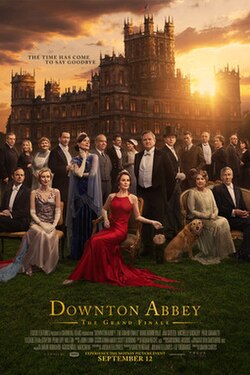
Downton Abbey: The Grand Finale-2025

Downton Abbey: The Grand Finale-2025

Director Simon Curtis

Starring Michelle Dockery, Hugh Bonneville, Elizabeth McGovern

Scott’s Review #1,535
Reviewed June 11, 2026

Grade: B

Downton Abbey: The Grand Finale (2025) is like comfort television set on a big screen.

The third in a planned film trilogy based on the popular television series that ran from 2010 to 2015, the film is satisfying while remaining safe and warm.

It concludes in the early 1930s, nearly a generation after the series debuted in 1912.

From a historical perspective, it’s compelling to see how world events progressed from the sinking of the Titanic when the series began to the begrudging acceptance of a divorced woman as the head of a household in the 1930s.

Separating an evaluation of the television series itself, and honing in on the three films, The Grande Finale ends at just the right time, feeling ever so stale at this point.

The absence of Maggie Smith as the Dowager Countess of Grantham is noticed, as her trademark wit and bitchiness cannot be replaced by any other character.

Let’s hope that creator Julian Fellows doesn’t go down the path that the slasher franchise Friday the 13th did in the 1980s and birth Downton Abbey: A New Beginning.

In this installment, the Crawley family and their staff enter the 1930s with the typical trials, tribulations, scandals, and drama they have overcome.

When Mary (Michelle Dockery) finds herself at the center of a public scandal over her divorce, the family also faces financial trouble, the threat of losing everything, and social disgrace.

The Crawleys must embrace change as the staff prepares for a new chapter with the next generation leading Downton Abbey into the future, which is at the heart of the finale.

The storylines, though modernized for the times, follow a familiar pattern, which is comforting for audiences. The soothing, methodical pace, lovely musical score, and familiar characters we have come to know and love over the years all return.

Even though there are problems for the Crawleys to tackle, nothing too heavy or startling emerges, maintaining a safe bubble for viewers to nestle in, keeping their security blanket intact.

Of course, lead actors like Dockery, Hugh Bonneville, and Elizabeth McGovern, joined by Paul Giamatti, are given the meaty storylines since they best represent the Crawley family.

Dockery as Mary, frequently known as being uptight, loosens up a bit amid her scandalous divorce, even giving in to desire and having a steamy one-night stand with a handsome stranger.

Meanwhile, Robert and Cora (Bonneville and McGovern) must grapple with the 1929 Wall Street stock market crash and the subsequent Great Depression.

The real-life world events the fictional stories are based on make the events more interesting than if writers had invented them.

A major positive is that nearly every character in the ensemble is given something to do, even if it’s only a crumb or two to chomp on.

For example, Carson (Jim Parsons) copes with retirement, while the cook, Mrs. Patmore (Lesley Nicol), embraces it and hands the reins to the young assistant, Daisy (Sophie McShera).

Popular couple John (Brendan Coyle) and Anna (Joanne Froggatt) Bates, eternally loyal to Robert and Mary, have a touching send-off.

Finally, the same-sex romance between Guy Dexter (Dominic West) and Thomas, a former butler at Downton Abbey (Robert James Collier), is explored as the men slowly become more comfortable admitting their relationship to friends.

Still taboo, the notion shows the progress that has occurred in the world over the decades.

The film ends perfectly, a wonderful tribute seen through Mary’s eyes as she takes over the Crawley estate. She sees those deceased family members she was once close to as she ponders the vast estate and the years gone by.

Violet, Matthew Crawley, and Lady Sybil Crawley all appear in archival cameos, making for a sweet and teary wrap-up.

Amid the comfort factor, the film doesn’t offer much that is new or different from the other installments. The new storylines aren’t particularly dangerous, and it’s clear things will be wrapped up in short order.

As nice as Downton Abbey: The Grand Finale (2026) is, let’s hope it truly is the finale. There’s something to be said about going out on top before the gas runs out of the tank.
Gosford Park-2001

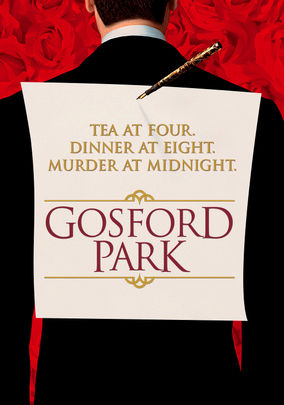
Gosford Park-2001

Director Robert Altman

Starring Maggie Smith, Helen Mirren, Ryan Phillippe

Top 250 Films #105

Scott’s Review #350

60021796

Reviewed January 9, 2016

Grade: A

Somewhere between the brilliant PBS series of the 1970s and the ultra-modern cool of Downton Abbey (also PBS) lies the masterpiece that is Robert Altman’s 2001 gem, Gosford Park.

Ironic is that the creator, writer, and executive producer of Downtown Abbey, Julian Fellowes, wrote the screenplay of Gosford Park.

No wonder, combined with Altman’s direction, they created genius.

The period is 1932 and the wealthy, along with their servants, flock to the magnificent estate of Gosford Park, a grand English country home. The guests include both Americans and Brits and everyone is gathered for a shooting weekend- foreshadowing if ever there was.

Following a dinner party, a murder occurs and the remainder of the film follows the subsequent police investigation, and the perspectives of the guests and the servants as a whodunit ensues.

Many of the character’s lives unravel as secrets are exposed.

Sir William, the murder victim, is a powerful industrialist. After he announces he will withdraw an investment, the ramifications affect many of the guests so that the set-up is spelled out for the audience.

At the risk of seemingly nothing more than a plot device- it is so much more than that.

During a pheasant shoot, Sir William receives a minor wound thanks to a stray birdshot- is this intentional or merely an accident? When Sir William meets his fate that evening, the potential suspects pile up.

If there are two compelling aspects to a great film, they are a good old-fashioned whodunit and an enormous cast, all potential suspects.

What makes Gosford Park exceptional is that every character is interesting in some way and all are written well.

Secrets abound for miles in this film and are revealed deliciously. Torrid affairs, sexuality secrets, and blackmail abound as revelations make their way to the surface and Altman knows exactly how to cast doubt or suspicion on many of his characters.

The compelling relationship between American film producer Morris Weissman and his valet, Henry Denton (Ryan Phillipe), along with the domineering head housekeeper, Mrs. Wilson (Helen Mirren) are my favorite characters and dynamics.

How clever that Maggie Smith would play similar roles as stuffy aristocrats in both Gosford Park and Downton Abbey.

Rich in texture is the balancing between the haves and the have-nots and how those characters mix (sometimes in secret rendezvous!)

Typical of Altman films, the character dialogue commonly overlaps, and the actors largely improvise the script. In addition to being an actor’s dream, this quality gives a dash of realism to his films and Gosford Park is no exception.

Since there are so many characters and so many plots and sub-plots going on at once, my recommendation is to watch the film at least twice to fully comprehend the layers of the goings-on.

Gosford Park (2001) will become more and more appreciated.

Oscar Nominations: 1 win-Best Picture, Best Director-Robert Altman, Best Supporting Actress-Helen Mirren, Maggie Smith, Best Screenplay Written Directly for the Screen/Original Screenplay (won), Best Art Direction, Best Costume Design

Vanity Fair-2004

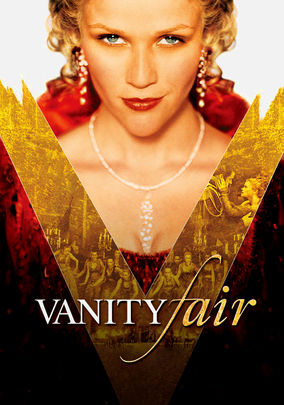
Vanity Fair-2004

Director Mira Nair

Starring Reese Witherspoon, James Purefoy

Scott’s Review #772

Reviewed June 12, 2018

Grade: B

An adaptation of the classic 1848 novel written by William Makepeace Thackeray, Vanity Fair (2004) softens the traditionally unlikable and roguish character of Becky Thatcher quite a bit.

This proves not to be the smartest move as the character, now more of a heroine is watered down and forever changed, as is this film adaptation.

Reese Witherspoon (Becky) drew harsh criticism for her starring turn, but I do not think she is so bad, and the costumes and set designs are wonderful and quite the highlight of the resulting period piece.

In 1802 England, we meet Becky Sharp, a young woman who has just graduated from a School for Girls and been sent to work as a governess. Because her father, a talented painter, is impoverished, Becky is cast aside as lower class and deemed undesirable to anybody upper class- the men she is most interested in.

Despite her reputation as a tart, Becky aspires to marry rich and frequently gets into trouble with her shenanigans and smart tongue while romance blooms with the handsome Rawdon Crawley (Purefoy).

The story is supposed to encompass Becky’s life from approximately age eighteen through her mid-thirties (though Witherspoon never appears to age) and displays her trials and tribulations, her loves and losses through the years.

We follow her from rural England to London and Belgium, eventually residing in Germany, reduced to working in a casino, where the film concludes.

The film is a treat as the various countries as they appeared in the nineteenth century, and the wars and battles occurring during this period are featured making for an interesting history lesson.

The main appeal should be Becky Thatcher since the film revolves around her, and numerous criticisms were thrown around accusing the film of casting Reese Witherspoon in the important and demanding role based on her star power at the time.

In 2004 Witherspoon was experiencing enormous film success after 2001’s Legally Blonde and 2002’s Sweet Home Alabama- admittedly fluff films- but securing her box office power nonetheless. These films undoubtedly led to her being cast in the pivotal role, but I thought the star was perfectly adequate and gave Becky appropriate humor and zest.

Based on Witherspoon’s “girl next door” persona and the fact that she just looks like a good character- perplexing the decision to cast her if filmmakers wanted to be true to the character.

Witherspoon was delicious in 1999’s Election as villainous Tracy Flick, a role of a lifetime. But that is the exception and not the standard.

But I digress- the bottom line is that while she is a capable actress, she does not give the gritty performance that many were expecting to be true to the character in the novel.

The rest of Vanity Fair is just mediocre as far as the story goes.

While the antics of Becky are both humorous and dramatic, her rooting value in the romance department does not come across in the 2004 film offers- not enough chemistry exists between the leads to warrant much support.

Opinions abound that other incarnations of Vanity Fair are far more superior and compelling than this film is, but I have yet to see any.

Compliments must be reaped on the costume department and the art direction- both are superior. Such threats are the lavish and colorful costumes and gowns that mark the time. From the classic style hats and highfalutin dresses featured in ball after ball, this aspect is nearly enough to recommend a watch over the dull story and immeasurably the highlight of the entire film.

Vanity Fair (2004) is considered a messy travesty to those well-read enough to have turned the pages of the classic novel. Since I have not yet read the book, perhaps I enjoyed the film slightly more than I should have, but alas, I did not find the casting of Witherspoon as Becky nor the overall product to be drivel as many did.

I recommend the film for the gorgeous visual treats if nothing else.