Category Archives: Drama

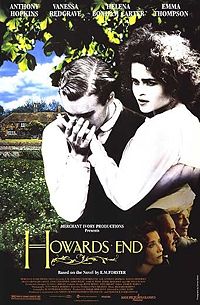
Howards End-1992

Howards End-1992

Director James Ivory

Starring Anthony Hopkins, Emma Thompson, Helena Bonham Carter

Top 250 Films #79

Scott’s Review #702

Reviewed December 1, 2017

Grade: A-

Howards End is my favorite film adaptation of E.M. Forster’s novel, which was also adapted into a film during the 1980s (1985’s A Room with a View and 1987’s Maurice are the other two notable works).

The novels were written during the early 1900s and set during the same period, focusing on class relations in 20th-century England.

The film is lovely and picturesque, telling an interesting story about romance and drama between the haves and have-nots during this period.

The film was a success and received heaps of Academy Award nominations in 1993.

Margaret Schlegel (Emma Thompson), an upper-middle-class intellectual, part of London’s bourgeoisie, befriends wealthy and sophisticated, yet shockingly conservative Ruth Wilcox (Vanessa Redgrave).

The two women strike up a powerful friendship, which results in her beloved country home being left to Margaret when an ailing Mrs. Wilcox dies.

To complicate matters, Margaret falls in love with a businessman (and husband of Ruth), Henry (Anthony Hopkins), while Margaret’s sister Helen, briefly becomes engaged to Paul Wilcox, Henry’s son.

The two families’ lives further intersect when they wind up as neighbors in London and the true owner of the beloved “Howards End” is questioned.

Added to the mix are several other characters of various social backgrounds, having connections to the families.

The writing in Howard’s End is rich and emotional as each character is perfectly fleshed out this includes the supporting as well as the lead characters.

Thompson and Hopkins, both sensational actors, have tremendous chemistry together, and unsurprising was Thompson’s win for Best Actress during this competitive year. She carries the film seamlessly with her upper-middle-class ideals- not conservatively rich, but far from working-class- she epitomizes poise grace, and empathy for those less fortunate than she.

Hopkins, on the other hand, is calculating and confident, yet charismatic and sexy as an old-school, controlling businessman.

Somehow, these two characters complement each other exceptionally well despite their varied backgrounds

The role of Helen may very well be Helena Bonham Carter’s finest. Not being an enormous fan of the actress-overrated and too brooding in my opinion enjoys portraying an interesting character in Helen.

Lovelorn and earnest, yet somewhat oblivious, she develops a delicious romance with the young clerk, Leonard Bast, my favorite character in the film. Living with Jacky, a woman of dubious origins, he is the ultimate nice guy and sadly winds up down on his luck after heeding terrible business advice.

Bast, thanks in large part to actor Samuel West, who instills an innocent, good guy quality in his character, deserves major props.

The cinematography featured in Howards End is beautiful with extravagant outdoor scenes- the lavish gardens of Howards End- just ravishing and wonderful.

Kudos too to the art direction, set design, and costume department for making the film look so enchanting.

There is something so appealing about the look of this film and director, James Ivory, undoubtedly deserves praise for pulling it all together into a suave picture. Whether the scene calls for sun or rain, tranquil or bustling, every scene looks great.

If I were to knock any points from this fine film it would be at two hours and twenty-two minutes, Howards End does drag ever so slightly, and many scenes involve the characters merely having chats with each other, without much action.

But this criticism is small potatoes when compared to the exceptional writing and well-nuanced character development displayed throughout the piece.

Admittedly, and perhaps shamefully, I have not read any of the Forster novels, but Howards End appears to be the film that is most successfully adapted, gleaming with textured finesse, grace, and style.

With the film’s finest actors along for the experience, and intricate, fine story-telling, Howards End (1992) is a film well worth watching.

Oscar Nominations: 3 wins-Best Picture, Best Director-James Ivory, Best Actress-Emma Thompson (won), Best Supporting Actress-Vanessa Redgrave, Best Screenplay Based on Material Previously Produced or Published (won), Best Original Score, Best Art Direction (won), Best Cinematography, Best Costume Design

Independent Spirit Award Nominations: Best International Film

Picnic-1955

Picnic-1955

Director Joshua Logan

Starring William Holden, Kim Novak

Top 250 Films #81

Scott’s Review #550

Reviewed December 19, 2016

Grade: A-

Picnic is a classic 1955 film that is wonderful to watch over Labor Day weekend or anytime during the humid summer season.

The film perfectly depicts summertime in a tiny town in Kansas. It is a slice-of-life story about life in middle America during the 1950s, despite its trials and tribulations.

William Holden stars as a “wrong side of the tracks” type of guy who arrives in a quiet Kansas town on Labor Day weekend, disrupting the town’s events and causing scandals for the townspeople.

He is a hunky former college football player and exudes sexuality.

He then falls in love with his best friend’s girlfriend, Madge Owens, played by Kim Novak. The chemistry between the two stars is the film’s main appeal.

The supporting cast makes this film unique (Arthur O’Connell and Rosalind Russell star as townspeople who are in a relationship of their own).

Picnic also contains a gorgeous and lovely musical score, precisely “Theme from Picnic” and “Moonglow”.

It is shot on location in Kansas, mostly in and around Hutchinson, and is considered classic summer enjoyment.

Based on the Pulitzer-award-winning play.

Oscar Nominations: 2 wins-Best Motion Picture, Best Director-Joshua Logan, Best Supporting Actor-Arthur O’Connell, Best Scoring of a Dramatic or Comedy Picture, Best Art Direction, Color (won), Best Film Editing (won)

Wild Strawberries-1957

Wild Strawberries-1957

Director Ingmar Bergman

Starring Victor Sjostrom, Bibi Andersson

Top 250 Films #82

Scott’s Review #1,111

Reviewed February 10, 2021

Grade: A

A seventy-eight-year-old man (Victor Sjostrom) reflects on life, loss, and a million other emotions as he ponders his inevitable death in the Ingmar Bergman masterpiece Wild Strawberries (1957).

The film’s melancholy tone forces viewers to imagine themselves in the older man’s shoes and wonder how senior citizens view death. One significant point is that it represents the geriatric demographic, which has traditionally been lacking in cinema.

It’s cerebral and reminds me of A Christmas Carol since an older man struggles over his forgotten and sometimes misbegotten youth.

Bergman creates genius on par with his most famous work, The Seventh Seal, also released in 1957. I’d list these two films as his very best and most inspiring.

Do older people fear death?  Do they whimsically revisit their youth from time to time, or do they live with regret and unfulfilled desires?

My hunch is that it’s probably a bit of all.

Wild Strawberries made me think like the older man and the effect was powerful. They made me worry about my death and relive my glory days.

Isak Borg (Sjostrom) begins to reflect on his life after he takes a road trip from his home in Stockholm to the distant town of Lund to receive a special award. Along the way, a string of encounters causes him to experience hallucinations that expose his insecurities and fears.

He realizes that his choices have rendered his life meaningless, or so he perceives it.

He is accompanied by his daughter-in-law Marianne (Ingrid Thulin), who doesn’t like Isak too much, is pregnant, and plans to leave her husband. They meet a trio of friendly hitchhikers led by Sara (Bibi Andersson), who reminds Isak of the love of his youth.

A bickering couple reminds him of his unhappy marriage, while his elderly mother reminds him of himself.

The best part is when the group stops at Isak’s childhood seaside home and imagines his sweetheart, Sara, with whom he remembered gathering strawberries but who instead married his brother.

Anyone who has returned to their childhood home or neighborhood can easily relate to the powerful memories. I pretended I was in Isak’s character, and several emotions occurred.

Sjostrom infuses a natural range of emotions. At first, crotchety and distant, I admired his sentimentality as he fondly recalls innocently picking strawberries on a summer day. How glorious and innocent it is to reminisce in a mundane yet monumental act.

Although he was an older man, he was once young. How quickly the years pass. I took this as a lesson to appreciate each day and experience. Sjostrom had me mesmerized.

Some find Izak unsympathetic. I found him incredibly likable.

Relationships are a strong element of Wild Strawberries. Izak muses over past loves, his mother, daughter-in-law, housekeeper, and hitchhikers. Peculiar is his relationship with his housekeeper, Agda, who is played stunningly well by Julian Kindahl.

Are they secret lovers or platonic friends? They seem like husband and wife.

While the story is astounding, the visual qualities of Wild Strawberries are exceptional.

The video content is crisp and clear, with very bright black-and-white photography. Each shot is mesmerizing and reminiscent of paintings.

There is so much going on in Wild Strawberries. The closest adjectives to describe the experience are hallucinogenic and mesmerizing.

The people gathered over a meal were young, fresh, and carefree. They all have lives ahead of them, and almost every viewer can recount a time when they felt that way.

It’s both nostalgic and sad to realize it doesn’t last, as Bergman makes so painfully evident.

The scene where Isak witnesses a hearse approaching is terrifying. When he realizes it is himself lying in the casket, it gives one a chill. The scene is creepy and powerful in tone and effect.

Wild Strawberries (1957) explores many facets of the human experience, including sorrow, joy, depression, acceptance, frustration, and fulfillment.

This is a work of genius and is highly recommended to anyone who appreciates excellent experiences in cinema.

Oscar Nominations: Best Original Screenplay

Once Upon a Time in Hollywood-2019

Once Upon a Time in Hollywood-2019

Director Quentin Tarantino

Starring Leonardo DiCaprio, Brad Pitt, Margot Robbie

Top 250 Films #84

Scott’s Review #926

Reviewed August 1, 2019

Grade: A

Once Upon a Time in Hollywood (2019) is another brilliant offering by one of the most (deservedly) respected directors of the modern film era.

This film may be his most personal as it includes many cinematic references and immerses itself in the Hollywood lifestyle. Toned down considerably from the violence standard in his other films, the first half lays the groundwork for a startlingly good second half with every detail of utmost importance.

A bevy of riches awaits any viewer enthusiastically feasting their eyes on this film.

The time is 1969, as actor Rick Dalton (Leonardo DiCaprio) struggles to reinvent himself and revitalize his career in Hollywood amid a changing cinematic landscape.

Famous for a popular western television series from the 1950s, Bounty Law, a pursued film career has not taken off, and he is reduced to guest appearances as the villain, then considered throwaway roles, in other episodic series.

His stunt double and best friend, Cliff Booth (Brad Pitt), accompanies him almost everywhere, serving as both sidekick and errand boy.

Meanwhile, famous director Roman Polanski and his wife, actress Sharon Tate (played by Argot Robbie), have moved into the house next door, which Dalton hopes will help him revitalize his career aspirations.

As Tate goes about her daily life of running errands and watching her movies in the theater, she is visited by Charles Manson one day, looking for the former resident of her house.

Historical viewers are familiar with the subsequent events that unfolded in real life, as Tarantino presents a fictional and tantalizing version of the events.

The film’s length is two hours and thirty-nine minutes, quite robust but typical for a Tarantino production. Some may complain about the bloated running time, but the film never drags; instead, the director lays out all the pieces carefully like a fine chess game.

By the mid-point, all hell breaks loose with one of the most suspenseful and edge-of-your-seat scenes in film history. When Cliff drives a flirtatious young hippy hitchhiker, Pussycat (Margaret Qualley) to a range populated by Manson followers, he is in for the adventure of his life…..if he survives.

Once Upon a Time in Hollywood is an orgy of cinematic tidbits, featuring a myriad of clips from forgotten films of the late 1960s and popular songs from that era.

This is just the tip of the iceberg in greatness as Tarantino perfectly immerses the viewer into the time with fury and zest. Every set piece, costume, hairstyle, or car is flawlessly placed. Kraft macaroni and cheese, Velveeta cheese, and popular dog food from the period are featured.

Tarantino is a fan of cinema and makes cinema lovers fall in love with cinema all over again.

The cast is humongous, but each character is necessary and perfectly represented in roles large and small.

The haunting troupe of Manson followers, specifically Tex Watson (Austin Butler), Squeaky Fromme (Dakota Fanning), and Susan Atkins (Mikey Madison), are all real-life figures. They are foreboding, dangerous, and crucial to the story.

Al Pacino shines in the small but pivotal role of Schwarz (not Schwartz), Dalton’s agent, while Steve McQueen’s look-alike, Damian Lewis, on-screen for merely seconds, is memorable.

The list of cameo performances goes on and on and on, and the fun is wondering who may appear next.

Despite the incorporation of big-name stars in important minor roles, the best performances belong to DiCaprio and Pitt. DiCaprio’s best scene takes place alone in his trailer as the washed-up star botches his lines thanks to a hangover, causing a delay in filming.

He abuses himself into nailing the scene, receiving kudos all around, while becoming teary-eyed after a compliment from a young actress.

Pitt has never given a better performance than he does as Cliff, sharing his best scenes with his adorable dog Brandi and with DiCaprio.

Who can ever forget his chest-baring rooftop scene?

Quentin Tarantino scores again with a bombastic and flawless picture, his ninth release. Rumored to retire after his tenth film, one can hardly fathom the reality of that statement. Hismovis can be watched and watched again, continuously absorbing new and noteworthy details of rich texture.

Once Upon a Time in Hollywood (2019) easily joins the ranks of great works, not just of the director’s catalog, but of all time.

Oscar Nominations: 2 wins-Best Picture, Best Director-Quentin Tarantino, Best Actor-Leonardo DiCaprio, Best Supporting Actor-Brad Pitt (won), Best Original Screenplay, Best Sound Editing, Best Sound Mixing, Best Production Design (won), Best Cinematography, Best Costume Design

Once Upon a Time in America-1984

Once Upon a Time in America-1984

Director Sergio Leone

Starring Robert De Niro, James Woods

Top 250 Films #85

Scott’s Review #218

60028306

Reviewed January 19, 2015

Grade: A

An epic film, the extended directors cut at more than four hours in length, 1984’s Once Upon a Time in America is a film directed by Sergio Leone, who also directed the 1968 masterpiece Once Upon a Time in the West and numerous other westerns starring Clint Eastwood.

This particular film is in a different vein and not to be confused as any sort of sequel or related to the aforementioned film- this time Leone explores the crime drama genre rather than the western and does so in remarkable fashion.

The film tells the story of a group of Jewish friends who became involved in organized crime during the 1920s in New York City.

The main story is told via flashbacks as the central character, Noodles, played by Robert De Niro, returns to Brooklyn thirty years later to reunite with his former mobster friends.

In this way, the film is sectioned- the group of youngsters and kids and the same characters as adults.

Once Upon a Time in America has been met with much controversy since it was made. At the time of its release, the film was butchered as over an hour of footage was cut by the studio heads making the film largely uneven.

Fortunately, the restored version, at over three hours in length, is available for viewing. Furthermorethe director cut clocks in at well over four hours, and is the best version to watch. Due to so many cuts, other versions appear shoddy and out of order making the viewing experience difficult.

Once Upon a Time in America is largely underappreciated except for the die-hard cinema lovers most patient with the film, and deserves mention as an excellent crime epic drama.

The film contains many similarities to The Godfather and The Godfather Part II and the role De Niro plays is not too different from Vito Corleone in Part II.

However, the greatest contrast is that Once Upon a Time in America is more visually artistic than The Godfather films.

The film centers mainly on Noodle’s perspective as he enjoys youth in the Lower East Side of Manhattan where he meets his group of lifelong friends.

The focal point is his friendship with Max, the adult character played by James Woods, and his undying love for Deborah, played by Elizabeth McGovern as an adult.

As kids, they are worry-free, but gradually fall in with a group of older mobsters, first doing their dirty work, followed by venturing out on their own.

The themes of the film are loyalty, childhood friendship, betrayal, and greed as all of the characters change (or die) in the time that the film takes place.

When a mysterious letter forces Noodles to resurface in Brooklyn, we begin to understand the back story and the history between the friends as layers are slowly peeled back.

The film drags slightly in the middle section, but the first part and last parts are very well-made and absorbing.

Leone has a way of pacing the film that works- it is methodical, and nuanced, with wonderful set pieces and each period explored- 1920s, 1930s, and 1960s seem equally as authentic as the next one does.

I especially enjoyed the 1920s art direction- it revealed such a state of genuineness and felt like truly there in that period.

The relationship between Noodles and Deborah is an interesting one worth mentioning. Falling in love as youngsters (when Deborah was played by a very young Jennifer Connelly) they had an innocent, puppy-love relationship.

As adults, due to a violent, disgraceful act, their tender relationship is subsequently ruined and one might argue one of the characters turns quite unsympathetic.

Once Upon a Time in America (1984) is a sprawling epic film sure to be enjoyed by intelligent fans of the crime epic drama genre and specifically Sergio Leone fans- an underappreciated gem.

Ryan’s Daughter-1970

Ryan’s Daughter-1970

Director David Lean

Starring Sarah Miles, Robert Mitchum, Christopher Jones

Top 250 Films #87

Scott’s Review #10

60010843

Reviewed June 17, 2014

Grade: A

Ryan’s Daughter (1970) is a sweeping epic by the masterful director, David Lean (Lawrence of Arabia, A Passage to India, Doctor Zhivago).

The film is sprawling and filled with fabulous locales of oceanic Ireland. Much of the action takes place using exterior scenes and this is arguably as prominent and important to the film as the story is.

Set in WWI-era Ireland, one will immediately notice the gorgeous Irish landscapes and the brilliant photography involved. This gives the film a timeless look, and one can simply escape into the scenery itself, forgetting the story, and dream away through the roaring waves.

The intense “storm scene” is second to none as Lean had to wait over a year to film this pivotal scene- and Mother Nature had to cooperate.

The story is twofold: a love story involving a woman torn between her schoolteacher husband and a strapping, yet English (at this time there was no love lost between the Irish and English), officer. Rosy (Sarah Miles) is headstrong yet kindhearted, the daughter of a local, prominent man.

Her husband, Charles (Robert Mitchum) is dutiful and loyal to a fault. After Rosy’s affair with the British officer, she is deemed a tyrant by the townspeople, as her husband chooses to stand by her side.

The second story is political. A feeling of extreme nationalism exists among the townspeople against the British. Both stories blend nicely as small-town gossip and a subsequent witch hunt come into play.

The village idiot is played brilliantly by John Mills, who won an Academy Award for his efforts.

Character-driven is the story’s main appeal and the audience will surely feel perplexed about whom to root for or feel empathy for. I know I did. In fact, at different times one’s loyalties can fluctuate or be challenged.

The film is reminiscent of Doctor Zhivago to me as romance and politics intertwine and a dilemma involving the central female characters are similar. At over three hours in length, the film does not drag and remains interesting throughout as the conflict and drama reach a crescendo during the final act.

At no time is there any filler or unnecessary scenes, which, in itself is a positive.

Sadly, Ryan’s Daughter is not considered as worthy as other aforementioned David Lean efforts, but I disagree with this- the film ages exceptionally well- like a fine wine.

This film also focuses largely on a female character and, therefore, is female-driven, a wonderful aspect of the film, circa 1970.

Oscar Nominations: 2 wins-Best Actress-Sarah Miles, Best Supporting Actor-John Mills (won), Best Sound, Best Cinematography (won)

Bonnie and Clyde-1967

Bonnie and Clyde-1967

Director Arthur Penn

Starring Warren Beatty, Faye Dunaway

Top 250 Films #89

Scott’s Review #628

Reviewed March 25, 2017

Grade: A

Bonnie and Clyde is an excellent 1967 crime drama that is not only a great film, but also successfully and surprisingly influenced an entire generation, becoming somewhat of a rallying cry for the youth generation of the time.

Released in a tumultuous period in history (the Vietnam War, the Sexual Revolution, and Civil Rights), the film fits the times and was groundbreaking in its use of violence, blood, and sex.

The film holds up tremendously well to this day and is beloved by intelligent film lovers everywhere.

The film begins with snapshots of the honest Bonnie and Clyde- a duo of bank robbers who rampaged the southwest during the Great Depression.

Set in steamy Texas, circa the 1930s, the film tells its story.

Clyde Barrow (Warren Beatty) meets Bonnie Parker (Faye Dunaway) when he tries to steal her mother’s car one hot day. Instantly infatuated with each other, the steamy duo team up and become partners in crime.

Over time, they enlist others and become more successful bank robbers, with the stakes rising with each heist.

Rounding out the crew of criminals are gas-station attendant, C.W. Moss, and Clyde’s older brother Buck, played by Gene Hackman, along with his wife, Blanche (Estelle Parsons), an innocent-minded and sometimes hysterical preacher’s wife.

Bonnie and Clyde is a unique film in many different ways- the quick-cut editing style influenced Sam Peckinpah in his movies to come, and the film uses a fast-paced rat-a-tat-tat style that symbolizes the gunfire, a significant element of the film.

Blood spurts from victims’ bodies in a style never before seen on the big screen, which led to many filmmakers’ comfort with using increased violence.

You could say that Bonnie and Clyde took away the innocence of Hollywood films and shook all of the traditional elements inside out.

The film’s conclusion is one of the greatest in cinematic history.

Far from an idyllic, happy ending, the traditional one in those days, the law finally catches up with Bonnie and Clyde, with grim results for the pair, and their demise is gruesome but true to form.

We have fallen in love with the characters, so their hasty exit from this world is tough to stomach, and as they writhe and twitch with each gunshot wound, the bullets pummeling the bodies, the scene is a difficult one to watch.

The love story between Bonnie and Clyde is intense yet sweet, and the casting of Beatty and Dunaway is spot-on. Smoldering with sexuality- as Bonnie fondles Clyde’s gun, who does not see this as a phallic symbol- their relationship is fraught with stamina and emotional energy.

The two actors feed off of each other and fill the scenes with gusto. Their chemistry is part of what makes the film so great.

One of the best scenes is the shoot-’em-up showdown at a ranch where the robbers are hiding out. The scene is laden with intensity and violence. As Buck is mortally wounded, Blanche is blinded and captured, soon to make a grave mistake in revealing one of the identities of the others.

Bonnie, Clyde, and C.W. barely escape with their lives, and their antics from this point become bloodier and bloodier. The cat-and-mouse play during this scene makes it the most suspenseful of them all.

Amid all the violence, a fantastic scene unfolds when Bonnie and Clyde meet at a secret location with Bonnie’s mother. A local townswoman, not an actress, was cast in the pivotal role of Bonnie’s mother, and the scene is an emotional experience.

The woman’s kindness and sensibility, and the sheer “regular person” she encompasses, humanize Bonnie and Clyde, and ominously, their downfall is soon to occur.

A highly influential film, Bonnie and Clyde is a film that is still quite relevant, especially for those who appreciate good movies and rich, intelligently written characters who are flawed yet humanistic, layered with complexity.

This is what director Penn carves out, and the film is an all-time Hollywood classic.

Oscar Nominations: 2 wins-Best Picture, Best Director-Arthur Penn, Best Actor-Warren Beatty, Best Actress-Faye Dunaway, Best Supporting Actor-Gene Hackman, Michael J. Pollard, Best Supporting Actress-Estelle Parsons (won), Best Story and Screenplay Written Directly for the Screen, Best Costume Design, Best Cinematography (won)

Reflections in a Golden Eye-1967

Reflections in a Golden Eye-1967

Director John Huston

Starring Marlon Brando, Elizabeth Taylor

Top 250 Films #90

Scott’s Review #678

Reviewed September 3, 2017

Grade: A

Reflections in a Golden Eye is a film made during the beginning of a rich and creative time in cinema history (the latter part of the 1960s and the beginning part of the 1970s), where films were “created” rather than produced.

Less studio influence meant more creative control for the director- in this case, John Huston, who cast the immeasurable talents of Elizabeth Taylor and Marlon Brando in the key roles.

Worth mentioning is that Montgomery Clift was the intended star, but died before the shooting began. Richard Burton had turned down the role.

The film is an edgy and taboo story of lust, jealousy, and sexual repression set amid a southern military base. In the novel 1967, repressed homosexuality is explored in full detail, as well as heterosexual repression and voyeurism.

Initially a box-office flop, the film has since become an admired and cherished part of film history.

Reflections in a Golden Eye is based on the 1941 Carson McCullers novel.

Major Weldon Penderton (Brando) resides with his spoiled wife, Leonora (Taylor), at a US Army post somewhere in the South during the 1940s and 1950s.

A neighboring couple, Lieutenant Colonel Morris Langdon (Brian Keith) and his depressed wife, Alison (Julie Harris) are also featured and the trials and tribulations of Army life are exposed. Playing key roles are Langdon’s effeminate houseboy, Anacleto, and a mysterious Private Williams, played by a young and dashing Robert Forster.

Weldon is a repressed homosexual, rigid, and very unhappy with himself and his life, despite being successful professionally. To make matters worse, he is repeatedly needled and tormented by Leonora, who is having an affair with Morris.

Leonora adores her prized horse, Firebird, who becomes a significant part of the story. When Weldon and Leonora spy Private Williams completely naked in the woods riding bareback, Weldon feigns disgust, but his secret desires for the young man are revealed.

The two men then begin a secret cat-and-mouse game of spying and following each other around until a tragedy occurs.

Reflections in a Golden Eye is not a happy film; rather, it is a depressing piece about troubled lives and emotions. Passions are unfulfilled and repeatedly repressed as each character can be dissected in a complex fashion.

I am most intrigued by the character of Private Williams. A bit of an oddity, he mainly watches the action from afar, learning Weldon and Leonora’s secrets- they keep separate bedrooms and repeatedly squabble.

We wonder- is Williams obsessed with Weldon or Leonora? Or both? He sneaks into her room and rummages through her lingerie and perfume drawers. Would he, in a different time, consider himself to be transgender? Or merely intrigued by cross-dressing?

Weldon can also be carefully examined- he has fits of rage and violence that frequently erupt. Poor Firebird suffers a violent beating at his hands, to say nothing of the main character’s fate at the end of the film.

Having a macho and masculine exterior, his job is that of a leader, but the perception of a homosexual male during that time, if it was thought of at all, was more like the femininity portrayed by the Filipino male, Anacleto.

Huston wisely casts both male roles well in this department, as the men, along with Williams, could not be more different or nuanced.

A wise and telling aspect of the film is how it was initially shot with a muted yet distinguishable golden haze- appropriate to the film’s title- and much of the action seems to be viewed from the viewpoint of the horses.

The color theme was reportedly changed because it confused audiences, but my copy has the intended golden haze, and I find this tremendous. It works brilliantly in capturing Huston’s original intentions.

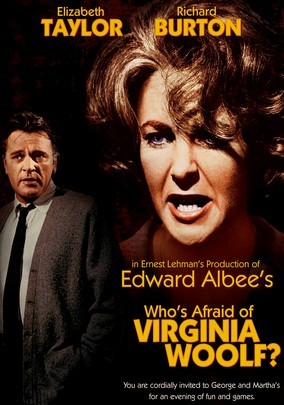
The film is reminiscent of Who’s Afraid of Virginia Woolf or Cat on a Hot Tin Roof, the latter made only the year before. Arguably, Taylor’s character in that film is very similar to Leonora’s.

In ways, Reflections of a Golden Eye (1967) could have been a stage production. One thing is clear: the film explores the human psyche deeply. I look forward to repeated viewings and further digging into the feelings and motivations of every principal character in a groundbreaking film by Huston.

3 Women-1977

3 Women-1977

Director Robert Altman

Starring Shelley Duvall, Sissy Spacek

Top 250 Films #91

Scott’s Review #578

Reviewed January 1, 2017

Grade: A

Robert Altman is one of my all-time favorite directors and what a pleasure it is to uncover additional gems that he has directed over the years.

I have seen 3 Women (1977) before but some films (the true greats) are like fine wines and get better and better over time, in addition to being appreciated more and more with each passing viewing.

3 Women is a prime example of this. The level of psychology and the changing personalities of the characters make it a unique and brilliant experience.

3 Women is a psychological feast and the study of three complex characters, hence the title.

How fantastic how Altman claimed to have dreamed the entire film, complete with Duvall and Spacek in the roles, and then attempted to recreate the dream on film- he has done a masterful job.

The film is dream-like with an interpretive element that will leave the viewer pondering not only the relationships between the three women but who exactly each woman is- consciously and sub-consciously. Lots of questions will abound as the film concludes.

The main relationship is between the characters portrayed by Duvall and Spacek.

Duvall plays Millie Lamoreaux, a chatty and confident woman, who works at a California health spa for elderly clientele. She is statuesque and gorgeous, but surprisingly not well-liked by her colleagues, two of whom are mysterious identical twins.

New employee Pinky Rose is a shy and vulnerable mousy type, who takes an immediate liking to Millie, becoming somewhat obsessed with her. The pair eventually move in together and begin to engage in a mysterious and sometimes volatile friendship dripping in jealousy and lust.

Eventually, they switch personalities, only adding to the mystique of the film. They reside in the Purple Sage Apartments, run by Edgar and Willie Hart.

Willie is the third woman referenced in the title and is a pregnant painter, creating unsettling murals marveled at by Pinky.

It has been argued that 3 Women was an influence on the David Lynch masterpiece, Mulholland Drive (1992), and the more I ponder this the more that I agree with it.

The dream-like, surrealistic qualities are prevalent in both films.

Peculiar, strong-willed women are the central characters in both films and psychology and amnesia are the main themes. The southern California setting is identical as are the interpretive elements, and the fantastically odd characters- both lead and supporting.

When Pinky’s elderly parents are introduced, this is uncanny to a pair of grandparents featured in Mulholland Drive. Both are superior films so the comparisons are a joy to think about and ponder the complexities.

Ingmar Bergman’s 1966 psychological film Persona is most certainly a large influence on 3 Women. That film dared to explore merging personalities among women.

The final scene of 3 Women is intense and thought-provoking. The lives of the women carry on following a tragic event, but each takes on a certain persona and role within the family unit that they have forged.

Among other qualities, I view 3 Women as a feminist film, despite being directed by a male. Altman was famous for allowing his actor’s free reign in dialogue and development and this most certainly had to be the case with 3 Women.

One of Altman’s masterpieces.

Altman is a genius in nearly every film that he creates, but 3 Women is probably his most cerebral, and the film that can be talked about and analyzed more than the others.

What a pure treat for a complex film lover to explore. 3 Women (1977) is not for mainstream audiences nor is it meant to be.

Requiem for a Dream-2000

Requiem for a Dream-2000

Director Darren Aronofsky

Starring Ellen Burstyn, Jared Leto

Top 250 Films #95

Top 10 Most Disturbing Films #3    

Scott’s Review #172

60001134

Reviewed September 21, 2014

Grade: A

Requiem for a Dream (2000) is a disturbing film and, at times, tough to watch. Still, it is also a brilliant masterpiece, visually as well as from a storytelling perspective, that I appreciate more and more with each painful (in a good way!) viewing experience.

The film is easily one of the most disturbing films I have ever seen.

The subject matter is drug trafficking/addiction that affects more than one character in the cast- a myriad of different films have tackled this subject- think Traffic, released around the same time as Requiem for a Dream, for a comparison.

At the risk of directly comparing Requiem for a Dream to Traffic, which is unfair, I will say that as gritty as Traffic is, Requiem for a Dream makes it look like a kid’s film.

Director Darren Aronofsky’s direction is superb.

The story revolves around a young man (Harry) from Brooklyn, played by Jared Leto, his girlfriend Marion, played by Jennifer Connelly, Harry’s mother Sara, played by Ellen Burstyn, and Harry’s best friend Tyrone, played by Marlon Wayans.

Each individual falls into a trap of drug addiction in their way, but all are written sympathetically so that the audience cares about them and feels their sorrows intensely.

Harry and Tyrone are involved in drug selling but aspire to be successful and both love their mothers and their significant others- in Harry’s case that is Marion.

Marion (Connelly) falls in over her head and is forced to turn tricks to feed her heroin habit. She is an intelligent young woman from an affluent family, which makes her downward spiral into prostitution all the more shocking.

The standout among the central characters is Sara Goldfarb, who is a lonely widowed woman obsessed with a television game show. She develops delusions of grandeur of becoming a contestant and is tragically determined to lose weight to fit into her favorite red dress.

She becomes dependent on diet pills and begins hallucinating that her refrigerator is attacking her.

Aronofsky perfectly mixes in fantasy sequences showcasing Burstyn’s real attractiveness contrasted with the desperation of Sara. Sara is a sad character and Burstyn is mesmerizing in the role.

How she lost the Oscar to Julia Roberts in 2000 is and always will be one of the biggest Oscar travesties in my opinion.

The special part of this film is the visual and cerebral aspects. The film is dreamlike in its texture and extreme, fast-paced close-ups of the diet pills or heroin being consumed.

The viewer feels the highs and lows that the characters feel and there is immediately a sense that all of the characters are doomed and hopeless.

Besides, this film has one of the most effective and haunting scores I have ever experienced, right up there with John Carpenter’s Halloween.

The slow-motion sequences combined with frenetic images make this quite cerebral to watch. I cannot watch this film very often as it is too disturbing and upsetting, but I sure am glad it was made at all.

Oscar Nominations: Best Actress-Ellen Burstyn

Independent Spirit Award Nominations: 2 wins-Best Feature, Best Director-Darren Aronofsky, Best Female Lead-Ellen Burstyn (won), Best Supporting Female-Jennifer Connelly, Best Cinematography (won)

Sunset Boulevard-1950

Sunset Boulevard-1950

Director Billy Wilder

Starring Gloria Swanson, William Holden

Top 250 Films #101

Scott’s Review #330

60010956

Reviewed January 8, 2016

Grade: A

I adore films about Hollywood (good ones), and Sunset Boulevard (1950) is an absolute treasure.

Directed by classic film director Billy Wilder, the film is a film noir about a legendary silent film star, Norma Desmond, who struggles to cope with the advent of sound movies and the instability of her life, plagued by mental illness as her career has long since ended.

Handsome Joe innocently stumbles upon her mansion, forming an eerie relationship that ends in tragedy.

Sunset Boulevard is a famous street in Los Angeles and Beverly Hills, California. It is immediately featured in the film as Joe Gillis, played by William Holden, drives down the street, an unsuccessful screenwriter whose car is about to be repossessed.

Joe narrates the film, and we see a man lying dead in a vast swimming pool. Ironically, this is the film’s ending, and Wilder works backward in an interesting way, so the audience knows tragedy will eventually ensue.

To avoid being chased by men, Joe pulls into a driveway and hides his car in a garage near a vast yet run-down mansion. He is mistaken for a coffin salesman and meets the infamous and creepy Norma and her servant, Max.

The coffin is for Norma’s deceased pet chimpanzee. Intrigued and broke, Joe hatches a plot to rewrite Norma’s terrible screenplay- and make some money from the aging Hollywood star.

Norma needs companionship. The two, along with Max, embark on a complicated relationship marked by jealousy, passion, and rage.

The black-and-white style works exceptionally well in the film, and the lighting creates a sense of intrigue and film noir mystique.

Sunset Boulevard combines noir with a rich character study of Norma, and we feel her pain and isolation as she is cast aside due to the times.

I love how Wilder focuses on the gloomy nature of Norma’s vast mansion—especially when she throws a New Year’s Eve party isolated with just her, Joe, and a hired band—and intersperses it with a lively party in Hollywood filled with young, energetic, up-and-coming talents.

The scenes blend seamlessly and effectively showcase the two different worlds and perspectives.

Sunset Boulevard is a brilliant depiction of old Hollywood at its best (and worst). A study in ambition, struggle, high hopes (Joe), and faded success and dreams shattered in reality, where delusion is the only defense (Norma).

Oscar Nominations: 3 wins-Best Motion Picture, Best Director-Billy Wilder, Best Actor-William Holden, Best Actress-Gloria Swanson, Best Supporting Actor-Erich von Stroheim, Best Supporting Actress-Nancy Olson, Best Story and Screenplay (won), Best Scoring of a Dramatic or Comedy Picture (won), Best Art Direction-Set Decoration, Black-and-White (won), Best Cinematography, Black-and-White, Best Film Editing

The Best Years of Our Lives-1946

The Best Years of Our Lives-1946

Director William Wyler

Starring Frederic March, Myrna Loy, Dana Andrews

Top 250 Films #102

Scott’s Review #858

Reviewed January 20, 2019

Grade: A

Many films emerged during the 1940s that depicted the horrific events of World War II. The Best Years of Our Lives (1946) is the first film to focus on the aftermath of the war and the lasting psychological effects on soldiers and their loved ones.

The film may teeter on the edge of soap opera territory. Still, it is powerful, dramatic, tender, and heartfelt, allowing its audience to experience the challenges faced by those who serve their country after leaving the military.

Director William Wyler, who also created the similarly themed Mrs. Miniver (1942), again explores the family drama genre. Still, the drama occurs this time in small-town America rather than outside London.

While Mrs. Miniver focuses on the ravages of the current war, he chooses to delve into its after-effects, which offer a broader range of situations and greater complexity. The result is a more substantial and cerebral experience.

The story centers on three U.S. service members as they attempt to readjust to civilian life upon returning home from the battlefields of World War II. Homer (Harold Russell), Al (Frederic March), and Fred (Dana Andrews) all live in the same small town, Boone City, USA.

The men were acquaintances but did not serve together in the war, as each held a different rank and had other duties.

Al has the most going for him with a loving wife, Milly (Myrna Loy), two children, and a stable household. He is promoted to Vice President of a local bank, but despite this achievement, he is a heavy drinker and prone to anger.

He is enraged at the poor treatment of veterans trying to obtain bank loans and at the United States for hindering veterans’ attempts at rebuilding their lives. His adult daughter Peggy (Teresa Wright) is a prominent character as she begins a flirtation with Fred.

Fred is unskilled and must return to his menial job as a drugstore soda jerk, much to his selfish wife, Marie’s (Virginia Mayo), chagrin. Homer lost both hands in the war and wore mechanical prosthetic hands, which made him insecure and troubled.

His days as a respected high school football quarterback have sadly come to an end, though he has unwavering support from his fiancée, Wilma (Cathy O’Donnell).

The trials and tribulations of many characters begin to mount as one character fights another over a dispute about the meaning of the war. Another character plots to ruin a marriage and embarks on a plan to rescue a character from another.

The plots run the risk of being too daytime drama-like, except that the underlying point of the troubled veterans is always at the forefront, and their challenges are to be taken seriously.

A poignant moment is a crucial scene when one character admits that they have “given up the best years of my life,” a frustrated testimonial and proof that war can ravage not only the lives of the veterans but also of their loved ones.

Wyler does not hold back in conveying a clear message through the film. The viewer will undoubtedly ponder the title, “The Best Years of Our Lives,” and realize that it is open to different interpretations and does not have only a positive connotation.

The most powerful aspect of The Best Years of Our Lives is that the actor who played a military veteran, Harold Russell, was a disabled veteran. This realism of a man portraying himself and the terrible effects the war had on him makes his character my favorite and highly empathetic.

His Academy Award wins for Best Supporting Actor are emotional and deserving, as he a won Best Picture and seven other awards.

Featuring a topic that gained prominence after World War II, The Best Years of Our Lives (1946) is a grand Hollywood film that embodies all the hallmarks of a classic drama.

Under the surface, the film is dripping with relevance, social commentary, and the psychological trauma that veterans face upon returning home, and how some are damaged beyond repair. The rich American-style film remains a worthy watch, nearly a century after production wrapped.

Oscar Nominations: 7 wins-Best Motion Picture (won), Best Director-William Wyler (won), Best Actor-Fredric March (won), Best Supporting Actor- Harold Russell (won), Best Screenplay (won), Best Scoring of a Dramatic or Comedy Picture (won), Best Sound Recording, Best Film Editing (won)

Gosford Park-2001

Gosford Park-2001

Director Robert Altman

Starring Maggie Smith, Helen Mirren, Ryan Phillippe

Top 250 Films #105

Scott’s Review #350

60021796

Reviewed January 9, 2016

Grade: A

Somewhere between the brilliant PBS series of the 1970s and the ultra-modern cool of Downton Abbey (also PBS) lies the masterpiece that is Robert Altman’s 2001 gem, Gosford Park.

Ironic is that the creator, writer, and executive producer of Downtown Abbey, Julian Fellowes, wrote the screenplay of Gosford Park.

No wonder, combined with Altman’s direction, they created genius.

The period is 1932 and the wealthy, along with their servants, flock to the magnificent estate of Gosford Park, a grand English country home. The guests include both Americans and Brits and everyone is gathered for a shooting weekend- foreshadowing if ever there was.

Following a dinner party, a murder occurs and the remainder of the film follows the subsequent police investigation, and the perspectives of the guests and the servants as a whodunit ensues.

Many of the character’s lives unravel as secrets are exposed.

Sir William, the murder victim, is a powerful industrialist. After he announces he will withdraw an investment, the ramifications affect many of the guests so that the set-up is spelled out for the audience.

At the risk of seemingly nothing more than a plot device- it is so much more than that.

During a pheasant shoot, Sir William receives a minor wound thanks to a stray birdshot- is this intentional or merely an accident? When Sir William meets his fate that evening, the potential suspects pile up.

If there are two compelling aspects to a great film, they are a good old-fashioned whodunit and an enormous cast, all potential suspects.

What makes Gosford Park exceptional is that every character is interesting in some way and all are written well.

Secrets abound for miles in this film and are revealed deliciously. Torrid affairs, sexuality secrets, and blackmail abound as revelations make their way to the surface and Altman knows exactly how to cast doubt or suspicion on many of his characters.

The compelling relationship between American film producer Morris Weissman and his valet, Henry Denton (Ryan Phillipe), along with the domineering head housekeeper, Mrs. Wilson (Helen Mirren) are my favorite characters and dynamics.

How clever that Maggie Smith would play similar roles as stuffy aristocrats in both Gosford Park and Downton Abbey.

Rich in texture is the balancing between the haves and the have-nots and how those characters mix (sometimes in secret rendezvous!)

Typical of Altman films, the character dialogue commonly overlaps, and the actors largely improvise the script. In addition to being an actor’s dream, this quality gives a dash of realism to his films and Gosford Park is no exception.

Since there are so many characters and so many plots and sub-plots going on at once, my recommendation is to watch the film at least twice to fully comprehend the layers of the goings-on.

Gosford Park (2001) will become more and more appreciated.

Oscar Nominations: 1 win-Best Picture, Best Director-Robert Altman, Best Supporting Actress-Helen Mirren, Maggie Smith, Best Screenplay Written Directly for the Screen/Original Screenplay (won), Best Art Direction, Best Costume Design

The Red Shoes-1948

The Red Shoes-1948

Director Michael Powell, Emeric Pressburger

Starring Moira Shearer, Marius Goring

Top 250 Films #108

Scott’s Review #683

Reviewed September 19, 2017

Grade: A

The best in the collection of cinematic ballet films, 1948’s The Red Shoes is a highly artistic and influential film, one that is undoubtedly studied in film schools everywhere.

One cannot view The Red Shoes without amazement, and the realization that this piece must have been dissected by legendary director Darren Aronofsky before he created his creepy 2010 psychological thriller, Black Swan, is evident.

The Red Shoes is a British film that imbues it with a transparent element of grace, class, and sophistication, perfectly encapsulating the themes of love, ambition, and jealousy —the Brits do it right.

Director Michael Powell later crafted the odd and controversial 1960 film Peeping Tom, which was sure to have wholly ruined his career, yet he brought his A-game to this 1948 work.

Decades later, Powell is now considered a genius director.

The film is laden with foreshadowing, at least a handful of times during its running time, as we meet our heroine, Vicky Page (Moira Shearer), a bright-eyed young woman with flowing red locks and aspirations of grandeur as she emerges as a fledgling ballerina in the Covent Garden area of London.

Partially due to her aristocratic upbringing and her assertive, snooty aunt, she lands an audition for the ballet company led by the sophisticated Boris Lermontov (Anton Walbrook).

He is immediately enamored of her, yet gives her the cold shoulder, making her question her talent. The key here is the incorporation of trains in multiple sequences.

As Lermontov and Vicky’s lives begin to intertwine, a young music student named Julian (Marius Goring) is perturbed by the plagiarism of his music by his professor, who had conducted Heart of Fire under the guise of it being his work. When Julian expresses his displeasure to Lermontov, he is hired to perform with the orchestra.

The addition of Julian to the plot kicks off a compelling triangle between the three characters, whose lives overlap in a mixture of young love, passion, and jealous rage.

The action takes off even further as the film moves to the gorgeous setting of Paris and Monte Carlo, a treat for any worldly or aspiring world traveler, as the photography and cinematic angles of the lush locales are breathtaking.

As former prima ballerina Irina Boronskaya decides to leave the company to be married, Lermontov creates a new ballet, The Red Shoes, starring Vicky, with music composed by Julian.

This creates enormous pressure for all involved as the film takes a dark turn.

Dashes of influence surrounding the exquisite performance of the famous Swan Lake dance number heavily influenced the 1950s classic An American in Paris (1951).

The long, colorful, dramatic sequence emits lush, vivacious music and performance. This “time out” from the heavy drama encompassing the rest of the film is beautiful and peaceful, and one of the sheer highlights of The Red Shoes.

The film hinges on the dynamic between the three principal characters, as each actor is spot-on and rich in flair.

Incredibly profound are the performances by Shearer and Walbrook, as each actor brings their respective character to life with the perfect amount of fury, ambition, and tension. Still, Goring as Julian is equally worthy of mention. Kudos.

I adore witnessing Moira Shearer dance; her talent and tenacity are astounding. An internationally renowned British ballet dancer and actress, Vicky’s role is ideally suited to her, as the character must have been close to her heart.

Who can forget the most famous scene, where a determined and crazed Vicky finishes her stage performance, Powell firmly holding the camera on her makeup-stained face, her blue eyes wide and hair wild?

Her look of triumph and insanity, lost in the moment, is a grand and unforgettable image that is often repeated in cinema reference books.

Equal parts dramatic, romantic, eerie, lustful, and wise, The Red Shoes (1948) is a classic film made way ahead of its time. Its startling visuals, treasured art and set designs, powerful acting, and compelling story make it a must-see.

No wonder this film had such a profound influence on other masterpieces to come.

Oscar Nominations: 2 wins-Best Picture, Best Motion Picture Story, Best Scoring of a Dramatic or Comedy Picture (won), Best Art Direction-Set Decoration, Color (won), Best Film Editing

Maurice-1987

Maurice-1987

Director James Ivory

Starring James Wilby, Hugh Grant

Top 250 Films #111

Scott’s Review #14

60010639

Reviewed June 17, 2014

Grade: A

A brilliant film adaptation of the E.M. Forster novel set at Cambridge University during the turn of the twentieth century, it tells the story of oppression and social norms that took place at the time.

It is a gorgeously shot film, with beautiful landscapes, photography, and costumes.

Reminiscent of the British films “A Room with a View”, and “Howard’s End”, it is a male love story during a time when it was forbidden and lives were ruined because of sexuality like this.

The film’s characters make choices: some repressed, others celebrate, with differing results. In the middle of it, all is a beautiful love story.

Maurice (1987) is a timeless, brave treasure.

Oscar Nominations: Best Costume Design

Rebel Without a Cause-1955

Rebel Without a Cause-1955

Director Nicholas Ray

Starring James Dean, Natalie Wood

Top 250 Films #112

Scott’s Review #885

Reviewed April 14, 2019

Grade: A

Rebel Without a Cause (1955) is usually most associated with being the best-remembered film of star James Dean’s short-lived career. East of Eden (1955) and Giant (1956) are his other notable films in a much too brief time.

With Rebel Without a Cause, Dean and underappreciated director Nicholas Ray crafted a story about teenage angst and rebellion that has brilliant authenticity and was the first of its kind to influence countless other films.

In Los Angeles, three teenagers meet and commiserate at the juvenile section of the police station, revealing their respective crimes. Jim Stark (Dean) has been brought in for drunkenness and meets John “Plato” Crawford (Sal Mineo), who was brought in for killing a litter of puppies, and Judy (Natalie Wood), who was brought in for curfew violation.

All three suffer from problems at home and confide in one another. Their most profound revelations connect them and bond them for life.

To complicate matters, Jim is a new student and must endure challenges associated with this, in addition to his troubled home life. His main rival is Buzz Gunderson (Corey Allen), who challenges Jim to a knife fight and, finally, a deadly “Chickie Run” game.

This leads to Buzz’s death, which infuriates his gang, who mistakenly assume that Jim ratted them off to the cops. This puts a target on Jim’s back as he slowly falls in love with Judy and develops a deep friendship with Sal, who idolizes him.

One key to the success of Rebel Without a Cause is in the casting. Dean, rebellious in real life and the roles he portrayed, chews up each scene he appears in.

The famous scene in which Jim quarrels with his father (Jim Backus) results in a bombastic emotional unraveling and an exclamation of “You’re tearing me apart!” as his blind-sided parents bicker with one another over how best to handle the situation.

Dean is a pivotal reason for the film’s success and landmark status.

Wood infuses her character, Judy, with poignancy and a calm demeanor. Judy is a good kid who behaves wildly out of frustration over her inability to communicate with her deliberately distant father (William Hopper).

Finally, Plato (Mineo), who is so sensitive that he threatens to break apart at the seams, has taken to killing puppies as a desperate cry for attention from his wealthy, always absent parents.

Wood and Mineo support the film in brilliant form.

Jim and Judy are likable as a pair from opposite sides of the tracks, another influential aspect of the film that became commonplace in oodles of entertainment genres over the years.

Good Girl meets Bad Boy is dangerous, tender, and filled with story possibilities.

It is implied that Plato is in love with Jim, but in 1955, films were meticulous about pushing the envelope much further than an implication when it came to homosexuality. Rumors ran rampant that Dean and director Ray had a torrid love affair off-screen.

Another positive is that the film is told within twenty-four hours, providing excellent pacing and an action-packed emotional punch. The best scenes occur at night, especially the deadly car race, and the fantastic conclusion takes place in the old deserted mansion that the trio of friends claim as their sanctuary.

The tragic final ending is sure to result in the shedding of a tear or two by anyone who watches and is entranced by the decisive finality of the event.

Watching the film in the present day, one must appreciate the enormous influence that Rebel Without a Cause has achieved.

Some classics that succeeded Rebel and stand out on their own include American Graffiti (1973), The Breakfast Club (1985), and even West Side Story (1961), which also starred Natalie Wood. Each is riddled with teenage angst, hormones, and elevated emotions, and all contain a seriousness and a depth all their own.

Rebel Without a Cause (1955) is a film that should be viewed and viewed again for more than the prominent and impressive story it tells.

The film is directed well and speaks to a generation of unruly and angry teenagers, giving them a much-needed voice. It is fraught with emotion and balance for current and future generations of teenagers to learn from.

Oscar Nominations: Best Motion Picture Story, Best Supporting Actor-Sal Mineo, Best Supporting Actress-Natalie Wood

Carol-2015

Carol-2015

Director Todd Haynes

Starring Cate Blanchett, Rooney Mara

Top 250 Films #117

Scott’s Review #308

80058700

Reviewed December 27, 2015

Grade: A

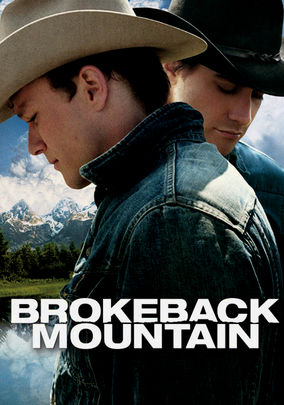
My comparison would be that this film is the female version of Brokeback Mountain (2005).

Carol is a story of hidden romance and secret lives in the early 1950s when it was difficult to lead an alternative lifestyle openly (or even in hiding!).

The film is a marvel in its honest storytelling, exquisite class, and gracefulness with excellent cinematography and a nice, heartwarming tale.

Carol is directed by Todd Haynes, a director known for films about doomed romances faced with societal challenges. Carol is a wonderful piece of work.

The film contains two equal female lead roles- Carol Aird (Cate Blanchett) is a gorgeous, sophisticated socialite.  She exudes confidence and style in everything that she does.

Always perfectly dressed, well made up, manicured fingernails, her mannerisms relay confidence, and control. She is married to a wealthy businessman, Harge (Kyle Chandler), who is madly in love with her, yet they are divorcing because of her “problem”.

The fact that Carol is a lesbian is known to Harge and they share somewhat of an understanding, and a five-year-old daughter. The divorce they are going through is difficult.

Therese Belevit (Rooney Mara), is the polar opposite of Carol.  Young, and naïve, she is a part-time shopgirl, fascinated by photography. She dates men and goes to parties, living out a typical young girl’s life.

When Carol and Therese meet at the store where Therese works, they are immediately enamored with one another and a friendship develops. Both seem caught off guard and the chemistry between the two actresses sizzles.

The focus is the budding romance between Carol and Therese, and the societal differences that they face, not to mention the age difference between the two women. I found the chemistry quite evident thanks to Blanchett and Mara.

Worlds apart, the two women somehow find their way to each other and form a bond. Their relationship is tender, gentle, and carefully laid out for the audience. They are neither animalistic nor barbaric in a sexual way, but rather sweet.

When Therese takes a spontaneous car trip from New York to Chicago, leaving her boyfriend, Richard, conflict develops. He wants them to run off to Paris but Therese wants to be with Carol. He breaks up with Therese and accuses her of having a crush on Carol.

Therese and Carol’s romance is finally consummated in a mid-western hotel. It is New Year’s Eve and Todd Haynes chooses to shoot this scene in a romantic, spontaneous way. They are celebrating the holiday, but both are blue and vulnerable. It makes perfect sense that they would turn to one another.

The film delves into many different emotions that Carol and Therese face- love, glee, anger, rage, confusion, rejection, and loneliness. These adjectives and the tone of the film are why it succeeds.

From an acting perspective, both Blanchett and Mara are great, but I am more partial to Blanchett’s performance. She embodies this character. From when she orders a martini dry with one olive, to how she brazenly approaches Therese, she is a woman in control. But faced with family issues she becomes vulnerable and we see her as human.

Besides the interesting story of a love faced with many challenges, the look of the film is grand. The sets, hairstyles, clothes, and makeup are graceful and rich. To summarize- everyone looks great and it portrays a perfect picture of the 1950s.

A progressive Hollywood tale, Carol showcases glamour, and great acting, and sends a powerful message of acceptance and struggle during a difficult time to be “different”, to fulfill one’s life.

Oscar Nominations: Best Actress-Cate Blanchett, Best Supporting Actress-Rooney Mara, Best Adapted Screenplay, Best Original Score, Best Cinematography, Best Costume Design

Independent Spirit Award Nominations: 1 win-Best Feature, Best Director-Todd Haynes, Best Female Lead-Cate Blanchett, Rooney Mara, Best Screenplay, Best Cinematography (won)

Call Me By Your Name-2017

Call Me By Your Name-2017

Director Luca Guadagnino

Starring Timothée Chalamet, Armie Hammer

Top 250 Films #118

Scott’s Review #708

Reviewed December 27, 2017

Grade: A

Call Me by Your Name (2017) is a gorgeous film. It is simply beautiful in storytelling, cinematography, and acting.

A humanistic film that crafts a lovely tale of young love, friendship, and emotions, which is breathtaking to experience.

In fact, in the LGBT category, I would venture to proclaim that this film is groundbreaking. It leaves behind any tried-and-true homophobic elements and instead tells a good story that is fresh, sincere, and simply flawless.

The period is the summer of 1983, and the landscape is the beautiful Italian Riviera.

Seventeen-year-old Italian-American Elio (Timothée Chalamet) dreams of spending the summer away, living with his affluent parents in a small village. His world is rich with culture and learning—his father (Michael Stuhlbarg) is a professor, and his mother is a translator.

A brilliant student, Elio wiles away the days reading, playing music, and flirting with his girlfriend, Marzia.

When a handsome twenty-four-year-old American student, Oliver (Armie Hammer), arrives for a six-week stay to assist Elio’s father on a project, desire and first love blossom between the young men as they struggle with their burgeoning relationship.

Directed by Luca Guadagnino, who has also directed the lovely 2009 film, I Am Love, is a man known for stories of desire in small Italian villages.

Call Me By Your Name is the third in a trilogy, I Am Love and 2015’s A Bigger Splash being the others.

The setting is crucial to the story, as both the summer heat and the world of the intellectual scholars are nestled into a grand shell of culture. The philosophical nature of the story is palpable—the film exudes intelligence and sophistication.

By 2017, the LGBT genre had become populated with films in the romantic, drama, and comedy sub-genres, but many use the standard homophobic slant to elicit drama and conflict.

Not to diminish the importance of homophobic discussions to teach viewers, Call Me By Your Name stands alone in that homophobia is not an issue in this story.

Given the time of 1983, this may be surprising—at the very cusp of the AIDS epidemic, this topic is also not discussed; rather, the subject matter is simply a love story between two males and the coming-of-age story that their love expresses.

The film is quite moving; Elio and Oliver are characters filled with texture and raw emotion. Oliver is confident, charismatic, and a great catch for any lucky young lady in the village.

Hammer fills the role with poise and humanity.

Chalamet, a beautiful young man, gives the complex role his all, as so much can be conveyed not by dialogue, but by expressions on the actor’s face.

As Oliver slow dances with a local girl, the wounded look that Chalamet reveals, his eyes welling up with tears, is heartbreaking. Seventeen is a tough age for most young men, but when coming to terms with one’s sexuality, it can be excruciating.

The final scene is poignant, as it features a five-minute-long sequence of gazing into Chalamet’s eyes, during which many emotions are expressed.

Enough credit cannot be given to Stuhlbarg as Elio’s father, as he gave one of the best speeches ever performed in film history. The actor gives a subtle and poignant performance as the sympathetic and knowing father.

His speech, marked by understanding and warmth, is riveting and inspirational—to be cherished. Mr. Perlman is a role model to fathers everywhere and the ideal parent for any gay son.

One scene that could stir controversy is the sure-to-be-controversial “peach scene”. Involving an innocent peach used during a sex act, the scene is erotic and borders on “icky”, but is also vital to foster the connection between Oliver and Elio.

Another potential risk to the film is that Oliver is twenty-four, while Elio is seventeen, making Elio underage. However, the film never portrays Oliver as more of an aggressor, and the relationship remains tender and consensual.

Call Me By Your Name (2017) is not just a great LGBT film but a film for the ages.  Beautifully crafted with gorgeous landscapes and nuanced, powerful acting, the sequences are subtle and carefully paced.

The film is simply a treasure.

Oscar Nominations: 1 win-Best Picture, Best Actor-Timothée Chalamet, Best Adapted Screenplay (won), Best Original Song-“Mystery of Love”

Independent Spirit Award Nominations: 2 wins-Best Feature, Best Director-Luca Guadagnino, Best Male Lead-Timothée Chalamet (won), Best Supporting Male-Armie Hammer, Best Cinematography (won), Best Editing

The Last Picture Show-1971

The Last Picture Show-1971

Director Peter Bogdanovich

Starring Timothy Bottoms, Jeff Bridges, Cybill Shepherd

Top 250 Films #121

Scott’s Review #1,349

Reviewed March 9, 2023

Grade: A

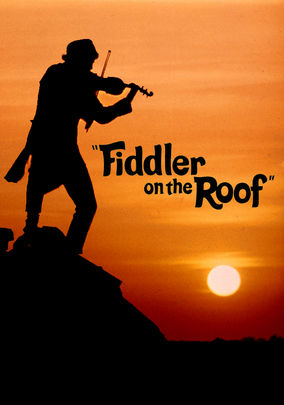
1971 was a great year in American cinema from The French Connection to Willy Wonka and the Chocolate Factory to Fiddler on the Roof to Dirty Harry. The list goes on and on.

The brilliantly filmed and directed The Last Picture Show is easily ensconced in the year’s top ten featuring an embarrassment of riches across the board. Important to promote is the successful use of the dusty setting and time which is the film’s secret sauce.

Peter Bogdanovich crafts a dreary coming-of-age tale of small-town life in landlocked Texas. The film is loosely based on a 1966 novel of the same name written by Larry McMurtry.

The film includes many songs by Hank Williams Sr. and other country & Western and 1950s popular music recording artists to reflect the era.

Most of the townsfolk are bored to tears in the windswept hamlet of Anarene, Texas. Their saving grace is a local cinema (the picture show) run by the popular Sam the Lion (Ben Johnson) which is about to close its doors forever.

Others frequent the café run by sultry waitress Genevieve (Eileen Brennan) who knows everyone’s business.

The gossip and scandals run wild throughout town following several principal characters and their trials and tribulations. High school students Sonny (Timothy Bottoms) and Duane (Jeff Bridges) lust after flirty Jacy Farrow (Cybill Shepherd) while trying to figure out their futures.

Sonny also finds time for an affair with depressed housewife Ruth Popper (Cloris Leachman), twenty years his senior, who is married to the school gym teacher, Coach Popper (Bill Thurman), who may be gay.

The year is 1951 when the Korean War is broiling and the once profitable oil town is in major decline.

Bogdanovich’s apt camerawork, shot in black and white, is central to the film and the winning recipe (well, one of them). If The Last Picture Show were shot in color or worse yet, colorized, it would detract from the proper mood of sadness.

The exterior scenes involve swirling dust and wide-angle shots of the main street often enough to relay a comparison to a ghost town especially as events go along. There are also some sequences involving vehicles or highway scenes conjuring up thoughts of escape or departure.

The other key ingredient is the ensemble of characters led by exceptional acting. Sonny is the handsome lead character who has a lifetime ahead of him and is the kindest of all the players. His all-American good looks infuse a vulnerability to the character especially revealed during scenes with Sam, his mentor, and his friend Billy.

Other quiet scenes reveal much about the supporting characters. Ruth sadly hangs the wash on her clothesline looking worn and weary while Genevieve grills a cheeseburger in the café, cigarette dangling and her once youthful aspirations slipping away.

Leachman and Johnson, both Academy Award winners in the supporting categories, deserve their awards. Successful at portraying their anger in quiet ways they also both have dignity and self-worth making their characters complex and revered.

The heartiest scenes belong to the younger set as they deal with simmering sexuality and hopes for college. Jacy experiments with sex, even sleeping with the man who her mother Lois (Burstyn) is having an affair with.

Shepherd also gives Jacy vulnerability as she awkwardly strips off her clothes during a pool party encouraged by a handsome boy she hopes to impress. At times, she is childish, other times a selfish bitch. It’s mentioned that her family is wealthy so the assumption is that she is spoiled.

The 1950s usually provides a level of nostalgia and good, old-fashioned, carefree Americana. The Last Picture Show (1971) thanks to the flawless direction and screenwriting of Bogdanovich and McMurtry instead paints a perfect portrait of misspent youth and shattered dreams.

Oscar Nominations: 2 wins-Best Picture, Best Director-Peter Bogdanovich, Best Supporting Actor-Ben Johnson (won), Jeff Bridges, Best Supporting Actress-Cloris Leachman (won), Ellen Burstyn, Best Screenplay-Based on Material from Another Medium, Best Cinematography

Fellini’s Roma-1972

Fellini’s Roma-1972

Director Federico Fellini

Starring Britta Barnes, Peter Gonzales

Top 250 Films #122

Scott’s Review #649

Reviewed June 5, 2017

Grade: A-

Fellini’s Roma (1973) is a trippy experience through Rome during two different periods

As with all Fellini films, the film is meant to be experienced rather than analyzed.

One must nestle into the life that Fellini offers on-screen- in this instance the fabulous city of Rome, Italy in both positives and negatives.

The experience was very good for me, as both a world of odd characters and of ancient Rome oozed from the screen appealingly and absurdly.

From a plot narrative- there is a rot one. Arguably the only character portrayed is Rome herself. The film takes place in both the 1930s as well as the 1970s and is said to be an autobiographical tale of director Fellini’s experiences growing up in Rome.

We see little Fellini as a youngster, experiencing the vast city for the first time, and as a teenager now living in the city. Interestingly, the film traverses from both sets of periods back and forth with really no rhyme or reason.

Throughout the film, we see both the beauty and the ugliness of Rome- the majestic Colosseum and the dirty entrails of the gloomy city. Scenes of seedy brothels, mainly in the 1930s, and a myriad of strange and scantily clad females prance before the cameras looking for a lucky score amid the droves of men lusting after them.

Another depicts a fashion show, of sorts, taking place at the Vatican, involving nuns and priests in bizarre costumes.

The 1930’s setting is my personal favorite. Gritty, cold, and harsh, the bleakness of Rome is depicted. Unsurprisingly, this has much to do with the historical period Since Mussolini was in power, and on the eve of World War II, the darkness was apparent.

In a frightening scene, bomb sirens wail while a woman shrieks in panic. The brothel scenes are downright creepy and the subsequent theatre scenes involving drunken, rowdy, young men leering and cursing at the entertainment, is a particular slice of a life sequence.

In contrast, the 1970s sequences are layered with more beautiful depictions of the city. Brighter colors are featured, and there appear to be either scientists or explorers digging into ancient ruins and finding gorgeous art that is subsequently ruined by the blowing air. We also see hippy types basking in the sunlight.

Again, much of this film is largely open to interpretation.

I adore Fellini’s Roma in terms of an expression of the city of Rome as an art form, but the film is highly unconventional- another plus for me.

Sure, I may have desired to learn more about the bevy of creepy and potentially interesting characters, but I finished the film with an appreciation of Rome, unlike none I have ever known.

A startling final scene, in which legendary Italian film star, Anna Magnani, appears scantily clad, implied to be a prostitute, was filmed shortly before her untimely death at the age of sixty-five.

As a film, Fellini’s Roma is a wonderful history lesson, but also a lesson in interpretation and film appreciation. Most filmgoers are accustomed to a beginning, middle, and end, as well as some semblance of a plot.

Roma contains none of that, but rather, is mind-opening and still fresh many years after its release, which is a true testament.

Short Cuts-1993

Short Cuts-1993

Director Robert Altman

Starring Tim Robbins, Julianne Moore, Lily Tomlin

Top 250 Films #123

Scott’s Review #1,400

Reviewed September 20, 2023

Grade: A

I am such a fan of acclaimed director Robert Altman because he typically features an enormous cast with richly composed characters all serving a story purpose. Frequently, with much character development and investment.

Short Cuts (1993) is a latter-day Altman offering set in Los Angeles, California, the City of Angels that is nearly as good as my all-time favorite of his, Nashville made in 1975.

Similarities burst to the screen with twenty-two principal characters to Nashville’s twenty-four. Their lives frequently intersect and the fun is peeling back the layers of their lives and discovering who is connected to whom.

Comparisons to 1992’s The Player (also Altman) and 1999’s Magnolia, directed by Paul Thomas Anderson can also be made for obvious Los Angeles setting reasons.

But, Magnolia is much weirder than Short Cuts.

The irony is that most characters are anything but angels as they suffer from insecurities, deaths, infidelity, and various shenanigans as they attempt to get through California life amid an earthquake and a fleet of helicopters spraying for medflies.

Altman based the film on the nine short stories and a poem by Raymond Carver.

Some of the tales include a waitress Doreen (Lily) who is married to an alcoholic limo driver (Tom Waits) who accidentally runs into a boy with her car. Soon after walking away, the child lapses into a coma. While at the hospital, the boy’s grandfather (Jack Lemmon) tells his son, Howard (Bruce Davison), about his past affairs.

Meanwhile, a baker (Lyle Lovett) starts harassing the family when they fail to pick up the boy’s birthday cake.

Dr. Ralph Wyman (Matthew Modine) and his wife, Marian (Moore), meet Stuart Kane (Fred Ward), an unemployed salesman, and Claire Kane (Anne Archer), a party clown, at a cello concert.

They impulsively decide to have a Sunday dinner date. seemingly having nothing in common.

Meanwhile, Marian’s sister, Sherri (Madeleine Stowe), is married to a cheating cop named Gene (Tim Robbins), who is having an affair with Betty Weathers (Frances McDormand), while Betty is divorcing one of the helicopter pilots, Stormy (Peter Gallagher).

There are other stories and connections to round out the fabulous cast.

The juicy and dramatic storylines play out like a terrific story arc on Days of Our Lives or As the World Turns with some needed comedic elements to balance things out.

Anyone who knows Altman will salivate with the name recognition among the cast most notably Tomlin and Robbins. Actors frequently chomped at the bit to appear knowing that he was an actor’s director.

This means he allowed his cast open range to create dialogue appropriate for their characters.

There’s no better example than when Jack Lemmon tells a story in the film. His improv and free dialogue are a dream to watch and a lesson in good and natural acting.

Despite the enormous cast everyone has something of quality to do. Nobody is languishing on the back burner with throwaway scenes or unimportant activities. All characters connect to others in some way.

Fans who fancy Los Angeles both in film and in real life with its bursting sunshine and cheery perception will revel in the down and dirty sub texture of Short Cuts.

The fun is getting there.

Some characters are wealthy but most struggle with day-to-day routine so the film contains a harsh realism. They try to find some shreds of happiness wherever they can get them.

Like real life which is part of the mastery of Short Cuts. The audience can relate to the characters because we all know people like them which makes the film a beautiful and treasured experience.

Or some may even be like us. The writing is brilliant and the characters are true to form.

One day I’ll create a list of my Top Ten Robert Altman films and I bet Short Cuts (1993) lands in the Top Five.

Oscar Nominations: Best Director-Robert Altman

Independent Spirit Award Nominations: 3 wins-Best Feature (won), Best Director-Robert Altman (won), Best Screenplay (won), Best Supporting Actress-Julianne Moore

Little Children-2006

Little Children-2006

Director Todd Field

Starring Kate Winslet, Patrick Wilson

Top 250 Films #126

Scott’s Review #334

70052692

Reviewed January 9, 2016

Grade: A

Little Children is a subtle, dark drama from 2006 that reminds me a great deal of The Ice Storm and American Beauty- both equally quiet masterpieces. All are similar films about dysfunctional, interpersonal relationships that are damaged.

The great film is one of my more modern all-time favorites.

On the surface, the small suburban Boston town in which the members of the film reside is whimsical, peaceful, and quiet. Spacious colonial and Victorian houses similarly line the sleepy streets.

The small town (unnamed) is affluent and, we learn very early on, is rife with scandal. A child-molester, Ronnie, (Jackie Earle Haley), who is also a resident of the town, living with his mother, has recently been let loose to resume his life, which makes the neighborhood tense and angry.

It is summertime, and the air is thick with heat and secrets.

Other than the child-molester story, the main drama involves Sarah Pierce (Kate Winslet), an intelligent, bored, stay-at-home housewife. She is angry and frustrated.

She cares for her three-year-old daughter Lucy, while her husband is addicted to porn and regularly sniffs panties that he purchases online, even risking his job to immerse himself in his addiction to porn.

They have a sex-less marriage.

Soon, Sarah embarks on a relationship with the resident hunk, Brad (Patrick Wilson), a stay-at-home Dad to four-year-old Aaron. His wife, Katherine (Jennifer Connelly), a “knockout”, produces documentaries and is the breadwinner of the family.

Thrown in the mix is crazed ex-cop, Larry, obsessed with protecting the neighborhood from Ronnie, and a trio of suburban house-wives, who are friendly with Sarah and secretly lust after Brad.

Little Children is a film about relationships, insecurities, and dreams remaining unfulfilled. How these relationships are damaged, filled with angst, or yearning for a resolution far out of reach, are explored and every character is sad in some way.

Each character is unfulfilled and in the middle of all of it is the torrid romance between Sarah and Brad. They while away the summer in romance that we just know will not last. They find some happy moments, but how will this continue?

Tragic is the situation with Ronnie- despite being a child molester he is portrayed as a sympathetic character. The entire town is against him- a sad scene involves the townspeople fleeing the community pool when Ronnie dares to go for a swim.

When he tearfully tells the police that he just wanted to cool down, there is such sadness in his eyes.

Despite being supporting characters in the film, my favorite performances are by Haley and Phyllis Somerville, as Ronnie’s feisty yet haggard mother, May.

Determined to ensure her son has a decent life, she lashes out at anyone who bullies her poor Ronnie. Somerville’s performance is heartbreaking and, in a perfect Hollywood world, she would have received an Oscar nomination.

Happily, Haley did, as injecting any sympathy in a character such as his is a difficult task, but Haley does so in spades.

The film is filled with narrative- in not dissimilar fashion to the classic Barry Lyndon (1975)- as the narrator explains the thoughts and inner turmoil of the characters in regular intervals. This adds layers and clarity to the film.

A masterful scene involves one centered around the dinner table, successfully done. Curious about husband Brad’s daytime life when she is away at work, Katherine invites Sarah and her daughter to join them for a cozy dinner.

As everyone eats and converses, the light bulb suddenly goes on in Katherine’s head and she pieces together events, realizing Brad and Sarah’s true relationship.

All of those days when she knew not where Brad was now came flowing back to her. A similar scene was played out in 2008’s The Kids Are Alright, working successfully in that film too.

The stories eventually intersect and I love this point of the film, especially being that it takes place in a smothering small town.

Character-driven, cynical, tragic, and dark. Little Children (2006) is a humanistic masterpiece that I never tire of watching- one of my favorites.

Oscar Nominations: Best Actress-Kate Winslet, Best Supporting Actor-Jackie Earle Haley, Best Adapted Screenplay

Far From Heaven-2002

Far From Heaven-2002

Director Todd Haynes

Starring Julianne Moore, Dennis Haysbert

Top 250 Films #127

Scott’s Review #332

60025011

Reviewed January 8, 2016

Grade: A

Far From Heaven (2002) is a gorgeous film, set in 1950’s upper-class and sophisticated Connecticut, that tackles not one, but two, separate social issues, in a wonderful story-telling fashion.

An interracial couple fraught with discrimination, and a homosexual husband hiding his secret lifestyle encompass this amazing film by acclaimed director Todd Haynes.

In years to follow, Haynes would also direct such masterpieces similar to the period (and story) of Carol (2015).

For starters, the cinematography and art direction are simply breathtaking- the beautiful and colorful small town in Connecticut, on the surface, prim and proper, is oozing with secrets and scandal just waiting to bubble to the surface.

An aerial view of the town allows the viewer to see this perfectly carved town in a sweeping motion.

Far From Heaven contains many similarities to All That Heaven Allows, made in 1955, and also focuses on a great scandal in a small, seemingly idyllic New England town.

Cathy Whitaker (Julianne Moore) seems to have everything perfectly styled and kept at home in affluent Connecticut, a successful husband named Frank (Dennis Quaid), who is an advertising executive, beauty, and a neighborhood filled with friends.

One night when Frank is working late, Cathy surprises him with dinner at the office, only to be surprised herself by catching Frank passionately kissing another man. In an awkward scene, Frank admits to Cathy that he needs conversion therapy, but instead turns to alcohol and continues to secretly see men.

Devastated, Cathy befriends her gardener, Raymond Deagan (Haysburt), a handsome black man, and slowly begins a relationship with him. Needless to say, this causes gossip and scandal amongst the townspeople.

Far From Heaven is fantastic story-telling, weaving, in essence, two main social stories together.

Frank questions his sexuality, afraid to admit he is gay and risking his reputation and career. Undoubtedly, he is a tormented individual and we see him slowly come to terms with his sexuality.

Haynes, fantastic at crafting a worthy story, carves a similar tale in 2015’s Carol, only she is a woman confident about her sexuality, but hiding it from society. Since the time in both films is the 1950s, the sexual revolution has not occurred, let alone anything gay-related.

The center story though belongs to Cathy and Julianne Moore portrays her to perfection. I would argue that Cathy is Moore’s best role- along with Amber Waves from Boogie Nights.

Hurt and betrayed by her husband, she suddenly is filled with new and dangerous emotions- falling in love with a black man in a not very open-minded time.

Moore and Haysbert have fantastic chemistry from their very first scene together.

I love how Haynes showcases the perfection of the town- the lawns are perfectly mowed, the flower beds flawless, and everyone appears cheerful and colorful. But when something in their little town becomes amiss (in this case Cathy going against the grain) the fangs come out and the animals bear their teeth.

A wonderful scene showcases Cathy and Raymond’s slow dancing in a solely black bar. They sway as one and Cathy is accepted by the black patrons. Raymond (and his daughter) are not treated the same way by the white folks of the town once they catch wind of the shenanigans going on between the interracial couple.

Far From Heaven (2002) is a beautiful film- from the way it looks and is shot, to the powerful acting performances all around. Moore may be the star and the central character of the film, but Quaid and Haysbert certainly deserve their due.

They each give layered performances as wounded and tortured men- and the conclusion of the film- perceived as open-ended- is also not a happily ever after climax.

Oscar Nominations: Best Actress-Julianne Moore, Best Original Screenplay, Best Original Score, Best Cinematography

Independent Spirit Award Nominations: 5 wins-Best Feature (won), Best Director-Todd Haynes (won), Best Female Lead-Julianne Moore (won), Best Supporting Male-Dennis Quaid (won), Best Cinematography (won)

Bambi-1942

Bambi-1942

Director David Hand

Starring Various voices

Top 250 Films #129

Scott’s Review #556

Reviewed December 22, 2016

Grade: A

Bambi (1942) is one of my favorite classic Disney animated features. It is simply a lovely, endearing, and heartbreaking tale.

Gorgeous and flawless, the film conveys a clear message about animals yearning for peace in a world where hunters seek to disturb and kill the graceful deer.

After all these years, this message still resonates loud and clear, sad, heartbreakingly. All deer hunters should watch this film and dare to take a shot.

Bambi was released during the Golden Age of Disney films, which was led by notable films such as Snow White, Dumbo, and Pinocchio, among others.

We first meet baby Bambi as his dear mother nurtures and nestles him, fawning over him with pride and teaching him the joys of the forest. Bambi’s father is the Great Prince of the Forest- protector of all the creatures of the land.

Bambi’s mother (unnamed) warns an exuberant Bambi to be cautious of the gorgeous yet dangerous meadows, where the deer are vulnerable and unprotected.

During the film’s famous gut-wrenching scene, tragedy occurs, and violence disrupts the peaceful forest, leaving Bambi alone, lost, and devastated, forced into a cruel world of tragedy, realism, and responsibility.

The scene gets to me every time, as we see the pain and harshness of life for the sweet deer, to say nothing of the other animals in the forest —namely, Thumper (a rabbit) and Flower (a young Skunk).

These characters are Bambi’s best friends. The dripping teardrop that oozes from Bambi’s eye can never be forgotten.

To counterbalance the film’s darkness, Disney successfully incorporates cheerful scenes of the animals dancing and interacting with each other as a unified community.

This is nice, as it shows the power and bond between the creatures – they are united as a family and take care of one another. I love this message, especially as young people will watch the film for the first time.

There is also a sweet romance offered between Bambi and Faline.

Watching the film and listening to the musical score is a way to experience sheer beauty. The music makes the film powerful- its classical and operatic elements are gorgeous and will elicit emotions.

Visually, each frame is a drawing set against a still, and it is magical to watch and marvel at the amount of work that undoubtedly went into this preparation.

In the end, the circle of life comes full circle. Bambi becomes the Great Prince of the Forest, replacing his father as the protector. Now, all grown up with two tiny babies of his own, he must protect his family and friends.

Life goes on. This is a sad yet realistic message. How brave Disney was in creating a masterpiece like Bambi.

Personal satisfaction is observing my beloved female feline friend, Thora, become mesmerized and attentive to the film each time I watch it.

Disney’s Bambi is a wonderful, cherished treasure that evokes emotions and conveys a valuable, poignant message. It is a timeless masterpiece to be enjoyed for generations to come.

One will not escape the film with dry eyes, a testament to the marvelous filmmaking involved.

Oscar Nominations: Best Scoring of a Dramatic or Comedy Picture, Best Original Song-“Love Is a Song”, Best Sound Recording

The Power of the Dog-2021

The Power of the Dog-2021

Director Jane Campion

Starring Benedict Cumberbatch, Kirsten Dunst, Jesse Plemons

Top 250 Films #134

Scott’s Review #1,199

Reviewed November 21, 2021

Grade: A

Benedict Cumberbatch delivers a harrowing and brutally honest performance in The Power of the Dog (2021), a thought-provoking and layered film by Jane Campion. Parts western, gothic, and drama, Cumberbatch leads the charge, but all players associated with the film knock it out of the park.

If the superior acting is not enough, the eerie subtext and gorgeous cinematography firmly place the viewer in 1925 Montana, where a vast and open range serves as the primary setting. Characters are riddled with secrets, and the fun lies in peeling back the layers to reveal their motives and true desires.

There are enough bare male butts to titillate most viewers, and Cumberbatch himself did not use the aid of a body double. He stated he wanted to be as raw and vulnerable as his character, the dastardly and cruel Phil Burbank.

Campion, who hasn’t made a film in over a decade, is back with a vengeance, paying homage to Ang Lee and his movie Brokeback Mountain (2006).

From the first moment on screen, we know something is mesmerizing about Phil. He is handsome and severe, an alpha male if there ever was one, and attributes his savvy to his deceased father figure, Bronco Henry. His relationship with this man is key to the whole story.

Along with his brother George (Jesse Plemons), the Burbank brothers are wealthy ranchers. One day, at the Red Mill restaurant on their way to market, the brothers meet Rose (Kirsten Dunst), the widowed proprietress, and her impressionable and effeminate son Peter (Kodi Smit-McPhee).

Phil behaves cruelly to Rose and Peter, but George becomes enamored with Rose and they marry, much to Phil’s chagrin. Now all living together, Phil taunts Peter and terrorizes Rose, but slowly begins to take the boy under his wing.

But what are his true intentions, and what will Peter do to save his mother from a complete breakdown?

The acting is so brilliant that I immediately became immersed in their lives. Particularly fascinating is Phil, but Rose, George, and Peter are all substantial characters. All the characters intertwine and have special relationships with each other, and all the principal actors are central to our fascination with them.

Rose may be Dunst’s best role yet, and Plemons is terrific as the kind and steady George. Smit-McPhee, unknown to me, is a revelation as the androgynous young intellectual.

There are enough homoerotic scenes to make the viewer question Phil’s sexuality. His secret stash of strong man magazines and his long gazes at nude male sunbathers may be enough to unlock the key. Still, when he rubs a handkerchief belonging to Bronco all over his body, the relationship between the two men oozes to the surface.

Campion has a lot of guts in taking on the male-driven western genre, and she brilliantly succeeds. Forgetting the storyline for a moment, the ravishing and oftentimes lonely landscape makes the film gorgeous to look at, especially on the big screen.

Plenty of long shots of the mountainous regions will inevitably captivate viewers and transport them to a bygone era.

The Power of the Dog was shot in New Zealand, but I was completely fooled into thinking Montana was the real filming location.

I adored seeing the costumes, whether it be Rose in a housedress or more distinguished characters like the governor and his wife dressed for a dinner party. All costumes appear authentic, peppered with a touch of glamour amidst the dirtiness of the range. Even the grubby ranch hands look great.

Discussions will certainly erupt once the film ends, and isn’t that the point of great films? The Power of the Dog (2021) takes the tried-and-true Western genre and infuses it with psychological depth.

Thanks to Campion and the team, she masterfully uses no gimmicks to draw the viewer into the world of the characters, instead offering authenticity and edge-of-your-seat drama.

Oscar Nominations: 1 win-Best Picture, Best Director-Jane Campion (won), Best Actor-Benedict Cumberbatch, Best Supporting Actor-Kodi Smit-McPhee, Jesse Plemons, Best Supporting Actress-Kirsten Dunst, Best Adapted Screenplay, Best Film Editing, Best Cinematography, Best Production Design, Best Original Score, Best Sound