Category Archives: Anthony Hopkins

The Silence of the Lambs-1991

The Silence of the Lambs-1991

Director Jonathan Demme

Starring Anthony Hopkins, Jodie Foster

Top 250 Films #64

Top 40 Horror Films #15

Scott’s Review #320

14546747

Reviewed January 3, 2016

Grade: A

The Silence of the Lambs (1991) has the honorary achievement of being one of only three films to win the top five Oscar statuettes, having been awarded Best Picture, Best Director (Jonathan Demme), Best Adapted Screenplay, Best Actor (Anthony Hopkins), and Best Actress (Jodie Foster) at the 1991 Oscar ceremonies.

This is no small feat, especially considering the film was released in March (not an Oscar-happy month) and is a horror film. These elements speak volumes for the level of mastery that is The Silence of the Lambs and the film holds up incredibly well as the years go by.

The film was a sleeper hit at the time of release and gradually built momentum throughout the year, becoming a phenomenon and forever a classic.

The film is adapted from the novel of the same name- written by Thomas Harris and, despite being a horror film, contains little gore. The film stars Foster as Clarice Starling, an FBI trainee, sent by her superiors to interview the infamous Hannibal Lecter.

Hannibal, “The Cannibal”, is a highly intelligent former psychiatrist who has been banished to a maximum security insane asylum after having been found guilty of killing and eating his victims.

The FBI hopes that Hannibal will aid them in a current case involving “Buffalo Bill”, a serial killer who skins his female victims.

Hannibal and Clarice embark on an intense and strange relationship in which he gets under her skin and questions her unhappy childhood in exchange for information about “Buffalo Bill”.

This relationship leaves Clarice vulnerable, though the pair develop a strong connection. As Hannibal makes more and more demands in exchange for information, he eventually escapes from custody and a chilling and bizarre escape.

The psychological elements and the intense relationship between Hannibal and Clarice are of monumental importance and Hopkins and Foster share an amazing chemistry.

Hopkins gives a top-notch and downright creepy performance as the cannibalistic killer. His mannerisms are stiff and calculating, his tone of voice monotone, and he simply embodies his character, making him a legendary and recognizable presence in film history.

Two memorable lines that he utters are, “I do wish we could chat longer, but I am having an old friend for dinner.”, and “I ate his liver with some fava beans and a nice Chianti”.

The character of “Buffalo Bill” is as terrifying as Hannibal Lecter.

Portrayed by Ted Levine, the character is maniacal, sexually confused, and otherwise downtrodden. A tailor, he aspires to make a full “woman suit” costume out of his victim’s skin. His current hostage, a Senator’s daughter, is kept confined in an old well and terrorized by Bill’s antics.

His famous line, “It puts the lotion on or it gets the hose again” still terrifies me.

Highly influential, mimicked for years to come, and containing multiple lines and characters permanently etched in film history, The Silence of The Lambs (1991) is a classic not soon forgotten.

The film was followed by multiple sequels, none of which come close to the power and psychological complexities of the original.

Oscar Nominations: 5 wins-Best Picture (won), Best Director-Jonathan Demme (won), Best Actor-Anthony Hopkins (won), Best Actress-Jodie Foster (won), Best Screenplay Based on Material Previously Produced or Published (won), Best Sound, Best Film Editing
Howards End-1992

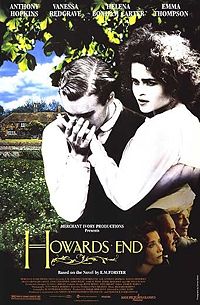
Howards End-1992

Director James Ivory

Starring Anthony Hopkins, Emma Thompson, Helena Bonham Carter

Top 250 Films #79

Scott’s Review #702

Reviewed December 1, 2017

Grade: A-

Howards End is my favorite film adaptation of E.M. Forster’s novel, which was also adapted into a film during the 1980s (1985’s A Room with a View and 1987’s Maurice are the other two notable works).

The novels were written during the early 1900s and set during the same period, focusing on class relations in 20th-century England.

The film is lovely and picturesque, telling an interesting story about romance and drama between the haves and have-nots during this period.

The film was a success and received heaps of Academy Award nominations in 1993.

Margaret Schlegel (Emma Thompson), an upper-middle-class intellectual, part of London’s bourgeoisie, befriends wealthy and sophisticated, yet shockingly conservative Ruth Wilcox (Vanessa Redgrave).

The two women strike up a powerful friendship, which results in her beloved country home being left to Margaret when an ailing Mrs. Wilcox dies.

To complicate matters, Margaret falls in love with a businessman (and husband of Ruth), Henry (Anthony Hopkins), while Margaret’s sister Helen, briefly becomes engaged to Paul Wilcox, Henry’s son.

The two families’ lives further intersect when they wind up as neighbors in London and the true owner of the beloved “Howards End” is questioned.

Added to the mix are several other characters of various social backgrounds, having connections to the families.

The writing in Howard’s End is rich and emotional as each character is perfectly fleshed out this includes the supporting as well as the lead characters.

Thompson and Hopkins, both sensational actors, have tremendous chemistry together, and unsurprising was Thompson’s win for Best Actress during this competitive year. She carries the film seamlessly with her upper-middle-class ideals- not conservatively rich, but far from working-class- she epitomizes poise grace, and empathy for those less fortunate than she.

Hopkins, on the other hand, is calculating and confident, yet charismatic and sexy as an old-school, controlling businessman.

Somehow, these two characters complement each other exceptionally well despite their varied backgrounds

The role of Helen may very well be Helena Bonham Carter’s finest. Not being an enormous fan of the actress-overrated and too brooding in my opinion enjoys portraying an interesting character in Helen.

Lovelorn and earnest, yet somewhat oblivious, she develops a delicious romance with the young clerk, Leonard Bast, my favorite character in the film. Living with Jacky, a woman of dubious origins, he is the ultimate nice guy and sadly winds up down on his luck after heeding terrible business advice.

Bast, thanks in large part to actor Samuel West, who instills an innocent, good guy quality in his character, deserves major props.

The cinematography featured in Howards End is beautiful with extravagant outdoor scenes- the lavish gardens of Howards End- just ravishing and wonderful.

Kudos too to the art direction, set design, and costume department for making the film look so enchanting.

There is something so appealing about the look of this film and director, James Ivory, undoubtedly deserves praise for pulling it all together into a suave picture. Whether the scene calls for sun or rain, tranquil or bustling, every scene looks great.

If I were to knock any points from this fine film it would be at two hours and twenty-two minutes, Howards End does drag ever so slightly, and many scenes involve the characters merely having chats with each other, without much action.

But this criticism is small potatoes when compared to the exceptional writing and well-nuanced character development displayed throughout the piece.

Admittedly, and perhaps shamefully, I have not read any of the Forster novels, but Howards End appears to be the film that is most successfully adapted, gleaming with textured finesse, grace, and style.

With the film’s finest actors along for the experience, and intricate, fine story-telling, Howards End (1992) is a film well worth watching.

Oscar Nominations: 3 wins-Best Picture, Best Director-James Ivory, Best Actress-Emma Thompson (won), Best Supporting Actress-Vanessa Redgrave, Best Screenplay Based on Material Previously Produced or Published (won), Best Original Score, Best Art Direction (won), Best Cinematography, Best Costume Design

Independent Spirit Award Nominations: Best International Film

The Father-2020

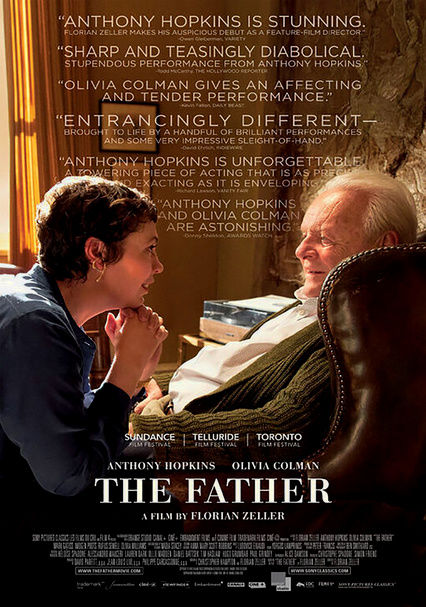
The Father-2020

Director Florian Zeller

Starring Anthony Hopkins, Olivia Colman 

Scott’s Review #1,123

Reviewed March 17, 2021

Grade: A

The Father is a heartbreaking 2020 drama film co-written and directed by Florian Zeller, based on his own 2012 play entitled Le Père. The piece is wonderfully written and superbly acted with incredible empathy for the characters involved.

Everyone should see this important film.

Anne (Olivia Colman) has always adored her intelligent and independent father, Anthony (Anthony Hopkins), who’s approaching the treacherous age of eighty. His mind is not what it used to be by any means, and is starting to fail. Stubborn, he rejects every caregiver she brings in to assist with his daily living.

Anne finds herself in anguish about how to solve this crisis while striving to live her own life.

Zeller spins a brilliant story from the very first scene because it’s told from Anthony’s perspective rather than solely from Anne’s.

Traditionally, in films centering around Alzheimer’s disease or dementia, the perspective is from the family member and how they cope and handle a life-altering and painful situation.

2014’s Still Alice, starring Julianne Moore, is an exception.

Immediately, the viewer is forced into the same world as Anthony and suffers as much confusion as he does. This is tremendously effective. When Anthony rummages in his kitchen in his London flat and hears a door close, he is startled.

Who can it be?

He wanders to the living room to discover a man sitting reading the newspaper, who claims to be Anne’s husband. Anthony has never laid eyes on the man before. Neither has the viewer.

Immediately, Anthony and the viewer are confused. Who is the man? Is he a burglar playing tricks on an older man, or is Anthony forgetting?

From this point in the film, it remains unclear what events are happening and what Anthony is forgetting or misunderstanding. Sometimes the characters are ambiguous.

Does Anthony think one person (Olivia Williams) is Anne, but is she his nurse? Is his caretaker his other daughter, Lucy? Is the man his daughter or Anne’s husband?

Confusion. Disorientation. Just like anyone with Alzheimer’s disease or dementia feels regularly.

Towards the finale, the most heartwrenching part of the film, Anthony weeps at his memory loss, yearning to be a child again and safe in his mother’s arms.

We feel his despair and desperation, and it’s gutwrenching to witness. Anyone who has had to care for an elder will understand. Anyone else should be empathetic.

We suffer alongside Anne, too. Help is becoming a necessity for her; she can’t make daily visits anymore, and Anthony’s grip on reality is unraveling. She wants to move to Paris, where her new boyfriend lives.

In a chilling scene, we watch Anthony sleeping peacefully while Anne gazes lovingly at him. She tucks him in and then begins to strangle him. We hope this is only a fleeting fantasy, toying with the idea of saving him from further suffering and giving her freedom back.

As we experience the changing tides of his memory, how much of his own identity and past can Anthony cling to? How does Anne cope as she grieves the loss of her father, while he still lives and breathes before her?

Hopkins and Colman are dynamic.

It’s hard to imagine Hopkins usurping his unforgettable role as Hannibal Lecter in The Silence of the Lambs (1991); he nearly does. His character is humorous, dignified, and lovable. He is also angry, feisty, and frustrated. Hopkins channels almost every emotion.

Colman is teary but strong. A woman sacrificing her own life and happiness for the burden of caring for her father. She is loyal and wouldn’t think twice about having it any other way.

The story is a downer, but one that must be witnessed.

The Father (2020) warmly embraces real life through loving reflection upon the simple human condition; heartbreaking and uncompromisingly poignant, the film tells a simple yet complex tale about life, death, and loss.

Oscar Nominations: 2 wins-Best Picture, Best Actor-Anthony Hopkins (won), Best Supporting Actress-Olivia Colman, Best Adapted Screenplay (won), Best Production Design, Best Film Editing

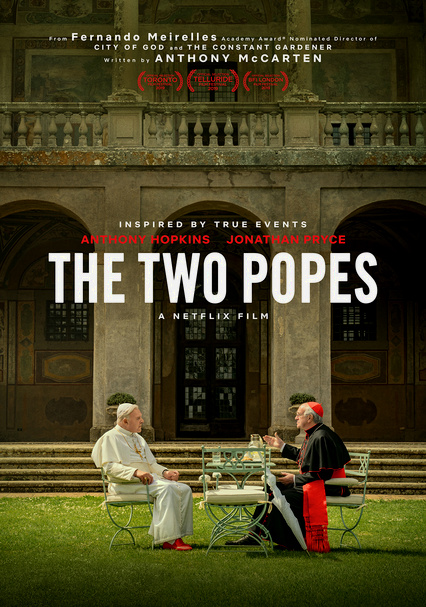
The Two Popes-2019

The Two Popes-2019

Director Fernando Meirelles

Starring Jonathan Pryce, Anthony Hopkins

Scott’s Review #994

Reviewed February 27, 2020

Grade: B+

The Two Popes (2019) is a biographical drama that focuses on two real-life religious figures and the close friendship they form while sharing differing ideas and viewpoints.

The two men hold the highest spiritual office, and deep respect culminates over time while past secrets are uncovered.

The film carefully balances past and present but offers too few meaty scenes between the legendary actors for my taste.

Otherwise, a thought-provoking and historical effort, with brilliant sequences of Italy and Argentina.

The film begins in April of 2005 during a pivotal moment in history, following the death of Pope John Paul II. The world is abuzz with the naming of Cardinal Joseph Ratzinger (played by Anthony Hopkins), elected Pope Benedict XVI.

At the same time, Bergoglio (Jonathan Pryce), from Argentina, receives the second-highest vote count.

Ratzinger has a stiff and more traditional approach to Christianity, while Bergoglio is more modern in thinking and open to new ideas.

Seven years later, the Catholic Church is embroiled in the Vatican leaks scandal, which tarnishes the very concept of religion. Benedict’s tenure has been marred by public accusations regarding his role in the cover-up, which has shocked the world.

Meanwhile, Bergoglio intends to retire and arrives in Rome to receive Benedict’s blessing. This is the point at which the men slowly come to terms with each other and develop mutual respect and admiration.

The Two Popes is worth the price of admission for the acting alone. With heavyweights such as Hopkins and Pryce, one can rest easy in this regard and simply enjoy the experience.

The scenes between the two actors are fantastic and fraught with energy.

As the religious figures confide in one another and secrets brim to the surface, the actors are believable as the real-life figures. Even good, old-fashioned small talk is fascinating to watch.

While the present-day sequences enthrall, the flashbacks of Bergoglio as a younger man and his journey into the church are explored a bit too much, sometimes halting the flow.

He was once engaged to be married, but instead joined the Jesuits. He was married in scandal when the perception was that he had collaborated with the Argentine military dictatorship, and he was exiled to serve as an ordinary parish priest to the poor for the next ten years.

The balance between timelines is acceptable, but the flashbacks become too prevalent as the film progresses.

Director Fernando Meirelles seems more comfortable shooting scenes within Argentina since those are best directed using black and white filming to showcase both the ravages of a chaotic nation and the decades preceding the present.

Best known for the wonderful City of God (2003), he also intersperses real-life news sequences featuring the peril of the Argentinian people. The two time periods do not always flow naturally together, though.

A huge positive is the inclusion of the child abuse scandal that rocked the religious world and the brave decision that Meirelles made to focus on the revelation that Benedict knew about the accusations and dismissed them, clearly aiding in their continuation.

Both Popes deal with the struggle between tradition and progress, guilt and forgiveness, and confronting one’s past, making it a character study.

The exterior and surrounding sequences are an absolute treat. Having visited Rome and particularly Vatican City, the Sistine Chapel, a showcase of the Vatican, is wonderful to view on a personal level.

The chapel in the Apostolic Palace, the official residence of the pope, is both astounding due to its lovely religious art and the backdrop for many scenes between Benedict and the future Pope Francis (Bergoglio).

Any viewer fond of world history or religious history will enjoy The Two Popes (2019). With great acting, secrets revealed, conflict, and loyalty, the film is crafted well.

Some momentum is lost in the story’s back and forth, and the film is hardly one that warrants repeated viewings or study in film school; however, it provides a realistic look at modern religion, complete with its arguments and discussions, to delve into.

Oscar Nominations: Best Actor-Jonathan Pryce, Best Supporting Actor-Anthony Hopkins, Best Adapted Screenplay

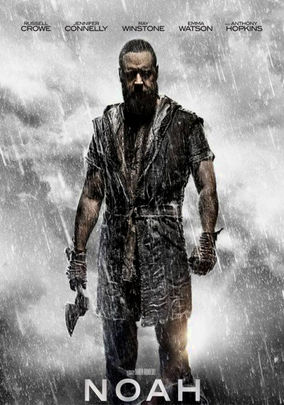
Noah-2014

Noah-2014

Director Darren Aronofsky

Starring Russell Crowe, Jennifer Connelly

Scott’s Review #3

70295061

Reviewed June 16, 2014

Grade: B+

Learning that Darren Aronofsky, a very dark director (Black Swan-2011, Requiem for a Dream-2000, and The Wrestler-2008), would be tackling a religious film piqued my curiosity.

Those expecting an uplifting, happy film about “god” will be disappointed.

This film is generating controversy from the religious folks, which I find interesting, but nobody wants me to go off on a tangent.

The film tells the tale of the biblical figure, Noah, and his quest to do God’s will through the signs he is given.

It takes incredible talent to make a film like this not seem silly and Aronofsky, Russell Crowe, and Jennifer Connelly succeed.

The film is quite dark and at times Noah comes off as more of a madman than a savior.

The visual effects and the musical score are wonderfully effective.

Noah (2014) has a few plot holes but is a nice fantasy/apocalypse-type film.