Category Archives: Luca Guadagnino

After the Hunt-2025

After the Hunt-2025

Director Luca Guadagnino

Starring Julia Roberts, Ayo Edebiri, Andrew Garfield

Scott’s Review #1,504

Reviewed November 29, 2025

Grade: B+

After the Hunt (2025) is a thriller mired in questions and secrets, which, from the outset, director Luca Guadagnino successfully creates. An atmosphere of the Yale University elitist intelligentsia, enshrouded in internal chaos, just reeking to be let go.

Julia Roberts reemerges into the awards conversation with a startlingly raw and introspective performance as Alma, a professor harboring a secret past that is invaded by present circumstances.

Guadagnino, known for the brilliant LGBTQ+-themed Call Me by Your Name (2017), usually incorporates emotional complexity, eroticism, and lavish visuals into his work. This one is highly character-driven, embellishing the thoughts and desires of the leads.

For the viewer, After the Hunt remains compelling because we don’t know whom to believe, with allegiances teetering from character to character, including Alma herself.

Alma drinks too much, pops pills, and has a secret apartment away from her eccentric husband, Frederick, wonderfully played by Michael Stuhlbarg. Despite being a psychiatrist, he coddles Alma and serves as her househusband rather than an equal, causing him peculiar bouts of weird behavior.

Meanwhile, Alma is desperately seeking tenure at Yale.

At a boozy party at Alma’s house one night, amid societal and philosophical conversations, Maggie (Ayo Edebiri), one of her students, uncovers a secret about Alma while snooping in her bathroom.

Later, Maggie, who is black and gay, leaves the party with Hank, one of Alma’s handsome colleagues (Andrew Garfield).

The next morning, Alma finds herself at a personal and professional crossroads when Maggie, a star student, levels an accusation against Hank, claiming she was sexually assaulted.

As the onion is peeled back, it is discovered that Maggie plagiarized a paper and has wealthy parents who help the University maintain its financial status. She is also obsessed with Alma, even wearing the same shade of fingernail polish.

At the same time, Hank is a volatile hothead with a vicious temper. Does he have a romantic past with Alma?

Who should Alma believe, and what should the audience think? Are we supposed to side with Maggie because it’s politically correct to believe a young black female over a white male?

Maggie immediately put me off. Was that the intention? I wanted to like her, but just didn’t. This was even before it was known that she was privileged.

By contrast, I immediately did like Hank. His passion for philosophy and his yearning for debate about the younger generation being coddled resonated with me.

Guadagnino offers more than solely a compelling story in After the Hunt.

As a Connecticut resident, the exterior locales are powerful. Rich camera shots of the massive Yale campus, especially on snowy days, provide wonderful texture to the film. A small, cruddy yet cozy Indian diner, strangely empty, serves as a meeting point for two poignant scenes.

Besides the campus, New Haven, Connecticut, is not the ritzy Greenwich, Connecticut, by any means, and Guadagnino must have realized this by incorporating ugly waterside views and glimpses of factories.

A quiet, introspective director, many scenes of Alma staring into the distance, in thought or pondering life, play well with philosophical debate scenes between faculty and students.

While the film’s pacing is slow, it works for me. And throughout the question remains of what Alma’s secret is and whether Hank sexually assaulted Maggie, or is it all lies?

The film is also reminiscent of Fatal Attraction (1987) or Single White Female (1992). The key to the film may lie in Maggie’s obsession with Alma, which slowly unfolds.

In what may be Julia Roberts’ best film role to date, After the Hunt (2025) doesn’t hit a home run with a slightly ambiguous, unsatisfying ending, but with stellar performances from Roberts, Edebiri, Garfield, and Stuhlbarg, it’s enough to warrant a watch.
Call Me By Your Name-2017

Call Me By Your Name-2017

Director Luca Guadagnino

Starring Timothée Chalamet, Armie Hammer

Top 250 Films #118

Scott’s Review #708

Reviewed December 27, 2017

Grade: A

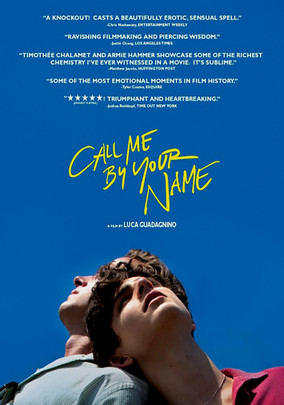
Call Me by Your Name (2017) is a gorgeous film. It is simply beautiful in storytelling, cinematography, and acting.

A humanistic film that crafts a lovely tale of young love, friendship, and emotions, which is breathtaking to experience.

In fact, in the LGBT category, I would venture to proclaim that this film is groundbreaking. It leaves behind any tried-and-true homophobic elements and instead tells a good story that is fresh, sincere, and simply flawless.

The period is the summer of 1983, and the landscape is the beautiful Italian Riviera.

Seventeen-year-old Italian-American Elio (Timothée Chalamet) dreams of spending the summer away, living with his affluent parents in a small village. His world is rich with culture and learning—his father (Michael Stuhlbarg) is a professor, and his mother is a translator.

A brilliant student, Elio wiles away the days reading, playing music, and flirting with his girlfriend, Marzia.

When a handsome twenty-four-year-old American student, Oliver (Armie Hammer), arrives for a six-week stay to assist Elio’s father on a project, desire and first love blossom between the young men as they struggle with their burgeoning relationship.

Directed by Luca Guadagnino, who has also directed the lovely 2009 film, I Am Love, is a man known for stories of desire in small Italian villages.

Call Me By Your Name is the third in a trilogy, I Am Love and 2015’s A Bigger Splash being the others.

The setting is crucial to the story, as both the summer heat and the world of the intellectual scholars are nestled into a grand shell of culture. The philosophical nature of the story is palpable—the film exudes intelligence and sophistication.

By 2017, the LGBT genre had become populated with films in the romantic, drama, and comedy sub-genres, but many use the standard homophobic slant to elicit drama and conflict.

Not to diminish the importance of homophobic discussions to teach viewers, Call Me By Your Name stands alone in that homophobia is not an issue in this story.

Given the time of 1983, this may be surprising—at the very cusp of the AIDS epidemic, this topic is also not discussed; rather, the subject matter is simply a love story between two males and the coming-of-age story that their love expresses.

The film is quite moving; Elio and Oliver are characters filled with texture and raw emotion. Oliver is confident, charismatic, and a great catch for any lucky young lady in the village.

Hammer fills the role with poise and humanity.

Chalamet, a beautiful young man, gives the complex role his all, as so much can be conveyed not by dialogue, but by expressions on the actor’s face.

As Oliver slow dances with a local girl, the wounded look that Chalamet reveals, his eyes welling up with tears, is heartbreaking. Seventeen is a tough age for most young men, but when coming to terms with one’s sexuality, it can be excruciating.

The final scene is poignant, as it features a five-minute-long sequence of gazing into Chalamet’s eyes, during which many emotions are expressed.

Enough credit cannot be given to Stuhlbarg as Elio’s father, as he gave one of the best speeches ever performed in film history. The actor gives a subtle and poignant performance as the sympathetic and knowing father.

His speech, marked by understanding and warmth, is riveting and inspirational—to be cherished. Mr. Perlman is a role model to fathers everywhere and the ideal parent for any gay son.

One scene that could stir controversy is the sure-to-be-controversial “peach scene”. Involving an innocent peach used during a sex act, the scene is erotic and borders on “icky”, but is also vital to foster the connection between Oliver and Elio.

Another potential risk to the film is that Oliver is twenty-four, while Elio is seventeen, making Elio underage. However, the film never portrays Oliver as more of an aggressor, and the relationship remains tender and consensual.

Call Me By Your Name (2017) is not just a great LGBT film but a film for the ages.  Beautifully crafted with gorgeous landscapes and nuanced, powerful acting, the sequences are subtle and carefully paced.

The film is simply a treasure.

Oscar Nominations: 1 win-Best Picture, Best Actor-Timothée Chalamet, Best Adapted Screenplay (won), Best Original Song-“Mystery of Love”

Independent Spirit Award Nominations: 2 wins-Best Feature, Best Director-Luca Guadagnino, Best Male Lead-Timothée Chalamet (won), Best Supporting Male-Armie Hammer, Best Cinematography (won), Best Editing

Queer-2024

Queer-2024

Director Luca Guadagnino

Starring Daniel Craig, Drew Starkey

Scott’s Review #1,462

Reviewed January 20, 2024

Grade: A

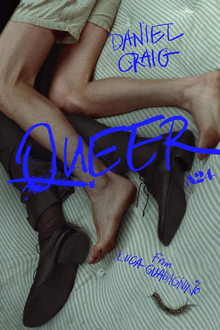
Daniel Craig sheds his James Bond (007) image for a more nuanced and challenging role in Luca Guadagnino’s film, Queer (2024). His layered and complex character must have been a dream role for the actor reportedly frustrated with the one-note Bond character.

Guadagnino, well-known for the similarly LGBTQ+-themed Call Me By Your Name (2017), trades Italy for Mexico and later Ecuador in his latest and darker project.

The film is a winning ticket and on an even keel with Call Me By Your Name, although I prefer the latter by a smidgeon. Queer is an exceptional film given the fabulous combination of elements like muted color tones, unrequited love, and the 1950s time period.

The sex scenes are pretty delicious and leave nothing to the imagination, providing titillation and appetite.

I was impressed by the unique incorporation of 1990s grunge band Nirvana in various sequences, including a beautiful rendition of ‘All Apologies’ by Sinead O’Connor as the film opens.

The funky, crisp blue/purple credits, which appear handwritten, are cool and modern, adding to the visual pleasures to come.

Events begin in 1950 when we meet William Lee (Craig), an American expatriate living in Mexico City, passing time by bar hopping and indulging in sexual activities with younger men.

One evening, he catches sight of Eugene Allerton (Drew Starkey), a young GI who is also an American expatriate. Lee becomes obsessed with Allerton and pursues him across various bars, hoping to gain his affection.

The men develop a relationship, but Eugene maintains an emotional distance from Lee. Despite Lee’s interest in a full-time connection, he is often seen with a mysterious red-haired woman.

As time marches on, Lee’s dependency on drugs and alcohol deepens, and the pair take an exotic and hallucinogenic trip to Ecuador to visit a wacky female doctor (Lesley Manville).

Will Lee and Eugene forge a dangerous same-sex relationship? Or will they go their separate ways as merely two ships passing at night?

The character of Lee is reportedly based on William S. Burroughs, a famous American author during the Beat Generation (a literary subculture of the 1950s).

His 1985 novella, Queer, is adapted.

Craig is dangerously good as Lee, invoking loneliness and hopefulness seemingly interchangeably in a given scene.

He’s relatively out of the closet, miraculous given that the gay rights movement would not happen for almost twenty years, but this begs the question of the progressive culture of Mexico City.

The audience realizes that Lee is yearning for a connection with another man and has repeatedly been unable to find it. Sure, he pays for the services of male prostitutes, but it’s not about the sex for him.

It’s a more profound desire.

As Lee embarrassingly admits his feelings for Eugene in a drunken confessional, Craig flawlessly reveals Lee’s pain. The actor rises way beyond the heights of James Bond in an acting extravaganza.

I adore the texture that Guadagnino films in. The gloomy streets and the fuzzy colors add the proper setting of emptiness and fulfillment.

Lee’s artist apartment is, in one way, calm and, in another way, bleak and shrouded with unhappy experiences. It’s littered with empty bottles and discarded drug paraphernalia.

The moments when Lee and Eugene are together in a movie theater or out to dinner when Lee imagines the pair embracing or stroking the young man’s face, are both tender and sad.

While the film doesn’t end happily, anyone familiar with Call Me By Your Name shouldn’t be surprised. Instead, Guadagnino showcases the reality and desperation of what being gay was like a long time ago.

It will not satisfy everyone, and the story teeters off course toward the end when the men get to South America, but the score and dazzling visuals make up for this.

Thanks to superior direction and a lead performance of excellence, Queer (2024) is a grand achievement in humanity and the complications that emerge when faced with emotions and desires that are not fulfilled.

Suspiria-2018

Suspiria-2018

Director Luca Guadagnino

Starring Dakota Johnson, Tilda Swinton

Scott’s Review #864

Reviewed February 7, 2019

Grade: B-

Dario Argento’s 1977 creative masterpiece is the original Suspiria, an orgy of style and visual spectacles carefully immersed within a standard slasher film appropriate for the times.

Some might deem it foolish to attempt a remake.

Argento’s film contains comprehensive and defined story elements, while the new Suspiria (2018) changes course with a brazen attempt to achieve the same mystique as the original. Instead, it offers a plodding and mundane story that is almost nonsensical and does not work.

Thankfully, a bloody and macabre finale brings the film above mediocrity.

Director Luca Guadagnino, fresh off the Italian and LGBT-themed Call Me by Your Name (2017), a bright film peppered with melancholy romance and lifestyle conflict, could not be more different from Suspiria.

The respected director parlays into the horror genre with two of Hollywood’s top talents, Tilda Swinton and Dakota Johnson, and a nice nod to the original film with a small appearance by leading lady Jessica Harper.

The premise of Suspiria remains intact, as the period is once again 1977, and the location remains Berlin, Germany. Susie Bannion (Johnson) is a gifted American dancer who joins the prestigious Tanz dance academy run by a coven of witches, where she unearths demonic tendencies.

Coinciding with her arrival is the disappearance of another student, Patricia Hingle, and the revelation that her psychotherapist Josef Klemperer (Swinton) has Patricia’s journals chronicling details of the dastardly coven.

From an acting perspective, Swinton impresses the most as she tackles three distinctive roles: an elderly and troubled psychotherapist, artistic director Madame Blanc, and Mother Marko, an aging witch.

Each character is vastly different, allowing the talented actress to immerse herself in the various characters. She is so convincing that I did not realize while watching the film that she played the psychotherapist or that a female played the character.

I admit to not being a fan of Dakota Johnson for perceptively using her Hollywood royalty to rise the ranks to film stardom or her lackluster film roles thus far—think Fifty Shades of Grey or the innumerable sequels—but she does not do much for me in the central role of Susie.

The miscast is more palpable compared to Harper’s rendition of the role decades earlier.

Johnson is predictably wooden and quite painful to watch, especially matched against a stalwart like Swinton in many scenes. Lithe and statuesque, the young actress does contain the physical qualities of a dancer, so there is that.

As a stand-alone film, my evaluation of Suspiria might be less harsh, but the original Suspiria is held at such lofty heights that this is impossible.

The problem is with the screenplay, as compelling writing is sparse. Much of the plot makes little sense and does nothing to engage the viewer at the moment. Slow-moving and meandering, lacking a spark or an abrupt plot breakthrough, I quickly lost interest in what was going on.

The interminable running time of over two and a half hours is unnecessary and unsuccessful.

Before I rake entirely Suspiria across the coals, my cumulative rating increases with the astounding and garish final sequence, which features a plethora of blood and dismemberment in a sickening witches’ sabbath.

As Klemperer lies incapacitated after being ambushed by the witches, one girl is disemboweled, followed by decapitation, as the bold use of red is blended into the lengthy sequence. As the withered and bloated Mother Markos relinquishes her title, an incarnation of Death is summoned, and heads explode.

The finale plays out like a horrible dance sequence.

To add to the above point, the visuals and cinematography are its highlights. By using mirrors and possessing a dream-like quality, the film looks great and harbors an eerie, stylistic, and deathly crimson hue. The resulting project is one of spectacle and intrigue rather than a sum of its parts.

Rather than approaching the film with an introspective or cerebral motif, it is recommended that you simply go with the flow and let it fester.

Guadagnino deserves credit for bravely attempting to undertake the creation of such a masterpiece and bringing it to audiences in 2018.

Suspiria (2018) lacks plot or pacing and is the second runner-up to the original. The story is not worth making heads or tails of since it is not interesting enough to warrant the effort.

Ultimately, skip this version and stick to the brilliance of the Argento effort, or better yet, do not compare the two films at all.

Independent Spirit Award Nominations: 2 wins- Best Cinematography (won), Robert Altman Award (won)

I Am Love-2009

I Am Love-2009

Director Luca Guadagnino

Starring Tilda Swinton

Scott’s Review #545

Reviewed December 11, 2016

Grade: A

Tilda Swinton shines in I Am Love,  an amazing Italian film from 2009 that I wish received wider recognition, but alas, some of the best films do not receive their due.

Swinton stars as a matriarch of a wealthy Italian family, who owns a successful business. To make this film very authentic, it was shot in and around Milan and contains a highly stylish and exquisite appearance.

It is a grand film with high-class set pieces and a great look. I do not hesitate to categorize it as an artistic, female version of The Godfather because it is that good.

It focuses on the family as a whole but more so on Swinton’s character, who is bored and unhappy with her life and yearns for passion and feeling.

One day she meets a friend of her sons and drama ensues.

The boy is only half her age, but they share a passion that awakens her from her doldrums. The conflict in the film is how the affair looks to society and affects the family business- not to mention detrimental to her marriage.

I Am Love (2009) is a great film that should be discovered by those looking for a gorgeous film with great drama.

Oscar Nominations: Best Costume Design