Category Archives: Jeff Bridges

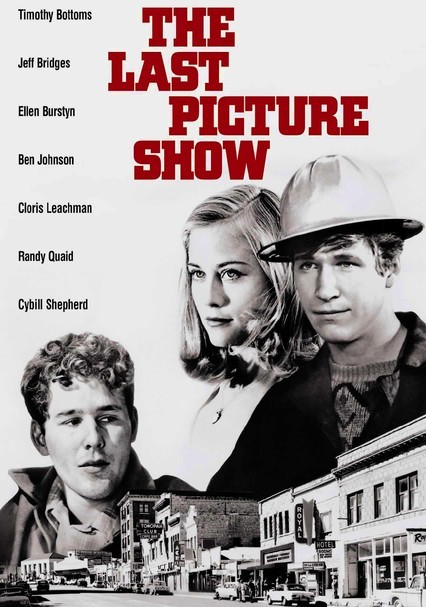
The Last Picture Show-1971

The Last Picture Show-1971

Director Peter Bogdanovich

Starring Timothy Bottoms, Jeff Bridges, Cybill Shepherd

Top 250 Films #121

Scott’s Review #1,349
Reviewed March 9, 2023

Grade: A

1971 was a great year in American cinema from The French Connection to Willy Wonka and the Chocolate Factory to Fiddler on the Roof to Dirty Harry. The list goes on and on.

The brilliantly filmed and directed The Last Picture Show is easily ensconced in the year’s top ten featuring an embarrassment of riches across the board. Important to promote is the successful use of the dusty setting and time which is the film’s secret sauce.

Peter Bogdanovich crafts a dreary coming-of-age tale of small-town life in landlocked Texas. The film is loosely based on a 1966 novel of the same name written by Larry McMurtry.

The film includes many songs by Hank Williams Sr. and other country & Western and 1950s popular music recording artists to reflect the era.

Most of the townsfolk are bored to tears in the windswept hamlet of Anarene, Texas. Their saving grace is a local cinema (the picture show) run by the popular Sam the Lion (Ben Johnson) which is about to close its doors forever.

Others frequent the café run by sultry waitress Genevieve (Eileen Brennan) who knows everyone’s business.

The gossip and scandals run wild throughout town following several principal characters and their trials and tribulations. High school students Sonny (Timothy Bottoms) and Duane (Jeff Bridges) lust after flirty Jacy Farrow (Cybill Shepherd) while trying to figure out their futures.

Sonny also finds time for an affair with depressed housewife Ruth Popper (Cloris Leachman), twenty years his senior, who is married to the school gym teacher, Coach Popper (Bill Thurman), who may be gay.

The year is 1951 when the Korean War is broiling and the once profitable oil town is in major decline.

Bogdanovich’s apt camerawork, shot in black and white, is central to the film and the winning recipe (well, one of them). If The Last Picture Show were shot in color or worse yet, colorized, it would detract from the proper mood of sadness.

The exterior scenes involve swirling dust and wide-angle shots of the main street often enough to relay a comparison to a ghost town especially as events go along. There are also some sequences involving vehicles or highway scenes conjuring up thoughts of escape or departure.

The other key ingredient is the ensemble of characters led by exceptional acting. Sonny is the handsome lead character who has a lifetime ahead of him and is the kindest of all the players. His all-American good looks infuse a vulnerability to the character especially revealed during scenes with Sam, his mentor, and his friend Billy.

Other quiet scenes reveal much about the supporting characters. Ruth sadly hangs the wash on her clothesline looking worn and weary while Genevieve grills a cheeseburger in the café, cigarette dangling and her once youthful aspirations slipping away.

Leachman and Johnson, both Academy Award winners in the supporting categories, deserve their awards. Successful at portraying their anger in quiet ways they also both have dignity and self-worth making their characters complex and revered.

The heartiest scenes belong to the younger set as they deal with simmering sexuality and hopes for college. Jacy experiments with sex, even sleeping with the man who her mother Lois (Burstyn) is having an affair with.

Shepherd also gives Jacy vulnerability as she awkwardly strips off her clothes during a pool party encouraged by a handsome boy she hopes to impress. At times, she is childish, other times a selfish bitch. It’s mentioned that her family is wealthy so the assumption is that she is spoiled.

The 1950s usually provides a level of nostalgia and good, old-fashioned, carefree Americana. The Last Picture Show (1971) thanks to the flawless direction and screenwriting of Bogdanovich and McMurtry instead paints a perfect portrait of misspent youth and shattered dreams.

Oscar Nominations: 2 wins-Best Picture, Best Director-Peter Bogdanovich, Best Supporting Actor-Ben Johnson (won), Jeff Bridges, Best Supporting Actress-Cloris Leachman (won), Ellen Burstyn, Best Screenplay-Based on Material from Another Medium, Best Cinematography
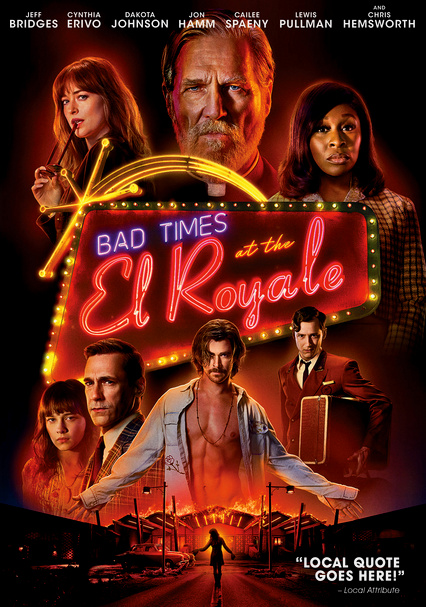
Bad Times at the El Royale-2018

Bad Times at the El Royale-2018

Director Drew Goddard

Starring Jeff Bridges, Cynthia Erivo, Dakota Johnson

Scott’s Review #919

Reviewed July 10, 2019

Grade: A-

Bad Times at the El Royale (2018), directed by Drew Goddard, known for crafting the horror film The Cabin in the Woods (2012), is a gem that crosses multiple genres with sound results.

With Bad Times, he assumes writing and production duties for the thriller and steals a page from the Quentin Tarantino playbook, most notably from The Hateful Eight (2015).

The resulting feature is clever, perverse, and mysterious. It is a fantastic, edge-of-your-seat experience and a must-see for Tarantino fans.

Set in 1969, the film focuses on seven strangers of different backgrounds who go to a seedy and remote hotel on the California/Nevada border. Each harbors its share of dark secrets, culminating during a deadly macabre showdown one dark and stormy night.

In many ways, each character seeks redemption or forgiveness for a past indiscretion or is otherwise protecting someone or something else. A large sum of money is also in play for the greedier characters to tussle over.

The seven players are as follows: Jeff Bridges plays catholic priest Donald “Dock” O’Kelly, Cynthia Erivo plays struggling soul singer Darlene Sweet, and Dakota Johnson portrays Emily Summerspring, a hippie trying to save her younger sister, Rose, who is devoted to and mesmerized by sadistic cult leader Billy Lee (Chris Hemsworth).

Finally, Jon Hamm plays Dwight Broadbeck, a vacuum salesman who may have a secret identity, and hotel clerk Miles Miller (Lewis Pullman), who runs the hotel alone.

As events roll along, the complexities of the characters grow, which is my favorite aspect of the film. There are so many twists and turns involving the characters’ backstories and motivations that surprises are in store.

Some characters have strange connections to each other, while others meet for the first time and their lives intersect in interesting ways.

The dynamic between all the actors works tremendously well, with the standouts being Bridges and Erivo, who share tremendous chemistry and are the most interesting characters, to mention get the most screen time.

Their characters forge a bond during their lengthy scenes while never wholly trusting each other. Erivo, as Darlene, gets to showcase her wonderful singing voice. The highlight is the grand hotel room sequence as she belts out “This Old Heart of Mine (Is Weak for You).”

Old and burdened with memory loss, Bridges successfully grants more sympathy to his character than he deserves.

The film loses momentum towards the end when introducing the miscast Hemsworth, who is pretty but not the most remarkable acting talent. The actor overacts, playing Billy Lee as sinister and one-dimensional rather than infusing complexities into the character, which doesn’t work.

A better casting choice (and Tarantino mainstays) would have been Leonardo DiCaprio or Brad Pitt, and either actor would have assuredly brought more depth to the role.

Comparisons must be made to The Hateful Eight and the comedy Clue (1985). Godard divides the film into chapters like the former, mostly entitled as the hotel room numbers. With each subsequent room, the events going on in that room and its inhabitants are explored.

As in both films, he brings several mysterious characters with connections together. In Clue, secret passageways that lead to various parts of a building are featured, offering layers of possibilities.

The hotel itself is styled and dressed brilliantly, nearly a character with glossy decals and shiny trimmings but with a solemn and melancholy gloominess. The establishment has seen its share of heartbreak, schemes, and even death. Clever is the division of the hotel into either the sunny and cheerful “California” section or the less posh “Nevada” section, purple and costing one dollar less.

The viewer is sucked into its web within the first sequence when a man is shown hiding money under the floorboards and then subsequently shot to death.

Despite being labeled a Tarantino rip-off, this does not bother me as I was enthralled with the characters, the details, and the vast nuances offered.

Unfortunately, the film was a box-office disappointment, suffering from a lack of awards buzz and a lofty running time. Bad Times at El Royale (2018) will entertain, intrigue, and keep one guessing until the credits roll.

Be prepared for a bloody good time!

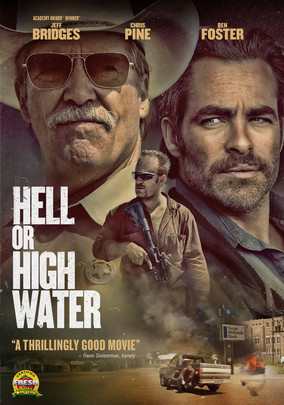
Hell or High Water-2016

Hell or High Water-2016

Director David Mackenzie

Starring Jeff Bridges, Chris Pine, Ben Foster

Scott’s Review #609

Reviewed January 16, 2017

Grade: B+

Hell or High Water (2016), a splendid tale of bank robbers chased by law enforcement officers in rural western Texas, is reminiscent of the Coen Brothers’ No Country for Old Men (2007) or a classic Sam Peckinpah film from the 1970s.

The film provides a good story with a morality tale, so the viewer is unsure who to root for—the good gr tad guys. This gives the film substance compared to the typical action-guy film, which is done to death.

Odd, quirky, minor characters are interspersed throughout the film, which adds comedy and a unique feel.

David Mackenzie directed the film, but up until now, it has been unknown to me.

Chris Pine and Ben Foster play Toby and Tanner, two brothers who embark on small-town bank robberies to save their recently deceased mother’s ranch.

Tanner (Foster) is the more seasoned criminal, having spent time in jail and being more volatile than his brother. Toby (Pine) is a family man with two kids and is more intelligent and sensible than his brother.

Two Texas Rangers, Marcus Hamilton (Bridges), a grizzled man weeks away from retirement, and his partner, Alberto Parker (Gil Birmingham), pursue them.

What I enjoyed most about this film is the authenticity of the setting.

The film was shot in New Mexico but meant to be in West Texas. This is believable, and the cinematography is gorgeous. The vastness of the land and the sticky desert heat are filmed very well.

Small-town Texas is portrayed as tiny characters introduced as townspeople, giving much credo to the film.

My favorites are the diner waitress-smitten with the handsome Toby (and her $200 tip), and t-bone waitress- grizzled and rude after forty-four years in the same place. Their sassy and abrasive behavior works and adds much to the film.

Dale Dickey is a treat in any film, and her turn as a bank employee is a joy.

How nice to see Chris Pine in a challenging role. His character is conflicted morally. Not wanting to hurt anyone, he struggles with the robberies and wants to do right by his kids and mother.

He is a decent man caught in uncertain circumstances, and Pine does an excellent job of portraying him, proving that the actor is becoming more than just a pretty face.

Bridges plays anger quite well, and it is nice to see the actor succeeding career-wise in his golden years. His Texas Ranger character is determined to uphold the law. Still, below the surface, he is more than a bit worried about his upcoming retirement, closing a chapter in his life that is undoubtedly important to him.

His relationship with his partner is jovial and buddy-like, but is there an underlying physical attraction between the men?

The film does not go there, but perhaps on a subconscious level, it is hinted at.

A fantastic scene laced with tension occurs near the film’s end when two of the main characters are killed. It is a stand-off of sorts atop a desert mountain ridge. One of the characters loses it, which results in a shoot-out and a shocking loss of life.

The scene is excellent in that it is a good, old-fashioned shoot ’em up done well.

Hell or High Water (2016) is a gritty action film with excellent elements, nice characterization, and clean fun. It’s a throwback to a long-time crime western without the standard stock characters.

This film is more layered than the traditional and intelligently written, achieving something unique.

Oscar Nominations: Best Picture, Best Supporting Actor-Jeff Bridges, Best Original Screenplay, Best Film Editing

Independent Spirit Award Nominations: 1 win-Best Supporting Male-Ben Foster (won), Best Screenplay, Best Editing

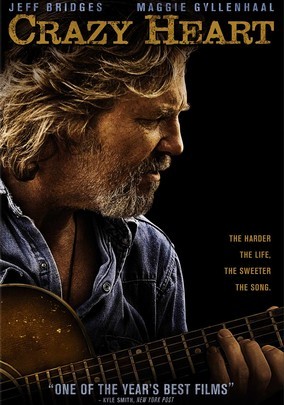
Crazy Heart-2009

Crazy Heart-2009

Director Scott Cooper

Starring Jeff Bridges, Maggie Gyllenhaal

Scott’s Review #571

Reviewed December 29, 2016

Grade: A-

Crazy Heart (2009) is a film that is perfectly crafted for Jeff Bridge’s talents as an actor and the role seems written specifically for him.

To that end, it is a showcase for the actor, and as proof, he was awarded the Best Actor Oscar.

He plays surly, grizzled, and rode-hard to the hilt. His chemistry with co-star Maggie Gyllenhaal is fantastic- despite her character being much younger than his.

The first directorial effort by Scott Cooper, who does an outstanding job.

Gyllenhaal plays a reporter, Jean Craddock, who becomes attached and fascinated by Bad Blake (Bridges), a former country-western star turned alcoholic and now a washed-up old man.

He has mentored an upstart played by Colin Farrell, who has since usurped Bad Blake in popularity, leading Blake to depression and alcohol to relieve his pain. He still performs, but in dirty hotels or bowling alleys, for peanuts.

Bridge’s character reminds me so much of Mickey Rourke’s character “Randy the Ram” in The Wrestler, from 2008, so anyone who enjoyed the latter will enjoy the former.

One might watch the two exceptional films in tandem- and in both, there appears a younger female character who meshes well with the stories.

The story portrayed in Crazy Heart is gritty and depressing, yet also heartwarming and sentimental. We root for Blake and Jean to succeed, battling Blake’s many demons.

Crazy Heart is very well-acted and genuine.

The film is nice as it is a character-driven film instead of a story-dictated one.

Oscar Nominations: 2 wins-Best Actor-Jeff Bridges (won), Best Supporting Actress-Maggie Gyllenhaal, Best Original Song-“The Weary Kind” (won)

Independent Spirit Award Nominations: 2 wins-Best Male Lead-Jeff Bridges (won), Best First Screenplay, Best First Feature (won)

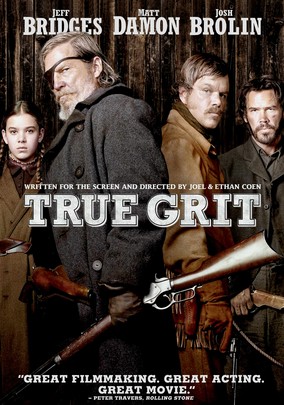
True Grit-2010

True Grit-2010

Director Ethan Coen, Joel Coen

Starring Jeff Bridges, Matt Damon, Josh Brolin

Scott’s Review #525

70142543

Reviewed November 24, 2016

Grade: A-

Having not seen the original, 1969 version of True Grit,  starring John Wayne,  I cannot compare the two, but the remake in 2010  is excellent.

I do not profess to be the greatest fan of the western genre as the stereotypes are usually peppered throughout and the good versus bad cliches done to death, but True Grit is a different, contemporary western.

Fantastic looking with numerous big, current stars, humor, and quirkiness.

True Grit is a mainstream (in camera and style) Hollywood Western (the Coen Bros. usually are more gritty in their stories), but a well-made one.

The odd supporting characters make this film fantastic and there is an edge to it that enamored me. The film also contains some Quentin Tarantino elements making it left of center in some ways.

It tells the story of a tomboy-like fourteen-year-old girl, Mattie Ross (Hailee Steinfeld), also the narrator of the film, who hires an aging U.S. Marshal to avenge her father’s death.

The story is well told, and the cinematography and attention to detail are great, giving off a crisp feel of really being in the Wild West.

Oscar Nominations: Best Picture, Best Director-Ethan Coen and Joel Coen, Best Actor-Jeff Bridges, Best Supporting Actress-Hailee Steinfeld, Best Adapted Screenplay, Best Sound Editing, Best Sound Mixing, Best Art Direction, Best Cinematography, Best Costume Design