In the Bedroom-2001

In the Bedroom-2001

Director Todd Field

Starring Tom Wilkinson, Sissy Spacek, Marisa Tomei

Scott’s Review #1,313

Reviewed October 29, 2022

Grade: A

Todd Field is an American actor and director who has made very few films. This shows that he must choose his projects carefully.

Little Children (2006) is one of my favorite films.

Based on a 1979 short story called ‘Killings’ by Andre Debus, In the Bedroom (2001) is an independent project representing what independent films do brilliantly. They tell stories about real people, with emotions, conflict, choices to make, and repercussions to face.

The story depicted in In the Bedroom is one that anyone viewing the film can either directly relate to or sympathize with any number of characters within.

The film centers on the inner dynamics of a family in transition. Matt Fowler (Tom Wilkinson) is a successful small-town doctor practicing in Maine and married to Ruth Fowler (Spacek), a music teacher.

Their son Frank (Nick Stahl) is involved in a summertime love affair with an older single mother, Natalie Strout (Marisa Tomei). He professes it to be merely a fling but her violent ex-husband is jealous.

As the beauty of the summer comes to an end, these characters find themselves amid an unimaginable tragedy. They must make difficult choices to persevere through the dark autumn and winter.

Having seen the film when it was released in 2001 and not again until 2022 I wondered how it would hold up over twenty years later. Would it feel dusty and dated or fall into the ‘one and done category like many films do?

The story is just as riveting and this is because of superior acting by the entire cast and exceptional direction and pacing by Field.

The lurid, quiet landscape is still and lonely in most scenes and this is frightening unto itself. The lush and serene Maine water, lobsters, lighthouses, and cabins are fraught with danger because of the human threat lurking in its midst.

The atmosphere is everything.

Fields reveals a story about a small town and the secrets buried beneath the surface. Even during a summer barbeque, there is tension when an unwelcomed guest arrives unannounced. With glances between characters, there is a lot of unspoken communication.

The acting is top-notch, especially Wilkinson and Spacek. Before the tragedy, they both hedgingly accept their son’s relationship with an older woman but hope it’s only a phase. They see the relationship as a major roadblock to his education at a good university.

After the tragedy, Matt and Ruth change. She becomes angry and cold, he is stoic and vengeful. Both actors seamlessly portray their characters just like real-life people.

Other players like Marisa Tomei and Nick Stahl as the younger couple met with tragedy perform their roles flawlessly.

This is a major reason why In the Bedroom resonates so well. Any viewer can put themselves in the shoes of Matt, Ruth, or even Natalie Strout. Circumstances can change our perspectives and turn us into different people, at least temporarily.

The last sequence is great. A decision made by Matt and Ruth is shocking and will follow them for the rest of their lives. The key is that they do not hastily make this decision but rather calmly ponder and strategize each step.

They are satisfied and have no regrets.

In the Bedroom (2001) is an emotionally honest and compelling journey into the exploration of character. It is powerful and humanistic, draws the viewer in quietly, and takes a forceful grip. It uses silence to its advantage making that silence haunting and melancholy.

Oscar Nominations: Best Picture, Best Director-Todd Field, Best Actor-Tom Wilkinson, Best Actress-Sissy Spacek, Best Supporting Actress-Marisa Tomei, Best Adapted Screenplay

Independent Spirit Nominations: 3 wins-Best First Feature (won), Best Male Lead-Tom Wilkinson (won), Best Female Lead-Sissy Spacek (won), Best Screenplay
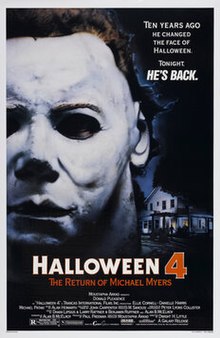
Halloween 4: The Return of Michael Meyers-1988

Halloween 4: The Return of Michael Myers-1988

Director Dwight H. Little

Starring Donald Pleasence, Ellie Cornell

Scott’s Review #1,312

Reviewed October 27, 2022

Grade: B

Give me a good slasher flick any day, and I’m a pretty happy guy.

Especially if it’s one from the Halloween franchise (my favorite series other than Friday the 13th, naturally), and viewed around the demonic holiday is the perfect flavor.

There is so much atmosphere to embrace with pumpkins, masks, and trick-or-treaters nestled seemingly safe in a small town ripe for the picking by a knife-wielding maniac.

By 1988, though, the slasher genre had severely waned, feeling redundant amid watered-down sequels and copycat patterns, resulting in a stale crop of films.

Halloween 4: The Return of Michael Myers (1988) is an okay film and a worthy entry to the franchise. It is most notable for correcting what many fans considered a terrible mistake.

Halloween III: Season of the Witch (1982) omitted maniacal Michael Myers entirely, which made many fans seethe with rage, so Part 4 corrects this miss by adding his name to the title card.

John Carpenter and Debra Hill, the main contributors to the original Halloween (1978), were not involved, so executive producer Moustapha Akkad went for a conventional, safe route, creating a standard slice-em-and-dice-em affair.

The allegedly comatose Michael Myers (George P. Wilbur) is being transferred from one hospital to another. Still, he wakes up when the ambulance crew chatters about his surviving niece, Jamie (Danielle Harris).

Out for fresh blood, he slaughters his attendants and sets out to find his one living relative, who is being cared for by a kind and resourceful foster sister named Rachel (Ellie Cornell).

Meanwhile, the ever-cautious Dr. Loomis (Donald Pleasence) remains on the killer’s path, intent on destroying the monster once and for all.

The overall tone of Halloween 4: The Return of Michael Myers is by-the-numbers, offering an experience that would satisfy only fans of the franchise and would not dare ruffle any feathers or attract new fanatics.

Even the premise of Myers escaping a hospital and targeting a family member is identical to the original film and its sequel. The familiar Haddonfield Hospital and Smith’s Grove Sanitarium return like good friends not seen for years.

There are no points given for originality, but that’s not necessarily a bad thing. After all, Halloween III tried to reinvent the wheel and was largely derided for its efforts.

I liked the film, and I like Part 4 for different reasons.

Myers is front and center with his pointy butcher knife and hulking frame, and that’s pleasing and comforting. The mask is a bit paler and his height shorter, but it’s the same Michael we all know and love.

Missing is Jamie Lee Curtis as Laurie Strode, presumed dead, but the return of Pleasence is a major win, as he takes center stage and has more screen time than he ever has as Loomis. Scarred and looking older and more withered, he is even more determined to best Myers.

In a neat little twist, Michael looks to pass his killing baton to his niece as she attempts to butcher her stepmom, similar to what Michael did to his sister many years earlier.

Borrowing heavily from its predecessors, Halloween 4: The Return of Michael Myers (1988) is satisfying but not revolutionary.

There are enough nods to history combined with a new batch of teenagers to make ground and continue the legacy.

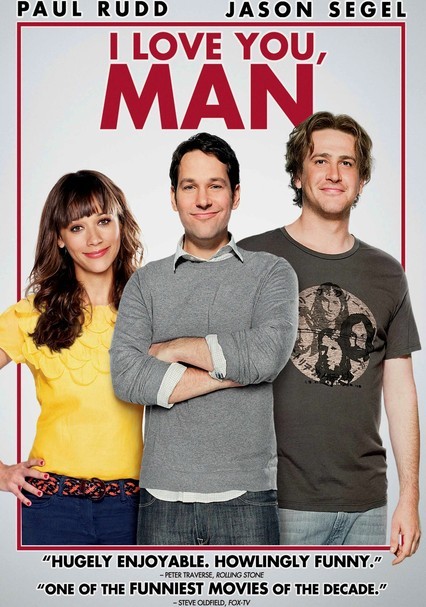
I Love You, Man-2009

I Love You, Man-2009

Director John Hamburg

Starring Paul Rudd, Jason Segal, Rashida Jones

Scott’s Review #1,311

Reviewed October 24, 2022

Grade: B

I Love You, Man (2009) is another one of these ‘feel-good’ types of ‘bromance’ comedies to grace the silver screen in the 2000s. It takes a familiar storyline of two male friends bonding, usually involving a female in the mix to complicate matters, with hilariously awkward moments thrown in.

It’s nothing groundbreaking or overly severe but rather a mildly satisfying ‘guy film’ that a female audience can also enjoy too because there exists a romance and a happily ever after.

I’m simplifying the specific gender tastes quite a bit but what I mean is the film is light and there can be something for everyone to enjoy.

While there are some innocent homoerotic playful moments between the men, for laughs, of course, the genre avoids anything LGBTQ+ related other than a gay supporting character who cleverly teaches the straight male how to ‘meet’ men.

Director, John Hamburg, is involved in similarly themed projects like Meet the Parents (2000) and Along Came Polly (2004) so he knows the common premise required for a film like I Love You, Man as well as what the audience wants.

As his wedding day approaches, nerdy Peter Klaven (Paul Rudd) realizes he has no one to serve as his best man. Through a series of “man-dates,” he finds abrasive Sydney Fife (Jason Segel), and the pair become instant friends.

But as Peter’s “bromance” with Sydney grows stronger, it threatens his relationship with his intended, Zooey (Rashida Jones), forcing Peter to make a choice.

It’s not a bad effort and Rudd and Segal have good chemistry as polar opposite characters. The differences are a big part of the laughs but Jones is somewhat unnecessary to the plot other than the required female component to satisfy the formula.

She dutifully plays her role as the straight woman immersed between two goofballs but has very little to do other than get in the way and be a roadblock to the guy’s fun.

It’s not a great role for her and the chemistry is lacking between her and Rudd but maybe that’s just the point. I’m not too sure but I found the humorous moments entirely left to the boys to provide.

My favorite section of the film is one that many may dismiss or deem secondary. The legendary progressive rock band Rush makes an appearance as a way that Peter and Sydney ultimately bond.

Any fan of music, especially a thinking man’s band like Rush, can attest to the genuine bond that can be created between followers of a specific group.

Rush is legendary for just that and it makes I Love You, Man feel fresher than it otherwise would have. Besides, other than Led Zeppelin is there a better example of a ‘guy’s band’?

Otherwise, the film is particularly run-of-the-mill. There are familiar arguments, misunderstandings, breakups, and makeup to be endured.

Events start with a marriage proposal and unsurprisingly end with a wedding ceremony so anything in between is rather superfluous since we can see the outcome a mile away.

Naturally, as much as Zooey wants Peter to have more male friends she becomes suspicious and otherwise threatened by the new blood, feeling left out.

There is a hint that Sydney may be trying to manipulate and pull the wool over Peter’s eyes over a financial loan but things work themselves out just fine.

As predictable as I Love You, Man (2009) is there is a sentimental, even heartwarming sensation to be left with, and a few good chuckles along the way.

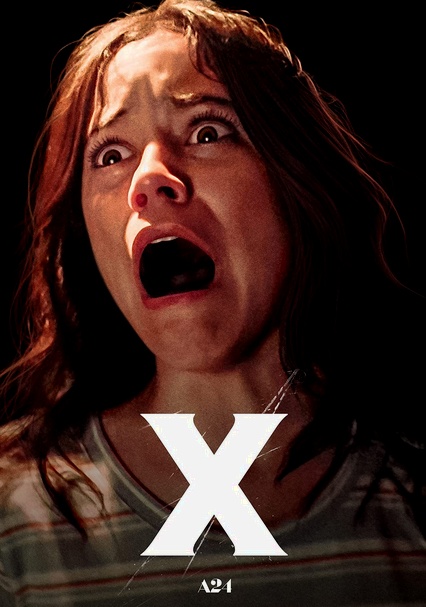
X-2022

X-2022

Director Ti West

Starring Mia Goth, Jenna Ortega

Scott’s Review #1,310

Reviewed October 20, 2022

Grade: B+

Film company A24 has become synonymous with releasing quality independent films, mainly within the horror genre. The newbie distributor, only born in 2012, has hit it out of the park on numerous occasions.

Cutting-edge and downright bizarre projects, such as Ex Machina (2014), Hereditary (2018), and Midsommar (2019), immediately spring to mind.

I’ll see anything that this company releases.

A group of young, aspiring actors set out to make an adult film named The Farmer’s Daughters in rural Texas. They rent a cabin from an unwitting elderly, reclusive couple. When the old folks catch on to what the actors are doing, all hell breaks loose as an unlikely killer begins a murder spree.

At the risk of spoiling the fun X was shot on location in New Zealand which doubles as Texas, USA.

Ah, the magic of movie-making.

The film will immediately draw comparisons to The Texas Chain Saw Massacre (1974) in its setting alone. Isn’t remote and barren farmland so effective in horror? There is something so creepy and foreboding about the stillness, animals, and miles and miles of emptiness.

Instead of a slaughterhouse or rotting meat, X uses a deadly alligator, which comes into play during the final act.

To further highlight the similarities between The Texas Chainsaw Massacre, the setting is the late 1970s, which is reflected in the characters’ dress and mannerisms. Even one long shot of the elderly couple’s house entryway is almost identical to the one used in that film, and surprise, surprise, the cast drives up in a van.

However, X is more than just a modern film patterned after a cult classic. There is proper tension and a stark 1970s, dirty grindhouse look with gritty camerawork and a grainy texture.

I felt immersed in the atmosphere and the time capsule, rather than watching people dress in current clothing in a retro style.

Very few viewers of X will likely be prudes, but there is a fair amount of nudity and sexual behavior- I mean a lot!

Since a porn film is being made, this is unsurprising, but rest assured, there is a hefty helping of tits, asses, and full-frontal nudity.

Perhaps as a response to the typically voyeuristic female-only nudity in most older slasher films, there is plenty of male nudity to balance the scales.

Another improvement to slasher films is the incorporation of character development and diversity. In lesser films, supporting nymphomaniacs like Bobby-Lynne (Brittany Snow) and Jackson (Scott Mescudi), who is black, would have been written as one-dimensional, but not in X.

Bobby-Lynne and Jackson love sex, but they also have dreams and aspirations, and are kind people, each separately trying to help the elderly couple.

Unsurprisingly, the elderly couple, especially the wife, takes center stage as the plot moves along. Suffice it to say, Pearl (the old lady) longs to be young and sexual again like she was in her prime.

She stalks Maxine (Mia Goth), touches her, and finally sneaks into bed with her, hoping to recapture her lost youth.

Things don’t exactly go well.

Goth portrays both Maxine and Pearl.

Motivations of Pearl may be a stretch, but there is a creepy fascination that works well throughout X, and the film never drags. It’s not every day that a ninety-year-old woman in a blood-soaked house dress wanders about a farm bludgeoning folks to death.

For a raw, independent, and fun foray back to the early days of the slasher genre before it became overly conventional, X is a winner.

A24 has another success on its hands since X (2022) will be followed by both a prequel and a sequel.

Halloween Ends-2022

Halloween Ends-2022

Director David Gordon Green

Starring Jamie Lee Curtis, Andi Matichak, Rohan Campbell

Scott’s Review #1,309

Reviewed October 19, 2022

Grade: B+

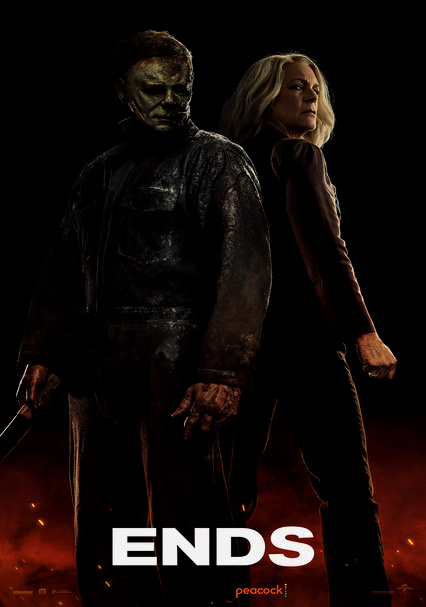
As a bit of a rewind for newer fans of the series or altogether non-fans, Halloween Ends (2022) is a slasher film and the sequel to Halloween Kills (2021), the thirteenth installment in the legendary Halloween franchise.

It is reported to be the final film in the trilogy of sequels that commenced with the 2018 film, Halloween, which directly follows the 1978 film and disregards all other entries.

It’s as if nothing more happened after knife-wielding Michael Myers toppled from a suburban terrace and escaped one Halloween night long ago.

Time will tell if this is indeed the final farewell, but the film wraps things up nicely, and it feels like a satisfying ending.

Halloween Ends is unconventional and murky in parts that intrigued me more than confused me. But rest assured, there is enough mayhem and creative kills to satisfy bloodthirsty audiences- it just takes some patience to get there.

I’m not sure all diehard fans will be satisfied with the film.

There are some twists and turns to maneuver through and some perplexities with a couple of leading characters, but I’m careful not to give too much away.

Over forty years since being terrorized while babysitting one Halloween night, Laurie Strode is writing her memoir as she tries to put the trauma of her past behind her. Since she still resides in the small town of Haddonfield, Illinois, this will not be easy when the sudden death of a young boy sets off terrifying events.

The opening sequence is compelling despite not even involving Laurie, Michael, or Laurie’s granddaughter, Allyson (Andi Matichak)!

The introduction of male babysitter Corey (Rohan Campbell) breathes fresh life into the complex family tree within the small town, and an event causes the young man to become Haddonfield’s new pariah.

Corey is a nice addition, as he dates Allyson and becomes involved in the family drama with Michael Myers, making him a significant connection.

I’m keeping this vague so I don’t spoil the fun. Still, the romance between Corey and Allyson is particularly evident during a scene where they spend the night together outside a local radio station.

Reminiscences of Laura Dern and Kyle MacLachlan’s characters in David Lynch’s masterpiece Blue Velvet (1986) are set amid a hauntingly cerebral musical score that lends the film an arthouse look and feel.

The young romance is shrouded by oncoming chaos, but they cannot stay away from each other.

A fun fact and a nod to the franchise’s strong film history is that John Carpenter, director of the original Halloween, and his son, Corey, provide the music for Halloween Ends.

Some of Corey’s and Allyson’s sequences feel poetic and dreamy, which is the opposite of what a ‘normal’ Halloween film feels like.

Not to be outdone by poetic filmmaking, the director David Gordon Green makes sure any bullies, sluts, or sexual creatures get their due by being fittingly hacked to bits or suffering crushed skulls to pay for their sins.

One even gets ensnared in barbed wire and then unceremoniously run over.

My favorite kills include a comical tongue removal that ends up making an album skip, and a stabbing and impaling onto a door, an apparent reference to Bob’s death in the original.

Inevitably, the film belongs to Laurie and Michael, and their showdown is no surprise. I was salivating for this final blood feast from the get-go, and it doesn’t disappoint.

Laurie’s kitchen is conveniently stocked with a set of sharp, shiny knives, which allows for a healthy dose of crimson-red blood soaking.

I could have used more nods to history. Besides the carbon copy killing of Bob, an old photo, and quick clips of scenes from the original, there isn’t a whole lot.

Bringing the original actors and characters to the fold in Halloween Kills worked well, but all little Lindsey Wallace (Kyle Richards) gets to do is serve drinks at the local bar and listen to other characters’ problems.

My money is on the fact that we haven’t seen the last of Michael Myers, but Halloween Ends (2022) will satisfy those looking for the expected Halloween trimmings with a dash of creative filmmaking.

Other than a couple of missed opportunities, it remains true to its audience.

Up the Sandbox-1972

Up the Sandbox-1972

Director Irvin Kershner

Starring Barbra Streisand, David Selby

Scott’s Review #1,308

Reviewed October 18, 2022

Grade: B

Up the Sandbox (1972) is likely the least successful film in the Barbra Streisand collection and more obscure than likely desired. The star performs no songs, and the film is experimental, but it’s unclear whether it was intended to be.

Streisand takes a break from comedies and musicals to venture into unknown territory, risking a payoff that doesn’t always come through.

On the flip side, she never looked more beautiful in a film.

The film has its moments. It’s shrouded in early progressive feminism, which provides intrigue, and it’s tough to go wrong with a bankable star like Streisand in a lead role.

Still, the fantasy sequences get too weird and sometimes unnecessary, and the film doesn’t always make a lot of sense.

The film gets taken down at least a notch for two anti-gay slurs that are shamefully unnecessary to any plot direction.

I award Up the Sandbox credit for thinking outside the box and being unconventional. Still, the parts don’t come together into a cohesive unit, leaving me unfulfilled while recognizing the superior qualities.

The cover art (see above) is wacky and thought-provoking.

Margaret (Streisand) is a young wife and mother who is bored with her day-to-day life in New York City, playing second fiddle to her successful and too-busy husband, Paul (David Selby).

He is a professor at Columbia University, and they reside in a cramped yet fairly sophisticated apartment.

To combat boredom, she regularly escapes into increasingly outrageous fantasies: her mother breaking into the apartment, an explorer’s demonstration of tribal fertility music at a party causing strange transformations, and somehow joining terrorists to plant explosives in the Statue of Liberty.

Streisand is well cast, and while other actresses could have given a fine performance, she plays New York Jewish better than anyone. Her struggle to break out of her life of doldrums is perfectly conveyed as she yearns to achieve a balance between men and women.

She resents going down the path of a housewife, just like her mother did, and vows to be nothing like her, as the women bicker and feud throughout the film.

The sequences involving her mother are the best in the film. Played by Jane Hoffman, Margaret’s mother provides all of the expected Jewish mother stereotypes, like nagging and judging, hilariously.

The funniest mother/daughter sequence sees Margaret smash her mother’s head into a giant birthday cake. Naturally, it’s just her fantasy.

Up the Sandbox wins big for the large number of location sequences set in early 1970s New York City, which is absolutely fascinating to watch. One with an appreciation for Manhattan can be assured of a pleasant viewing experience.

The most heartfelt and sentimental moments occur during a long shot of the still-under-construction World Trade Center. Seeing the Twin Towers still being erected brings back teary memories of 9/11.

Lavish sequences are set in and around Columbia University in upper Manhattan, and the campus is frequently seen as Margaret and her friends trudge their baby strollers through the campus and surrounding areas.

Where the film fails is when it teeters too far out in fantasy land. It makes little sense why Margaret would join terrorists intent on blowing up Lady Liberty, or what the group’s intentions are.

Perhaps it is a metaphor for something that went over my head.

Even when the screenplay is a dud, Ms. Streisand holds her head high and plays the comedy or drama with sincerity and professionalism. With her well-known perfectionism, she would have been aware when things were not working.

A film not remembered well, Up the Sandbox (1972) scores some points with its locales, progressivism, and star power, but stumbles off course too many times to recommend.

If only Streisand had belted out a number or two amid her scripted fantasies, the film might have worked better.

Jaws 2-1978

Jaws 2-1978

Director Jeannot Szwarc

Starring Roy Scheider, Lorraine Gary, Keith Gordon

Scott’s Review #1,307

Reviewed October 13, 2022

Grade: A-

Because of the enormous critical and commercial success of Jaws in 1975, a sequel was created. Important to keep in mind is that in the mid-1970s, it was not yet common to produce sequels, especially if the director, Steven Spielberg, had no interest in participating.

Jaws 2 (1978) was an enormous box-office success, but the reviews were only mixed.

I adore the film, which mixes thrills with the horror genre and wisely sets up the kills like a slasher film.

The teenagers are savagely attacked and killed by the Great White shark, one by one, in a style that uses a lurking and effective musical score.

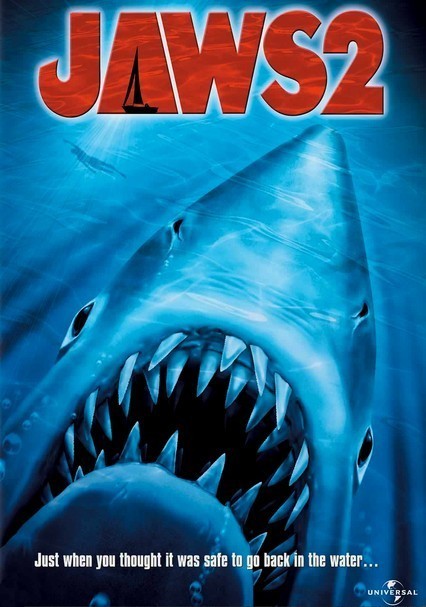
The film’s tagline, “Just when you thought it was safe to go back in the water…” has become one of the most famous in film history and has been parodied and homaged several times.

I want to assume it led to a healthy, almost now-mandatory helping of sequels to other successful films.

Unfortunately, Jaws 2 also spawned a couple more sequels of its own, which were piss-poor and laughable, but we won’t get into that here.

A fun fact is that the film was nearly as troubled as Jaws. The first director of the film, John D. Hancock, was deemed incompetent and replaced by Jeannot Szwarc.

Star Roy Scheider, who only reprised his role to end a contractual issue with Universal, was also unhappy during production and had several heated exchanges with Szwarc.

Maybe that should have been a sign not to make any more Jaws films.

Years after the shark attacks that left Amity Island reeling, Sheriff Martin Brody (Scheider) finds new trouble lurking in the waters and must rise to the occasion.

To add conflict, Mayor Vaughn (Murray Hamilton) wants to end the beach town’s poor reputation. But the sudden disappearance of a pair of divers suggests that something is up. When Sheriff Brody voices his warnings about holding an exciting sailing competition, everyone thinks he is suffering the effects of post-traumatic stress.

That is, until a shark fin is spotted in the water, sending the town into panic mode.

There’s no logical plot reason to make Jaws 2, but somehow I’m okay with that. The film entertains with enough frights and jumps to satisfy, and the formulaic approach works well.

Besides the enthralling final sequence when Brody must rescue his sons, Mike and Sean (Mark Gruner and Marc Gilpin), the opening sequence involving scuba divers and a female water skier is quite enticing and the best part of the film.

The musical score by John Williams, who fortunately returned to the fold, is fabulous and enhances any peril the characters face. The slick and clever approach gives the audience a clue that danger lurks nearby, but we don’t know when or where the shark will strike.

I mentioned slasher films earlier, and this formula is used in Jaws 2. As the teens set sail for the competition, it is good fun to wonder who will get killed and who will live to see another sunny beach day.

Despite Scheider not wanting to do the film, you’d never know it by his terrific acting. He doesn’t phone in his performance, and he brings macho swagger and muscle. He’s everyone’s favorite dad who only wants to save and protect.

Jaws 2 (1978) attempts to scare and entertain, and it succeeds. There is little character development, but it’s not the type of film that needs deep texture.

The reason to watch is to see folks who intend to enjoy the water get attacked and ripped to shreds.

Kindergarten Cop-1990

Kindergarten Cop 1990

Director Ivan Reitman

Starring Arnold Schwarzenegger

Scott’s Review #1,306

Reviewed October 12, 2022

Grade: C+

Before Arnold Schwarzenegger found politics and after he left professional bodybuilding, he starred in a string of films during the 1980s and 1990s.

At first, he was solely a bankable action figure due to his bulky frame, but he later delved into more comedic, friendlier film roles.

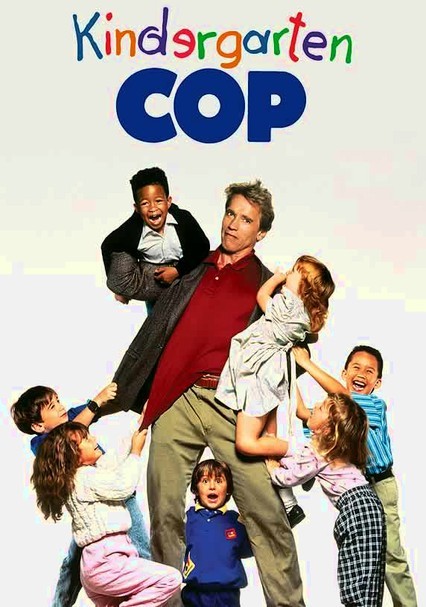
Kindergarten Cop (1990) is one of those films, yet there is enough mild violence to draw in the male crowd as well.

Some of his films were better than others, with the best being The Terminator (1984) and True Lies (1994).

Kindergarten Cop is a fair-to-middling effort that attempts to transport the brawny star into a likable teacher, but the result feels more forced than genuine.

Naturally, the main character finds himself in a quandary over whether to fight crime or teach youngsters after he falls in love with them and with another teacher.

The setup is way too similar to other films in the action-comedy genre, and it’s very standard fare. The bad guy and love interest are tired and cliched, and the gags involving the kids are overly juvenile and mostly fall flat.

Despite these trite characteristics, Kindergarten Cop is not a terrible film, thanks to Schwarzenegger’s appeal. He is good-natured, and his transition from grizzled cop to a kindly teacher is not unfun.

It provides some family-friendly light entertainment that can be enjoyed on a rainy Saturday afternoon.

Unusual circumstances force cop John Kimble (Schwarzenegger) to pose as a kindergarten teacher to apprehend the major drug lord Cullen Crisp (Richard Tyson) and his accomplice and mother, Eleanor, played by Carroll Baker.

While pretending to be a kid-friendly instructor, Kimble falls for pretty fellow teacher Joyce Palmieri (Penelope Ann Miller) as he tries to balance unruly children with the dangerous bad guys.

In a twist seen coming a mile away, Joyce and her son are the people that Cullen is pursuing.

Kindergarten Cop all seems so perfectly thought out.

It’s like a bunch of suits were sitting at a round table making sure the elements were all included: hero, bad guy, love interest, kids, enough action sequences, and a chase finale.

There is even one standard black kid and one Asian kid to check off the diversity box.

And enough precociousness to last a lifetime.

The comedy mostly comes in the classroom, where it’s frequently humorous to watch a gigantic man teach little kids, especially when he has no idea what to do.

Careful not to be too silly, there are a couple of sentimental moments and social situations, like when Kimble threatens a father who is abusing his son.

Director Ivan Reitman, quite familiar with screwball comedies, directed funnies such as Meatballs (1979) and Stripes (1981), so he knows what makes people chuckle.

The action sequences do not work well, other than providing a reason for Kimble to run around and protect the kids and Joyce. We all know he will eventually best Cullen, which he does.

Even the amazing Linda Hunt is wasted as a one-dimensional principal who initially hates Kimble but then comes around and accepts him.

Kindergarten Cop (1990) is too blueprint-ready to recommend since it contains elements used in hundreds of other films. But for fans of the hulking Schwarzenegger, the film is a safe offering that sees the star in a softer light.

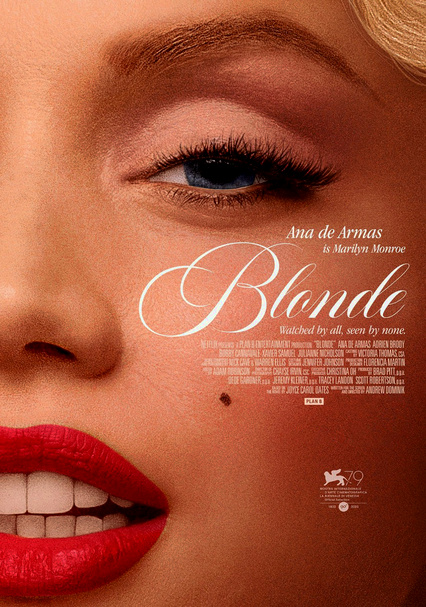
Blonde-2022

Blonde-2022

Director Andrew Dominik

Starring Ana de Armas, Adrien Brody, Bobby Cannavale

Scott’s Review #1,305

Reviewed October 7, 2022

Grade: A

Blonde (2022) is not the kind of film that I expected.

When I became aware that a new film vehicle showcasing the legendary film icon Marilyn Monroe was in the works, I assumed it would be a biographical-style effort. After all, this is hardly the first time the star’s life has been explored.

Throw in bits about her struggles, her love life, her famous screen roles, and her rise to fame, and there you’d have it.

My only real thought was who would be playing her?

Films about Marilyn have been made before, including the most recent effort I can recall, My Week With Marilyn (2011), starring Michelle Williams, a superior film but hardly groundbreaking or well remembered ten years later.

Released via the Netflix streaming service, director Andrew Dominik kicks the shit out of any preconceived notions about glamorous, happy, and prosperous Marilyn.

He creates a story focused on the dark side of the star: her failures, her insecurities, her forced abortions, and her humiliations. The result is a film that is both tragic and profound, and it should be well remembered.

Blonde delves into facts and some of the more profound thoughts of the legend herself, creating a muddy and dreamlike quality that makes the viewer apprehensive about what’s going on.

Since it’s based on Joyce Carol Oates’ 2000 fictional memoir, which is her interpretation of events, it makes truth and imagination all the muddier.

It’s not happy days watching Blonde, which left me wondering if Marilyn had a happy day in her life. From her abortions to sexual harassment, drug addiction, and physical abuse by her husband, she excitedly scampers off to a date with President Kennedy, only to be forced to give him oral sex.

Ana de Armas, known for Knives Out (2019) and No Time to Die (2021), is brilliant as Marilyn. Her mannerisms, speech patterns, and facial expressions reveal a genuine, layered portrayal rather than a carbon copy imitation of her.

Blonde boldly reimagines the life of one of Hollywood’s most enduring icons in two hours and forty-seven minutes of storytelling. It is advisable not to watch the film in one sitting, but instead spread it over three nights to let the story unfold.

Events begin with her volatile childhood as Norma Jeane, marked by an abusive mother and an absent father, and her rise to stardom and romantic entanglements. Blonde blurs the lines of fact and fiction to explore the widening split between her public and private selves.

In a way, Marilyn suffered from a split personality, longing to be Norma Jeane and despising Marilyn.

Enhancing the ambiguity, Dominik elects to use cinematography that is sometimes blurry as if in a sleepy haze, and sprinkles color with the primarily black and white filming. He even films one abortion scene from the perspective of Marilyn’s vagina.

These creative details lead me to classify Blonde as an art film and a highly interpretive one.

While not a crowd-pleaser, Blonde is not all doom and gloom either.

Tidbits about her most famous films, Gentlemen Prefer Blondes (1953) and Some Like It Hot (1959) are featured, showcasing one or two neat camera tricks, so it appears that de Armas is acting opposite Tony Curtis.

I worry that poor reviews for Blonde may hinder de Armas’s chances of receiving an Academy Award nomination. Positive reviews usually help secure Oscar recognition.

Thankfully, despite many critics and viewers having issues with the film, de Armas has received worldwide acclaim.

Bobby Cannavale and Adrien Brody are excellent as Marilyn’s husbands, controlling Joe DiMaggio and insecure artist Arthur Miller. Both actors combine effective acting with distinguished portrayals, allowing the audience to appreciate the appeal of both men.

Other interesting subplots involve Monroe’s ‘throuple’ romance with bisexual actors Cass and Eddy, and a haunting exposure of the abuse suffered by Marilyn at the hands of her mother, Gladys, wonderfully played by Julianne Nicholson.

There is little doubt that Blonde (2022) is an unconventional film that may not appeal to everyone. However, it’s the down-and-dirty texture and tour-de-force portrayal of Monroe that won me over.

It chilled me to the bone in the best possible way.

Oscar Nominations: Best Actress-Ana de Armas

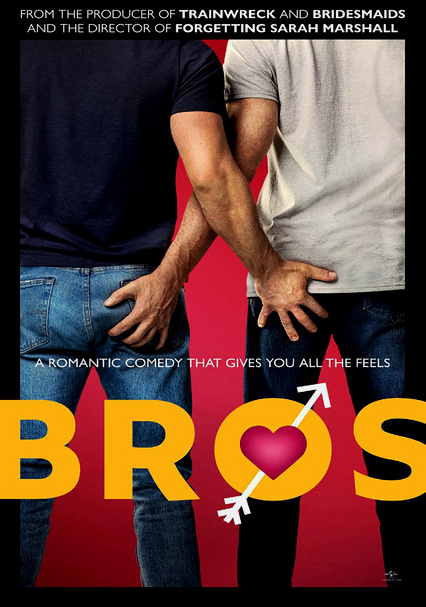
Bros-2022

Bros-2022

Director Nicholas Stoller

Starring Billy Eichner, Luke Macfarlane 

Scott’s Review #1,304

Reviewed October 5, 2022

Grade: A

Even if Bros (2022) were a bad film, it would still hold the monumental distinction of being the first LGBTQ+-themed romantic comedy released and supported by a major distributor.

In 2022, years after the legalization of same-sex marriage in the United States and various other milestones that would take too long to list, Bros is the first of its kind.

Fortunately, Bros is not a poor film but an exceptional one with brazen confidence and a lot to say.

Led by crisp and intelligent dialogue, lovable lead actors, a cast comprised solely of the LGBTQ+ community, strong characters, and hilarious moments, it has something for everyone, whether gay, straight, or otherwise.

Before readers pigeonhole the film as one only to be seen by the  LGBTQ+ community, I will cry bullshit.

Straight audiences will fall in love with the characters and learn valuable lessons about stereotypes and deep-seated emotions of gay men who are not always comfortable in their skin.

Unfortunately, Bros was not the box office smash hit the studio had hoped it would be. Some straight viewers felt the film was not for them, and that’s a shame.

There is still more work to be done to eliminate conscious and unconscious bias and educate others to embrace differences.

Billy Eichner, who co-wrote the Bros screenplay along with director Nicholas Stoller, stars in the film, alongside Luke Macfarlane.

Eichner plays a sardonic, gay Jewish male named Bobby Leiber who resides in New York City.  We meet Bobby while he is recording another episode of his New York podcast and radio show, The Eleventh Brick at Stonewall, where he talks to callers about his written works on gay history and gay icons.

He claims to be okay with being single and not having found love, instead hooking up with random men through a dating application called Grindr, although he is successful in his career and has good friends.

He awkwardly meets Aaron Shepard (Macfarlane), a hunky, masculine guy deemed ‘hot but boring’ by those in Bobby’s circle, in a gay club.

The two men slowly develop a romantic relationship despite their commitment problems and hectic schedules, which seem designed to put the kibosh on love.

Despite all the other aforementioned wins, what makes this LGBTQ+ film stand out is that the screenwriting feels fresh and intelligent. Above all else, it wisely paints the struggles that most gay men seeking a relationship of substance face.

As in other romantic comedies, specific setups and situations create conflict that risks preventing Bobby and Aaron from getting together. Bobby feels Aaron is out of his league, preferring other muscular men to his overbearing and critical approach.

One can understand Bobby’s angst, but in one of the film’s most poignant and beautiful scenes, Aaron tearfully reveals that Bobby constantly challenges him, and it feels good.

He needs to be with Bobby because it is right. Bobby serves as a mentor to Aaron as he wrestles with being true to himself. Stuck in a depressing yet financially secure job, Aaron longs to be a chocolate maker instead.

Beauty is only skin deep. Regardless of occasional insecurities, the two men are firmly connected, and that beats everything else.

On a personal level, both characters resonated with me, evoking their angst. One would assume that Aaron the hunk would be more confident, but is that the case? Both men teach and learn from each other, which makes their relationship powerful.

In addition to the romantic moments, Bros has its share of raunchy and comical scenes, which justify its ‘R’ rating. In typical Judd Apatow (the film’s producer) form, the sex scenes are revealing.

There are enough orgies, toe-sucking, and fist-sucking to make the prudish blush. The planned ‘rimming’ scene was cut from the final cut. One wonders what that would have been like.

The film follows a distinct comedy formula and includes a helping of standard annoying, clueless, or over-the-top colorful characters that appear to justify its mainstream comedy placement.

The genius is that Bros works.

I implore straight audiences to give the film a chance, if for no other reason than to show that gay people are as different from each other as apples and oranges. As Bobby makes clear, some are nice and some are assholes.

Bros (2022) treads conventional but with a twist, and shows that gay characters are as genuinely funny as straight characters. It provides laugh-out-loud moments and teary sentimental ones.

I’m eager for the next project from Billy Eichner.