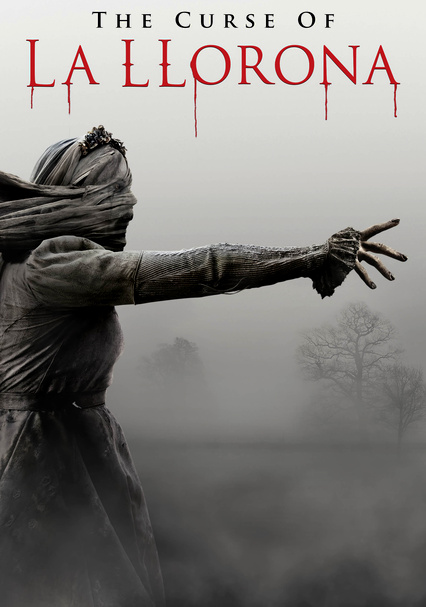
The Curse of La Llorona-2019

The Curse of La Llorona-2019

Director Michael Chaves

Starring Linda Cardellini

Scott’s Review #937
Reviewed August 29, 2019

Grade: C+

The Curse of La Llorona (2019) is a modern-day horror flick that possesses all the standard and expected trimmings that a genre film of this ilk usually has.

The story is left undeveloped, with many possibilities unexplored in favor of a by-the-numbers experience.

Linda Cardellini, an outstanding actress, consistently exceeds the material she is given, yet she often comes up empty-handed.

It is the sixth installment in The Conjuring Universe franchise.

The film does have jumps and frights galore, and a creepy ghost/spirit character that is scary, but more was expected from this film, which left me ultimately disappointed.

First-time director Michael Chaves is a novice, so a bit of leniency should be given as he develops a limited product, but he could have a strong future ahead of him if he works on story elements rather than focuses on merely scare tactics.

In 1673, in Mexico, a family happily plays in a field when one of the boys suddenly witnesses his mother drowning his brother, and soon suffers the same fate.

This incident becomes part of Mexican folklore and is subsequently feared by many. In present times (1973), caseworker Anna (Cardellini) is sent to investigate a woman who has locked her two sons in a room. Despite the woman’s claims that she is trying to save their lives, Anna brings them into police custody.

When the boys are later found drowned, the woman curses Anna, whose two young children are now in danger.

The positives are that Chaves makes a competent film. It is not bad and provides a level of familiarity, with creaking doors, cracking mirrors, and an evil spirit named “The Weeping Woman” that are effective and provide a scare or two at just the right moments.

Characters frequently see the spirit through a reflection, and since the film is set almost entirely at night, this tactic is successful.

Cardellini, garnering recent fame for her role in the Oscar-winning film Green Book (2018), undoubtedly signed on for The Curse of La Llorona before all the Oscar wins.

The actress gives it her all but can hardly save the film, though she does provide the professionalism that raises the film above a terrible experience. Not nearly enough praise will be given to the young child actors playing Anna’s kids.

Largely one-note and lacking any evident experience, ironically, they mirror Chavez’s inexperience. They react to the scenes as they are directed, but never add any depth or authenticity to their performances.

Besides Cardellini and the horror elements, The Curse of La Llorona lacks much shine or substance. The plot and characters are forgettable, and the viewer is left shrugging their shoulders once the film concludes, essentially forgetting the production thirty minutes later.

The story, based on folklore, is weak.

The audience is expected to believe the spirit killed her children and now roams the earth looking for other sacrificial pairs of children so that she may bring hers back from the dead?

In one perplexing sequence, the Weeping Woman softens when looking at Anna’s kids, her demonic face reveals how she once was a beautiful woman. She suddenly changes course and reverts to the evil spirit she had been.

Granted, the special effects are impressive, but this is one example of a missed opportunity. Why couldn’t we be given a meatier backstory of the motivations of the woman?

Other misses include the 1970s Los Angeles period, featuring a feathered hairstyle and a tight sweater worn by Anna, a clip of an old television show, and a car or two overlooking the City of Angels, which hardly appreciates the decade or the metropolis.

Especially laughable are the modern hairstyles and looks of the children, including the kid from the seventeenth century.

Any connection to The Conjuring (2013) or Annabelle (2014) is limited, as one character (Father Perez), appearing briefly holding the Annabelle doll, barely warrants mention.

The Curse of La Llorona (2019) may only be a blueprint of what director Chaves can build on in his career, and a bright future for him is not out of the question.

Building on the Conjuring franchise is a good place to start with a specific audience, who are sure to see this film. He should focus on developing his basics and creating films with more depth, character development, twists, and turns.
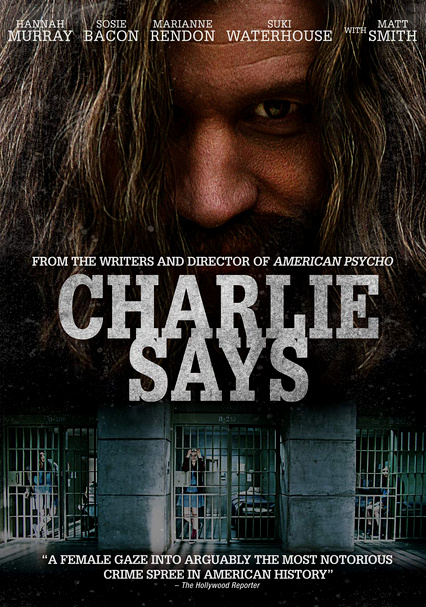
Charlie Says-2019

Charlie Says-2019

Director Mary Harron

Starring Hannah Murray, Sosie Bacon

Scott’s Review #936

Reviewed August 28, 2019

Grade: B

With the very high-profile release of Quentin Tarantino’s Once Upon a Time in Hollywood (2019) centering around the sadistic Manson murders of 1969, Charlie Says (2019) is another film that delves into the same story, though in a very different way.

The latter takes the perspective of the followers, victimizing them and examining the choices they made that affected the rest of their lives.

The angle is of interest, but the production never completely takes off, resulting in an uneven experience that requires more grit and substance.

Karlene (Merritt Wever), a female graduate student focused on women’s studies, takes an interest in three followers who were viciously killed in the name of their “god”, Charles Manson.

A few years after their arrests, they co-exist together in relative solitary confinement in a California penitentiary. They remain under the delusion that Manson is their leader and their deeds were all part of a grand cosmic plan until Karlene slowly brings them out of their haze of unreality with heartbreaking results.

The casting of the real-life figures is as follows: Charles Manson (Matt Smith), Leslie Van Houten (Hannah Murray), Patricia Krenwinkel (Sosie Bacon), and Susan Atkins (Marianne Rendon).

Each is a prominent character, with the central figure being Leslie “Lulu” and her complex relationship with Manson.

The newest to be recruited, the audience witnesses her hypnotic possession and her occasional uncertainty about the cult. For a fleeting moment, she is even tempted to leave, which the film hammers home to the audience.

Murray plays the character well, but does not resemble her enough for praise, though we read the conflict on her face very well. She is meant to be the thoughtful member of the Manson Family, whereas Patricia and Susan are more reactionary and temperamental, especially Susan.

Whether this is how things were is not known. Still, I always had a gnawing feeling throughout the running time that historical accuracy may have been secondary to the story points and dramatic effect.

Charlie Says is bothersome because of the realization that the girls were recruited and fed lies, falling for the deceit, hook, line, and sinker.

The followers were indeed brainwashed into Manson’s disturbing version of reality, and that fact is alarming, as the girls were not dumb people, only vulnerable young women.

Decades later, it is easy to think of other victims polarized by a central or controversial figure, whether it be in politics or another arena. The lesson learned is that people can be easily influenced.

The actual “murder night” and the death of Sharon Tate are featured, but up-close and personal gore is thankfully avoided. The actress, well known to have suffered a terrible fate, to say nothing of her unborn baby, is a small but crucial aspect of the film.

When one of the girls watches one of Tate’s films in her cell, another girl clamors for her to turn off the film, beginning to feel pangs of guilt and remorse.

The film questions the girl’s responsibilities for their actions, a fact that in real life many wrestled with, including the courts and parole boards. Were they merely duped in the cleverest of ways, or do they deserve their fates?

Spared of the electric chair due to a California law, a positive aspect of the film is a current update of the happenings of each girl, now over forty years later, as mature women. Lulu and Patricia remain incarcerated while Susan has died in prison.

After the film closed and a good measure of time was left to ponder the movie, I was left feeling slightly less than fulfilled and desiring a bit more.

Charlie Says (2019) feels safe and lacks enough grit or bombast, although it is well-intended. The film is clearly from a feminist point of view and is an interesting watch, though, given the subject matter, I had hoped for more substance.

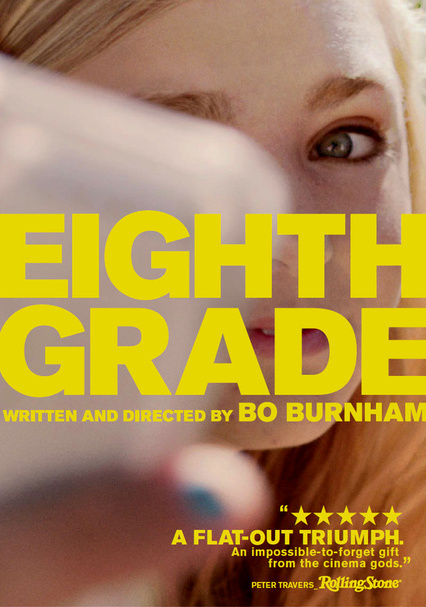
Eighth Grade-2018

Eighth Grade-2018

Director Bo Burnham

Starring Elsie Fisher, Josh Hamilton

Scott’s Review #935

Reviewed August 27, 2018

Grade: A-

Occasionally, a film rich with authenticity and pure honesty comes along, and Eighth Grade (2018) is one of those films.

Bursting with a lead character who brings a genuine sincerity to a complex role, director Bo Burnham gets the best out of emerging talent, Elsie Fisher, in an autobiographical story about teenage angst and awkwardness that nearly everyone can recollect from those hated middle school years.

The coming-of-age story follows the life and struggles of an eighth-grader, Kayla Day (Fisher), during her last week of classes before graduating from junior high school.

She struggles with severe social anxiety but produces secret YouTube videos in which she provides life advice to both herself and her audience. She has a clingy relationship with her sometimes overbearing father, Mark (Josh Hamilton), who adores her but is careful to provide Kayla with freedom and balance, her mother apparently out of the picture.

Eighth Grade feels fresh and rich with good, old-fashioned, non-cliched scenes as audiences fall in love with Kayla and her trials and tribulations.

The stereotypes would abound in a lesser film attempting to appeal to the masses, but this film is going for intelligent writing.

The scenes range from touching to comical to frightening. A tender father and daughter talking over a campfire provides layers of character development for both Kayla and Mark as an understanding is realized.

As Kayla ogles over her classmate Aiden, voted student with the nicest eyes, to Kayla’s demoralizing win for quietest student, she bravely attempts to get to know the boy.

Realizing that to win his heart, she must provide dirty pictures of herself or perform lewd acts, she hilariously watches oral sex tutorials and nearly practices on a banana in a scene rivaling any from the crude American Pie (1998).

To expand on this, the audience will experience concern for Kayla as she winds up in the backseat of a strange boy’s car, encouraged to take off her top, going rapidly from comedy to alarm.

Enough cannot be said for Fisher’s casting as Kayla. Reportedly seen on a real-life YouTube channel, Burnham plucked the fledgling young actress from the ranks of the unknown.

The bright young star will surely be the next big thing with her innocent yet brazen teenage looks- she is only sixteen! With pimples and a pretty face, she admires yet despises popular kids and resorts to telling one-off stories.

Fisher gives Kayla sass and poise mixed with her anti-socialism.

Befriended by a pretty and popular high school student assigned to be her buddy, Kayla awakens with gusto, finally seeing there may be life after middle school and maybe, just maybe, high school will not be as torturous as earlier years.

A cute add-on is an adorable relationship that develops between Kayla and just as awkward Gabe in the film’s final act. They dine over chicken nuggets and bond over a nerdy television show they love.

Hamilton deserves accolades in the more difficult role of the father of a thirteen-year-old. Smart is how the film shares his perspective on current events. He can be daring, as when he enters Kayla’s room to nearly catch her practicing her kissing technique, or creepy, as when he follows Kayla to the mall to see her new friends.

However, his deep affection and admiration for her provide a deep warmth seldom seen in teenage films.

Burnham is careful not to stifle the film with fluff or redundancy but rather makes it timely and relevant. The incorporation of the internet, text messaging, and the never-ending use of smartphones makes any older viewer realize that over ninety percent of thirteen-year-olds use these devices, and social media is the new normal.

The sobering realization is that painful teenage experiences do not end when the three o’clock school bell signals the end of the day.

When the students endure a drill to practice measures to survive a school shooting attack, the reality hits home that this is now also a part of a teenager’s everyday life. American life for the young has changed immensely since most of us were of this age, and Burnham does a bang-up job of reinforcing this importance.

Whether the viewer is elderly or middle-aged, has fond memories of middle school, or cringes at the thought, yearbooks safely packed up in boxes to bury the memories, every viewer can take something away from Eighth Grade (2018).

Excellent casting and an infusion of several cross-genres make this film a fresh and memorable independent comedy/drama deserving of a watch.

Independent Spirit Award Nominations: 1 win- Best Feature, Best Female Lead- Elsie Fisher, Best Supporting Male- Josh Hamilton, Best First Screenplay (won)

Angels of Sex-2012

Angels of Sex-2012

Director Xavier Villaverde

Starring Astrid Berges-Frisbey, Alvaro Cervantes, Llorenc Gonzalez

Scott’s Review #934

Reviewed August 23, 2019

Grade: C

Angels of Sex (2012) is a Spanish LGBT drama that attempts to create an intriguing romantic relationship between its characters but slowly teeters into a plot-driven soap opera mess, leaving the viewer unsatisfied.

Casting good-looking actors and showing plenty of skin only goes so far before one’s attention span begins to wane and one starts yearning for more depth, which never comes in this film.

The filmmakers do get some props for crafting a diverse film, but the story ultimately sucks.

The urban setting of Barcelona, Spain is the backdrop of the film as a student, Bruno (Llorenc Gonzalez), is saved by karate instructor, Rai (Alvaro Cervantes), and begins to question his sexuality as the men grow attracted to one another.

Throwing a hurtle into their blissful affair is Bruno’s girlfriend, Carla (Astrid Berges-Frisbey), who is drawn to both men while shunning their romantic attraction to one another.

The three characters interact and carry on affairs with each other leading to a series of emotions that influence their decisions.

The premise is intriguing, at the beginning of the story anyway, as a “straight man meets gay man” moment immediately occurs, and sparks fly between the men.

When Bruno accepts his attraction to Rai while also continuing his attraction to Carla a unique bisexual premise is offered. Why can’t Bruno spend equal time with Rai and Carla? Which one will he decide to choose or will choose him? Will each of the three be okay with the arrangement?

These are the sorts of interesting questions offered by the film until it slips about halfway through.

Each character begins to crumble and become banal and wishy-washy, especially Carla. She accepts the “time-sharing” relationship but then gets mad when she sees Rai and Bruno kiss, finally falling for Rai and having an affair with him. Huh?

This is character assassination 101. Bruno’s motivations become unclear as he hedges on nearly every decision, while Rai becomes more brooding and indecisive.

It’s as if the writers did not know which direction to take the characters in or thought their good looks would carry the film.

Other gripes include the title of the film having nothing meaningful to do with the story and rather seems like a weak effort at gaining some attention (and viewers) by incorporating such a title.

Another irritant was the constant inclusion of unknown characters break-dancing to the song. Was this necessary? Rai has an interest in the genre, we get that, but the needless scenes seem like attempts to fill time.

Better use of time might have been additional scenes of Carla and her mother. A passing scene or two and a situation involving Carla’s father cheating on the mother is limiting and could have been an interesting sub-plot, perhaps even figuring into the main story.

Carla’s group of friends add little to the film especially her slutty friend bedding two others in the group. The situation seems more like an add-on or a time filler than rich writing.

Props go to any film with the desire to showcase an LGBT-themed story as, despite the film being made in 2012, most LGBT films are still indie projects.

I hoped for and expected more from the film especially the culturally interesting location of a European hotbed of sexuality and parties.

Angels of Sex (2012) starts well until disintegrating into a bad LGBT episode of “As the World Turns” or “Days of our Lives” with poor character writing, unnecessary supporting characters and a feeble attempt at a twist ending that merely turns into a red herring and thereby a disappointment.

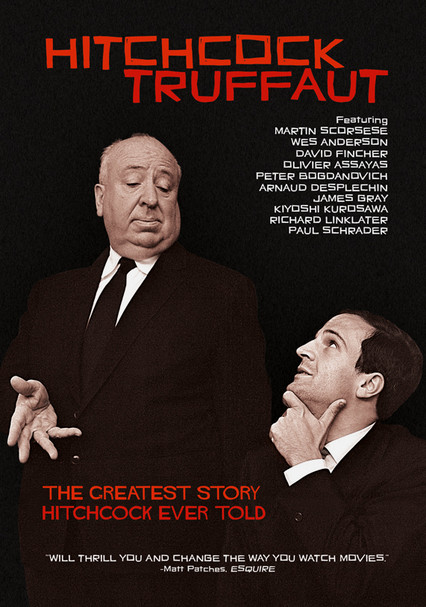
Hitchcock/Truffaut-2015

Hitchcock/Truffaut -2015

Director Kent Jones

Starring Wes Anderson, Martin Scorsese, David Fincher

Scott’s Review #933

Reviewed August 21, 2019

Grade: B+

A documentary about film and film-making is a worthy watch for any rabid lover of cinema, and when the subject at hand is Alfred Hitchcock, any fan must certainly chomp.

I remember Hitchcock/Truffaut (2015) appearing at my local independent theater at the time of release but missed my chance to see it.

The misstep having been undone, the work is fine, and the result is an abundance of riches, serving as a fly on the wall for those wishing to listen to two geniuses speak, or merely observe the clips of great films and revel in the creativity.

Already possessing a hefty knowledge of Hitchcock does not dull my perspective, nor do I take for granted the appreciation served.

For an entry-level fan of the director or French film director, Francois Truffaut, the title must be added to one’s “to see” list.

The documentary serves as inspiration and fulfillment for cinema lovers. Billed as side-by-side directors in the title, the documentary treats Hitchcock as the teacher and Truffaut as the student, especially given the age difference between the two men.

Truffaut interviewed Hitchcock in 1962 during a lengthy week-long discussion in a windowless Hollywood office, where the former soaked up the latter’s knowledge and points of view like a sponge.

Truffaut was already a well-regarded filmmaker at age thirty-two, with gems such as The 400 Blows (1959) already under his belt.

Truffaut then wrote a book about the conversations with Hitchcock, and director Kent Jones brings it to life in documentary form, telling his audience why the book had a tremendous impact on cinema while teaching the audience a thing or two about the movies.

The production analyzes film-making from technique to style to clothing, actors, and in between. The main crux is the technique Hitchcock used to create tension and suspense, manipulating the audience every step of the way.

A plethora of his films are featured which is a personal joy to see, most importantly the documentary is clever enough to build to Hitchcock’s most memorable sequence of all, the shower sequence in Psycho (1960), the director’s most recent film, and now, easily his most notorious.

Hollywood titans such as Martin Scorsese, David Fincher, Wes Anderson, and Richard Linklater, arguably geniuses, explain the influence that Hitchcock provided them.

Listening to these formidable directors whimsically praise and dissect Hitchcock’s analysis and explain how he led to their blossoming is a wonderful aspect.

Hitchcock/Truffaut (2015) is a treat for die-hard fans of Hitchcock or Truffaut- or both.

Conversations and interviews with other famous directors show the heavy influence, love, and appreciation for an ingenious suspense director and an equally unique French New Wave director.

A thirty-two-year age difference separated the two men, but they appear as natural as close colleagues.

Great minds do think alike.

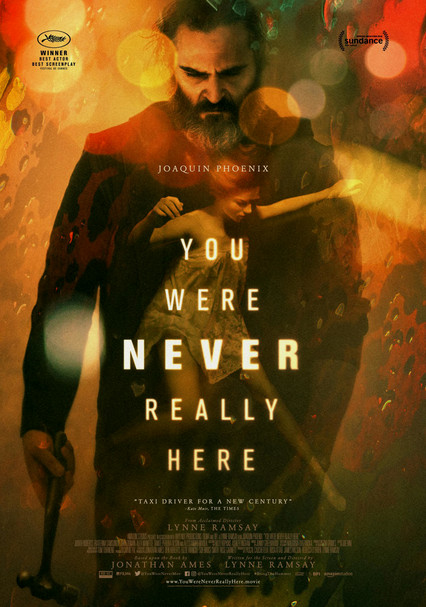
You Were Never Really Here-2018

You Were Never Really Here-2018

Director Lynne Ramsay

Starring Joaquin Phoenix

Scott’s Review #932

Reviewed August 19, 2019

Grade: A-

You Were Never Really Here (2018) is an independent psychological thriller that is most reminiscent in tone and texture of the legendary Scorsese film Taxi Driver (1976).

The main characters are worlds apart, but the classic influences the plot and trimmings amid a different period (the present).

A terrific and brooding performance by star Joaquin Phoenix leads the charge, as does the fantastic direction by Lynne Ramsay and the editing team. The dark film is an unusual and impressive choice for a female director.

Snippets of cinematic genius exist during a film that, with a more complete package, might have been a masterpiece.

We first meet Joe (Phoenix) somewhere in Ohio, as we learn he is a hired gun sent to rescue underage girls from sex trafficking rings. He is brutal in his methods of rescue, resorting to gruesome murders to complete his assignments, and is paid handsomely.

In New York City, he cares for his elderly mother, whom he adores, and is contacted to rescue Nina, the daughter of a New York State Senator, Albert Votto, for an enormous sum.

When Joe rescues Nina and waits for Votto, events quickly spin out of control, revealing a sinister web of deception.

When you look at the story that You Were Never Really There tells, it has been told many times before, typically in slick Hollywood conventional standards.

An angry ex-military man unleashes brutality on devious criminals, rescues the girl, and returns her safely to the open arms of her awaiting parents.

Fortunately, the film is more thoughtful than that, adding complexity to the Joe and Nina relationship and a stylistic, poetic quality featuring Joe’s relationship with his mother.

The plot is paced very well so that the events occur over only a day or two, and the film is highly unconventional and dark.

Frequent flashbacks give the film mystique as we see both Joe and his mother abused by Joe’s father, as a young Joe hides in a closet and hyperventilates. Now an adult, Joe is suicidal, frequently fantasizing or practicing his death until he is interrupted.

As grisly as the film can be, beautiful and tender moments are laden throughout as Ramsay provides gorgeous style and humanity. a homoerotic moment occurs when Joe lies next to the man who has killed his mother.

As the man is close to death at the hands of Joe, they hold hands as Joe provides comfort to the man in death. Joe then buries his mother in a pond in upstate New York, providing her with a peaceful final resting place. These are unique scenes that feel almost like an art film.

The conclusion is open-ended, leaving lots of questions. Joe and Nina appear to ride off into the sunset together, but what will they do? What is to become of them? Surely, no romantic element can be found, but where will they go from here?

Both characters appear to have nothing left to hang on to other than each other, but is this sustainable?

The film is not the type that is poised for a sequel, but I would be very curious about what Ramsay has planned for her characters.

Joe is not portrayed as wicked; he is too complex for that. Phoenix, a tremendous actor, perfectly infuses the character with brutality, anger, tenderness, and warmth.

The similarities between You Were Never Really Here and Taxi Driver—the grizzled New York portrayals, the political backdrop, and the main characters saving a woeful young girl from the depths of despair—make the two films comparable.

However, Joe and Travis Bickle are opposites, the latter having frenetic humor that the former lacks.

Ramsay has been around for a while, with We Need to Talk About Kevin (2011) being her most prominent film. She is successful at telling stories about deeply troubled individuals who are good people given awful circumstances.

With a tremendous actor like Phoenix on board, she crafts a solid work that has garnered accolades, at least among the indie critics, for You Were Never Really Here (2018). Ramsay seems poised to break out in a big way and shake up the film industry with future works.

Independent Spirit Award Nominations: 1 win- Best Feature, Best Director- Lynne Ramsay, Best Male Lead- Joaquin Phoenix, Best Editing (won)

With Six You Get Eggroll-1968

With Six You Get Eggroll-1968

Director Howard Morris

Starring Doris Day, Brian Keith

Scott’s Review #931

Reviewed August 15, 2019

Grade: B

A film that influenced the creation of the iconic television series, The Brady Bunch (1969-1974), or the reverse, depending on the timeline or who you ask, With Six You Get Eggroll (1968) is a cute family romantic comedy, hardly exceptional fare.

It becomes too silly during the final act.

The film follows the merging of two families into one big blended family, and its heart is the romance between two middle-aged singles looking for new love despite their baggage.

Abby McClure (Doris Day) is a widow raising three boys somewhere in northern California. She dutifully runs her deceased husband’s lumberyard while feeling unfulfilled in the romance department.

When her overzealous sister, Maxine (Pat Carroll), tricks her into inviting widower Jake Iverson (Brian Keith) to her dinner party, the pair do not connect. Still, they are drawn to one another as they become better acquainted.

Predictable obstacles come their way, including misunderstandings and backlash from their kids.

With Six You Get Eggroll is Day’s last film and certainly not one of her best offerings, but it is nonetheless moderately enjoyable.

The filmmaker intends to showcase a romance between Abby and Jake so that the elements are set up in a way that makes the characters likable, leaving a very predictable experience.

When Jake arrives at the party early and sees Abby at her disheveled worst, or after Jake makes up an excuse to leave the evening early but runs into Abby later at the supermarket, it’s the sort of film that has a happy ending.

As such, the chemistry between Day and Keith is palpable, making the film charming. If they had no chemistry, the film would be a bust, but their slow-burning fondness for each other works well for this genre.

They share a spontaneous evening of champagne and small talk at Abby’s house, and excitedly plan a date for the next day, only for Jake to make an excuse, leaving Abby perplexed.

When Abby sees him with a much younger woman, we feel her disappointment. After all, Abby is well past forty in a world where middle-aged women are not the pick of the litter anymore, as sister Maxine annoyingly reminds her.

When the young woman turns out to be Jake’s daughter, we smile with relief, along with Abby, because we like the characters and want them to be together.

The children: Flip, Jason, Mitch, and Stacey (a young Barbara Hershey) add little to the film and are merely supporting characters. They dutifully add obstacles to their parents’ happiness by squabbling over bathroom space or resenting one parent for taking the other away.

Conversely, Maxine and Abby’s housekeeper, Molly (Alice Ghostley), adds excellent comic relief, keeping the film from turning too melodramatic and providing natural humor.

The Brady Bunch comparisons are pretty apparent to any viewer who has seen the television series, and who hasn’t. The blended families and the G-rated dramatic crises are the most certain, and the period and clothes are almost identical.

Molly the maid could be Alice the housekeeper, and the actor (Allan Melvin) who plays Sam “the Butcher” from the television series appears as a Police Sergeant.

I half-expected the musical scores to mirror each other.

The film has some mild flaws aside from its predictability. The introduction of a band of hippies (though cool to see M*A*S*H alums Jamie Farr and William Christopher in early acting roles) and a speeding chicken truck resulting in arrests is way too juvenile and plot-driven.

A much better title could have been thought up for the film; With Six You Get Eggroll doesn’t exactly roll off the tongue, and it has nothing to do with the story.

Finally, Abby’s masculine profession is only shown in the opening scene and has nothing to do with the story.

For a wholesome late 1960s-themed evening, With Six You Get Eggroll (1968) is a moderate affair with cliches and a cheery tone, but also some genuine chemistry between its leads.

The sets and colors fit the times well, and Day is always top-notch. Perhaps one could skip this film and watch a sampling of The Brady Bunch reruns; the experience would be almost the same.

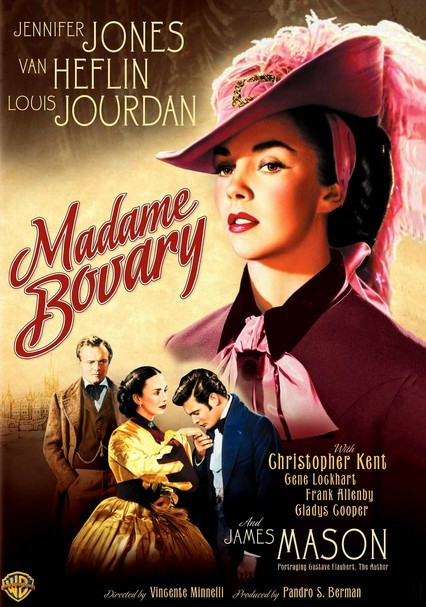
Madame Bovary-1949

Madame Bovary-1949

Director Vincente Minnelli

Starring Jennifer Jones, James Mason

Scott’s Review #930

Reviewed August 13, 2019

Grade: A-

Madame Bovary (1949) is a film adaptation of Gustave Flaubert’s famous novel. Remade a handful of times since this version, Jennifer Jones is cast in the lead role and does a fantastic job with a complicated part.

The title character is central to the controversial film, which will undoubtedly result in mixed opinions of her actions and motivations- whether she will be loved or loathed.

Director Minnelli mixes melodrama and glamour with pain and defeat in her story of one woman’s attempt at happiness.

Cleverly, the story is told within a story as the viewer is immediately amid a compelling and dramatic trial. Flaubert (James Mason) defends his novel depicting an adulterous woman (Jones) ruining the lives of men, deemed disgraceful to France and all womanhood.

He tells the story from his perspective and, through this, Madame Bovary’s perspective. She (Emma) marries a small-town country doctor, Charles Bovary (Van Heflin), and quickly grows disappointed with his lack of status.

Feeling trapped and unfulfilled, she embarks on failed romances with other men as she attempts to ascend the social ladder.

As with the novel, the theme is either understanding or abhorring Emma’s feelings and actions, or perhaps a mixture of both emotions.

Who would not forsake her for being true to her feelings and desiring her piece of the pie? Most women of her day were reduced to matronly statuses or asexual feelings, but Emma wanted satisfaction and life at the risk of her own family.

To counter these lustful feelings, she does not treat her husband very well, resenting his passivity and being disappointed at her daughter being a girl instead of her desired son.

She feels this would have allowed her better status, so her daughter is nearly shunned, preferring the affections of the housekeeper to her mother’s feeble attempts at love.

Is she Hellion or a sympathetic soul? Emma is one of the most complex of all female film characters.

Madame Bovary was written in 1949, and the novel was published earlier, so the progressive slant is rich and worthy of much admiration. The female perspective and the courage to reach for the stars and grasp life are spirited and wonderful to see, especially given the period.

A mixture of romantic drama and torrid affairs is at hand during this experience and always is the character’s center stage.

The film mixes Gone with the Wind (1939) remnants, especially the lavish dance hall sequence. The ball is the highlight, with gorgeous costumes, great cinematography, and bombastic dances.

As Emma cavorts with a dashing aristocrat, Rodolphe (Louis Jourdan), Charles gets drunk and makes a fool of himself, as her genuine disdain for her marriage becomes clear. The smashing windows with chairs moment is ahead of its time because of the effects used, and the constant dance twirls are dizzying.

So much importance occurs in this pivotal sequence.

While more than adequate, Jones would not have been my first choice for the role. Married to influential producer David O. Selznick, it was rumored that many of the actresses’ roles were given to her.

Delicious is to fantasize at what legends such as Bette Davis or Vivian Leigh might have brought to the character. Especially Leigh, given her dazzling performance as Scarlett O’Hara in Gone with the Wind, a follow-up as a similar and arguably more complex character is fun to imagine.

A film that allows for post-credits discussion is always positive, with Madame Bovary (1949) a lengthy analysis of a character begs deliberation.

Minnelli pours love and energy into a work dripping with nuances long before his famous musicals came to fruition. A strong and vital female character suffers a lonely and despairing fate, which is tragic and sad, but she lives her life with a zest that should empower us all.

Oscar Nominations: Best Art Direction-Set Decoration, Black-and-White

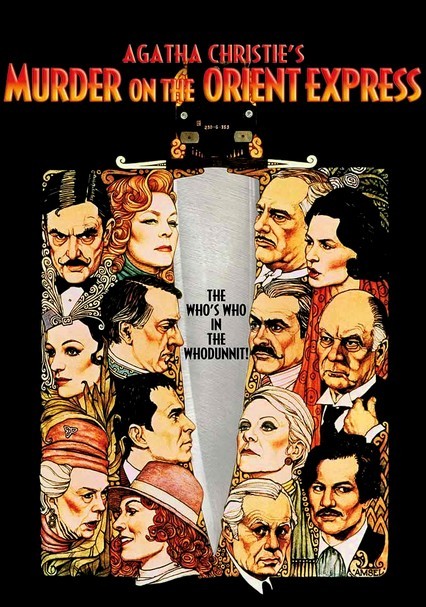
Murder on the Orient Express-1974

Murder on the Orient Express-1974

Director Sidney Lumet

Starring Albert Finney, Lauren Bacall, and Ingrid Bergman

Scott’s Review #928

Reviewed August 7, 2019

Grade: A-

Based on the 1934 novel of the same name by Agatha Christie, Murder on the Orient Express (1974) brings the story to the big screen with a robust and eccentric cast of characters, all steeped in suspicion.

The classic whodunit of all whodunits, the film adds a Hollywood flair with rich costumes and an authentic feel to a budget-blasting extravaganza that keeps the audience guessing as to who the killer or killers may be.

The film was recognized with a slew of Oscar nominations that year.

The hero of the film is Hercules Poirot (Albert Finney), a well-respected yet bumbling Belgian detective, who is solicited to solve the mysterious death of a business tycoon aboard the famous and luxurious Orient Express train.

On his way to the train’s destination, he encounters such delicious characters as the glamorous Mrs. Hubbard (Lauren Bacall), the nervous Greta Ohlsson (Ingrid Bergman), and his friend Bianchi (Martin Balsam), the director of the company who owns the enormous vessel.

Many other characters are introduced to the layered story.

As the complicated plot unravels, most of the characters have something to hide or a connection to other characters.

The fun for the viewer is to live vicariously through Poirot and await the big final reveal after the film that, unless one has already viewed the film or read the novel, one will not see coming.

With a film of this type, a detective thriller, the audience can be assured of a resolution, as a big murder mystery dinner theater production brought to the big screen.

Formulaic, the film never drags nor feels dull.

Amid the first few minutes of Murder on the Orient Express, the intrigue is unleashed at full-throttle speed, leaving one bedazzled and hooked.

The sequence is brilliantly done and thrusts the audience into a compelling backstory, prompting wonder about how these events connect to a train pulling out of the Orient.

Quickly edited film clippings of a news story explain the mysterious Long Island, New York, abduction and murder of the infant daughter of a famed pilot.

It is suggested that the Orient Express trip embarks from Istanbul, Turkey, and is destined for London. This means that several countries will be included in the trek, creating opportunities for both geographical accompaniments and new cultural experiences, which director Sidney Lumet offers in generous amounts.

Moments following the murder, the train has the unfortunate fate of colliding with an avalanche, leaving the passengers in double peril, with a killer on the loose and cabin fever to contend with.

To the compelled viewer, this is snug comfort, as the atmospheric locales are gorgeous and the thought of a dozen strangers trapped together with so much to hide brings the story into a frenzy.

Who did what to the murder victim is slowly revealed as several red herrings (or are they?) are revealed. Who is the mysterious woman strutting down the corridor shortly before the murder, spotted by Poirot? Is she a staged pawn or merely an innocent victim? Could she be the murderer?

The wonderful part of Murder on the Orient Express is the number of entangled possibilities.

The film’s conclusion turns the thriller into a moralistic story, to its credit. The fact that the murder victim was hateful and diabolical is a key part of the story and makes the viewer wonder if the killer or killers are justified in their actions.

Does the fact that Ratchett was stabbed a dozen times with varying degrees of severity play into the motivation?

A very compelling and unrecognizable Finney does a fantastic job of carrying the film among such a troupe of good actors.

Murder on the Orient Express (1974) sets out to entertain and succeeds on every level, bringing the book to the silver screen with a fresh interpretation that still honors Christie’s intent.

Stylistic and thought-provoking, the film has gorgeous costumes, a good story, and fine acting. Knowing who the killer is does little to detract from the enjoyment a repeated viewing provides.

Oscar Nominations: 1 win-Best Actor-Albert Finney, Best Supporting Actress-Ingrid Bergman (won), Best Screenplay Adapted from Other Material, Best Original Dramatic Score, Best Costume Design, Best Cinematography

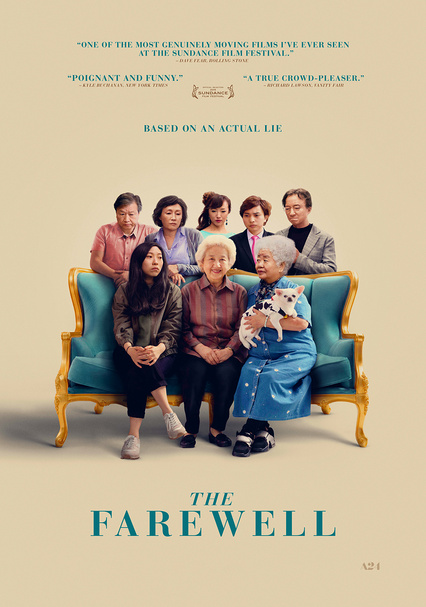
The Farewell-2019

The Farewell-2019

Director Lulu Wang

Starring  Awkwafina, Tzi Ma

Scott’s Review #927

Reviewed August 6, 2019

Grade: A-

Any film with a dark premise, such as The Farewell (2019), runs the risk of resulting in a bleak and depressing outcome, but the film is anything but a downer.

Surprisingly, to many, the film is classified as both a drama and a comedy, with snippets of humor and sadness prevalent throughout.

Met with widespread critical acclaim, the film successfully furthers the much-needed presence of quality Asian representation in modern cinema well into the twenty-first century.

Young upstart/comedienne Awkwafina, memorable for her humorous turn in Crazy Rich Asians (2018), returns to the big screen in a more subdued role, crafting a passionate and dramatic character that strongly leads the charge in an ensemble project exploring the family dynamic.

The film succeeds remarkably as a multi-generational glimpse into humanity, although it occasionally suffers from a slow pace.

A thirty-something struggling writer, Billi (Awkwafina), lives in New York City near her parents, all of whom are ex-pats from China. Billi is particularly close with her grandmother, Nai Nai (Zhao Shuzhen), who still resides in her birth land as they speak regularly via telephone.

When Billi is informed that her grandmother has terminal lung cancer and has weeks to live, the entire family reunites and decides to hold a mock wedding as an excuse to be all together.

The family makes the decision not to tell Nai Nai she is dying, preferring to let her live out her days in happiness rather than fear.

Awkwafina is the main draw of the film, and much of the action is told from her point of view.

One wonders if perhaps director Lulu Wang drew from personal experience when she wrote the screenplay. The audience is not aware of Billi’s sexuality, nor is it relevant to the film, but the vagueness was noticeable.

She does not date, nor does she look particularly interested in men. She does her laundry at her parents’ apartment and attempts, but fails, to secure a prestigious writing scholarship.

The supporting characters add tremendous depth, making the film more than just Billi’s story, and provide unique perspectives from her mother, father, and aunt, each of whom holds a distinct viewpoint about Nai Nai’s illness.

I adore this technique in rich storytelling, as it not only fleshed out secondary characters but also provides interesting ideas.  Nai Nai is not written as a doting old lady nor a victim; she is strong, witty, and full of life.

Shuzhen, unknown to me before viewing this film, brings tremendous poise to a crucial role, portraying it perfectly.

The Farewell is a quiet film that combines both comic and dramatic elements, often within the same scene, thereby providing relief from the dour subject matter.

Wang strikes the balance just right, ensuring the film does not become too heavy.

A hysterical bowing marathon ensues as the entourage decides to visit the grandfather’s grave, preparing the essentials to comfort him during the afterlife.

In stark contrast to the physical comedy, not a dry eye can be found when Billi and her parents depart China by taxi for the airport. Nai Nai tearfully waves goodbye to them, not knowing that it will undoubtedly be her final goodbye.

Any audience member with an elderly relative whom they seldom see will be deeply moved by this poignant scene. Questions such as “Would you keep a loved one unaware of a terminal disease?” will gnaw at the viewer, the central theme of the story.

Influenced by the buzz and word of mouth surrounding the film, I yearned for a single, powerful, emotional scene, but one clearly defined, bombastic moment never materialized.

Instead, the film offers small tidbits, careful not to overpower the audience or risk making the movie too sentimental or overwrought. I still think a pivotal teary scene might have been added for good measure.

A scene where Billi breaks down in front of her parents was adequate, but never catapulted the film over the top.

The Farewell (2019) is a fantastic film rich with emotion and importance.

Like Black Panther (2017), which brought Black characters to the forefront of the mainstream film genre, this film provides exposure to the Asian population, typically relegated to stereotypical roles such as doctors or Chinese takeout owners.

Wang delights with an independent film steamrolling itself across Middle America.

Independent Spirit Award Nominations: 2 wins-Best Feature (won), Best Supporting Female- Zhao Shu-zhen (won)