Room-2015

Room-2015

Director Lenny Abrahamson

Starring Brie Larson, Jacob Tremblay

Scott’s Review #373
80073823

Reviewed January 31, 2016

Grade: A

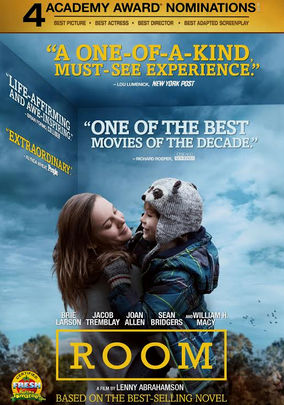
Room (2015) is a compelling story of a woman’s battle in captivity with her five-year-old son in tow.

The film also tells of the after-effects of reclusive living as they both strive to adapt to their changing world.

Receiving a slew of Academy Award nominations, the film is more than a one-dimensional story of peril or rescue, but rather, a smartly woven tale that delves into the psychological issues involved with being confined in a room for years, giving the film a deeper meaning.

Room is adapted from the novel of the same name, written by Emily Donoghue.

We meet twenty-four-year-old Joy (Larson) and her five-year-old son Jack, who live in squalor in a shed made into one room. They exist from food and supplies delivered by their captor “Old Nick”, who abducted Joy seven years prior.

He periodically rapes her and is Jack’s father, though there is no affection on either side. Joy has attempted escape before but has failed.

She is determined to break free once and for all and allow her and Jack a normal life.

In the first half, we learn about Joy and Jack and how they exist and forge a life together. Joy tells Jack they are real and the outside world and people on television are not.

They live in a fantasy world and Jack periodically treats objects (chair, toilet, bed) as real-life things, giving morning greetings to these objects- this is both cute and sad. His only channel to the outside world is a small skylight, which he endlessly gazes at.

I love how the film suddenly changes course at the halfway point and shifts focus to the aftereffects taking a dark, complex, psychological turn.

The first half takes place entirely in the “room”, and suddenly, a new world has blossomed. A monumental event changes the course of the film.

From this point, the film deals with the traumatic effects of being shut away for years. Joy suffers from depression. Jack sees a new world. We see how other characters deal with the turn of events.

Joy’s parents, wonderfully played by Joan Allen and William H. Macy react in completely different ways.

How have their lives changed because of Joy’s abduction? Will they see Old Nick every time they lay eyes on Jack? How will Joy’s mother’s new boyfriend react?

There is a strong theme of coping throughout the film and how all the characters cope with life events and attempt to resume a life of normalcy. There is such a unique humanistic feel to the film that makes it deeper than I would have expected.

Sure, Brie Larson gives a dynamic performance, but the film offers reflection and thought.

The direction and camera work are a marvel. We see a blurred view of what Jack sees in “the real world”.  It is almost like the audience is reawakening to life and we see it through a child’s eyes- the sights, the sounds.

Jack has created an imaginary dog in his mind and the film introduces more than one real dog that plays a pivotal role. We see Jack’s joy and terror at the new experiences.

Room (2015) encompasses thought-provoking ideas making what might only have been a basic story and turning it into an intricate journey into human psychology through many different nuances and facets.

What a wonderful, dark experience this is.

Oscar Nominations: 1 win-Best Picture, Best Director-Lenny Abrahamson, Best Actress-Brie Larson (won), Best Adapted Screenplay

Independent Spirit Award Nominations: 2 wins-Best Female Lead-Brie Larson (won), Best First Screenplay (won), Best Editing

Showgirls-1995

Showgirls-1995

Director Paul Verhoeven

Starring Elizabeth Berkley

Scott’s Review #372

962109

Reviewed January 31, 2016

Grade: D

Having heard much about the infamously poorly reviewed Showgirls (1995) and its reputation as one of the worst films ever made, I finally got around to watching it (twenty years after its release).

Now considered something of a camp classic, I am glad I did.

While I recognize the dubious distinction it holds and do not disagree with it, I also found something slightly entertaining about the film, and my thought process throughout was “this film is so bad that it might be good”, but in the end, it is pretty much just a bad film.

Nomi Malone (Elizabeth Berkley) hitchhikes to Las Vegas, intending to find success as a showgirl.

After her belongings are stolen, she is befriended by a kind-hearted woman named Molly, who works as a seamstress at the topless dance revue Goddess.

Molly takes her in and introduces her to the star of the show, Cristal (Gina Gershon).

A rivalry immediately develops between the women as Cristal mocks Nomi’s job at another topless club.

The main story centers on this rivalry as Nomi attempts to climb the ranks and succeed in the shady world of adult entertainment.

Along the way, she becomes involved with various men, specifically the entertainment director (and Cristal’s boyfriend), Zack, played by Kyle MacLachlan, leading to further tensions.

Let me be honest here- Showgirls is a bad film in every way. I observed three major flaws in the film: poor acting, poor writing, and an over-the-top tone on every level.

Let’s break it down.

Within minutes, I knew the acting was subpar, and I wondered whether that was the fault of the director (Paul Verhoeven), the actors, or a combination.

Known for directing Basic Instinct (a sexy, smoldering film), he may have had the same success in mind for Showgirls.

Berkeley gets the brunt of the mention since she is the lead character, but, wow, what a bad performance.

From the overdramatic delivery to the phony earnestness, I did not buy the performance for a minute and, on more than one occasion, fantasized about how a different actress might have tackled the role (Nicole Kidman and Julia Roberts came to mind).

Gershon was almost worse, as an irritating, brooding pout marred her sexiness and vixen-like character.

The writing is one-dimensional- a poor girl tries to achieve success in a bad, bad world and meets challenge after challenge. Nothing new here.

The predictability was apparent almost immediately, and most of the characters were unlikable. When Nomi takes an interest in a man, he becomes a player, keeping another aspiring female star on the side and feeding her the same lines he gave Nomi.

Even the one sympathetic character (Molly) exists only to make Nomi more likable, as when Molly is attacked and Nomi races to her bedside.

Forced and formulaic, this scene is a prime example of poor and contrived writing.

Most scenes play over the top.

Brimming with nudity and sexual excitement, the film is bawdy and party-friendly. In one scene, dancers take a line of coke before hitting the stage, and a feud between two of them results in one sabotaging the production, causing the other to break her hip.

The larger-than-life (in more than one way) x-rated, well-endowed, mama dancer, while entertaining, is also silly and foolish.

Chaotic and pointless, each scene was hard to believe and take seriously.

You may be wondering what positives can be found in Showgirls- the answer is not many, but there is a charm I found in the film, but perhaps I am gluttonous for punishment.

I think the film “feels” like it wants to have fun, and a certain level of entertainment can be found in viewing it, but this is like trying to find a needle in a haystack to see any good in Showgirls.

I do not disagree that Showgirls (1995) is one of the worst films ever made, but I found a sliver of charm, interest, and fun mixed in with the more prevalent drivel, poor quality, and painfully bad acting.

But perhaps that is because it is so bad.

The Revenant-2015

The Revenant-2015

Director Alejandro G. Iñárritu

Starring Leonardo DiCaprio, Tom Hardy

Scott’s Review #371

80064516

Reviewed January 27, 2016

Grade: A

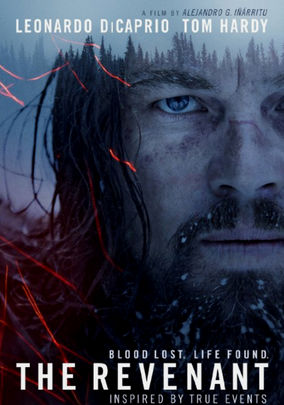
The Revenant is a fantastic 2015 film filled with intensity, great visual camera work/direction, and the acting talents of one of modern cinema’s dynamic performers Leonardo DiCaprio.

He shines every minute he is on-screen.

Almost all of the filming takes place outdoors (the American frontier period), and is a revenge tale, only adding to the excitement and beauty of the film.

The film is set in the 1820s, and we are immediately introduced to a large party of hunters and trappers in remote Wyoming as the film opens.

Right off the bat, I was struck by the picturesque scenery.

We are treated to a compelling (and bloody) battle between the trappers and a tribe of Native American Indians. The Louisiana Purchase has just passed, leading to tensions between various parties causing conflict and blood to spill.

The hunters are decimated so the remaining group must flee on foot, hoping to return to safety hundreds of miles away. The main character, Glass (DiCaprio), later receives a terrible injury and the main crux of the story develops as we embark on a tale of his desperation to survive and exact revenge on the men responsible for leaving him to die.

The film is a lesson in endurance. Glass is arguably put through almost every punishment imaginable and we wonder what more he can endure.

The film belongs to two actors. Dicaprio, and Tom Hardy as the villainous John Fitzgerald, a hunter with a major rivalry with Glass.

The film parlays into a revenge tale between the two characters.

DiCaprio is a gem in this film, not only is he compelling from a physical standpoint, he also looks broken, battered, and bruised, but DiCaprio gives a performance that I am fond of.

He acts non-verbally.

In one crucial scene, Glass is unable to move or speak as a violent act is committed. He is desperate yet helpless. The range of emotions portrayed by DiCaprio is astounding. The pain, hurt, and frustration are evident on his face and we sympathize greatly.

This is a powerful performance by DiCaprio.

Tom Hardy is compelling in his own right as the scoundrel he portrays. We despise this character and all his dirty deeds and Hardy successfully pours all his energy into this grizzled role.

Hardy, quite handsome in real life, is transformed into a partially scalped, dirty man. His fate at the end of the film is a clever aspect of The Revenant that helps make it not a typical run-of-the-mill western, but something so much more.

The infamous “bear scene” is second to none. How this compelling scene was shot is beyond me, but the result is a realism I have seldom witnessed in film. The scene is so prolonged and violent that one wishes it would conclude quickly.

A surprise comes that rivals any horror film.

Directed by Alejandro G. Iñárritu he follows a vastly different type of film (Birdman-2013) and does a wonderful job.

The Revenant is arguably a “guy’s movie”.

There are almost no women featured and the ones that are not treated well, which is unfortunate, however, sadly likely true of the times.

Interesting to note though, is Inarritu decided to have a female victim enact revenge on her abuser in a satisfying (though squeamish moment for the male viewer).

I found The Revenant to have definite left-wing leanings. The age-old controversy of the white man taking the Indian’s land is explored and the film has a way of bringing this up more than once as well as not making the Indian tribes “bad”, but rather sympathetic.

Especially since the character of Glass marries an Indian woman and bears a son with her.

Gorgeous cinematography morphed with a wonderful and intriguing story and peppered with brutality. The Revenant (2015) succeeds on every level and sets an important precedent for a film about perseverance in the face of hopelessness.

Oscar Nominations: 3 wins-Best Picture, Best Director-Alejandro G. Iñárritu (won), Best Actor-Leonardo DiCaprio (won), Best Supporting Actor-Tom Hardy, Best Sound Editing, Best Sound Mixing, Best Production Design, Best Cinematography (won), Best Makeup and Hairstyling, Best Costume Design, Best Film Editing, Best Visual Effects

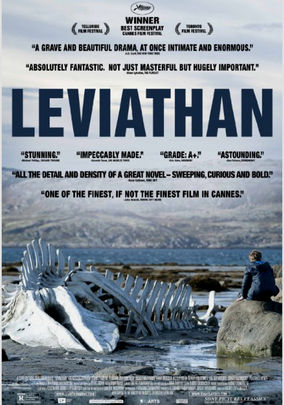
Leviathan-2014

Leviathan-2014

Director Andrey Zvyagintsev

Starring Elena Lyadova, Vladimir Vdovichenkov

Scott’s Review #370

80013610

Reviewed January 16, 2016

Grade: B+

Nominated for the 2015 Best Foreign Language Film (Russian), Leviathan is a tale of governmental corruption at the expense of the “little man”, mixed in with a family drama- and is quite heavy.

The film is above average. It’s a standard, tense drama, if you will, though a bit slow-moving at times. This is not so much a complaint as it is an observation.

As with many Foreign language films versus American films, there is more nudity (not in a gratuitous way) and fewer explosions, which is admiration, and hats off to foreign language films as a whole.

Leviathan made me think of the overall foreign language film genre in that assessment as it did not need CGI or any other “bells and whistles” commonplace in current American films.

Set in a gorgeous coastal area of Russia, featuring landscapes and outdoor shots, Leviathan is a story with religious overtones mixed with drama. “Good vs. evil” and both sides questioning God or defending their actions for god are featured message points.

The protagonist, Koyla, lives with his second wife, Lilya, and his son Roma in a coastal fishing town. Koyla is hot-headed and sometimes expresses rage, but is a good man living a simple life as a mechanic.

The corrupt Mayor is determined to take Koyla’s land and build a villa, offering Koyla an insulting sum of money to sell his land. The disputed land is currently in legal hands, and Koyla’s handsome lawyer friend, Dima, arrives from Moscow to handle the case and support the family in their uneasy times.

A secondary plot involves a love triangle between Koyla/Dima/Lilya, and Roma’s hatred for Lilya that, while somewhat interesting on its terms, did not do much to further the main plot and I am not sure how necessary it was to the film as a whole.

It has nothing to do with the land dispute and was left unresolved.

The clear “hero” of the film is Koyla, but he is no saint himself. He drinks heavily, at one point smacks his son (albeit deservedly so), and has a temper. But his land is being taken from him by a corrupt figure making Koyla empathetic and likable.

Leviathan is a compelling film as the clear message received is “bully vs. beleaguered working man”. The mayor is a fat, unattractive, drunken bully and the audience is instructed to root against him. He has the town justice department in his back pocket and uses blackmail to achieve success.

The film brings religion into the plot as a priest tells the mayor he is doing “God’s work”, thereby justifying his motivations (at least in his mind). Later, a defeated Koyla converses with a religious man questioning God and God’s actions.

The film is cold despite being set in what I believe to be the summer or fall. There is a chill in the air, it always looks windy, and the look of the film is dark. This is effective as Leviathan is a dreary film with an unhappy ending.

Life is harsh and cruel and the film extends that message.

I did not quite understand Lilya’s motivations and not much is known about her character, despite being involved in the events. What motivates her to have an affair with Dima? Why does she return to Koyla? Is she unhappy and seeking a more glamorous life?

This can be assumed but is never made clear so she is a mysterious character.

Enjoyable to me most is the final thirty minutes or so. When a character’s sudden death occurs, I wondered if a particular character was responsible for the death before it was revealed what truly happened.

A cinematic treat and an interesting premise, mixed with a bit of religion and a whodunit, make the Russian film Leviathan, a worthy viewing experience.

Oscar Nominations: Best Foreign Language Film

Independent Spirit Award Nominations: Best International Film

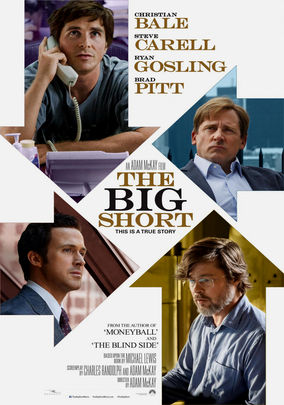
The Big Short-2015

The Big Short-2015

Director Adam McKay

Starring Christian Bale, Steve Carell

Scott’s Review #369

80075560

Reviewed January 10, 2016

Grade: A-

The Big Short (2015) is a confusing film and is its intention and also its genius.

Throughout some of the film, I was uncertain how much I liked it (or got it) and found many of the characters unlikeable, but at the conclusion, I realized that is exactly what the filmmakers intended is a clever tactic and makes The Big Short a success.

On the surface, the film has some humor but a very dark story at its core and left me a bit depressed and terrified at the conclusion.

I am happy that the film is receiving accolades and is the “thinking man’s” hit movie of the season.

To attempt to summarize the film, the film begins in 2005, approximately two years before the financial crisis of 2007-2008.

Eccentric hedge fund manager Michael Burry (Christian Bale), realizes the U.S. housing market is unstable and predicts a crash.

He attempts to profit by betting against the market, a move laughable to all around him, especially the banks who anticipate a windfall at Michael’s expense. Trader and fellow market managers, Jared Vennett and Mark Baum (played by Ryan Gosling and Steve Carrell) catch wind of Michael’s theory and try to get in on the action.

There is a sub-plot involving two younger investors also attempting to profit through the guidance of a retired banker (played by Brad Pitt).

The financial collapse is a tender subject and certainly no laughing matter, especially since it is so recent and affects many people.

The Big Short is touted as a comedy, which is strange. I found the audience didn’t know exactly what to laugh at or when. The film’s “laughs” were cynical, witty, and sometimes wicked. Many people do not get this type of humor.

In real life, people were kicked out of their homes and lost their jobs, pensions, etc. and it was all the result of greed, which The Big Short hammers home.

Several scenes include frat-boy investor/trader types getting rich by enabling almost anyone to afford a new house. Little did these people realize that there was a catch.

The film paints a jaded picture of Wall Street. The rich get richer at the expense of the middle class and the poor. It is an age-old sad tale.

Performance-wise, Carrell and Bale are the standouts. They both play characters who are damaged. Bale’s Michael is socially awkward, and has a false eye, but is also a genius. Carrell’s Mark is angry, grizzled, and is in therapy as a result of his brother’s suicide.

Both actors are great and have developed into worthy, credible acting talents. Worth mentioning, are small, but meaningful roles by Melissa Leo and Marisa Tomei.

The Big Short is shot interestingly, and highly unusual. From time to time, the action will stop and a famed celebrity (Selena Gomez, a world-renowned chef, or a model in a bubble bath) will explain the events, thus far, or give some review.

Also, more than once the actors will turn to the camera and speak directly to the audience. A personal touch that I found effective.

In the end, not much in life has changed, which is the message, and a frightening one. As one character brilliantly puts it “people will go back to blaming the poor and the immigrants”, which is a sad message.

After millions lost everything, not much has changed in the world and The Big Short makes that very clear. The people responsible have gotten away with crime, the banks bailed out, and a new scheme is undoubtedly in place.

It’s a sad world.

The Big Short (2015) is a gritty, harsh look at reality and a terrific film.

Oscar Nominations: 1 win-Best Picture, Best Director-Adam McKay, Best Supporting Actor-Christian Bale, Best Adapted Screenplay (won), Best Film Editing

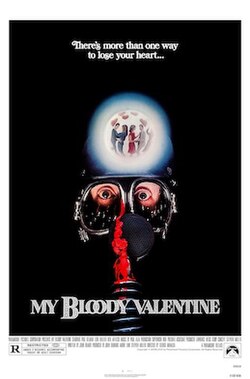
My Bloody Valentine-1981

My Bloody Valentine-1981

Director George Mihalka

Starring Paul Kelman, Lori Hallier, Neil Affleck

Top 20 Horror Films #20

Scott’s Review #367

Reviewed January 9, 2016

Grade: A

My Bloody Valentine (1981) is a perfect slasher film to watch on the romantic holiday of Valentine’s Day or, in fact, any day during the cold and snowy month of February.

The film loses something if watched in summer or at any other time of year, since its dark, harsh feeling is the perfect atmosphere when it’s watched at the right time.

My Bloody Valentine is an underrated gem of the early 1980s- just as Black Christmas was to the 1970s- and both ironically are heralded so by directors such as Quentin Tarantino.

Other, less gritty films received greater exposure and commercial success, but I am proud to name My Bloody Valentine among my Top 20 favorite horror films.

Both are also “holiday-themed” films.

The plot is basic, yet layered, with a unique setting. Rather than a creepy house, a summer camp, or some other tried and true device, we have the ingenious coal mine setting- immediately fraught with great potential.

Think about it- a coal mine is dark, suffocating, creepy, with countless secret passages, the fear of being lost, and running out of oxygen. It is also underground, where help cannot easily be obtained.

The town is aptly named Valentine Bluff (how clever), so Valentine’s Day is a major holiday. The Mayor and police chief figure prominently in the story, and the use of town history makes the film engaging.

Typical for the slasher genre, we have a bunch of horny teens, partying to the max, who decide that the coal mine is the perfect place to throw a Valentine’s Day party, and they do so with gusto.

There are a few middle-aged characters with meaty stuff to do, and the main plot is of the whodunit sort. The killer’s get-up is simply genius.

He (or she) is wearing a completely dark miner’s outfit with an oxygen mask, which emits a heavy breathing sound, adding to the great atmosphere of My Bloody Valentine.

One of my favorite scenes involves the offing of Mabel Osbourne, the earnest, sweet-natured party planner, who is excitedly preparing the annual Valentine’s Day town dance.

She marvels at receiving a box of chocolates with a wonderful poem, only to read it. “Roses are red, violets are blue- two are dead and so are you”! Poor Mabel then has her heart removed, and it is sent (gift-wrapped naturally) to the Mayor and police chief.

The scene is both horrific and comical.

My Bloody Valentine (1981) is a favorite of mine in the genre and carries that genre with its bloodiness, fun storytelling, and wicked charm.

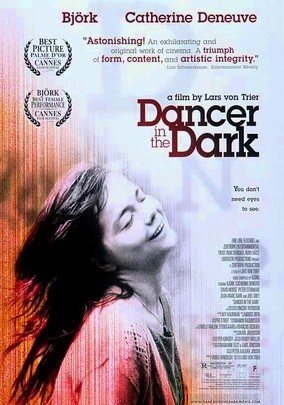
Dancer in the Dark-2000

Dancer in the Dark-2000

Director Lars von Trier

Starring Björk, Catherine Deneuve

Scott’s Review #365

60002276

Reviewed January 9, 2016

Grade: A

Dancer in the Dark is in my opinion one of the most important, inventive films of the 2000s and proudly is one of my favorites of all time.

However, the film is not pleasant to watch, and is quite painful and depressing, if the truth be told. But the relevance and sheer emotion the film elicits is more than enough reason to be exposed to it- if only, but perhaps, once.

Director, Lars von Trier, is a master at creative and disturbing, dream-like films that are either odd, non-linear, or otherwise open to interpretation in some way.

He has directed such gems as 2011’s Melancholia and 1996’s Breaking the Waves, to name but two.

With Dancer in the Dark, he uses handheld cameras which add much grit to the film so it almost feels documentary style, and a grainy, shaky look.

The addition of musical numbers mostly written and performed by the star, Bjork, is a wonderful touch.

Speaking of Bjork, words cannot express what a brilliant performance she gives in the film, and the raw emotion she expresses in her starring role is awe-inspiring.

So much was the stress of filming Dancer in the Dark, that she, to my knowledge, has never made another film.

She was shamefully overlooked in the Best Actress Oscar category- an omission that is one of the biggest fails in Oscar history.

Tensions were reportedly high on the set of Dancer in the Dark, as Bjork reportedly despised her director, never missing a chance to tell him so, disappeared from the set for days on end, and spat in his face. Co-star Deneuve, a former French mega-film star, reportedly did not get along well with Bjork.

Despite all the drama, the stars managed to pull together a masterpiece.

Bjork plays Selma, a Czech immigrant, living in Seattle with her young son. The year is 1964. Selma is poor, struggling to survive by working in a clothing factory along with her best friend Cvalda (Deneuve).

Selma and Cvalda escape their dull lives by watching classic musical films at their local cinema. To make matters worse, Selma is suffering from a degenerative eye disease causing her to gradually lose her sight. She struggles to save enough for surgery for her son, who is sure to suffer the same fate without it.

Selma frequently imagines musical numbers in her day-to-day life involving friends and co-workers. When a tragic turn of events occurs and Selma is accused of a crime, the film goes in a very dark direction.

The conclusion of the film will always require handkerchiefs as it is as powerful as it is gloomy.  The aspect I love most about Dancer in the Dark is that it smashes barriers about what film art is and throws all of the rules out the window.

Lars von Triers, famous for this created a dreamy, independent hybrid musical and drama, a dynamic, tragic, emotional experience all rolled up into one great film.

Oscar Nominations: Best Original Song-“I’ve Seen It All”

Independent Spirit Award Nominations: 1 win-Best Foreign Film (won)

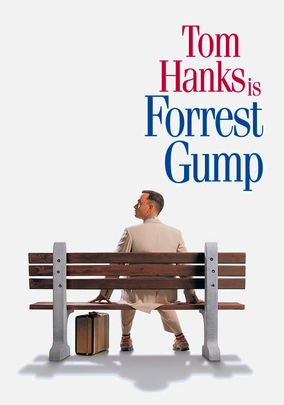
Forrest Gump-1994

Forrest Gump-1994

Director Robert Zemeckis

Starring Tom Hanks

Scott’s Review #362

60000724

Reviewed January 9, 2016

Grade: A

Awarded a bevy of Academy Awards in 1994, Forrest Gump is a film that is ingrained in many people’s memories, as it was a monster hit in the mid-1990s.

Some complained that the film’s unrealistic nature was silly and the story too saccharine. Still, it is an innocent, sweet piece about a simple-minded man’s journey through life and the insurmountable success he achieves.

I adore the film largely from a sentimental standpoint and for the memories it conjures up when I watch it years later.

I find the film to be a comfort.

Zemeckis, a feel-good film director (Back to the Future, 1985, Who Framed Roger Rabbit?, 1988), carves a whimsical tale of a fellow, Forrest Gump (played brilliantly by Tom Hanks), a slow-witted, but gentle soul, from Alabama, and his decades-long journey through life.

His lifelong love is Jenny (played by Robin Wright), a troubled girl who relies on Forrest throughout their decades-long friendship.

Forrest is always in the right place at the right time and influences historical events in his innocent way.

Forrest Gump is unique in its clever use of editing to incorporate Forrest into real-life historical events, which is a big part of the film’s appeal.

In one instance, Forrest meets with Richard Nixon and reveals the Watergate scandal. He also met President John F. Kennedy after winning a football scholarship.

And who can ever forget the numerous lines made famous from the film- “Stupid is as stupid does”, and “Life is like a box of chocolates. You never know what you are going to get.”, to name just two.

What I love most about the film is its heart, and the relationships Forrest shares with the central characters in his life are rich in depth. Forrest’s haggard but kind mother (Sally Field) loves her son, and they share a tender, emotional relationship.

When Forrest enlists in the Army during the Vietnam War, his grizzled commanding officer, Lt. Dan Taylor (an Oscar-nominated performance by Gary Sinise), surprisingly becomes one of Forrest’s closest friends.

The film takes a darker turn when we begin to see a more human side to Taylor after a horrible accident, which leaves him without legs. To counterbalance this tragedy, Forrest is comically wounded in the buttocks.

I am not sure whether I love or loathe Jenny as a character.

Wright is perfect at giving her some vulnerability, and her terrible upbringing can excuse some of her actions and lead her to take advantage of Forrest, arguably for her own gain.

Still, she has Forrest’s heart, so she cannot be all that bad.

A favorite scene takes place in Washington, where Forrest speaks at an anti-war rally. Jenny, in the crowd, recognizes Forrest, and their reunion is sweet. Jenny, now a hippie and expelled from school, returns to Forrest’s life.

The fates of both Jenny and Mrs. Gump are scenes that will undoubtedly require tissues to get through, as they are tender and emotional as can be.

Zemeckis’s Forrest Gump (1994) has emotion, sweetness, and heart, and those are nice qualities for a film to have.

It is not too sappy, overwrought, or manipulative; instead, it provides an honest story.

Oscar Nominations: 6 wins-Best Picture (won), Best Director-Robert Zemeckis (won), Best Actor-Tom Hanks (won), Best Supporting Actor-Gary Sinise, Best Screenplay Based on Material Previously Produced or Published (won), Best Original Score, Best Sound Effects Editing, Best Sound, Best Art Direction, Best Cinematography, Best Makeup, Best Film Editing (won), Best Visual Effects (won)

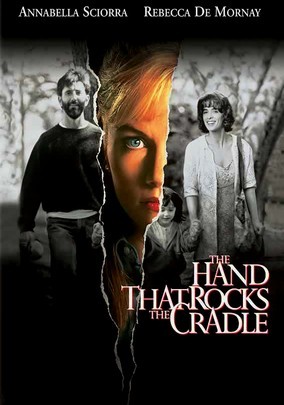
The Hand That Rocks the Cradle-1992

The Hand That Rocks The Cradle-1992

Director Curtis Hanson

Starring Rebecca De Mornay, Annabella Sciorra, Matt McCoy

Scott’s Review #360

569891

Reviewed January 9, 2016

Grade: A

One may argue that the slick 1992 thriller The Hand That Rocks The Cradle is a direct rip-off of the 1987 blockbuster hit Fatal Attraction, which spawned countless imitators, and they may be accurate, but I adore this film.

It contains great tension and is well-acted, but above all, The Hand That Rocks The Cradle features Rebecca De Mornay in a wonderful performance as one of the screen’s most memorable villains, Peyton Flanders.

This is a film that will admittedly not win any awards for originality, but that I love all the same.

Peyton Flanders is very pregnant when we meet her. Her husband is creepy Dr. Mott, an obstetrician who sexually molests Claire Bartel (Sciorra) in his office during an exam.

Humiliated and upset, Claire, after being encouraged by her husband, Michael, files charges against Dr. Mott. He commits suicide, and Peyton loses her child.

Filled with vengeance, she vows to destroy Claire.

The plot may sound like a tawdry daytime soap plot device, but The Hand That Rocks The Cradle somehow works like a charm.

Unlike Fatal Attraction, there is little rooting value between Peyton and Michael- we know she is a crazed lunatic- the fun is seeing how she gets hers.

She manipulates him and insinuates herself into their home- she pretends to be a nanny and subsequently manipulates Michael and Claire’s daughter.

Julianne Moore, in an early role in her storied film career, is believable as Claire’s best friend, who is the only one who sees Peyton for the monster she truly is.

Sadly, her screen time is limited.

Regardless of the other fine performances from the rest of the cast, this is De Mornay’s film- she is psychotic, then sweet, and plays both to the hilt.

I suppose a film like The Hand That Rocks The Cradle (1992) isn’t meant to be analyzed too much, since it tries to thrill, scare, and make the audience uneasy, but boy, is it sure fun.

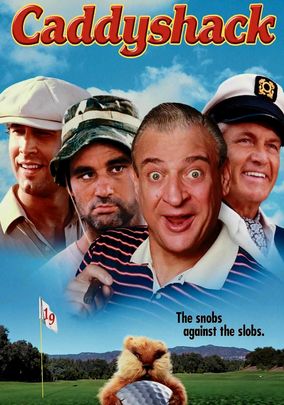
Caddyshack-1980

Caddyshack-1980

Director Harold Ramis

Starring Chevy Chase, Rodney Dangerfield

Scott’s Review #353

343044

Reviewed January 9, 2016

Grade: A

Caddyshack is one of the funniest slapstick comedies of the 1980s, arguably the decade of “mindless comedy”.

Made in 1980, the cusp of the decade, it led the pack during a time when, one after another, comedy films were churned out in a cookie-cutter style, based largely on the success of Caddyshack.

While not every aspect of the film works, the parts that do are hysterical, and its influence on film history is unquestionable.

More than merely a “dumb comedy”, Caddyshack features funnymen of the day (Bill Murray, Chevy Chase, and Rodney Dangerfield), and the talent and timing are good.

Clean-cut teenager Danny Noonan works as a caddy at a posh resort named Bushwood Country Club. An “underachiever”, he lacks direction in life while being pressured by his parents to attend college.

While spending the summer at work pondering his future, high jinks ensue as a rivalry develops between the club co-founder, Judge Smails (Ted Knight), and the outrageous Al Czervik (Rodney Dangerfield), who is a nouveau riche real estate developer.

Meanwhile, bordering on psychotic, Bill Murray as groundskeeper Carl Spackler is engrossed in his feud with a gopher running rampant on the golf course.

Mixed in with all of this are the standard teen romance themes, bathroom gags, and sexual jokes.

Caddyshack is not high art, nor does it need to, or intend to be. It is simply pure juvenile fun. It is not even that well written, but it works. The portions that work so well do not even involve the caddies who were originally set to be the focal point of the film.

Rather, the real scene-stealers are the two oldest members of the cast- Rodney Dangerfield and Ted Knight. The bickering and barbs traded between the two characters are delicious and downright funny.

When Al mocks Smail’s hat, or dances with his snobbish wife, or crashes into his new boat, each scene is rich with goofy comic timing.

Without a doubt, my favorite scene is the “doody” scene in the resort pool. It is laugh-out-loud raucous, as a candy bar tossed into the water is mistaken for something else.

The star of this scene is Lois Kibbee, who plays Judge Smail’s wife.

Her comic mannerisms and upper-crust looks make her a perfect choice for the role, and she arguably steals the show in her limited appearances.

When Al jokes that she must have been something before electricity, her facial expressions perfectly emit comic horror.

There are points of the film that really are unnecessary and do not work well- I have never understood Bill Murray’s character, Carl. Bordering on silly, with a stuffed animal as the gopher, Murray himself is fantastic- improvising, but the role does not seem necessary to the rest of the film.

More scenes between the Judge and Al, or more from Chevy Chase’s character, Ty, and the Judge’s wife, would have been preferable.

Also, the attempted teen triangle between Danny, Maggie, and Lacey is dullsville- plain Maggie cannot compete with gorgeous and slutty Lacey.

These criticisms, however, are small gripes compared to the hilarity and perfect timing of the rest of the film, which is why it ranks among my favorites.

Caddyshack, along with Animal House, paved the way for the plethora of slapstick comedies to follow- a few good, most bad, but must be recognized as the influence that it was, and a must-see for fans of golf, sports, and good, clean fun.

The elements of Caddyshack (1980) come together and work so well.

Burn Witch Burn (Night of the Eagle)-1962

Burn Witch Burn (Night of the Eagle)- 1962

Director Sidney Hayers

Starring Peter Wyngarde, Janet Blair

Scott’s Review #316

220px-Night-of-the-eagle-poster

Reviewed January 1, 2016

Grade: B

Burn Witch Burn, retitled for U.S. release from the original British title Night of the Eagle, is a 1962 black-and-white horror film.

It is based on a 1943 novel entitled Conjure Wife.

The film is quite decent and delves into the fascinating and arguably unusual subject of witchcraft. It’s careful not to be too dark a film, and it resembles more of an extended episode of the Twilight Zone. It’s a good episode.

I enjoyed the film’s wit and charm. It never took itself too seriously and added humor and lightness.

Norman, a psychology professor at the local university, is intelligent, successful, and well-adjusted. He has a blonde, pretty, sophisticated wife named Tansy.

The perfect housewife, she coordinates Friday night bridge parties with fellow professors and staff and a Mrs. Cleaver type, the mother character from the famous 1950s television series Leave it to Beaver.

When Norman discovers Tansy is practicing witchcraft and possesses various charms, dolls, and weird things, he forces her to destroy all of them.

This leads to a series of bad events.

Norman is accused of rape by a student, and other dire circumstances occur. Tansy assumes this is a result of the destruction of her witchcraft.

Burn Witch Burn is a fun film that doesn’t take itself too seriously despite its heavy subject matter. Tansy certainly does not look like the stereotypical witch. She is more like a PTA mom; we almost cheer for her.

At the same time, the film is not so over-the-top that it becomes ridiculous, either. I found it entertaining but not a masterpiece or scary.

As the film progressed, I found the action confusing from a story-line perspective, but that was admittedly okay. I went with it and enjoyed it.

For instance, the plot thickens when an enormous eagle affixed to the front of the university building comes into play or the sinister university secretary’s motives are revealed.

The special effects and ambiance of the thunderstorm are worth mentioning. The heavy storm was crucial in making Burn Witch Burn a compelling horror film. It added a heavy dose of spookiness to the events, and the atmosphere was spot on.

Burn Witch Burn (1962) is a fun, late-night horror flick that does not take itself too seriously. It is a worthy film for horror fans to enjoy.

An underappreciated British horror flick.