Tag Archives: Horror

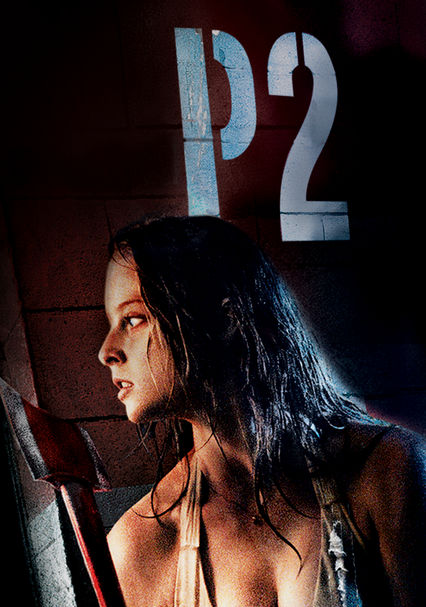
P2-2007

P2-2007

Director Franck Khalfoun

Starring Rachel Nichols, Wes Bentley

Scott’s Review #1,106 

Reviewed January 29, 2021

Grade: B

Franck Khalfoun, a French filmmaker known for the horror genre, makes his directorial debut with P2 (2007).

As a horror buff, the film has a great premise which made me immediately want to see it. Unfortunately, while the film has its moments of intrigue and plenty of gore, the climax ultimately disappoints and it turns run-of-the-mill.

Like many of its modern horror brethren, there is little that separates it from other similar films.

It’s fine Saturday night viewing fare but quite predictable.

Films set during the Christmas holiday and especially in festive New York City always enrapture me so P2 gets a leg up. The film doesn’t utilize the holiday very well save for a smattering of decorations within an office building, some snow, and one creepy holiday song.

Set on Christmas Eve, the plot follows a young businesswoman named Angela (Rachel Nichols) who becomes trapped in an underground parking garage in midtown Manhattan. She is pursued by a psychopathic unhinged security guard (Wes Bentley), who is obsessed with her.

Bentley, known for his terrific role in American Beauty (1999) is the main reason to see this film. He plays creepy and obsessed very well and is a great villain.

His piercing blue eyes are intense and frightening and his obsession with Elvis Presley and his dog is revealed. He is disturbed though for no apparent reason, which is not positive to any character development.

Why is he crazy?

When Thomas plays Elvis Presley’s “Blue Christmas” over the intercom it’s a festive and delightfully morbid highlight.

I desired to know what makes Thomas tick and why he hunts Angela. Has he been watching her for months or does he simply see an opportunity on this particular night and go for the gusto?

The plot reveals a bit of both which is unsatisfying because there is no payoff.

Does he knock out and kidnap Angela because she rebuffs his advances or would he have done this anyway if she agreed to dinner?

He is in love with her but why? It’s not that she isn’t a catch. She is pretty and a successful businesswoman with a good head on her shoulders. Does she reject him because she gets a bad vibe or because he’s a security guard?

I wanted more backstory for both main characters but once she is chained to a table it hardly matters. He’s gone too far off the deep especially after it’s revealed he has killed others. Thomas’s motivations are not satisfying.

Nichols, a novice actress, is very good at her role. She carries the film and is in a state of peril most of the time. But she neither overacts nor plays the victim.

There is a nice balance of terror and figuring out what steps to take to save her life and flee the madman.

P2 possesses a female-empowerment vibe but Angela does appear in skimpy clothing thus issuing the standard state of undress required by their female stars, a formula many horror films stick to.

Angela is smart, quick-thinking, and strong. She tries to outsmart her capturer and more often than not she does and she is victorious in the end.

Surprise!

I noticed multiple nods to the Saw (2004-present) franchise since this series introduced and embraced the torture-horror genre.

Many horror films use this technique to shock and startle viewers instead of providing clever writing or stories. The use of videotape appears in P2 which borrows heavily from Saw.

P2 (2007) is a fine effort and will satisfy horror fans. It may tread into familiar territory and back itself into a corner with limited story possibility, but I did look over my shoulder a couple of times after viewing the film when I was in my building’s parking garage.

Ironically, I was on level P2.

Maybe the film did leave an impression after all?

Terror Train-1980

Terror Train-1980

Director Roger Spottiswoode

Starring Ben Johnson, Jamie Lee Curtis

Scott’s Review #1,098

Reviewed January 5, 2021

Grade: B+

Terror Train (1980) is a creepy slasher film released amid the heyday of the genre’s popularity. It embraces a familiar formula of teenage party victims. Still, it adds a helping of red herrings/whodunit twists, which catapult it above mediocrity and will keep audiences engaged until the finale.

Helpful is the casting of the “scream queen” of the time, Jamie Lee Curtis, who is the main attraction and the “final girl”. Her casting adds credibility and star power.

The film is a puzzle, with a difficult-to-predict ending and many twists and turns along the way—a perfect watch for a snowy New Year’s Eve, when it is set.

Events begin three years before the happenings in the main story, naturally, at a New Year’s Eve fraternity party, inhabited by a group of energetic pre-medical students looking for a good time.

Alana Maxwell (Curtis) is coaxed into participating in a cruel joke meant to lure an insecure pledge, Kenny (Derek MacKinnon), to a bedroom with the promise of sex.

Instead of becoming a light-hearted prank the group later laughs about, the joke spirals Kenny into insanity and a long stay at a mental institution.

Reunited for another party, this time on a train, bitterly cold and snowy New Year’s Eve is again the setting. The same group, now forgetting all about the prank, unwittingly boards the train for a night of booze, laughs, and partying.

This time, a costume party is on the menu, which is convenient for a disguised killer intending to spend the night murdering the partygoers. He first kills Ed (Howard Busgang) on the tracks and takes his Groucho Marx costume to confuse everyone else.

A mysterious magician and assistant are aboard to provide entertainment.

The film belongs to Curtis since the idea was to create “Halloween on a Train”.

While Halloween (1978) is superior and scarier, Terror Train is cleverer. Many a red herrings appear throughout the story, so that a deduction about the killer’s identity can quickly be questioned.

Curtis, a popular star with the younger set in 1980, inevitably led fans to the movie theaters to see Terror Train. The comparisons to Halloween are apt- both feature disguises, masks, costumes, and mayhem.

The casting of Ben Johnson as Carne, the train conductor, an actor making films since the 1930s, and who won an Oscar for The Last Picture Show in 1971, provides the patriarchal character as Donald Pleasance did in Halloween.

Despite the vulnerability of being on a train speeding through the middle of nowhere on a frigid winter night with a killer on board, having a father figure and a voice of reason is reassuring. And the casting agents were lucky to get him.

The vibe in Terror Train is great, and the setting works wonderfully. In an ode to Hitchcock, the train is an effective setting for suspense or murder. The victims have few places to hide and a long tube with dark seats and hidden compartments, while they disappear one by one, which is perfect horror fodder.

The gripe is that the killer’s identity is painfully obvious. Spoiler alert- it’s who you think it is!

After the film, I was left feeling tricked and bamboozled. But, just like the mysterious magician, all is not what it seems.

Newcomer director, Roger Spottiswood, casts real-life magician, David Copperfield, for good effect, and the star does a fairly good job of adding tension and looking sinister. When the big revelation is upon us, a cool gender-bender treat awaits, but the killer is predictable, nonetheless.

A quick nod to the inclusion of some diversity, few and far between in the 1980 slasher fare. One of the fraternity brothers is a black male. The character is handsome and arrogant, and he gets his comeuppance quickly, but the addition is worth noting.

Terror Train (1980) is an atmospheric and surprisingly good holiday-themed slasher film that flies under the radar. Snuggle under a warm blanket, open the midnight champagne, and enjoy the claustrophobic, frightening post-Christmas trimmings.

The Witches-1967

The Witches-1967

Director Cyril Frankel

Starring Joan Fontaine, Kay Walsh, Alec McCowen

Scott’s Review #1,096

Reviewed December 29, 2020

Grade: B

Legendary film actress Joan Fontaine chose a Hammer horror film as her final role. While not high-brow art, these films are an entertaining treat for horror fans.

They are frequently macabre, clever, and make the most of a small budget.

In The Witches (1967), Fontaine leads the way, adding class and huge star quality. The film is good, but not great, with an unfulfilling ending. The cinematography and Fontaine’s involvement are the best aspects.

Also worthy of mention in the acting department is Kay Walsh, a talented British actress, who is terrific as the seemingly kind woman who becomes a crazed witch. She adds professionalism to a pivotal role. The other supporting actors play their parts well, ensuring that the craft of acting is respected.

I adore the British flair that Hammer films always have.

Fontaine plays Gwen Mayfield, an English schoolteacher who accepts a new job as the headmistress of the local school in the quaint village of Heddaby. The quiet town is exactly what Gwen needs after suffering a nervous breakdown while residing in Africa.

She experiences a small flirtation with the Reverend Alan Bax (Alec McCowen), who confesses that he is not overly religious. Stephanie is his sister, played by Walsh.

Before long, Gwen becomes immersed in the worlds of two of her students, Ronnie (Martin Stephens) and Linda (Ingrid Brett). Ronnie insists that Linda is being abused, which prompts Gwen to investigate. Meanwhile, Gwen discovers a voodoo doll and sleuths to find out what is going on in the village.

Events lead her to a sanitarium, and finally to a coven of witches, intent on human sacrifice.

The Witches has a late-1960s look and feel, which adds some sophistication. Gwen is draped in stylish clothes and jewelry and wears a cute, trendy bob haircut.

The set design is cool, with groovy, colorful furniture that makes the tight budget work to its full advantage.  Alan and Stephanie’s estate is particularly impressive with modern furniture, drapes, and various trimmings.

Another positive is the hefty amount of exterior sequences offered.

Director Cyril Frankel, who directed many episodes of the popular British television series The Avengers, provides a similar production, so The Witches feels like a long episodic series. The luxurious English village is sunny, calming, and atmospheric, brightening the film’s atmosphere.

This nicely counterbalances the themes of demons, voodoo, and witches.

Frankel builds the story momentum throughout The Witches at a good pace, but this is lost in the final act, which is way too abrupt. During the first three-quarters of the production, we are led to believe that Gwen is either crazy, imagining the strange events, or that one of the townspeople is gaslighting her.

It’s easy to deduce that the latter is what is going on, and the fun is figuring out who is doing the dirty deeds.

When the culprit is revealed (and it’s displayed on the cover art!), the conclusion is underwhelming. An attempted cemetery human ritual to remove life from Linda and infuse it into Stephanie so that she can live forever is weak.

After an odd sequence of the townspeople dancing and writhing around like nutcases in an unintentionally laugh-out-loud example of overacting, Gwen foils Stephanie’s plan. The witch succumbs to death, a victim of her heinous plan backfiring.

It is hinted that Gwen and Alan (who are revealed to be good) will forge a romance in the future, but I would have liked to have gotten a stronger sense of their budding attraction during the film. Still, it is likely the two will ride off into the sunset together, safely.

While not as gory as other Hammer films, The Witches (1967) instead features exceptional performances and tells a decent story, interesting until the low-key finale.

I expected a bit more from the ending, which simmers out instead of electrifying.

Gretel & Hansel-2020

Gretel & Hansel-2020

Director Oz Perkins

Starring Sophia Lillis, Alice Krige, Sammy Leakey

Scott’s Review #1,088

Reviewed December 5, 2020

Grade: B+

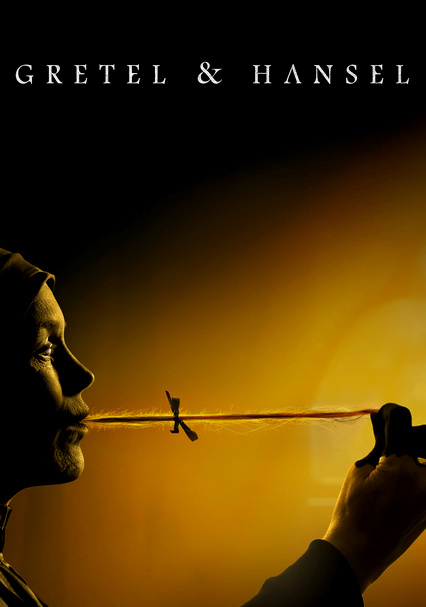
Gretel & Hansel (2020) is not a film with a plot that makes complete sense, but in this instance, that’s okay, making the experience creepier with the wonderful trimmings provided.

A horror film released in January has the cards stacked against it – most studios use the first quarter as a dumping ground for films with little box-office hope or much fanfare.

Predictably, the movie flopped, but it’s a diamond in the rough.

For fans of horror post-2010, this film immediately reminded me of The Witch, the 2015 independent film, and the directorial debut of Robert Eggers.

The slow pacing and assumed seventeenth-century remote village setting are an instant comparison. The dark sets and candle-lit scenes captivated me with their striking ambiance.

With exceptional cinematography, eerie lighting, and the prominent Brothers Grimm fairy tale theme, always a plus in horror, who cares if the t’s are all crossed. The elements supersede the story, though with a witch and two children at play, I was immediately hooked.

The follow-through is crooked and confusing, lacking a clear conclusion. Expect to be perplexed by the ending.

We are provided a quick story of a little girl wearing a pink dress who frightens the village with her special powers. Because she nearly died as a baby and was taken to an enchantress who saved her life, she has a unique history.

She makes her father commit suicide and causes other deaths, so she is taken to the middle of the forest to fend for herself or starve. She manages to find her way and makes the other children die.

Pay close attention because this story will tie into the end of the film.

In present times, we meet Gretel (Sophia Lillis) and Hansel (Sam Leakey). Gretel is sixteen years old, while Hansel is eight. Their mother goes mad, and they are forced to provide for themselves as they hit the road.

Gretel is both drawn to and fascinated by the story of the girl in the pink dress.

They eventually stumble upon a cabin with tons of lovely food, which they hungrily devour. A mysterious woman named Holda/The Witch (Alice Krige) takes them in, but is there a price the children must pay for the riches they enjoy?

Unclear is where the film is set. Is it Germany, where the folklore is derived? Is it supposed to be in the United States? The actors have American accents.

It was shot in Ireland, but this hardly matters. It’s a village and a forest in a land of anywhere, though I fantasized the setting was a northern country like Norway or Finland. Maybe the ambiguity is a good thing.

I like how Gretel & Hansel has a feminist vibe, and the perspective is from her point of view. That is why her character is older, hence the title. She is a coming-of-age teenager, so there is a more measured approach. Gretel even has a short pixie cut, almost boyish herself, giving the character a more modern look.

This serves the film well, adding an interesting take on the classic fairy tale.

There’s also a weird mommy theme played out in two different stories that end up connecting. Gretel and Hansel’s mothers are psychotic, while Holda is revealed to be a mother herself and harbors a deep secret about what she does with children who wander into her house.

Spoiler alert- it isn’t good.

The acting is outstanding, especially on the part of Sophia Lillis as Gretel and Alice Krige as Holda.

Lillis, an up-and-coming star after appearing in It (2017) and It: Chapter II (2019), is a talented commodity, while Krige gives Holda a ghastly and convincing persona. She is ambivalent, and we mostly don’t know what to make of her or what her intentions are. Lillis and Krige have delightful chemistry.

The cretins that the children meet along their journey to anywhere are worthy of any devilish story. A creepy gentleman who Gretel intends to cook and clean for to make money eyes her greedily and asks about her virginity. A bald, wailing monster chases Gretel & Hansel but is shot by a stranger.

Anyone with a hankering for a good, old-fashioned, ghostly, gothic horror film, Gretel & Hansel (2020) is a recommended watch.

The film boasts a hearty mix of horror elements, including eeriness, dark sets with illuminating lighting, and forbidding sequences in the forest, all set against a nice production design.

It may leave you scratching your head, but enjoy the ride.

Psychomania-1973

Psychomania-1973

Director Don Sharp

Starring Nicky Henson, Mary Larkin, George Sanders

Scott’s Review #1,084

Reviewed November 19, 2020

Grade: B-

Psychomania (1973) is a film that has an intriguing premise, but it becomes messy and confusing because elements don’t come together.

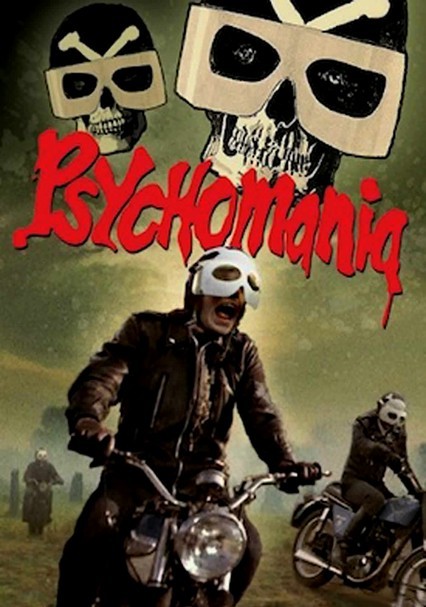
A motorcycle gang wreaking havoc on their English small town decides to kill themselves and come back from the dead to live forever. They intend to do so with the aid of witchcraft and a sinister cult.

Unfortunately, neither the gang comes back to everlasting life nor does the premise provide an adequate payoff. The film meanders along without much intrigue or interest except for an above-average finale.

But even that is too little, too late.

Renowned film and television actor George Sanders, famous for powerful roles in classics like Rebecca (1940) and All About Eve (1950), in which he won an Academy Award, and numerous other roles, co-stars as a butler.

His role in Psychomania is barely more than a throwaway part since he does not have much to do. Hardly the crowning achievement of his long career, he committed suicide soon after the shooting wrapped.

Star, Nicky Henson joked that Sanders saw the finished film and overdosed on pills, realizing how far his career had descended. Hopefully, that’s an urban legend.

Beryl Reid, wonderfully bitchy in The Killing of Sister George (1968) as a lesbian soap opera star, is similarly downgraded, playing a glamorous matron who gets her kicks by holding seances for her neighbors.

She is the mother of the psychopathic leader of a violent teen gang.

Tom Latham (Henson) is the handsome leader of “The Living Dead,” a motorcycle gang that enjoys driving around town intimidating folks. He is joined by his pretty girlfriend, Abby (Mary Larkin), who is good-natured and less rebellious than the others.

Tom has time to flirt with other girls and uses his good looks to his advantage. He is in cahoots with his mother (Reid), and they have a penchant for frogs and black magic.

The gang decides, through Tom’s encouragement, to commit suicide, and if they believe in it, they will return as one of the “undead”.

Each follows suit, except for Abby, and engages in ritualistic activities at their hangout, “The Seven Witches”, which is a poor man’s Stonehenge. They decide to kill Abby because of her defiance.

The DVD quality (mine anyway) was atrocious and did the film no favors. My enjoyment would have increased if the luscious English landscape and its vibrant colors could have been capitalized on.

Mrs. Latham’s home, filled with creative antiques and oddities, would have been enhanced by higher-quality pieces.

The story never comes together. I like the main character, Tom, and find his sneering and posturing appealing in a light-hearted way. Henson is way too good-looking to be believable as a foreboding and crazy guy, but he sure is easy on the eyes.

No chemistry is to be found between him and Larkin, but they are cast well for this type of film- looks like overacting talent. Neither is terrible in the acting department nor great either.

The supporting characters look very British and of the 1970s, which is to be expected. This isn’t an annoyance as much as an astute observation. From the doctors who perform the autopsies to the constables, to the chief inspector, everyone looks their part.

Psychomania has a 1970s look and feel, so it ultimately feels dated because there is not much else to distinguish it from other films.

It’s adequate, but not much more.

On the positive, some of the music is chirpy and hip, which adds a bit of an upbeat, contemporary vibe. The numerous motorcycle scenes make me wonder whether a motorcycle company has a stake in the film, but surprisingly, it works.

The film, targeted as a horror film, is a strange one to categorize. The cult and witchcraft elements give off that vibe. The title of Psychomania (1973) creates a motorcycle/horror effect.

I’m not sure what to make of this film other than a sleazy, greasy, devil-worshipping mess. Poor Don Sharp, well-known for directing many Hammer horror films, seems not to know what to do with the silly script he is handed.

Is it a goofy comedy or straight-ahead horror?

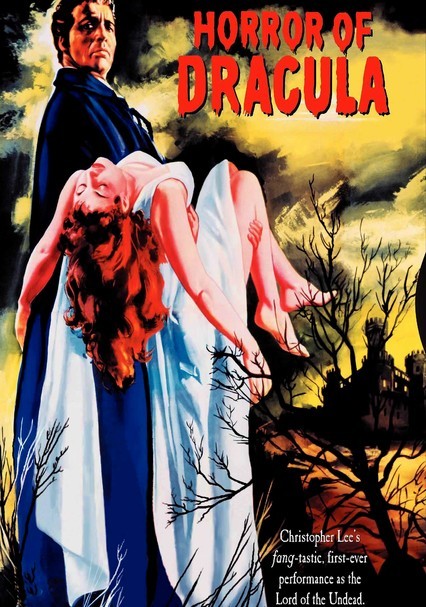
Horror of Dracula-1958

Horror of Dracula-1958

Director Terence Fisher

Starring Peter Cushing, Christopher Lee

Scott’s Review #1,083

Reviewed November 17, 2020

Grade: B+

The first colorized retelling of the classic vampire film starring Bela Lugosi from 1931, Horror of Dracula (1958) infuses style and a modern feel into the production making it a formidable entry compared to the original.

The film launched the popular and delightful British Hammer Horror film series, which included eight Dracula sequels.

British horror films nearly always add macabre elements and a British sophistication that merges class with gothic. For maximum effect, they are perfect late-night watches during the Halloween season.

The atmospheric tone is key and will delight horror fans. The addition of horror stalwarts Peter Cushing and Christopher Lee enhances the pleasures.

On a gloomy night in 1885, a librarian named Jonathan Harker (John Van Eyssen) arrives at Count Dracula’s castle in Romania to begin his new assignment.

Secretly a vampire hunter, he is bitten by a desperate woman, really a vampire, begging for help. Jonathan manages to kill the woman but is then killed by Dracula (Lee). Doctor Van Helsing (Cushing) arrives at the castle to investigate, but Dracula already has designs on Jonathan’s fiancée, Lucy (Carol Marsh).

A battle of good versus evil ensues.

Lee brings sexuality to Dracula, which Lugosi lacks, though Lugosi is the creepier of the two. I love the close-up scenes where Dracula bears his enormous fangs and his eyes turn red in a good close-up style.

The casting of Lee is perfect as he becomes identifiable even in the first installment. I also love how Lee is tall, giving the character a menacing, foreboding, distinguished look.

Many might secretly welcome him nibbling on their necks!

Cushing, later to be cast as the villain, is terrific as the empathetic Van Helsing. Lee and Cushing play well against each other. Van Helsing is stoic and confident as he smoothly leads the charge against Dracula and guides Jonathan’s loved ones into unchartered and unimaginable territory. It’s almost as if he has been through this before.

A great scene occurs when Van Helsing arrives in town for a brandy and a drink at the local pub. Its inhabitants are suspicious and frightened, draping garlic over the entryway and hoping he will leave soon.

The best part of House of Dracula is the atmosphere we are treated to, and the color razzles dazzle. The story is good, but the texture powerfully shines through.

Careful not to be too showy, director Terence Fisher, soon to be a Hammer horror prominent fixture, uses his limited budget to his advantage in clever form.

Fisher realized his project was a colorized version and created a polished-looking, colorful stained glass window, which is prevalent in several scenes. Dracula’s castle, especially the bedroom where Jonathan stayed, is part cozy and homespun, part gothic and chilling. The cellar crypt is equally vast yet confining, as the open coffins reveal who lies in them.

The plethora of books elicits a cerebral feeling.

The finale is well done but not as spectacular as expected. Other parts are better. Van Helsing chases Dracula in a race against the sunrise, ripping curtains down to provide harsh light and turning Dracula to dust.

I was expecting a little more and more blood or a good stake through the heart. Fortunately, that entertainment was provided earlier in the film.

Having never read the 1897 Gothic horror novel by Bram Stroker (it’s on my list!), the film is pretty on target.

The film bestows creepy elements and sexuality with great color, lighting, and set design. The lesson learned is that a hefty budget and CGI can’t replicate the creative design and sound effects.

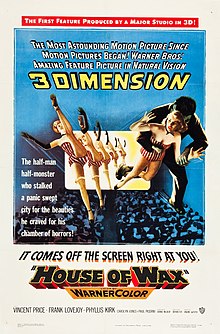
House of Wax-1953

House of Wax-1953

Director Andre De Toth

Starring Vincent Price, Phyllis Kirk

Scott’s Review #1,081

Reviewed November 13, 2020

Grade: B+

House of Wax (1953) is a classic horror film that should be seen by anyone who enjoys the genre. Its macabre elements make it a must-see.

Be sure to watch the 1953 version, not the mediocre 2005 remake that starred Paris Hilton with a severely changed storyline.

Interestingly, the 1950s version is a remake of the 1933 film Mystery of the Wax Museum, which I was unaware of until recently.

Pre-code 1930s horror is brilliant, so I cannot wait to watch this offering soon.

The production has the honor of being the first color 3-D film released by a major film studio, and the result is stylish and impressive for that early stage of cinema. If this isn’t enough, Vincent Price also stars.

With these riches, one could anticipate a masterpiece like Frankenstein (1931) or King Kong (1933). It’s not entirely on that level with a B-movie vibe that rises immensely in respectability with exquisite human art, a chilling premise, and a lesson about historical figures of long ago.

The film is a very short eighty-eight minutes.

The haunting and atmospheric opening titles immediately showcase the 3-D appearance in the first shot alongside a rainy and dreary New York City set in the early 1900s.

Director Andre De Toth confirms to his audience that it’s a 3-D film with the bold title leaping out of the screen within seconds. This sets the tone perfectly as the illustrious wax museum set is up next.

Wax creations like Marie Antoinette, John Wilkes Booth, and Joan of Arc pose in the vast gallery.

Henry Jarrod (Price) is a Professor who views his creations as his children, each unique and human-like to him. Marie is his ultimate masterpiece, and one wonders if she is his fantasy wife. His business partner, Burke (Roy Roberts), wants out of their partnership and takes drastic measures to gain insurance money. He sets fire to the museum, which burns to the ground, horribly disfiguring Henry.

The Professor goes off the deep end and rebuilds the museum using real human beings that he steals from the morgue! Frankenstein’s influence is evident.

Besides Price, the star is the wax museum, almost a character, but never upstages Price. Henry is sympathetic and menacing, and I felt sorry for the guy. Not only is his house of wax destroyed, but he has a disfigured face for life. His insurance policy benefit is of little comfort, nor is killing the man responsible for his misfortune.

We should root for the main couple, Sue Allen (Phyllis Kirk) and Scott Andrews (Paul Picerni), and attempt to understand why the wax figures look like dead people they know.

They are not the most substantial element of the film, though. Like other famous horror villains, Norman Bates and Hannibal Lecter, Henry is appealing, and we like him.

I would have liked to learn more about Henry before his ruination. Besides a brief tour of his museum, where he cleverly describes each work, we don’t know much about his life. He is creepy, but what else? Has he ever married? What are his parents like?

Charles Bronson and Carolyn Jones have minor roles as Henry’s mute assistant, Igor, and Burke’s gold-digging girlfriend, Cathy, respectively. This is fun since both went on to legendary careers in film and television.

A must-see for anyone studying cinematic technique or good horror trimmings, House of Wax (1953) contains state-of-the-art effects for the time, illuminating gas-lit streets of New York City, and a finale that includes a boiling hot vat of molten wax (what else!) that inspired a James Bond film.

These facets are lovely, but any horror film starring Vincent Price is worth the price of admission.

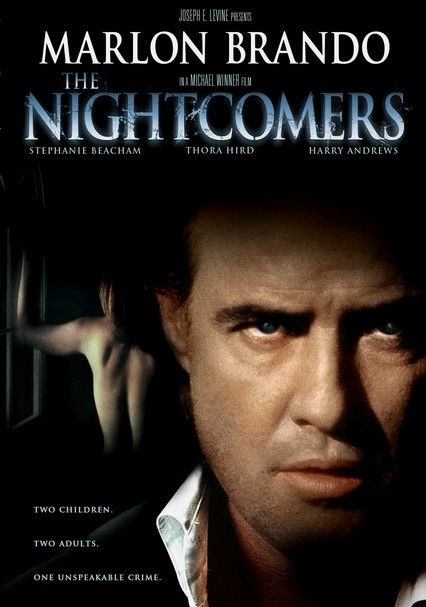
The Nightcomers-1972

The Nightcomers-1972

Director Michael Winner

Starring Marlon Brando, Stephanie Beacham

Scott’s Review #1,080

Reviewed November 11, 2020

Grade: B-

The Nightcomers (1972) is a disappointing prequel to Henry James’ 1898 novella The Turn of the Screw, which had already been adapted into the 1961 film The Innocents.

The dreadful title is neither catchy nor specific to the film. The lackluster and unmemorable result is jarring, given the masterpiece that is The Innocents.

It’s unclear whether the intention was to build on the film or to base it directly on the novella, forgetting The Innocents.

It’s not worth the effort to ruminate over the answer.

The most interesting comparison is that the film was released the same year as The Godfather (1972), in which the iconic role of Vito Corleone, the mafia head of household, and arguably the best role of Marlon Brando’s career, was created.

Mirrored against his role as a bizarre gardener named Peter Quint, with a broken Irish accent, one can guess why one role is memorable and why the other isn’t.

Flora (Verna Harvey) and Miles (Christopher Ellis) are recently orphaned children living in a vast English estate. Their absent guardian pays for the housekeeper, Mrs. Grose (Thora Hird), and governess, Miss Jessel (Stephanie Beacham), to keep things running smoothly.

Jessel and Peter embark on a torrid and sometimes abusive relationship that the children witness and emulate through play-acting. Flora and Miles suffer from isolation and must use their imaginations to make the best of their idle days.

Watching in sequence with The Innocents is not encouraged.

The Nightcomers is best served as a stand-alone product. The events and continuity are muddy and will confuse the most astute viewer.

Flora is much older than she is in The Innocents, even though the action takes place before those events. The characters being played by different actors doesn’t help.

Finally, The Nightcomers contains none of the ghostly mystique and spookiness that The Innocents does. So, it is advisable to put The Innocents out of mind.

Admittedly, events do come together in the final act, which is the best part of the film.

When two deaths occur simultaneously, they are both quite shocking and powerfully filmed. I felt more emotionally invested in the final ten-minute sequence than in the rest of the film.

Brando has one emotional scene worthy of his talents. Given the actor’s powerful chops, he can make any scene believable, but this is the cream of the crop material.

Stephanie Beacham is an okay casting choice, but I never felt the chemistry or connection between Jessel and Quint. Their relationship didn’t work for me.

Suspension of disbelief is required to get through a scene where a character drowns in what looks like two feet of water, making the scene lose some power.

Harvey and Ellis, as the children, are okay, but nothing spectacular. I am jaded, but I compare them again to The Innocents, and those actors are just better and more haunting, especially Miles.

The subject of mental illness and the distinction between reality and imagination is not explored in The Nightcomers.

The production is not a total dud, containing enough exterior elements of the plush and English landscape to please and make viewers feel they are in the country manor themselves.

The interior scenes are just as good. The children gallop through the enormous house to their heart’s delight, making the viewer feel like a kid along with them.

The sadomasochistic scenes between Peter and Miss Jessel are quite titillating and border on the X-rated. During the bedroom scenes, I nearly blushed from embarrassment. But, as erotic as they are, they also don’t do much to further the plot or add to the story.

They have a kinky sex life- so what?

There is also a weird suggestion of incest since Flora and Miles imitate what Quint and Jessel do; how far would they take it? The plot has good potential, but the film and direction aren’t executed well, and things don’t come together.

If you’ve never heard of The Innocents (1961), then The Nightcomers (1972) is recommended.

If viewing a cinematic masterpiece is desired, however, stick with the former and never look back.

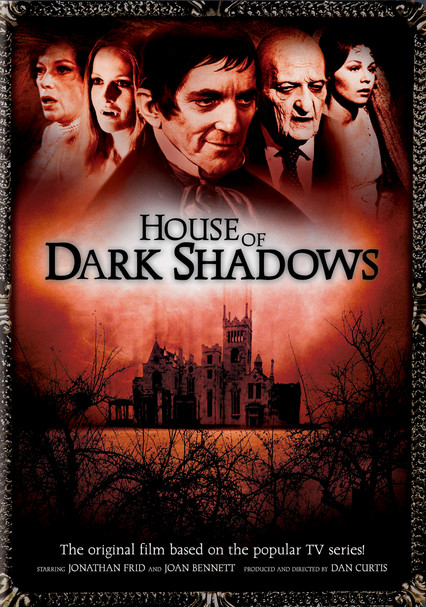
House of Dark Shadows-1970

House of Dark Shadows-1970

Director Dan Curtis

Starring Jonathan Frid, Grayson Hall

Scott’s Review #1,079

Reviewed November 9, 2020

Grade: B

House of Dark Shadows (1970) is undoubtedly intended primarily as a treat for fans of the popular gothic soap opera Dark Shadows, which aired on ABC from 1966 to 1971.

The soap was groundbreaking for its gloominess and its focus on the world of vampires, eliminating the tried-and-true apple-pie wholesomeness of serials like As the World Turns and The Guiding Light.

The film was an enormous hit with fans at the time of release, and while all can enjoy it, it screams of a specific target audience.

Released during the height of the television show’s popularity in 1970, it must have been enthralling to be the first feature film based on a daytime soap opera.

And how exciting for fans to see their favorites on the silver screen. I tried to keep this in mind as I was watching, and it helped me enjoy it more.

In later years, I watched bits of season one, so I have some knowledge.

If memory serves, some of the action happens in both the series and the film (like Barnabas rising from his coffin), but that doesn’t seem necessary and felt more like a recap to me.

The film is entertaining enough on its own merits, in a spooky, atmospheric way, though beyond more blood and chills, it follows the same formula as the series.

Our star, Barnabas Collins (Jonathan Frid), emerges from his coffin in the family mausoleum, much to the chagrin of the family handyman. He introduces himself to the Collins family as a distant cousin from England.

He has an uncanny resemblance to a figure in a portrait displayed at the estate, which is over a hundred years old.

A fancy ball is thrown to celebrate the family, where Barnabas bites Carolyn (Nancy Barrett), turning her into a vampire. He quickly becomes obsessed with governess Maggie (Kathryn Leigh Scott) while awakening the suspicions of psychologist Julia Hoffman (Grayson Hall).

The whole package is stylish and haunting, with plenty of essential goth attire, like coffins, capes, fangs, and blood-red lips. The production style is appealing and not the least bit cheesy or amateurish.

The famous Lyndhurst estate in Tarrytown, New York, was used during the shoot, and with good results. The interior is lavish, and the exterior is just as grand with lush grounds and a hidden driveway, which is helpful in the plot. The eerie attic, with its macabre and stifling trimmings, is vital in one scene.

This works much better than a studio set, and the overall production is superior to the series.

The final thirty minutes or so are the best part, with an astonishing Hammer horror likeness. When Julia gives Barnabas a powerful injection meant to cause him to age rapidly, all hell breaks loose.

You see, while Barnabas is obsessed with Maggie, Julia is secretly in love with Barnabas, so the dramatic soap opera necessities are intact.

The makeup during this sequence is highly effective and downright creepy.

Other characters are likable and respectable in the film, but the acting isn’t great, which reduces believability just a bit. Stalwarts like Joan Bennett as Elizabeth Collins Stoddard, Roger Davis as Jeff Clark, and David Henesy as little David Collins have prominent roles.

It’s an ensemble effort, as each character has a role to play in supporting the main story. This is a nice add-on and gives everyone time to shine.

Regardless of knowledge of the daytime drama series, one can enjoy the film on its own merits, though how exciting it must have been for fans to see their favorites on the silver screen in 1970.

I am not sure how many viewers will need to invest in the film, because it feels like a reward for series viewers and, in the present day, a retro, nostalgic experience.

The series was again celebrated in a film, the mediocre 2012 effort Dark Shadows, starring Johnny Depp.

House of Dark Shadows (1970) is a compelling watch around Halloween time, with nice autumnal, gothic elements that fit the season of the witch.

The ghastly (in a good way) makeup and bloody bites and pretty people turned vampires, suffering from stakes through the heart, is worth the watch.

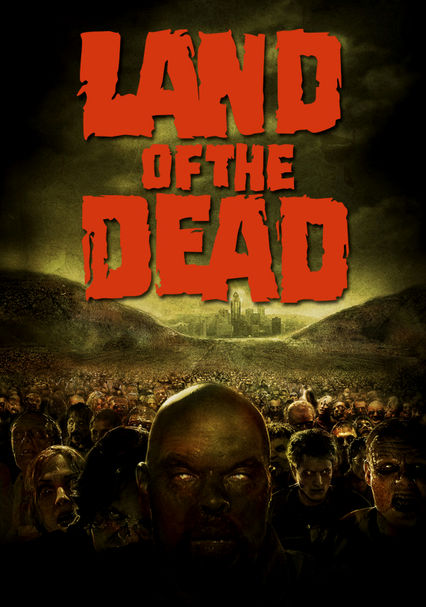
Land of the Dead-2005

Land of the Dead-2005

Director George A. Romero

Starring Simon Baker, John Leguizamo

Scott’s Review #1,077

Reviewed November 6, 2020

Grade: C+

Land of the Dead (2005) is a post-apocalyptic horror film written and directed by George A. Romero, the fourth of Romero’s six Living Dead movies, preceded by Night of the Living Dead (1968), Dawn of the Dead (1978), and Day of the Dead (1985).

The result is a mediocre effort, plagued by poor acting and too much silliness. The goofy nature of the film negates any sense of foreboding or dread despite there being plenty of zombies.

The result is camp over horror instead of a blended mix of both which would have worked better.  To compare Land of the Dead to Night or Dawn is a tough ask since the formers are so much better and have political points to make.

There is nothing like that in Land of the Dead besides a weak side story about the class distinction that goes nowhere, and some jokes about the Bush regime.

That’s a shame because it would have made the film more relevant.

What we are served is a healthy dose of shoot ’em up or slice ’em up scenes where zombie heads or some other appendage are blown or sliced off. This was fun for a while, but I wanted something more.

Wisely, and staying true to the other films, the events are set around Pittsburgh, Pennsylvania which helps with continuity. The geographical reference to the famous “three rivers” immediately identifies the city used.

As events kick off, we learn that the zombie population has outnumbered the human population forcing the humans to barricade themselves within a structured community for safety. There exist the haves who live in a luxury high-rise and the have-nots who survive in squalor.

Dennis Hopper plays the rigid government figure, Paul Kaufman, and our good guy is the handsome Riley Denbo (Simon Baker) who provides aid to those in need.

Conflict erupts when it’s discovered that the zombies exhibit superior intelligence. They storm the gates of the city in droves and wreak havoc on the people of the community.

Other characters along for the ride are Cholo (John Leguizamo), Slack (Asia Argento- yes, daughter of famous horror director Dario Argento), and Charlie (Robert Joy). The rest of the film is a battle between good and evil (the zombies and greedy Paul) and not much else.

Why do zombies exhibit advanced intelligence? Are they cloning or are more humans becoming zombies? These questions are not answered.

Creatively, Land of the Dead looks good. It is stylistic, dark, and mysterious. Scenes, where zombies parade around in misty and gloomy conditions, are cool. The slicker and more commercial style gives a modern and fresh look and feel.

Reminiscent of 28 Days Later, the 2002 offering by Danny Boyle, that’s not a bad thing though it’s tepid for Romero. 28 Days Later rejuvenated the zombie genre so patterning after it doesn’t hurt Land of the Dead.

Another positive is the homoerotic nature of the relationship between Cholo and Mike (Shawn Roberts), a rookie. Both masculine and aggressive, there exists a hint of tenderness and closeness that feels romantic. When Mike is bitten and commits suicide to avoid turning, Cholo is devastated, implying that they might have shared a close background.

Unfortunately, this is never explored after Mike’s death.

On that note, the characters are not particularly interesting or crafted well. Paul is merely bad, while Riley is heroic. Cholo is angry and rebellious, while Slack is a prostitute. Charlie is the sidekick.

Everyone has their place, but little substance is given about their past lives, their hopes for the future, or anything more than escaping the zombies. I get that’s the goal, but more personal stuff would have been better.

The rest is what you would expect from a zombie film and nothing more, which feels lazy of Romero especially since he wrote the screenplay. He tends to deliver better products with some meaning or interpretation.

In Dawn of the Dead, for example, the zombies sought the mall because it was familiar to them. One could argue that a city and its lights offer more of the same, but this feels weak and has already been explored.

I guess I was expecting more of something that would grab me into the world of the film and nothing ever did.

A forgettable affair, Land of the Dead (2005) does not require repeated viewings as its predecessors do. This film was one-and-done for me.

Some trimmings and entertainment exist, but I yearned for more substance than a standard, Saturday late-night zombie-fest. There are enough of those already.

Valerie and Her Week of Wonders-1970

Valerie and Her Week of Wonders-1970

Director Jaromil Jireš

Starring Jaroslava Schallerová

Scott’s Review #1,076

Reviewed October 30, 2020

Grade: B+

One of the oddest films I’ve ever laid eyes on. The best way to view a film like Valerie and Her Week of Wonder (1970) is to absorb it and let it either pull you in or turn you off.

The cadence is to feel the film and then, later, search for any semblance of meaning or interpretation, or perhaps never.

The genre best to categorize the film is art cinema meets fantasy meets horror meets fairy tale. Is it ever a bizarre experience? If one is to take hallucinogens first, this film is a recommended watch.

The production is Czech and is translated to Valerie a týden divů in its native language. 

The story involves a week in the life of Valerie (Jaroslava Schallerová), a girl on the cusp of womanhood, and the weird sexual thoughts and desires she encounters while blossoming. She encounters witchcraft, vampires, and a bizarre Constable, who wears a mask.

Valerie is raised by the strangest grandmother imaginable (Helena Anýžová), who morphs into other characters named Mother and Redhead. Valerie does not live a boring life.

One poster for the film is of a blooming flower with splotches of blood that can be interpreted as a girl losing her virginity.

To delve much further into the plot than a quick summary would is wasteful, because it doesn’t make much sense.

Such activities as Valerie’s grandmother making a pact with vampires to keep her young forever, Valerie lying in a coffin surrounded by rotten apples, being burned at the stake, and finally being followed and menaced by her priest are a few of the shenanigans the film presents.

This is shrouded by some of the loveliest photography and scenery you’ve ever seen.

The creativity and experimental nature of Valerie and Her Week of Wonders will allure an open-eyed viewer seeking something left-of-center… very left-of-center.

The story is secondary.

The medieval landscape is gothic and haunting, perfect for evil-doings and strangeness. Not to harp on this point, but the look of Valerie and Her Week of Wonders is the money shot. All else can be left by the sidelines.

The perspective is all Valerie’s, which is nice in an early 1970s feminist way. It feels like Valerie is changing from a girl to a woman and a strong one at that. She is coming into her own after facing and challenging demons. In the mix is a handsome man who titillates Valerie.

I felt like I was emerging into the girl’s subconscious and experiencing her fears and desires alongside her.

Critically speaking, I would have preferred a little more logic and wrap-up, but that’s just me.

Surely, not a realistic interpretation. Was the girl dreaming while asleep or merely delving into fantasy one day? The more I tried to follow the story and put the pieces together like a puzzle, the less it did me any favors.

I then decided to space out and indulge in the other lovelies included. I should have done this from the beginning.

I am unsure how many Czech films I have seen, if any, but Valerie and Her Week of Wonders (1970) is a clear example of what Czech filmmakers can do, and it’s wild what they can come up with.

The mystique is likely multiplied on American audiences, and a viewer used to more formulaic approaches to film. With a desire for more put-together stories and logic, I nonetheless admired this film for the magic and style it offered.

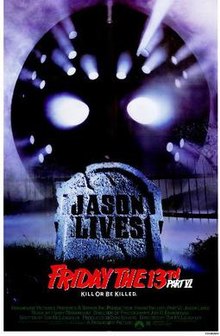
Friday the 13th Part VI: Jason Lives-1986

Friday the 13th Part VI: Jason Lives-1986

Director Tom McLoughlin

Starring Thom Mathews, Jennifer Cooke

Scott’s Review #1,074

Reviewed October 26, 2020

Grade: B-

Due to the fan outrage that surrounded Friday the 13th: A New Beginning (1985), a film I thought was decent, the powers that be decided that a return to form was in order, quickly resurrecting Jason in the corniest of ways.

Re-discovering the “real Jason” is not the worst idea in the world but the execution is not there and I’m not crazy about the introduction of “superhuman” Jason.

How is anyone supposed to ever kill him?

Adding comedy and children is okay with me but both ideas largely fall flat when paired with inadequate acting and gimmicky sitcom situations with no character development. There is no time invested in getting to know any of the characters.

The heavy metal soundtrack, featuring the music of Alice Cooper, is the best part.

The film isn’t helped by a slicker 1980s visual look though this does come with better production values.

Not the greatest of all the Fridays.

The chapter gets off to a compelling start when Tommy (Thom Mathews) and his friend Allen Hawes (Ron Palillo- yes, Horshack from the Welcome Back Kotter television series) trudge through the rain and mud back to Camp Crystal Lake to finally bury Tommy’s demons.

Fans of the series will recall that Tommy did a stint in Pinehurst Halfway House and a pretend Jason went on a killing spree to avenge his son’s death.

The friends dig up the grave of Jason. The murderer is struck by lightning and magically comes back to life, killing Allen. Tommy spends the rest of the film trying to warn the town that Jason is alive and well and back on a deadly rampage.

The camp has been renamed to the more pleasant-sounding Forest Green to make people forget that numerous killings have ever taken place. This seems to have worked as a busload of kids flock to the camp for a summer of fun along with the usual batch of camp counselors in tow.

To the film’s credit, like with its predecessor, there is a black character, this time a counselor named Sissy Baker (Renee Jones), and some of the child characters offer different ethnicities.

The diversity and inclusiveness are to be admired, but unfortunately for Sissy, she is dragged through a window and savagely beheaded.

Jason kindly spares the kids.

I like how there is consistency in keeping the main character Tommy Jarvis, albeit with a different actor. We’ll probably never know why it was decided to recast John Shepherd with Thom Mathews, but the actors look enough alike to avoid too much confusion.

Like Shepherd, Mathews possesses a wounded look which makes the casting adequate.

There is a rooting quality to Tommy especially as he faces adversity with the police department. Sheriff Garris and Deputy Rick are played purely as foils and are a roadblock to capturing Jason.

Any attempt at romantic chemistry between Tommy and Megan (Jennifer Cooke) falls flat because there simply isn’t any between the actors, try as they might. Neither are the best actors in the world (not a requirement for the horror genre) but do have the right, fresh-faced look warranted to be cast.

Megan is the only person who believes Tommy as they race to the camp to stop and kill Jason.

The rest of the film is more of the same and offers no surprises except for more humor. A coked-up pair having sex in a motorhome and a group of corporate types on a paintball outing are examples of this. The four “suits” beheaded by a machete are the best part of the otherwise campy and obnoxious sequence.

The rest of the characters are killed off systematically with nothing especially interesting to add to the film.

Writer and director Tom McLoughlin attempts to revitalize the aging series and genre with more special effects and techniques and does little else to freshen his characters. It would have been nice to get to know some of them better.

By 1986 the slasher film needed rest and Friday the 13th Part VI: Jason Lives is a dull entry in the series catalog.

There is nothing terrible about the film, nor is there anything memorable either.

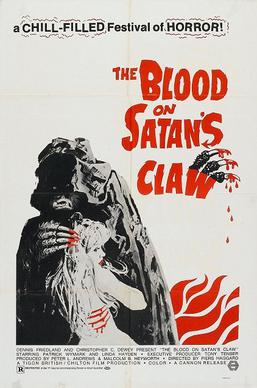
The Blood on Satan’s Claw-1971

The Blood on Satan’s Claw-1971

Director Piers Haggard

Starring Patrick Wymark, Linda Hayden

Scott’s Review #1,050

Reviewed August 7, 2020

Grade: B

I am always up for a good British horror film, with a creepy musical score, satanic elements, and eclectic, good actors. Especially embraceable are offerings from the late 1960s and early 1970s.

The Blood on Satan’s Claw (1971), also released as Satan’s Skin, is very reminiscent of both Witchfinder General (1968) and The Wicker Man (1973), the three often lumped together in a small, brief sub-genre termed folk horror.

The film is not high art, nor is it intended to be. Taking itself too seriously would ruin the experience.

Instead, a gruesome, low-budget offering is just what the doctor ordered for late-night sipping, cocktails, or your preferred enlightenment or sedative.

The elements are all there- thunder and lightning, a perfect score, and the English countryside.

The Blood on Satan’s Claw would have been dynamite if the choice to cast horror legend Peter Cushing or Christopher Lee had come to fruition, but Cushing’s wife was dying of cancer, and Lee wanted too high a salary, or so the story goes.

Anyway, Patrick Wymark was awarded the lead role of a village judge. The actor had a penchant for booze and had to be watched closely.

Sadly, he died soon after filming wrapped.

Those expecting a concise plot will be disappointed. Reportedly, the script was changed repeatedly in a dizzying fashion before filming commenced. Some plot points and characters are introduced only to be unceremoniously dropped or forgotten.

Little wonder why the story confused me to no end.

Many characters have strange reaction shots as if they are reacting to different scenes. No matter, though, the film is a good time despite the inconsistencies.

In a nutshell, a cute plowman Ralph (Barry Andrews) uncovers a hideously deformed skull with one gouging eye and strange fur. When he reports his findings to the local judge (Wymark), the judge is skeptical, especially when the skull disappears before he lays eyes on it.

The village and its inhabitants quickly succumb to a group of teenage devil-worshipers led by beautiful but fiendish Angel Blake (Linda Hayden), who begins to perform blood sacrifices to bring the skull back to life.

Director Piers Haggard, who also wrote some of the script with Robert Wynne-Simmons, does a great job of adding the right elements to create a satisfactory mood.

The ancient setting of early-eighteenth-century England is always a juicy horror add-on, since the unfamiliar time lends it mystique.

The cinematography is gorgeous with lavish fields and stone buildings. I could have done without the laughably bad wigs the male actors were forced to wear, though.

Hayden is the standout for me.

A dead ringer for The Brady Bunch’s Maureen McCormick, only British, mixes deadly with beautiful in an underappreciated role. The actress was at the time a sex symbol, appearing in other horror films such as Taste the Blood of Dracula (1970) and Vampira (1974).

As the teenage ringleader, her best scene is when she serves as a temptress to the local Reverend (Anthony Ainley). She seductively disrobes and confidently walks over to the intimidated man, offering full-frontal nudity and the obvious daydreams of schoolboys everywhere.

Those not turned off by witch hunts, devil fur shavings, or characters sawing off their limbs will find The Blood on Satan’s Claw (1971) a real treat.

The film will please those classic horror fans expecting what the expected is in British horror which is a good thing. The demonic and religious trimmings mix well with a cast that is classically trained with most appearing in similarly themed horror films.

The story is weak and haphazard but the film is recommended to just enjoy the moment with.

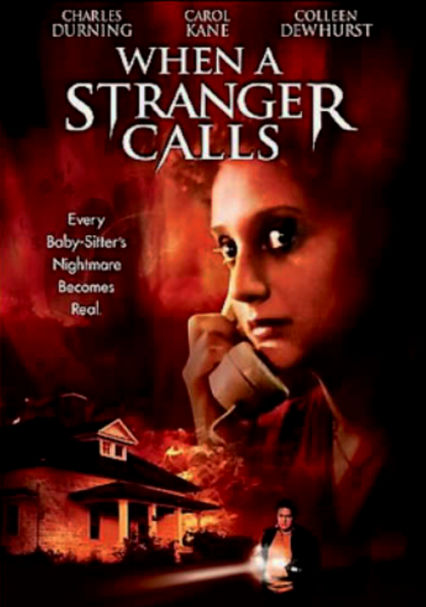
When a Stranger Calls-1979

When a Stranger Calls-1979

Director Fred Walton

Starring Charles Durning, Carol Kane, Tony Beckley

Scott’s Review #1,046

Reviewed July 29, 2020

Grade: B+

When a Stranger Calls (1979) has the great honor of possessing one of the most frightening twenty minutes in horror film history, kicking the daylights out of the stunned and transfixed viewer from the first frame.

While still a very good film, the pacing slows down and changes into a different kind of film before kicking back into high- gear again for the final twenty minutes of action.

This results in some imbalance and imperfections throughout.

Carol Kane, Tony Beckley, and Colleen Dewhurst make the film as good as it is and are the standouts for me.

Teenage babysitter Jill Johnson (Carol Kane) calmly walks through an affluent California neighborhood for a quiet evening of watching two children. The doctor and his wife are embarking on a night of dinner and a movie and the children will be no trouble, Jill is told since they are recovering from colds and are already fast asleep in their beds.

Shortly after they leave, Jill begins to receive odd phone calls from a man simply asking, “Have you checked the children”? At first, assumed to be a practical joke, the calls become more menacing prompting Jill to get the police involved.

Now terrified, Jill is told by the alarmed police to calmly get out of the house because the calls she is receiving are coming from inside the house!

She flees and is met head-on by Detective John Clifford (Charles Durning), who apprehends an English merchant seaman named Curt Duncan (Tony Beckley), who has ripped the children to shreds with his bare hands.

He is subsequently sent to asylum only to escape seven years later prompting Clifford to hunt him down like an animal.

The film is sectioned into two segments and multiple genres. The beginning and conclusion are standard horror sequences while the guts of the film delve into a psychological thriller or crime drama territory with similarities to Dirty Harry (1971).

Clifford spends much of his time trying to track down Duncan in a cat-and-mouse game throughout Los Angeles. Colleen Dewhurst plays a middle-aged woman who catches the eye of Duncan one night in a seedy downtown nightclub.

Director, Fred Walton, makes Clifford a hard-edged, grizzled detective who has seen it all and has no mercy for Duncan, intent on killing him rather than capturing him. Durning is not the best part of the film and the role might have been cast with a more charismatic actor.

Perplexing is what Duncan’s motivation is for killing other than simply being crazy which is not a good enough explanation. Was he abused as a child? During some scenes, he is sympathetic, more like a wounded child than a crazed killer.

He simply wants a friend, whereas Clifford, the good guy, is sometimes unsympathetic and tough to root for.

With “deer caught in headlight’s eyes” expressions and emotions, Kane’s Jill is brilliant at using her eyes to great benefit. The audience feels her peril, fear, and panic during her scenes. When Duncan resurfaces looking for her again (though it’s not clear why he obsesses over her), her nice life, two children, and husband’s lives are all placed in jeopardy.

Dewhurst, who could have easily been cast as the lead in Gloria (1980) is tough as nails and no-nonsense, though she does feel sympathy and some attraction for Duncan.

In 1996, when Scream was released and provided the oomph that the horror genre desperately needed, thanks were justifiably given to When a Stranger Calls for its mighty influence.

The first twelve minutes of Scream are a direct homage to this film when a stranger calls (pun intended!) and the leading lady’s life spirals out of control due to a phone call and a menacing voice.

Parts of the opening sequence are influenced by Black Christmas (1974) a brilliant horror film instrumental in the making of so many others. The revelation that the killer is inside the house is a plot device that remains scary and satisfying.

Offering a cross-genre approach that works best with the terrifying horror elements, When a Stranger Calls (1979) is a sometimes terrific and sometimes an uneven picture.

Thanks to compelling acting, the slowed-down middle portion does not ruin the entire experience, but what an erupting and memorable beginning and end.

Followed by an unsuccessful sequel and an even more disappointing remake in 2006.

Ready or Not-2019

Ready or Not-2019

Director Tyler Gillett, Matt Bettinelli-Olpin

Starring Samara Weaving, Adam Brody

Scott’s Review #1,040

Reviewed July 16, 2020

Grade: B+

A hybrid of dark comedy, horror, and whodunit, Ready or Not (2019) is a splatter of a good time.

Witty and macabre, the film is patterned after Knives Out (2019), Clue (1985), and the television series Riverdale, with a dash of Kill Bill Volume 1 and 2 (2003-2004) peppered in for good measure.

The results are fantastic, gory, and fun, and the pacing is on point. The best aspect is the unpredictability factor, as the conclusion cannot be drawn, and the audience willingly plunges along for a thrilling ride, eager to see what happens next.

The film begins with a mysterious flashback.

A young boy living in a vast mansion is confronted by an injured man begging for help. The boy cries out for his family, who shoots the man dead.

Decades later, happier events transpire as Alex (Mark O’Brien) and Grace (Samara Weaving) enjoy a lavish wedding at the Le Domas family estate.

Alex’s family is extremely wealthy, and he asks Grace if she is certain she wants to join the family. Why wouldn’t she welcome a life of pampering and all the money she can imagine? She readily tells Alex that, yes, she is sure she wants to marry him.

After the wedding, Alex and Grace are summoned by the family to partake in a game, a family tradition. Grace will choose a card, and everyone will play that game.

When Grace chooses the Hide-and-Seek card, the reactions are morose. When she gleefully trots off at midnight to hide, she assumes it is an innocent game.

She quickly realizes that the family is determined to kill her as part of an ancient legend involving a deal to keep the family money secure. Grace spends the night being pursued by members of the family while the household staff is accidentally killed off.

Being a horror film, the rosy start to the movie (the wedding) is delicious and short-lived, as any fan of the horror genre knows that dreary events are soon in store. The fun is waiting for the other shoe to drop and the body count to begin rising.

Ready or Not succeeds most when Grace is being pursued, and when she emerges from the dumb waiter, thinking she will give up the game and enjoy a good night’s sleep, the scenes are spectacular. A house-nanny is shot by a doltish family member who mistakes her for Grace, cowering behind a bed.

At that moment the bride realizes she is screwed.

The final thirty minutes of Ready or Not take a different turn as victimized Grace turns into revenge-seeking Grace. Think Carrie White at the prom after being soaked with pig blood.

As Grace lumbers through the mansion in her blood-streaked white gown, happy to kill any one of the filthy rich family members, she has the most fun pummeling Alex’s mother, Becky Le Domas (Andie MacDowell), to death with a box, which he gets to witness.

Revenge Grace is like Uma Thurman’s The Bride in the Kill Bill double-feature.

Released the same year as Knives Out (2019), both films portray the wealthy characters similarly, rendering them as shallow and unlikable as humanly possible. Insipid, money-hungry, and impolite, they treat each other as badly as those considered beneath them.

Daniel (Adam Brody), may turn out to be Grace’s knight in shining armor but can he be trusted? Can Alex?

Snippets of the 1985 comedy Clue emerge as secret passageways are revealed, and one death is reminiscent of the singing telegram girl’s death, as the character leaps into the room only to be instantly killed. It’s a fun scene and not too seriously intended, which makes it enjoyable.

The gothic nature of the series Riverdale also comes into play with the modern trimmings and dark ambiance.

Ready or Not (2019) successfully produces what it intends to—an entertaining, cleverly written horror yarn. With a clear feminist stance and oozing with wealth and glamour, the rich people are horrible and ultimately get what they deserve.

This is satisfying to the viewer despite the silly motivations of the family.

Played for laughs, the film doesn’t take itself too seriously despite a subdued lesson in overindulgence and entitlement—a crackling, fun late-night offering.

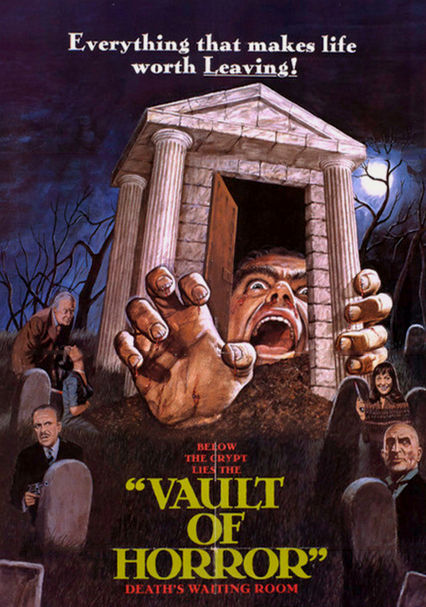
Vault of Horror-1973

Vault of Horror-1973

Director Roy Ward Baker

Starring Curd Jürgens, Daniel Massey

Scott’s Review #1,038

Reviewed June 26, 2020

Grade: A-

Horror anthologies are usually a treat and a nostalgic reminder of childhood afternoons watching Twilight Zone reruns on television.

This is hardly much of a stretch since Vault of Horror (1973) is a British anthology based on Tales from the Crypt (1972), which in turn was based on stories from the EC Comics series.

Each chapter is superior storytelling, providing bloodthirsty horror viewers with suspense, adventure, and surprise endings.

Below is a summary, review, and rating of each vignette.

Framing Story- A

Events get off to an intriguing start as, one by one, five businessmen enter an elevator in a corporate office in downtown London. They are taken to the basement level, though none of them has pressed that floor, and emerge to find a gentlemen’s club.

With no way to get back onto the elevator, they begin to drink, each discussing a recurring nightmare.

This segment immediately grasps the viewer as we ponder questions. Is someone holding the men there for a reason, who is behind it, and why? Are the men’s nightmares only nightmares, or are they revealing deeper secrets?

Midnight Mess- A

Harold Rodgers (Daniel Massey) is a suave, well-dressed man who tracks down his missing sister Donna (real-life sister, Anna Massey!) in a peculiar village. He fiendishly kills her to acquire her share of their father’s inheritance.

Working up an appetite, he dines at a local restaurant that serves blood soup and blood clots as the main course. Sophisticated vampires inhabit the village, and his sister is one of them!

This vignette is my favorite because the restaurant decor is warm and toasty, the village provides a stylish ambiance, and the writing is clever throughout. The bloody feast the eatery serves is a devilish delight in macabre humor.

And the fangs are great.

The Neat Job- A

Arthur Critchit (Terry-Thomas) is an elegant man suffering from obsessive-compulsive disorder. He is married to Eleanor (Glynis Johns), a trophy wife, who, despite wanting to please her husband, is a lousy housekeeper.

Constantly criticized for being incompetent, Eleanor loses it and kills Arthur with a hammer. She proudly cuts him to bits and stores his remains in glass jars, all neatly labeled.

This story is simply delicious, offering elegant British furniture to salivate over and macabre, witty comedy as the viewer eagerly anticipates what Eleanor will do when she finally snaps, and we know she will snap.

Bravo!

The Trick’ll Kill You- A-

Sebastian (Curd Jürgens) is a magician on holiday in India, where he and his wife Inez (Dawn Addams) are searching for new tricks for their act.

Frustrated, they encounter a girl charming a rope out of a basket with a flute. The couple persuades her to come to their hotel room, where they murder her and steal the enchanted rope. They gleefully plot how to incorporate the rope into their act, assuring them of riches.

Inez experiments with climbing the rope only to disappear with a scream. An ominous patch of blood appears on the ceiling, and the rope coils around Sebastian’s neck and hangs him. Their smirking victim reappears alive in the bazaar.

This vignette provides a good glimpse of the Far East and is culturally outstanding. The story is compelling, though a letdown from the earlier entries.

Bargain in Death- B+

Maitland (Michael Craig) is buried alive as part of an insurance scam concocted with his friend Alex (Edward Judd). They each plan to double-cross and kill the other to get the money.

Two trainee doctors bribe a gravedigger to dig up a corpse to help with their studies. When Maitland’s coffin is opened, he jumps up gasping for air, and the gravedigger kills him. At the same time, Alex’s car crashes into a tree, and he dies.

In humorous comedy, when trying to close the sale of the corpse, the gravedigger apologizes to the doctors for the damage to the head.

This segment is more comical than the others, and a nice aside is that the trainee doctors are named Tom and Jerry. The plot is a bit convoluted and doesn’t succeed as much as the other stories.

Drawn and Quartered- A

Moore (Tom Baker) is a struggling painter living in Haiti. When he learns that his paintings have been sold for high prices by art dealers after being praised by a critic, he goes to a voodoo priest for help in exacting revenge.

He is instructed that whatever he paints or draws can be harmed by damaging its image.

Returning to London, Moore paints portraits of the three men who cheated him and mutilates the paintings to exact his revenge. After the displays, his portrait, each one, including Moore, suffers an agonizing experience.

This story is top-notch, and the loss of the eyes and the hands is the highlight of the fun.

As the film wraps up, we learn the mysterious puzzle involving the five men satisfyingly.

Vault of Horror (1973) is a horror anthology that hardly disappoints. I am eager to watch this one again, which is a major achievement for a cinematic offering to have on a viewer.

Night of the Demon-1957

Night of the Demon-1957

Director Jacques Tourneur 

Starring Dana Andrews, Peggy Cummins

Scott’s Review #1,037

Reviewed June 25, 2020

Grade: B+

There is something very soothing about 1950’s British horror films. Whether it’s the intelligence, the accents, or the elements, they differ from American horror films of the decade.

Arguably, they are just better. The horror genre, which has existed in cinema for decades, creates a clever story about a curse.

Night of the Demon (1957) has excellent visual effects and effective black-and-white cinematography, which makes the look work well. That said, the hype surrounding this film as one of the greatest horror films is unwarranted.

When I think of the greatest of all horror films, selections such as Halloween (1978), The Shining (1980), and Rosemary’s Baby (1968) come to the forefront on the American front, while Peeping Tom (1960) and Frenzy (1972) must be mentioned as for British films.

Night of the Demon, while above-average and has risen to prominence and rediscovery as a cult classic, doesn’t ultimately deliver the goods.

To provide a bit of contextual background, the film was plagued with issues and differences of opinion that are plausible proof of messiness upon dissection.

The original ninety-five-minute British feature was trimmed to eighty-three minutes and retitled Curse of the Demon for the United States market. It played there in 1958 as the second half of a double feature.

Additionally, the director and producer disputed whether to show the creature on-screen. The producer edited footage before release, which resulted in continuity issues.

Night of the Demon is the pure British version.

Dana Andrews, best known for The Best Years of Our Lives in 1946, stars as Doctor John Holden, an American psychology professor who visits Britain to attend a conference led by the deceased Professor Harrington.

Harrington is killed by electrocution after seeing a creature emerge from the trees. His niece Joanna (Peggy Cummins) also arrives to attend her uncle’s funeral and teams with Holden to determine a connection between Harrington and satanic cultist Dr. Julian Karswell (Niall MacGinnis). The cultist lives with his mother in a lavish, stately manner. 

Let’s outline what works best in Night of the Demon.

The visual aspects are superb and deserving of accolades. During a party at the Karswell home, the cultist wills a swirling windstorm to develop that is as frightening as it is realistic.

I wonder whether Alfred Hitchcock studied this scene as a similar one in The Birds (1963), in which the female star shuffles a group of children at a party in danger. The scene is professional and authentic.

The climax, amid a dark train track, is one of the best. The ambiance is frightful and well-paced, just what a finale to a film is supposed to be. Karswell, eventually followed by a piece of parchment with runic writing on it, supposedly part of an ancient curse, is terrifying.

It’s like he is being chased and pursued. Holden can pass the curse (meant for him) back to Karswell, who is inevitably ripped to ribbons by a speeding train. Why is a scene of peril amid a train always so compelling? The sense of adventure, dread, horror, and the macabre all reconvene in this crucial scene.

Naturally, the creature reappears.

The romance between Holden and Joanna is mediocre at best and unnecessary to the main plot. It’s as if someone decided a romance between the male and female principles was needed, and Holden and Joanna were it.

There is little chemistry, nor does the duo need to be romantically intertwined- it serves little purpose other than providing a reason to sleuth together. The decision seems more like a measure of the cinematic tradition of that time than any actual story purpose. It’s not an irritant, nor is it a positive.

The creature is not scary, and the film would have been better leaving it out. Sometimes, especially in horror, what is not seen is more terrifying than what is seen. The creature is preliminary and amateurish at best and provides no fright value. It appears to be made of clay or plastic.

Night of the Demon (1957) is a horror film I would like to see again and perhaps study more deeply. Its rich special effects and outstanding black-and-white cinematography enhance the visual treats.

The story of an ancient curse and a riveting speeding train climax that would make Hitchcock take notice are praiseworthy. But I still do not understand the categorization of the greatest of the horror greats.

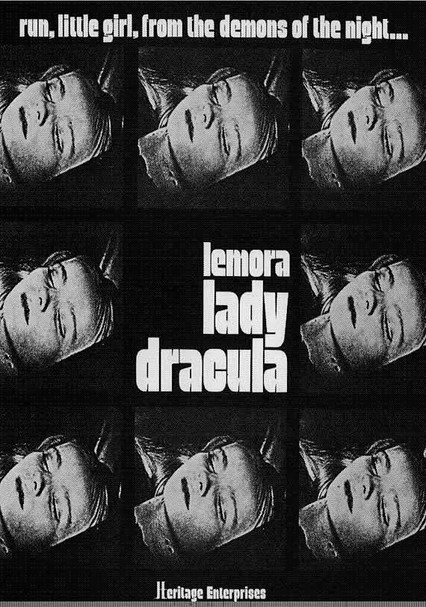
Lemora: A Child’s Tale of the Supernatural-1973

Lemora: A Child’s Tale of the Supernatural-1973

Director Richard Blackburn

Starring Cheryl Smith, Leslie Gilb

Scott’s Review #1,036

Reviewed June 22, 2020

Grade: A-

Lemora: A Child’s Tale of the Supernatural (1973) is a bizarre and fascinating horror film and a great example of 1970s experimental cinema.

At the risk of stating that there may be a tad too much exploration going on, since aspects go in many directions, the film is the perfect watch for a late weekend-night extravaganza of the weird and wild, and a joy to view.

The fact that I am still thinking about the film days after watching is a tremendous sign. Vampires, creepy clown-like figures, a reverend, a blood-thirsty woman, and a thirteen-year-old girl make up the cast of unusual characters to feast one’s eyes upon in delight.

During the Prohibition era in the southern United States of America, a young, angelic girl named Lila Lee (Cheryl Smith) slips out one night to look for her gangster father after receiving an anonymous, cryptic tip.

Lila is someone of note in her small town, envied by many in the church where she preaches with the local Reverend (Richard Blackburn).

She treks along swampy territory to the strange town, Astaroth, where her father is being held. After vampires attack Lila, a strange woman named Lemora (Lesley Gilb) helps her and offers her a place to live, but Lila soon begins to wonder whether Lemora is a friend or a foe.

For such a low-budget affair, the visual details are superb.

The photography and lighting are particularly commendable. Many characters ooze with glowing fright, especially Lemora. The ghostly white color enhances her blood-red lips, creating a pasty, haunting image that is ghastly to the eye.

If done at a sloppy level, the result could easily have been juvenile or comedic (not in a good way. Still, the elements fall together in an easy flow, combining horrific details that fascinate.

The best characters are Lila and Lemora, and their scenes together are immense. Gilb is the standout, bringing a monotone, wide-eyed performance reminiscent of a talking Bride of Frankenstein.

She frightens the audience, to say nothing of Lila, and is a fantastic villain.

Beautiful and erotic, her sexuality is in question.

Lila, young, fresh-faced, and developing, is ripe for the picking by Lemora, but I was perplexed whether Lemora wanted her blood or her other parts. The vague, but suggested, lesbianism and sexual abuse of a child only enhance the mystique and macabre qualities. When Lemora bathes Lila, this is where it’s most evident.

I adore films that challenge the norm and attempt to break the mold of the typical carbon-copy film or a formulaic script, but there is none to be had in Lemora: A Child’s Tale of the Supernatural, and it keeps the viewer guessing.

Comparisons to the brilliant The Night of the Hunter (1955) have been made, and while I don’t quite see it, a chilling fairy-tale concept exists. Think Hansel and Gretel, the Brothers Grimm’s German fairy tale, sans Hansel.

Lila’s pigtails and little girl’s dress give her a childlike vulnerability and appearance.

While deserving credit for bravery and letting loose from a story perspective, there is a measure of disorder and confusion about what is going on that perplexed me.

Blackburn, who also plays the Reverend, brings out many creatures on the attack, coming out of nowhere to scare Lila. Unclear is who they are (or were!) and what their motivations are.

Why does Lemora like to feed on children? Is she holding Lila’s father captive to lure her into her clutches? Is Lila’s blood more desirable than that of other children? The plot points are uneven, but maybe that doesn’t matter.

A suggestion, if plausible, is to check out the film’s uncut version. I saw the cut version, which was trimmed by nearly forty minutes and released theatrically in late 1974.

Tough to find, I wonder if this would provide more clarity to several plot items. Lemora: A Child’s Tale of the Supernatural (1973) was heavily criticized by the Catholic Legion of Decency, who deemed it “anti-Catholic”, which is more than enough reason to give it a whirl.

A Nightmare on Elm Street 5: The Dream Child-1989

A Nightmare on Elm Street 5: The Dream Child-1989

Director Stephen Hopkins

Starring Robert Englund, Lisa Wilcox

Scott’s Review #1,032

Reviewed June 12, 2020

Grade: C+

When one compares A Nightmare on Elm Street 5: The Dream Child (1989) to the first A Nightmare on Elm Street (1984), made merely five years prior, the latter is shockingly bad, but rated on its own merits it is okay with both creative and silly moments.

The franchise feels exhausted at this point, a long rest is recommended, as too many cheesy and doltish moments make this installment more of a comic failure with rarely any scary or sinister moments.

A watered-down and forgettable entry in a series once blooming with potential.

Sadly, it would only be two years before another Nightmare was released.

With a mother theme complete, nearly all the parents and children involved in Freddy Krueger’s original story-line dead and buried, a dream sequence double-shot contained within parts 3 and 4, the logical next idea is to utilize a child story.

This is not a bad idea given that Freddy was accused of child molestation, but the intention to produce a spawn of Freddy is less than marvelous. The Child’s Play franchise (1988-2019) took this cue with Seed of Chucky in 2004.

Once again, a year has passed since the events of the previous entry as Alice (Lisa Wilcox) and Dan (Danny Hassel) cheerily date and enjoy their lives together as they graduate from high school. They are accompanied by friends Greta, Yvonne, and Mark.

When Alice has a strange dream about a nun, a mental hospital, and an attack by patients, Dan stresses that she controls her dreams.

As the dreams persist she begins to have nightmares of Freddy and a strange baby. When Alice and Dan learn they are pregnant, things become violent when Dan and the others are systematically killed off in their dreams while Alice is deemed “crazy”.

A pleasantry to mention is that at least the film offers a slight measure of consistency and continuity as we are reintroduced to Alice and Dan, familiar characters from Part 4.

The film wisely keeps the same actors to avoid the jarring disruption that existed in Part 4 when a startling recast was made of its main character from Part 3. Johnson and Jordan are not the greatest actors nor are the supporting cast, but the great acting ability is a nicety not a necessity in slasher films.

The visuals are also entertaining, which has habitually been good throughout each of the chapters. Some animated sequences emerge, particularly within the dream sequences.

The kills and attacks are also well crafted as when a comic book artist is terrorized by Freddy and when one victim, Greta, eats herself alive. There is more humor to the kills than in other installments.

Greta’s death is almost revenge against her controlling mother, who is weight-conscious. When Greta chokes to death (in real life) she drops dead in front of her mother and their dinner guests.

The scene is macabre black humor.

Otherwise, the film is very familiar territory. The baby topic culminates in a wacky sequence that does not work well and is implausible even for a horror film.

In dreams, Freddy is feeding his victims to the baby (strangely, named Jacob- wouldn’t Freddy Jr. have been cleverer?) as nourishment to make him be like Freddy. In the real world, Dan’s (now dead) parents demand the baby from Alice when it is born.

This is a silly television afternoon special moment. The story concludes with Alice going to sleep to fight Freddy and save her son, which she naturally does.

At the risk of beating a dead horse, 1989 was a paltry year in cinema specifically in the slasher genre.

Quite successful during the late 1970s and the early 1980s, it became over-saturated and riddled with carbon copies. A Nightmare on Elm Street 5: The Dream Child (1989) is a forgettable film offering little to distinguish itself from other chapters. In its defense, how could it, be the fifth release in six years?

A feeble attempt by the studio to capitalize financially on a name brand that has run out of steam.

A Nightmare on Elm Street 4: The Dream Master-1988

A Nightmare on Elm Street 4: The Dream Master-1988

Director Renny Harlin

Starring Robert Englund, Tuesday Knight, Lisa Wilcox

Scott’s Review #1,030

Reviewed June 8, 2020

Grade: B-

By 1988, a tepid year in cinema, and with the slasher genre nearly dead on arrival, the release of A Nightmare on Elm Street 4: The Dream Master (1988) had the cards stacked against it.

The franchise feels tired and out of gas by this point, so more comedy and humorous lines were added along with a return to a similar concept offered in A Nightmare on Elm Street 3: Dream Warriors (1987), the dream sequences.

The film is so-so with not much making it stand out as compared to the superior first three offerings. Thankfully, Robert Englund is the mainstay and main attraction.

A year after the events of the previous film, Kristen (Tuesday Knight) and her friends have been released from the stifling Westin Hills sanitarium, putting the horrific events behind them.

Their attempts to resume normal teenage activities like attending class and partying are thwarted by Freddy Krueger (Englund) who begins to infiltrate Kristen’s dreams.

As usual, a fresh batch of teenagers is along for the ride as they struggle to stay awake by watching Music Television (MTV) and revisiting the lavish junkyard featured in the previous installment.

The redundancy of another franchise film using the tired “one year later” to begin events anew is feeling like a cliché.

The main character Kristen being played by a different actress does not help the film only making it lack any consistency, the fact that actress Patricia Arquette had little interest in returning for around two in the role is not the film’s fault, but a brand-new character instead of a recast might not have been a bad idea.

Recasting prominent roles may work in daytime soap operas but not in the movies.

A Nightmare on Elm Street 4: The Dream Master, while quite similar to its predecessor, Dream Warriors, so much so that they could easily be watched in tandem, has some positive qualities.

I love the MTV angle, the network music channel overtaking nearly every United States teenager’s living room or bedroom throughout the 1980s.

If the filmmakers wanted to get teenagers who might not necessarily watch horror films, this was a perfect marketing tool. The target audience is perfectly aligned, and the film feels fresh and relevant for its time of release.

The drawback to the above point is that making a film that is timely means that decades later its risk is being referred to as “of its time”, and sadly that is what has happened with Dream Master.

Nobody will scramble to watch this installment when other better chapters are out there. There may hardly be a reason to watch this one against you unless a Nightmare marathon is on the docket.

The junkyard set and the creepy church set are very good, so the film does well from a visual perspective.

Englund is Freddy and his familiarity cannot be dismissed, but the actor seems to be phoning in his performance by this point in the franchise. Finally receiving top billing, as he should, he shares his familiar witty remarks and playfully taunts his victims like a cat would before pouncing on a mouse.

The actor adds even more humor to his one-liners, but this sacrifices the horrific moments of which there are not many. A successful horror/comedy fusion is a delicate balance and there is not enough meat on the bone.

Entertaining at best, A Nightmare on Elm Street 4: The Dream Master (1988) is not well remembered, nor should it be. A dated affair, with emotionless teenage actors needing acting lessons and surely never to be heard from again, round out the cast led by Robert Englund.

The film is a letdown because it is too much like Dream Warrior and suffers from too much predictability.

A Nightmare on Elm Street 3: Dream Warriors-1987

A Nightmare on Elm Street 3: Dream Warriors-1987

Director Chuck Russell

Starring Patricia Arquette, Heather Langenkamp, Robert Englund

Scott’s Review #1,028

Reviewed May 29, 2020

Grade: B+

A Nightmare on Elm Street 3: Dream Warriors (1987) is a credible effort to take the, at this point, tired slasher genre in a new direction, using style and special effects to its advantage.

The film is not a work of art and does not stray too far from the norm to risk losing the target audience, but the experiment works, providing the film with a fresh feel.

Thankfully, Freddy Krueger (Robert Englund) is in tow providing wit and humor and rich character history rarely seen in horror.

One year following the events of the previous chapter, Kristen Parker (Patricia Arquette) awakens following a nightmare of being chased by Freddy Krueger, to find him in her bathroom where she is attacked again.

Her mother believes that she is suicidal and sends her to Westin Hills Psychiatric Hospital, where Kristen is placed under the care of Dr. Neil Gordon (Craig Wasson).

The rest of the events of the film mainly take place in this setting. A new intern therapist, Nancy, (Heather Langenkamp) takes an interest in Kristen’s case.

In two clever plot twists, one a bit too coincidental, Nancy reveals to the remaining patients that they are the “last of the Elm Street kids”, the surviving children of the people who banded together and burned Krueger to death many years ago.

The second is more intriguing as a nun named Sister Mary Helena (Nan Martin) provides the history of Freddy’s mother, Amanda Krueger, who turns out to be the same.

This humanizes Freddy a bit and provides layers to his story rather than just another “slice ’em and dice ’em” horror film.

The film has a way of gathering curiosity and delivering the goods with dreams hypnosis and mental synapses, as the kids realize they have dream powers that culminate in a group adventure.

Perfect for the mental hospital setting.

The junkyard sequence that provides the climax with so much muscle is splendid adding creative and colorful bits of junk, littering the entire set with rusty tin trinkets and other nooks and crannies to marvel at.

A feast for the eyes and a perfect backdrop for evil and killings. The set design works tremendously well in this film.

The familiar character Nancy played once again by Langenkamp (the main girl from the first Nightmare) is a nice touch of recognition that will please fans immensely. A returning favorite in a horror franchise is always a smart move.

The casting of esteemed character actress Nan Martin, who can frighten the pants off anyone if given a good part, is a divine decision. The actress even resembles legendary actress Betsy Palmer (familiar to Friday the 13th fans as the dreadful Mrs. Voorhees).

The creepy mommy theme so often works well in horror films and this inclusion is no exception.

The theme song to A Nightmare on Elm Street 3: Dream Warriors is a pop-metal treat written and performed by the heavy metal band Dokken.

This inclusion assuredly brought the teenage girls and the mullet crowd alike to movie theaters across America. The song is catchy and can easily be head-banged as the end credits roll across the screen.

Even more impressive is that the lyrics make sense from a story perspective since dreams are a huge part of the franchise and this specific installment.

Nearly rivaling the original A Nightmare on Elm Street (1984) in originality and plot, A Nightmare on Elm Street 3: Dream Warrior (1987) does a fantastic job bringing energy to a fading genre, one not to be rejuvenated for another nine years when Scream (1996) debuted.

Engaging and brightly lit razzle-dazzle visual sets within dreams are pulse-racing and creative, while a mother story crafts fresh air. This film is the sequel high-point to a series of duds soon to follow.

Torture Garden-1968

Torture Garden-1968

Director Freddie Francis

Starring Burgess Meredith, Jack Palance, Peter Cushing

Scott’s Review #1,027

Reviewed May 28, 2020

Grade: B

A horror offering made up of multiple vignettes is a treat, offering numerous stories, especially with some late-1960s British sophistication peppered in.

Torture Garden (1968) contains four stories- Enoch, Terror over Hollywood, Mr. Steinway, and The Man Who Collected Poe, each with some intrigue. The structure may be most comparable to The Twilight Zone television series, but in a British way.

The Terror over Hollywood is my personal favorite.

Burgess Meredith (yes, that Burgess Meredith of the Batman television series) stars as Doctor Diabolo, a sinister con artist who runs an attraction at a fairground sideshow.

Having shown them a handful of tepid haunted-house-style gimmicks to whet their appetites, he promises a frightening experience if they pay extra.

Of course, they are immediately taken, and when they follow him behind a curtain, one by one, they view their fates through a transfixed female deity, Atropos (Clytie Jessop).

The stories commence through a hallucinogenic method.

Below is a summary and review of each vignette.

In Enoch, Colin Williams (Michael Bryant), a greedy playboy with money troubles, takes advantage of his elderly uncle (Maurice Denham) by causing his death and falling under the spell of a man-eating cat.

Colin is determined to find his uncle’s riches, leading him to desperation. The plot is far-fetched, but the black cat with glowing green eyes is memorable, as are the beheadings of a homeless man, a nurse, and finally, the Playboy himself.

When the cat finally puts another person under the spell, the conclusion is satisfying.

Terror over Hollywood travels across the pond to the United States, where it introduces a tale of jealousy, schemes, and intrigue in La La Land.

The vignette most resembles Invasion of the Body Snatchers in theme and is quite compelling.

Carla Hayes (Beverly Adams) is a beautiful, aspiring actress intent on clawing her way to the top by any necessary means. After she ruins her roommate’s dress and steals her date, she embarks on a strange journey that leads her to a role in a film, but there is a price to pay.

Adams is a stellar star who brings life and energy to the story.

Providing the most bizarre of all the vignettes, Mr. Steinway involves a possessed grand piano by the name of Euterpe, who becomes jealous of its owner, Leo’s (John Standing) new lover, Dorothy (Barbara Ewing), and goes on the attack seeking revenge.

The story is about Dorothy, a sideshow patron, so the events are told from her perspective.

The story contains plenty of loopholes, but it’s fascinating to see the enormous, gorgeous piano come to life as a character and push Dorothy out the window, sending her plummeting to her death.

Finally, in The Man Who Collected Poe, a Poe collector (Jack Palance) murders another collector (Peter Cushing) over collectibles he refuses to show him, only to find that the keepsake is the real Edgar Allan Poe (Hedger Wallace).

Seeing both the esteemed real-life figure and horror legend Cushing makes this chapter enjoyable, even though it is the least compelling of the bunch. Knowing that Torture Garden was meant initially to star Cushing and Christopher Lee detracts from the film just a bit.

One can only imagine the possibilities.

In the epilogue, which proves to be a clever twist, the mysterious fifth patron (Michael Ripper) scares the others into fleeing for their lives before revealing that he is a conspirator of Doctor Diabolos.

The group is proven to be merely gullible rubes, left with the belief that a murder has occurred and their fates will come true.

The film presents black magic and the occult in a fun, not a frightening, way. This is both a positive and a negative since witchcraft never felt so family-friendly.

Torture Garden (1968) is neither the best nor the worst horror anthology ever created. The plots are uneven but entertaining and never dull.

The creative additions of a killer piano, a killer cat, and famed storyteller Edgar Allen Poe are worth the price of admission, as is the centerpiece villain played by the great actor Burgess Meredith, who helps keep the plot moving along.

Doctor Sleep-2019

Doctor Sleep-2019

Director Mike Flanagan

Starring Ewan McGregor, Rebecca Ferguson

Scott’s Review #1,026

Reviewed May 22, 2020

Grade: B

Based on the 2013 novel of the same name written by Stephen King, a sequel to his own 1977 novel The Shining, Doctor Sleep (2019) is also a direct sequel to the film adaptation of The Shining (1980).

Events are set several decades after the original events and incorporate elements from the 1977 novel as well. A fun fact is that King hated the film version of The Shining but approved of the script for Doctor Sleep.

The first and last parts of the film are superior to the rest, mainly succeeding when elements of The Shining are incorporated.

The rest meanders and teeters too much into supernatural and computer-generated imagery territory, taking away from the haunting ghost story elements that made the original The Shining such a frightening treasure.

Ewan McGregor plays Danny Torrance, the little kid scarred from the trauma he suffered when his father Jack went mad at the looming Overlook hotel decades earlier.

Danny, now a grown man and a suffering alcoholic, lives a life that is out of control, suppressing his “shining” gifts that allow him to possess psychic abilities.

Hitting rock bottom, Dan moves to a tiny town in New Hampshire and befriends Billy Freeman (Cliff Curtis), who sponsors him in AA. Dan is regularly visited by the spirit of Dick Hallorann, the deceased chef from the hotel who teaches Dan how to contain his demons.

Meanwhile, the True Knot, a cult of psychic vampires led by Rose the Hat (Rebecca Ferguson), extend their lifespans by consuming “steam”, a psychic essence released as they torture and kill those who have the shining.

They primarily feed on young children and pursue Abra Stone (Kyleigh Curran), a young girl whose shining is even more potent than Dan’s. She communicates telepathically with him and forms a pact to destroy Rose and her cronies.

Let’s take the good with the bad.

The film gets off to a perfect start with the recreation of scenes from The Shining when Danny rides his big wheel throughout the winding 1970’s 1970s-style hallways of The Overlook and gazes at the forbidden Room 237.

The synth musical score that made The Shining atmospheric and unforgettable is also included as the bass-infused heartbeat is showcased amid overhead camera angles, a clear ode to The Shining.

The finale of Doctor Sleep comes full circle as Dan and Abra travel from New Hampshire to snowy Colorado and revisit the Overlook, now tattered and ill-forgotten from decades of abandonment.

The showdown between Dan, Abra, and Rose treats fans to clips of Jack Nicholson and Shelly Duvall.

Visits from familiar characters and sets, such as the ghostly bartender, the conjoined twins, the wrinkled, old, naked woman, the gushing elevator blood, and the hedge maze, make their return, providing a lovely feeling of nostalgia.

Unfortunately, between the first thirty minutes and the final thirty minutes, there are another ninety minutes of screen time that don’t always work. For starters, a running time of two hours and thirty-two minutes feels too long for a horror film, and the filler lying in between is that much more apparent.

The action meanders, especially given the anticipated final battle, which is inevitable.

Taking nothing away from either Ferguson or Curran, who are fine in their respective roles of Rose and Abra, neither is the most interesting aspect of Doctor Sleep. They are new characters in the novel and therefore the film but are secondary to Dan and his intricate relationships with Jack, Wendy, and Dick.

The only parts of the story that were interesting to me were the connections and thoughts Dan had to experiences forty years earlier.

The battle scenes between Rose, Abra, and other characters do nothing for the story and take the film too far in the direction of the supernatural and slick technological aspects that The Shining didn’t need.

Since Doctor Sleep was adapted from the successful recent King adaptations of It Chapter Two (2019) and Pet Sematary (2019), perhaps this is the reason for the modern additions.

If Doctor Sleep (2019) could be sliced and diced to eliminate the middle and keep the bookends of the beginning and finale, the result would have paid proper homage to The Shining (1980); instead, we get only halfway there.

The film has some nice elements and stays true to its history, but it contains a few unnecessary additions that detract from its overall quality. And how can a film ever compare to the greatness of The Shining (1980)?

Prom Night-1980

Prom Night-1980

Director Paul Lynch

Starring Jamie Lee Curtis, Leslie Nielsen

Scott’s Review #1,025

Reviewed May 21, 2020

Grade: B

Released in the summer of 1980, Prom Night feels much more like a late 1970s-styled film than the plethora of carbon copy products that were churned out in the early part of its decade.

The film is a conventional slasher whodunit and does not reinvent the wheel, but small tidbits of stylized cinematography are nestled within its formulaic confines during what could be considered throwaway scenes.

Prom Night might be forgotten if not for the casting of “Scream Queen” Jamie Lee Curtis who leads the charge, carrying the story.

The film is heavily influenced by two very popular motion pictures that preceded it. The most obvious comparison, also in the horror genre, is Carrie (1976), which has a gruesome finale set in the usually cheerful late spring high school gymnasium event, known as prom night.

Prom Night also capitalizes on the enormous success of Saturday Night Fever, a 1977 vehicle that made John Travolta and discotheque household names, to say nothing of making teenage girls swoon.

Prom Night even copies a cheesy disco dance sequence.

The story begins, like many horror films do, with an incident that took place many years ago, paving the way for current events.

Youngsters, Wendy, Jude, Kelly, and Nick play hide-and-seek in an abandoned convent. When little Robin Hammond tries to join them, the group starts teasing her, repeating “Kill! Kill! Kill!”, over and over again, frightening her and causing her to accidentally fall to her death through a second-story window.

The children make a pact not to tell anyone what happened and keep the incident a secret. The shadow of an unseen person who witnessed Robin’s death emerges.

Flash-forward to the present day when the children are now in high school and eagerly await a night of dancing, drinking, and perhaps getting lucky, as they flirt and plan their partners for the night.

Robin’s family, led by the stoic Mr. Hammond (Leslie Nielsen) memorializes her on the anniversary of her death as sister Kim (Curtis) and brother Alex (Michael Tough) ready themselves for the prom that night.

Meanwhile, Kelly, Nick, Jude, and Wendy begin to receive menacing phone calls. Could Mr. Hammond, Kim, or Alex be behind the calls, perhaps seeking to avenge Robin’s death, or is this too obvious an approach?

As nightfall draws near the teenagers and their friends begin to fall victim to throat-slitting, a decapitation, and a chase with an ax by a crazed killer wearing a ski mask and black clothing.

An ode to the Halloween franchise in the final act is delicious, but may or may not have been intentional.

The best part of Prom Night is the whodunit factor and most of the fun is trying to figure out who is offing the kids. We know the motivation but not the who.

Red herrings are thrown directly to the audience like bones to a hungry dog.

The creepy, alcoholic janitor, Sykes, leers at the teens and even witnesses one of the murders (spoiler alert- he is not the killer!) but his claims are dismissed as drunken rants.

An escaped sex offender thought to be Robin’s killer, and an enemy of Kim’s are also thrown in to distract the viewer.

There is little character development (surprise, surprise) as standard stock characters are on display. There is the jokester, the bitchy rich girl, the virginal girl, and the obnoxious boy, so diversity is not the ingredient of this film.

A formula is followed and we know the final reveal will be the be-all, end-all of a film like this. Despite being formulaic Prom Night is still enjoyable, never feeling mediocre. Enough is going on to please horror fans seeking thrills.

Not a bad effort, Prom Night (1980) captures the viewer’s attention immediately and is never dull. The one-hour and twenty-nine minutes running time is a smart move as quick and easy can be described in the film.

The surprise reveals genuinely does surprise when the masked killer is revealed.

This is not Halloween (1978), Friday the 13th (1980), or Black Christmas (1974), the cream of the crop in slasher films, but is worth the watch.

A Nightmare on Elm Street 2: Freddy’s Revenge-1985

A Nightmare on Elm Street 2: Freddy’s Revenge-1985

Director Jack Sholder

Starring Mark Patton, Kim Myers, Robert Englund

Scott’s Review #1,024

Reviewed May 18, 2020

Grade: B

While producing a surprising and tantalizing sexual subtext to a standard story and including a male protagonist instead of the generic female, A Nightmare on Elm Street 2: Freddy’s Revenge (1985) sometimes feels overwrought.

With stock characters and not enough scary moments to satisfy bloodthirsty appetites, the effort and aching for something a bit different is apparent if viewers are sharp enough to take a curious peek.

The glossy 1980s cinematic look is cringe-worthy and very “of the time” which usurps the creative tidbits nestled beneath the surface, as deserving of their merits as they are.

Nonetheless, the film is not at all bad, almost feeling fresh by today’s standards, and the familiar villain is worth the price of admission. Once again Freddy baits and taunts his victims, who never stand a chance, with his trademark sneer and razor-sharp nails.

Five years following the events of the first A Nightmare on Elm Street (1984), a new family arrives on the cursed block, happily anticipating a new life filled with baked cookies and warm fires.

Parents Ken and Cheryl Walsh (film legend Hope Lange) raise two kids, Angela and Jesse (Mark Patton). The latter is haunted in his dreams by a killer driving a school bus. Jesse is joined by his friend and romantic interest, Lisa (Kim Meyers), school chum Grady (Robert Rusler), and Coach Schneider (Marshall Bell), who may or may not be gay.

An obvious comparison to the similar-themed Friday the 13th franchise, a hot ticket during the 1980s, is the return to a familiar setting.

Elm Street is to A Nightmare on Elm Street what Camp Crystal Lake is to Friday the 13th. The locale is a character itself and knowing that bad stuff will occur there is pleasing to the viewer.

Elm Street is supposed to be a quiet and safe place for families to snuggle in their beds with pets, dreaming the nights away, not worrying about an evil force turning their pleasant dreams into nightmares come to life.

A clever homoerotic tidbit lost on most viewers, emerges nonetheless, especially in hindsight. Let’s remind ourselves that 1985 was not a hotbed of LGBTQ cinematic activity, especially as the horrific A.I.D.S epidemic was front-page news.

Gay-themed films were not the norm, not even in the independent film circuit yet, so any mention of a gay character was a win for the community.

A riveting scene has Jesse dreaming of indulging in a drink at a gay bar and is caught by Schneider, who sends him to the showers. The sexual overtones, obvious now, were not then.

Sadly, this is as far as the film goes with this subject.

The remainder of the story is mostly standard fare, featuring a lively teenage pool party, aqua-net-infused hairstyles, up-tempo pop music, and familiar written characters, most of whom turned up with different faces in the droves of horror films that peppered suburban movie theaters in those days.

Not daring to make Jesse a gay character, though someone humorously made the character’s name androgynous, Jesse and Lisa share a tender kiss in her cabana.

Most sequels pale in comparison to their originals. A Nightmare on Elm Street 2: Freddy’s Revenge (1985) is an adequate follow-up that dares to incorporate as much diversity and inclusiveness as could be mustered in a mainstream film during the mid-1980s.

Let’s not kid ourselves that the studios did not have profit on the mind over credibility and creativity, but the stakes are not exactly played safe which is to its credit.

There were far worse sequels in this franchise yet to come!